
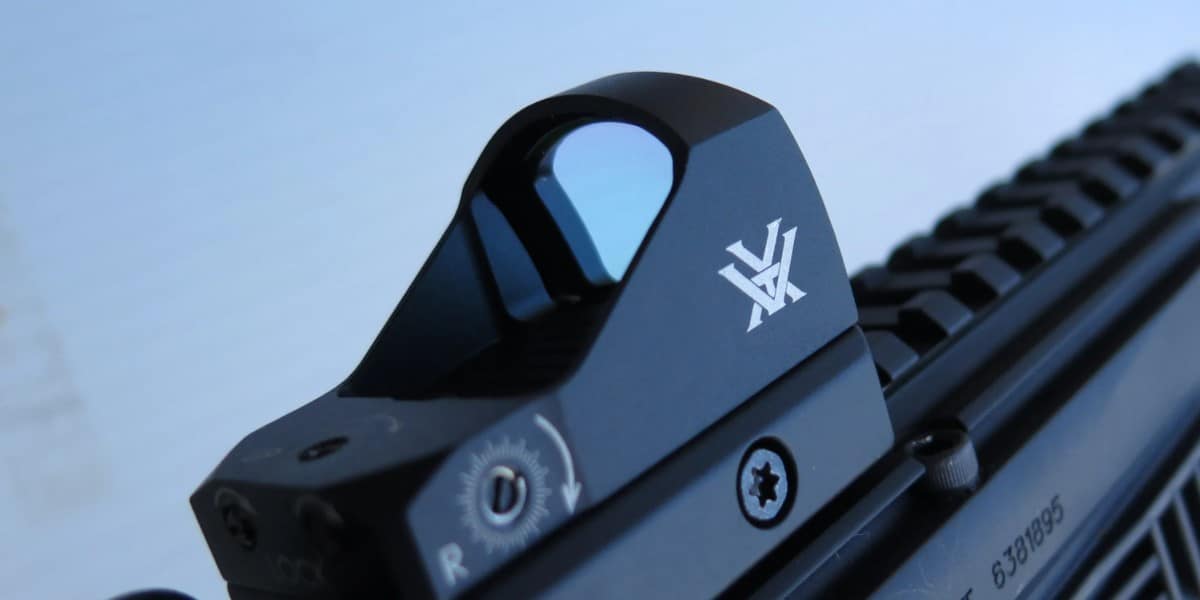
The Vortex Viper has been bolted to slides, shotguns, and flat-tops for years now, and it earned its following the old-fashioned way: it kept working when cheaper open reflex sights quit. It is a mid-tier, slide-ready optic on the Docter/Noblex footprint, built around a 6 MOA dot that Vortex aims squarely at close, fast work rather than precision. That reputation is what pulled me toward it again. I wanted to see whether a design that predates the current wave of shake-awake micros still makes sense on a defensive pistol, where the optic spends most of its life waiting in a holster.
What I found splits cleanly down one line. The housing, the glass, and the dot itself are honest workhorses that took everything my Glock dished out without complaint. The power management is where the years show. No shake awake, a 14-hour auto-shutoff, and a battery you cannot reach without breaking the optic loose from the slide. For a range toy or a truck-gun shotgun, none of that matters. For something you might stake your morning on, it changes the math. This is a good red dot fighting one of its own design decisions.
Vortex Viper 1x24mm Review
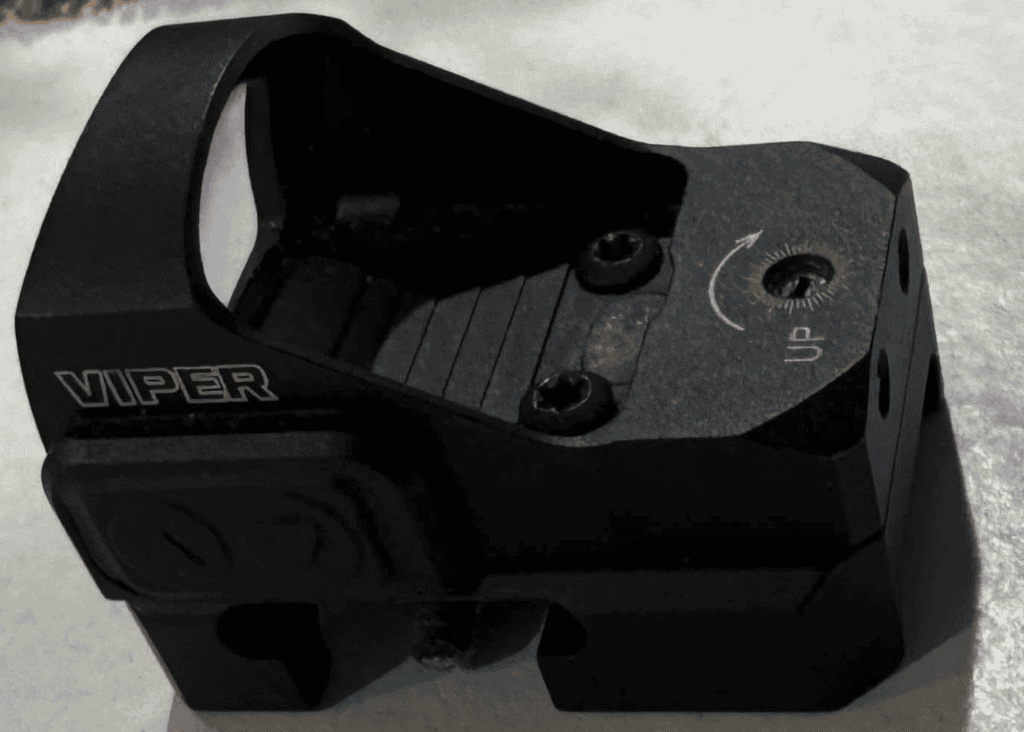
I ran the Viper on a Glock 17 Gen5 MOS, using the Docter-pattern adapter plate that drops it into the MOS cut, and fed it Blazer Brass 115gr FMJ across about six hundred rounds over a few weeks. The plan was simple: treat it like a carry optic, not a paper-punching toy. Draw from concealment, shoot at speed, leave it sitting between sessions the way a defensive gun actually lives.
The Dot Is Built for the Job It Claims
First magazine through it, the 6 MOA dot did exactly what a 6 MOA dot is supposed to do. It jumped into the window fast and sat there bold and obvious, the kind of dot you find on the draw without hunting for it. On a body-sized target at across-the-room distances it was instant. I pushed it back to 25 yards to see where the size started costing me, and that is where the trade-off became real: the dot covers a lot of a small target at that range, so my groups opened up compared to what the same gun does with irons and a careful press. That is not a flaw, it is the point. This is a buckshot-and-bad-breath-distance dot, and inside its lane it is genuinely quick.
The glass deserves a mention too. The 24mm window is generous for an optic this small, and the tint is mild enough that I never felt like I was looking through a bottle. Both-eyes-open, the frame mostly disappeared and I was left with target and dot.
Where the Years Start Showing
The crack in the armor showed up on a cold, overcast morning early in the testing. I had the brightness backed down to a middle setting from a bright afternoon session, and when I came up on the first draw the dot had a soft, smeared halo around it instead of a clean point. Cranking it brighter cleaned it up, but that is the Viper’s open-reflex emitter telling on itself: at the lower settings the dot is not as crisp as it is up high, and in dim light you end up running it brighter than you would like. For someone with astigmatism the bloom at low settings will likely be worse, and I would steer that shooter toward a smaller, cleaner dot.
Then there is the part that actually changed how I felt about the optic. About two weeks in, I pulled the Glock out of the safe for a session, lined up on the first target, and the window was empty. The 14-hour auto-shutoff had done its job sometime overnight, and with no shake awake there was nothing to bring the dot back except reaching up and thumbing the button. On a range that costs you three seconds and a quiet curse. On a gun you grabbed at 2 a.m. for a reason, that empty window is a different kind of problem. You learn to leave it switched on and burning battery, which brings me to the next annoyance.
For more of my articles about Vortex red dot sights have a look at Vortex Sparc 2 or Vortex Crossfire.
The Battery You Have to Earn
The CR2032 loads from the bottom, under the optic, so changing it means breaking the Viper loose from the slide. I did it once mid-testing to confirm the process, re-torqued the screws, and went back out to verify zero. It had shifted a hair, nothing wild, but enough that I would never swap a battery on a carry gun without putting rounds downrange afterward to reconfirm. Pair a bottom-load battery with a 14-hour auto-off and you have a power system that wants you to either accept dead-window surprises or pull the optic regularly. Neither is what I want from something defensive.
It Just Refused to Break
For all my griping about power, the Viper never once flinched under recoil. Six hundred rounds of 9mm slide-cycling is not abusive, but plenty of budget open reflex sights walk their zero or rattle loose in that window, and this one did not. I checked zero at the start, the midpoint, and the end, and outside of that one battery-swap shift it held. The aluminum housing took a knock against a steel barricade during a drill and shrugged it off. This is the part of the Viper’s reputation that is fully earned: it is a tough little optic, and Vortex backs it with the unlimited lifetime VIP warranty, which for a lot of buyers erases the long-term worry entirely.
So where does that leave it? The Viper is a legitimately good optic carrying one dated design decision. The dot is fast, the build is honest, the warranty is bulletproof. The power management belongs to an earlier generation of red dots, and on a defensive pistol that is the one place it matters most.
How I Set Up and Stress-Tested the Viper for Carry Duty
I chose the Glock 17 Gen5 MOS on purpose. The Viper rides the Docter/Noblex footprint, and the MOS plate system is the most common way real buyers actually mount this optic to a duty-size pistol, so it is the honest test platform rather than a convenient one. Blazer Brass 115gr FMJ kept the cost down for a high-round-count stretch, and 9mm slide velocity is the right kind of repetitive shock for shaking loose a mount that is going to fail. I ran it across a few weeks under whatever the morning handed me, including that one cold overcast session that exposed the low-setting bloom, drawing from concealment and shooting on a timer rather than off a bag.
Most of what I wanted to learn here was not whether it survives recoil. It was whether the power behavior bites in practice. That judgment comes from years of running slide-mounted dots on defensive pistols, where the pattern is consistent: shooters obsess over dot size and glass clarity and almost never think about how the optic behaves when it has been sitting untouched in a holster for a day. The dots that disappoint carry buyers rarely fail mechanically; they fail by being dark or smeared at the exact moment you need them, and the only way to know which side of that line an optic lands on is to stop babying it between sessions and let it sit the way a real carry gun sits. That is exactly the test the Viper’s auto-off and bottom-load battery forced, and it is the reason this review leans hard on power management instead of group sizes. My full testing methodology covers how I confirm and reconfirm zero around a remount, which mattered more here than usual.
Performance Ratings
Field Test Data
| Test Parameter | Result |
|---|---|
| Rounds fired | ~600 rounds of 9mm over a few weeks |
| Zero retention (start / mid / end) | Held within ~1 MOA except for a small shift after a deliberate battery-swap remount |
| Return-to-zero after remount | Shifted slightly; required reconfirmation downrange after re-torquing |
| Draw-to-first-shot (close range) | Consistently fast; dot found on the draw without hunting |
| Dot crispness across brightness | Clean and bold at higher settings; visible bloom/halo at lower settings in dim light |
| Cold-start readiness | Window dark after overnight sit; 14-hour auto-off triggered with no shake awake to recover |
Tested on: Glock 17 Gen5 MOS | 9mm | Blazer Brass 115gr FMJ
Pros and Cons
PROS
|
CONS
|
Common Questions About the Vortex Viper 1x24mm
Is the Viper a good choice for everyday carry on a pistol?
It can be, with one caveat: leave it switched on. The 14-hour auto-off and lack of shake awake mean a gun left in a safe overnight can wake up to a dark window, so you trade some battery life for readiness or accept the risk.
Why does my dot look blurry or smeared at low brightness?
That is the open-reflex emitter showing at lower settings, and it is more pronounced for shooters with astigmatism. Running the dot a notch or two brighter usually cleans it up.
Should I get the 6 MOA or the 3 MOA version?
The 6 MOA tested here favors speed for pistols and buckshot inside close range. If you want more precision at distance or plan to throw slugs from a shotgun, the 3 MOA is the better call.
What does it fit, and is the battery easy to change?
It uses the common Docter/Noblex footprint, so mounts and slide cuts are easy to find. The battery is the downside: it loads from the bottom, so you have to remove the optic and reconfirm zero afterward.
To find out more about sights have a look at my articles about EOTech 512 holographic sight and Vortex Strikefire 2 red dot sight.
Disclosure
Everything above comes from rounds I personally put through this optic. This article may contain affiliate links, and a purchase made through them can earn the site a commission at no extra cost to you. Those relationships do not influence the evaluation or the verdict above.
A Tough Dot That Asks You to Manage It
Buy the Vortex Viper if you want a proven, fast open reflex dot for a pistol, shotgun, or carbine and you understand exactly how it handles power. The build is honest, the 6 MOA dot is genuinely quick at the ranges this optic is meant for, and the lifetime warranty means a failure years from now is Vortex’s problem, not yours. Inside that lane, it is easy to recommend.
The hesitation is narrow but real. On a defensive pistol that lives in a holster, the no-shake-awake design, the 14-hour auto-off, and the bottom-load battery add up to an optic you have to actively manage rather than one you can trust to be ready cold. If you will keep it switched on and recheck zero after a battery change, that is a manageable habit and the Viper rewards you with years of dependable service. If you want a dot that simply wakes up when you grab the gun, this is not the one, and that is the single line that should decide it for you.
If you are interested in my other reviews have a look the articles about Vortex Venom and Razor AMG UH-1.
Mike Fellon is the founder of ScopesReviews and an optics specialist with 15+ years in precision shooting. A former Bass Pro Shops firearms advisor and NRA-certified instructor, he’s hands-tested 200+ rifle scopes across hunting and competition. Based in Dallas, Texas.