
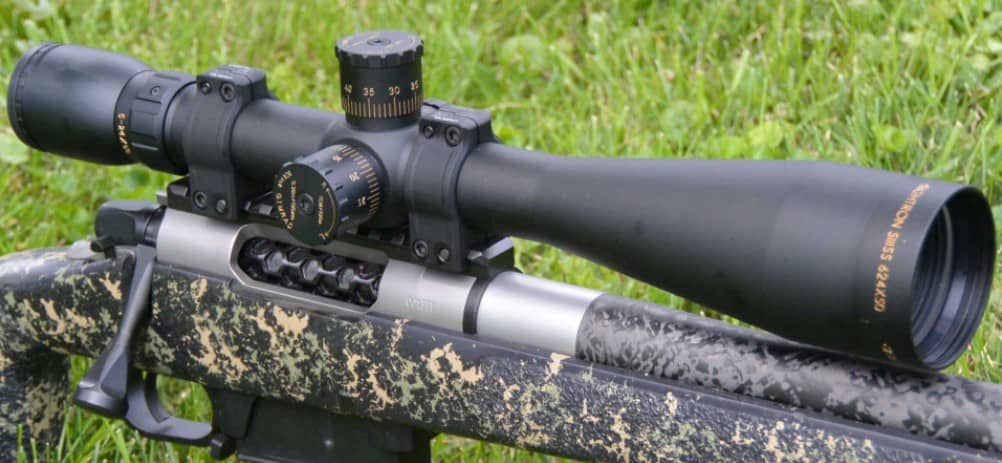
Walk into any benchrest match or precision rimfire shoot and start counting scopes. You will see Nightforce, you will spot the occasional March, and tucked quietly between them, doing serious work, you will find Sightron. The brand spends almost nothing on marketing, which is why a lot of shooters who argue Vortex against Leupold online have never actually looked through one. That is the whole situation with Sightron in a sentence: glass and tracking that read like they cost a good deal more than the sticker, wearing a name nobody is hyping.
I pulled three from different corners of the lineup, a long-range SIII, a fixed-power benchrest SII, and the do-everything S-TAC, to see whether the sleeper reputation holds up once you spread it across price tiers. It mostly does. The SIII SS 8-32×56 LR finished on top, and it is the one that explains why people get quietly loyal to this brand.
My Favourite Sightron Scopes
Best Overall
Sightron SIII SS 8-32×56 LR 30mm
This is the scope that earns Sightron its reputation. The glass holds detail at the top of the magnification range where a lot of pricier optics start to mush out, the eighth-MOA clicks are crisp and they return to zero, and the build feels like it will outlast the rifle under it. It is the premium pick of the three and it shoots like it. If you want one Sightron that shows you what the brand is actually about, this is the one.
The Benchrest Purist’s Choice
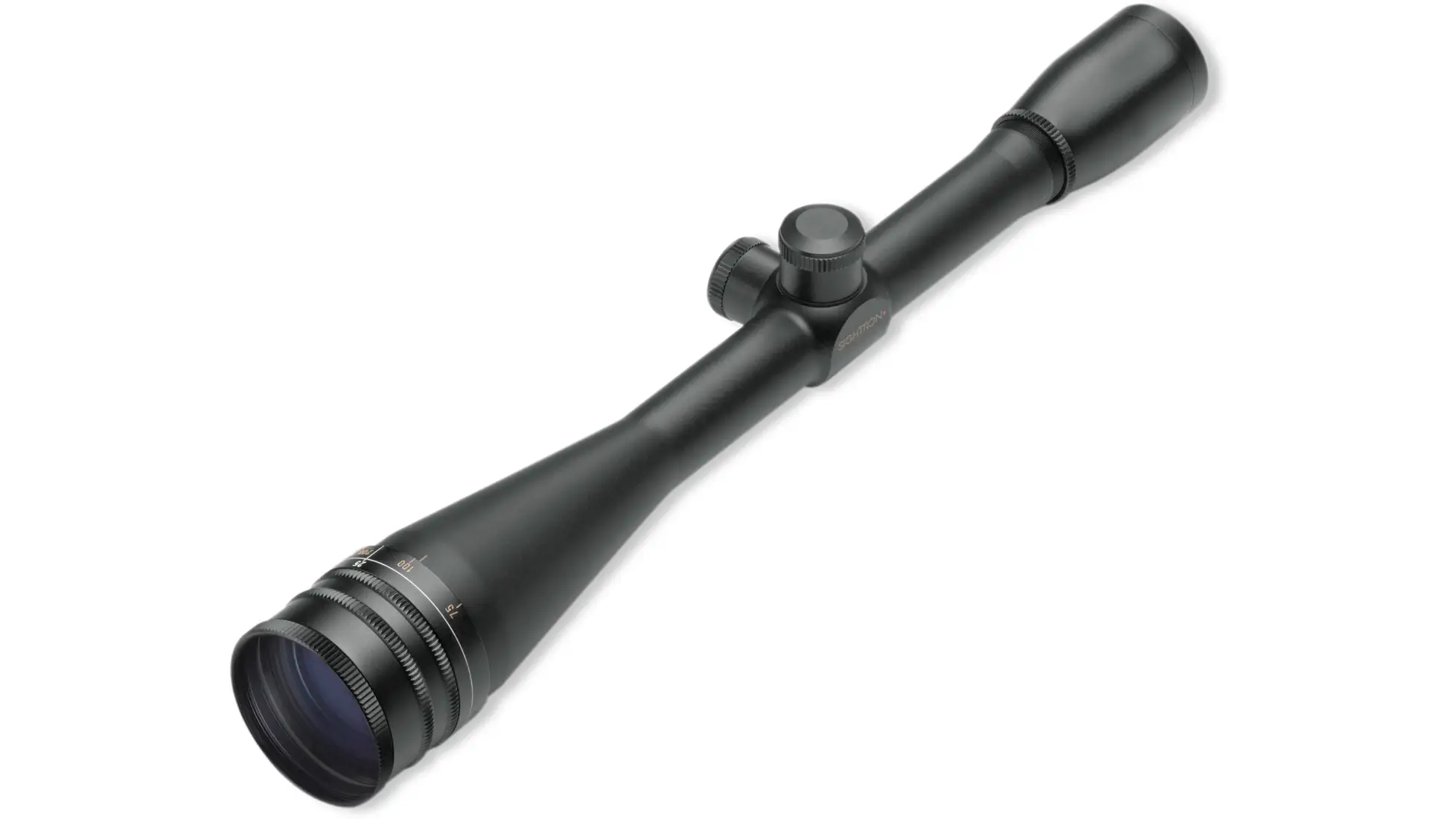
Sightron Fixed Power Target S-II 36x42mm
A fixed 36x with an adjustable objective and a fine target dot, in continuous production since 2002 because benchrest shooters never stopped buying it. It does one job, holds dead still on a sandbag, and does that job better than scopes wearing fancier names. Mount it on a heavy bench gun and nowhere else.
Best Value Across the Most Jobs
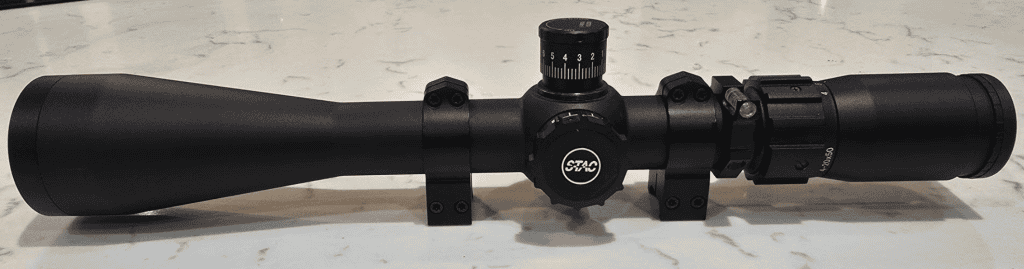
Sightron S-TAC 4-20x50mm
The most flexible of the three and the easiest on the wallet. A 4-20x range covers everything from close practical work out to mid-range steel, the MOA-2 reticle gives you holdovers the target scopes lack, and the side focus racks down to ten yards. The glass is a notch under its Japanese-built siblings, but for the money it is hard to argue with.
I’ve Put Sightron Next to Glass That Costs Triple
Most of what I know about Sightron came from setting it beside optics that cost two and three times as much, on the same bench, in the same light. A few years back I ran a Nightforce Competition and a Vortex Golden Eagle against a borrowed SIII 8-32 at a benchrest line, swapping all three onto the same rifle across one morning. The Sightron did not win every category; the Nightforce tracked like a machine and felt it. But at the dot, at full magnification, in flat midday glare, I could not honestly call the glass a step behind. That rattled the two guys I was shooting with more than it rattled me. Since then I have logged enough hours behind the SIII and SII lines, and watched enough of them go years without a trip back to the shop, that I quit filing the brand under budget alternative. It does not belong there. That history is why I trust my own read on these three more than I trust anyone’s spec sheet.
Side-by-Side Specs
Worth saying before you scan this: two of these scopes are not really meant to be compared head to head on every line. The fixed 36x is a benchrest instrument and the SIII and S-TAC are variables built for distance work, so things like field of view and magnification range are measuring different jobs, not better and worse. Look at glass, tracking, and how the reticle matches your shooting instead.
| Features | Sightron SIII SS 8-32×56 LR 30mm | Sightron Fixed Power Target S-II 36x42mm | Sightron S-TAC 4-20x50mm |
|---|---|---|---|
| Magnification | 8-32x | 36x | 4-20x |
| Objective Diameter | 56 mm | 42 mm | 50 mm |
| Eye Relief | 3.6″ – 4.0″ | 3.2″ | 3.7″ – 4.0″ |
| Weight | 26.5 oz | 17.3 oz | 23.8 oz |
| Length | 15.35″ | 15.31″ | 14.8″ |
| Tube Size | 30 mm | 1 inch | 30 mm |
| Reticle | Target Dot .125 MOA (SFP) | Target Dot .125 MOA (SFP) | MOA-2 (SFP) |
| Field of View | 12.2 – 3.1 ft @ 100 yds | 3.0 ft @ 100 yds | 23.6 – 4.4 ft @ 100 yds |
| Turret Style | Target (Resettable) | Capped Target (Resettable) | Covered Target (Resettable) |
| Adjustment Range | 70 MOA Elevation / 70 MOA Windage | 60 MOA Elevation / 60 MOA Windage | 80 MOA Elevation / 40 MOA Windage |
| Click Value | 1/8 MOA | 1/8 MOA | 1/4 MOA |
| Parallax Adjustment | Side Focus, 40 yds to infinity | Adjustable Objective, 15 yds to infinity | Side Focus, 10 yds to infinity |
| Illumination | No | No | No |
The 3 Best Sightron Scopes
1. Sightron SIII SS 8-32×56 LR 30mm – Long-Range Precision

First Light on Cold Glass
I ran this one on a Bergara B-14 HMR in 6.5 Creedmoor across a stretch of cold late-winter mornings, feeding it Hornady 140gr ELD Match. The range I used had bays opening up well past a thousand yards, which is exactly where a scope like this either proves itself or gets exposed. The first thing I noticed had nothing to do with shooting. Cranked to the top of the range on a frost-clear morning, looking at a steel plate sitting out past six hundred, the image just stayed clean. No color fringing crawling along the edge of the plate, no soft wash creeping in from the sides. A lot of optics get apologetic above twenty-something power. This one did not.
Where the Eighth-MOA Clicks Earn Their Keep
The turrets are the part I kept coming back to. Eighth-MOA clicks are fussy if you are dialing big corrections, but on a precision rig at distance they let you split a hold that quarter-MOA scopes round off. I shot a tracking check the second morning, boxing the turrets up, over, down, and back, and the dot came home to the same hole in the paper every time. Did it three sessions running because I wanted to be sure it was not luck. Seventy MOA of elevation is not a mountain of travel, and on a steeper cartridge you would want to start with canted base to reach way out. With the Creedmoor and a twenty-MOA rail it had everything I asked of it.
A Reticle Built for Paper, Not Brush
That fine target dot in the second focal plane is a precision aiming tool and nothing else. At full magnification the eighth-MOA dot sits on a target like a pencil point, which is glorious on a known-distance plate and useless if you ever expected to hold over a coyote at last light. There is no illumination, the crosshair goes thin and dark against shadow, and that is the trade. Sightron built this reticle for shooters who dial rather than hold, and judged against that purpose it is close to ideal. Judged against a lit tree reticle for field work, it is the wrong tool, and you should know which camp you are in before buying.
The Weight You Sign Up For
It is a heavy scope, heaviest of the three here, and the 56mm objective rides high enough that you want rings that match. On a bench gun or a dedicated long-range rig nobody cares. I would not hang it off a mountain rifle you plan to carry all day, but that was never its job. Over the testing it never lost zero, never fogged on the cold mornings when I brought it in and out of a warm truck, and never gave me a reason to reach for something else. This is the Sightron that makes the brand’s reputation make sense.
Numbers from the sessions, for the people who like to see them:
Field Test Data
| Test Parameter | Result |
|---|---|
| Tracking box test (repeated 3 sessions) | Returned to zero every time, no drift |
| Best 5-shot group @ 100 yds (bipod, rear bag) | 0.52 in |
| Edge clarity at 32x, 600 yd steel | Clean, no noticeable fringing |
| Zero retention across cold/warm cycling | Held through truck-to-line temp swings |
| Approximate rounds fired | ~120 |
Tested with: Bergara B-14 HMR (6.5 Creedmoor) | Hornady 140gr ELD Match
Pros and Cons
PROS
|
CONS
|
Performance Ratings
If you shoot known distances and dial your corrections, this is the easy recommendation of the group and the one I would buy with my own money. It asks for the right mount and the right discipline, and it gives back glass and tracking that quietly embarrass scopes wearing louder names.
For other brand reviews, you can also read my Athlon scopes review and UTG scopes review.
2. Sightron Fixed Power Target S-II 36x42mm – Benchrest & Fixed-Power Target
Why This One Has Outlived Trends
Sightron has been building this 36×42 since 2002, and it is still in the catalog for one reason: benchrest shooters keep buying it because it works. I set it up on a Savage Model 12 FV in .223 Remington, a heavy-barrel varmint rig that lives on a front rest, and fed it Federal Gold Medal 69gr Sierra MatchKing off the bench at a hundred yards. The first session told me most of what I needed to know. At a fixed thirty-six power, with the adjustable objective dialed in, a dime-sized aiming point at a hundred yards looks like a dinner plate, and that .125 dot floats on the center of it like it was painted there.
The Adjustable Objective Is the Whole Game
People new to high-fixed-power scopes underestimate how much the focus matters. The AO on this racks through a long, fine sweep, and getting parallax truly gone at this magnification is the difference between a scope that prints tiny groups and one that lies to you. I spent the better part of a morning just learning where the focus wanted to sit for a hundred-yard target, marking it, and once I had it the groups tightened up noticeably. It focuses down close enough for rimfire bench work too, which is a big part of why this thing has such a loyal rimfire silhouette and benchrest crowd.
Living With 36 Fixed Powers
Here is the honest limitation, and it is not a flaw so much as a personality. Thirty-six fixed power and a three-foot field of view at a hundred means mirage becomes your enemy on a warm afternoon, and finding your target through that tunnel takes deliberate gun handling. One breezy session the boil came up off the ground and the image started swimming by mid-morning, which is just physics at this magnification, not a knock on the glass. You shoot this scope early, on still mornings, off a solid rest. Try to use it like a field scope and you will hate it. Use it for exactly what it is built for and it is a quiet pleasure.
Light, Simple, and Built to Last
It is the lightest scope here by a good margin and the simplest, a one-inch tube with capped turrets you set once and forget. The clicks are the same crisp eighth-MOA Sightron uses on the SIII, and over the testing they reset to zero cleanly every time I checked. There is no illumination, no fancy reticle, no side focus, and that minimalism is the point. For a bench gun that lives indoors between matches, this is a lot of precision for a mid-tier outlay.
The bench numbers from those sessions:
Field Test Data
| Test Parameter | Result |
|---|---|
| Best 5-shot group @ 100 yds (front rest, rear bag) | 0.34 in |
| Parallax elimination at 36x | Crisp once AO dialed; long fine focus sweep |
| Turret reset to zero | Clean every check |
| Mirage onset | Noticeable by mid-morning on warm days |
| Approximate rounds fired | ~95 |
| Close-focus check (rimfire distance) | Focused down without trouble |
Tested with: Savage Model 12 FV (.223 Remington) | Federal Gold Medal 69gr Sierra MatchKing
Pros and Cons
PROS
|
CONS
|
Performance Ratings
There is nothing flashy about this scope and that is exactly why it has lasted two decades. Buy it if you have a dedicated bench gun and you want an aiming point that sits dead still on a tiny target. Buy almost anything else if you need it to do a second job, because this one will not.
3. Sightron S-TAC 4-20x50mm – Versatile Mid-Range Target
The Sightron Most People Should Start With
This is the one built in the Philippines rather than Japan, and it is where Sightron stretches to hit a friendlier price. I put it on a Ruger Precision Rifle in .308 Winchester with Federal Gold Medal 168gr Sierra MatchKing, working it from close practical drills out to steel at six hundred. Coming to it straight off the SIII, the glass step-down is real and worth being honest about. It is good, plenty good for the work, but side by side at full magnification the SIII pulls slightly more detail out of a distant target. That is not a fair fight, though; one of these costs roughly double the other.
A Reticle That Actually Gives You Options
The MOA-2 reticle is the practical difference-maker here. Where the two target scopes give you a bare dot, the MOA-2 puts hash marks in two-MOA increments down all four quadrants around a floating center, so you can hold for wind and elevation instead of dialing every shot. The catch worth knowing is that it lives in the second focal plane, so those values are only true at the top of the range, at twenty power. Drop the magnification and your holds shrink with the image. Once that clicked for me I treated it as a twenty-power holdover reticle and it served the practical work well, letting me chase steel at varying distances without spinning turrets between every target.
Turrets That Disappear Until You Need Them
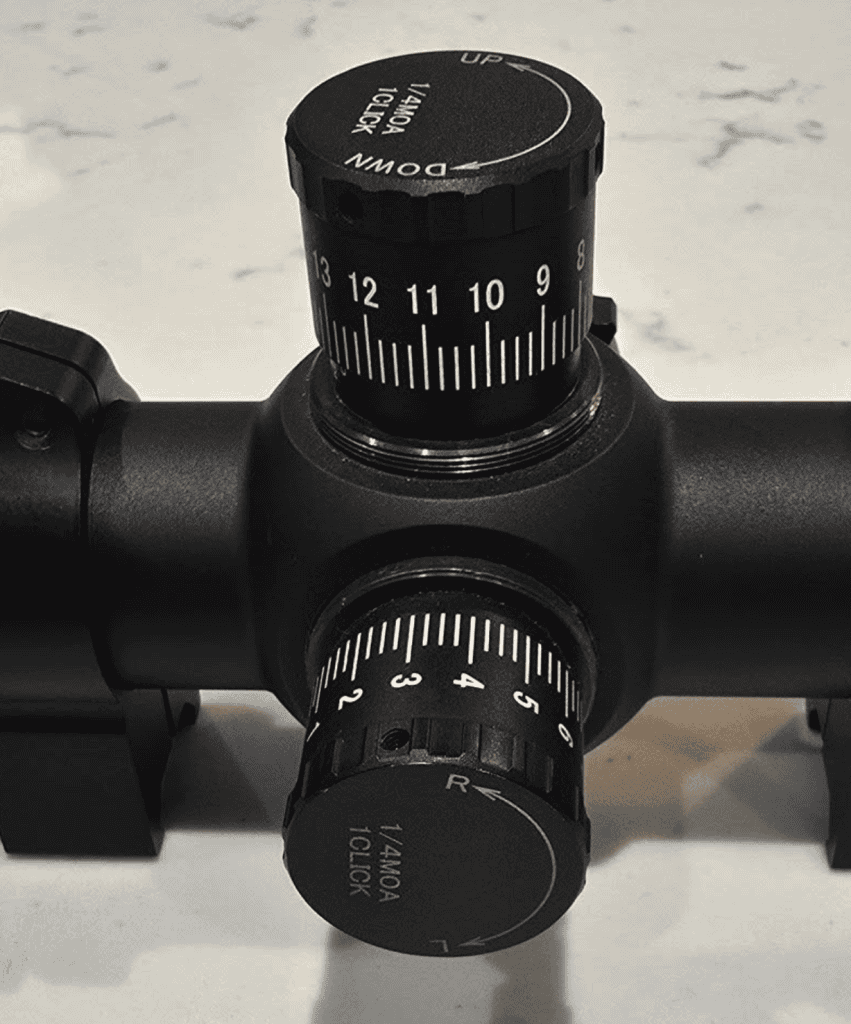
The covered target turrets are a sensible match for how this scope gets used. Pop the caps and you have resettable quarter-MOA clicks with a generous eighty MOA of elevation, which is more vertical travel than either target scope here and a real asset if you want to reach way out. Cap them back up and they will not snag or drift in a truck or a pack. The side focus racking all the way down to ten yards is a nice touch too, more useful than the SIII’s forty-yard floor if you ever shoot rimfire or air with it. During the testing the clicks tracked honestly through a couple of dial-and-return checks, no surprises.
Where the Corners Got Cut
For all that flexibility, this is the scope where you feel the brand managing cost. The glass is a tier under its Japanese siblings as noted, the turret clicks are a touch less tactile than the eighth-MOA units, and at dawn drills the lack of illumination on a black reticle against a dark backstop had me wishing for a lit center. None of that makes it a bad scope. It makes it an honest mid-tier optic that does more jobs than the target scopes while asking less of your wallet. For a shooter who wants one Sightron to cover practical and target work, this is the rational pick even if it is not the one that wows.
Here is how it logged out over the sessions:
Field Test Data
| Test Parameter | Result |
|---|---|
| Best 5-shot group @ 100 yds (bipod, rear bag) | 0.78 in |
| Dial-and-return tracking checks | Tracked true, returned to zero |
| MOA-2 holds at 20x, 600 yd steel | Repeatable hits once holds learned |
| Low-light reticle visibility | Hard to pick up at dawn, no illumination |
| Approximate rounds fired | ~130 |
Tested with: Ruger Precision Rifle (.308 Winchester) | Federal Gold Medal 168gr Sierra MatchKing
Pros and Cons
PROS
|
CONS
|
Performance Ratings
Think of this as the Sightron that gets you in the door without committing premium money. It will not make you gasp the way the SIII does, but it does more jobs than either target scope and does them honestly. For a lot of shooters, that flexibility is worth more than the last increment of glass.
Three Rigs, One Cold Range Stretch, Around 350 Rounds
Because these three scopes do genuinely different jobs, I did not try to force them onto one rifle. Each got paired with a host that matched its purpose, which is also why the rifles change between the reviews above. The SIII rode a Bergara B-14 HMR in 6.5 Creedmoor for long-range work, fed Hornady 140gr ELD Match. The benchrest SII went on a Savage Model 12 FV in .223 Remington with Federal Gold Medal 69gr Sierra MatchKing. The do-everything S-TAC sat on a Ruger Precision Rifle in .308 Winchester running Federal Gold Medal 168gr Sierra MatchKing.
All of it happened over a few weeks of cold late-winter mornings at a range with bays running from a hundred yards out past a thousand, which let me test the bench scope up close and the SIII at real distance without changing venues. I shot early on purpose; the SII at thirty-six power makes mirage a problem the moment the ground warms, so still, cold air was the friend of this whole project. Total round count landed somewhere around three hundred fifty across the three rifles, with each scope getting zeroed off a hundred-yard target first and confirmed before I stretched it out. The thing that stuck with me was how little drama there was: three scopes, three rifles, and not one lost zero or fogged lens across the stretch.
For the full step-by-step on how I run these evaluations, it is laid out in my testing and review process.
Where Sightron Buyers Talk Themselves Into the Wrong Scope
Assuming Every Sightron Is Japanese Glass
The brand’s reputation rests on the Japanese-built SIII and SII lines, and shoppers carry that reputation onto the whole catalog. The S-TAC is built in the Philippines to hit a lower price, and while it is a good scope, it is not the same optical tier as its siblings. People order one expecting SIII glass and feel let down by a comparison that was never fair. Buy the S-TAC for its versatility and value, and buy up the line if pristine glass is the priority.
Buying a Fixed 36x for a Rifle That Leaves the Bench
The SII 36×42 is cheap enough relative to its precision that hunters and field shooters get tempted. Then they mount thirty-six fixed power and a three-foot field of view on something they carry, and they cannot find a target, fight a tight eyebox, and battle mirage all afternoon. This scope is a bench instrument. If your rifle does anything but sit on a front rest, this is the wrong Sightron, no matter how good the price looks.
Expecting Tactical Features Sightron Does Not Prioritize
Cross-shoppers come from brands loaded with illumination, zero stops, and first-focal-plane tree reticles, then fault these scopes for lacking them. Sightron spends its budget on glass and tracking, not feature count, and the target lines here run capped turrets, no illumination, and fine SFP dots on purpose. That is a philosophy, not a shortcoming. If a lit FFP reticle is non-negotiable for you, that is a signal to shop a different design, not to expect Sightron to be something it is not.
Treating the SFP Reticles as Hold-Anywhere Tools
Both target scopes use a fine dot meant for dialing, and the S-TAC’s MOA-2 only reads true at twenty power. Buyers expect to hold over at any magnification the way a daylight-bright tree reticle lets them, then miss when their holds shrink with the zoom. Learn each reticle’s actual job: dial with the target dots, and run the MOA-2 at top magnification when you intend to hold. Match technique to the reticle and the misses stop.
The Sightron Questions That Keep Coming Up
Where are Sightron scopes actually made?
It depends on the line. The premium SIII and the SII target scopes are built in Japan, which is where the brand’s glass reputation comes from. The more affordable S-TAC line is built in the Philippines. The company itself is Japanese-owned and runs its US operation out of North Carolina.
Is Sightron really comparable to Nightforce or Vortex?
On glass, the Japanese-built models genuinely hang with optics costing more, which is the brand’s whole appeal. Nightforce still edges them on sheer mechanical toughness, and Vortex wins on features and resale visibility. If you value optical quality and tracking over gadgets and brand cachet, Sightron is a quiet bargain.
How good is the warranty?
Strong. Sightron backs its scopes with a limited lifetime warranty covering defects and normal-use problems, and the SIII line carries solid coverage on top of that. Just as telling, very few of these scopes ever need warranty work in the first place, which matches what I have seen owning and testing them.
Which one should I buy for long range versus benchrest?
For dialed long-range work, the SIII SS 8-32×56 LR is the clear choice and my top pick here. For dedicated benchrest off a front rest, the SII 36×42 is purpose-built and has been a competition favorite for two decades. If you want one scope to cover practical and mid-range target shooting, the S-TAC is the flexible value option.
Which Sightron Belongs on Your Rifle
If your shooting is dialed precision at known distances, steel matches, load development, anything where you spin turrets and want glass that stays honest at the top of the range, the SIII SS 8-32×56 LR is the one to save for. It is the priciest of the three and it earns it. The trade you accept is weight and a reticle that is useless in low light, so it is a poor choice if your rifle ever doubles as a field gun.
For a shooter whose rifle lives on a front rest, the SII 36×42 is hard to beat for the money. The decision here is narrow on purpose: buy it only if you have a dedicated bench gun and shoot on calm mornings. The same fixed power that makes it deadly on paper makes it the wrong call the instant the rifle has to do anything else.
The S-TAC 4-20×50 is the answer when you want one scope that refuses to specialize, practical drills one weekend and mid-range target the next, without spending premium money. Its holdover reticle and broad zoom buy you flexibility the target scopes cannot. Accept that the glass is a tier down and that holds only ring true at full power.
One honest boundary across all three: none of these is built for low-light field hunting. No illumination, no daylight-bright tree reticle, no forgiving low-power bottom end on the target models. If your real need is dusk-to-dark holdover shooting in the timber, the right move is to look outside this slice of the lineup entirely rather than make one of these do a job it was not designed for.
Disclosure
ScopesReviews earns affiliate commissions when you buy through some of the links on this page, at no extra cost to you. For this guide I bought the SII 36×42 and the S-TAC outright for the testing, and the SIII was a unit I had spent significant range time behind already, including the side-by-side benchrest comparison that shaped my read on the brand. Nothing here was supplied by Sightron, and the rankings reflect what these scopes did on my rifles across those cold mornings, not who paid for the privilege.
Why This Brand Keeps Winning Quietly
The sleeper thing about Sightron is real, and these three confirm it from different directions. The SIII SS 8-32×56 LR is the standout, my Best Overall, because it delivers glass and tracking that read like a far more expensive scope while wearing a name half the range has never seriously considered. The SII 36×42 quietly owns its benchrest niche the way it has since 2002, and the S-TAC proves the brand can stretch down to a friendlier price without falling apart, even if you can feel where the corners got trimmed. Across all three, the build held up, the turrets tracked, and nothing fogged or lost zero. That consistency is the brand’s real signature, more than any single feature.
Picking a scope, and picking the brand behind it, comes down to matching the tool to the actual job rather than the name on the tube. Sightron rewards the shooter who cares more about what they see and how it tracks than about what is trending. If you want to keep digging, my breakdown of the best long-range scopes put these picks in wider company. Buy the one that fits how you actually shoot, and this is a brand that will quietly outperform its own modest reputation.
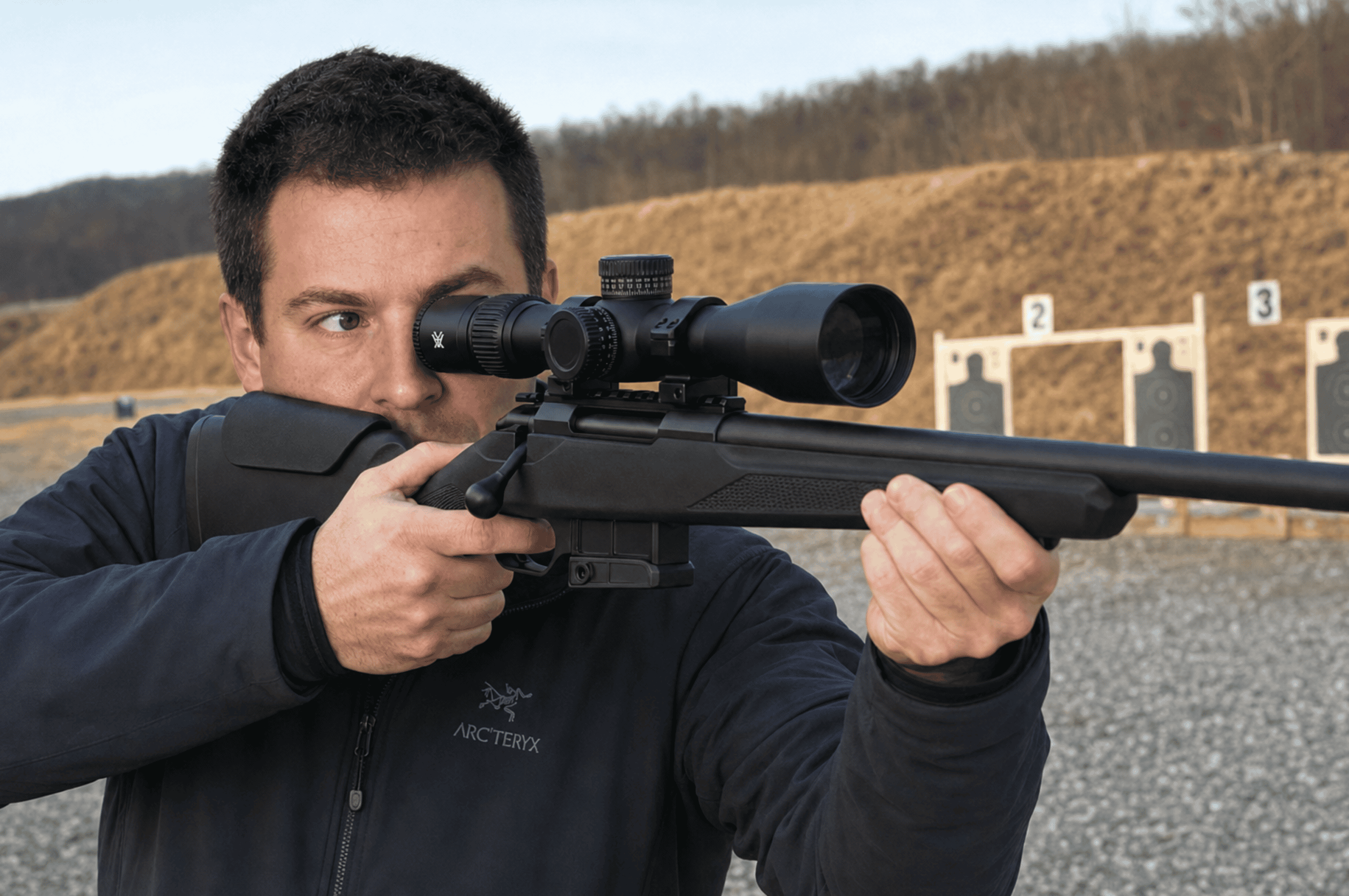
Mike Fellon is the founder of ScopesReviews and an optics specialist with 15+ years in precision shooting. A former Bass Pro Shops firearms advisor and NRA-certified instructor, he’s hands-tested 200+ rifle scopes across hunting and competition. Based in Dallas, Texas.