
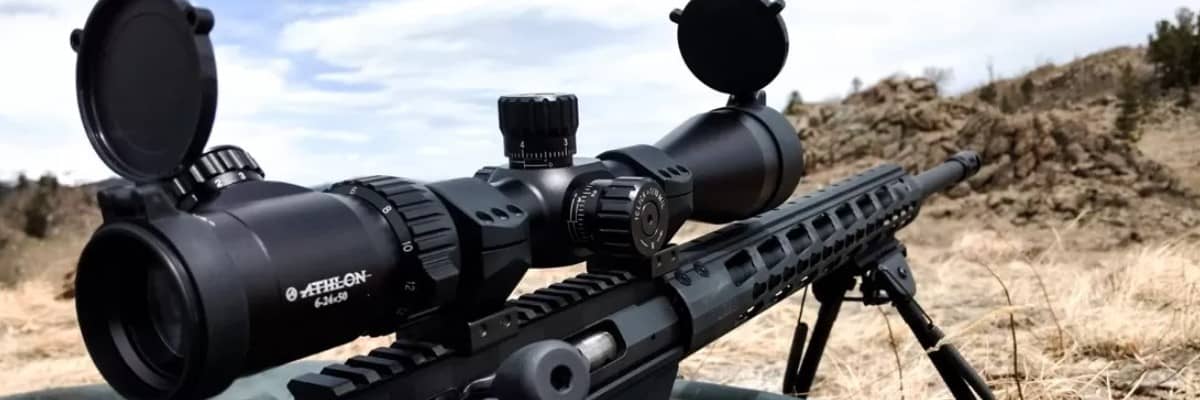
Athlon built its name on giving budget shooters more scope than the price tag promised, and the lifetime warranty made it an easy recommendation. What that reputation flattens is the fact that Athlon isn’t one quality level. It’s a ladder, and the rungs sit further apart than the listings suggest. I lined up three models from different heights of it: the Talos at the entry, the Argos in the feature-packed middle, and the Helos a genuine step up in build. Putting them on rifles at the same time, the gaps between them say more than any single spec sheet does, because each one tells you exactly what Athlon will and won’t do at its price.
The Helos BTR Gen II 2-12×42 came out on top, and not because it costs the most. It’s the one model here where every part of the package pulls in the same direction.
The 3 Athlon Scopes I Like The Most
Best Overall
Athlon Optics Helos BTR Gen II 2-12x42mm
This is the rung where Athlon stops cutting corners that you feel. First focal plane mil reticle, locking turrets with a zero stop, a 30mm tube with real travel in it, and a magnification range that covers a brush shot and a steel plate without apology. Nothing about it is the most extreme number in this group. It’s the only one where I never caught myself working around a limitation.
Most Magnification for the Money
Athlon Optics Argos BTR GEN3 6-24x50mm
Pound for dollar, no scope here hands you more glass and more top-end power. The APRS11 reticle is a genuine precision grid and the exposed zero-stop turrets feel a tier above the price. Just go in knowing where Athlon spent the budget and where they didn’t, because the adjustment travel tells on them.
Best Pick on a Tight Budget
Athlon Optics Talos 4-16x40mm
The lightest scope in the group and the one that asks the least of your wallet. It’s a capped, second-focal-plane hunting optic that does the deer-rifle job honestly and doesn’t pretend to be anything past that. For a first real scope or a backup hunting rig, it earns its keep.
What Running Three Athlon Tiers Back to Back Taught Me
I’ve owned or tested enough Athlon glass over the years to stop reading their lineup as a list of products and start reading it as a pattern. The brand picks one or two things to do well at each tier and lets the rest sit at “adequate,” and once you know where each model spends its money you can predict the compromise before you ever mount it. That’s what made running these three back to back useful instead of repetitive. The Talos showed me exactly where Athlon caps a budget hunting scope (the tube, the focal plane, the glass at the top of the range). The Argos showed me how far they’ll stretch a feature list before something structural gives. And the Helos confirmed the rung where the compromises finally stop fighting each other. None of that comes from a spec table. It comes from watching the same maker make the same kinds of choices across a decade, then putting three of those choices on rifles and seeing which one I stopped thinking about. The Helos was the one I stopped thinking about.
The 3 Best Athlon Scopes
1. Athlon Optics Helos BTR Gen II 2-12x42mm – Best Overall DMR & Field Scope
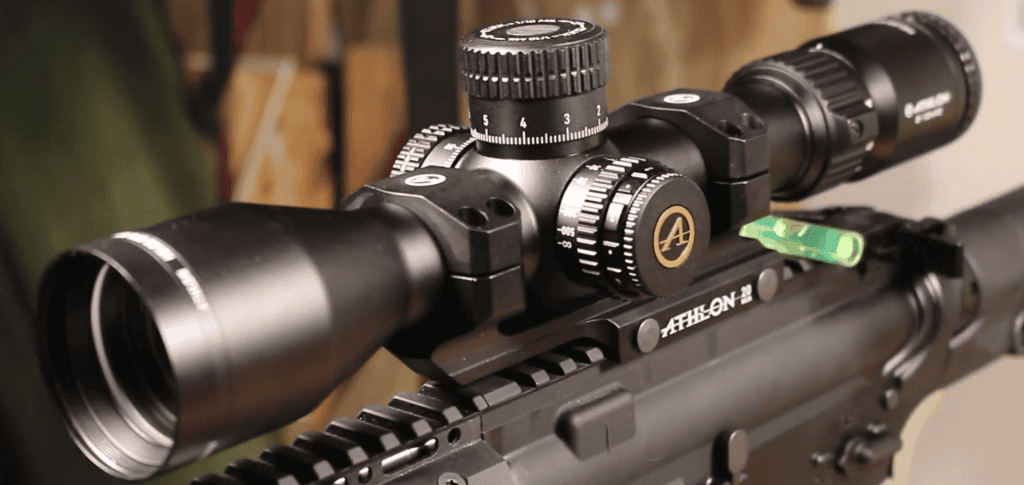
Why This Is the Athlon I Stopped Adjusting To
There’s a particular feeling with budget-to-mid glass where you’re constantly negotiating with the scope, holding your head just so to clear the shadow, backing off magnification to find the target again. The Helos never made me do that. Mounted on the M5, first cold-bore session of the trip, I dialed parallax at 300, settled in, and the eyebox just held. That sounds small. After enough scopes that fight you at the top of their range, a 2-12x that stays usable at 12x with a forgiving eyebox is the whole ballgame.
The Reticle That Justifies the Step Up
The AHMR2 is a first-focal-plane mil grid, and on a gas gun running a DMR role that focal plane choice is the reason to buy this scope over the cheaper ones in the line. Holds stay true at any magnification, so when a second target popped up close while I was zoomed for a far plate, I held off the hash marks instead of spinning down power and re-ranging. The illuminated center helped in the gray light of an early session under heavy overcast. The tree gives you enough reference for wind holds without the picket-fence clutter that makes some FFP reticles useless at low power, where this one thins out to almost nothing and lets you run it like a 2x patrol optic.
Locking Turrets That Earn Their Complexity
I ran a box drill the second morning: up 1 mil, right 1, down, left, back to a taped zero. It returned every time, and the zero stop caught exactly where I set it. The locking collars are the part I came around on. I usually find lockout fussy, but on a truck gun that gets jostled, knowing the elevation can’t walk off a hunt is worth the extra motion. With 32 mils of elevation on tap, this has the most usable vertical travel of the three by a wide margin, which matters more here than the modest top-end magnification.
Where It Gives a Little Back
It’s not flawless. Past 10x the glass softens at the very edges, noticeable if you’re a pixel-peeper on a target board, invisible on game or steel. And 12x is a real ceiling: this is not the scope for ringing steel way out where the Argos lives. The 42mm objective gathers less light than the Argos’s bigger glass, so in the last few minutes of legal shooting light it dims a touch sooner. None of that undercuts what it’s for. It’s the most complete optic Athlon makes in this stretch of the lineup.
Numbers from the sessions, for anyone who wants the receipts:
Field Test Data
| Test Parameter | Result |
|---|---|
| Tracking (1-mil box drill) | Returned to zero, no drift over 4 corners |
| Eyebox at 12x | Forgiving; minimal head-position hunting |
| Zero retention | Held through ~110 rounds, no shift |
| Low-light usability | Reticle illumination cut through heavy overcast |
| Best 5-shot group (100 yds, bipod) | 0.8 in with 175gr SMK |
Tested with: Aero Precision M5 (.308 Winchester) | Black Hills 175gr Sierra MatchKing
Pros and Cons
PROS
|
CONS
|
Performance Ratings
If you only read one line here, read this one: the Helos is the model where Athlon’s compromises stop stacking against you. It isn’t the flashiest number on any single spec, and that’s exactly why it wins.
2. Athlon Optics Argos BTR GEN3 6-24x50mm – Most Magnification Per Dollar
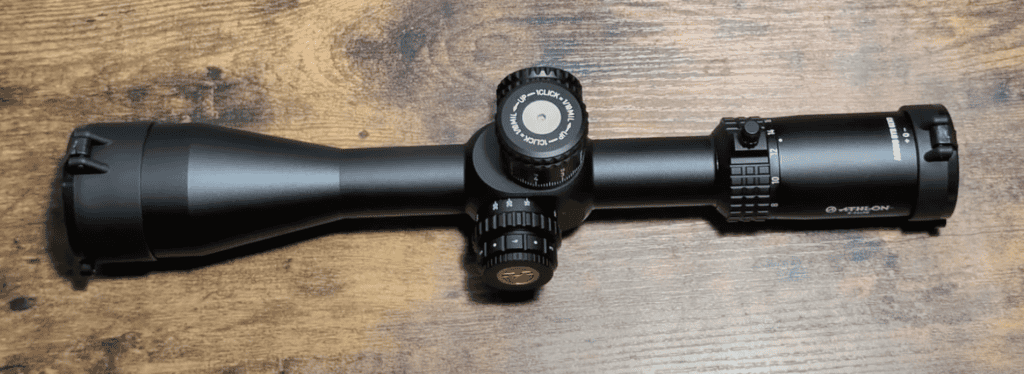
A Feature List That Reads Like a Scope Costing Far More
First time I clamped the Argos onto the Howa and looked through it, I got why this thing has the reputation it does. 24x of magnification, a genuinely good first-focal APRS11 grid, exposed tactical turrets with a real zero stop, all at the heart of Athlon’s mid-tier pricing. On paper it embarrasses the Helos. Spend a few range days with it, though, and the picture gets more complicated than the spec sheet suggests.
The Glass Holds Up Where It Counts
The 50mm objective pulls in light the smaller scopes can’t match, and at 6x through about 18x the image is genuinely sharp. I was ringing a 10-inch plate at 500 off the bipod with the 6mm Creedmoor and the ELD Match, and the reticle gave me clean wind references to do it on holds. The APRS11 tree is busier than the Helos reticle, which suits this scope’s job: it’s built to be cranked up and held precise, not run fast and low. At 24x in that late-summer mirage the image boiled, but that’s physics punishing high magnification, not a flaw in the glass. Backed down to 18x the mirage settled and the scope was still plenty for the distance.
Where Athlon Spent the Budget, and Where They Didn’t
Here’s the catch that the spec table half-hides. For a scope built around 24x and a precision reticle, 18 mils of total elevation is tight. That’s the least vertical travel of the three scopes here, in the model that most wants more of it. On the 6mm Creedmoor it was a non-issue out to the distances I shot, the round is flat and the zero stop let me use most of that travel up top. Put this on a heavy magnum reaching way out and you’ll run out of dial before you run out of want, likely needing a canted base to claw it back. Athlon clearly put the money into the glass and the turret feel and left the internal travel where a flat-shooter is fine but a true long-range build is not.
Turrets You’d Expect a Tier Up
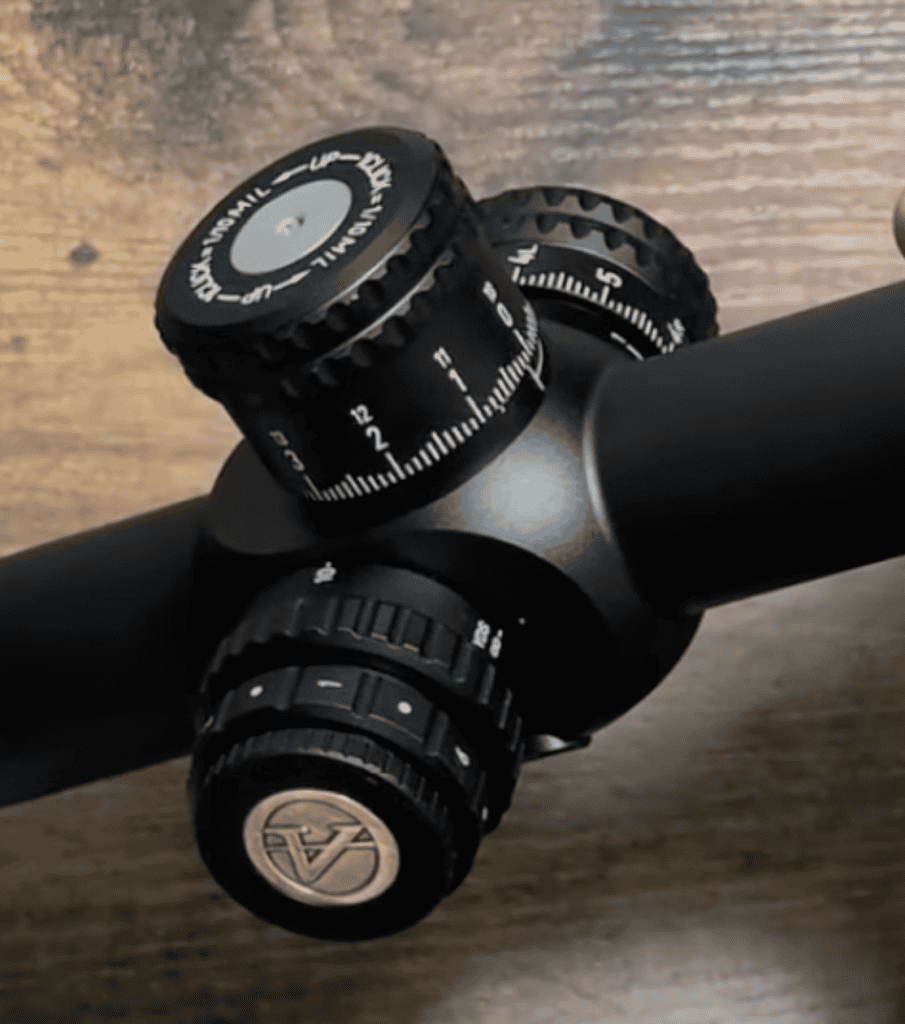
The exposed turrets are the best-feeling part. Crisp, audible clicks, no mush, and the zero stop returned dead-on through a tracking check. Stack that against the Talos and you’re in a different world; stack it against the Helos and it comes down to whether you want exposed-and-fast or locking-and-secure. Both track. They just answer different questions.
The session log shook out like this:
Field Test Data
| Test Parameter | Result |
|---|---|
| Tracking (tall-target check) | Accurate; zero stop returned dead-on |
| Usable elevation travel | 18 mils total; adequate for flat-shooting, tight for magnums |
| Image at 24x in mirage | Boiled at full power; clean backed to 18x |
| Best 5-shot group (100 yds, bipod) | 0.7 in with 108gr ELD Match |
| 500-yd steel hit rate | Consistent on a 10-in plate off bipod |
| Weight on the rifle | Heaviest here at 30.3 oz; front-heavy on lighter builds |
Tested with: Howa M1500 HCR (6mm Creedmoor) | Hornady 108gr ELD Match
Pros and Cons
PROS
|
CONS
|
Performance Ratings
If your shooting lives at flat-trajectory distances and you want the most magnification and glass Athlon will sell you at this tier, the Argos is a lot of scope. Just buy it knowing the elevation travel is the wall, and build around it rather than expecting it to reach where the spec list implies.
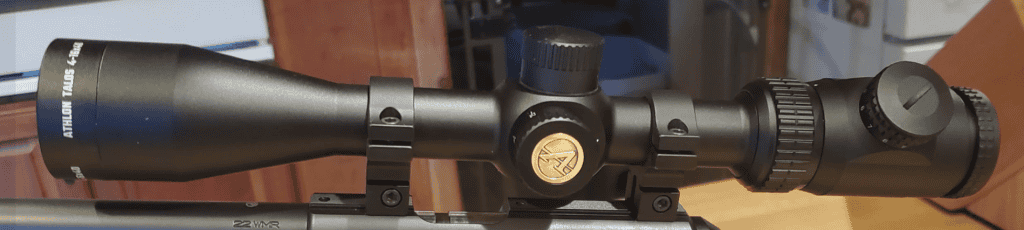
3. Athlon Optics Talos 4-16x40mm – Best Lightweight Budget Hunting Pick
The Honest Bottom Rung
The Talos is what Athlon builds when the brief is “make it cheap, make it work, don’t lie about it.” Mounted on the Ruger American Predator it disappeared, half a pound lighter than the Helos and almost a full pound under the Argos, which on a deer rifle you carry all day is the point. A 1-inch tube, capped turrets, second focal plane: every choice here is the budget choice, and for what this scope is meant to do, most of them are the right ones.
A BDC Reticle Doing Exactly Its Job
The BDC 600 lives in the second focal plane, which for a hunting scope is a feature, not a compromise. The reticle stays the same visual size as you change power, so a quick shot at low magnification on a moving animal isn’t cluttered. Sitting an elevated stand at first light, the illuminated center dot picked up a doe at the edge of legal light cleanly, and the holdover dots gave me a reference past my zero without touching a turret. This is the workflow a deer hunter actually uses: hold, don’t dial. For that, the BDC and the SFP layout are correct. Asking it to do precision dialing would be using it wrong.
Where the Budget Shows
Push the Talos to 16x and the glass tells you what tier you’re in. The image goes a little flat, contrast drops, and the edges get soft well before the Argos would blink. In real hunting light at 8x to 12x it’s perfectly good. The capped turrets are fine for set-and-forget but slow if you ever did want to dial, and the 1-inch tube and 40mm objective gather less light than either bigger scope when the sun’s nearly gone. The .243 and the 95-grain load printed honest groups, so the scope is plenty accurate enough for its task; it just runs out of refinement at the top of its range. That’s the deal at this price, and the Talos doesn’t pretend otherwise.
What You’re Really Buying
Weight, simplicity, and a lifetime warranty on a scope that costs less than a decent pair of boots. For a new hunter’s first rifle or a backup that lives in the truck, that’s a strong, honest package. It is not a precision tool and was never built to be one.
Here’s what the testing turned up:
Field Test Data
| Test Parameter | Result |
|---|---|
| Weight on the rifle | Lightest here at 19.1 oz; carries all day |
| Low-light reticle | Illuminated dot usable at edge of legal light |
| Image at 16x | Flattens and softens at edges; fine at 8-12x |
| Best 5-shot group (100 yds, rest) | 1.1 in with Deer Season XP 95gr |
| Zero retention | Held through ~80 rounds, no shift |
Tested with: Ruger American Predator (.243 Winchester) | Winchester Deer Season XP 95gr
Pros and Cons
PROS
|
CONS
|
Performance Ratings
Judge the Talos against its price and its purpose and it’s a quietly good little scope. Judge it against the Helos or Argos and it loses, because it’s meant to: it’s the rung you start on, not the one you finish at.
A Gas Gun, a Chassis Bolt, and a Deer Rifle, Across Late-Summer Range Days
These three don’t share a job, so they didn’t share a rifle. Forcing a 6-24x precision scope and a 4-16x deer optic onto the same platform would have told me nothing real about either. The Helos went on an Aero Precision M5 in .308 Winchester, fed Black Hills 175gr Sierra MatchKing, because a 2-12x first-focal mil scope on a gas gun is exactly the DMR-style role it’s built for. The Argos rode a Howa M1500 HCR chassis rifle in 6mm Creedmoor with Hornady 108gr ELD Match, a flat-shooting combo that lets a high-magnification scope earn its keep. The Talos sat where it belongs, on a Ruger American Predator in .243 Winchester running Winchester Deer Season XP 95gr.
Most of the work happened over a run of late-summer days on a high-plains rifle range with steel staggered from 100 out past 500, plus a few dawn sessions from an elevated stand for the Talos. The heat threw mirage that punished the Argos at full power, which turned out to be useful. Round count landed near 300 across all three, enough to zero each, confirm tracking with a box drill, and live with them past first impressions. Each scope got its own zero confirmed at 100 before anything else. The full rundown of how I run these evaluations lives in my scope testing methodology.
Where Athlon Buyers Grab the Wrong Rung
The mistakes people make with Athlon almost never come from the scopes being bad. They come from misreading which model solves which problem, because the brand stacks features in ways that look interchangeable on a listing page and aren’t in the field.
Buying the Argos for the Magnification, Ignoring the Travel
The 6-24x number sells the Argos as a long-range scope, and shooters mount it on a heavy magnum expecting to reach way out. Then they discover 18 mils of elevation doesn’t get them there and they’re shimming bases to recover dial. The Argos is a high-magnification scope for flat-trajectory shooting, not a max-distance dialing rig. If your plan is serious long range, that travel ceiling matters more than the top-end power, and you should either build around it or step to a model with more vertical room.
Treating the Talos and the Helos as the Same Tier With a Different Price
On a spec sheet a 4-16x and a 2-12x can look like a lateral move where you trade some power for some dollars. They’re not the same animal. The Talos is a one-inch-tube, second-focal, capped hunting scope; the Helos is a 30mm, first-focal, locking-turret precision optic. The money between them buys a different category, not a longer zoom. Buyers who grab the Talos to save a little and then try to run it like a mil-dialing scope end up frustrated by a tool that was never built for it.
Assuming Every Athlon Reticle Is in the Same Focal Plane
Athlon mixes FFP and SFP across the lineup, sometimes within the same model family, and people don’t check. They buy expecting their holds to stay true at any power and find out the Talos reticle only subtends correctly at one magnification, or they buy the FFP Helos and complain the reticle shrinks at low power not realizing that’s the point. Read the focal plane before you buy, not after. It changes how the scope is used more than almost any other spec.
Skipping the Warranty Math
Some buyers cross-shop Athlon against no-name optics that cost a little less and ignore that Athlon’s lifetime, no-questions, no-receipt warranty is part of what you’re paying for. With a budget scope, the warranty is not a footnote; it’s a meaningful slice of the value. Buying a cheaper unknown to save a few dollars and losing the coverage is a bad trade on optics that take recoil for years.
Straight Answers to the Athlon Questions I Hear Most
Is Athlon actually good, or is it just internet hype?
It’s genuinely good for what it charges. Across these three the glass, tracking, and build all hold up against their price tiers, and the brand’s reputation on forums is mostly earned. The honest caveat is that “Athlon” isn’t a quality level; it’s a ladder. The Talos and the Helos are both good, but at very different things.
Where are Athlon scopes made, and does the warranty really hold up?
Athlon is a U.S.-based company and its scopes are manufactured overseas, with the higher tiers getting more refined production. The warranty is the real draw: lifetime, transferable, no receipt or registration needed. Reports of fast, no-argument replacements are common, and it covers used scopes you bought secondhand. For a value brand, that coverage is a big part of the pitch.
Which of these three should a first-time buyer get?
If you’re hunting and want simple and light, the Talos. If you want one scope that’ll grow with you into precision work and target shooting, stretch for the Helos; it’s the most versatile and the one you’re least likely to outgrow. The Argos makes sense only if maximum magnification at flat-shooting distances is specifically what you’re after.
Can the Talos handle hard-recoiling rifles?
For normal hunting calibers, yes. It held zero fine on the .243 and Athlon rates these for standard centerfire recoil. On heavy magnums I’d lean toward the 30mm-tube Helos or Argos, which have more robust bodies and gave me zero worries on harder-kicking setups.
Matching an Athlon Tier to the Rifle You Own
The do-it-all shooter who wants one scope to keep. Get the Helos BTR Gen II. It’s the only one of the three that moves comfortably between a close brush shot and mid-range steel without you fighting it, and the FFP mil reticle plus locking turrets mean it grows with your skills instead of capping them. This is the rung I’d point most people to, even though it costs the most, because it’s the one you won’t replace in a year.
The flat-trajectory target shooter chasing magnification. The Argos earns its spot here, with one boundary drawn clearly: keep it on cartridges and distances where 18 mils of elevation is plenty. On a 6mm Creedmoor or a .223 varmint rig punching paper and ringing steel at sane distances, the magnification and glass are a genuine bargain. The moment your ambitions involve a magnum and extreme range, this is the wrong scope, and no amount of top-end power fixes the travel.
The hunter who values light weight and a tight budget. The Talos, without hesitation, for a deer or hog rifle you carry more than you shoot. Hold-over with the BDC, keep it at mid power for the best image, and don’t ask it to dial. For a new shooter’s first scope it’s hard to argue against.
When to look past this slice entirely. If you’re building a dedicated long-range rig that lives at extreme distance, none of these three is the answer; you want a scope with far more elevation travel, and that means stepping up Athlon’s line to the Ares or Cronus tier or looking elsewhere. Buying down and fighting the limitation is the costliest mistake of all.
Disclosure
I bought the Talos and the Helos outright for this testing and borrowed the Argos from a buddy at the high-plains range who’d had it on his Howa for a season, so it came to me already broken in rather than fresh out of the box. This site uses affiliate links, and if you buy through one I may earn a small commission at no extra cost to you. That arrangement never decides the order these scopes finished in. The Helos won because it was the scope I stopped thinking about, and I’d have told you that whether or not a single link existed on this page.
Where Athlon’s Ladder Pays Off, and Where It Stops
Three scopes, one brand, three genuinely different answers. That’s the real lesson of testing Athlon as a lineup instead of a single model. The Talos proves the brand can build an honest budget hunting scope without embarrassing itself. The Argos proves they’ll pack a startling feature list into a mid-tier price, as long as you understand where the elevation travel draws the line. And the Helos BTR Gen II proves there’s a rung where the compromises finally stop working against each other. It’s my Best Overall here because it’s the only one of the three I never had to manage around, the scope that did its job and got out of the way.
If there’s a single takeaway, it’s that “is Athlon good” is the wrong question. The right one is which Athlon, for which rifle, doing which job. Spend a tier too low and you’ll fight a tool that was never meant for your task; spend at the right rung and the value the brand is famous for actually shows up. For most shooters reading this, that rung is the Helos.
Mike Fellon is the founder of ScopesReviews and an optics specialist with 15+ years in precision shooting. A former Bass Pro Shops firearms advisor and NRA-certified instructor, he’s hands-tested 200+ rifle scopes across hunting and competition. Based in Dallas, Texas.