
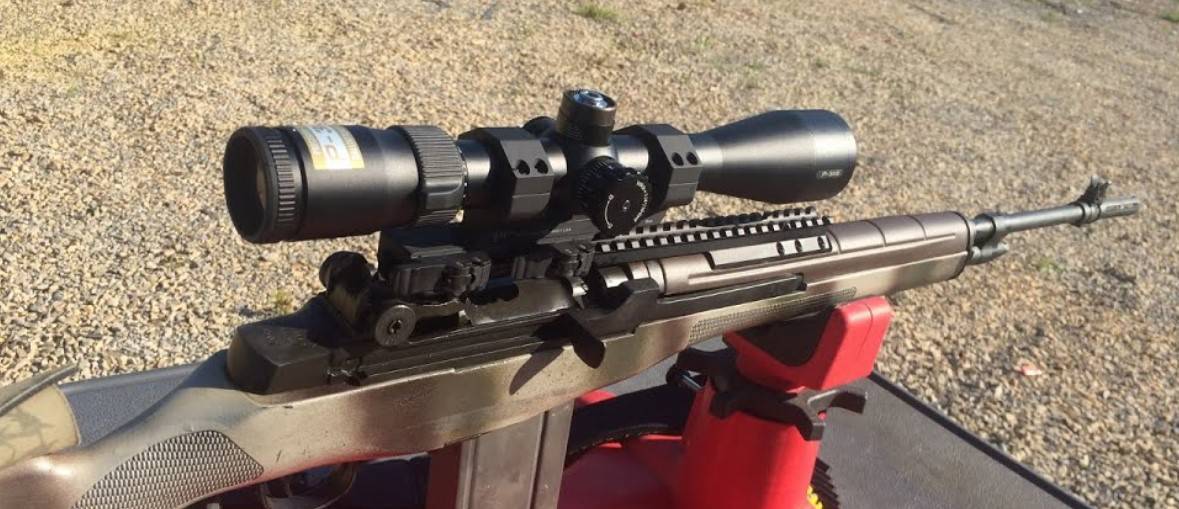
The M1A demands more from a scope than most rifles. Not because it’s inaccurate, far from it. But that side-mounted receiver rail sits higher than anything you’re used to from bolt guns, which means you’re adding a cheek riser to nearly every setup. Pair that mounting reality with the rifle’s 100-to-600-yard versatility, and scope selection becomes less about grabbing premium glass and more about matching magnification range to how you’ll actually use this platform.
I tested four scopes that approach this challenge differently. After six weeks and roughly 580 rounds, the Vortex Venom 3-15×44 proved the most capable all-around option. Its 3-15x range covers the M1A’s practical effectiveness from close work to legitimate 600-yard precision, while the first focal plane MIL reticle and exposed elevation turret give you the tools for serious range work without overcomplicating things.
My Top 4 Picks For The M1A
Best Overall
Vortex Venom 3-15×44
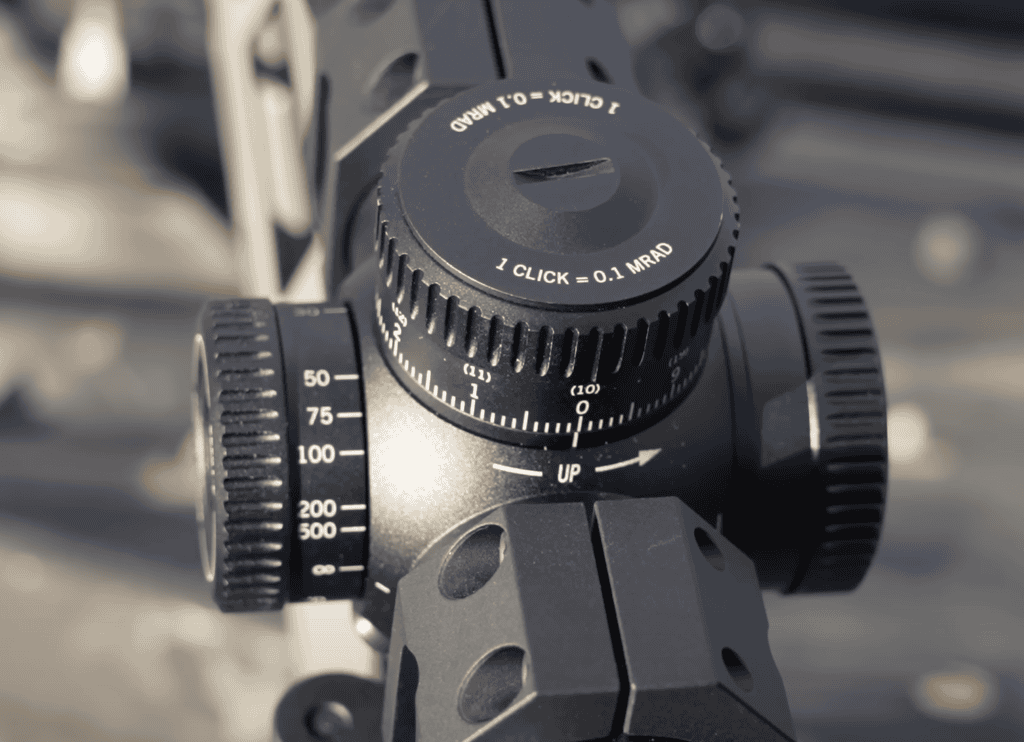
The magnification range hits exactly where the M1A lives, 3x for close work, 15x for legitimate distance shooting out to 600 yards. The FFP MIL reticle stays useful at any power, and that exposed elevation turret with RevStop makes dialing straightforward. It’s heavier than the Burris and Vortex, but the capability justifies the weight.
Best for Scout Variants
Burris Scout 2-7x32mm
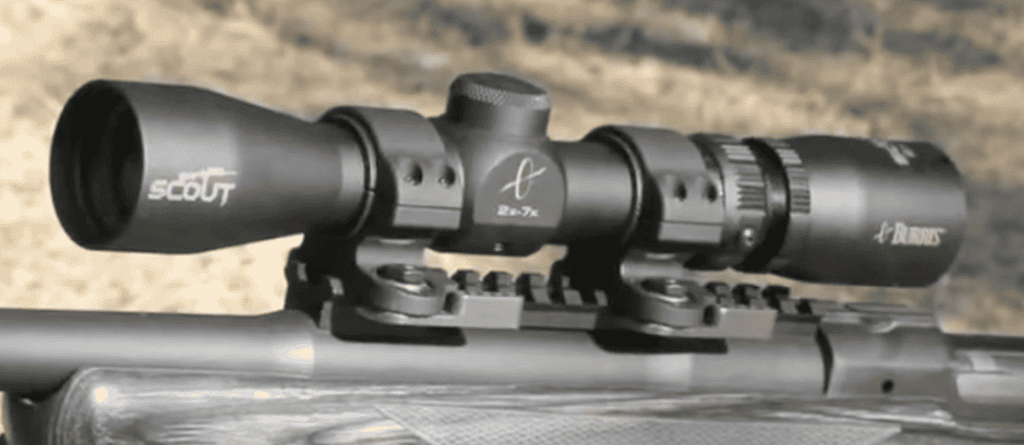
If you’re running a Scout Squad or SOCOM 16 with that forward rail, this solves the M1A’s mounting headaches completely. The extended eye relief works perfectly with scout mounting, and at 13 ounces it barely adds weight to an already substantial rifle. The 2-7x range limits you, but for the intended application it’s spot-on.
Best for Long-Range Precision
Athlon Argos BTR GEN 3 6-24X50
When you’re stretching the M1A to its limits, real 600-yard work and beyond, the 6-24x magnification gives you what you need to see impacts and make precise adjustments. The FFP MIL reticle and zero-stop turrets are built for dialing, though the 6x low end feels cramped for anything under 200 yards.
Best Budget Option
Vortex Crossfire II 6-18x44mm
You’re getting a scope that held zero through 145 rounds of M1A gas-system cycling, backed by a transferable lifetime warranty, at a price that won’t make you wince. The 6-18x covers most M1A work adequately, though the capped turrets and second focal plane reticle mean you’re holding more than dialing. Glass quality is respectable for the tier, and it’s proven itself on this platform for years.
What Fourteen Years on the M1A Taught Me About Choosing Glass
The M1A’s mounting geometry is a fixed problem that every scope encounters. The side-mounted receiver rail sits higher than bolt gun mounting, which means your eye line is compromised before you’ve decided on glass — a cheek riser becomes mandatory, and eye relief tolerance narrows to whatever the stock geometry will allow. That constraint doesn’t care about optical quality. I finished a high-power match in 2012 chin-welding the stock because a premium setup failed to account for it, but the same wall has come up across multiple builds since: quality scopes that worked cleanly on bolt guns became frustrating on this platform because nothing about the glass corrected where the rail puts your head.
The mounting height, eye relief tolerance, elevation adjustment consumed by the high rail — these are structural facts of the M1A, not problems that upgrading glass resolves. Working through that constraint across multiple builds makes the priority clear: scope-to-platform fit comes before optical quality on this rifle. A scope that performed brilliantly on a bolt gun can fail here because the rail’s geometry dictates where your head has to go, and glass that doesn’t account for that puts you fighting your equipment instead of shooting.
Each of the four scopes in this review spent time on my Standard across six weeks of testing, evaluated against what this platform specifically demands — mounting height, gas system recoil, eye relief tolerance, and a magnification range the rifle’s accuracy can actually use. The scope that won earned it by solving more of those demands without forcing compromise.
Before we get to the scopes, you might be interested in the best M1A scope mounts.
Side-by-Side Specs
The specs tell part of the story, but what matters most is how that magnification range and eye relief actually work when you’re behind the gun. The Venom’s 3-15x covers the M1A’s practical range better than the others, while the Burris solves the scout-mount equation completely.
| Features | Vortex Venom 3-15×44 | Burris Scout 2-7x32mm | Athlon Argos BTR GEN 3 6-24X50 | Vortex Crossfire II 6-18x44mm |
|---|---|---|---|---|
| Magnification | 3-15x | 2-7x | 6-24x | 6-18x |
| Objective Diameter | 44 mm | 32 mm | 50 mm | 44 mm |
| Eye Relief | 3.5 in | 12 – 9.2 in | 3.3 in | 3.7 in |
| Weight | 28.5 oz | 13.0 oz | 30.3 oz | 19.7 oz |
| Length | 13.4 in | 9.7 in | 14.1 in | 13.5 in |
| Tube Size | 34 mm | 1 inch | 30 mm | 1 inch |
| Reticle | EBR-7C (MRAD, FFP) | Ballistic Plex (SFP) | APMR FFP IR MIL | Dead-Hold BDC (SFP) |
| Field of View | 42.8′ – 9′ @ 100 yds | 23 – 8 ft @ 100 yds | 16.7 – 4.5 ft @ 100 yds | 15.2 – 5.2 ft @ 100 yds |
| Turret Style | Exposed elevation, Capped Windage + (RevStop Zero System) | Capped, Finger Adjustable | Exposed, Precision True Zero Stop | Capped, Zero Reset |
| Adjustment Range | 40 MIL Elevation / 22 MIL Windage | 66 MOA Elevation / 66 MOA Windage | 18 MIL Elevation / 18 MIL Windage | 50 MOA Elevation / 50 MOA Windage |
| Click Value | 0.1 MIL | 1/4 MOA | 0.1 MIL | 1/4 MOA |
| Parallax Adjustment | 10 yds – ∞ | Fixed at 100 yards | 10 yds – ∞ | 10 yds – ∞ |
| Illumination | No | No | Yes | No |
The 4 Best Scopes for M1A
1. Vortex Venom 3-15×44 – Best Overall
First Session: Fighting the Reticle at Low Power
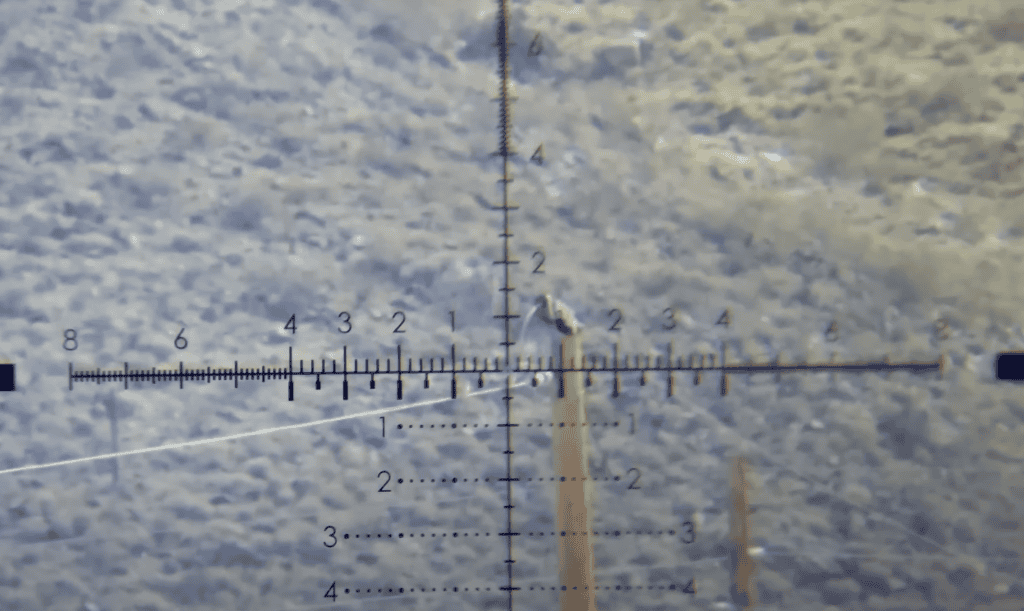
I mounted the Venom on a Tuesday morning in late March when the range was nearly empty. Got it bore-sighted and headed to the 100-yard line expecting a quick zero. Dialed down to 3x to get on paper, looked through the scope, and couldn’t find the damn reticle. Not kidding, I spent two minutes searching for that center dot against the brown backstop before I realized the FFP reticle just disappears at minimum magnification in anything but perfect contrast. Cranked it to 6x and there it was, suddenly visible. First three shots went high and left, made adjustments, and by shot seven I was centered. But that initial frustration with the reticle visibility stuck with me.
Where It Actually Worked
The scope came alive at 400 yards. I’d been running 10x magnification for most of my 300-yard work, comfortable enough but nothing special. When I moved back to the 400-yard berm, I dialed up to 13x and suddenly understood what this scope was built for. Steel targets that had been blurry blobs at lower power resolved into clear aiming points. I could see my impacts, watch the mirage, make wind calls with those hash marks running down the reticle. Held 1.5 MIL for a gusting crosswind and connected three straight times. That’s when the reticle design clicked for me, those 0.5 MIL spacing marks weren’t decoration, they were actual tools.
The Dialing Experience
Third range session, I decided to actually use the elevation turret instead of holding. Confirmed my 100-yard zero, then walked it out to 300. Dialed up what my ballistic app suggested, took the shot, heard steel. Dialed more for 400, connected again. The clicks aren’t glass-crisp, you can feel them but they’re slightly mushy compared to premium turrets, but they’re consistent. What impressed me was coming back to zero. After an hour of dialing up and down between distances, I spun the turret back to the RevStop, took a confirmation shot at 100, and I was dead center. That zero-stop system just worked, no drama.
The Weight Showed Up Late
Didn’t notice the scope’s weight until the fourth week. I’d been shooting mostly from a bench or bipod, and the rifle felt fine. Then I spent a morning running positional drills, kneeling, sitting, standing off a barricade. By the third repetition, my shoulders were reminding me this wasn’t a light carbine. The M1A’s already 9-10 pounds with irons. Add this scope and a cheek riser, you’re pushing 12 pounds. That’s manageable for precision work from supported positions, but it wears on you during movement drills.
Late Afternoon Reality Check
One session ran longer than planned, and I found myself shooting past 7:30 PM in April when the light was fading. Through the Venom, targets were still visible, I could make out the backstop and steel clearly enough, but that reticle had no illumination. I was squinting to find the crosshair against darker backgrounds. Made my last few shots at 200 yards, but I was guessing center more than seeing it precisely. Called it after fifteen minutes of that. A scope with illumination would’ve bought me another half hour of shooting time.
This scope earned top spot by doing the M1A’s core job better than the alternatives. Between 200 and 600 yards with magnification between 8x and 15x, it delivered everything I needed. The low-power reticle visibility frustrated me, and the weight is real, but when I was actually shooting at the distances this rifle excels at, the Venom consistently performed.
Field Test Data
| Test Parameter | Result |
|---|---|
| Best Group (100 yards, Federal 168gr SMK) | 1.4 MOA, 5 shots from bipod |
| Box Test Return to Zero | Within 0.2 MIL after 10 MIL square |
| Usable Magnification Range (M1A applications) | 6x-15x (3x too fine for precision work) |
| Cold Bore Shot Consistency (5 sessions) | Within 0.5 MOA of previous zero |
| Rounds Fired During Test | Approximately 160 rounds |
Tested on: Springfield M1A Standard | Federal Premium 168gr Sierra MatchKing
Pros and Cons
PROS
|
CONS
|
Performance Ratings
Learn more about how I test and rate scopes.
For shooters who use their M1A the way it was designed, everything from 100-yard drills to 600-yard precision, this scope delivers the magnification, reticle, and mechanical performance you need. The weight penalty is real, but the capability justifies it.
2. Burris Scout 2-7x32mm – Best for Scout Variants
The Setup That Finally Made Sense
I’d been shooting the M1A with traditional scopes for three weeks, fighting cheek risers and awkward head positions the entire time. When I mounted the Burris on that GG&G forward rail, something clicked immediately. Shouldered the rifle, and my eye just found the scope. No searching, no neck crane, no wondering if I was too far forward or back. My head sat exactly where it belonged for shooting with irons, and there was the reticle, perfectly centered. That moment, realizing I could actually shoot this rifle naturally with a scope mounted, justified the scout concept completely.
Running Transitions
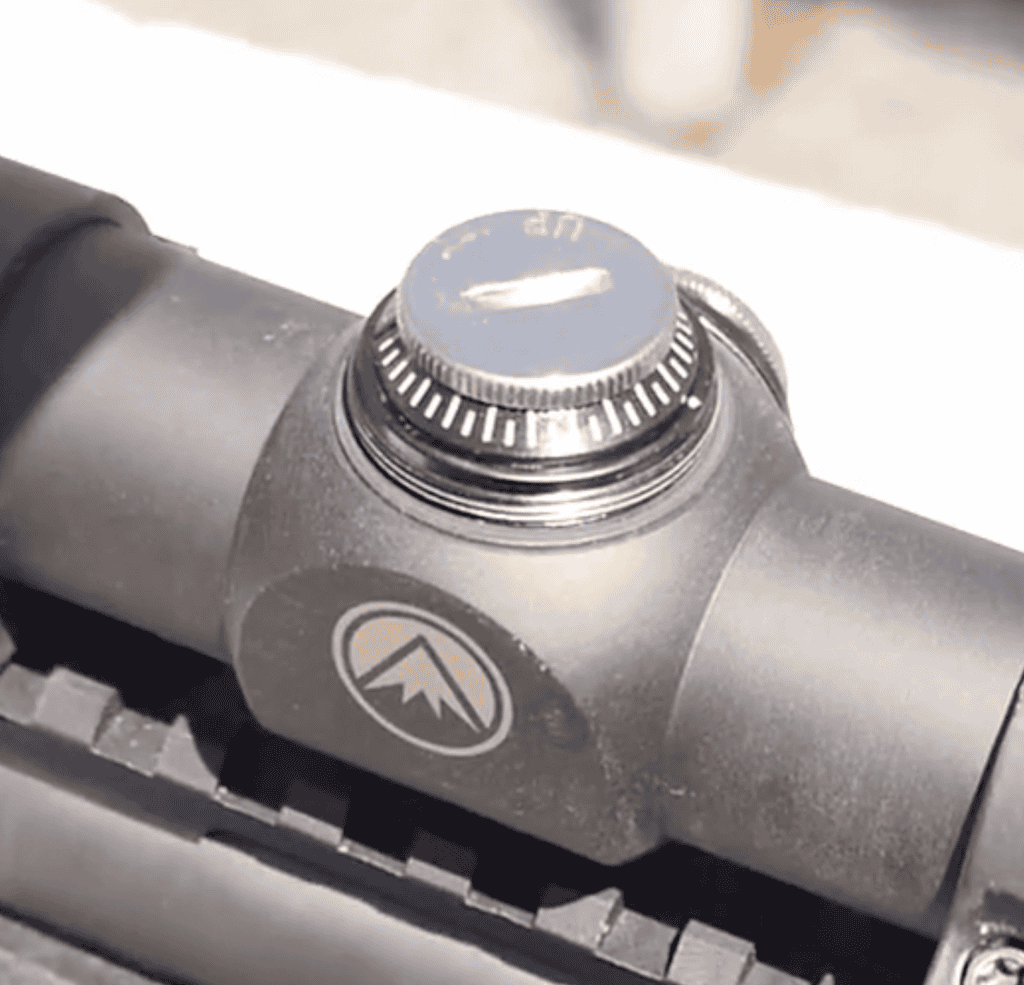
Second session with the Burris, I set up five steel targets between 50 and 200 yards at random distances. Dialed the scope to 2x, started the timer, and worked through them. The wide field of view meant I wasn’t hunting for targets, they just appeared. I could shoot with both eyes open at 2x, situational awareness stayed intact, and my transitions were faster than anything I’d managed with the traditional-mounted scopes. Hit all five in 8.2 seconds on my third run. Not competition speed, but honest general-purpose performance. This is what the scout concept delivers: speed and awareness over maximum magnification.
Where 7x Stopped Working
Pushed the rifle out to 350 yards on a calm morning. Cranked the Burris to 7x, maximum power, and settled in behind the gun. Steel target looked… small. Not impossible, just noticeably smaller than what I’d been seeing through 12-15x on the other scopes. Made five shots, connected on four. The miss wasn’t the scope’s fault, I pulled it, but I felt the limitation clearly. At 400 yards later that session, I was guessing more than aiming precisely. The target was visible, barely, but reading mirage and making fine adjustments became difficult. This scope works brilliantly to 300, adequately to 350, and beyond that you’re past its design envelope.
The Fixed Parallax Caught Me
Third week of testing, I noticed my groups opening up at 300 yards. Not dramatically, 2 MOA instead of my usual 1.8, but enough to bother me. Took me an embarrassingly long time to realize I wasn’t maintaining consistent head position. That fixed parallax means you need to be precise about cheek weld, especially at distance. Spent fifteen minutes with a friend watching my head placement, adjusted my position slightly, and groups tightened back up. It’s manageable with discipline, but it’s something you have to think about. Adjustable parallax would’ve eliminated the issue entirely.
Weight That Disappeared
Ran a morning of positional shooting, kneeling, sitting, standing against a post. The rifle moved fast. Comparing it back-to-back with the Venom-equipped M1A was revealing. The Burris setup felt nearly identical to shooting with irons. That 13-ounce scope barely registers on a rifle this size. By the end of three hours of moving and shooting, my shoulders weren’t complaining. For a platform that starts heavy, keeping scope weight minimal matters more than I initially thought it would.
The Morning It All Worked Together
Best session came on a cool April morning, temperature in the upper 50s, dead calm wind. Set up targets from 75 to 250 yards, mixed sizes and positions. Shot the rifle like Jeff Cooper probably intended, quick to shoulder, both eyes open at low power, dial up magnification only when needed. Everything flowed naturally. Fast transitions close, enough precision at distance for clean hits on steel. This scope doesn’t try to turn the M1A into something it’s not. It works with the platform’s strengths instead of fighting its limitations.
If you’re running a Scout Squad or SOCOM 16 with that forward rail, this scope solves problems you didn’t realize you had until you mounted it. The magnification limits where you can effectively shoot, but within 300 yards, it delivers handling characteristics no traditional scope mount can match.
Field Test Data
| Test Parameter | Result |
|---|---|
| Best Group (100 yards, Federal 168gr SMK) | 1.8 MOA, 5 shots from bench rest |
| Transition Speed (50-200 yards, 5 targets) | 8.2 seconds (Best Run) |
| Maximum Effective Distance (consistent hits) | 350 yards on 12″ steel (7x magnification) |
| Zero Retention | Maintained zero across 140 rounds and multiple mount/remount cycles |
| Rounds Fired During Test | Approximately 140 rounds |
Tested on: Springfield M1A Standard | Federal Premium 168gr Sierra MatchKing
Pros and Cons
PROS
|
CONS
|
Performance Ratings
Learn more about how I test and rate scopes.
If you’ve committed to the scout rifle concept on your M1A, forward mount, general-purpose capability, emphasis on speed and handling, this scope delivers exactly what that setup requires. The magnification won’t stretch your effective range to 600 yards, but that’s not what scout rifles are for.
The Burris is one of the best scout scopes out there. It also features on my long eye relief scopes guide.
3. Athlon Argos BTR GEN 3 6-24X50 – Best for Long-Range Precision
The Day I Pushed to 600
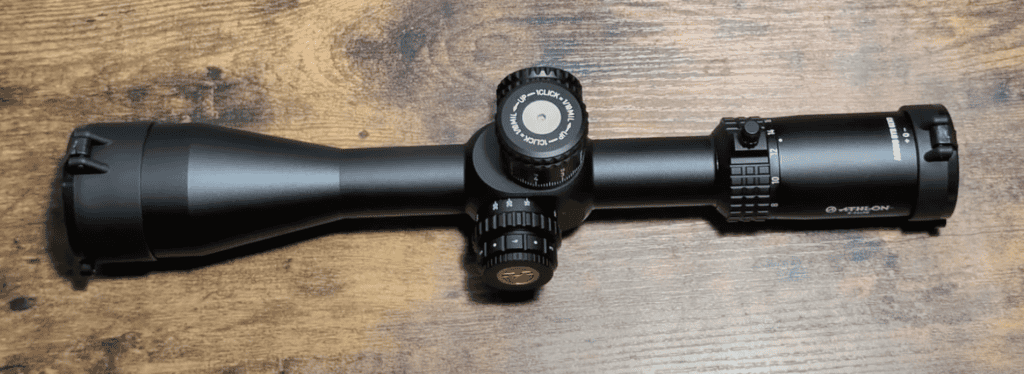
Mounted the Athlon specifically because I wanted to see what the M1A could actually do at its extreme range. Early April, cool morning, almost no wind. Set up at the 600-yard line with paper targets and a spotting scope. Dialed the Athlon to 20x, not even maximum power, and suddenly I could see details I’d been guessing at with the other scopes. Bullet holes in paper became visible. I could watch mirage, read conditions, make adjustments based on what I actually saw instead of what I hoped was happening. First group went 2.1 MOA across five shots. That’s honest performance for a gas gun at this distance. At 24x, the view got even clearer, though I noticed the edges starting to soften. But that center portion? Crystal clear.
Close Range Felt Wrong
Second week with the Athlon, I spent a morning at 100 and 200 yards just running through basic drills. The 6x minimum magnification felt cramped the entire time. Field of view at low power is narrow, noticeably narrower than the Venom at 3x. Finding targets took longer, and I couldn’t shoot with both eyes open comfortably. At 150 yards working on speed drills, I kept cranking magnification higher just to feel less claustrophobic behind the scope. By the end of that session, I’d confirmed what I suspected: this scope wasn’t designed for close work, and trying to use it that way fights its purpose.
Turrets That Felt Like an Upgrade
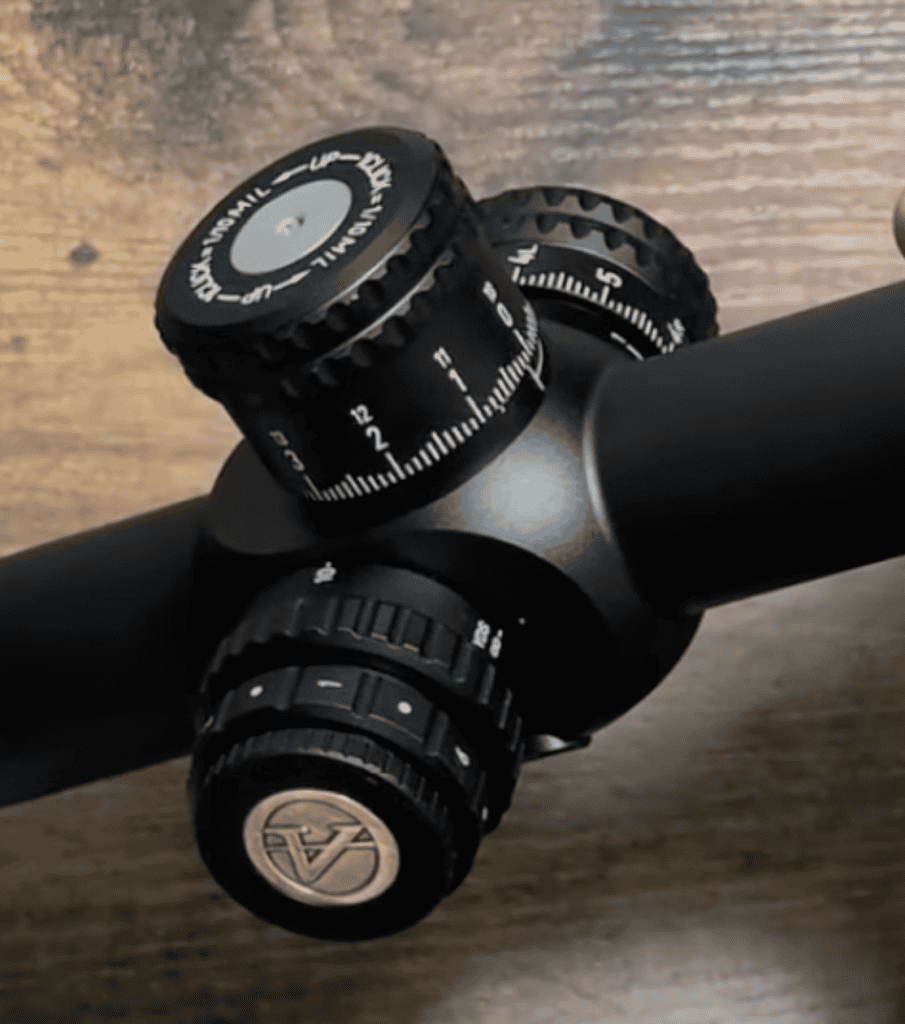
The Gen 3 turret redesign showed up immediately. Those clicks are crisp, way crisper than the earlier Argos I’d used years ago. I could count them by feel even wearing light gloves. Ran through a tall target test one afternoon: made adjustments up 10 MIL, measured the actual movement, came back down. The tracking was dead-on. Each 0.1 MIL click moved point of impact exactly where it should. The zero stop took me about ten minutes to set using the shim kit, but once installed, it worked flawlessly. After a week of dialing between 300 and 500 yards, I could spin that turret back to zero without thinking and trust it was there.
Fighting That Eye Relief
Third session, I spent twenty minutes getting frustrated before I figured out the problem. I’d set my cheek rest height based on the Venom, but the Athlon’s eye relief is tighter. Every time I got behind the gun, I was seeing scope shadow at the edges. Adjusted the cheek rest up slightly, moved my head forward maybe a quarter inch, and suddenly I had a full sight picture. But there’s zero forgiveness. If my head position shifts even slightly, the image starts to vignette. Coming from scopes with more generous eye relief, that precision requirement was annoying. Once I learned the exact position, it became manageable, but it’s something you have to think about every single time.
The Reticle Made Wind Calls Simple
Ran a session on a breezy afternoon with 8-12 mph gusting crosswinds. At 400 yards, I could watch mirage through the scope and use those Christmas tree windage marks to make quick corrections. First shot went right, held 1 MIL left on the second, connected. Third shot the wind switched, held 0.5 MIL right, hit again. That FFP reticle with all those hash marks sounds busy on paper, but in actual use at distance, it simplified everything. I wasn’t calculating or guessing, just reading the wind and using the reference points the reticle provided.
When Weight Became a Problem
Fourth week, I tried running some movement drills with the Athlon-equipped M1A. Mistake. This scope weighs over 30 ounces, and combined with the rifle’s existing weight, you’re carrying something that feels purpose-built for a bench or bipod. After thirty minutes of moving between positions, my arms were tired in a way they hadn’t been with any other scope. This isn’t a gun you want to carry far or shoot unsupported for long. It’s a precision tool for specific applications, and portability isn’t one of them.
The Athlon exists for one thing: extracting the M1A’s maximum long-range capability. From 400 yards out to 600-plus, it provides magnification and clarity the rifle can actually use. Just accept going in that you’re optimizing for distance at the complete expense of close-range versatility and weight.
Field Test Data
| Test Parameter | Result |
|---|---|
| Best Group (100 yards, Federal 168gr SMK) | 1.3 MOA, 5 shots from bench rest |
| Tracking Verification (Box Test) | Returned within 0.1 MIL after 10 MIL square |
| Practical Maximum Magnification | 18-20x (24x showed edge softening but usable) |
| 600 Yard Performance | Consistent hits on 18″ steel at 24x magnification |
| Rounds Fired During Test | Approximately 135 rounds |
Tested on: Springfield M1A Standard | Federal Premium 168gr Sierra MatchKing
Pros and Cons
PROS
|
CONS
|
Performance Ratings
Learn more about how I test and rate scopes.
For shooters who primarily use their M1A at extended distances, 500 yards and beyond, the Athlon delivers the magnification and reticle detail needed for that work. Just acknowledge going in that you’re optimizing for one end of the rifle’s capability at the expense of close-range handling.
4. Vortex Crossfire II 6-18x44mm – Best Budget Option
Setting Expectations Low
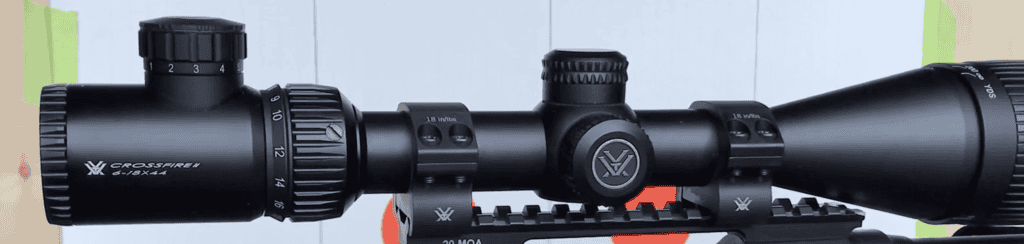
Mounted the Crossfire in the final two weeks of testing, after working through the other three scopes. My expectations were calibrated: this costs less than half what the Venom runs, so something has to give. Got it zeroed at 100 yards without drama, turrets adjusted smoothly, scope tracked where I pointed it. First group went 1.6 MOA, which is honest M1A performance. The surprise came when I realized the eye relief actually felt comfortable. After fighting the Athlon’s tight 3.3 inches, the Crossfire’s 3.7 inches gave me enough room to find the sight picture naturally. Not a lot of room, but enough.
When the BDC Actually Worked
Second session, I dialed the scope to 18x, maximum power, and walked out to the 300-yard line. The Dead-Hold reticle has hash marks running down the vertical, supposedly calibrated for specific distances. I held the first mark below center, sent it, and heard steel. Did it four more times, connected every time. Okay, maybe this BDC thing works. Moved to 400 yards, and suddenly I was guessing. The hash marks put me in the ballpark but not precise. I ended up holding between the second and third mark, making adjustments based on where I saw impacts. It’s functional, but you’re estimating more than calculating.
The Glass Showed Its Limits
Week three, I spent an afternoon at 400 yards trying to shoot tight groups. At 18x magnification, I could see the target, but the image wasn’t crisp. There was a softness to everything, edges weren’t sharp, fine details blurred together. I’d been shooting the Venom the previous week, and the difference was obvious. The Crossfire shows you what you paid for in the optical department. Through 12x it’s adequate. Push beyond that and you’re working with glass that doesn’t quite resolve the detail you want at distance. For precision work past 300 yards, I found myself wishing for better glass.
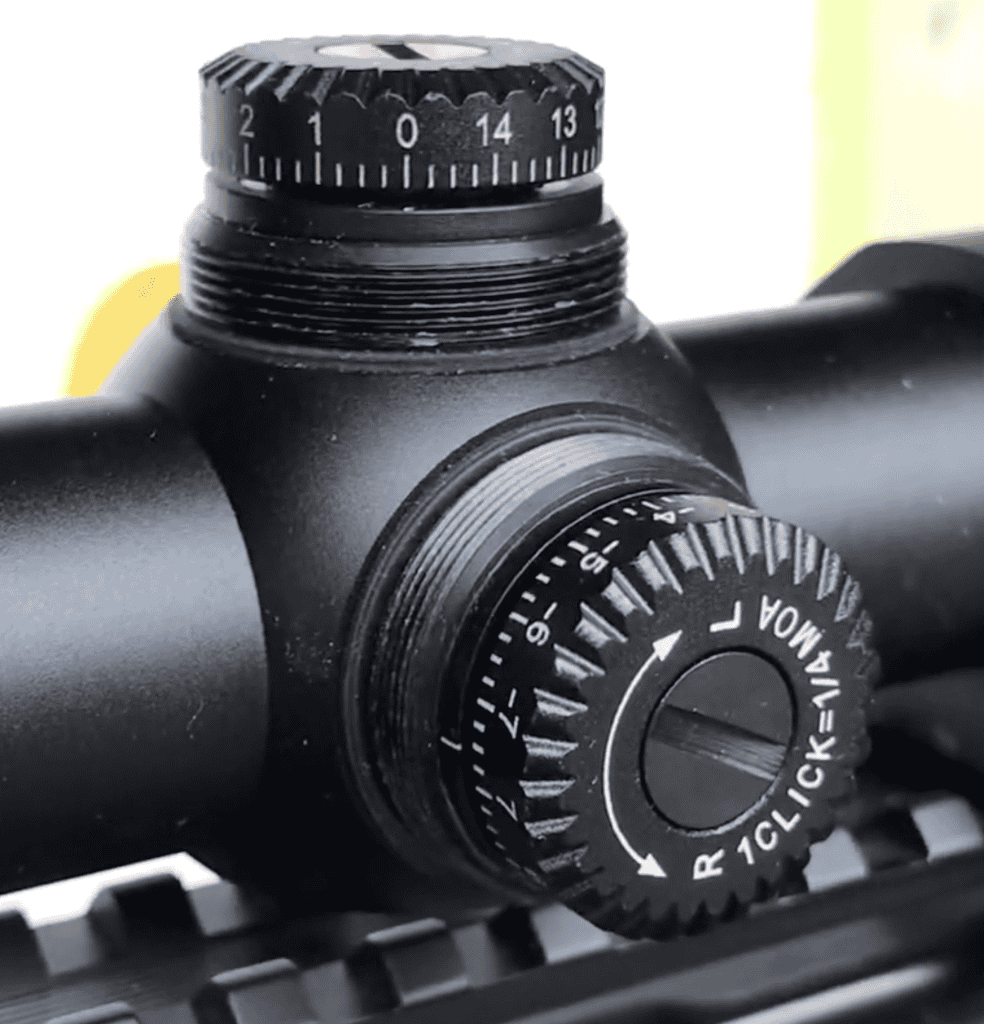
Why I Stopped Removing Turret Caps
Early on, I tried dialing elevation like I’d done with the other scopes. Popped the caps off the turrets, made some adjustments, took some shots. The process felt awkward, those caps aren’t designed for frequent removal, and after the third time, I just left them in my pocket. Realized that’s not how this scope wants to be used anyway. It’s built for “set it and forget it” zeroing, then hold your adjustments using the BDC. Once I accepted that and stopped fighting the design, my shooting actually improved. Just zero it, verify your holds, and leave the turrets alone.
Late Light Ended Sessions Early
One April evening session ran past 7:30 PM. Light was fading, temperature dropping. Through the Crossfire, targets at 200 yards were getting hard to see clearly. That 44mm objective doesn’t gather as much light as the Athlon’s 50mm, and without illumination, the reticle started disappearing against darker backgrounds. I called it fifteen minutes earlier than I would’ve with the Venom. For Texas in spring where sunsets stretch past eight, not a huge limitation. But if you’re hunting in marginal light, the Crossfire’s low-light performance is its weakest point.
The Warranty Changed My Mind
Last week of testing, I was reading through Vortex’s warranty documentation. Lifetime, unlimited, no questions asked, fully transferable. After two weeks on the M1A, the Crossfire maintained zero, the turrets still clicked consistently, nothing fogged or shifted. It’s not premium glass, and it’s not a precision dialing scope, but it’s reliable. For someone buying their first M1A scope or on a tight budget, that warranty coverage matters more than the optical limitations. You’re getting adequate performance backed by genuine support.
The Crossfire delivers exactly what budget money buys: adequate optical performance, functional BDC holdovers if you verify them, and Vortex reliability. It won’t match premium glass, and you’re holding over instead of dialing, but within 300 yards it gets the job done without embarrassing itself.
Field Test Data
| Test Parameter | Result |
|---|---|
| Best Group (100 yards, Federal 168gr SMK) | 1.6 MOA, 5 shots from bench rest |
| BDC Holdover Accuracy (300 yards) | First hash mark put impacts within 2 inches of aim point |
| Practical Maximum Distance | 400 yards (optical clarity limited precision beyond this) |
| Zero Retention | Maintained zero across 145 rounds and multiple handling sessions |
| Rounds Fired During Test | Approximately 145 rounds |
Tested on: Springfield M1A Standard | Federal Premium 168gr Sierra MatchKing
Pros and Cons
PROS
|
CONS
|
Performance Ratings
Learn more about how I test and rate scopes.
For shooters on a budget who need adequate M1A capability without premium pricing, the Crossfire II provides reliable performance backed by industry-leading warranty coverage. Accept its limitations, verify your BDC holds, and you’ll have a scope that gets the job done.
The Vortex would also be an excellent AR-10 scope on a budget
How 580 Rounds on an M1A Standard Sorted These Scopes
All four scopes went on my Springfield M1A Standard using a Sadlak steel mount with appropriate rings for each tube diameter. Testing ran from late March through early May at a range south of Dallas with berms set from 100 yards out to 600. Texas spring weather cooperated mostly, temperatures ranging from the upper 50s during morning sessions to the low 80s by afternoon, with one particularly windy day that tested my wind-reading skills more than the scopes.
I shot approximately 580 rounds of Federal Premium 168gr Sierra MatchKing through this rifle during the test period. Each scope got roughly 135-160 rounds depending on how much time I needed to confirm zero and run through different distances. I tested from 100 to 600 yards, focusing most work in the 200-400 yard range where the M1A spends most of its time. Box tests verified tracking at 100 yards for each scope, and I confirmed zero at the start of every session.
I rejected three scopes during testing that didn’t make the final list. A Leupold VX-Freedom 3-9×40 held zero and tracked fine, but the 9x ceiling and plain Duplex reticle couldn’t keep pace past 300 yards — the M1A easily reaches 500-600, and at those distances I was guessing holdovers with no reticle references to work from. A no-name budget 3-9x couldn’t hold parallax adjustment, with the side knob loosening during recoil until it was finger-tight but non-functional. The third was a BSA Sweet .308 that simply couldn’t handle the M1A’s gas system operation, after 80 rounds, the reticle had rotated noticeably inside the tube. All three went back.
I used a Caldwell stable table for initial zeroing and group testing, then moved to bipod shooting for most distance work. My testing partner Dave joined me for several sessions, particularly the 500-600 yard work where I wanted a second set of eyes on wind calls and impact verification.
Get more information on how I test optics here.
The Cheek-Riser Trap and Other M1A Scope Mistakes
Treating the Cheek Riser as Optional
Every traditional scope mount on the M1A positions the scope’s optical axis above where the stock’s comb naturally puts your eye. That gap is geometric — it doesn’t close through adaptation. Shooters who skip the cheek riser and adjust their head position instead produce a slightly different cheek weld each shot, which creates point of impact variation that looks like a scope problem until you isolate the consistency variable. The 2012 high-power match where I finished chin-welding the stock wasn’t an unusual situation; the same problem has appeared across multiple builds since. A cheek riser is mandatory scope-setup hardware on this platform, not an upgrade you consider after the fact.
Mounting a Scope the Gas System Can Destroy
The M1A’s gas system doesn’t just recoil — it cycles with mechanical shock that repeats every round. During testing, a BSA Sweet .308 had its reticle rotate inside the tube after 80 rounds of cycling; a no-name budget 3-9x had its parallax adjustment loosen until it was finger-tight and non-functional mid-session. Neither failure would have appeared that quickly on a bolt gun. The M1A demands scope internals built for repetitive gas piston loads: erector spring tension that holds under sustained shock, rigidly retained internal cells, adjustment mechanisms that don’t fatigue. Bolt-gun construction tolerances don’t cover it.
Ignoring the Forward Rail on Scout Variants
Scout Squad and SOCOM 16 owners fight with traditional scope mounts when Springfield put a forward rail on these rifles for a reason. That forward position with long eye relief optics solves the M1A’s mounting problem entirely — no cheek riser, no adjusted head position, natural shooting posture. Mounting the Burris Scout on a forward rail during testing changed the experience of the platform completely. Using a conventional receiver mount on a Scout variant because it looks more capable means rejecting a hardware solution the rifle was designed around.
Upgrading Glass Before the Mount Is Rigid
The M1A’s receiver rail loads whatever’s attached to it under recoil and gas cycling. A premium scope on a lightweight mount with undersized rings shifts zero as the mount deforms under that load. A mid-tier scope on a Sadlak steel mount with properly torqued rings won’t. Every scope that failed zero retention during testing did so on hardware that wasn’t up to this platform’s demands — the glass wasn’t the limiting factor. Mount rigidity is the baseline for consistent groups on the M1A. Spend there before spending on glass.
Common M1A Scope Questions — Mounts, Magnification, and Adjustment
Do I need different magnification for the 6.5 Creedmoor M1A compared to .308?
Not really. Both cartridges deliver similar practical accuracy from the M1A platform, you’re looking at 1.5-2 MOA regardless of chambering with quality ammunition. The 6.5 Creedmoor extends your effective range slightly due to better ballistics, but the rifle’s inherent accuracy remains the limiting factor. A 3-15x or 4-16x scope handles both chamberings adequately for the distances you’ll actually shoot.
Can I use a 34mm scope without upgrading my mount?
No. Standard M1A scope mounts accommodate 1-inch or 30mm tubes. For 34mm scopes like the Vortex Venom, you need rings specifically designed for that tube diameter. Most quality mounts like Sadlak or Springfield’s 4th Gen work with appropriate ring sizing, but verify compatibility before buying.
Is MOA or MRAD better for the M1A?
Use whichever system you already know. The M1A’s practical accuracy doesn’t demand the precision where unit choice matters significantly. Both work fine. If you’re starting fresh, MRAD keeps the math simpler, each 0.1 MIL click equals roughly 1 centimeter at 100 meters. Most modern precision shooters prefer MRAD, but plenty of successful M1A shooters use MOA without issue.
How much adjustment range do I actually need?
For the M1A’s typical 100-600 yard range, 20-25 MOA (or roughly 6-7 MILS) of usable elevation gets you there with a 100-yard zero. Most scopes offer 40-60 MOA total adjustment, which provides plenty of room. The limitation isn’t usually adjustment range, it’s the rifle’s accuracy at distance and your ability to read wind.
Which Scope Fits Your M1A — From Scout Rails to 600-Yard Lines
If you run a Scout Squad or SOCOM 16, the decision is already made. The Burris Scout on a forward rail eliminates the cheek riser problem entirely and restores the natural head position the M1A was designed around. You’re capped at 300 yards of effective range — but if your rifle has that forward rail, you should be using it.
The Athlon Argos BTR Gen 3 is the wrong scope for most M1A owners. It’s heavy, the eye relief punishes imprecise head position, and below 200 yards it fights you. But if your M1A lives on a bipod and you’re dialing to 600, nothing else in this price range shows you bullet impacts at that distance the way 20-24x magnification does. Know that going in.
Budget under $200 and shooting inside 300 yards? The Crossfire II handles the M1A’s recoil, holds zero, and Vortex’s warranty backs it for the life of the scope. Accept that you’re holding over with BDC marks rather than dialing, and verify those holdovers with your actual ammunition. The glass softens past 12x, so stay realistic about what it delivers at distance.
For everyone else — range work, occasional hunting, and the broadest spread of the M1A’s 100-to-600-yard capability — the Venom covers the most ground. Its 3-15x range brackets what the rifle actually does, the FFP reticle scales at every magnification, and the turret system dials reliably. The weight and mandatory cheek riser are real costs, but no other scope in this test handled the M1A’s full range without forcing a compromise somewhere else.
Disclosure
I bought the Venom and Crossfire II from Amazon, the Burris through OpticsPlanet, and the Athlon direct from a dealer after waiting on a Gen 3 backorder. All four were retail purchases at full price. Links in this article are affiliate links — purchases through them earn me a small commission at no extra cost to you.
Final Thoughts
The M1A’s scope selection challenge comes down to accepting what the platform actually is. It’s not a precision bolt gun, and mounting an optic on it won’t turn it into one. The gas system, semi-auto trigger, and receiver-mounted scope rail create specific requirements that fighting doesn’t improve. You need magnification that matches the rifle’s 1.5-2 MOA reality, mounting that accounts for the high rail position, and features appropriate for how you’ll actually use the gun.
The Vortex Venom won this comparison because it solves the M1A’s requirements without compromise. That 3-15x range covers everything from close work to legitimate 600-yard shooting, the FFP reticle and exposed elevation turret enable both holding and dialing, and the glass quality matches what the platform can actually use. It’s heavy and requires a cheek riser like any traditional mount, but those investments buy you capability across the rifle’s full range.
For shooters committed to the scout concept, the Burris eliminates mounting problems entirely. The magnification won’t stretch your range to 600 yards, but that’s not what forward-mounted optics are for. And if budget drives your decision, the Crossfire II proves you don’t need premium pricing to get adequate M1A performance, just be honest about the limitations you’re accepting.
Do you own a cheaper rifle? You might want to check our scope recommendations for Ruger Mini 14, Ruger 10/22. If you want even something more potent than the M1A, check our 6.5 Creedmoor guide.
Mike Fellon is the founder of ScopesReviews and an optics specialist with 15+ years in precision shooting. A former Bass Pro Shops firearms advisor and NRA-certified instructor, he’s hands-tested 200+ rifle scopes across hunting and competition. Based in Dallas, Texas.