

The M1A was engineered as a battle rifle, not as an optics platform. That distinction matters when you start shopping for scope mounts, because the design choices that make it reliable (the gas system, the operating rod running alongside the receiver, the stripper clip guide that most receiver mounts displace) create a mounting environment unlike any other semi-auto you’re likely to own.
No integrated Picatinny rail. Receiver dimensions that can vary between production runs. A platform split into distinct variants — Standard, Scout Squad, SOCOM — with different hardware compatibility across all of them. Stack .308 Winchester recoil on top, and you have a rifle that exposes a weak or poorly fitted mount faster than almost anything else. If you haven’t settled on an optic yet, my best M1A scopes guide covers what works on this platform before you commit to a mounting solution.
I tested four mounts on a Springfield M1A Scout Squad and logged 320 rounds across installation cycles and zero-retention checks. The SADLAK is my top pick, the clearest recommendation this category offers.
The Four M1A Mounts Worth Your Money
Best Overall
SADLAK M1A Scope Mount
Steel construction, 12-point receiver contact, and zero-retention numbers that hold up across repeated installation cycles. The SADLAK delivered the best zero-retention results in this test. Premium pricing for a reason, and that reason shows up every time you pull it off the rifle and put it back on.
Best for Standard & Scout Squad Owners
Springfield MA4GENAM M1A Scope Mount
Four generations of refinement by the people who built the rifle. Not as precise on reinstallation as the SADLAK, but a confident mid-tier choice for the M1A shooter who keeps the scope mounted and wants factory-engineered fit at a step below SADLAK pricing.
Best for Scout Squad & SOCOM 16
GG&G M1A Scout Scope Mount
Purpose-built for Scout Squad and SOCOM 16 variants, this barrel clamp mount keeps your rifle light, your iron sights accessible, and your zero where you left it. If you have one of these specific platforms and want a scout or red dot setup, nothing in this group touches it for the application.
Best Budget Pick
UTG New Gen 4-Point Locking M14/M1A Scope Mount
The honest budget option. It works better than its price suggests when thread locker is applied correctly, but hardware quality limits where and how hard you can run it. For range use and casual shooting, it gets the job done. Hunting and competition rifles deserve something better.
How Twelve M1A Mounting Setups Shaped These Reviews
My M1A history goes back to a Springfield Standard I picked up in 2018 for Texas hill country work, mostly whitetail and hogs out to about 400 yards. First mount I put on it was the Springfield Gen 4 aluminum. It worked, but getting it properly seated took three range sessions to sort out. From there I got methodical about this platform in a way I hadn’t been with bolt guns or ARs, where mounting is comparatively forgiving.
By the time I acquired a Scout Squad specifically to broaden my testing coverage, I’d worked through about a dozen mounting setups across the two rifles: receiver mounts of varying designs, barrel clamp approaches, a couple of hybrid solutions that didn’t survive hard use. That process taught me where commercial receiver tolerances create fitment variability, how operating rod clearance affects scope positioning, and what zero retention actually means on a platform that puts more stress on its mounting hardware than most.
The four mounts reviewed here got tested against that accumulated context — documented ammo, documented installation cycles, consistent distances. The Scout Squad was the test platform because it’s the only M1A variant all four of these mounts can be installed on.
The 4 Best M1A Scope Mounts
1. SADLAK M1A Scope Mount – Precision & Repeatable Fit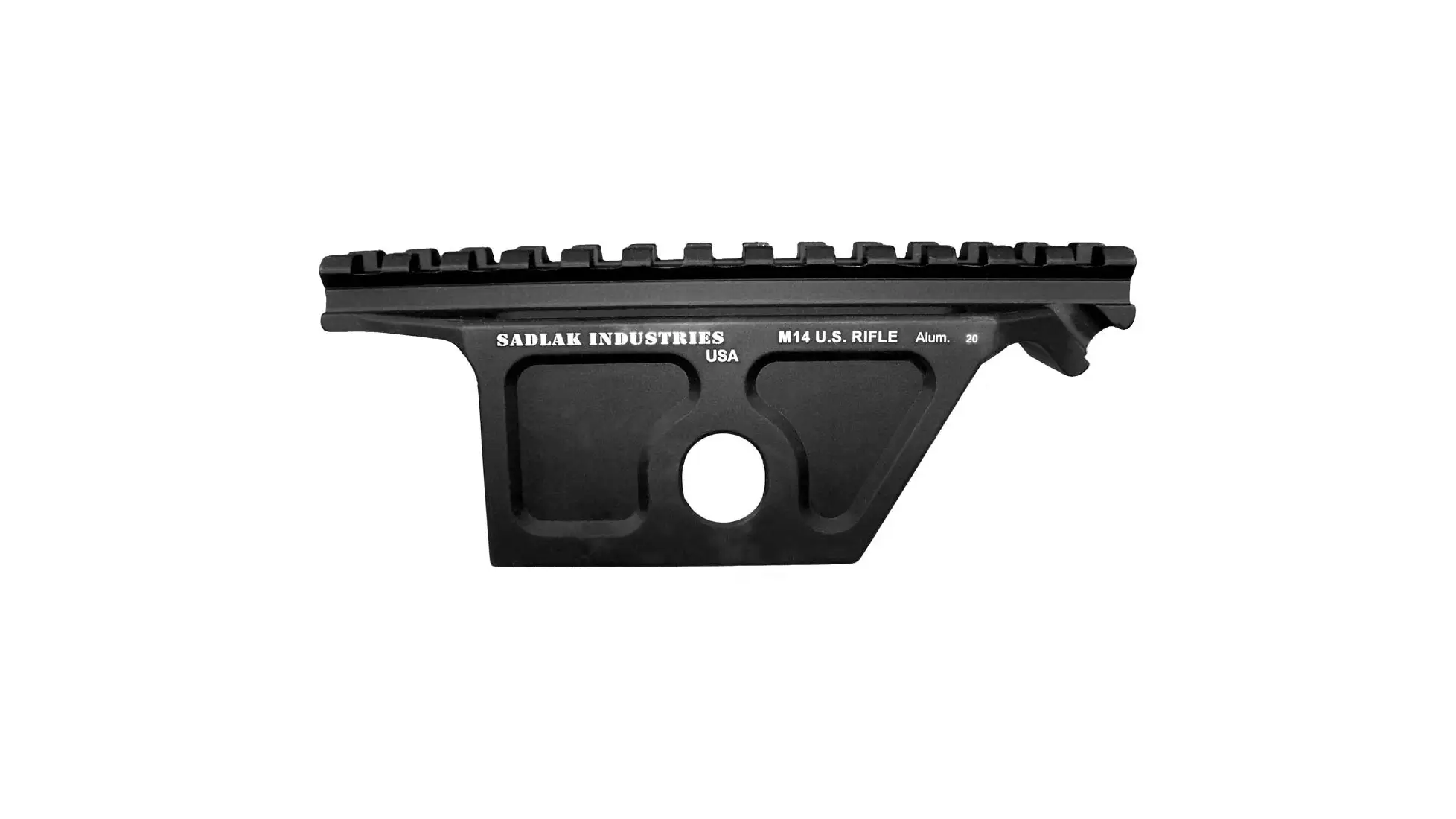
The receiver inspection kit that ships with the SADLAK tells you more about this mount than any spec sheet. Before the mount itself comes out of the packaging, SADLAK is handing you a gauge to check your receiver’s dimensions. They know M1A receivers vary between production runs, and they’d rather you confirm compatibility before installation than discover a seating problem at the range. That single detail establishes what you’re dealing with.
Steel construction, and you feel it immediately. The mount has genuine mass in a way that the aluminum alternatives don’t, and once you understand what the 12-point contact system means in practice (twelve distinct surfaces engaging the receiver geometry rather than the two or three that simpler mounts rely on), that weight starts making sense as a feature rather than a liability.
Installing a Mount With Twelve Contact Points
First installation on my Scout Squad took about 35 minutes, working carefully through the detailed instructions SADLAK includes. The contact surfaces engage sequentially as you work through the steps, and the goal is confirmed flush contact at each point before advancing. My Scout Squad seated cleanly without the mallet persuasion that the Springfield mount required later in testing. That was this rifle, not a guarantee across all commercial receivers. Subsequent reinstallations dropped to around 18 minutes once I knew the process well. That learning curve is real, but it’s not excessive.
Zero Retention: Ten Cycles and What the Numbers Were
I pulled and reinstalled this mount ten times across the test period, establishing a bore sighter baseline before each cycle and confirming with groups on paper at 100 yards. Maximum POI shift across all ten cycles was 0.3 MOA. Most reinstallations came back within 0.2. For comparison, the Springfield MA4GENAM averaged around 0.5 MOA across eight cycles. That gap is small in absolute terms but represents real performance separation when you need the scope to return predictably after removal for cleaning or transport. If repeatable return-to-zero is a priority across your other rifles too, my best quick detach scope mounts guide covers the broader category.
The Weight and What to Do With That Information
The steel model weighs approximately 11 ounces. On a Scout Squad that’s already pushing nine pounds before an optic, the SADLAK adds meaningful mass at the top of the receiver. SADLAK does offer an aluminum version that comes in significantly lighter, and for a field carry rifle where every ounce matters across a long day, that version deserves consideration. I tested the steel model because it’s the configuration most relevant to this guide’s precision-focused comparison. Just understand the weight tradeoff going in.
The Iron Sight Channel Nobody Brings Up
A through-channel machined into the mount body preserves the rear-sight line when the scope tube is removed from the rings. I verified this during one of the test sessions: removed the optic from the rings, shot a 10-round string at 100 yards through the irons, then remounted the scope and confirmed zero hadn’t shifted. The irons worked exactly as they should. On a platform where most receiver mounts force you to choose between optics and backup iron sights entirely, that preserved sight-line geometry is genuinely useful, not just a bullet point on the product page.
What 90 Rounds Under Sustained Strings Showed
With the mount in place across three sessions totaling 90 rounds, zero stayed where I put it. Bore sighter confirmed my established zero after every session. No torque loss on any hardware. The lockup has no perceptible flex when you put lateral or vertical pressure on the mount body, which matters on a rifle that moves the way the M1A does under recoil. That rigidity under sustained .308 is what justifies the steel construction, the price, and the installation complexity in combination.
The SADLAK delivered the best zero-retention results in this test. It’s heavier than the alternatives and costs more, and both those facts matter depending on your application. For precision-focused shooting, hunting setups where reinstallation consistency matters, or any situation where zero retention after reinstallation needs to be reliable rather than approximate, nothing in this group came close during this evaluation.
The numbers below are the clearest summary of why this mount sits at the top of the group.
Field Test Data
| Test Parameter | Result |
|---|---|
| Return to Zero (10 removal/reinstall cycles) | Max 0.3 MOA shift; avg under 0.2 MOA |
| Zero Drift Under Sustained Fire (90 rounds) | No measurable shift across 3 sessions |
| First Installation Time | ~35 minutes |
| Subsequent Reinstallation Time | ~18 minutes |
| Receiver Seat Contact | Flush across all 12 contact points; no daylight detected |
| Lockup Rigidity (manual pressure test) | No perceptible movement in any direction |
Tested on: Springfield Armory M1A Scout Squad | Leupold Mark 5HD 3.6-18×44 | ~90 rounds
Pros and Cons
PROS
|
CONS
|
Performance Ratings
2. Springfield MA4GENAM M1A Scope Mount – Factory-Fit Receiver Mount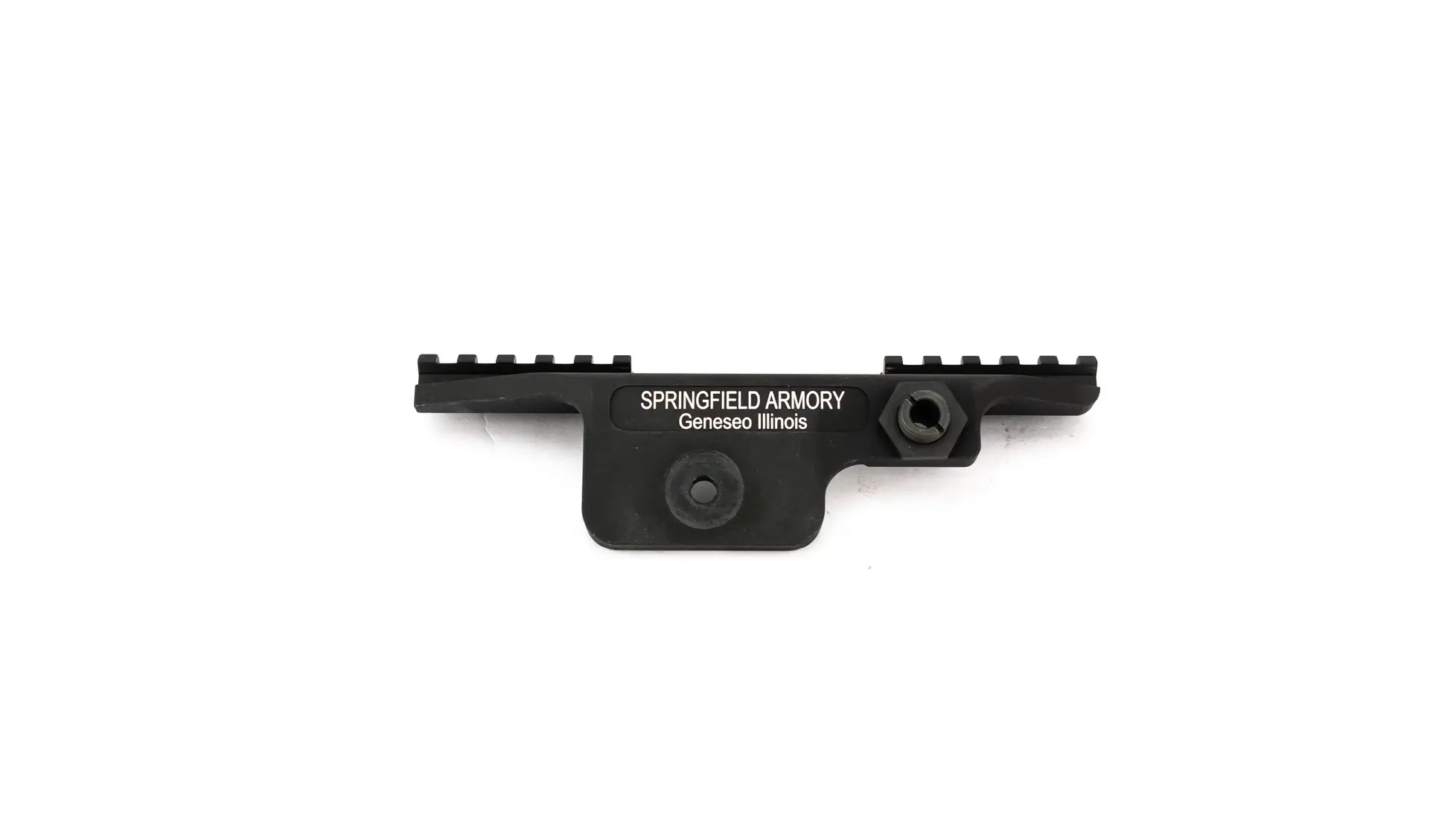
Springfield knowing their own receiver better than any third-party manufacturer is a reasonable starting assumption, and the MA4GENAM bears that out in hand. The Gen 4 designation isn’t marketing shorthand. It reflects three previous versions and the specific problems each one revealed. In hand, the one-piece aircraft aluminum construction is clean, the machining is consistent, and the full-length Picatinny rail gives you genuine scope positioning flexibility without the rail gaps that some competing designs introduce.
The Mallet Step and What It Means for Fit
Full rifle disassembly is required for proper installation, which immediately distinguishes this from the GG&G’s simpler handguard drop-in. The step that catches people off guard is seating the mount’s front portion. Springfield’s instructions are specific: drive the mount forward until the front screw can no longer advance, using a mallet if necessary. My Scout Squad needed about a dozen firm taps before I had full flush contact. Properly seated, the mount shows no daylight against the receiver anywhere and feels genuinely solid. But you have to follow the process, not skim it. First installation clocked around 45 minutes.
What Three Contact Points Deliver
The MA4GENAM uses three attachment points against the receiver compared to the SADLAK’s twelve. That difference shows up in the zero-retention numbers. Across eight removal and reinstallation cycles, average POI shift measured around 0.5 MOA — acceptable for most applications, but a clear step behind the SADLAK’s average of under 0.2 MOA. Hunters who keep the scope mounted and aren’t pulling the mount regularly won’t notice that gap. Anyone who removes the mount frequently for cleaning or field use will. It’s not a flaw in the design; it’s an honest consequence of fewer contact points on a hard-recoiling platform.
One Re-Torque in 85 Rounds
Around 40 rounds into the test period, I ran a torque check on the attachment hardware. One screw had backed off slightly. Zero hadn’t shifted detectably at that point, but it’s worth disclosing: this mount benefits from blue Loctite applied during initial installation, not added later when something starts to feel loose. After treating that screw and reinstalling, no further torque loss occurred across the remaining rounds. Thread locker isn’t optional here — treat it as part of the installation process from the start.
Two Compatibility Limits Worth Knowing Before You Order
The MA4GENAM does not fit the M1A SOCOM II. That ends the evaluation for SOCOM II owners and sends them toward the SADLAK instead. The second limit: no iron sight channel. Installing this mount means the factory rear sight comes off, and it stays off while the scope is in place. Springfield’s decision to remove that access is presumably a fitment tradeoff, but it’s a real constraint for anyone who wants the option of dropping back to irons in the field. The SADLAK is the only receiver mount in this group that preserves that access.
The rail itself handles both compact and larger-objective scopes without clearance concerns on the Scout Squad platform, which is worth mentioning since some earlier-generation M1A mounts were specific about scope sizing. Getting the Mark 5HD positioned at proper eye relief was straightforward.
For the Springfield M1A shooter who keeps the scope mounted and wants factory-engineered fit at a step below SADLAK pricing, this is the right call. Know its limitations (no backup irons, no SOCOM II) going in, apply thread locker during installation, and it delivers what the platform needs.
Field Test Data
| Test Parameter | Result |
|---|---|
| Return to Zero (8 removal/reinstall cycles) | Avg ~0.5 MOA shift; consistent across cycles |
| Recoil Zero Drift (85 rounds) | ~0.3 MOA cumulative shift; within acceptable range |
| First Installation Time | ~45 minutes including disassembly and mallet seating |
| Torque Retention | One re-torque required at ~40 rounds; stable through remaining test period with Loctite applied |
| Receiver Seat Verification | Full flush contact confirmed after mallet seating; no daylight visible |
Tested on: Springfield Armory M1A Scout Squad | Leupold Mark 5HD 3.6-18×44 | ~85 rounds
Pros and Cons
PROS
|
CONS
|
Performance Ratings
3. GG&G M1A Scout Scope Mount – Scout Squad & SOCOM 16 Only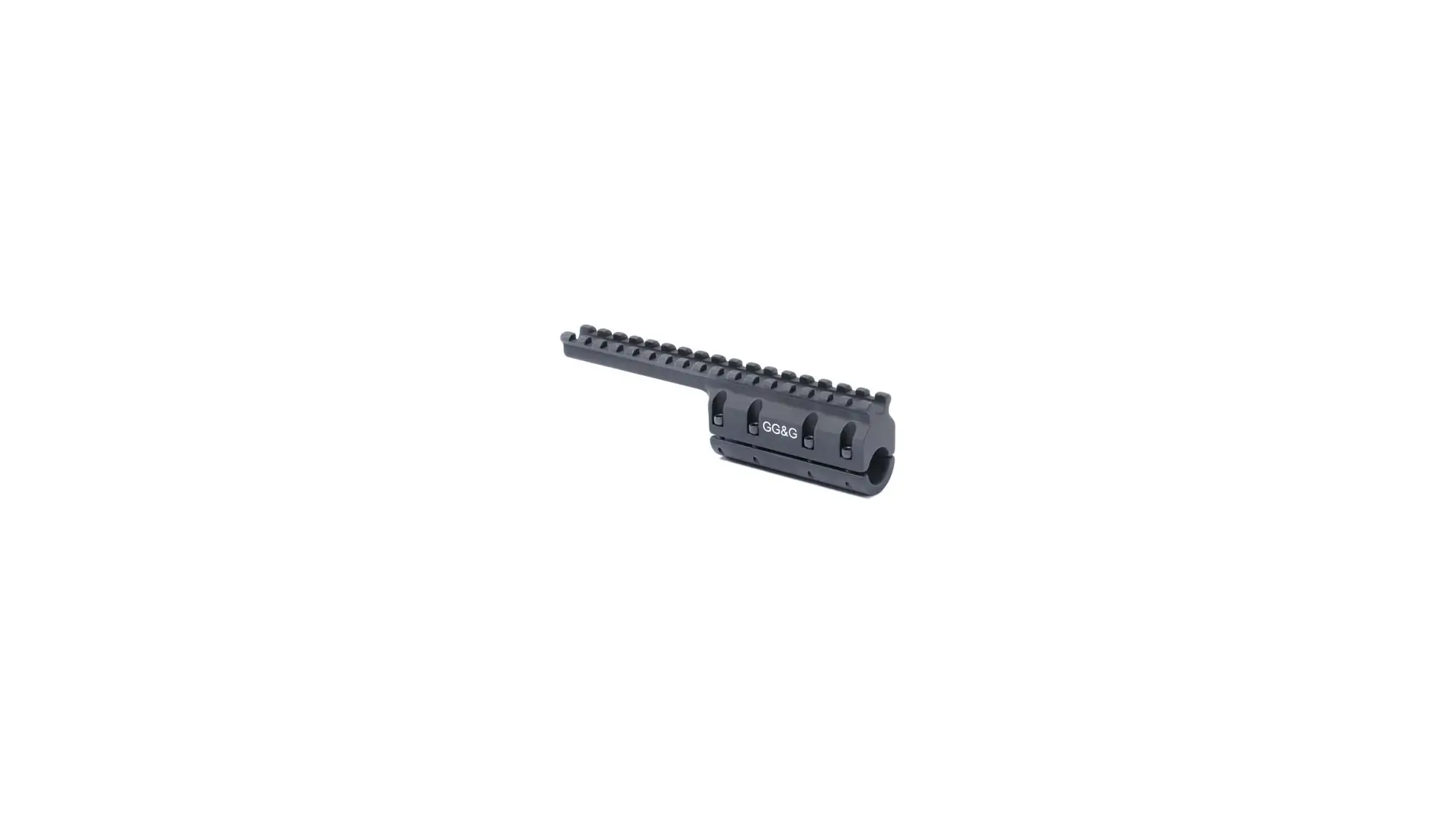
Before anything else: the GG&G M1A Scout Scope Mount fits only the M1A Scout Squad and SOCOM 16 with the factory cutout top handguard. It does not fit the standard M1A, the National Match model, or any non-Springfield Armory variant. Standard M1A owners should move to the SADLAK or Springfield reviews. That compatibility wall is the first thing to understand about this mount, and it’s also what allows GG&G to build something genuinely optimized for a specific platform rather than compromised to fit everything.
Why I Had to Swap Scopes for This Evaluation
The GG&G positions its Picatinny rail over the handguard area, forward of the receiver. A conventional scope with 3.5-4.0 inches of eye relief cannot be used in that position — your eye would need to be somewhere near the handguard, which isn’t how the rifle is meant to be held. For the three receiver mounts in this guide I used the Leupold Mark 5HD 3.6-18×44 to keep conditions consistent. For the GG&G I swapped to a Leupold FX-II Scout 2.5x28mm with 9.3 inches of eye relief, because that’s what the mounting position is actually designed for. Calling this a controlled comparison while using a scope the mount physically can’t accommodate would have produced useless data, not an honest evaluation.
The Clamping System in Practice
Installation is the cleanest of the four mounts I tested. The GG&G drops into the factory handguard cutout and clamps to the barrel with eight screws rather than the Scout Squad barrel mount’s six. On my Scout Squad I seated it on the barrel assembly, leveled it using a rail-mounted level, and had all eight screws torqued to spec in about 22 minutes. No receiver interface, no full disassembly, no mallet. For comparison, the Springfield MA4GENAM took 45 minutes and required going into the rifle’s guts. The accessibility difference is substantial.
Zero Drift Across Four Sessions
Because this is a static barrel clamp mount rather than a removable receiver mount, zero retention testing works differently. I measured POI consistency across sessions rather than removal-reinstallation cycles. After 75 rounds spread over four range visits, drift was negligible. The eight-screw clamping system distributes the clamping load around the barrel perimeter well enough that the M1A’s recoil doesn’t work the mount loose over sustained strings. The mount simply doesn’t move during normal use — which is the right answer for a static barrel clamp.
What the Forward Position Changes About the Rifle
Running the FX-II Scout forward of the receiver shifts how the rifle handles. Transitions are faster, the rifle shoulders more naturally for quick shots, and the overall balance feels less top-heavy than with a conventionally mounted optic. For close to mid-range use — the hunting and field carry scenarios where a Scout Squad actually earns its keep — the configuration suits the rifle well. Precision shooting at longer distance is a different story. The forward position and low magnification of a scout-appropriate optic aren’t optimized for extended precision work, and pretending otherwise would be dishonest. That’s not a failing of the GG&G specifically; it’s the inherent tradeoff of the scout configuration.
Iron Sights Still in Play
GG&G machined a center channel through the full length of the rail, leaving the factory rear sight accessible with the scout scope mounted. I tested this specifically: sight picture through the irons was clear and usable while the FX-II Scout sat above. On a field rifle running a scout optic, having that iron backup without dismounting anything is a genuine operational advantage, and it’s one of the details that makes this mount feel like it was designed by people who actually use the platform rather than people who build mounts generically.
Within its platform constraints, this is a well-executed product. Scout Squad and SOCOM 16 owners who want a low-profile scout or red dot setup with minimal added weight and iron sight access intact — this is exactly what they need from this group.
Field Test Data
| Test Parameter | Result |
|---|---|
| Zero Drift Across 4 Sessions (75 rounds) | Negligible; no measurable POI change session to session |
| Clamping Screw Torque Retention (8 screws) | All screws stable through full test period; no re-torque required |
| Installation Time | ~22 minutes from field-stripped state |
| Iron Sight Access Through Center Channel | Confirmed usable with scout scope mounted; no obstruction |
| Brass Clearance During Rapid Fire | Full clearance observed; no contact with mount body throughout |
Tested on: Springfield Armory M1A Scout Squad | Leupold FX-II Scout 2.5x28mm | ~75 rounds (forward scout position requires long eye relief optic; see testing setup section for explanation)
Pros and Cons
PROS
|
CONS
|
Performance Ratings
4. UTG New Gen 4-Point Locking M14/M1A Scope Mount – Budget Range Option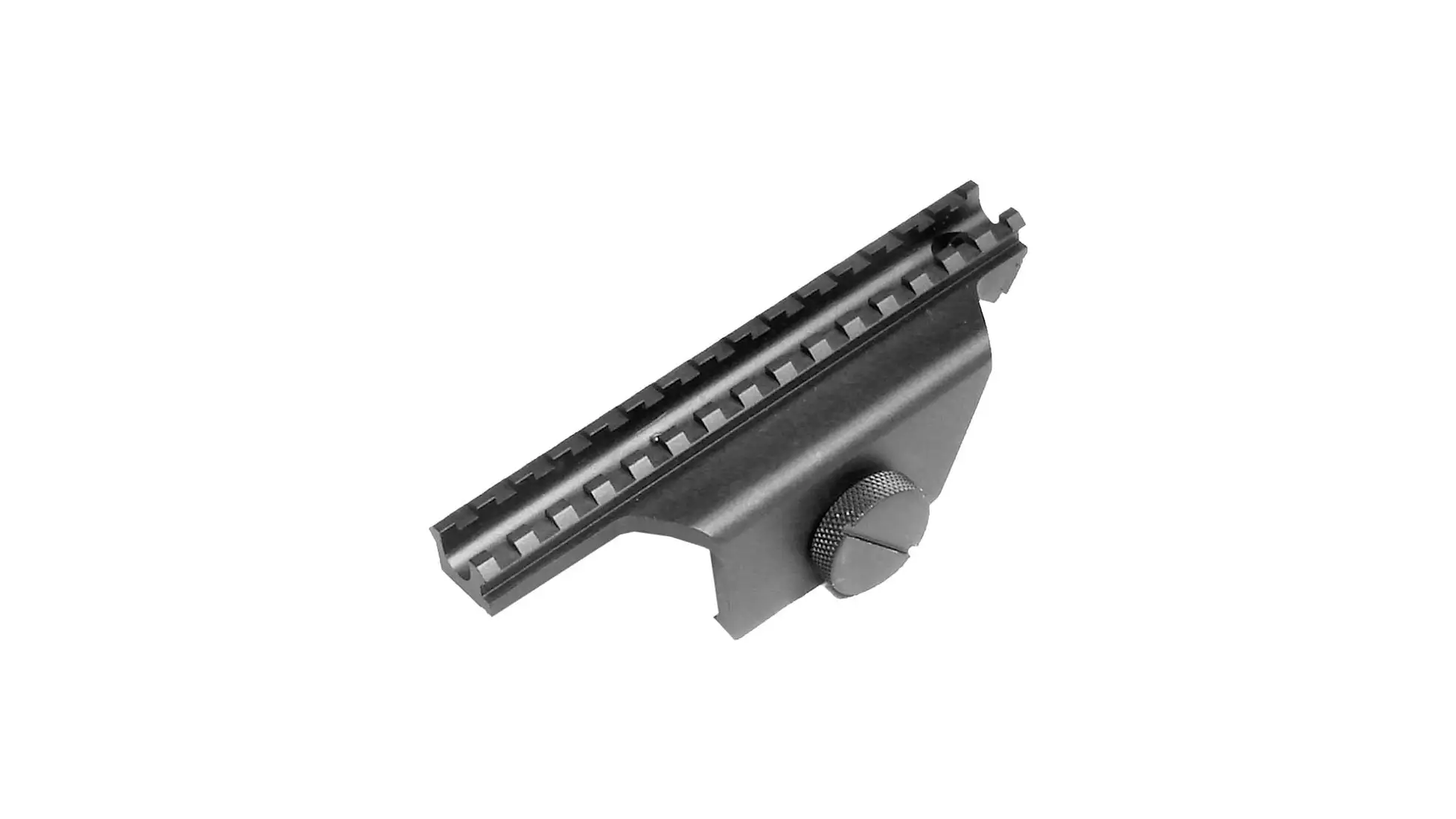
Less than fifty dollars for an M1A scope mount. That pricing positions this as either a genuine budget find or a cautionary tale, depending entirely on what you’re asking it to do. After 70 total rounds and a full test period on the Scout Squad, my answer lands in the middle: it’s a functional mount within a specific and limited use case, and whether it earns that role depends on what you walk in expecting.
Where the Budget Shows Itself
The one-piece aluminum body looks acceptable. The 15-slot Picatinny rail is functional, and the 4-point locking concept is sound design. Where the budget shows up is in the hardware — specifically the side screw that engages the receiver. Compared to the SADLAK or Springfield mounting hardware, the receiver-engagement screw on the UTG has noticeably softer metal feel. The manufacturing tolerance at that single interface point is where the difference between a forty-dollar mount and a two-hundred-dollar mount actually lives, and the M1A’s recoil finds it quickly.
Thread Locker Is Not Optional Here
In initial testing without thread locker applied, the receiver-engagement screw backed off within 40 rounds. Zero had begun to creep by the time I caught it. After reinstalling with blue Loctite on that screw and the rail hardware, the mount held through the remaining 30 rounds without further torque loss. The lesson isn’t that the UTG is poorly designed; it’s that the hardware tolerances require thread locker to compensate for what the material doesn’t provide. Treat it as a mandatory installation step — apply it during the initial build, not as a reaction to something going loose later.
What 70 Rounds Through the Scout Squad Actually Showed
The initial zero creep belonged to the 40-round pre-Loctite phase. With thread locker properly applied, zero shift through the remaining 30 rounds measured around 0.8 to 1.0 MOA cumulative. For reference, the SADLAK showed no measurable shift across 90 rounds, and the Springfield came in around 0.3 MOA over a similar string. The gap is real. The UTG’s 4-point locking system simply didn’t hold as consistently as a higher-contact receiver interface under repeated .308 recoil in this test, even after installation was corrected. I also noticed light contact marks on the mount body from 147gr loads at higher velocities during rapid fire strings, though this didn’t cause any functional problem during testing. Brass ejection patterns are worth checking with whatever load you’re running.
Separate from the sustained-fire check, I removed and reinstalled the UTG three times against the same bore sighter baseline used for the other receiver mounts. Those were bore-sighter-only checks, not additional live-fire groups, which keeps the UTG live-fire total at 70 rounds. The cycles averaged roughly 0.9 MOA of indicated shift and were inconsistent enough that I would not choose this mount for a rifle where scope removal is routine.
When to Stop Here and When to Keep Looking
For a shooter who wants to evaluate whether scoped M1A shooting is something they want to pursue before committing premium money, the UTG provides that evaluation at a price that doesn’t sting. Range sessions, casual practice, learning how your M1A handles with glass on top: it covers those use cases adequately. For anything beyond that — hunting, competition, a rifle that goes into the field and needs to perform there — the zero retention ceiling is too low for the platform’s demands. The SADLAK or Springfield MA4GENAM is the honest next step, and the UTG’s job in this guide is to mark where that line is.
The UTG works when you’re clear about what it is and where its limits are. It doesn’t fail catastrophically; it just can’t hold the standard the M1A’s recoil asks of it under serious use. As a starting point or a range-dedicated option, it earns that role.
Field Test Data
| Test Parameter | Result |
|---|---|
| Zero Drift Under Sustained Fire (30 post-Loctite rounds) | ~0.8–1.0 MOA cumulative shift after the 40-round pre-Loctite phase showed zero creep |
| Bore-Sighter Reinstall Check (3 cycles) | Avg ~0.9 MOA indicated shift; inconsistent between cycles; not live-fire confirmed |
| Installation Time | ~15 minutes; fastest of the four mounts tested |
| Receiver Engagement Screw (without thread locker) | Backed off within 40 rounds; zero shift detected by mid-session |
| Brass Clearance (147gr hot loads) | Light contact marks observed on mount body during rapid fire |
Tested on: Springfield Armory M1A Scout Squad | Leupold Mark 5HD 3.6-18×44 | ~70 rounds
Pros and Cons
PROS
|
CONS
|
Performance Ratings
One Scout Squad, Two Rejected Mounts, and 320 Rounds in North Texas
I ran this evaluation on a Springfield Armory M1A Scout Squad chambered in .308 Winchester, using a private outdoor range outside of Greenville, Texas through November and into early December 2024. Temperatures through the test period ran from the upper 30s on the coldest morning to the low 60s by afternoon — mostly clear with a few overcast sessions that actually made spotting POI shifts on paper easier without glare off the target faces.
For the three receiver mounts (SADLAK, Springfield MA4GENAM, UTG), I kept testing conditions consistent with the same Leupold Mark 5HD 3.6-18×44 throughout. The GG&G is a forward barrel clamp mount built for the scout position, which requires long eye relief optics — a conventional scope with 3.5-4.0 inches of eye relief simply cannot produce a usable sight picture at that mounting position. For the GG&G evaluation I used a Leupold FX-II Scout 2.5x28mm with 9.3 inches of eye relief, which is what the mount is actually designed for. That’s the only equipment variable that breaks from the controlled setup, and it’s explained in the GG&G review.
Total rounds across all four mounts came to 320. Zero retention was measured using a bore sighter baseline before and after each live-fire reinstallation cycle on the SADLAK and Springfield receiver mounts, confirmed with groups on paper at 100 yards. The UTG’s three reinstallation checks were bore-sighter-only, and the GG&G’s static barrel clamp was measured across sessions rather than removal cycles. I tracked torque spec retention at mid-test intervals and ran sustained strings to stress-test each mount’s hardware under realistic conditions.
Two mounts I tested and ruled out before reaching the final four: the ARMS #18 M1A/M14 Scope Mount showed inconsistent receiver seating on my Scout Squad’s commercial receiver, requiring fitting adjustments I wasn’t comfortable accepting for a controlled comparison. The M1Surplus M14/M1A Mount placed the scope high enough that cheek weld became problematic even with a riser added, and zero crept noticeably under rapid fire past round 50 — a zero retention failure specific to how that mount’s geometry interacts with sustained recoil on this platform.
M1A Scope Mount Mistakes That Cost Zero and Time
Not Checking Brass Clearance Before Locking In Your Scope Position
The M1A’s operating rod travels along the right side of the receiver during every shot cycle, and ejected brass follows accordingly. Depending on how you position the scope rings on the receiver rail, the mount body or objective bell can land directly in the path of ejected cases — especially with hotter loads at higher velocities. This doesn’t show up during slow bench work with mild ammo; it appears mid-session during faster shooting. The UTG mount in my testing showed light brass contact marks from 147gr loads that I didn’t catch until I inspected the mount after a rapid-fire string. Check clearance at your chosen scope position before committing to ring placement.
Ordering Without Confirming Your Exact M1A Variant
The M1A family has more variant-to-variant incompatibilities than most buyers expect. The GG&G Scout Mount fits only Scout Squad and SOCOM 16 with factory cutout handguards — it won’t touch a standard M1A. The Springfield MA4GENAM explicitly doesn’t fit the SOCOM II. The SADLAK seated cleanly on my tested Scout Squad, but it is built to USGI receiver spec and can require fitting work on commercial-dimension variants. The phrase “M1A scope mount” on a product page doesn’t mean it fits every M1A. Verify your specific model against manufacturer compatibility specs before the mount ships, not after it arrives and won’t seat correctly on your receiver.
Scoping the Rifle Without Planning for the New Cheek Weld Height
A receiver-mounted scope on an M1A raises the sight line considerably compared to the factory iron sight position. The M1A’s stock comb sits lower than most modern semi-auto platforms, and the gap between your original cheek weld and where your eye needs to be with a receiver-mounted scope in place is larger than on most rifles you’ve probably optic’d before. A cheek riser or adjustable comb stock isn’t optional if you want a repeatable cheek weld. Budget for it when you buy the mount. Skipping it means chin-welding your way through sessions and mistaking a comfort problem for a zero problem.
Treating Thread Locker as Optional on Receiver Attachment Screws
Receiver-interface screws on M1A mounts take sustained stress from every shot cycle on a platform that hits considerably harder than most semi-autos. Thread locker wasn’t necessary on the GG&G or SADLAK hardware in my testing, but it wasn’t optional on the Springfield and UTG attachment screws. My recommendation is blue Loctite on the primary receiver-engagement screw, with red reserved only for manufacturer-specified permanent contact points. Skipping the receiver screw entirely can lead to zero shift within a session. On the UTG especially, this directly affected whether the mount held after the 40-round loosening point. Don’t wait until something backs off to add thread locker.
Buying a Forward Scout Rail and Expecting It to Work With a Conventional Scope
The GG&G and similar barrel clamp forward mounts for the Scout Squad are designed for scout scopes (typically 9-14 inches of eye relief) or red dots and reflex sights. A standard variable scope with 3.5-4.0 inches of eye relief cannot produce a usable sight picture at the forward mounting position — your eye would need to be over the handguard for that to work, which isn’t how the rifle is held. Shooters buy the mount, try to use an existing scope, assume the mount is defective when they can’t acquire a sight picture, and return it. The mount is functioning exactly as designed. Matching the optic to the mounting configuration is the step that gets missed.
Disclosure
I purchased all four mounts with my own money for this evaluation: the SADLAK directly through their website, the Springfield MA4GENAM through OpticsPlanet, the GG&G through Brownells, and the UTG from Amazon. The Leupold Mark 5HD used for the receiver mount testing came from my existing collection rather than being sourced specifically for this guide. This guide contains affiliate links; if you buy through them, I receive a commission at no additional cost to you. The SADLAK sits at the top of these ratings because its own test segment produced the strongest zero-retention results in this 320-round evaluation — not because of where I bought it.
The M1A Doesn’t Forgive Cheap Decisions
After running these four mounts through a Texas fall and into December, the M1A’s mounting challenge comes into sharper focus. The platform doesn’t reward shortcuts. The operating rod, the receiver geometry, the sustained .308 recoil — all of it makes this a harder category to get right than mounting optics on virtually anything else in a semi-auto safe, and the performance differences between these four mounts are wider than you’d see testing the same price-tier spread on an AR or a bolt gun.
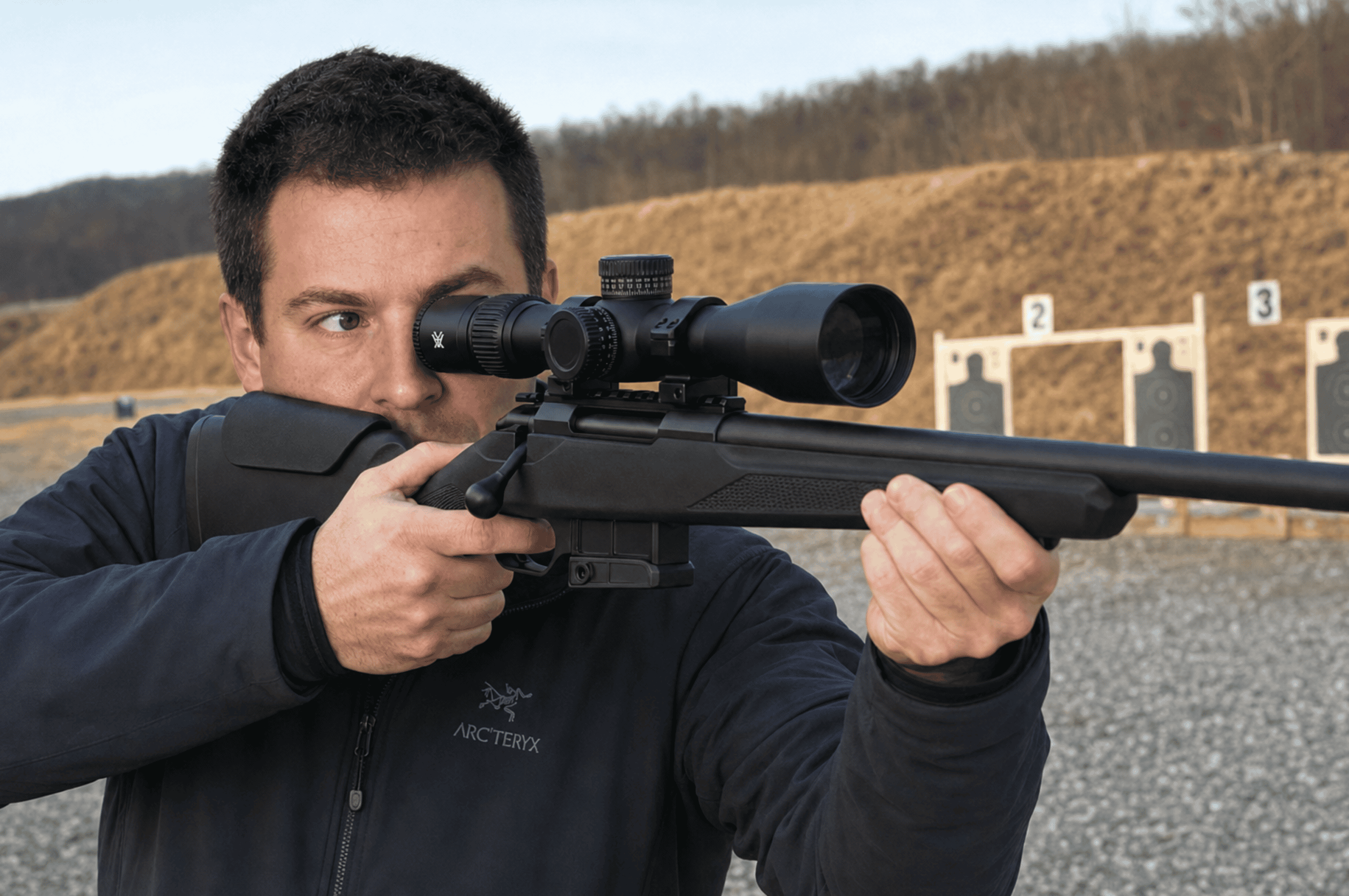
Mike Fellon is the founder of ScopesReviews and an optics specialist with 15+ years in precision shooting. A former Bass Pro Shops firearms advisor and NRA-certified instructor, he’s hands-tested 200+ rifle scopes across hunting and competition. Based in Dallas, Texas.