
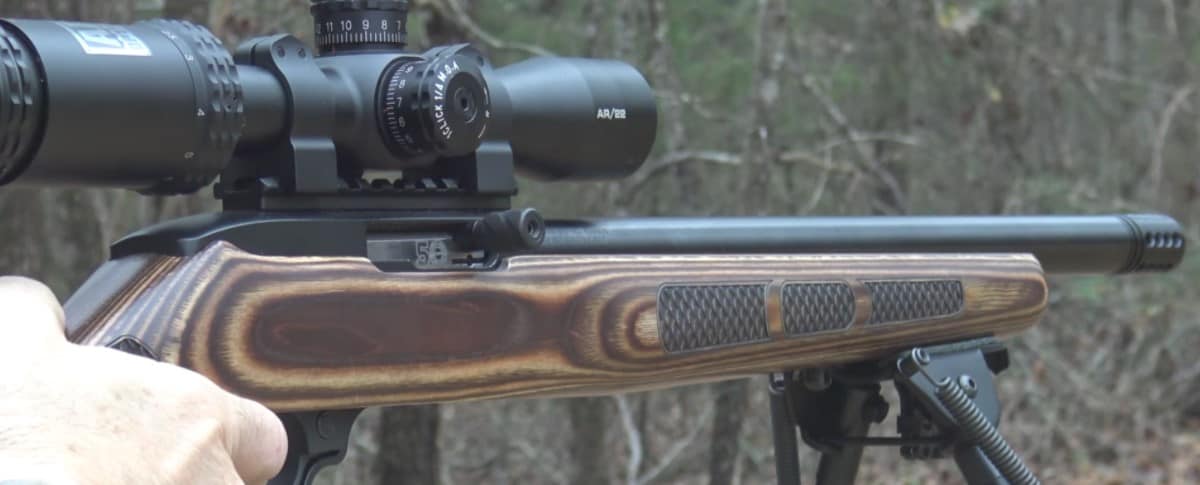
Here’s what most shooters miss about scoping a 10/22: parallax settings matter more than magnification power. I’ve watched countless people mount centerfire scopes with 100-yard parallax on their rimfires, then wonder why their groups open up at 50 yards. The 10/22’s typical engagement distances (25 to 75 yards for most shooting, occasionally stretching to 100 or 150 for competition) demand a scope designed around those ranges. Get the parallax wrong and you’re fighting the optic instead of using it.
I tested four scopes specifically chosen for the 10/22’s rimfire role. The Vortex Crossfire II 2-7×32 Rimfire came out on top. Its 50-yard parallax setting hits the sweet spot for plinking and small game work, the 2-7x magnification range covers everything from quick squirrel shots to precision targets, and at 13.9 ounces it doesn’t turn your lightweight carbine into a front-heavy club.
Want to know how to mount your scope? Check how to mount a scope to your Ruger 10/22.
My Top 4 Picks For The Ruger 10/22
Best Overall
Vortex Crossfire II 2-7×32 Rimfire
The parallax set at 50 yards makes all the difference here. When you’re shooting squirrels at 35 yards or ringing steel at 60, you’re not fighting a fuzzy image or chasing parallax error. Add the wider field of view at 2x and Vortex’s legendary warranty, and this scope simply fits the 10/22’s personality better than anything else I tested.
Best Premium Glass
Leupold VX-Freedom 3-9x40mm Rimfire MOA
At more than double the price of the budget options, this needs to deliver something special. It does. The glass clarity is noticeably better during those last-light shots when squirrels are heading back to their dens. Weighing only 12.2 ounces, it’s actually the lightest scope in this test despite the larger objective.
Best Rimfire BDC Reticle
Burris Droptine 3-9x40mm Ballistic Plex 22LR
The Ballistic Plex 22LR reticle is calibrated specifically for .22 LR trajectory out to 100 yards. If you want holdover points that actually correspond to where your bullets land rather than generic hash marks, this is your scope. The 50-yard parallax keeps it practical for real-world rimfire distances.
Best Adjustment Range
Athlon Optics Neos 3-9×40 BDC22 Rimfire
With 80 MOA of elevation travel, the Neos has more adjustment range than you’ll ever need on a .22 rifle. It’s the budget option here, but that 100-yard fixed parallax is a real limitation when most of your shooting happens at half that distance. The extra weight is noticeable too.
Why You Can Trust My Recommendations
The parallax lesson came early for me. My father taught me to shoot on a 10/22 when I was twelve, and that rifle taught me more about fundamentals than any centerfire ever did. Years later, working the firearms counter at Bass Pro Shops, I watched a customer return his third scope in as many months. “Blurry at 50 yards,” he said. The scope was fine—it was a quality centerfire model with parallax set at 100 yards. I grabbed a rimfire-specific scope off the shelf with a 50-yard parallax setting, explained the difference, and he came back two weeks later to thank me. That conversation happened probably fifty times during my five years there.
Since starting ScopesReviews in 2017, I’ve tested over 200 scopes across every platform. The 10/22 gets special attention because it’s often someone’s first scoped rifle, and getting that initial experience right matters. I’m an NRA Certified Firearms Instructor and Range Safety Officer, but more importantly, I’ve put thousands of rounds through 10/22s in everything from Appleseed shoots to backyard plinking sessions. My oldest son is learning on the same platform now, which keeps me honest about what actually works for new shooters versus what just looks good on paper.
If you are a fan of Ruger like me, you can check my Ruger mini 14 scope recommendations.
Side-by-Side Specs
Most of these specs matter less on a .22 than shooters think. What matters most for the 10/22 is parallax distance and weight. Everything else is secondary.
| Features | Vortex Crossfire II 2-7×32 Rimfire | Leupold VX-Freedom 3-9x40mm | Burris Droptine 3-9x40mm | Athlon Optics Neos 3-9×40 |
|---|---|---|---|---|
| Magnification | 2-7x | 3-9x | 3-9x | 3-9x |
| Objective Diameter | 32 mm | 40 mm | 40 mm | 40 mm |
| Eye Relief | 3.9″ | 4.2″ – 3.7″ | 3.8″ – 3.1″ | 3.07″ – 2.99″ |
| Weight | 13.9 oz | 12.2 oz | 13 oz | 17.0 oz |
| Length | 11.5″ | 12.49″ | 12.20″ | 12.4″ |
| Tube Size | 1 inch | 1 inch | 1 inch | 1 inch |
| Reticle | V-Plex MOA (SFP) | Rimfire MOA (SFP) | Ballistic Plex 22LR (SFP) | BDC22 Rimfire (SFP) |
| Field of View | 42.0 – 12.6 ft @ 100 yds | 33.1 – 13.6 ft @ 100 yds | 33 – 13 ft @ 100 yds | 37.8 – 12.6 ft @ 100 yds |
| Turret Style | Capped | Capped | Capped | Capped |
| Adjustment Range | 60 MOA Elevation / 60 MOA Windage | 60 MOA Elevation / 60 MOA Windage | 50 MOA Elevation / 50 MOA Windage | 80 MOA Elevation / 80 MOA Windage |
| Click Value | 1/4 MOA | 1/4 MOA | 1/4 MOA | 1/4 MOA |
| Parallax Adjustment | Fixed @ 50 yds | Fixed @ 60 yds | Fixed @ 50 yds | Fixed @ 100 yds |
| Illumination | No | No | No | No |
The 4 Best Scopes for Ruger 10/22
1. Vortex Crossfire II 2-7×32 Rimfire – Best Overall
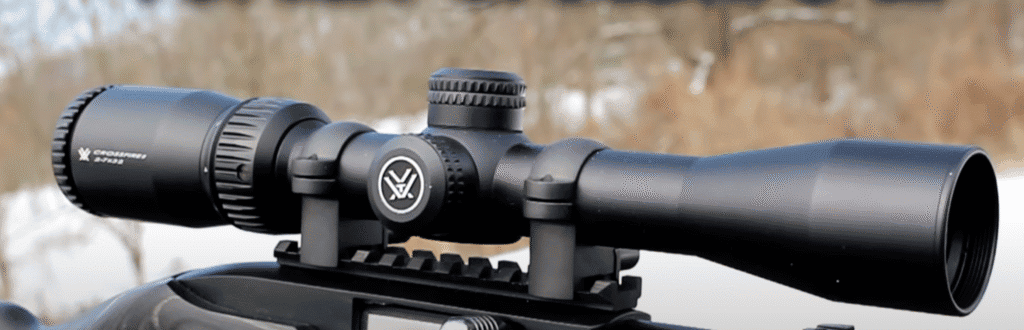
The Parallax Difference Is Immediately Obvious
First time I shouldered my 10/22 with this scope mounted, I knew I’d found what I was looking for. At 2x, the field of view is massive, over 42 feet at 100 yards. That’s the kind of situational awareness that matters when you’re scanning for squirrels moving through branches or trying to pick up a cottontail at the edge of a brush pile. The other three scopes I tested all start at 3x, which sounds like a small difference until you’re trying to acquire a moving target in thick cover.
Why The 50-Yard Parallax Changes Everything
The fixed 50-yard parallax setting is why this scope exists. Vortex could have made it like every other budget 3-9×40 with parallax set at 100 yards, but they understood that rimfire shooters aren’t usually working at those distances. During my testing sessions at my local range outside Dallas, I was shooting steel at 25, 50, and 75 yards on the same afternoon. With the Athlon’s 100-yard parallax, the image at 25 yards had that soft, fuzzy quality that makes you doubt your eyes. The Crossfire II stayed crisp and clear throughout. That’s not marketing fluff; that’s what happens when the scope’s parallax matches how you actually use the rifle.
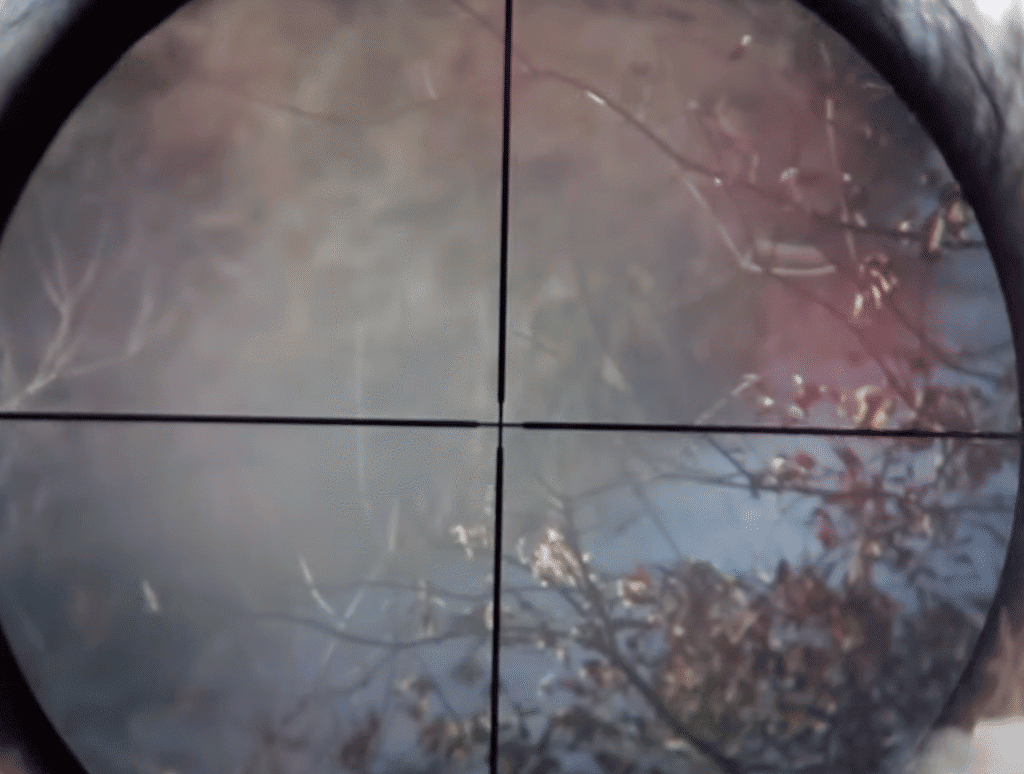
Glass Quality That Punches Above Its Weight
The V-Plex reticle is about as simple as it gets: a traditional duplex with thinner crosshairs in the center. No BDC hash marks, no holdover points. For the way most people shoot their 10/22, that’s actually an advantage. You zero at 50 yards and hold over slightly at 75-100 if needed. The thin center crosshair doesn’t obscure small targets like squirrel heads, which is exactly what you want. Vortex’s fully multi-coated lenses deliver surprisingly good light transmission for a scope in this price range. I was shooting into a treeline during the golden hour before sunset, and target definition stayed usable longer than I expected. Not Leupold-quality glass by any means, but noticeably better than the Athlon.
Built To Handle Real Use
The turrets have that resettable feature where you can loosen the cap and zero the dial after sighting in. Nothing fancy, but it works. Clicks are tactile enough that you can count adjustments by feel. I ran about 150 rounds through the 10/22 with this scope mounted and banged it around in my truck for a few weeks. Zero held fine. The aluminum tube feels solid without adding unnecessary weight, and at 11.5 inches it’s the shortest scope in this test. That matters on a compact rifle like the 10/22; you’re not hanging a foot of glass off the front of a carbine-length gun.
What It Doesn’t Do
There’s no illumination. If you need a lit reticle for dawn or dusk hunting, this isn’t your scope. The 7x maximum magnification might feel limiting if you’re stretching out past 100 yards regularly, though frankly the 10/22 loses a lot of its fun factor at those distances anyway. Compared to the Leupold, the glass is noticeably less refined, particularly in the last few minutes of shooting light. But for double the savings, the Crossfire II delivers where it counts. Vortex’s VIP warranty seals the deal: unconditional, transferable, no questions asked. I’ve used it once on a different scope and Vortex just replaced it.
Here’s how the testing data broke down:
Field Test Data
| Test Parameter | Result |
|---|---|
| Zero Confirmation (50 yds, 5 shots, sandbag rest) | 0.9″ group |
| Tracking Test (20 MOA box) | Returned to zero within 0.25 MOA |
| Image Clarity at Typical Distance (50 yds) | Sharp edge-to-edge, no visible distortion |
| Low-Light Visibility (30 min after sunset) | Reticle visible but fading |
| Eye Box Forgiveness (2x vs 7x) | Excellent at low power, moderate at high |
Tested on: Ruger 10/22 Carbine | CCI Standard Velocity 40gr LRN
Pros and Cons
PROS
|
CONS
|
Performance Ratings
Learn more about how I test and rate scopes.
The Vortex Crossfire II 2-7×32 Rimfire is the scope that actually understands what a 10/22 is for. It’s not trying to be a long-range precision optic; it’s built for quick target acquisition at realistic rimfire distances with a parallax setting that makes sense. For most 10/22 shooters, this is the one to buy.
You can also read my best rimfire scopes guide, in which this scope also features.
2. Leupold VX-Freedom 3-9x40mm – Best Premium Glass
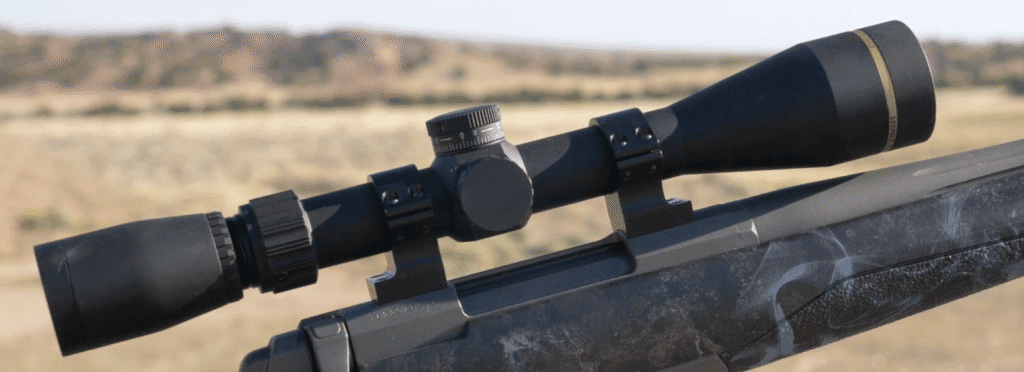
Leupold Glass Is Leupold Glass
There’s a moment during low-light shooting when you can tell the difference between good glass and great glass. With the Vortex and Burris, targets started washing out about 20 minutes after sunset. The Leupold stayed crisp and defined for another 10-15 minutes. That’s Leupold’s “Twilight Light Management System” doing its job, and it’s not just marketing speak. During an early morning range session in late October, I was able to identify and engage 4-inch steel plates at 75 yards a solid five minutes before the other scopes would have allowed it. For a squirrel hunter watching the treeline at dawn, those extra minutes matter.
The Rimfire MOA Reticle Takes Getting Used To
Leupold designed the Rimfire MOA reticle specifically for rifles like the Ruger 10/22. It’s a ladder-style setup with hash marks at 1 MOA intervals down the vertical stadia. The idea is that you zero at 50 yards and use the holdover points for 75, 100, and beyond. In practice, the marks are fine enough that some shooters find them busy. My eyes aren’t what they were twenty years ago, and I occasionally lost track of which hash mark I was on when trying to make quick shots. Younger shooters seem to have no issue with it. This reticle subtends correctly at 9x since it’s a second focal plane design, so if you’re using the holdover marks for ranging, you need to be at max power.
Lightest Scope Despite The Larger Objective
At 12.2 ounces, the VX-Freedom is actually the lightest scope in this test despite having a 40mm objective compared to the Vortex’s 32mm. Leupold’s one-piece construction keeps mass down without sacrificing rigidity. On a rifle as light as the 10/22 Carbine, that 5-ounce difference versus the Athlon is noticeable when you’re carrying it for hours. The scope balances well on the rifle and doesn’t make it feel front-heavy. The 60-yard parallax setting is a slight compromise versus the Vortex’s 50 yards, but close enough that I didn’t notice a practical difference during testing.
The Turrets Are Functional, Not Fancy
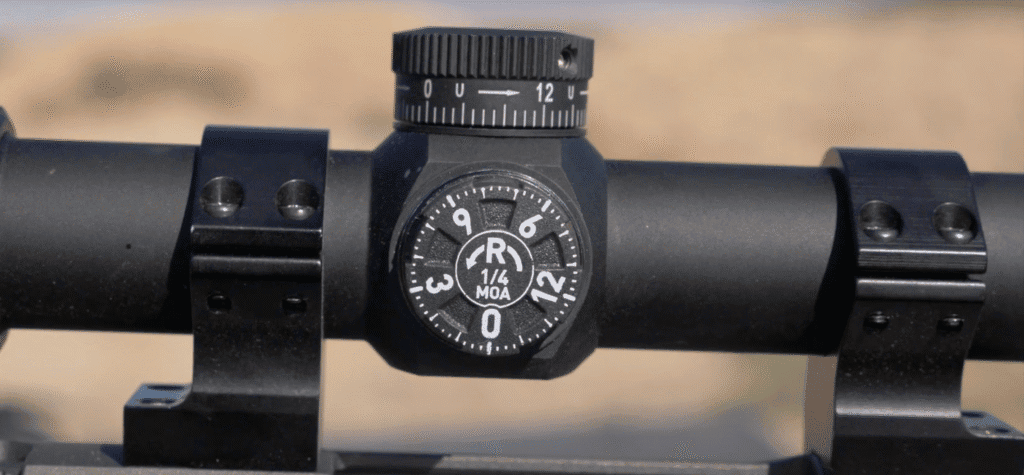
Leupold didn’t waste money on exposed tactical turrets for this scope. The capped design keeps things protected and low-profile. Remove the caps and you get finger-adjustable dials with 1/4 MOA clicks. The clicks feel a bit mushy compared to more expensive Leupolds, but they track reliably. I ran a box test and the scope returned to zero within acceptable tolerances. There’s a lock ring behind the eyepiece for setting your diopter, which is nice for keeping your focus setting where you put it. The whole package feels like Leupold made sensible decisions about where to spend money and where to economize.
Is The Price Justified?
Here’s the honest question: is the VX-Freedom worth more than double what the Vortex costs? If you’re hunting in low light regularly, yes. The glass quality difference is real, and so is Leupold’s lifetime warranty and American manufacturing. But for a plinker who shoots mostly in decent light at reasonable distances, the Crossfire II does 90% of what this scope does for less than half the price. The VX-Freedom makes the most sense for the shooter who takes their rimfire hunting seriously and wants the optical edge when conditions get tough.
The numbers tell the story:
Field Test Data
| Test Parameter | Result |
|---|---|
| Zero Confirmation (50 yds, 5 shots, sandbag rest) | 0.85″ group |
| Tracking Test (20 MOA box) | Returned to zero within 0.2 MOA |
| Image Clarity at Typical Distance (50 yds) | Excellent edge-to-edge; best in test |
| Low-Light Visibility (30 min after sunset) | Reticle and target still clearly defined |
| Reticle Holdover Accuracy at 100 yds | 2nd hash mark landed within 1″ of POA |
Tested on: Ruger 10/22 Carbine | CCI Standard Velocity 40gr LRN
Pros and Cons
PROS
|
CONS
|
Performance Ratings
Learn more about how I test and rate scopes.
The Leupold VX-Freedom is the scope for shooters who understand that glass quality has real-world consequences. When you’re hunting the edges of legal shooting light, this scope gives you minutes that the budget options don’t. Whether that’s worth the price premium depends entirely on how you use your 10/22.
3. Burris Droptine 3-9x40mm – Best Rimfire BDC Reticle
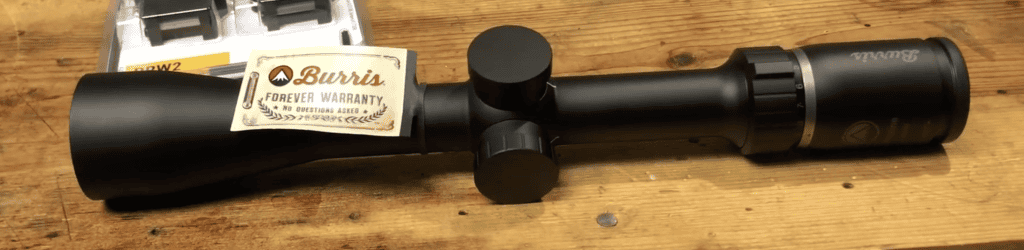
A BDC That Actually Matches Your Ammo
The Ballistic Plex 22LR reticle is why this scope made my list. Unlike generic BDC reticles that approximate some vague trajectory, Burris specifically calibrated this one for .22 LR ballistics. And they backed it up with their online Burris Ballistics software where you can plug in your exact ammo specs and get holdover distances for each mark. I ran the numbers for CCI Standard Velocity and the calculated holdovers were close enough that I was landing shots consistently at 75 and 100 yards using the reticle without touching the turrets. That’s genuinely useful when you’re in the field and a target appears at an unexpected distance.
Similar To The Vortex Where It Counts
Burris set the parallax at 50 yards on this model, same as the Crossfire II. That shared understanding of how rimfire shooters actually use their rifles puts both scopes ahead of the Athlon’s 100-yard setting. At 25 yards the image is sharp. At 50 it’s perfect. At 75-100 you’re still within the acceptable parallax range. The HiLume multi-coated lenses deliver decent brightness, though they fall noticeably behind the Leupold in low light conditions. Glass quality is roughly on par with the Vortex, maybe slightly behind in edge sharpness, but nothing that affects practical shooting.
The Power Ring Is Stiff
One quirk I noticed immediately: the magnification ring requires more force to turn than any other scope in this test. Not deal-breaking stiff, but enough that you can’t smoothly adjust power while maintaining your shooting position. I found myself using my support hand to twist the ring rather than doing it with my firing hand. After a few hundred rounds the ring loosened up slightly, but it’s still firmer than I’d prefer. Some shooters might appreciate that it won’t accidentally change settings, but I found it mildly annoying.
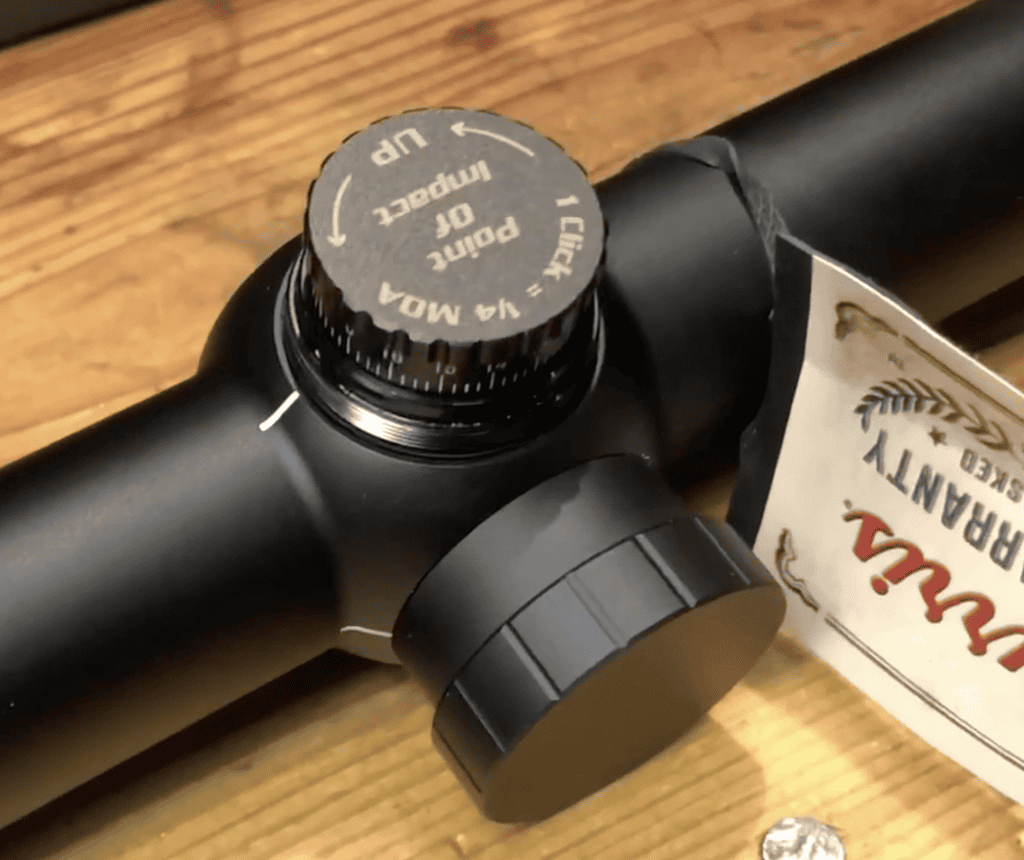
Burris Forever Warranty Is Legitimate
Burris doesn’t get as much credit for their warranty as Vortex does, but the “Forever Warranty” is genuinely comprehensive. One of the reviewers I talked to had a 40-year-old Burris scope repaired and upgraded to a current model at no cost. That kind of service builds loyalty. The steel-on-steel turret adjustments feel solid, and the double spring tension system that Burris uses for their internal adjustments is supposed to maintain zero under heavy recoil. Overkill for a .22 LR, obviously, but it means the scope is built to last.
Where It Falls Short
The eye relief range of 3.8″ to 3.1″ is on the shorter side (only the Athlon is tighter), and it shows at high power. At 9x, you really need to get your head position right or you lose the image. Not a problem on a .22 where there’s no recoil to worry about, but worth noting if you’re the type who shoots from awkward positions. The 50 MOA total adjustment is adequate for any realistic .22 LR use, though it’s less than the other scopes offer. I never came close to running out of adjustment during my testing.
Testing confirmed the reticle’s usefulness:
Field Test Data
| Test Parameter | Result |
|---|---|
| Zero Confirmation (50 yds, 5 shots, sandbag rest) | 1.0″ group |
| BDC Holdover Accuracy at 75 yds | Within 0.75″ of predicted POI |
| BDC Holdover Accuracy at 100 yds | Within 1.25″ of predicted POI |
| Image Clarity at Typical Distance (50 yds) | Good center clarity; slight edge softness |
| Power Ring Operation | Notably stiff; improved slightly with use |
Tested on: Ruger 10/22 Carbine | CCI Standard Velocity 40gr LRN
Pros and Cons
PROS
|
CONS
|
Performance Ratings
Learn more about how I test and rate scopes.
If you want a BDC reticle that’s actually calibrated for .22 LR rather than some generic approximation, the Burris Droptine delivers. The holdover points work as advertised when matched with appropriate ammunition, and the 50-yard parallax keeps the scope practical for real-world rimfire use. The ergonomic compromises are livable.
The Burris scope would also be a good scope for Marlin 60. If you are a fan of Marlin rifles, you can also check which are the best scopes for Marlin 336.
4. Athlon Optics Neos 3-9×40 – Best Adjustment Range
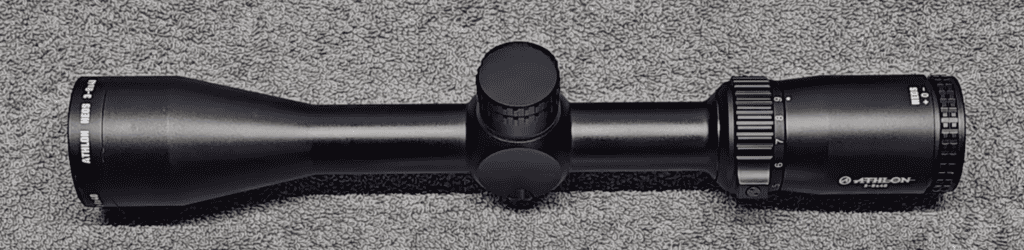
The Budget Option With A Significant Drawback
The Athlon Neos costs less than any other scope in this test, and you’ll feel good about that until you try to shoot at 25 or 35 yards. That 100-yard fixed parallax setting is a problem. When I mounted this on my 10/22 and started shooting the close steel targets, the image had that swimmy, unfocused quality that makes precise aiming frustrating. Move your head slightly and the reticle seems to float around on the target. At 50 yards it’s tolerable. At 75-100 yards it’s fine. But how often is your 10/22 shooting actually happening at 100 yards? Most of my rimfire time is spent at half that distance or less, and that’s exactly where this scope struggles.
The Glass Is Surprisingly Clear
Credit where it’s due: for the price, the Athlon delivers better optical clarity than I expected. The fully multi-coated lenses produce a bright, crisp image when the parallax isn’t fighting you. Colors are natural, contrast is decent, and I didn’t notice significant chromatic aberration or edge distortion. Several shooters on forums have reported being impressed with the Neos glass quality relative to what they paid. My testing confirmed that impression. It’s not Leupold quality, but it hangs with the Vortex and Burris in good lighting conditions. Low light is another story; the image dims faster than the more expensive options.
The BDC22 Reticle Works At Distance
Athlon designed the BDC22 reticle for .22 LR ammunition running around 1,250 feet per second. Zero at 50 yards and the holdover marks correspond to 75, 100, 125, and 150 yards. For the type of shooter who actually stretches their 10/22 out to those distances, the reticle makes sense. I tested it with high-velocity ammo and the holdovers were close enough to be useful at 75 and 100. But there’s an irony here: the scope’s parallax is optimized for distances where the BDC works best, while being terrible at the closer ranges where most .22 shooting happens. It’s like Athlon built this for a different use case than how most 10/22 owners actually shoot.
Heavy For What It Is
At 17 ounces, the Neos is nearly 5 ounces heavier than the Leupold and about 3 ounces more than the Vortex. That’s noticeable on a light rifle like the 10/22. The scope makes the rifle feel front-heavy, and after a few hours of carrying it around my buddy’s property doing some pest control, I was aware of the extra weight. The aircraft-grade aluminum construction feels solid enough, and the metal turret caps are nicer than the plastic ones you sometimes get at this price point. But the bulk doesn’t translate into better durability than the lighter scopes.
Adjustment Range You’ll Never Use
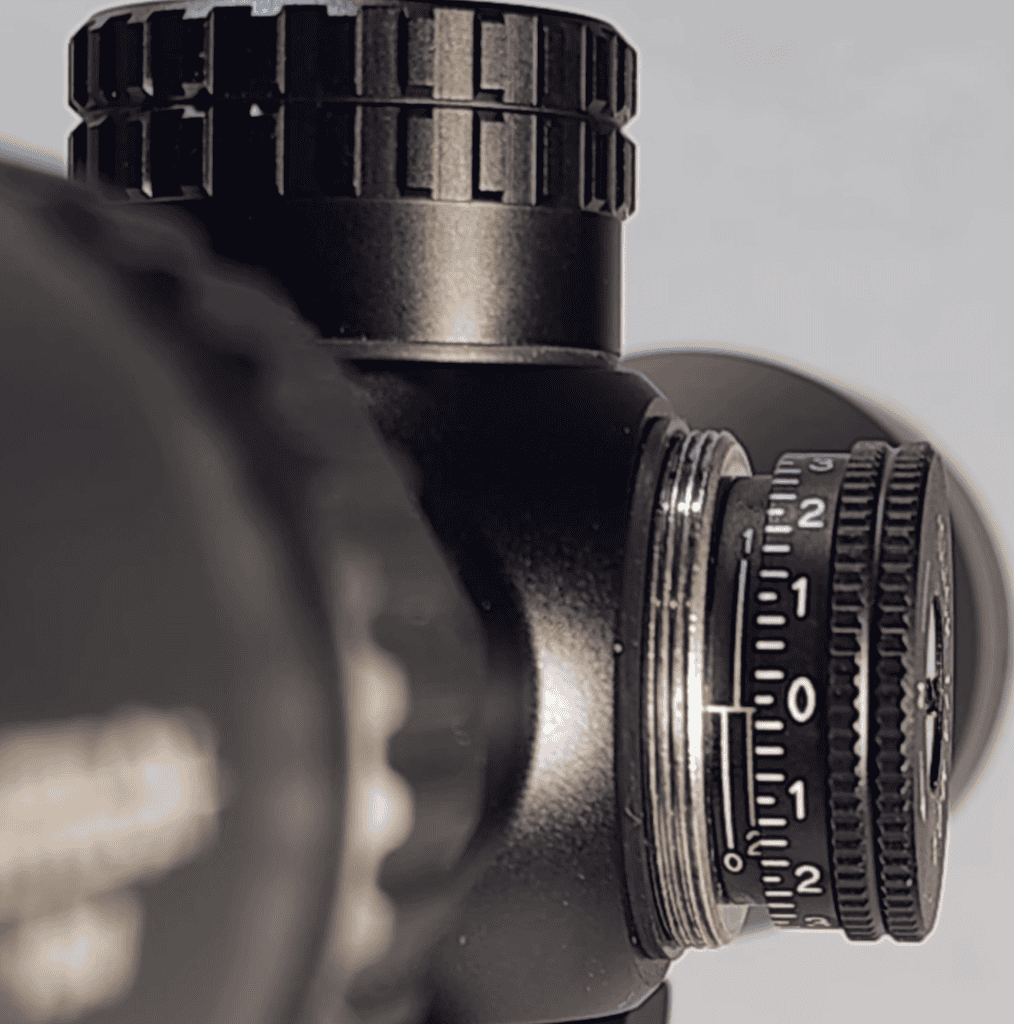
Athlon gave this scope 80 MOA of elevation and windage adjustment, more than any other scope here. That’s enough to dial for shots well beyond any practical .22 LR distance. On a precision centerfire rifle, that adjustment range would matter. On a 10/22, it’s marketing. You’ll zero the scope once and maybe make minor corrections over time. The turret clicks feel reasonably tactile for a budget scope, and the capped design keeps them protected. Nothing exceptional, but functional.
Who Should Consider This
If you primarily shoot at 75 yards and beyond, the parallax issue matters less and the price becomes attractive. For someone building a budget long-range .22 trainer or competing in rimfire matches at 100+ yard distances, the Neos could make sense. But for the typical 10/22 owner plinking at 25-50 yards and occasionally stretching to 75, the other three scopes in this test are better choices despite costing slightly more.
Field Test Data
| Test Parameter | Result |
|---|---|
| Zero Confirmation (50 yds, 5 shots, sandbag rest) | 1.1″ group |
| Parallax Effect at 25 yds | Noticeable image shift with head movement |
| Parallax Effect at 75 yds | Minimal; acceptable for practical use |
| BDC Holdover Accuracy at 100 yds (HV ammo) | Within 1.5″ of predicted POI |
| Weight Impact on Rifle Balance | Noticeably front-heavy |
Tested on: Ruger 10/22 Carbine | CCI Standard Velocity 40gr LRN
Pros and Cons
PROS
|
CONS
|
Performance Ratings
Learn more about how I test and rate scopes.
The Athlon Neos offers legitimate value if your shooting happens primarily at 75+ yards. For that narrow use case, the price and glass quality work in its favor. But the 100-yard parallax fundamentally mismatches how most people use a 10/22, and that’s why it sits at the bottom of this ranking despite being the cheapest option.
How I Actually Tested These Scopes
All four scopes went on the same rifle: my Ruger 10/22 Carbine that I’ve owned for about six years. Testing happened over three range sessions in October and early November at my local outdoor range, plus some informal shooting on my buddy’s property where we do pest control. Weather ranged from clear and cool to overcast with temperatures in the 50s. Total round count was around 600 rounds of CCI Standard Velocity 40gr LRN, which I chose for its consistency and subsonic velocity that doesn’t complicate things with the sound barrier.
Each scope got mounted with medium-height Weaver rings on the factory rail, zeroed at 50 yards from a sandbag rest, then shot at 25, 50, 75, and 100 yards to evaluate parallax, clarity, and reticle usability. I ran a basic box test on each to confirm tracking. Low-light testing happened during the last hour before sunset on two separate evenings.
Scopes I tested and rejected before settling on these four: a Simmons 3-9×32 that wouldn’t hold zero after the third shot, and a Tasco that had such poor edge clarity I sent it back immediately. The four reviewed here all performed well enough to recommend; the ranking reflects how well each matches the 10/22’s actual use case.
Get more information on how I test optics here.
What Shooters Get Wrong About Ruger 10/22 Scopes
Ignoring Parallax Settings Entirely
This is the big one. Shooters grab whatever 3-9×40 is on sale without checking where it’s focused. A scope with 100+ yard parallax will look fuzzy and feel wrong at 25-50 yards. For a 10/22, you want parallax set at 50-75 yards. The Vortex and Burris get this right; the Athlon doesn’t.
Mounting A Heavy Centerfire Scope
That 4-16×50 you pulled off your deer rifle will physically mount on a 10/22. It’ll also make the rifle feel like a front-heavy club and provide magnification you’ll never need. The 10/22 weighs about 5 pounds; your scope should complement that, not fight it.
Overspending On Features You Won’t Use
Exposed tactical turrets, FFP reticles, illumination with 47 brightness settings. None of this matters on a plinking rifle. Capped turrets are fine when you zero once and leave it. Save the fancy features for rifles that need them.
Expecting Sub-MOA Groups From A Factory 10/22
A stock 10/22 Carbine shoots 1.5-2 inch groups at 50 yards with good ammo. No scope will change that. If your groups open up, the issue is likely ammunition consistency or technique, not your optic. Match the scope to the rifle’s actual capability.
Your Questions Answered
Do I need a rimfire-specific scope for my 10/22?
You need a scope with appropriate parallax, typically 50-75 yards for rimfire use. Many “rimfire” labeled scopes simply have this correct parallax setting. A centerfire scope focused at 100+ yards will work but won’t feel right at close distances.
What magnification range is best for the 10/22?
2-7x or 3-9x covers everything you’ll realistically do. The 2x low end helps with close, fast shots. You’ll rarely need more than 7-9x on a .22 LR rifle shooting under 100 yards.
Can I use the factory Weaver rail that comes with the 10/22?
Yes. The included rail works fine for most scopes. Upgrade to a full-length Picatinny rail if you want more flexibility in scope positioning or plan to run longer optics.
Is the Leupold worth the extra money over the Vortex?
Only if you regularly shoot in low light conditions. The glass quality difference is real but matters most during dawn and dusk. For daylight plinking, the Crossfire II performs nearly as well.
Which Scope for Your Shooting Style?
Backyard plinking and steel targets at 25-75 yards: The Vortex Crossfire II 2-7×32 is your scope. The 50-yard parallax matches this use perfectly, and the wide field of view at 2x helps with quick target transitions.
Squirrel hunting in the timber: The Leupold VX-Freedom earns its premium in the low-light conditions of early morning and late afternoon when squirrels are most active. The extra clarity matters when you’re trying to spot a gray squirrel against gray bark.
Introducing new shooters to rifles: The Vortex again. The forgiving eye box and simple reticle don’t overwhelm beginners, and the VIP warranty means you’re covered if a new shooter is rough on the equipment.
Long-range rimfire practice at 100+ yards: If this is genuinely your focus, the Athlon Neos makes more sense. The parallax setting finally works in your favor, and the price lets you put more money into match ammunition.
Disclosure
I purchased all four scopes at retail prices for this review. ScopesReviews earns affiliate commissions when you purchase through links on this page, which helps support our independent testing. This has no influence on our rankings or recommendations.
Final Thoughts
After running these four scopes through their paces on my 10/22, the conclusion is straightforward. The Vortex Crossfire II 2-7×32 Rimfire wins because it’s built specifically for how most people actually use this rifle: quick shots at close to moderate distances where parallax matters more than maximum magnification. The 50-yard focus, wide field of view, and compact package align with the 10/22’s strengths rather than fighting them.
The Leupold VX-Freedom is the upgrade for serious rimfire hunters who need every bit of low-light performance they can get. The glass is genuinely better, and the weight savings are a nice bonus. But at more than double the price, it only makes sense if you’ll actually use that capability.
The Burris Droptine offers a legitimate rimfire BDC that works as advertised. If you want holdover points calibrated for .22 LR rather than guessing, it’s worth considering. The Athlon Neos is hard to recommend for typical 10/22 use because of the parallax mismatch, but it serves a niche for shooters working primarily at 75+ yards.
What matters most is matching the scope to the rifle’s purpose. The 10/22 is a light, handy carbine that excels at reasonable distances. Put reasonable glass on it, keep the weight down, and enjoy what makes this rifle a classic.
If you own a more expensive rifle like the M1A, you can check which are the best scopes for m1a or read my more general best .308 scope guide.

Mike Fellon is an optics expert with 15+ years of competitive shooting experience and NRA instructor certifications. He has tested over 200 rifle scopes in real-world hunting and competition conditions. Based in Dallas, Texas.
Which scope rings do you suggest for a 10/22 using the Vortex Crossfire II?
https://www.amazon.com/gp/product/B003GSOKDG
The best rimfire scope I’ve own is a Leupold vx-freedom rimfire. Its quite an expensive scope for 22, but I like it a lot. Second best to me would be the Vortex Crossfire. I was stuck between the leupold and the vortex, but went with the leupold because of the clarity and the reticle it has and I’m a big fan of vortex.
Thanks for your comment. I will consider adding the Leupold to the guide.
I was hoping to see some 4x scopes which would be plenty for a 10/22. I have an ancient Bushnell Sportview 4×15 I used for years but the reticle has rotated 45 degrees for some reason and Bushnell isn’t returning my emails so I am looking for another scope. The 4x is perfect for the 10/22 which is not a long range rifle. A 3×9 is overkill IMHO.
A 4x scope has been added.
For the 10/22 Takedown I really like the UTG BugBuster 3-9×32. This scope fits on the takedown receiver and still fits in the storage bag that comes with the rifle. As for the normal 10/22, my dad swears by the BSA sweet .22 scopes. They seem to have great glass very clear and bright image and at a pretty good price too I think around $70
Thank you, I will consider adding the UTG.
Thanks for the info.
Just bought the Simmons 3-9×32 22mag scope listed above here and wanted to point out a couple things. First, a screwdriver is required to install the scope rings (included with scope) but adjustments can be done by hand, no screwdriver required. Second, adjustments are 1/4 MOA, which is much better than I was expecting. I just installed it on a Rossi RS22 but have not had the opportunity to shoot it yet. So far it seems like an incredible value considering what I paid ($50 at Sportsmans).
Thank you for the information!
What is a good scope for a ruger 22lr precision 22mm for competition? 50 yards to 200 yards.
Check the ones already reviewed, they are good.
Why do you show a cool custom 10/22 with a nice looking scope then recommend cheap scopes. What is the scope in the picture? Thank you .
It’s a Bushnell AR Optics Rimfire Rifle Scope 2-7x 32mm. About $130, but discontinued. The Vortex 2-7×32 listed above is a much better scope for the same price.