
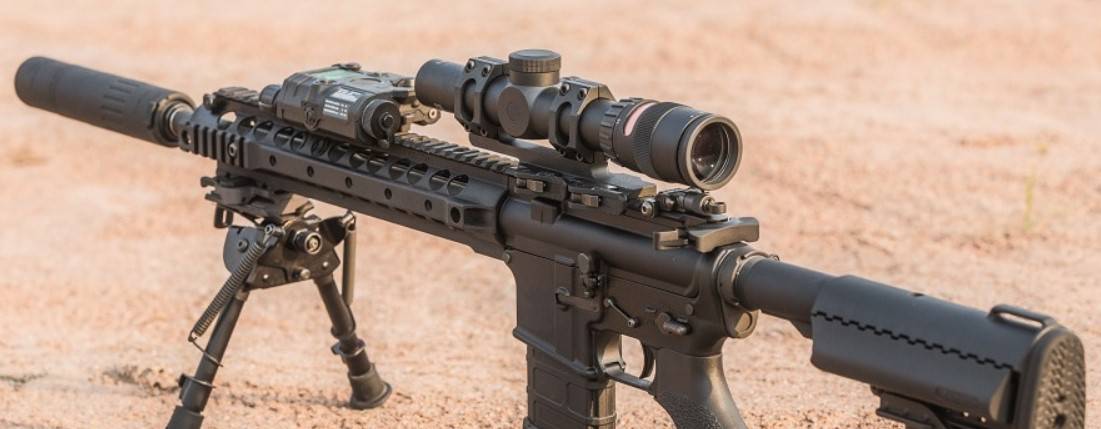
The AR-10 sits in an awkward middle ground that drives a lot of shooters crazy. It’s not a close-range tactical rifle like its little brother, but it’s also not a dedicated long-range precision rig. You’ve got a semi-auto that can reach 600 yards without breaking a sweat, sometimes push 800 if conditions are right, but most of your shooting happens between 200 and 500. Pick the wrong scope and you’re either squinting through too much magnification at 100 yards or maxed out when you need to reach.
I tested four scopes specifically for this challenge. After roughly 650 rounds of Federal Gold Medal Match 168gr through my AR-10 over three months of range sessions, one scope consistently delivered what this platform actually needs: the Vortex Diamondback Tactical 4-16×44. It covers the AR-10’s entire useful range, gives you tactical turrets when you need to dial, and costs less than half what some shooters spend chasing marginal improvements.
My Top 4 Picks For The AR-10
Best Overall
Vortex Diamondback Tactical 4-16×44
This scope solves the AR-10’s versatility problem. The 4-16x range handles everything from 100-yard zeros to 600+ yard steel, the FFP MRAD reticle gives you holdovers when you need speed and precise turret clicks when you have time, and at 23 ounces it won’t turn your rifle into a bench gun. For three hundred twenty dollars, nothing else tested delivered this much capability.
Best for Hunting & Lightweight Builds
Leupold VX-Freedom 4-12×40 CDS
If you’re building a hunting rifle that might see timber stands and long pasture shots in the same season, the Leupold’s 15.7 ounces and generous eye relief make it the most comfortable option. The CDS elevation turret handles drops to 500 yards, and that variable eye relief means you won’t get scope bite even if you’re rushing a shot. It stops at 12x though, which limits serious long-range work.
Best for Long-Range Target Shooting
Athlon Argos BTR Gen 3 6-24×50
When you know your AR-10 work starts at 300 yards and stretches past 600, the Athlon’s 24x top end and precise zero-stop turrets justify the 30-ounce weight penalty. The illuminated MRAD reticle handles low light better than the Vortex, and the glass quality at this price surprised me. Just understand that 6x minimum magnification makes close work awkward.
Best for Close to Mid-Range & Fast Acquisition
Primary Arms SLx 1-8×24
The ACSS reticle is brilliant for fast shooting inside 300 yards, and true 1x lets you run the AR-10 like a tactical carbine. But this is fundamentally an LPVO trying to do a job it wasn’t designed for. The 8x top end and fixed parallax at 100 yards mean you’re leaving half the AR-10’s capability on the table. But if you shoot only close to mid-range it’s a good choice.
Why You Can Trust My Recommendations
My first AR-10 scope mistake cost me a decent doe at 380 yards. I’d mounted a 3-9x scope because that’s what made sense on my bolt guns, figured 9x would be plenty. When that deer stepped into a clearing across a cut cornfield, I cranked to 9x and realized I was looking at a blob. Could see she was a deer, couldn’t see enough detail to feel good about the shot. She walked off while I sat there annoyed at myself.
That was 2018. I was one year into running ScopesReviews and still learning that what works on a Remington 700 doesn’t always translate to the AR platform. The five years at Bass Pro Shops had taught me plenty about matching scopes to bolt actions, but semi-autos present different problems. Higher bore axis, different shooting positions, longer engagement ranges than most people use them for.
I’ve tested over 200 scopes across my career, with at least forty specifically on AR-10 platforms in .308, 6.5 Creedmoor, and .260 Remington. My NRA Range Safety Officer and Certified Firearms Instructor credentials mean I get to see what works when other shooters run into the same problems. The AR-10 scope question comes up constantly, and the answer depends entirely on what you’re actually doing with the rifle.
Side-by-Side Specs
These specs tell you what’s on paper. What matters more is which features actually help you shoot an AR-10 effectively, but sometimes you need the raw numbers to make sense of the differences.
| Features | Vortex Diamondback Tactical 4-16×44 | Leupold VX-Freedom 4-12×40 CDS | Athlon Argos BTR Gen 3 6-24×50 | Primary Arms SLx 1-8×24 |
|---|---|---|---|---|
| Magnification | 4-16x | 4-12x | 6-24x | 1-8x |
| Objective Diameter | 44mm | 40mm | 50mm | 24mm |
| Eye Relief | 3.8″ | 5.2″ – 3.8″ | 3.3″ | 3.3″ – 3.2″ |
| Weight | 23.1 oz | 15.7 oz | 30.3 oz | 17.9 oz |
| Length | 14.1″ | 12.4″ | 14.1″ | 10.3″ |
| Tube Size | 30mm | 1 inch | 30mm | 30mm |
| Reticle | EBR-2C (MRAD, FFP) | Tri-MOA (SFP) | APRS11 FFP IR MIL | ACSS (FFP) |
| Field of View | 26.9 – 6.7 ft @ 100 yds | 19.9 – 11.2 ft @ 100 yds | 16.7 – 4.5 ft @ 100 yds | 105.0 – 14.3 ft @ 100 yds |
| Turret Style | Exposed Tactical | Exposed CDS elevation, capped windage, Zero reset | Exposed, Precision True Zero Stop | Capped |
| Adjustment Range | 25 MRAD Elev / 25 MRAD Wind | 80 MOA Elev / 80 MOA Wind | 18 MRAD Elev / 18 MRAD Wind | 130 MOA Elev / 130 MOA Wind |
| Click Value | 0.1 MRAD | 1/4 MOA | 0.1 MRAD | 1/4 MOA |
| Parallax Adjustment | 20 yds to infinity | 35 yds to infinity | 10 yds to infinity | Fixed (100 yds) |
| Illumination | No | No | Yes | Yes |
The 4 Best Scopes for AR-10
1. Vortex Diamondback Tactical 4-16×44 – Best Overall
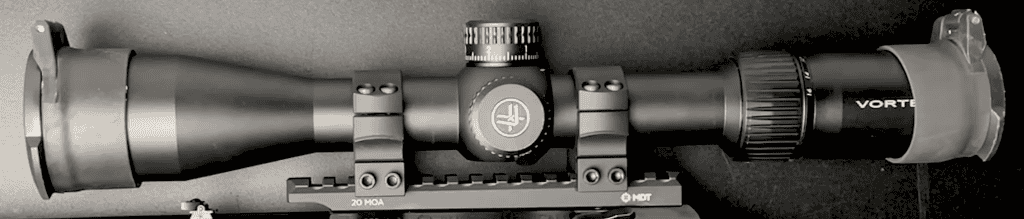
The 4-16x Sweet Spot for AR-10 Work
Most shooters overthink AR-10 scopes. They either grab a high-magnification precision rig that’s useless under 300 yards, or they stick with something like a 3-9x that runs out of gas before the rifle does. The Diamondback sits exactly where this platform needs it. At 4x you can scan for targets and engage inside 200 yards without hunting for a sight picture. At 16x you’ve got enough resolution to read wind at 600 and confirm impacts on steel.
I mounted this on my AR-10 in early September and ran it through a mix of range work and what I’d call practical shooting situations. The first day out, I zeroed at 100 yards and then walked steel from 200 to 550 in 50-yard increments. The FFP reticle meant I could use holdovers at any magnification, which turned out to matter more than I expected. When you’re dealing with a semi-auto and the speed that comes with it, being able to dial down to 8x and still trust your mil holds makes follow-up shots faster.
Christmas Tree Reticle That Actually Works
The EBR-2C reticle gets called a Christmas tree, and yeah, there’s a lot going on. First time I looked through it I thought it was cluttered. Then I used it for a few range sessions and realized the design makes sense once you stop staring at it and start shooting.
The thin center crosshair gives you precision for smaller targets, but at 4x it damn near disappears if you’re looking at dark timber or shade. That’s the FFP trade-off. The reticle scales with magnification, so at low power it gets fine. Not unusable, but you need decent lighting. Above 8x the reticle thickens enough that visibility stops being a concern. The hash marks become clear reference points for both elevation and windage.
Compared to the Athlon’s illuminated APRS11, the Vortex reticle felt more precise but required better light. The Leupold’s Tri-MOA stayed visible at all magnifications because it’s SFP, but you lose the ability to use holdovers anywhere except full power.
Turrets You Can Actually Trust
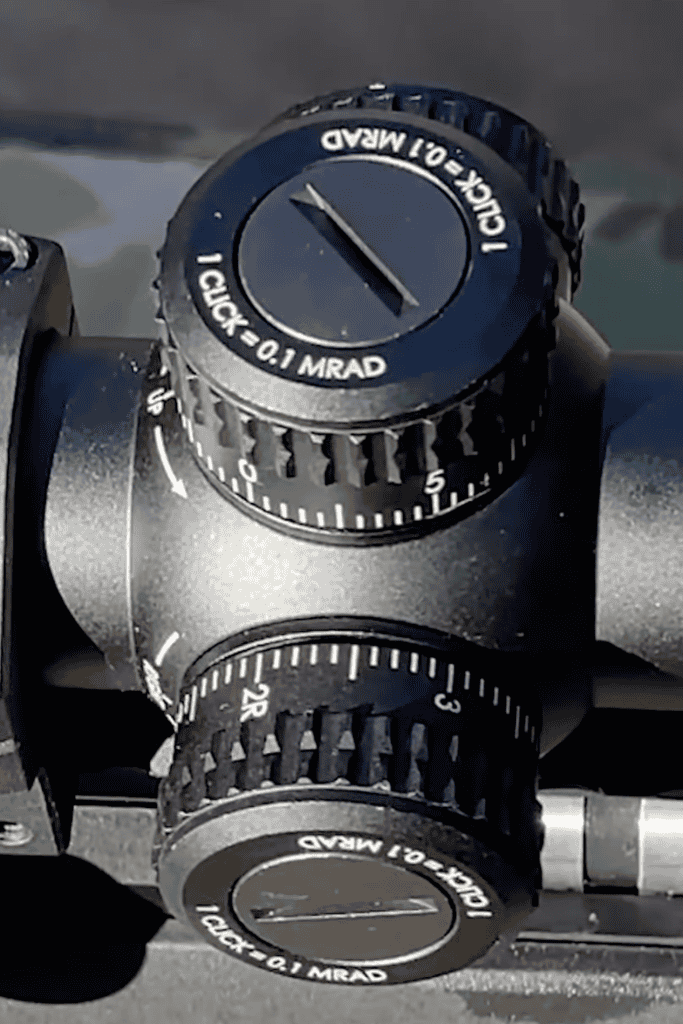
The exposed tactical turrets don’t have a zero-stop, which frustrated me initially. But after roughly 150 rounds through this scope, the tracking proved solid enough that I stopped worrying about it. Each 0.1 MRAD click is distinct. Not as crisp as turrets on scopes costing twice this, but they’re not mushy either. You feel and hear each adjustment.
I ran a modified box test at 100 yards, cranking through 3 MRAD adjustments in each direction and returning to center. The point of impact tracked perfectly. Then I took it to 450 yards and dialed elevation for five different steel plates at varying distances. The turrets returned to zero every time.
What you don’t get is revolution indicators or any fancy system to track multiple turns. With 25 MRAD of total travel, you’re dealing with about 4 full rotations. Pay attention or you’ll lose track of where you are. For AR-10 work out to 600 yards, this hasn’t been a problem for me. Most of my elevation adjustments stay within one revolution.
Glass Quality That Surprised Me
I went into this expecting budget glass. What I got was clarity that held up through most of the magnification range. Center image stayed sharp even at 16x. Edge clarity fell off past about 75 percent of the field of view, and yeah, you could see some chromatic aberration on high-contrast edges when the sun hit right. But for shooting steel or watching impacts, the glass delivered.
The parallax adjustment runs from 20 yards to infinity, and most of the dial sits between 20 and 75 yards. That’s weird for a scope designed to reach 1,000 yards, and it means you’re making fine adjustments in a narrow range when working at distance. Not a deal breaker, just something to be aware of when you’re setting parallax at 400 or 500 yards.
Field Test Data
| Test Parameter | Result |
|---|---|
| Accuracy at 100 yards (5-shot group) | 0.9 MOA with Federal GMM 168gr |
| Tracking Test (4 MRAD box at 100 yds) | Perfect return to zero, <0.1 MRAD deviation |
| Maximum Distance Tested | 625 yards on 12″ steel (consistent hits) |
| Low Light Performance | Usable 20 minutes after sunset at 12x |
| Reticle Visibility | Good above 8x; marginal at 4x in shade |
Tested on: AR-10 (.308 Win) | Federal Premium Gold Medal Match 168gr SMK
Pros and Cons
PROS
|
CONS
|
Performance Ratings
Learn more about how I test and rate scopes.
The Diamondback Tactical isn’t perfect, but it solves the AR-10 scope problem better than anything else I tested in this group. You get enough magnification to use the rifle’s full capability, a reticle that actually helps you shoot at distance, and turrets you can dial when precision matters. For most shooters running an AR-10, this is the scope that makes sense.
It would also be one of the best scopes for 6.5 Creedmoor for mid-ranges.
2. Leupold VX-Freedom 4-12×40 CDS – Best for Hunting & Lightweight Builds
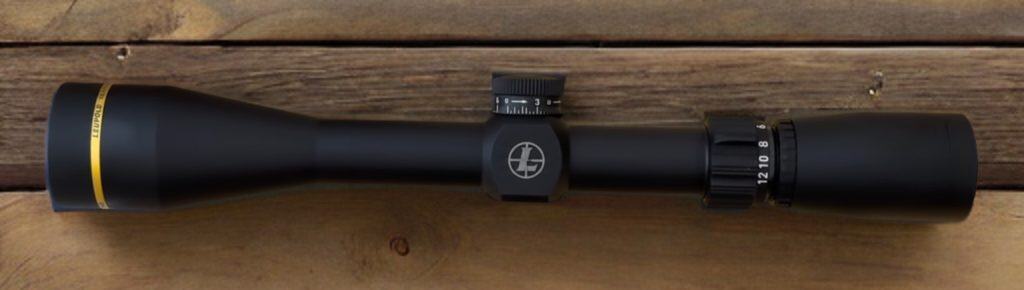
When Weight Actually Matters
At 15.7 ounces, this Leupold weighs seven ounces less than the Vortex and nearly 15 ounces less than the Athlon. That difference sounds trivial until you’re hauling an AR-10 up a ridge or holding it offhand waiting for a shot opportunity. The VX-Freedom turns an AR-10 into something closer to a traditional hunting rifle in terms of balance.
I tested this scope through October and early November, mostly in hunting scenarios rather than pure range work. The goal was to see if a scope designed for hunting could handle the AR-10’s capabilities without giving up too much on the precision side. What I found was a scope that made compromises I could live with for certain uses, but showed its limitations when I pushed past 400 yards.
That Variable Eye Relief Changes Things
The Leupold starts at 5.2 inches of eye relief at 4x and drops to 3.8 inches at 12x. This matters more on an AR-10 than it would on a bolt gun. The AR platform puts the scope higher above the bore, and getting consistent cheek weld while managing eye relief takes some adjustment.
What that variable range actually gives you is flexibility. At 4x with over five inches of working distance, you’ve got room to get on target fast even if your head position isn’t perfect. Useful in timber or when a deer steps out at 75 yards and you need to make it happen. At 12x when you’re stretched out prone or on a rest, the tighter eye relief isn’t a problem because you’ve got time to set up properly.
Compared to the fixed 3.8 inches on the Vortex, the Leupold felt more forgiving in field positions. The Primary Arms sat even tighter at 3.3 inches and never changed. The Athlon matched the Leupold’s worst case but didn’t give you the breathing room at low power.
The CDS System and What It Actually Does
The Custom Dial System means Leupold will build you a turret calibrated for your specific load. You send them your ballistics data, they laser-etch a dial with yardage marks instead of MOA clicks. In theory, you range your target, turn the dial to that number, hold center, and shoot.
I ran the factory turret marked in MOA rather than ordering a custom dial. The exposed elevation turret has 1/4 MOA clicks that are positive but not particularly refined. They work, but the adjustments feel less precise than the Vortex’s tactical turrets. The capped windage turret makes sense for hunting where you’re mostly using Kentucky windage anyway.
The zero-reset feature worked well. After confirming zero, you pull up the turret, rotate it to align the zero mark, and push it back down. Simple system that lets you dial for distance and then return to your 100-yard zero without counting clicks.
Where 12x Stops Being Enough
The 4-12x range handles most AR-10 hunting scenarios. Whitetail at 300 yards, hogs at 250, even coyotes at 400 if you can make the wind call. But when I took this scope to 550 yards on steel, I felt the limitation. At 12x you can see a 12-inch plate clearly enough to know where to aim, but reading mirage or confirming small adjustments gets harder.
The Vortex’s 16x gave me noticeably better resolution at distance. The Athlon’s 24x made reading wind easier than either. For pure hunting inside 400 yards, the Leupold’s 12x top end works fine. For anything approaching precision rifle work or consistent shooting past 500, you’re giving up capability.
Glass That Justifies the Price
Leupold glass has a reputation, and this scope lives up to it despite being their entry-level line. The image stayed sharp across the magnification range. Color rendition looked natural, contrast was good even in flat light, and edge clarity held up better than I expected from a 40mm objective.
In the last half hour of shooting light, the Leupold pulled ahead of the Vortex noticeably. Not enough to make or break a shot in most cases, but the brighter image and better contrast helped me stay on target longer. The Athlon’s 50mm objective gathered more light overall, but the Leupold’s glass quality kept it competitive.
Field Test Data
| Test Parameter | Result |
|---|---|
| Accuracy at 200 yards (5-shot group) | 1.2 MOA with Federal GMM 168gr |
| Eye Relief Comfort Test | Forgiving at 4x (5.2″); tight but usable at 12x (3.8″) |
| Maximum Practical Distance | 450 yards (limited by 12x magnification) |
| Low Light Performance | Excellent; maintained clarity 30 min after sunset |
| Scope Weight Impact | Improved rifle balance and handling significantly |
Tested on: AR-10 (.308 Win) | Federal Premium Gold Medal Match 168gr SMK
Pros and Cons
PROS
|
CONS
|
Performance Ratings
Learn more about how I test and rate scopes.
If you’re building a hunting rifle and weight matters, the VX-Freedom makes sense. The glass quality punches above its weight class, the scope handles like it belongs on a lighter rifle, and for shots inside 400 yards it delivers. Just understand that 12x is where it stops, and that limitation becomes real when distance increases.
In my opinion, The Vortex would also be a great scope for 30-06.
3. Athlon Argos BTR Gen 3 6-24×50 – Best for Long-Range Target Shooting
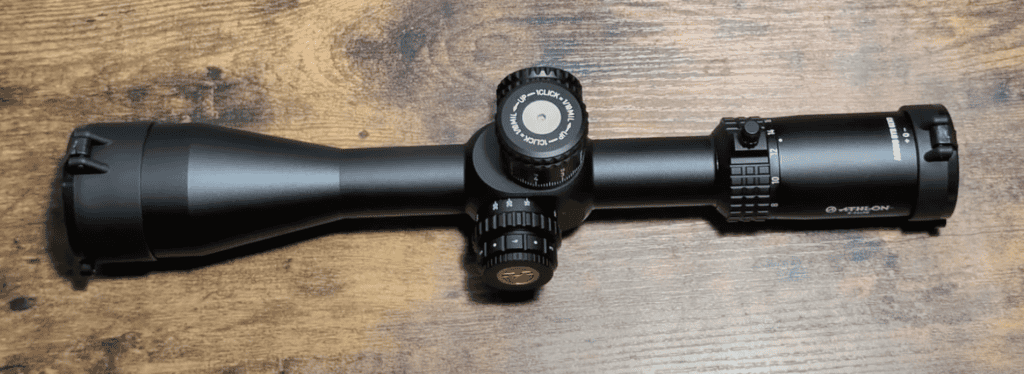
The Weight Problem Nobody Wants to Admit
Thirty ounces. That’s nearly two pounds of scope sitting on top of your rifle. Add rings and a mount and you’re pushing 2.5 pounds before you’ve fired a shot. On an AR-10 that already weighs 8 to 9 pounds empty, this scope turns your rifle into something you set up and shoot from a position, not something you carry far or shoot offhand.
I knew this going in. What surprised me was how much that weight mattered during actual shooting. At the bench or prone with a bipod, the Athlon’s heft settled the rifle and made it easier to spot impacts. Standing or kneeling for a quick shot, the scope made the rifle feel front-heavy and awkward. This isn’t a hunting scope unless you’re shooting from a stand or blind.
When 24x Makes Sense
The Athlon starts at 6x, which immediately limits its versatility. You can work at 200 yards on 6x, but the narrow field of view at 16.7 feet makes target acquisition slower than it should be. The other scopes started at 1x or 4x and gave you options. This one assumes you’re working at distance from the start.
Past 400 yards, that 24x top end started showing its value. At 550 yards I could read mirage clearly, watch bullet trace, and make precise wind calls. The Vortex topped out at 16x and left me wanting more magnification. The Leupold’s 12x made reading conditions at that distance mostly guesswork. The Athlon gave me enough optical power to actually use the AR-10’s capability at the upper end of its range.
I spent roughly 120 rounds testing this scope between 300 and 650 yards. The sweet spot seemed to be 500 to 600 yards where the magnification helped without making the image too dim or shaky. Beyond 600 the scope had the power, but the rifle and ammunition combination started showing their limits.
Zero Stop That Actually Stops
The Precision True Zero Stop uses a brass plate system. After zeroing, you remove the elevation turret cap (secured by a single top screw), and inside you’ll find a 1/8-inch thick brass plate. You then tighten the three side screws on this brass plate while ensuring the T-shaped side touches the metal post on the base, creating a mechanical stop. Finally, reinstall the turret cap with the zero line aligned with the vertical mark. Takes maybe ten minutes with an Allen wrench or coin. Once set, you can dial elevation up and when you spin it back down, it stops at your zero.
This is a real zero-stop, not just a reset. The Leupold’s system let you return to zero by watching the dial. The Athlon’s system physically prevents you from dialing past zero. In terms of features usually found on scopes costing more, the zero-stop and illuminated FFP reticle put the Argos ahead of both the Vortex and Leupold.
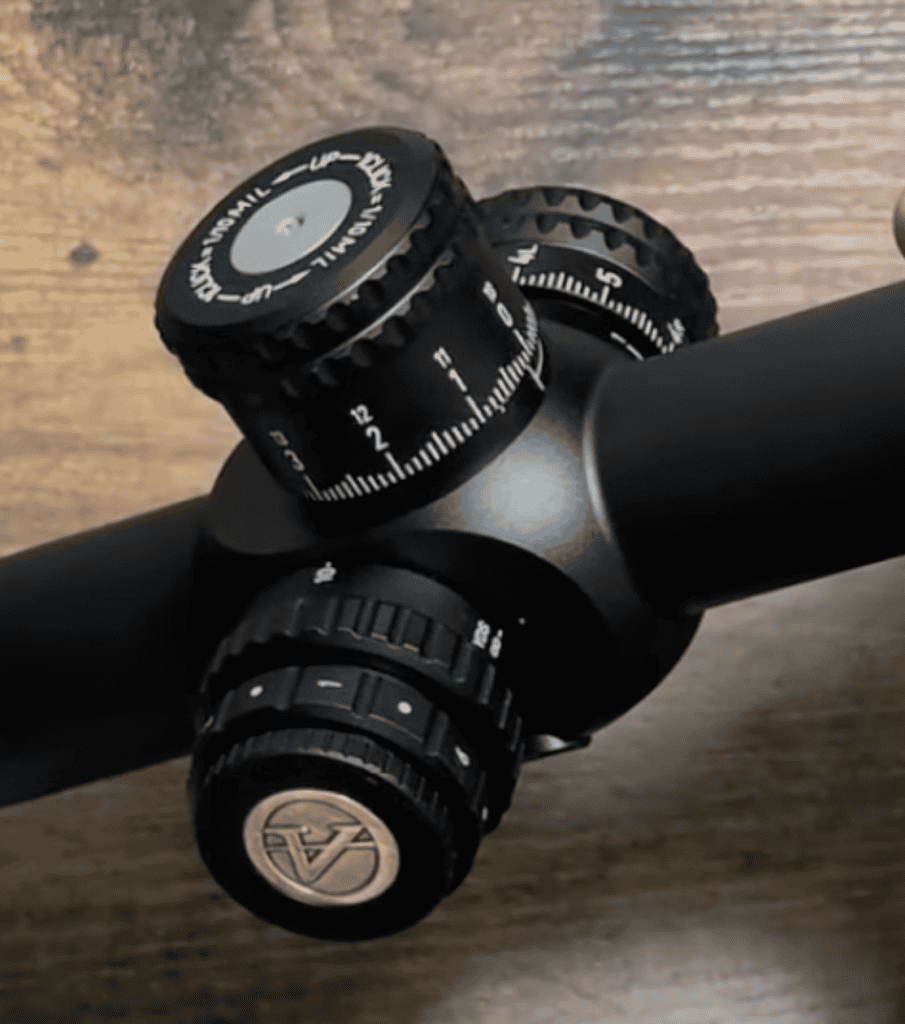
Illumination When Light Gets Tough
The APRS11 reticle is a mil-based Christmas tree with hash marks. Illumination covers the center portion of the reticle in red. Multiple brightness settings, with the first two useful for low light and the upper settings bright enough for day use if you’re shooting into shade.
I found myself using illumination more than I expected. Not because the reticle disappeared without it, but because the red center helped my eye settle on the aiming point faster. In late afternoon when I was shooting at dark steel against timber, the illuminated dot gave me a clear reference point without washing out my sight picture.
The illumination battery sits in the windage turret cap. Handy for changes but easy to forget about until you pull the cap and the battery falls out. Minor complaint, but it happened to me once when I was adjusting windage at the range.
Glass That’s Good Until It Isn’t
Up to about 18x, the Athlon’s glass impressed me. Image clarity stayed sharp in the center, color looked neutral, and the 50mm objective pulled in enough light that the scope stayed usable even as magnification increased. Chromatic aberration was minimal, edge clarity held up reasonably well, and I could spot impacts consistently.
Above 18x the image started to soften. Not dramatically, but enough that I noticed the difference between the Athlon at 24x and the Vortex at 16x wasn’t as large as I expected. If you’re spending most of your time between 12x and 18x, the Athlon’s glass quality delivers. If you’re planning to live at 24x, understand that the image quality drops off some at maximum magnification.
Field Test Data
| Test Parameter | Result |
|---|---|
| Accuracy at 100 yards (5-shot group) | 1.0 MOA with Federal GMM 168gr |
| Tracking Test (3 MRAD box at 100 yds) | Excellent return to zero, zero-stop engaged properly |
| Maximum Distance Tested | 650 yards on 18″ steel (80% hit rate) |
| Illumination Battery Life | Ran continuously for 8+ hours without dimming |
| Scope Weight Impact | Noticeably front-heavy; challenging for unsupported shooting |
Tested on: AR-10 (.308 Win) | Federal Premium Gold Medal Match 168gr SMK
Pros and Cons
PROS
|
CONS
|
Performance Ratings
Learn more about how I test and rate scopes.
The Athlon Argos BTR Gen 3 excels when you know your shooting will start at 300 yards and extend to the rifle’s limits. The weight, magnification range, and feature set all point toward dedicated long-range work. For anything requiring versatility or portability, look elsewhere.
This Athlon would also be one of the best scopes for .308.
4. Primary Arms SLx 1-8×24 – Best for Close to Mid-Range & Fast Acquisition
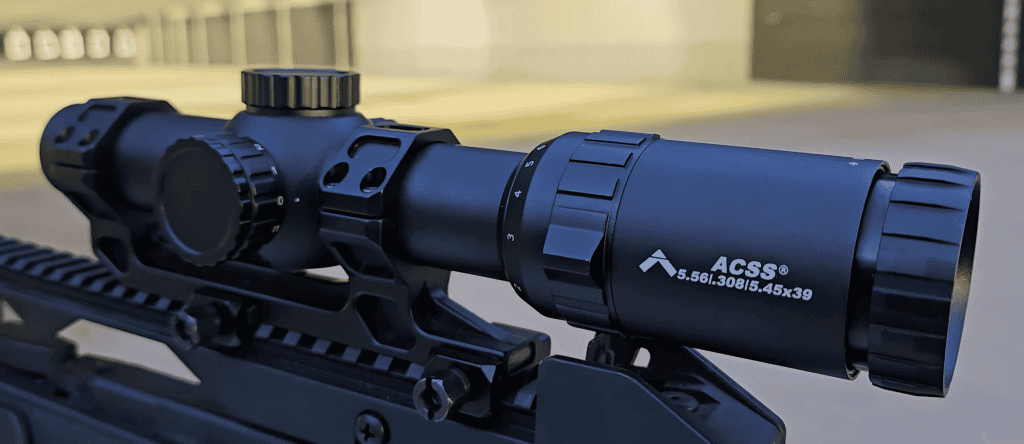
The Right Scope for the Wrong Rifle
The Primary Arms SLx is an excellent low-power variable optic. The ACSS reticle is smart, the true 1x works, and the price makes sense for what you get. But mounting this on an AR-10 is like putting touring tires on a sports car. The scope performs exactly as designed, which is the problem.
I tested this scope because enough people asked about running LPVOs on AR-10s that I wanted to see if it made sense. After 100 rounds between 100 and 400 yards, I confirmed what I suspected going in. An LPVO optimized for AR-15 work doesn’t scale up well when the rifle’s effective range doubles.
That 1x Advantage You Won’t Use
At 1x the Primary Arms gives you a true both-eyes-open sight picture. The large horseshoe catches your eye immediately, and the illuminated center chevron works like a red dot for fast shooting inside 100 yards. This is brilliant on a carbine. On an AR-10, it solves a problem that doesn’t exist.
Nobody builds an AR-10 for close quarters work. The rifle is bigger, heavier, and kicks harder than an AR-15. If you need true 1x capability for close-range speed, you’re running the wrong platform. The AR-10 exists to reach farther than 5.56 can, and this scope’s design works against that purpose.
I ran some drills at 50 yards just to test the 1x functionality, and yes, it’s fast. But then I moved to 300 yards and cranked the magnification to 8x, and the limitations became obvious.
When 8x Isn’t Enough
At 300 yards on 8x, I could engage man-sized targets without much trouble. The ACSS reticle’s holdover marks worked as advertised. But reading wind, spotting impacts on anything smaller than a 12-inch plate, or making precise shots on target transitions all felt harder than they should have.
The Vortex at 16x gave me twice the optical power. The difference was noticeable. At 400 yards the Primary Arms maxed out and I was straining to see detail. The Vortex still had another 100 yards of practical capability before magnification became limiting. The Athlon’s 24x made the comparison unfair.
I pushed the Primary Arms to 500 yards because I wanted to know where it stopped being useful. At 8x I could hit a 16-inch steel plate maybe half the time if I made good wind calls. But I wasn’t shooting with confidence. I was guessing more than I was reading conditions.
Fixed Parallax That Limits You
The parallax is fixed at 100 yards. For an LPVO designed for carbine work inside 300 yards, this makes sense. Most of your shooting happens at distances where parallax error stays minimal. On an AR-10 where you’re working past 300 yards regularly, fixed parallax becomes a real limitation.
At 400 yards I noticed the reticle moving relative to the target as my head position shifted slightly. Not dramatically, but enough that precise shots required being very deliberate about head placement. The other three scopes all had adjustable parallax that I could dial for the distance I was shooting.
ACSS Reticle Doing Its Job
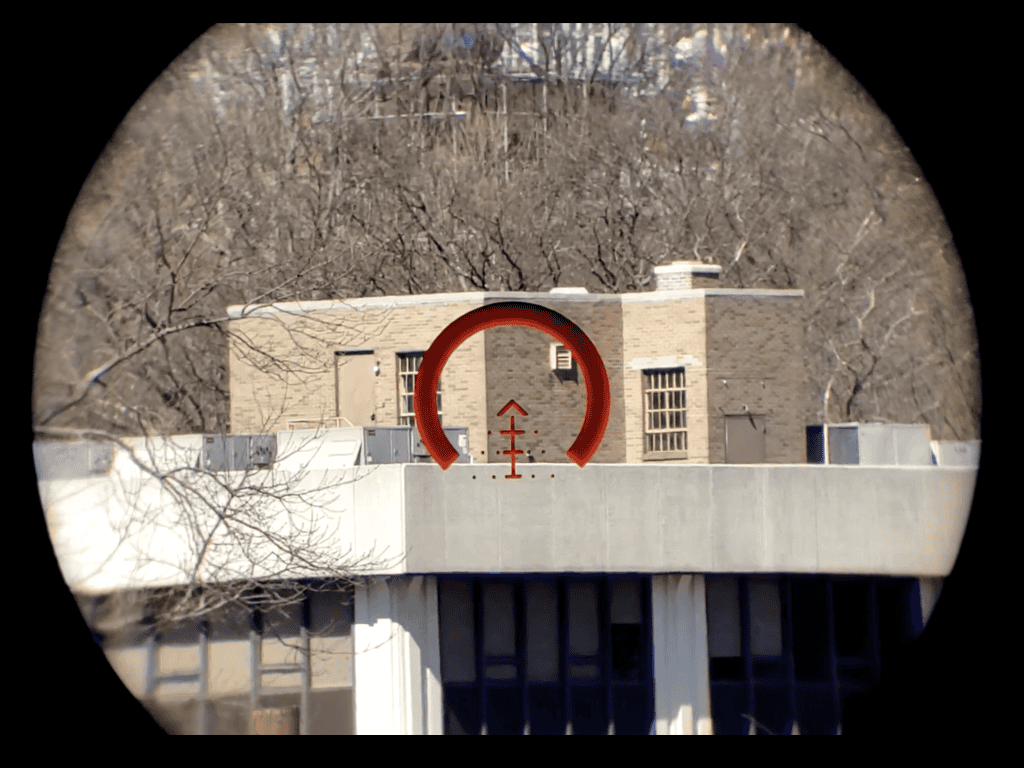
The Advanced Combined Sighting System reticle is legitimately clever. The chevron center provides a precise aiming point, the surrounding horseshoe helps your eye find the center fast, and the ranging brackets let you estimate distance if you know your target size. The BDC holdovers are calibrated for specific loads, and if you’re shooting one of those loads, the system works.
I was using Federal Gold Medal Match 168gr, which doesn’t match the ACSS calibration exactly. The holdovers got me close enough that I could make hits, but I had to verify the actual drops rather than trusting the reticle marks. With the correct ammunition the system would be more accurate.
The illumination runs on a CR2032 battery with 11 brightness settings. Daylight bright at the top, night-vision compatible at the bottom. The illumination helped the reticle stand out against varied backgrounds, particularly at 1x where the horseshoe gave me a bold reference point.
Glass and Weight That Work Better Elsewhere
At 17.9 ounces the Primary Arms weighs just over a pound. Only the Leupold came in lighter. The compact 10.3-inch length keeps weight close to the receiver, which helps rifle balance. For an AR-15 these are advantages. On an AR-10 where you’re already dealing with a heavier platform, saving a few ounces matters less than having adequate optical capability.
The glass quality was fine. Not impressive, not disappointing. Image clarity stayed acceptable through the magnification range, though the small 24mm objective meant light transmission dropped off noticeably above 6x. In bright conditions this wasn’t an issue. In the last hour before dark, the scope felt dim compared to the other three.
Field Test Data
| Test Parameter | Result |
|---|---|
| Close Range Speed (50 yds, 1x) | Excellent; horseshoe reticle acquisition fast |
| Mid-Range Performance (300 yds, 8x) | Adequate but strained; limited detail visibility |
| Maximum Practical Distance | 400 yards (magnification became limiting factor) |
| Parallax Error at 400 yards | Noticeable reticle shift with head movement |
| ACSS Reticle Functionality | Holdovers worked with verification; not exact for test ammo |
Tested on: AR-10 (.308 Win) | Federal Premium Gold Medal Match 168gr SMK
Pros and Cons
PROS
|
CONS
|
Performance Ratings
Learn more about how I test and rate scopes.
The Primary Arms SLx is a quality optic that I’d recommend without hesitation for an AR-15. On an AR-10, it gives up too much of the rifle’s capability to make sense. If you’re building a .308 carbine that never shoots past 300 yards, maybe this works. For anything else, you need more magnification.
How I Actually Tested These Scopes
Testing started in early September and ran through mid-November at my local range outside Dallas and at a private property in east Texas where I could stretch distances past 600 yards. Most sessions happened in temperatures between 65 and 85 degrees, with a few October mornings cold enough to see my breath. I tested in wind ranging from calm to maybe 15 mph sustained, which is about as much as I’m willing to shoot in for serious testing.
All four scopes went on the same AR-10 in .308 Winchester. I used Federal Premium Gold Medal Match 168gr Sierra MatchKing exclusively, roughly 650 rounds total split between the four scopes and the ones I rejected. Each scope got zeroed at 100 yards before I moved to distance work. The Vortex saw about 150 rounds, the Leupold got 130, the Athlon around 120, and the Primary Arms 100. The rest went into scopes that didn’t make the cut.
I tested but rejected a Bushnell Banner 3-9×40 that lost zero after about 40 rounds. The adjustments felt sloppy and the reticle actually shifted during recoil, which told me everything I needed to know about the internal construction. A Simmons 8-Point 3-9×40 came off after one range session when the parallax made precise shots past 200 yards nearly impossible and the turrets felt like they were grinding. I also tried a UTG 4-16×44 that tracked poorly enough in a box test that I didn’t bother shooting it at distance. The turrets would click but the point of impact didn’t move consistently with the adjustments.
For mounting I used a quality one-piece cantilever mount at 1.5 inches height, which is standard for AR platforms. Each scope got at least two range sessions, and the ones that showed promise got additional testing at varying distances and conditions. The goal was to see how each scope handled the AR-10’s actual use case, not just shoot groups at 100 yards.
Get more information on how I test optics here.
What Shooters Get Wrong About AR-10 Scopes
Treating It Like an AR-15
The biggest mistake is mounting a 1-6x or 1-8x LPVO because it works on your carbine. The AR-10 exists to reach farther than 5.56 can. If you’re using a scope designed for 300 yards and closer, you’re wasting the platform. Start your thinking at 4x minimum, and understand that 12x is where capability begins, not ends.
Ignoring Weight Consequences
A 30-ounce scope on an 8-pound AR-10 creates a front-heavy rifle you’ll only shoot from supported positions. If you hunt or need portability, a 20-ounce scope delivering 90 percent of the performance makes more sense than turning your rifle into a benchrest gun.
Mounting at Wrong Height
AR-10s need scope mounts between 1.35 and 1.5 inches high, measured from rail to scope centerline. Mount like a bolt gun and you’ll strain to get a sight picture. The inline design requires higher mounting than traditional rifles.
Your Questions Answered
Do I really need FFP on an AR-10?
FFP helps if you use holdovers at varying magnifications. SFP keeps better reticle visibility but holdovers only work at max power. For AR-10 work across multiple ranges, FFP gives flexibility worth having.
What’s the minimum magnification I should consider?
Start at 4-12x minimum. The 12x gets you to 400 yards comfortably. Plan to shoot past 500 regularly? You’ll want 16x or higher.
Should I worry about eye relief with .308 recoil?
AR-10 recoil is manageable but real. I’d want 3.5 inches minimum, more is better. Variable eye relief giving 4+ inches at low power provides safety margin if shooting offhand.
Which Scope for Your Shooting Style?
Building a hunting rifle for timber and fields: The Leupold VX-Freedom at 15.7 ounces keeps the rifle balanced, variable eye relief forgives rushed shots, and glass quality works in last light. You give up magnification past 12x, but most hunting happens inside 300 where that’s plenty.
Shooting steel matches or precision competitions: The Vortex Diamondback Tactical covers close transitions and distance work, FFP lets you holdover at any magnification, and exposed turrets track reliably. Best competition features for the price.
Dedicated long-range work beyond 500 yards: The Athlon Argos gives you 24x and zero-stop at mid-tier pricing. Weight doesn’t matter from a bench or bipod. The 6x bottom end limits close work, but that’s not what this rifle does.
Disclosure
I purchased all four scopes with my own money from retail channels. No manufacturers provided samples or knew I was testing. Links include affiliate codes that may earn me commission at no cost to you, helping keep this site running. My recommendations stay the same regardless.
Final Thoughts
The AR-10 scope question comes down to matching capability to actual use. The Vortex Diamondback Tactical won because it addresses the platform’s requirements without compromises that matter. You get magnification to use the rifle’s full range, a reticle that works at any power, and turrets you can trust. The glass quality and features compete with scopes costing significantly more.
The Leupold makes sense when weight and handling trump maximum range. The Athlon delivers long-range precision features at a fair price if you’re building a specialized tool. The Primary Arms belongs on an AR-15.
If you are a fan of powerful guns, you can check my m1a optics and scar 17 scopes guides.

Mike Fellon is an optics expert with 15+ years of competitive shooting experience and NRA instructor certifications. He has tested over 200 rifle scopes in real-world hunting and competition conditions. Based in Dallas, Texas.
A great review It helped a lot
Thank you
Dana Palmer
Glad I could help.
Thank u so much, u r a life saver on trying to figure out what to put my AR10 at the last min for hunting season..If u have anything on night vision and thermal scopes email me a link or something.
Thanks for the comment.
You can check the 2 guides here:
https://scopesreviews.com/best-night-vision-scope/
https://scopesreviews.com/best-thermal-scopes/
Great review, I took your advice and purchased the Vortex Diamondback 4X12X40BDC, for my build. Wow!! Excellent, actually so good I purchased the HP 4X16X44BDC, for my 300 Weatherby which is also, Wow!! Vortex product quality is first rate and the best warranty in the business. Whats not to like?
Are these scopes really that good? I’ve learned over the years, especially with scopes, you get what you pay for. You buy a $300 scope, you’ll have $300 quality. So i don’t scrimp on a scope..but i also don’t care to give away money. Are they comparable to mord expensive scopes?
Give them a try. With online stores policies, it’s easy to return if you are not satisfied.
Great review and thanks for all the information.