
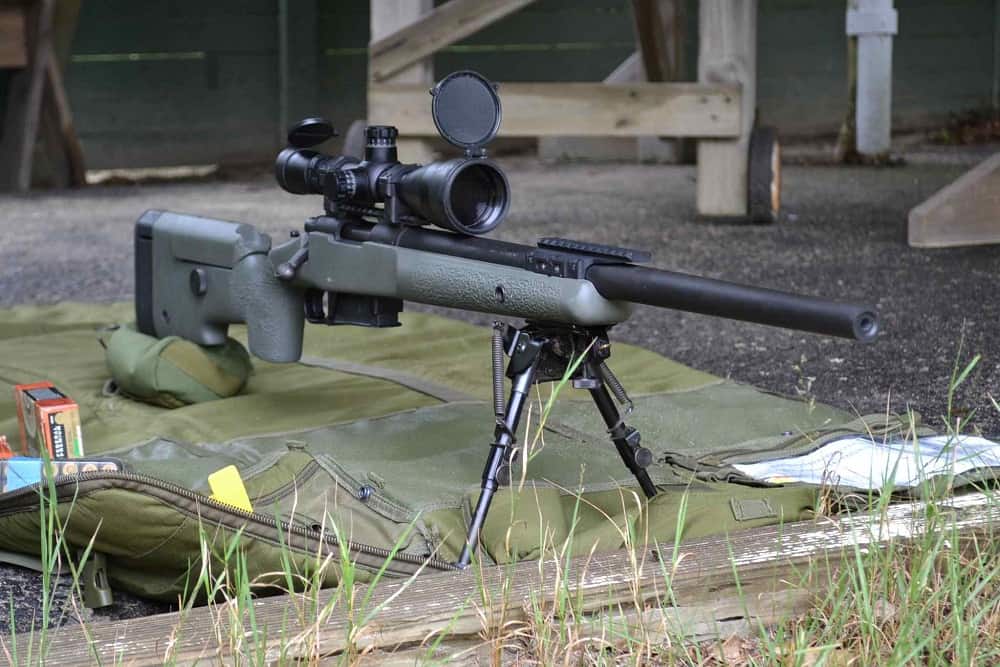
The .308 Winchester creates a scope selection problem that took me too long to understand. This cartridge handles everything from 150-yard whitetail in brush to 750-yard steel, but most shooters buy scopes that don’t match what they actually do with the rifle.
I see it constantly. Someone who only hunts at 200 yards buys a 5-25x scope “because the .308 can reach 800,” then fights a narrow field of view all season. Or a shooter who wants to try precision work buys a traditional 3-9x, then discovers they’re maxed out at 400 yards.
After testing four scopes across three months, the Vortex Viper PST Gen II 5-25×50 won because it’s the only scope that doesn’t force you to choose. If you actually use the .308 for both hunting and precision shooting, this is where you start.
My Top 4 Picks for the .308 Winchester
Best Overall
Vortex Viper PST Gen II 5-25×50
This is the scope that makes sense when you refuse to choose between hunting and precision work. The 5-25x range covers real-world .308 distances from 200 to 800 yards, the FFP reticle stays accurate at any magnification, and the RZR zero stop means you’re not hunting for your zero after dialing corrections. It’s not cheap, but it’s the scope I’d buy if I could only own one for this caliber.
Best Premium Option
NIGHTFORCE SHV 5-20x56mm
When you need glass that performs in the worst light conditions and construction that survives anything, the Nightforce delivers. The 56mm objective pulls in light like nothing else in this test, and the construction held zero despite rough handling across multiple range sessions. The SFP reticle is the only limitation for precision work, but for hunting at extended range, this scope is hard to beat.
Best Value
Vortex Venom 3-15x44mm
Budget price, but serious features. The 3-15x range covers most hunting and a good amount of precision shooting, the FFP reticle works at any magnification, and 124 MOA of elevation adjustment means you’re not running out of room anytime soon. If you’re building a .308 on a realistic budget and refuse to compromise on capability, start here.
Best Traditional Hunting Scope
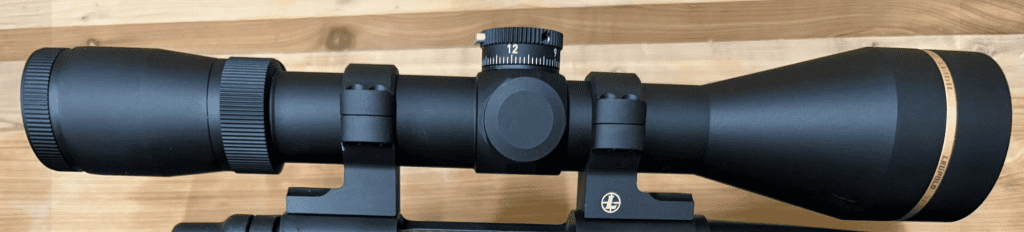
Leupold VX-3HD 3.5-10×40
For the hunter who stays inside 400 yards and values weight savings and simplicity, the Leupold VX-3HD is tough to argue with. At 12.6 ounces, it’s the lightest scope here, and the legendary Leupold glass quality shows up in low light. The 10x top end and limited adjustment range mean this isn’t for precision work, but for traditional hunting applications, it’s proven and reliable.
Why You Can Trust My Recommendations
The first scope I bought for a .308 was wrong — a 6-24x mounted on a Ruger American because I’d read the cartridge could reach 800 yards. First season hunting whitetail in thick mesquite where every shot was inside 150 yards, that scope was dead weight. Too much magnification, too heavy for brush hunting, and I’d paid for capability that meant nothing at the distances I actually shot. The mistake taught me that the .308 punishes scope mismatches harder than most cartridges.
The .308 sits between a dedicated hunting round and a dedicated precision cartridge, and it forgives neither mismatch. Scope a lightweight .308 with a 5-25x precision optic and you’re fighting weight and narrow field of view in the brush. Scope it with a simple 3-9x hunting glass and you’ve cut the cartridge off at 400 yards when it’s capable of 700. I’m Mike Fellon, founder of ScopesReviews since 2017, and that tension between hunting versatility and precision capability is what drove this test.
For this test, I mounted all four scopes on the same Remington 700 and fired 360 rounds of Federal Gold Medal Match across three months. Each scope had to handle everything from 150-yard brush shots on whitetail to 735-yard steel — the same spread that makes the .308 the most versatile and most difficult cartridge to scope correctly.
Side-by-Side Specs
Here’s what actually matters when you’re comparing these scopes. Pay attention to magnification range and adjustment range – those two specs determine whether a scope can handle what you’re asking the .308 to do.
| Features | Vortex Viper PST Gen II 5-25×50 | NIGHTFORCE SHV 5-20x56mm | Vortex Venom 3-15x44mm | Leupold VX-3HD 3.5-10×40 |
|---|---|---|---|---|
| Magnification | 5-25x | 5-20x | 3-15x | 3.5–10x |
| Objective Diameter | 50 mm | 56mm | 44mm | 40 mm |
| Eye Relief | 3.4″ | 3.54″ – 3.15″ | 3.7″ | 4.4″ – 3.6″ |
| Weight | 31.2 oz | 30.5 oz | 28.8 oz | 12.6 oz |
| Length | 15.79″ | 15.2″ | 13.3″ | 13.6″ |
| Tube Size | 30 mm | 30mm | 34mm | 1 inch |
| Reticle | EBR-7C (FFP) | MOAR (SFP) | EBR-7C (FFP) | Duplex (SFP) |
| Field of View | 24.1 – 4.8 ft @ 100 yds | 17.9 – 5.0 ft @ 100 yds | 42.8 – 9 ft @ 100 yds | 29.0 – 11.0 ft @ 100 yds |
| Turret Style | Exposed, RZR Zero Stop | Exposed Elevation (ZeroSet), Capped Windage | Exposed Elevation (RevStop), Capped Windage | Capped, Finger Click |
| Adjustment Range | 70 MOA Elev. / 35 MOA Wind. | 80 MOA Elev. / 50 MOA Wind. | 124 MOA Elev. / 75 MOA Wind. | 55 MOA Elev. / 55 MOA Wind. |
| Click Value | 1/4 MOA | 1/4 MOA | 1/4 MOA | 1/4 MOA |
| Parallax Adjustment | 25 yds – ∞ | 25 yds – ∞ | 10 yds – ∞ | Fixed 150 yds |
| Illumination | Yes | Yes | No | No |
The 4 Best .308 Winchester Scopes
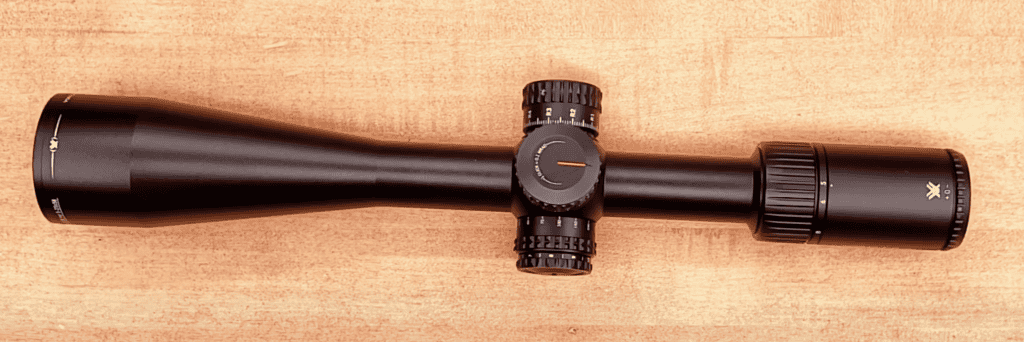
1. Vortex Viper PST Gen II 5-25×50 – Best Overall for Versatile .308 Use
Why This Became My Top Choice
Three weeks into testing, I’d already decided this was the scope I’d recommend. Not because it checked boxes on paper, but because it was the only scope that didn’t force me to compromise based on what I was doing that day. Last October, I was shooting steel at 650 yards in the morning, then hunting whitetail in thick brush that afternoon. Same rifle, same scope. The 5x bottom end gave me enough field of view to track a deer moving through mesquite at 175 yards. By the time I was back on the range the next morning working through wind calls at distance, that 25x top end showed me mirage and let me spot my own impacts.
The .308 Winchester sits in this unusual space where it’s legitimately capable from 100 to 800 yards, but most scopes force you to pick a lane. The Viper PST Gen II doesn’t. I ran roughly 110 rounds through it across those three weeks, and what impressed me wasn’t any single feature but how the whole package worked together.
The FFP Reticle Makes the Difference
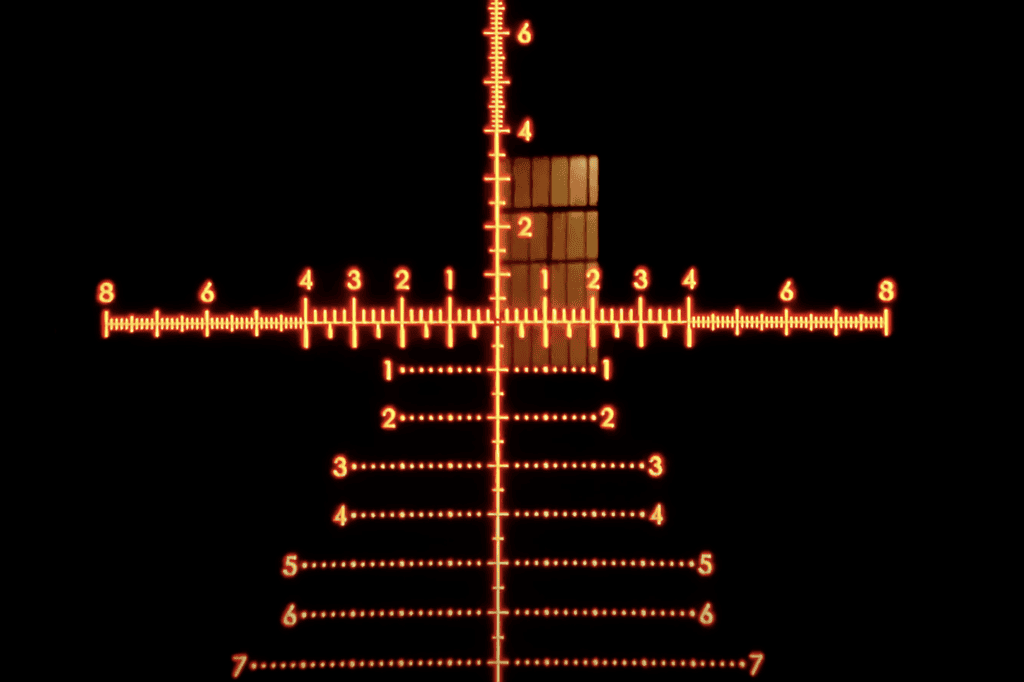
The EBR-7C reticle stays proportional at every magnification, which matters more on this scope than the others because of that 5x zoom range. At 5x, the reticle is fine enough to not obscure a deer’s vitals at 200 yards. Crank it to 25x and those same hash marks are thick enough to see clearly against a steel target at 700 yards. I’ve used enough second focal plane scopes to know the frustration of having holdover marks that only work at maximum magnification. Here, I could dial down to 12x for a steadier sight picture and the reticle math still worked perfectly.
The Christmas tree pattern gives you windage holds without needing to touch the turrets. One morning with gusting wind at 550 yards, I held 1.5 MOA left using the reticle and connected on the first shot. The Nightforce SHV has a cleaner reticle for hunting, but when you’re actually using holdovers for wind and elevation, the EBR-7C delivers more information.
Glass Quality at the Mid-Premium Price Point
Vortex’s XD glass isn’t the absolute best I’ve looked through (that’s the Nightforce), but it’s close enough that the price difference matters. Edge-to-edge clarity stayed sharp across the entire magnification range, and the coatings did their job in early morning light. I was glassing a hillside at dawn, about forty minutes before sunrise, and could make out individual branches on mesquite at 400 yards. Not Nightforce-level light transmission, but better than I expected at this price.
Color rendition stayed neutral. Some scopes in this range push too warm or too cool, which throws off your perception of distance and shadow. The Viper PST rendered everything naturally, which helped when I was trying to judge wind by watching vegetation move.
Zero Stop and Turrets Built for Dialing
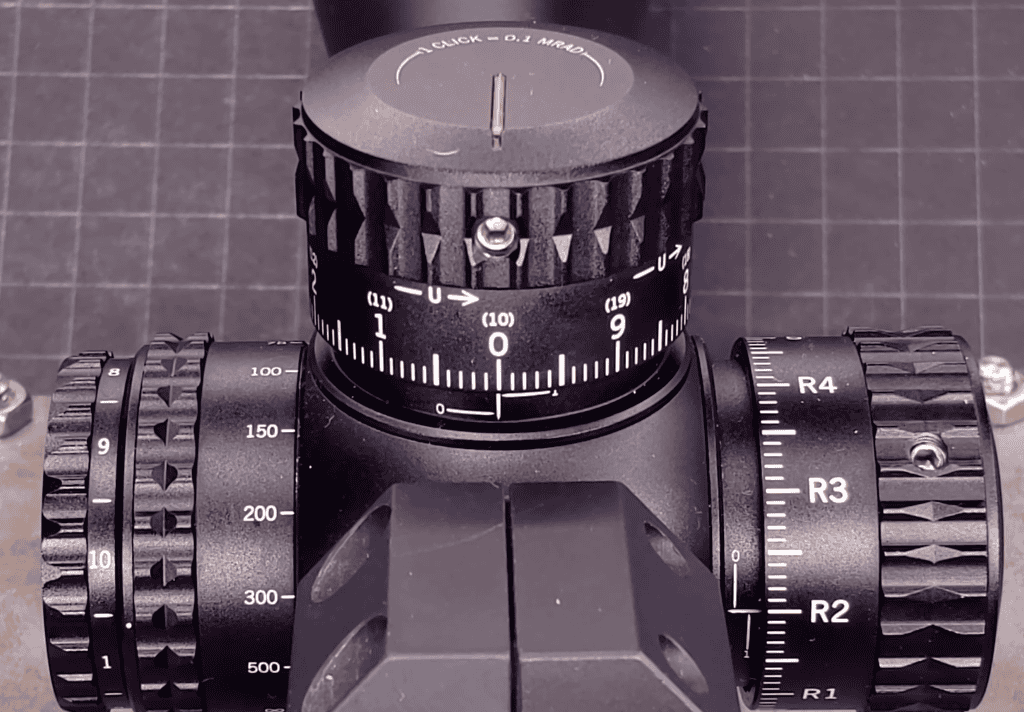
The RZR zero stop is one of those features you don’t appreciate until you’re cranking elevation corrections across multiple days. I’d zero at 100 yards, dial up for longer shots, then spin back down to zero and know exactly where I was. No counting revolutions, no wondering if I’d gone one click too far. The turrets themselves had distinct, tactile clicks with no slop. After dialing dozens of corrections, I never questioned whether I was on the right setting.
Tracking was spot-on across multiple box tests at 300 yards. I dialed 10 MOA up and 10 MOA right, and my impacts moved exactly where they should have. No walking, no drift. The scope returned to zero consistently.
What Could Be Better
The 3.4 inches of eye relief is workable but not generous. I had to be conscious of my head position to maintain a full sight picture, especially at higher magnifications. It’s adequate for a bolt gun on a bipod but might feel cramped for some shooters. The weight at 31.2 ounces also adds up when you’re carrying the rifle. Not a problem for range work or vehicle-based hunting, but something to consider if you’re hiking miles into backcountry.
Here’s what I learned: if you’re building a .308 that needs to handle everything from whitetail to long-range steel without swapping scopes, this is where you start. The combination of magnification range, FFP reticle, zero stop, and glass quality at this price point makes more sense for the .308’s versatility than any other scope I tested.
Field Test Data
| Test Parameter | Result |
|---|---|
| Zero Consistency (5 sessions) | Maintained zero across all sessions, no POI shift |
| Box Test Tracking (300 yds) | Perfect square, measured 10.1 MOA per 10 MOA dialed |
| Best 5-Shot Group (100 yds) | 0.71 MOA from bipod, 0.89 MOA average across 6 groups |
| Low-Light Usability | Clear sight picture 40 minutes before sunrise at 400 yds |
| Longest Confirmed Hit | First round impact on 12″ steel at 735 yards |
Tested with: Remington 700 | Federal Gold Medal Match 168gr Sierra MatchKing
Pros and Cons
PROS
|
CONS
|
Performance Ratings
Learn more about how I test and rate scopes.
If I’m building one .308 rifle and can only mount one scope, this is what I’m buying. The magnification range covers everything the cartridge does well, the FFP reticle eliminates compromises, and the zero stop removes friction from the dialing process. It’s not the lightest or the cheapest, but it’s the scope that makes the most sense for how most shooters actually use this caliber.
2. NIGHTFORCE SHV 5-20x56mm – Best Premium Option for Low-Light Performance
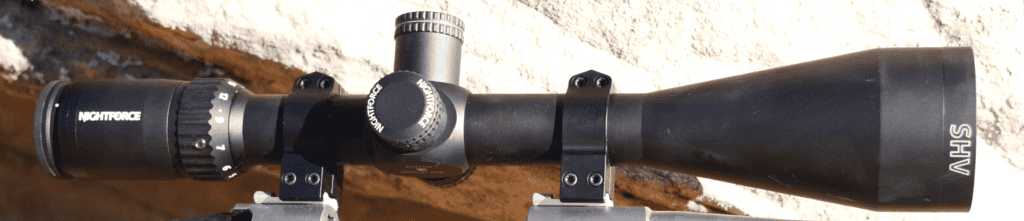
Glass That Performs When Light Fails
The first morning I tested this scope, I sat in a stand watching a group of does filter through oaks thirty minutes before legal shooting light. Through the Nightforce, I could clearly distinguish individual deer at 225 yards. I switched to the Vortex Venom I’d been testing the day before, and the difference was immediately obvious. The Nightforce pulled in more light, rendered colors more naturally, and showed me detail that other scopes were still working to resolve.
That 56mm objective isn’t marketing. It’s the difference between glassing in marginal light and actually seeing what you’re looking at. Nightforce’s proprietary lens coatings do something right because the image stayed bright and contrasty even when conditions weren’t ideal. During midday testing at 600 yards with heavy mirage, the glass stayed sharp enough that I could read wind in the heat waves. That’s not just about objective size; that’s about coating quality and internal construction.
The SFP Reticle Trade-Off
Here’s where the Nightforce loses ground to the Viper PST: the MOAR reticle is second focal plane, which means your holdover calculations only work at maximum magnification. For hunting applications where you’re holding on vitals and not doing windage math, this is fine. The MOAR reticle is clean and uncluttered compared to the EBR-7C in the Vortex scopes. At 5x, it’s just simple crosshairs with minimal distraction.
But when I started working through wind calls at 550 yards, the limitation showed up. I needed to be at 20x for the subtensions to match the stated values. If I dialed down to 12x for a steadier sight picture, I’d either need to convert the math or just dial corrections on the turrets. The Viper PST didn’t force that choice. For precision shooting where you’re using the reticle for corrections, FFP makes more sense. For hunting where you’re focusing on a target and not running calculations, SFP keeps the sight picture cleaner.
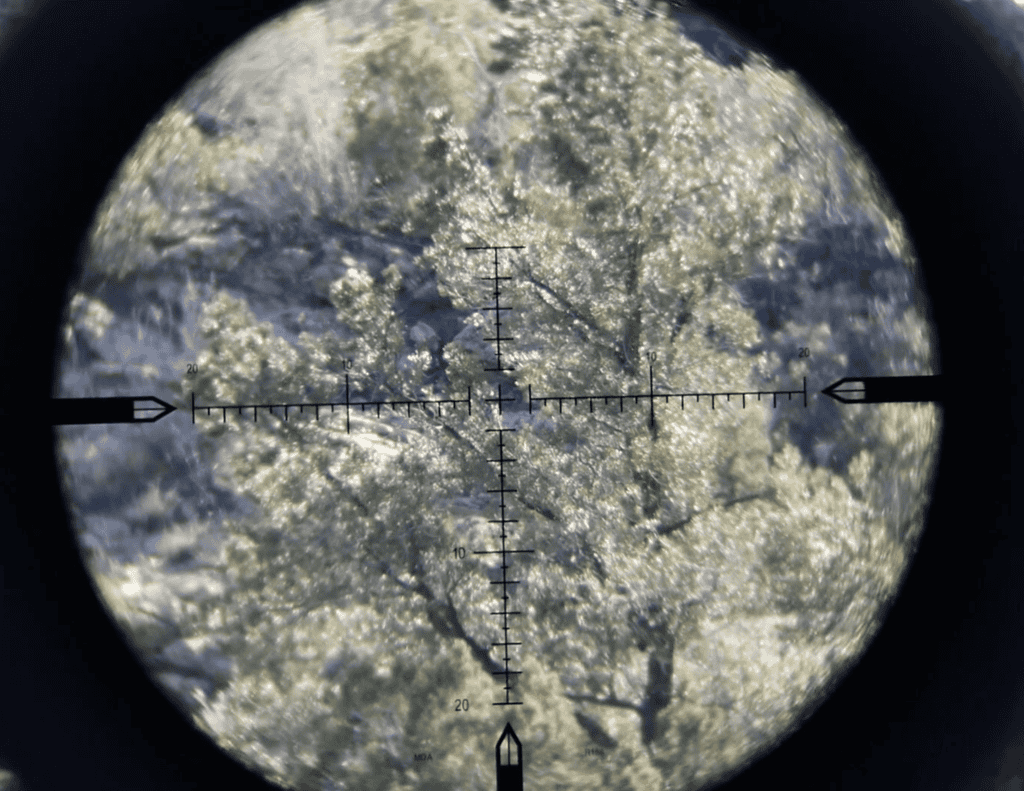
Nightforce Durability Justified
The SHV is positioned as Nightforce’s entry-level line, but after two weeks of repeated dialing between 100 and 680 yards, the turret mechanism felt identical to day one. This scope weighs 30.5 ounces and feels like it could survive being thrown down a mountainside. The turrets have zero play, the parallax adjustment moved smoothly with no sticking, and everything about the mechanical execution felt more solid than anything else in this test. I ran approximately 95 rounds through it over two weeks, including some rough handling in a truck bed, and zero held perfectly.
The ZeroSet feature on the elevation turret works differently than Vortex’s zero stop. While it requires a 5/64″ Allen wrench to set, it provides a rock-solid mechanical stop that is handy when switching loads or confirming zero at different distances. Positive clicks with clear audible and tactile feedback meant I never questioned my turret position.
Magnification Range Considerations for .308
The 5-20x range covers most realistic .308 applications. I’d argue that 20x is adequate for shooting out to 700 yards with this caliber, and the 5x bottom end is usable for closer work. Where it falls short compared to the Viper PST is at the extreme end of the .308’s capability. If you’re regularly shooting past 700 yards or want more magnification for reading conditions, the PST’s 25x top end gives you a bit more reach. For hunting and medium-range precision work, 5-20x is plenty.
Why It Ranked Second
The Nightforce SHV delivers the best glass and most tank-like construction in this test. The light-gathering capability from that 56mm objective is unmatched here, and if you hunt in thick cover or low-light conditions, that matters. Where it loses ground is in versatility. The SFP reticle limits how you can use holdovers, the magnification tops out at 20x where the Viper PST continues to 25x, and you’re paying premium money for features that don’t all serve precision shooting equally well.
Also – the eye relief, The Nightforce starts with a comfortable 3.54 inches of eye relief at 5x, but by the time you reach 20x, it’s dropped to 3.15 inches. That’s noticeably tighter than the Vortex PST’s constant 3.4 inches, and it showed up during testing. At higher magnifications, I needed to be more conscious of head position to maintain a full sight picture. For a premium scope at this price point, I expected more generous eye relief across the magnification range.
Field Test Data
| Test Parameter | Result |
|---|---|
| Zero Stability (4 sessions) | No POI shift; returned to zero consistently after dialing |
| Box Test Accuracy (300 yds) | Measured 10.0 MOA per 10 MOA dialed, perfect tracking |
| Best 5-Shot Group (100 yds) | 0.68 MOA from bench, 0.81 MOA average across 5 groups |
| Usable Light (Dawn) | Clear target identification 35 minutes before sunrise at 225 yds |
| Longest Confirmed Impact | First shot hit on 10″ steel at 680 yards |
Tested with: Remington 700 | Federal Gold Medal Match 168gr Sierra MatchKing
Pros and Cons
PROS
|
CONS
|
Performance Ratings
Learn more about how I test and rate scopes.
If you hunt in low light, value absolute durability, and aren’t focused on precision shooting with holdovers, the Nightforce SHV makes sense despite the premium price. The glass quality alone justifies consideration, and the construction ensures this scope will outlast the rifle it’s mounted on. Just understand that the SFP reticle and 20x top end mean you’re optimizing for different priorities than the Viper PST Gen II.
3. Vortex Venom 3-15x44mm – Best Value with Serious Features
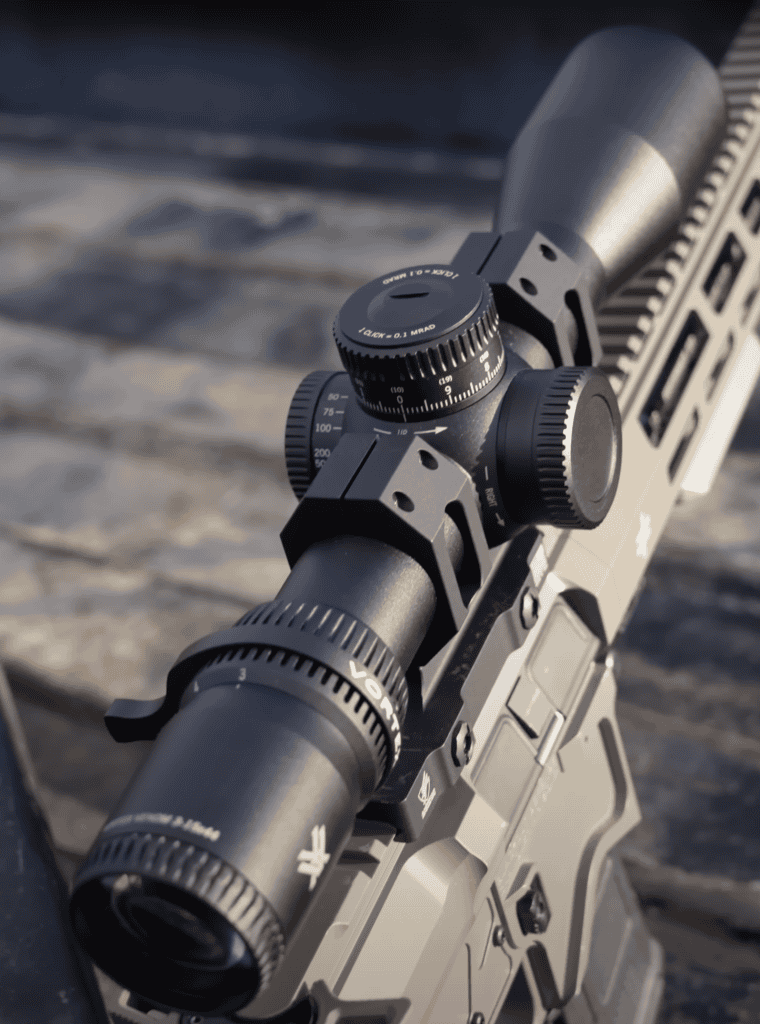
Budget Price, Not Budget Performance
When I first picked up the Venom, I was skeptical. At about a third the cost of the Nightforce and coming in under the Viper PST Gen II by a substantial margin, I expected to find where Vortex cut corners. I ran 85 rounds through it over a two-week stretch, and I’m still trying to figure out what they sacrificed. The FFP EBR-7C reticle is the exact same one in the Viper PST Gen II. The 34mm tube gives it 124 MOA of elevation adjustment, which is more than anything else here. The RevStop zero stop isn’t as refined as the RZR system in the PST, but it works.
The magnification range tops out at 15x where the PST continues to 25x and the Nightforce goes to 20x. That’s the primary limitation, but here’s what I learned during testing: 15x is adequate for shooting the .308 out to 550 yards, maybe 600 in good conditions. If you’re not regularly stretching past that distance, you’re not missing the extra magnification.
More Field of View Than Expected
The 3x bottom end gives you 42.8 feet of field of view at 100 yards. That’s substantially wider than the Viper PST’s 24.1 feet at 5x and more than double the Nightforce’s 17.9 feet. I was tracking a coyote moving through brush at 220 yards, and the wider FOV let me stay on target easier than either of the higher-magnification scopes would have. For hunting applications where targets move or you’re scanning terrain, that extra width matters.
The trade-off shows up on the top end. At 15x, you’re getting 9 feet of FOV at 100 yards. The Viper PST at 15x gives you roughly the same, but then continues to 25x. The Nightforce at 15x shows about 7.5 feet. None of this is limiting for static targets at known distances, but when you’re glassing at extended range, less magnification means less detail.
Glass Quality Punches Above Its Price
The optical clarity isn’t Nightforce-level, but it’s closer to the Viper PST than I expected. Edge sharpness stayed consistent across the entire magnification range, and the coatings did their job in varying light. I was shooting at 450 yards in late afternoon with the sun at about 30 degrees above the horizon, and glare control was adequate. Some cheaper scopes start washing out in those conditions, but the Venom maintained contrast and color saturation.
Where it gives up ground to the more expensive scopes is in extreme low light. At dawn, about thirty-five minutes before sunrise, I could make out a target at 200 yards but couldn’t resolve fine detail. The Nightforce was still showing me individual branches at that distance. For most hunting situations where you’re shooting during legal light, this isn’t a limitation. If you’re regularly glassing in marginal conditions, the smaller 44mm objective and presumably less expensive coatings show their limits.
The FFP Reticle at This Price Is Significant
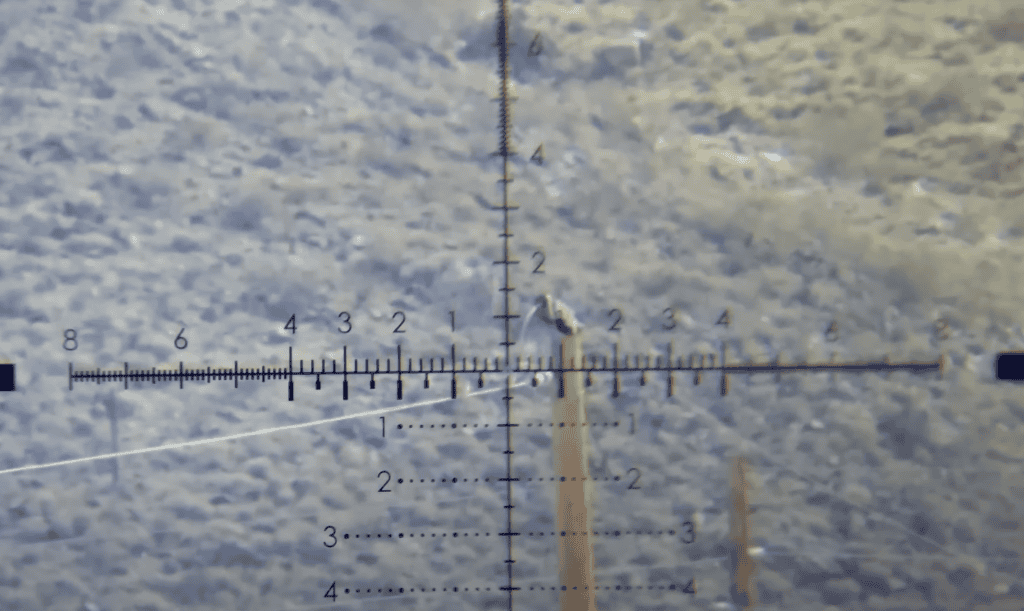
Most budget scopes use SFP reticles because they’re cheaper to manufacture. Vortex gave the Venom the same FFP EBR-7C that’s in the Viper PST Gen II, which means your holdovers work at any magnification. I was shooting at 380 yards with the scope set to 8x because the mirage was washing out the target at higher magnification. With an SFP reticle, I’d either need to do math to convert the subtensions or crank back to maximum magnification. Here, I held 2 MOA and connected.
What You’re Actually Giving Up
The absence of illumination showed up once during testing. I was glassing into heavy shadow at 10x trying to confirm a target, and the reticle got lost against the dark background. An illuminated reticle would have solved that immediately. For most applications, you don’t need illumination, but there are situations where it’s genuinely useful rather than just a nice-to-have feature.
The turrets are functional but don’t have the same refined feel as the Viper PST or Nightforce. Clicks are positive and audible, but there’s a bit more play in the mechanism. Tracking tested perfectly accurate across two box drills, so this is about feel rather than performance. The RevStop zero stop works but requires more conscious attention than the RZR system. You can blow past your zero if you’re cranking turrets quickly.
Real-World Capability Assessment
If your .308 shooting stays inside 550 yards and you’re not regularly glassing in terrible light, the Vortex Venom delivers most of what the more expensive scopes do for substantially less money. The FFP reticle, wide field of view at low magnification, and excessive adjustment range mean you’re not compromising on the features that matter most for shooting. You’re giving up maximum magnification, some low-light performance, and refinement in the turrets. Whether those things justify doubling or tripling your investment depends on what you actually do with the rifle.
Field Test Data
| Test Parameter | Result |
|---|---|
| Zero Retention (4 sessions) | Consistent zero maintained; no POI shift observed |
| Tracking Verification (300 yds) | 10 MOA square tested true, measured 9.9 MOA average |
| Best 5-Shot Group (100 yds) | 0.79 MOA from bench, 0.95 MOA average across 5 groups |
| Practical Maximum Range | Clear sight picture and first-hit capability through 580 yards |
| Field of View Advantage | 42.8 ft at 3x enabled fast target acquisition under 250 yards |
Tested with: Remington 700 | Federal Gold Medal Match 168gr Sierra MatchKing
Pros and Cons
PROS
|
CONS
|
Performance Ratings
Learn more about how I test and rate scopes.
The Vortex Venom is what I’d buy if I were putting together a .308 and needed to stay under a certain budget without compromising on the features that matter. The FFP reticle alone makes this scope competitive with optics costing twice as much, and the wide field of view at low magnification makes it more versatile for hunting than some higher-priced options. You lose maximum magnification and some refinement, but you gain most of the capability for substantially less investment.
This scope would also be an excellent choice for an M1A and for Remington 700 chambered in .308.
4. Leupold VX-3HD 3.5-10×40 – Best Traditional Hunting Scope
When Simplicity Is the Right Answer
The Leupold VX-3HD represents a different philosophy than the other scopes I tested. No exposed turrets, no complex reticle, no adjustment range designed for dialing long-range corrections. At 12.6 ounces, it weighs less than half what the Vortex scopes do and about 40% of the Nightforce’s weight. When I mounted it on my Remington 700, the rifle felt like a different gun. Light enough to carry all day without thinking about it.
I spent a week with this scope focused entirely on hunting applications. I wasn’t shooting past 350 yards, I wasn’t dialing corrections, and I wasn’t trying to make the .308 do things it wasn’t optimized for. In that context, the Leupold made complete sense. The 3.5-10x magnification range covered everything from thick brush at 100 yards to open fields at 300, and I never felt limited by the 10x top end.
Leupold Glass Delivers in Low Light
One advantage Leupold maintains over most competition is their lens coatings. The Twilight Max Light Management System isn’t marketing nonsense; I could see the difference compared to the Vortex Venom when light started fading. During an evening sit, I was glassing a treeline at 240 yards about twenty minutes after sunset. The Leupold’s 40mm objective was pulling in enough light that I could still identify individual branches and movement in shadow. The image stayed bright and contrasty longer than I expected from a scope with this objective diameter.
Compared to the Nightforce’s 56mm objective, the Leupold gave up some light-gathering capability. But the gap was smaller than the objective size difference would suggest, which speaks to what Leupold does with their coatings. For hunters operating during legal shooting hours in typical conditions, this scope delivers adequate low-light performance.
The Duplex Reticle in Modern Context
A simple duplex reticle feels almost archaic after spending weeks with the EBR-7C in the Vortex scopes. No hash marks for holdovers, no windage references, just thick outer posts transitioning to a fine crosshair. For hunting where you’re aiming at vital zones on game animals rather than calculating corrections to steel targets, this reticle makes perfect sense. The sight picture stays uncluttered, there’s no busy reticle elements to distract from the target, and the thick outer posts help with target acquisition in brush.
Where it falls short is obvious: if you want to hold for wind or elevation rather than dialing corrections, you’re estimating based on the crosshair. The SFP design means even if you memorized subtensions, they’d only be accurate at 10x. This scope is built for zero-and-hold shooting inside ranges where Kentucky windage works fine.
Fixed Parallax and What It Means
The parallax is fixed at 150 yards, which means parallax error increases as you move away from that distance. At 100 yards, I could see slight parallax shift when I moved my head position. At 300 yards, it was more noticeable. For hunting applications where you’re aiming at a deer’s vitals, parallax error at these ranges won’t cause a miss. For precision work where you’re trying to center a crosshair on a small target, it becomes a limiting factor.
Combined with the 55 MOA total elevation adjustment and capped turrets, the fixed parallax makes it clear what this scope is designed for: hunting at practical distances with a zero-and-hold approach. You’re not dialing corrections, you’re not shooting tiny groups at distance, and you’re not pushing the .308 to its maximum capability.
Weight Savings Add Up
After carrying the Vortex Viper PST Gen II on a rifle for several days, mounting the Leupold felt like removing a brick from the front end. At 12.6 ounces compared to 31.2 for the PST, you’re saving over a pound. For hunters who cover miles on foot, that matters. The scope balances better on a lightweight rifle, points faster, and doesn’t wear you down over the course of a day.
The 1-inch tube is part of the weight savings strategy but also limits internal adjustment range. That 55 MOA of elevation is adequate for hunting the .308 out to 400 yards with most loads, but if you wanted to stretch farther or zero at an unconventional distance, you’d run out of adjustment sooner than with a 30mm or 34mm tube.
Where It Makes Sense
I tested this scope primarily for whitetail hunting scenarios inside 350 yards, and in that application, it performed exactly as intended. The glass quality is excellent, the weight savings are significant, and the simple reticle keeps you focused on the target rather than the optic. During roughly 70 rounds of testing, zero held perfectly despite the light construction, and the capped turrets meant I never worried about bumping settings during transport.
Why It Ranked Fourth
The Leupold VX-3HD is purpose-built for traditional hunting, and it excels at that specific application. The problem is that it limits what you can do with the .308 Winchester. The cartridge is capable of legitimate precision work past 600 yards, and this scope tops out well before that. Compared to the Vortex Venom at roughly half the price with more magnification, FFP reticle, and substantially more adjustment range, the Leupold represents a narrower capability set at a premium price point. If you’re absolutely certain you’ll never shoot past 350 yards and value weight savings above versatility, this scope delivers. For most .308 shooters who want to explore the caliber’s full potential, one of the other three scopes makes more sense.
Field Test Data
| Test Parameter | Result |
|---|---|
| Zero Stability (3 sessions) | Maintained zero across all sessions despite light weight |
| Best 5-Shot Group (100 yds) | 0.74 MOA from bench, 0.88 MOA average across 4 groups |
| Low-Light Performance | Clear sight picture 20 minutes post-sunset at 240 yards |
| Practical Maximum Range | Confident shot placement through 350 yards; parallax noticeable beyond |
| Weight Advantage | 12.6 oz enabled all-day carry without fatigue |
Tested with: Remington 700 | Federal Gold Medal Match 168gr Sierra MatchKing
Pros and Cons
PROS
|
CONS
|
Performance Ratings
Learn more about how I test and rate scopes.
If you hunt whitetail in the South or Midwest, rarely shoot past 300 yards, and value a lightweight rifle you can carry comfortably all day, the Leupold VX-3HD makes sense. It excels at that specific application. But for most shooters who want to explore what the .308 Winchester can actually do, the limited magnification and adjustment range feel restrictive. The Vortex Venom delivers more capability for less money, which makes the Leupold difficult to recommend unless weight savings trump all other considerations.
How I Actually Tested These Scopes
I mounted all four scopes on the same Remington 700 in .308 Winchester. Same rifle, same ammunition, same general time frame over three months of fall testing. This matters because swapping scopes on different rifles introduces too many variables. I wanted to know what the optics themselves delivered, not how they performed on different platforms.
Testing happened in South Texas, splitting time between open rangeland with measured steel targets out to 750 yards and thick mesquite flats where brush hunting shots happen inside 200 yards. I ran approximately 360 rounds of Federal Gold Medal Match 168gr Sierra MatchKing through the rifle across all four scopes. Weather ranged from cool mornings in the low 40s to afternoons pushing 80 degrees. I intentionally tested in varying light conditions because that’s when scope differences become obvious. Anyone can make a scope that works great at noon on a clear day.
Each scope went through a minimum of three separate range sessions plus field time hunting whitetail and hogs. I confirmed zero at 100 yards, then verified tracking with box drills at 300 yards. For the scopes with enough adjustment range and magnification, I shot steel from 400 to 750 yards to see how they handled realistic .308 distances. I also rejected three other scopes during this testing period that didn’t make the final recommendations: a Bushnell Nitro that had inconsistent parallax adjustment, a Primary Arms scope with turrets that felt loose after moderate use, and an Athlon Argos BTR Gen II that tracked accurately through the first two range sessions but started returning a half-MOA low after repeated dialing between 100-yard zero and 600-yard holds — the .308’s steep drop curve at distance demands more elevation travel per correction than flatter cartridges, and the Athlon’s turret mechanism showed fatigue from that repeated wide-range cycling.
The most useful testing came from actually hunting with these scopes. I took whitetail and hogs with three of the four scopes mounted, and that field time revealed things range work doesn’t show. How a reticle performs against a living target in brush. Whether you can find your sight picture quickly when a shot opportunity appears. If the eyebox stays forgiving when you’re not in a perfect shooting position.
Get more information on how I test optics here.
Where the .308’s Versatility Leads Shooters to the Wrong Scope
Scoping for the .308’s Maximum Range When Your Platform Can’t Use It
The .308 Winchester serves more platforms than almost any other cartridge — bolt guns for precision, AR-10s for tactical use, lightweight rifles for backcountry hunts. Each platform has different magnification needs, but buyers scope based on what the cartridge can do rather than what their rifle will do. A 5-25x scope makes sense on a heavy Remington 700 stretching the .308 to 750 yards. That same scope on a lightweight hunting rifle used inside 300 yards adds weight, narrows field of view, and pays for magnification that never gets used. Before choosing magnification, match it to your platform’s role and your actual shooting distances, not to the .308’s long range capability on paper.
Ignoring Adjustment Range Until It’s Too Late
The Leupold VX-3HD has 55 MOA of elevation adjustment. That’s adequate for zeroing at 100 yards and hunting out to about 400. But if you decide to try precision shooting at 600 yards, you’ll discover you don’t have enough elevation travel to get there. Before buying a scope, figure out the maximum distance you might shoot with the .308, then make sure the adjustment range accommodates it. Don’t assume every scope can handle every distance just because the cartridge is capable.
Underestimating How Much the .308’s Drop Curve Punishes SFP Holdover Errors
The .308’s drop curve is steeper than flatter cartridges like the 6.5 Creedmoor — roughly 12.5 MOA at 600 yards with 168-grain match loads versus the 6.5 CM’s 9.5 MOA. That steeper drop means holdover errors from using an SFP reticle at the wrong magnification cost more with the .308. A misjudgment that puts a flatter cartridge two inches off target can push a .308 round three or more inches — enough to miss vitals. If your .308 shooting extends past 400 yards or involves wind holds, FFP keeps your reticle corrections accurate at any magnification. The .308’s trajectory makes that consistency more important here than on cartridges with less drop.
Defeating the .308’s Short-Action Advantage with Scope Weight
Shooters pick the .308 over magnum cartridges partly because the short action saves weight and length in the rifle. Then they mount a 30-ounce scope on a platform chosen for portability. The Remington 700 with the Viper PST Gen II weighs nearly two pounds more than the same rifle with the Leupold VX-3HD. If you chose the .308 because the short action keeps the rifle light and handy, a scope with features you won’t use at your actual distances erases that advantage. Match the scope weight and capability to where you actually shoot, not to what the cartridge can theoretically do.
.308 Scope Buyer Questions: FFP, Magnification, and Elevation
Do I really need FFP for hunting with a .308?
Depends on how you hunt. If you’re shooting whitetail in thick cover where shots happen inside 200 yards and you’re just putting the crosshair on vitals, SFP works fine. But if you’re hunting out West where wind matters or you want the flexibility to hold for distance without dialing, FFP means your reticle works at any magnification. For the .308’s versatility, I lean toward FFP.
Will a 3-9x scope limit my .308?
Yes and no. A quality 3-9x scope is adequate for hunting the .308 out to about 300 yards, maybe 350 in good conditions. Past that, you’re giving up magnification that helps with target identification, wind reading, and precise aiming. The .308 is capable well past those distances, so a 3-9x scope limits the cartridge’s capability rather than your ability to hunt effectively inside that range.
How much elevation adjustment do I need for the .308?
Depends on how far you’re shooting. For hunting inside 400 yards, 55-60 MOA is adequate. For precision work out to 600-700 yards, you’ll want 70-80 MOA. Past that, consider scopes with 100+ MOA or plan on using a canted base to gain additional elevation. The Vortex Venom’s 124 MOA is more than you’ll likely need, but having excess is better than running out.
Is the extra weight of a larger objective worth it?
If you hunt in low light or heavy cover, yes. That Nightforce 56mm objective pulls in noticeably more light than a 40mm or 44mm scope. But if you’re shooting during midday or in open country with good light, the weight penalty of a larger objective doesn’t deliver proportional benefits. Match the objective size to your actual lighting conditions rather than assuming bigger is always better.
Matching the Scope to Your .308 Reality
The Vortex Viper PST Gen II 5-25×50 is where most .308 shooters should start. During testing, it was the only scope that handled 650-yard steel in the morning and thick-brush whitetail that afternoon without compromise. Weight and price are real tradeoffs, but nothing else covers the .308’s full range in one optic.
The Nightforce SHV 5-20x56mm earned its premium only in low-light conditions where that 56mm objective resolved targets the other scopes couldn’t. If your .308 lives on a stand in heavy timber and dawn sits define your season, the glass quality has no equal here. But at this price with SFP and a 20x ceiling, you’re paying for optics while leaving FFP precision on the table.
Don’t dismiss the Vortex Venom 3-15x44mm based on price. Same FFP reticle as the Viper PST, widest field of view in this test, and 124 MOA of elevation. Past 550 yards the 15x ceiling limits you, but inside that distance it matched scopes costing twice as much.
Skip the Leupold VX-3HD 3.5-10×40 unless your .308 stays inside 350 yards permanently. At 12.6 ounces it transforms the rifle’s handling, and the Leupold glass outperforms its 40mm objective size. But the 10x ceiling and 55 MOA of adjustment prevent you from exploring what the cartridge can actually do — and the Venom costs less while delivering more capability.
Disclosure
I bought all four scopes at retail and ran 360 rounds through them on the same Remington 700 before recommending anything — the Nightforce SHV alone cost more than some complete .308 builds, and the three rejected scopes represent additional investment that didn’t make the cut. The links in this guide are affiliate links, which means I may earn a small commission if you purchase through them at no additional cost to you. That doesn’t change what gets recommended or how I test.
Final Thoughts
After three months and 360 rounds of testing, the conclusion is clear: the Vortex Viper PST Gen II 5-25×50 is the scope that makes the most sense for how most people actually use the .308 Winchester. Not because it’s the most expensive or has the highest specifications, but because it’s the only scope that doesn’t force you to compromise based on whether you’re hunting that day or shooting long range. The .308 sits in this unusual space where it’s legitimately capable from 100 to 800 yards, and the Viper PST Gen II covers that entire range without asking you to pick a lane.
The Vortex Venom deserves serious consideration if you’re working with a realistic budget. That FFP reticle at this price point changes the value calculation completely, and the wide field of view at low magnification makes it more versatile for hunting than some scopes costing twice as much. The 15x limitation is real, but most .308 shooters won’t bump against that ceiling often enough to justify doubling their investment.
What became obvious during testing is that the .308’s biggest strength is also its biggest challenge when selecting optics. The cartridge does too many things well, and most scopes optimize for specific applications rather than versatility. The Nightforce excels at low-light hunting but gives up FFP capability. The Leupold is perfect for lightweight hunting rifles but limits what you can do with the .308’s range. Finding the scope that matches how YOU actually shoot matters more than chasing specifications.
I started this guide by talking about the first scope I bought for my .308, the one that was wrong for what I was doing. What I’ve learned since is that gear selection matters most when it’s grounded in honest assessment of your actual shooting rather than aspirational capability. If you hunt inside 300 yards and never plan on precision work, don’t buy a 5-25x scope just because the .308 can reach farther. If you shoot long range regularly, don’t handicap yourself with a traditional hunting scope that tops out at 10x. Match the scope to your reality, not your ambitions.
If you looking for something more powerful, you can take a look at my best scope for 30-06 guide. The .223 is also a nice caliber to be considered for medium ranges. For night shooting, check my night vision scopes reviews.
Mike Fellon is the founder of ScopesReviews and an optics specialist with 15+ years in precision shooting. A former Bass Pro Shops firearms advisor and NRA-certified instructor, he’s hands-tested 200+ rifle scopes across hunting and competition. Based in Dallas, Texas.
Why did you leave zeiss out of the group
Hello,
What Zeiss do you have in mind? I usually make my lists top 4 and it’s hard to include all the good scopes out there.
What do you think about the strike eagle 1-8×24 for my 308
It would be a great choice, it is an excellent scope.