
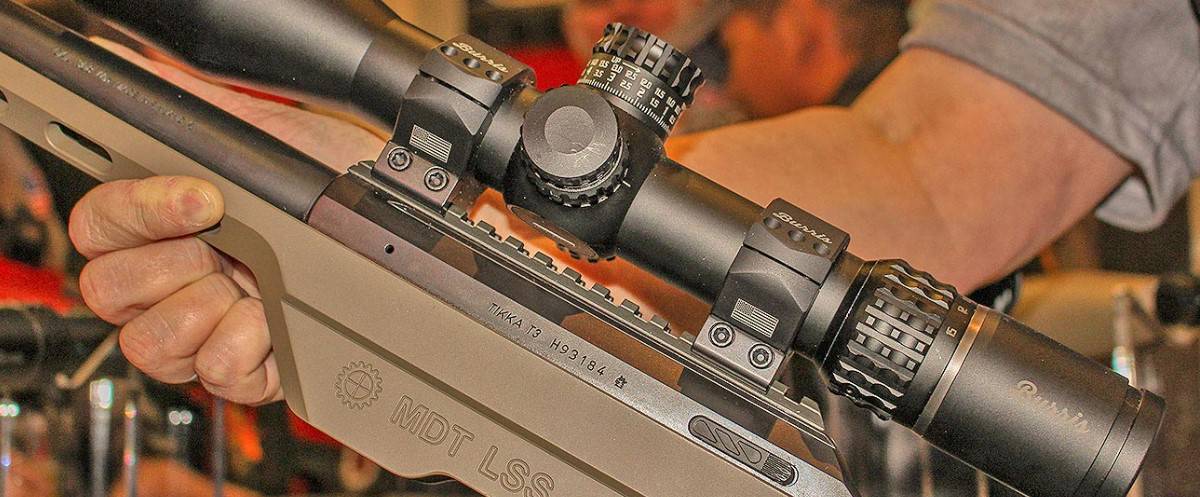
A thousand yards is the distance where the gap between scope marketing and actual scope performance becomes impossible to hide. You’re dialing real elevation. You’re reading wind that’s already done things at 600 yards your bullet won’t see until 800. The reticle either gives you what you need to spot misses and correct, or it doesn’t. The turrets either return to zero shot after shot, or they wander a tenth of a mil over a string and you spend the rest of the day blaming your trigger pull.
That’s why these four ended up on the same rifle. Each gets called a “1000-yard scope” by somebody, and that label means very different things across this price spread. After two months of fall testing pushing them out to 1,100 yards, the Nightforce ATACR 7-35×56 was the one I’d trust to make a cold-bore first-round hit at distance without second-guessing the scope. Whether that’s the right pick for you depends on what you actually do with your rifle, which is what the rest of this is for.
My Top 4 Picks for 1000 Yards
Best Overall
Nightforce ATACR 7-35×56
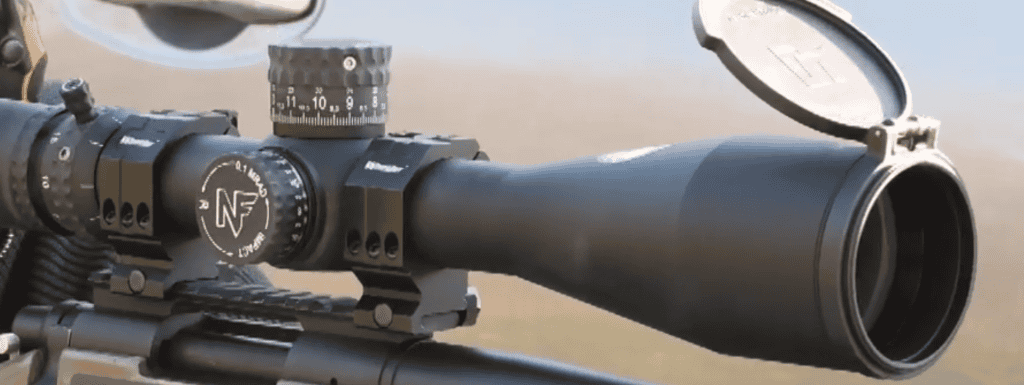
If there’s a scope I’d hand a stranger and say “this will hit at 1000 yards if you do your part,” this is it. The tracking is the kind you stop thinking about, which at this distance is the highest compliment I can pay a scope. Glass cuts through Texas mirage at 30x better than anything else I had on the bench, the MIL-XT reticle is genuinely useful for spotting and correcting, and 29 MRAD of elevation is plenty for 6.5 Creedmoor at 1000 yards and into the mid-range past that. It’s expensive, and you feel that price every time you click the turret.
Best for Competition Shooters
Vortex Razor HD Gen III 6-36×56
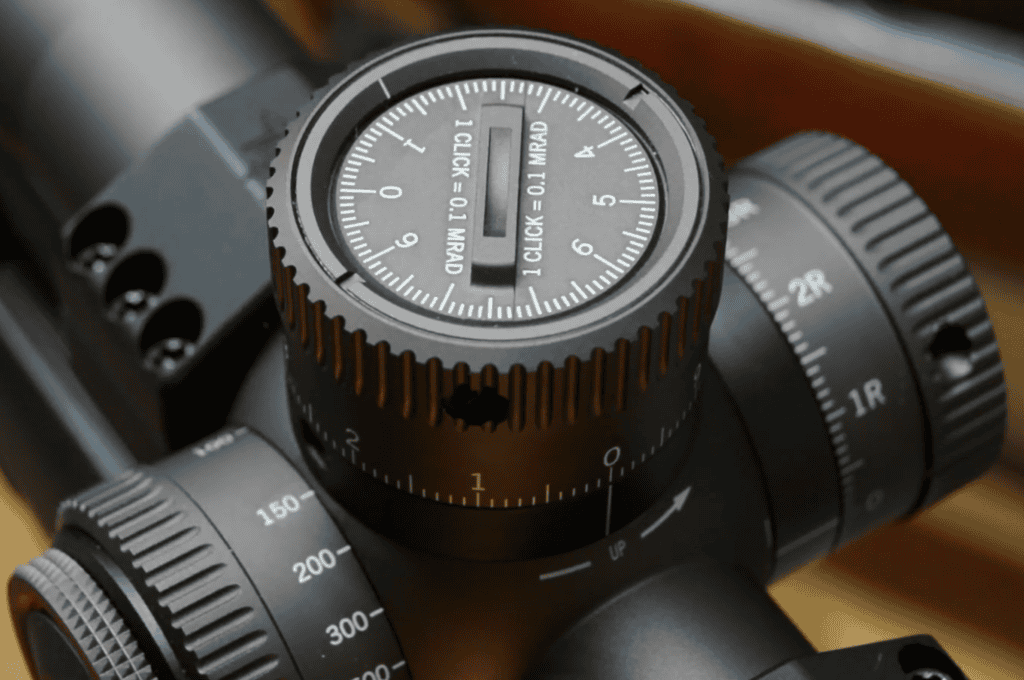
The L-TEC+ locking turrets and 36 MRAD of elevation make this the scope to grab if you’re chasing PRS hits or stretching past 1000 with regularity. It’s a tank, both in how it shoots and how it feels on the rifle, and that weight is the price of admission. If you’re shooting from bipod or barricade and weight doesn’t bother you, the Razor delivers performance that’s a hair behind the ATACR.
Best for Target Shooters
Sightron SIII SS 8-32×56
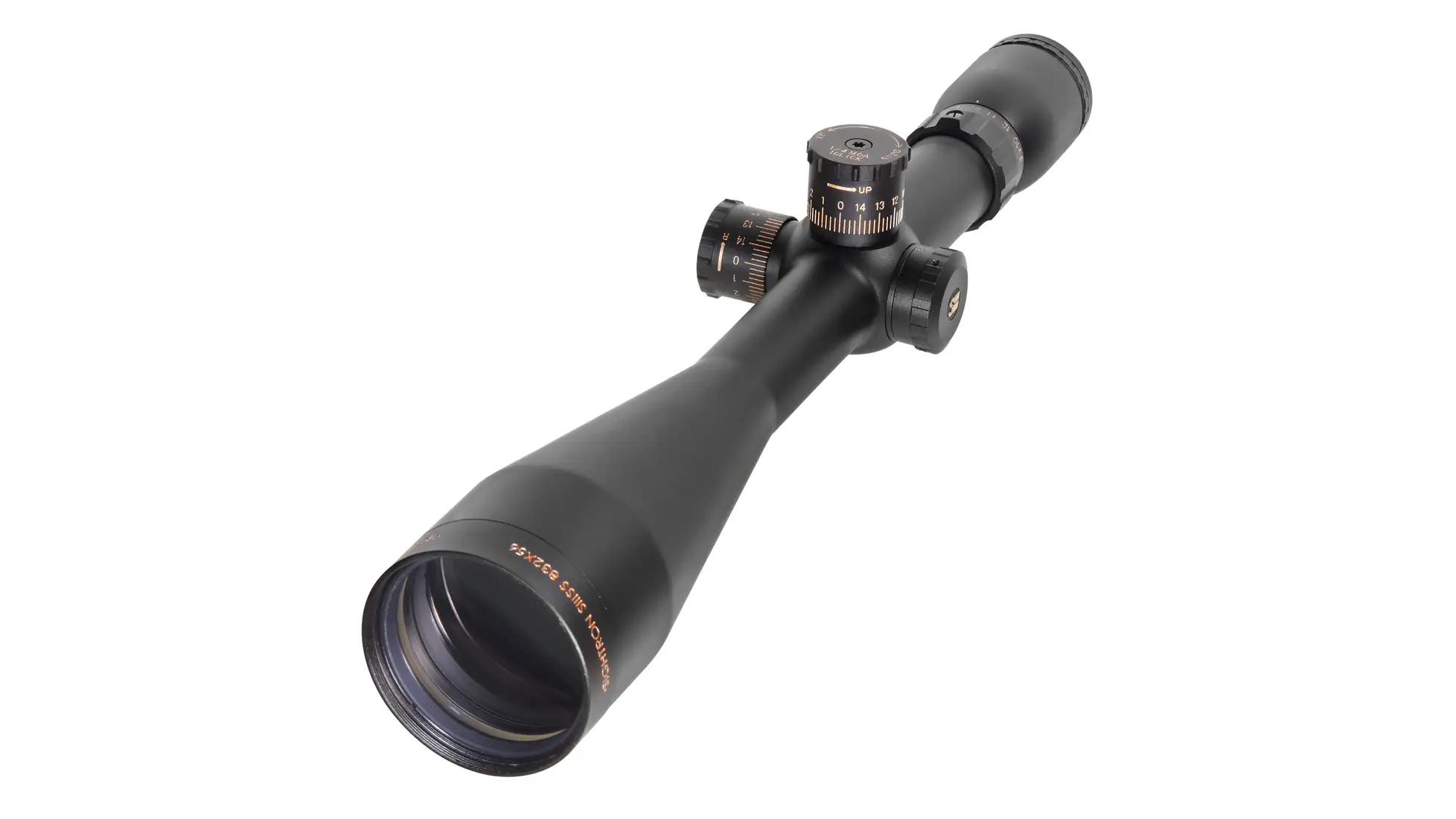
The glass on this scope punches well above its price tier, and at 26.5 ounces it’s the lightest scope here—dramatically lighter than the two premium scopes and about five ounces lighter than the Viper. The SFP MOA-2 reticle is a deliberate choice that makes sense for benchrest and F-class shooters who stay parked at one magnification and dial everything. If you’re a target shooter rather than a tactical-style shooter, this is the value play that doesn’t feel like a compromise.
Best Budget Pick
Vortex Viper PST Gen II 5-25x50mm
This is the one I’d recommend to someone getting into 1000-yard shooting who doesn’t want to spend premium-scope money before they know they’ll stick with it. The FFP MRAD reticle works the same as the expensive scopes, the RZR zero stop holds, and it tracks well enough to make hits at distance. The 50mm objective gives up some light against the 56mm crowd, and 20 MRAD of elevation is tighter than I’d want for ELR, but for the cost it gets the job done.
Why My 1000-Yard Scope Picks Hold Up
Most of the scopes I’ve watched fail at distance don’t fail the way the marketing copy warns you they might. They don’t suddenly go dark or fog up on a humid morning. They drift. A tenth of a mil here, a tenth there, accumulated over a hundred clicks of dialing, and the round that should’ve been on the 10-inch plate at 1000 is in the dirt and you can’t tell why. That pattern shows up over and over once you start pushing scopes hard enough to expose it, and 1000 yards is where it starts to expose itself.
I run a local 1000-yard club match a few times a year, plus regular bench and prone sessions out past 800, and that volume of dialing under conditions I actually care about is what built my sense for which scopes hold and which ones quietly don’t. The four scopes in this guide all went through the same core test protocols on the same rifle, against the same targets, on the same days where I could manage it—though round counts and specific tests like tall-target tracking varied across scopes. That’s the only way comparison numbers mean anything at this distance.
My background as an NRA-certified instructor and the 200-plus scopes I’ve worked through over the last decade matter less for this guide than the simple fact that I’ve watched a lot of expensive optics underperform when the elevation got real. That’s the lens these picks came from.
Side-by-Side Specs
For 1000-yard work, the specs that actually move the needle are elevation range, click value, parallax precision, and tube diameter. Everything else matters less than the marketing suggests. Glass quality doesn’t show up in any of these numbers, which is why specs alone won’t tell you the whole story.
| Features | Nightforce ATACR 7-35×56 | Vortex Razor HD Gen III 6-36×56 | Sightron SIII SS 8-32×56 | Vortex Viper PST Gen II 5-25x50mm |
|---|---|---|---|---|
| Magnification | 7-35x | 6-36x | 8-32x | 5-25x |
| Objective Diameter | 56 mm | 56 mm | 56 mm | 50 mm |
| Eye Relief | 3.6″ | 3.5″ | 3.6″ – 4.0″ | 3.4″ |
| Weight | 39.3 oz | 45.1 oz | 26.5 oz | 31.2 oz |
| Length | 16.0″ | 15.3″ | 15.3″ | 15.8″ |
| Tube Size | 34 mm | 34 mm | 30 mm | 30 mm |
| Reticle | MIL-XT (FFP) | EBR-7D (MRAD, FFP) | MOA-2 (SFP) | EBR-7C (MRAD, FFP) |
| Field of View | 15.0 – 3.4 ft @ 100 yds | 20.5 – 3.5 ft @ 100 yds | 12.2 – 3.1 ft @ 100 yds | 24.1 – 4.8 ft @ 100 yds |
| Turret Style | Exposed, ZeroStop | Exposed Locking, L-TEC+ Zero Stop | Target, ExacTrack System | Tactical, RZR Zero Stop |
| Adjustment Range | 29 MRAD Elevation / 17 MRAD Windage | 36 MRAD Elevation / 15.5 MRAD Windage | 70 MOA Elevation / 70 MOA Windage | 20 MRAD Elevation / 10 MRAD Windage |
| Click Value | 0.1 MRAD | 0.1 MRAD | 1/4 MOA | 0.1 MRAD |
| Parallax Adjustment | 11 yds to ∞ | 10 yds to ∞ | 40 yds to ∞ | 25 yds to ∞ |
| Illumination | Yes, DigIllum | Yes, 11 settings | No | Yes, 10 settings |
The 4 Best 1000 Yard Scopes
1. Nightforce ATACR 7-35×56 – Best Overall
What Earned This Scope My Trust
The first time I ran a tall-target tracking test on the ATACR, I watched the impact line up against a known measured stripe at 100 yards and stop being surprised somewhere around the 20-click mark. The clicks went where they said they would. Then they came back. Then I did it again on a different day, in different temperatures, and got the same result. That’s the experience that earns a scope its reputation, and it’s the reason Nightforce charges what it charges. Most premium scopes track well most of the time. This one tracked consistently within tolerance every single time I asked it to.
Glass That Holds Up at Maximum Magnification
At 30x in October mirage outside Abilene, I could resolve the spotting paint on a steel plate at 1100 yards. The Razor Gen III on the same target a week later was close, but not quite the same. The ATACR has a way of making mirage look like information rather than interference, which is the highest praise I can give glass at this price point. Edge-to-edge clarity is excellent, contrast on shadowed targets is excellent, and the field stays usable all the way through the magnification range rather than turning into mush above 25x like a lot of high-magnification scopes do.
Turret Feel and the ZeroStop That Means It
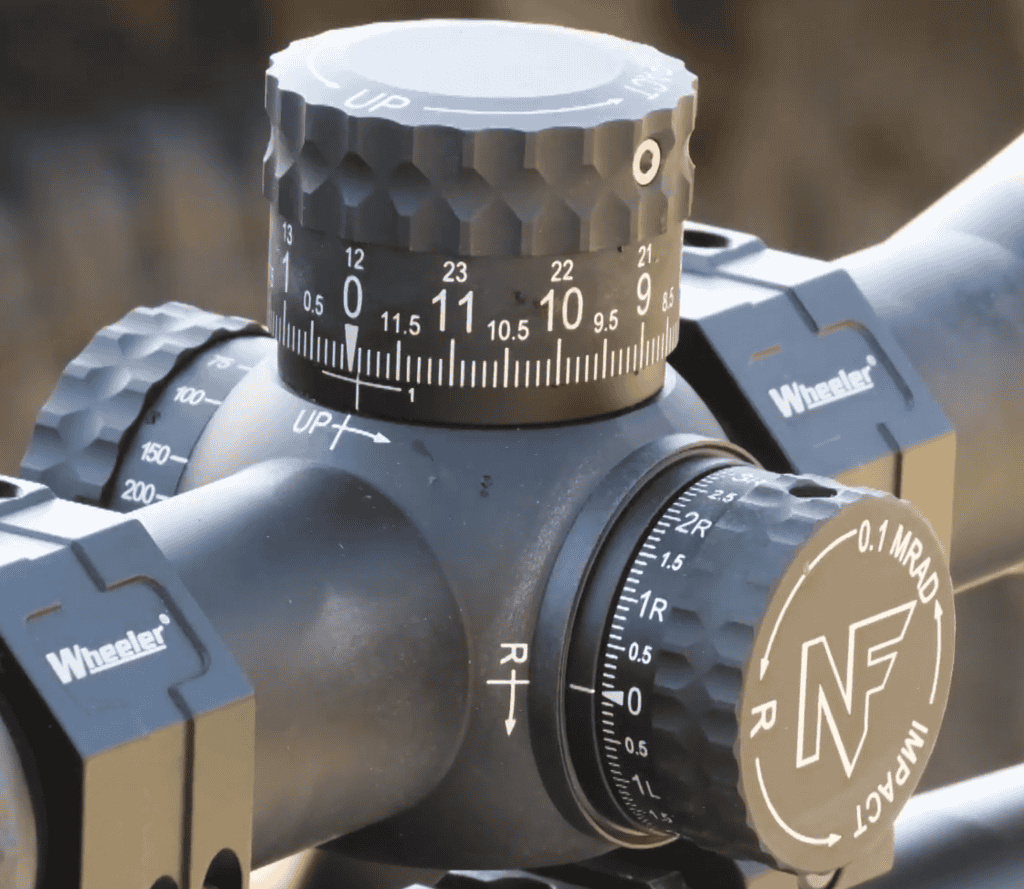
The clicks are firm, audible, and impossible to miscount. After dialing well over a thousand clicks across this testing window, I never lost track of where I was on the elevation turret. The ZeroStop locks down to a hard mechanical stop that doesn’t shift over hundreds of cycles. 29 MRAD of elevation is well-suited for a 6.5 Creedmoor at 1000 yards with a 20 MOA rail, though ELR work stretching toward a mile will push its limits. If you plan on pushing extreme distances with heavier calibers, you’re better off checking out my top picks for the best scope for 338 lapua magnum.
The MIL-XT Reticle and How It Reads
I came into this guide preferring the EBR-7D, and the MIL-XT changed my mind for long-range work. The 0.2 MIL holdovers are clean, the floating center dot gives you precision aim without obscuring small targets, and the windage tree is laid out the way I want it laid out: visible without being crowded. For pure 1000-yard precision, this reticle is the cleanest of the four I tested. The DigIllum uses a push-button manual system with enough brightness range that moving from sunlit prairie to deep shade doesn’t leave you hunting for a usable setting.
What 39 Ounces Feels Like
The ATACR is not light. On the Bergara, the whole rig is comfortably north of 13 pounds with the mount and bipod, and you feel that walking from the truck to the firing line. For competition shooters humping the rifle between stages, the Razor’s extra weight or the Sightron’s significant weight savings might matter more. For prone shooting from a known position at 1000, it’s the kind of complaint that disappears the moment you settle behind the rifle.
Here’s what the numbers looked like:
Field Test Data
| Test Parameter | Result |
|---|---|
| Box Test (5 MRAD square @ 100 yds) | Returned to zero with no measurable drift, 40 rounds |
| Tall-Target Tracking (15 MRAD up and back) | Within 0.1 MRAD of mechanical truth across 5 cycles |
| Cold-Bore First-Round Hits @ 1000 yds (12″ plate) | 8 of 10 across testing sessions |
| Resolution Test @ 1100 yds in mirage | Could resolve 3″ paint markings at 30x |
| Total Rounds Through This Scope | Approximately 100 rounds |
Tested with: Bergara B-14 HMR chambered in 6.5 Creedmoor | Hornady ELD Match 140gr
Pros and Cons
PROS
|
CONS
|
Performance Ratings
If you can swing the price and you’re committed enough to 1000-yard shooting that you’ll spend the rounds to get good at it, the ATACR is the scope I’d put on my own rifle and stop shopping. It does the job that matters most at this distance with a confidence none of the others quite match.
2. Vortex Razor HD Gen III 6-36×56 – Best for Competition Shooters
The Most Elevation You’ll Find Here
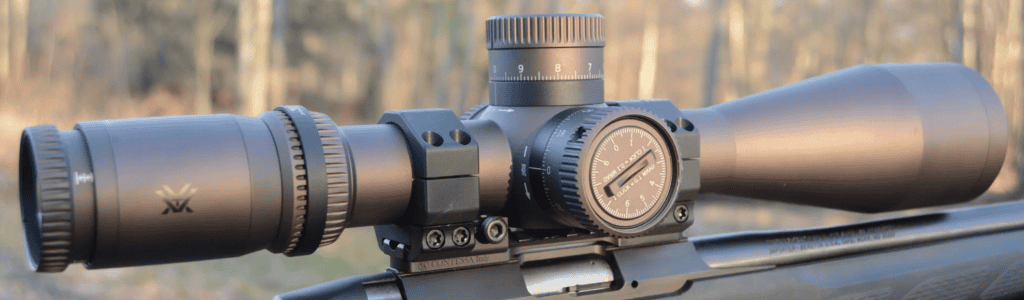
36 MRAD of internal elevation is genuinely a lot. That’s seven more than the ATACR and noticeably more than the Sightron’s 70 MOA equivalent. For 1000-yard work with a 6.5 Creedmoor it’s overkill, which is the right kind of problem to have. Where it earns its keep is when you’re stretching the same rifle out to 1400 or 1500 yards on the same zero, or when you’re running a less efficient cartridge that drops harder. The Razor Gen III is the scope I’d grab if my use case crept past pure 1000-yard work.
Locking Turrets That Solve a Real Problem
The L-TEC+ system locks with a quick rotation collar that you can engage or release with your shooting hand without breaking position. I was skeptical of locking turrets for years (one more thing to forget), but in competition where you’re moving between stages and the rifle is bouncing around in cases and on barricades, having turrets that won’t shift accidentally provides the exact kind of reliability you’d expect from the best sniper scopes. Once you get used to the workflow, the lock becomes invisible. The zero stop is firm and stays where you set it.
Glass That Stays a Half-Step Behind
The Razor Gen III’s glass is excellent, full stop. Side by side with the ATACR on the same target at the same distance, there’s a small but real gap in contrast and resolution at the upper end of the magnification range. The Vortex has slightly more chromatic aberration at the edges and slightly less detail through mirage. For most shooters in most conditions, the difference wouldn’t matter. For someone trying to read a 3-inch paint mark at 1100 yards in heat shimmer, it does.
Why the Weight Cuts Both Ways
At 45.1 oz, the Razor Gen III is the heaviest scope here by a noticeable margin and the heaviest premium scope I’ve mounted in a while. The Bergara HMR was already not a featherweight, and putting the Razor on it created a setup that’s beautifully stable on a bipod and noticeably uncomfortable carrying from the truck to a stage. For pure prone work, the weight contributes to stability and recoil management. For anything else, it’s a tax you pay.
EBR-7D Reticle Density
The EBR-7D has more going on than the ATACR’s MIL-XT. The Christmas-tree hold structure is great for fast wind holds across multiple distances (which is why PRS shooters like it), but for pure target work it’s busier than I’d want. The 0.2 MIL hash marks are clean, illumination has 11 settings with the top few visible in direct sunlight, which I confirmed in field testing, and the parallax goes down to 10 yards if you ever need to shoot at airgun distances with a centerfire scope (you won’t). FFP keeps the reticle subtensions accurate at any magnification.
The numbers from testing:
Field Test Data
| Test Parameter | Result |
|---|---|
| Box Test (5 MRAD square @ 100 yds) | Returned to zero with no measurable drift, 35 rounds |
| Maximum Elevation Dialed (one zero) | Approximately 23 MRAD before mechanical stop on this zero |
| Locking Turret Cycle Test | 200+ lock/unlock cycles without play developing |
| Cold-Bore First-Round Hits @ 1000 yds (12″ plate) | 7 of 10 across testing sessions |
| Illumination Daylight Visibility | Top 3 settings clearly visible in direct sun |
| Total Rounds Through This Scope | Approximately 90 rounds |
Tested with: Bergara B-14 HMR chambered in 6.5 Creedmoor | Hornady ELD Match 140gr
Pros and Cons
PROS
|
CONS
|
Performance Ratings
The Razor Gen III earns its place by being the scope with the most elevation headroom past 1000 yards and locking turrets that justify themselves in competition. The weight is the asterisk on every recommendation; if you can live with it, this scope delivers.
3. Sightron SIII SS 8-32×56 – Best for Target Shooters
The Glass That Made Me Double-Check the Price
The first time I put my eye behind the SIII SS at 25x, I genuinely thought I’d grabbed the wrong scope off the bench. Sightron has been quietly producing glass that punches well above its price for years, and this scope is the showcase. The image is bright, contrast is clean, and detail at the upper end of the magnification range stays sharper than I’d expect from a scope at this tier. It doesn’t quite match the ATACR in mirage, but the gap is much smaller than the price gap suggests.
SFP MOA-2 and the Shooter It’s Built For
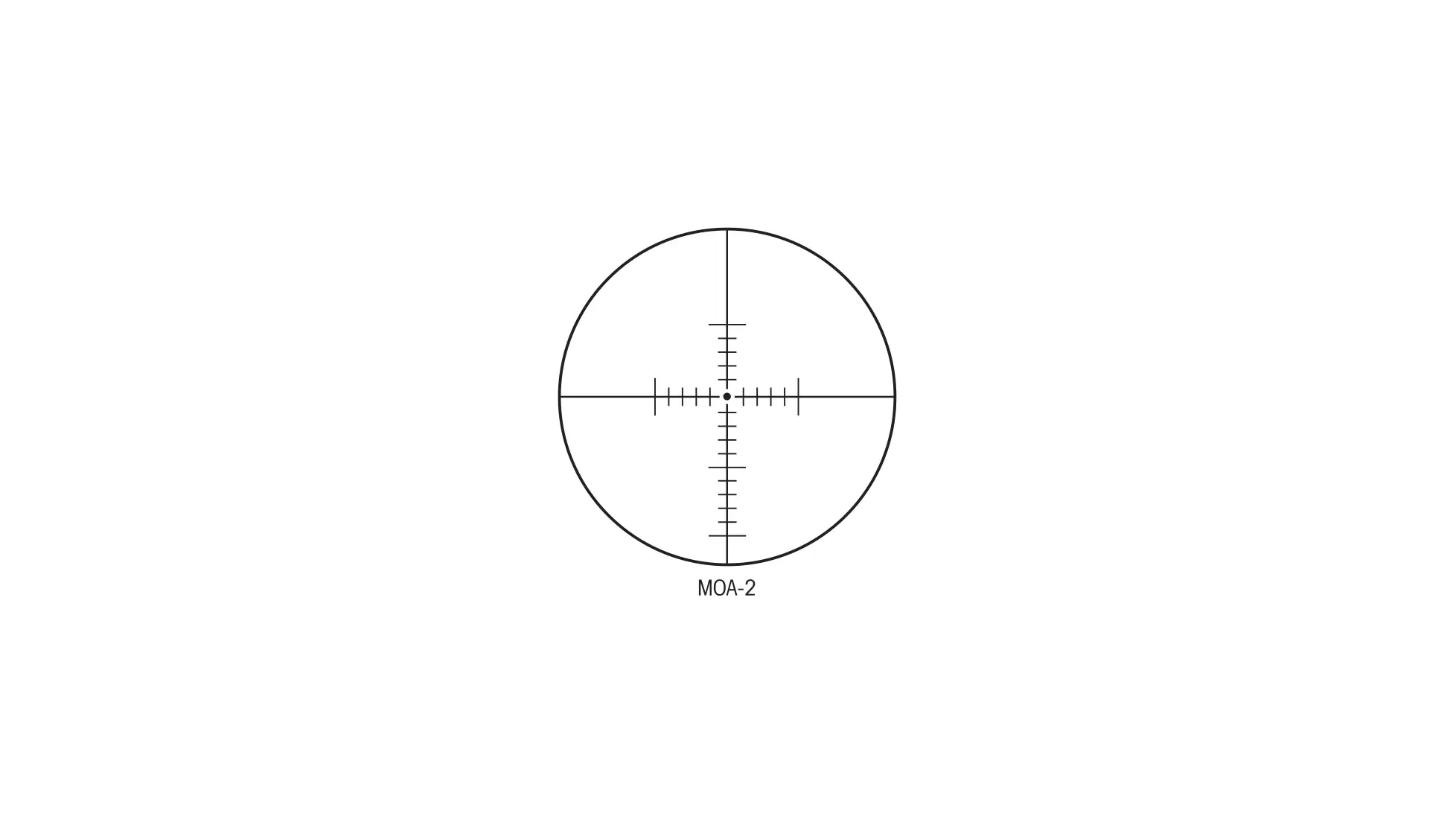
This is the only second focal plane reticle in the group, and the only MOA reticle. Both choices are deliberate. The MOA-2 is a clean target reticle (fine crosshair with MOA hash marks) that’s purpose-built for shooters who park at a single magnification (32x for most 1000-yard work) and dial everything off the turret. For benchrest, F-class, and similar disciplines, SFP at one mag is actually a feature: the reticle stays the same visual size whether you’re at 8x for setup or 32x for the shot. If you want to dial down and use holdovers on the fly, this isn’t your reticle. If you don’t, the MOA-2 is unobtrusive in the best way.
ExacTrack Tracking and What 70 MOA Buys You
Sightron’s ExacTrack system is the real reason this scope can hang at 1000 yards. The 1/4 MOA clicks are crisp and audible, tracking returned to zero through my box test, and 50 MOA of dialing for the Bergara at the longest distances I tested didn’t expose any wandering. 70 MOA total elevation is roughly equivalent to about 20 MRAD, which is enough for 6.5 Creedmoor at 1000 with a 20 MOA rail underneath, but you’re using most of it. Anyone planning to shoot a heavier-dropping cartridge or push past 1100 would want to think about that ceiling.
Weight That Changes the Shoot
At 26.5 ounces, the Sightron is dramatically lighter than the Razor Gen III and noticeably lighter than the ATACR. On a hunting-weight rifle or a setup you actually carry, that’s the difference between a comfortable day and a sore shoulder. The Bergara HMR with the SIII felt balanced and shootable in a way the same rifle with the Razor mounted just didn’t. For shooters who occasionally hunt with their long-range rifle, this is the option that doesn’t make the rifle hate you on the way in.
What This Scope Doesn’t Try to Be
No illumination. No locking turrets. No fancy reticle gimmicks. The Sightron is a target scope from a company that’s been building target scopes for a long time, and it knows what it’s not. If you want competition features and tactical reticles, this isn’t the scope. If you want excellent glass, honest tracking, light weight, and a reticle that gets out of your way, it’s the best value here by a clear margin.
The bench results:
Field Test Data
| Test Parameter | Result |
|---|---|
| Box Test (20 MOA square @ 100 yds) | Returned to zero across 30 rounds |
| Tall-Target Tracking (40 MOA up and back) | Within 1/4 MOA across 4 cycles |
| Resolution Test @ 1000 yds at 32x | Clearly resolved 4″ paint markings in moderate mirage |
| Cold-Bore First-Round Hits @ 1000 yds (12″ plate) | 7 of 10 across testing sessions |
| Total Rounds Through This Scope | Approximately 80 rounds |
Tested with: Bergara B-14 HMR chambered in 6.5 Creedmoor | Hornady ELD Match 140gr
Pros and Cons
PROS
|
CONS
|
Performance Ratings
The SIII SS occupies a specific niche, and within that niche it’s hard to beat for the money. Target shooters who don’t need illumination, FFP, or tactical features get a scope that performs well above its price point and weighs roughly 60 percent of what the Razor does.
4. Vortex Viper PST Gen II 5-25x50mm – Best Budget Pick
What You Get for Roughly a Third of the Price
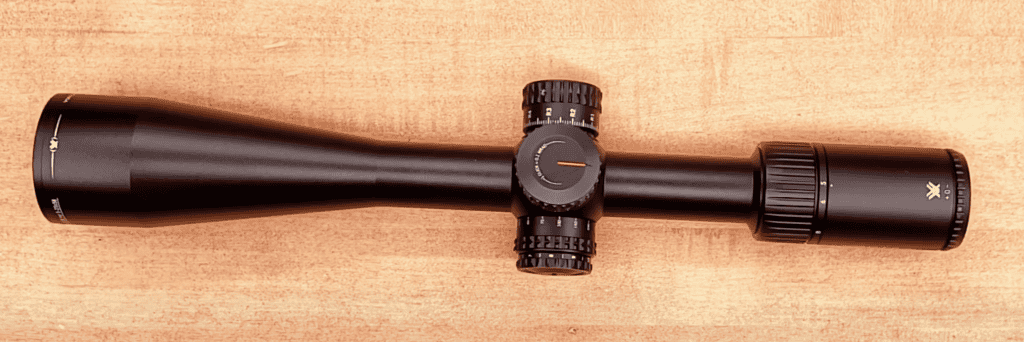
The Viper PST Gen II is the scope that proves you can shoot 1000 yards without spending premium-scope money. It’s not in the same league as the three above it, and pretending otherwise would be a disservice. What it is, is an honest scope that gives you the architecture you need (FFP MRAD, zero stop, exposed tactical turrets, illumination) and asks you to accept some compromises on glass and adjustment range. For someone learning the discipline, that’s the right trade.
Tracking That Held Up Better Than Expected
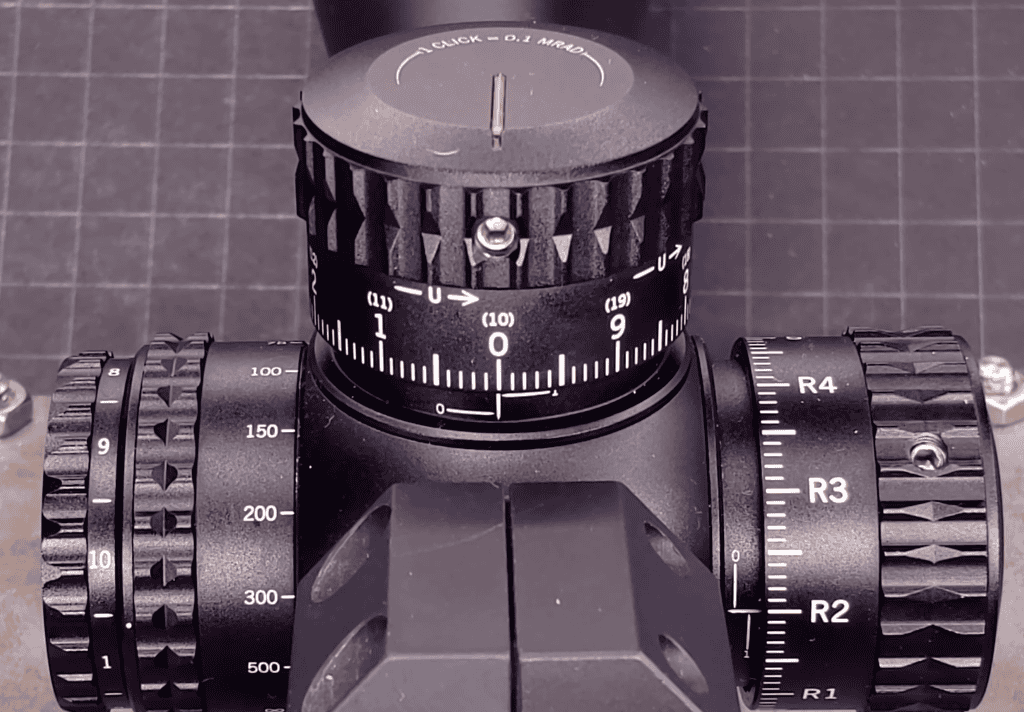
I went into testing assuming this would be where the Viper showed its tier. It wasn’t. The RZR zero stop is firm and stays put, and the box test came back to zero across three cycles without measurable drift. Clicks are slightly less crisp than the ATACR or Razor Gen III; you notice them more when you’re going fast. But for the actual job of putting elevation on the rifle and getting it back to zero, the Viper PST Gen II does what it’s supposed to do. The Gen II is a real improvement over the original PST in this department, with the second generation moving from 1/4 MOA to true 0.1 MRAD clicks across the MRAD line.
The 50mm Objective and Where It Shows
This is the only 50mm objective in the test, and the difference is visible in low light and through mirage at 25x. The image isn’t dim, but next to the 56mm objectives on the same target at the same time of day, it’s clearly working harder. For shooting in good light at moderate distances, the gap is small. For trying to read mirage through 25x of magnification in challenging conditions, the 50mm objective is the trade-off you accepted when you saved the money.
The EBR-7C Reticle Carries the Scope
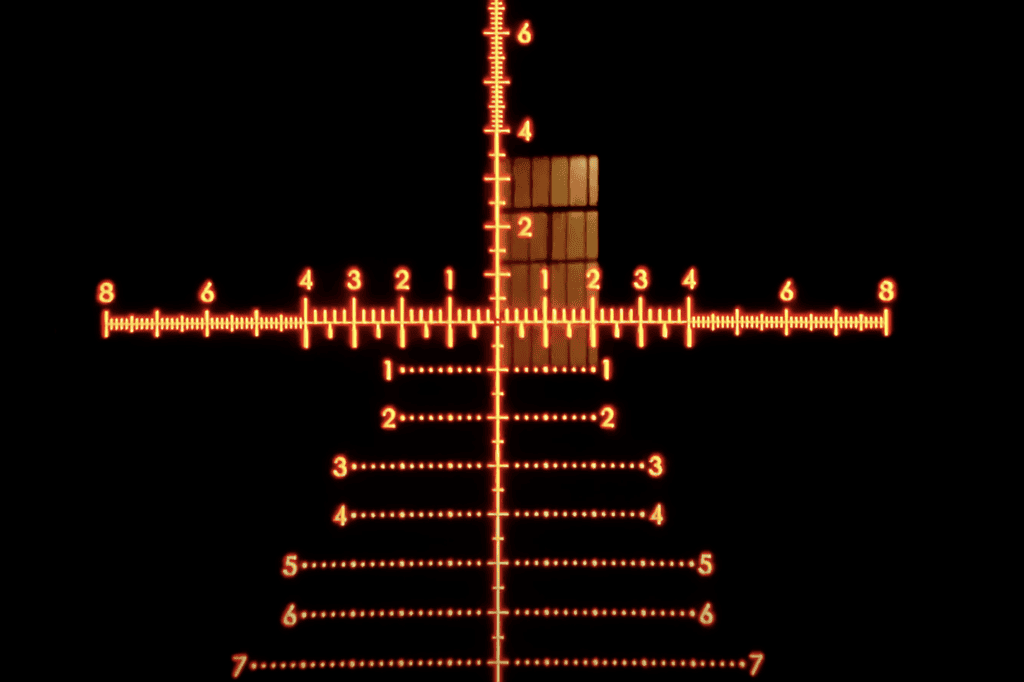
The EBR-7C is genuinely good. It’s a hash-based FFP MRAD reticle with a usable Christmas-tree hold structure, daylight-visible illumination (the top settings are visible in direct sun, which I always test), and clean 0.2 MIL subtensions. The reticle on this scope does most of what the EBR-7D on the Razor Gen III does, in the same focal plane, with the same click value. For a shooter learning to dial elevation and hold for wind, this reticle teaches the same skills as the more expensive options.
Living With 20 MRAD of Elevation
This is the catch. 20 MRAD is enough for 6.5 Creedmoor at 1000 yards on a 20 MOA rail, but you’re using roughly 60 to 70 percent of it. Push beyond 1000, or try to run a heavier-dropping cartridge like .308 at the same distance, and you’ll run out of adjustment. For pure 1000-yard work in 6.5 CM or 6mm CM with a canted base, this scope works. For ELR ambitions, it doesn’t.
Here’s how it performed:
Field Test Data
| Test Parameter | Result |
|---|---|
| Box Test (5 MRAD square @ 100 yds) | Returned to zero across 25 rounds |
| Cold-Bore First-Round Hits @ 1000 yds (12″ plate) | 5 of 10 across testing sessions |
| Maximum Elevation Available with 20 MOA Rail | Approximately 14 MRAD usable above 100-yd zero |
| Glass Resolution @ 1000 yds at 25x | Could resolve 6″ markings in light mirage |
| Total Rounds Through This Scope | Approximately 80 rounds |
Tested with: Bergara B-14 HMR chambered in 6.5 Creedmoor | Hornady ELD Match 140gr
Pros and Cons
PROS
|
CONS
|
Performance Ratings
The Viper PST Gen II isn’t trying to be the best 1000-yard scope on the market, and it shouldn’t be judged that way. It’s trying to be the most scope you can get without a four-figure outlay, and it succeeds at that. Its cold-bore first-round performance at 1000 yards trailed the premium options in testing, but that gap matters less for a shooter building fundamentals than it does for one making consequential first shots cold. For a season of learning long range, the Viper PST Gen II is the rational starting point.
What Testing These Four Looked Like in the Field
All four scopes spent two months—October and November—cycling through a Bergara B-14 HMR in 6.5 Creedmoor, mounted on a 20 MOA Picatinny rail and shot exclusively with Hornady ELD Match 140gr. I used the same rifle, the same ammunition, and the same load of dope across every scope so any difference I observed could be attributed to the optic and not the rest of the system. The testing happened at a private long-range facility outside Abilene with steel out to 1200 yards and a quiet bench at 100 for tracking verification.
Conditions ran the range you’d expect for West Texas fall: morning mirage that built through midday, wind that picked up after lunch and sometimes did things at 800 the spotting scope at 100 didn’t predict, and a couple of cold mornings in the low 40s that let me check zero retention across temperature swings. A friend of mine who shoots NRA mid-range matches helped spot for several of the longer sessions; having a second set of eyes on impact location at 1000 made the tracking comparisons more honest than I could do solo. Total round count across all four scopes landed at roughly 350.
Two scopes that didn’t make the cut deserve mention. The Athlon Cronus BTR Gen II 4.5-29×56 tracked fine at modest adjustments but started accumulating measurable drift past 8 MRAD up from zero, which is exactly the range you care about for 1000-yard work and exactly where it can’t afford to drift. The Bushnell Match Pro ED 5-30×56 had parallax that wouldn’t tune precisely enough at extended distances—stringing appeared around 1000 yards and worsened beyond that—which the four scopes that made the cut didn’t show.
My full testing process and what each score weight means is on my methodology page.
What 1000-Yard Shoppers Get Wrong About Scope Selection
Chasing Maximum Magnification
Shooters new to long range tend to think 35x or 40x at the top end means better hits at 1000. In practice, mirage will limit your useful magnification to somewhere between 20x and 25x on most days in most conditions. The extra magnification adds weight, narrows the field of view, and demands a tighter eye box without giving you cleaner shots. If you find yourself comparing scopes primarily on top-end magnification, you’re optimizing for something that won’t matter on the firing line.
Underestimating Elevation Range
A scope advertised as “long range” with 50 MOA of elevation total sounds like a lot until you mount it on a flat rail and discover you’ve got maybe 25 MOA above your 100-yard zero. That’s not enough for 6.5 Creedmoor at 1000, let alone heavier-dropping cartridges. Either buy a scope with adequate internal elevation (the Razor Gen III’s 36 MRAD is the headroom standard here), or commit to a 20 MOA canted rail and do the math on whether the combination actually gets you where you need to go.
Buying on Glass Quality and Ignoring Tracking
Glass shows on the showroom floor. Tracking only shows after hundreds of clicks. A lot of shooters buy a scope because the image was bright and crisp in the store, then find out two seasons later that the turrets drift a tenth of a mil per box test and they can’t make a cold-bore hit at distance. Insist on a tall-target tracking test before you commit, and don’t buy any scope at this distance from a brand that doesn’t have a track record for honest turret behavior.
The 1000-Yard Scope Questions I Hear Most
Do I really need first focal plane for 1000-yard work?
If you dial elevation and hold for wind, yes, FFP is meaningfully better because reticle subtensions stay accurate at any magnification. If you’re a dedicated benchrest or F-class shooter who stays parked at one mag and dials everything off the turret, SFP works and the Sightron in this guide proves it. For most 1000-yard shooters who want flexibility, default to FFP.
How much elevation adjustment do I actually need?
For 6.5 Creedmoor or similar cartridges at 1000 yards with a 20 MOA canted rail, you can get away with as little as 20 MRAD (approximately 69 MOA) of internal elevation. Plan to push beyond 1000, run a heavier-dropping cartridge, or shoot off a flat rail, and you want 29 MRAD or more. Erring high here costs you nothing except a few dollars on the price tag.
Is 25x enough magnification, or should I get more?
25x is enough for 1000 yards under virtually all conditions you’ll actually shoot in. Mirage limits effective magnification well below the maximum on most days. The reason to go higher (32x, 35x, 36x) is for clear-condition target identification past 1000 or for extracting maximum detail in benchrest competition. For most shooters, the 20-25x band is where you’ll spend your time regardless of what’s available.
MOA or MIL for 1000-yard shooting?
Either works mechanically; the difference is the ecosystem you shoot in. Tactical and competition shooters mostly use MIL, traditional target and F-class shooters mostly use MOA. Pick the system your shooting partners and matches use so you’re speaking the same language about wind calls and corrections. The math is identical; the conventions aren’t.
Matching One of These Scopes to How You Actually Shoot
For the shooter who’s already committed to long-range as a discipline and wants the scope that won’t be the limiting factor, the Nightforce ATACR is the answer. You’ll pay for it, but you won’t second-guess the optic when a shot lands off the plate.
PRS competitors and shooters who plan to stretch beyond 1000 with regularity should look hard at the Vortex Razor HD Gen III. The 36 MRAD of elevation and locking turrets are real advantages in those environments, and the weight matters less when you’re shooting off bags and bipods anyway.
Dedicated benchrest and F-class shooters who don’t want or need tactical features get the most scope for the money with the Sightron SIII SS. The MOA-2 reticle is purpose-built for one-magnification target work, and the 26.5-ounce weight is a meaningful comfort upgrade.
If you’re new to the discipline and don’t yet know whether you’ll stick with it long enough to justify a premium scope, the Vortex Viper PST Gen II is the rational pick. Buy it, shoot it for a season, then upgrade if you’ve fallen in love with long range. There’s no shame in starting here.
Disclosure
The links in this guide are affiliate links, which means I earn a small commission if you buy through them at no additional cost to you. All four scopes in this test were purchased through ordinary channels; the Bergara HMR and the 350-ish rounds of Hornady ELD Match came out of the same household budget as the rest of my testing. The friend who spotted for me during the longer 1000-yard sessions got paid in tacos and gas money, not editorial influence.
Which Scope Actually Belongs on Your Rifle?
After several thousand clicks of elevation across four scopes and a Texas fall’s worth of shooting on the same rifle, the Nightforce ATACR 7-35×56 is the scope I’d put on my own 1000-yard rifle if money were no object. Its tracking is the gold standard, its glass holds up at the magnification you’ll actually use, and the MIL-XT reticle is the cleanest tool for the job among everything I tested. The Vortex Razor HD Gen III is the close runner-up that wins on adjustment range and locking turrets if competition is your focus. The Sightron SIII SS is the value champion for target shooters specifically, and the Vortex Viper PST Gen II is the legitimate entry point for everyone else.
Picking the right scope for 1000-yard shooting matters more than it does for almost any other shooting application I write about, because at this distance the scope’s failures are no longer things you can shoot around. A scope that drifts 0.1 MRAD moves your impact roughly 3.6 inches at 1000 yards. A scope without enough elevation to dial doesn’t get you to the target. A reticle that’s wrong for your shooting style costs you time when you don’t have any. Buy the scope that matches the shooting you actually do, not the scope that sounded most impressive in the marketing copy.
If you want to dig into related topics, my guides on best long-range rifle scopes cover adjacent applications with overlapping requirements.
Mike Fellon is the founder of ScopesReviews and an optics specialist with 15+ years in precision shooting. A former Bass Pro Shops firearms advisor and NRA-certified instructor, he’s hands-tested 200+ rifle scopes across hunting and competition. Based in Dallas, Texas.