
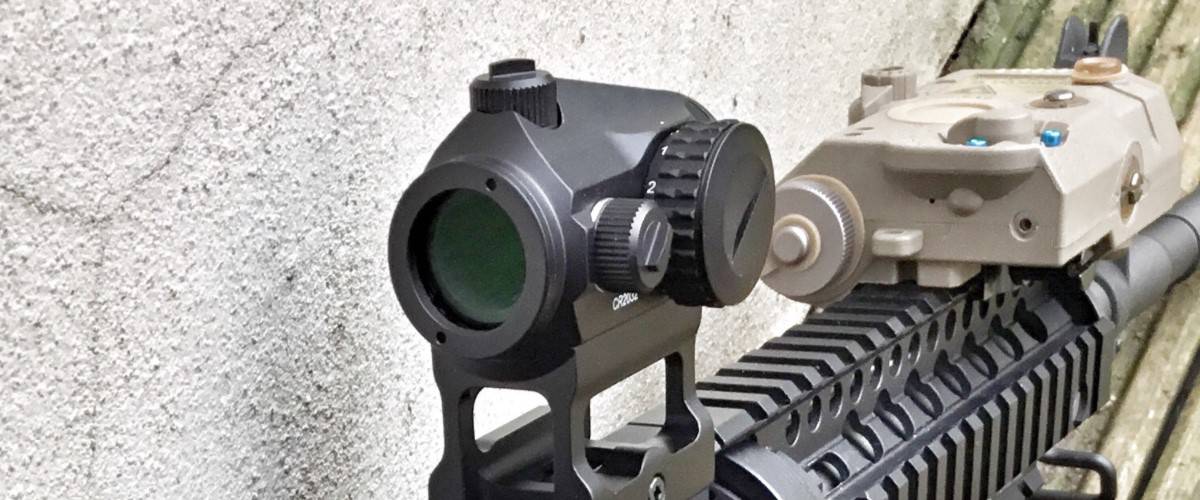
The Crossfire II 1×22 sits at the bottom of Vortex’s red dot lineup, and that is exactly why people keep asking me about it. It is the optic a lot of shooters reach for when they finish a first AR build and have almost nothing left for glass. Vortex positions it as a no-nonsense tube dot for carbines and home-defense guns: a 2 MOA aiming point, a 22 mm window, the Aimpoint Micro footprint, and that VIP warranty stamped on the back of it.
I wanted to know whether the entry-level price came with entry-level frustration or whether Vortex had quietly built something that just works. The thing I kept circling back to before testing was the on/off setup. This is a manual rheostat dial, no shake awake, no auto-off. On a budget optic in this era that is a real decision, not an oversight, and I figured it would either be a footnote or the whole story.
It landed somewhere in between. The Crossfire II earns its keep as a dependable budget carbine dot with genuinely useful glass and a mounting footprint that belongs on optics costing far more. The friction is the one I worried about going in, and it is the kind of thing you live with rather than love.
Vortex Crossfire II 1×22 Review
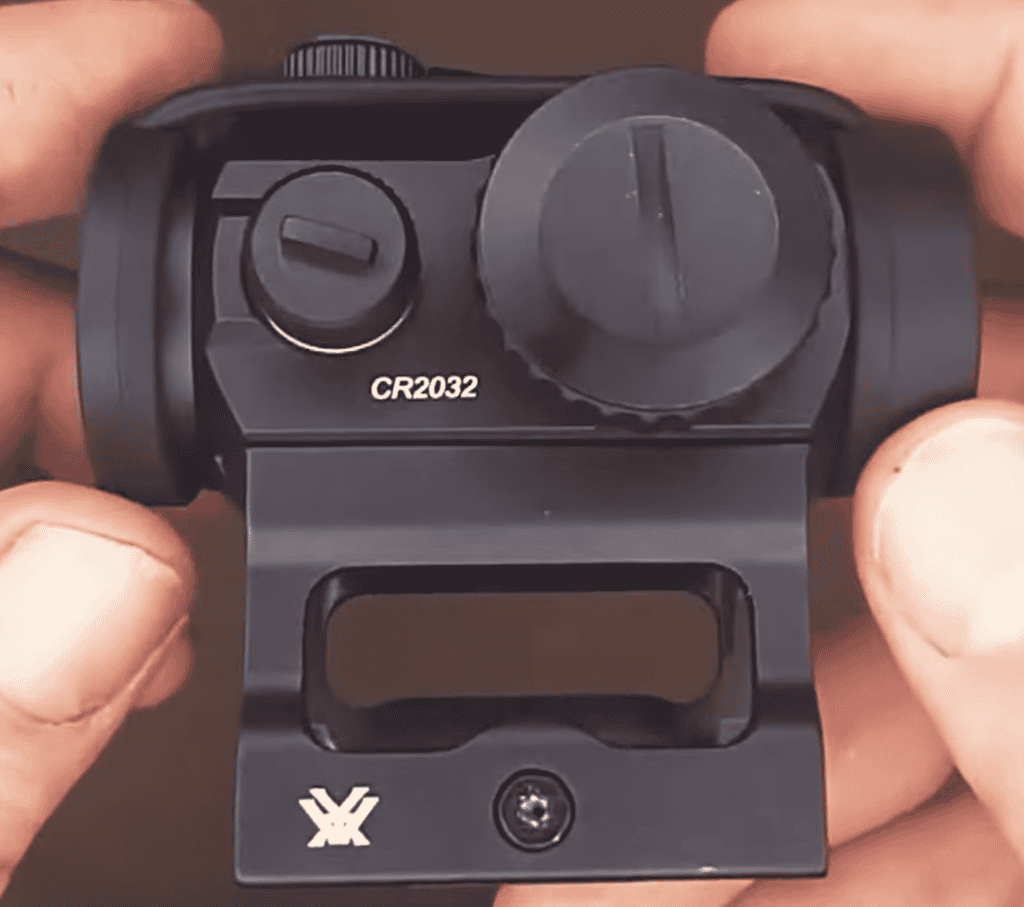
I ran the Crossfire II on a Ruger AR-556 across a handful of range trips, mostly working 25 and 50 yard drills with some stretching out past 100. The first thing you notice mounting it is that 22 mm tube. It is not a generous window. After years behind larger reflex and open-emitter optics, looking through this one feels like glancing through a porthole, and your cheek weld has to be honest or you go hunting for the dot.
The morning the window was empty
Second trip out, cold start, I shouldered the rifle on the first drill of the day and the tube was dark. Nothing there. I stood at the line thumbing the rheostat dial up from zero while the guy next to me waited. That is the manual on/off in practice. There is no motion sensor to wake the dot, no timer that left it running, just a dial you have to remember to spin before the dot exists. I forgot it twice that first month. Once you build the habit it becomes muscle memory with your other range setup, but for a home-defense gun you grab in the dark, that habit is doing a lot of work, and I would not trust it there.
A dial that only goes one way
The brightness rheostat has its own quirk. It runs in a single direction through the settings, so if you overshoot the level you want, you cannot back off one click; you spin all the way around through off and start over. Out in changing light that got mildly annoying. I clicked past my daylight setting more than once chasing a cloud bank, and ended up doing a full rotation to get back. The detents themselves are soft, not the crisp clicks you feel on pricier optics, so finding a setting by feel alone is a guess.
The dot itself is the good news
Here is where the Crossfire II quietly delivers. The 2 MOA dot is a smart choice for a carbine optic, small enough to keep precision honest at 100 yards without smearing into a blob, large enough to find fast inside typical defensive distances. On the daylight settings that actually register, the dot is round and reasonably crisp. I have astigmatism in one eye, and like most budget emitters this one shows me a little flare at the brightest setting, but dialed down to a working level it cleaned up better than I expected for the tier.
The low end is the weak spot. The bottom few brightness settings are genuinely dim. On an overcast dawn I had the dot cranked higher than I would have liked just to keep it visible against dark brush, which is the opposite of the problem you want. The two night-vision levels exist for the small slice of buyers running NODs, but for naked-eye low light, the usable range starts higher up the dial than the eleven-setting count suggests.
Where it quietly outperforms its price
Durability and zero retention were non-issues, and that is the part that matters most for a budget optic people actually beat on. I pulled the optic off its mount and reinstalled it twice during testing to check the footprint, and it returned close enough to zero that a couple of clicks brought it right back, which is more than I expected at this tier. Across roughly 500 rounds of 5.56 it never lost zero, never flickered, never did anything dramatic. The Aimpoint Micro footprint is the real headline feature here: it means you can run this on a quality lower mount or co-witness riser, and if you upgrade later, the mount carries forward. For an entry-level dot, that is a genuinely forward-thinking design choice.
The enclosed tube shrugged off a rainy afternoon without fogging, and the nitrogen purge plus O-ring sealing held up to the kind of weather a working carbine sees. None of this is flashy. It is the boring reliability that actually earns trust at this price.
If you are interested in my other reviews have a look at Vortex Venom red dot or EOTech 512 holographic sight.
How I Put the Crossfire II Through a Budget-Carbine Workout
I mounted the Crossfire II on a Ruger AR-556 and fed it Federal American Eagle 55gr FMJ, which is the honest reality of how this optic gets used: a value carbine, cheap range ammo, a shooter who put the money into the gun and the rounds rather than the glass. I confirmed zero at 50 yards off a bag, then validated return-to-zero twice by pulling the optic and remounting it, since the Aimpoint Micro footprint is half the reason to buy this thing. Testing ran across several trips in mixed conditions, from bright afternoon sun to an overcast dawn and one steady rain, with a round count in the neighborhood of 500.
What I was really evaluating is something you only get a feel for after running a stack of these entry-level tube dots: where the tier cuts its corner. Every budget micro makes a sacrifice somewhere, and the useful question is not whether it cut a corner but which one. I have put time behind the Sig Romeo5, the Holosun 403 family, and a parade of sub-tier dots, and the pattern is consistent: the cheaper ones either skimp on the emitter and give you a smeary dot, or they skimp on the durability and lose zero, or they keep the modern convenience features and cut the glass. The Crossfire II’s corner is the one I would pick if forced. It spends its budget on a clean dot, real zero retention, and a premium footprint, and it pays for that by giving you a small window and an old-school manual dial. That trade tells you Vortex understood what a budget buyer can and cannot live without, and it is the kind of judgment you only trust from an optic after you have watched cheaper ones fail the other way. Full testing process is documented in my full testing methodology.
Performance Ratings
Field Test Data
| Test Parameter | Result |
|---|---|
| Zero confirmation (50 yds, bag rest, 5 shots) | Settled into a tight cluster; dot adequate for a precise 50 yd zero |
| Return-to-zero after 2 remounts | Returned within a couple of clicks each time; footprint repeatable |
| Round count fired without issue | ~500 rounds 5.56, no flicker or zero walk |
| Cold-start dot acquisition | Requires manual dial-up every session; no motion wake |
| Low-light usability (overcast dawn) | Lowest settings too dim for naked eye; usable range starts mid-dial |
| Weather exposure (steady rain) | No fogging or intrusion; sealed tube held |
Tested on: Ruger AR-556 | 5.56 NATO | Federal American Eagle 55gr FMJ
Who Should Actually Run This Carbine Dot
This is the right optic for the shooter who just finished a first AR-15 build and wants honest, reliable glass without raiding the ammo fund. If you are running a range carbine, a truck gun, or a working rifle where you control when it gets turned on, the Crossfire II rewards you with a clean dot, real zero retention, and a footprint that lets you upgrade your mount instead of starting over. The Aimpoint Micro footprint alone makes it a smart entry buy, because nothing you spend on a quality mount goes to waste later.
It is also a sensible pick for the buyer who values the VIP warranty as a safety net. At this tier, knowing Vortex will replace it no matter what takes the gamble out of going budget.
Where I would steer you away: this is the wrong optic for a dedicated home-defense gun you grab in the dark. The manual on/off means a dead window if you did not leave it running, and a 50,000-hour battery tempts you to leave it on until it quietly dies on the one night you need it. If you want a dot that is always ready the instant you lift the rifle, spend up for shake awake. It is also a poor fit if you prize a wide, fast sight picture; the 22 mm tube is tighter than open-emitter alternatives and asks more of your cheek weld.
For more of my articles you can check my review about Burris AR-536 or Sightmark Ultra Shot Plus reflex sight.
What to Buy Instead If the Manual Dial Is a Dealbreaker
The Crossfire II’s weak point is convenience, so the alternatives worth naming are the ones that solve exactly that. If the manual on/off is what stops you, the Holosun HS403 family brings shake awake and solar backup at a comparable budget tier; you give up nothing meaningful on glass and gain a dot that is awake when you lift the rifle. That single feature is the whole reason to cross-shop it against this Vortex.
If the tight 22 mm window is your sticking point, the Sig Sauer Romeo5 offers a similar price and footprint with motion-activated illumination and a sight picture a lot of shooters find easier to get behind quickly. It is the obvious pick for someone who wants the same budget-carbine role without the cold-start ritual.
And if you want a real step up in window and brightness while staying reasonable, the Primary Arms SLx MD-25 gives you a larger 25 mm tube, autolive illumination, and a brighter usable range, which directly answers both of the Crossfire II’s compromises at once. You pay a bit more, but it fixes the two things I flagged.
Disclosure
This review reflects my own hands-on testing and honest assessment. This article may contain affiliate links, and a purchase made through them can earn the site a small commission at no extra cost to you. Affiliate relationships do not influence my evaluation or conclusions.
The Bottom Line: A Smart Budget Buy You Have to Stay on Top Of
Buy the Crossfire II 1×22 if you want a dependable entry-level carbine dot and you are honest with yourself about the manual on/off. The glass is clean, the 2 MOA dot suits a carbine, the durability and zero retention held up to everything I asked of it, and the Aimpoint Micro footprint quietly makes this one of the smarter ways to start in red dots without throwing money away on a mount you will replace. Add the VIP warranty and the value math gets easy.
The one thing that keeps it out of my top recommendation is the same thing I flagged before I ever mounted it: no shake awake, a one-way brightness dial, and dim low settings. For a range gun or a working carbine you control, none of that is a dealbreaker. For a grab-it-in-the-dark defensive rifle, it is enough that I would point you toward a shake-awake optic instead. Match it to the right gun and the Crossfire II is an easy yes.
To find out more about red dot sights have a look at my Burris AR332 review.
Mike Fellon is the founder of ScopesReviews and an optics specialist with 15+ years in precision shooting. A former Bass Pro Shops firearms advisor and NRA-certified instructor, he’s hands-tested 200+ rifle scopes across hunting and competition. Based in Dallas, Texas.