
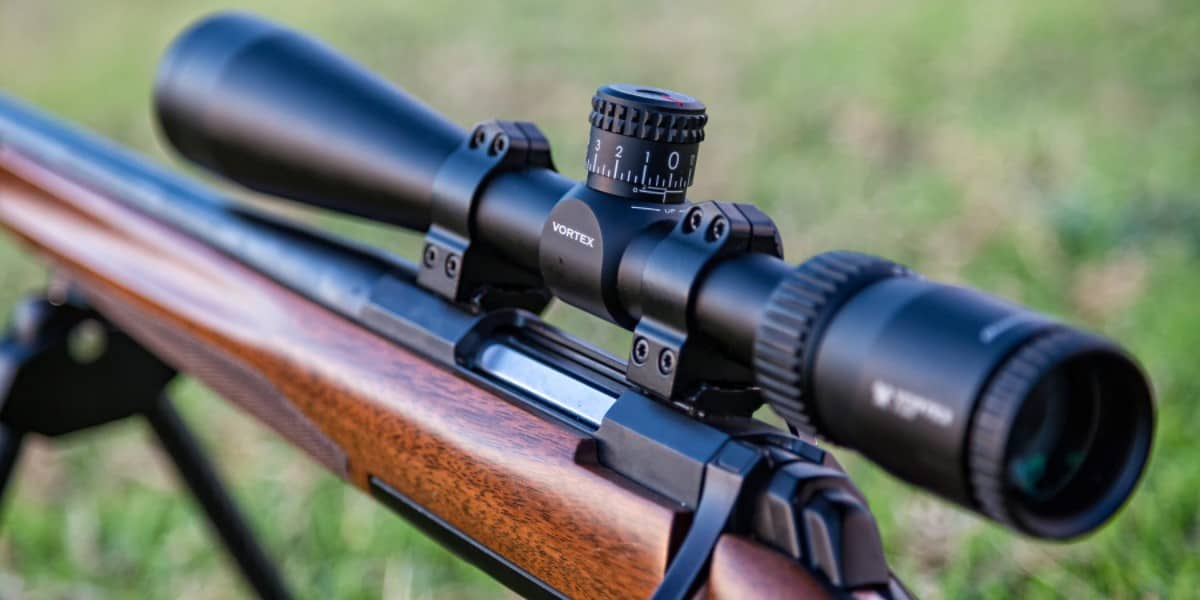
Walk into any gun counter looking for a first real hunting scope on a working budget and the Diamondback 4-12×40 is going to come up before you finish the sentence. It is the scope a lot of deer rifles wear out of the box, and the 4-12x range reads like exactly what a whitetail hunter wants: low enough for a brushy stand, high enough to reach across a cut field. I wanted to find out whether that range is honest or whether the top half of it is there to sell the spec sheet.
So I mounted one on a deer rifle and hunted and shot it the way the people buying it do, across a fall season of stand sits and range trips, paying attention to where it stopped doing its job. The capped turrets, the fixed parallax, the Dead-Hold BDC reticle: none of that is aimed at a precision crowd, and I didn’t judge it against one.
What I found is a scope that is genuinely good inside the lane it was built for and noticeably less so the moment you push past it. The number on the dial says twelve. The number you’ll actually trust is lower.
For more Vortex optics, you can read my full Vortex scopes review.
Vortex Diamondback 4-12×40 Review
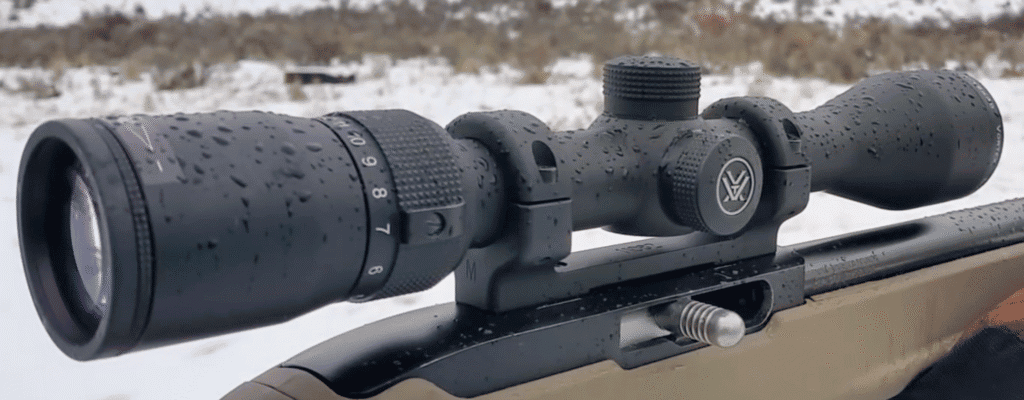
My test rig was a Savage Axis II in .270 Winchester running Federal Fusion 130gr, a deliberately ordinary deer setup that lands in the same price conversation as the scope itself. I zeroed at 100 yards, which is exactly where the fixed parallax wants you, and then hunted and shot it from October into the cold end of the season.
The eyebox is the part nobody mentions until it costs them
The first thing I noticed wasn’t the glass; it was how particular the scope is about where my eye sits. At 4x and 6x it’s forgiving and quick, cheek to the stock and the picture is just there. Crank up toward 12x and that generosity disappears. One gray morning a doe stepped out of the timber and I’d left the magnification dialed up from the previous evening’s glassing. I dropped my cheek, found a black crescent shadowing the edge of the field of view, shifted my head twice to clear it, and by the time the picture was clean she’d turned and I’d lost the shot angle. That wasn’t the scope failing. That was me asking it to do close, fast work at a magnification it isn’t comfortable at. I started leaving it parked at 6x for stand hunting after that, and the problem evaporated.
Where the Dead-Hold BDC actually earns its place
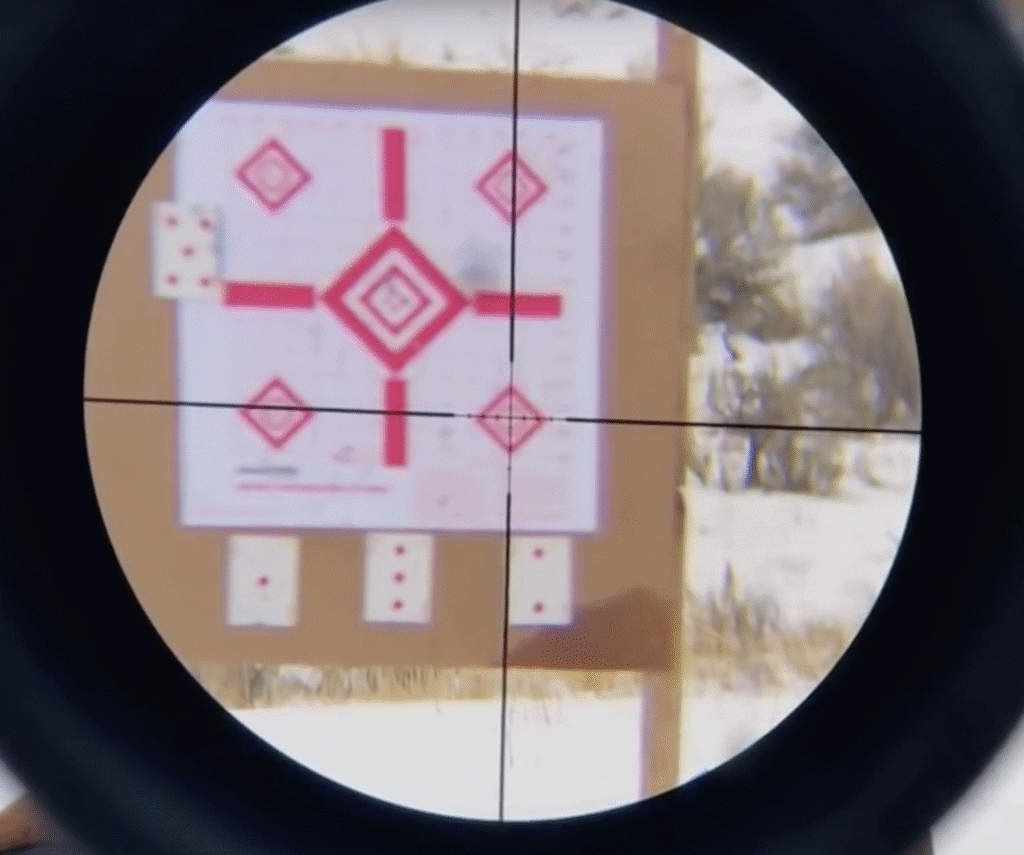
The Dead-Hold BDC is a second-focal-plane reticle, so the holdover marks only mean what they’re supposed to mean at the top magnification. The hash values, 1.5, 4.5, 7.5, and 11 MOA stacked below center, are calibrated at 12x. That sounds like a contradiction with everything I just said about the top end, and in practice it’s a tension you manage rather than a flaw. For a field-edge shot at a moderate poke I’d bump up to 12x, settle, and use the first hash for the drop.
On a still afternoon late in the season I did exactly that on a buck standing at the far side of a bean field, held the second mark down, and the Fusion landed where the reticle promised. The system works. The reticle stays uncluttered enough for the close shots and gives you honest holdover references for the longer ones, which is more than a plain duplex offers a hunter who doesn’t want to dial.
Twelve power is a number, not a setting
Here’s the rub with that fixed 100-yard parallax. The reticle wants 12x for its holdovers, but 12x is also where the fixed parallax and the thin eyebox gang up on you. Sighting in, I ran it to full magnification on a target past the hundred-yard mark and the image softened and the reticle started to swim against the target whenever I moved my head off center. At 100 yards it’s crisp. Push the distance out and hold the magnification up, and you’re fighting parallax error the scope gives you no way to correct. The glass itself is respectable for the tier, clear and neutral in good light through the middle of the range, but the combination of soft focus and a punishing eyebox means I treated 12x as a brief, deliberate setting for a settled shot, never a place to live while I hunted.
Holding zero is the part it never argued about
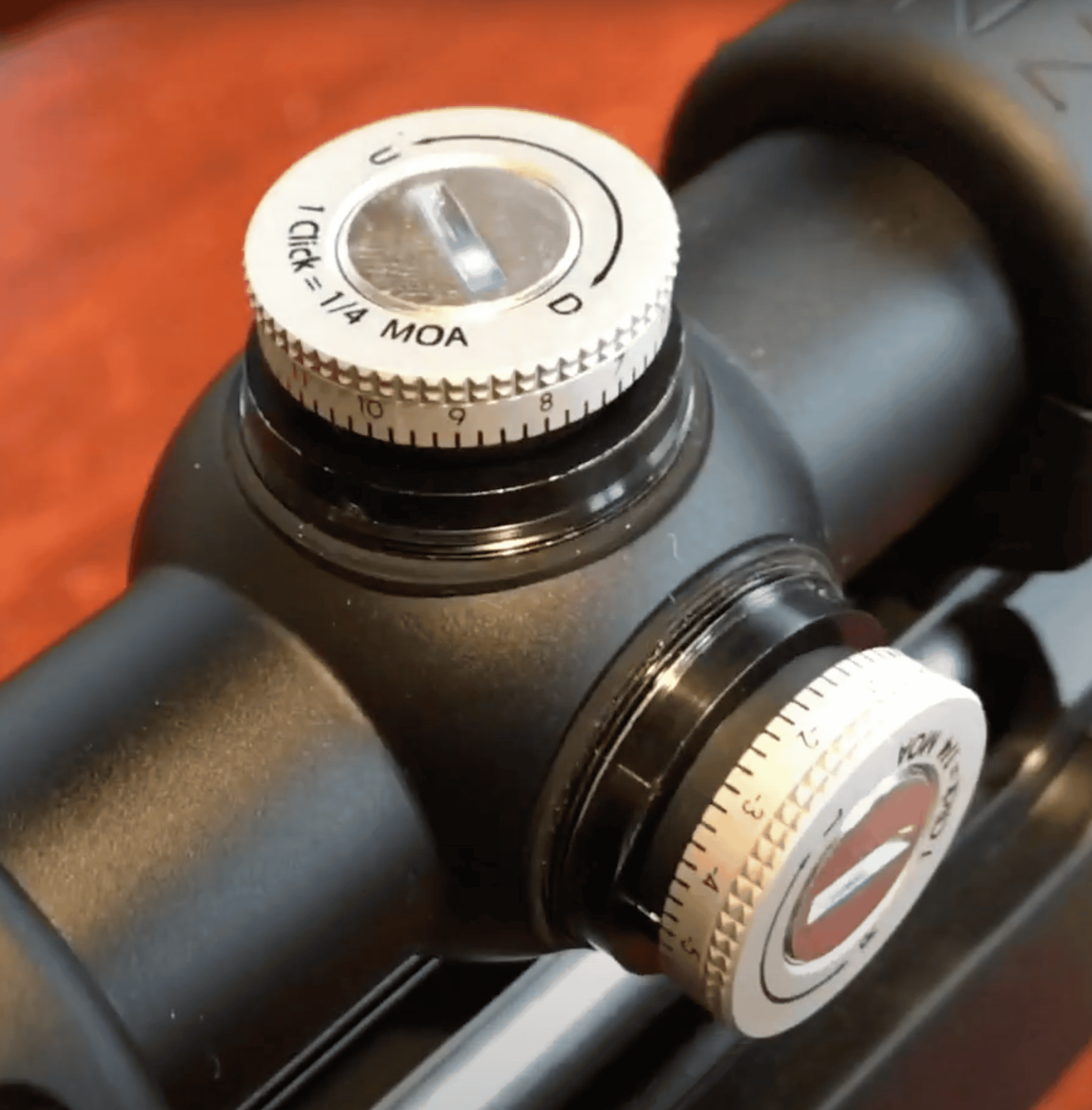
For everything the top end gives up, the basics are solid. I pulled the turret caps and ran a rough box check early on, dialing up, over, down, and back, and the reticle returned to my zero without complaint. More importantly for a hunting scope, it held that zero through a full season of getting jostled in and out of a truck, leaned against trees, and rained on twice. The capped turrets are the right call here. This is a set-it-and-forget-it optic, not a dialing scope, and the caps keep your zero safe from a sleeve cuff in the dark. Low light was the one pleasant stretch beyond expectation: the 40mm objective held usable brightness into the last legal shooting minutes better than the modest objective size suggested, though it’s a moderate-light tool, not a dusk specialist.
Put together, the picture is consistent. As a moderate-range hunting scope run between 4x and roughly 9x, the Diamondback does its job honestly and durably. The trouble is only ever at the top of its own dial, where the eyebox, the parallax, and the focus all conspire to make 12x a number you bought but won’t often use.
How I Hunted and Shot This Scope Across a Season
The platform was a Savage Axis II in .270 Winchester feeding Federal Fusion 130gr, picked because it is precisely the kind of attainable deer rifle this scope gets bolted to in the real world. Matching a budget hunting optic to a budget hunting rifle keeps the evaluation honest; putting it on a custom build would have flattered it. I zeroed at 100 yards to suit the fixed parallax, then carried it through stand sits and walk-up hunts from October into late season, in cool mornings, one steady rain, and the flat low light of the season’s end, with a few hundred rounds across range days mixed in for the tracking and zero-retention checks.
What I was really testing for is a pattern I’ve watched repeat across budget variable hunting scopes in this exact tier. The spec sheets in this class almost always advertise a top magnification the optic can’t fully back up, and the tell is rarely the glass; it’s the eyebox tightening and, on fixed-parallax models, the focus going soft once you stretch past the zero distance at full power. The Diamondback fits that pattern cleanly, which is why I spent my attention on the eyebox at 12x and the behavior past 100 yards rather than just admiring how it looked at 6x. Recognizing where a tier cuts its corners is the difference between reading a spec sheet and knowing what the spec sheet won’t tell you. You can read my full testing methodology for how I structure that across a hunting season.
Performance Ratings
Field Test Data
| Test Parameter | Result |
|---|---|
| Best 3-shot group, 100 yds (bipod, rear bag) | 1.1 inches |
| Box check, capped turrets (15 MOA square) | Returned to zero, no measurable drift |
| Zero retention across the season (~250 rounds) | Held; no shift after truck transport and rain |
| Eyebox behavior at 12x | Narrow; head position unforgiving, shadowing on a sloppy cheek weld |
| Image at 12x past 100 yds | Softened; visible parallax shift with head movement |
| Usable shooting light at dusk | Held into the last legal minutes |
Tested with: Savage Axis II | .270 Winchester | Federal Fusion 130gr
The Hunter This Scope Was Built For, and the One It Will Frustrate
This is a moderate-range deer scope, and the buyer it serves best is the hunter putting together a first capable rig without overspending. If you hunt whitetail from stands and field edges, take most of your shots inside sensible hunting ranges, and want a reticle that gives you honest holdovers without making you learn turret math, the Diamondback fits you almost perfectly. Run it between 4x and 9x and it is clear, reliable, and durable enough to ignore for years. The set-it-and-forget-it hunter is exactly who Vortex built this for.
It also suits the new shooter who values the warranty as much as the glass. The capped turrets keep a zero safe from accidental knocks, and the VIP coverage means a failure down the road isn’t a wallet event.
Where it goes wrong is the buyer shopping the 12x number. If you bought this expecting a do-everything optic that doubles for target work or precision plinking at distance, the fixed 100-yard parallax and the tight top-end eyebox will let you down. The shooter who wants to dial, who shoots a lot past the zero distance at full magnification, or who needs a forgiving eyebox for fast shots on a hard-kicking rifle should look elsewhere. This scope draws a clean line at the top of its range, and buying it means accepting that line rather than fighting it.
If the Top-End Limits Are a Dealbreaker, Look Here Instead
The reason to cross-shop the Diamondback isn’t its price; this tier is crowded. It’s the fixed parallax and the eyebox at full power. A few alternatives solve those specific problems different ways.
The Vortex Diamondback Tactical 4-16×44 is the most direct fix from inside the same family. It adds a side-focus parallax dial and exposed turrets, so if your real complaint is the soft image past 100 yards at high power, it answers exactly that gap while keeping the warranty and the general handling you already know.
The Vortex Crossfire II 3-9×50 goes the other direction for the hunter who admits they live at lower magnification anyway. The larger objective gathers more light for dusk, the eye relief is longer and more forgiving for a hard-recoiling rifle, and dropping the 12x you weren’t using saves money for ammunition.
If the budget is genuinely tight and adjustable parallax is the one feature you refuse to give up, the Bushnell Banner 4-12×40 includes it. The glass isn’t as crisp and the turrets feel softer, but for a hunter who wants to correct parallax at distance above all else, it gets there for less.
Disclosure
Everything here comes from a season of carrying and shooting this scope myself. This article may contain affiliate links, and a purchase made through them can earn the site a commission at no extra cost to you. Those relationships do not influence the evaluation or the rating; the scope was judged on how it performed in the field.
A Deer Scope Worth Owning if You Respect Where It Stops
The Diamondback 4-12×40 is an easy scope to recommend to the right hunter and an easy one to oversell to the wrong one. Inside its lane, a moderate-range hunting optic run between 4x and roughly 9x, it is clear for the tier, it holds zero through a season of abuse, and the Dead-Hold BDC gives a hunter usable holdovers without any turret math. Backed by the VIP warranty, that’s a lot of dependable deer scope for entry-level money.
The honest caveat is the top of the dial. The fixed 100-yard parallax and the tightening eyebox mean 12x is a brief, deliberate setting and not the do-anything magnification the spec sheet implies. So buy it if you’re a whitetail hunter who shoots at sane ranges and wants something reliable to forget about. Skip it if you bought into the 12x and expected it to behave like a target scope. Match your expectations to the lower two-thirds of that range and this scope will serve you honestly for a long time.
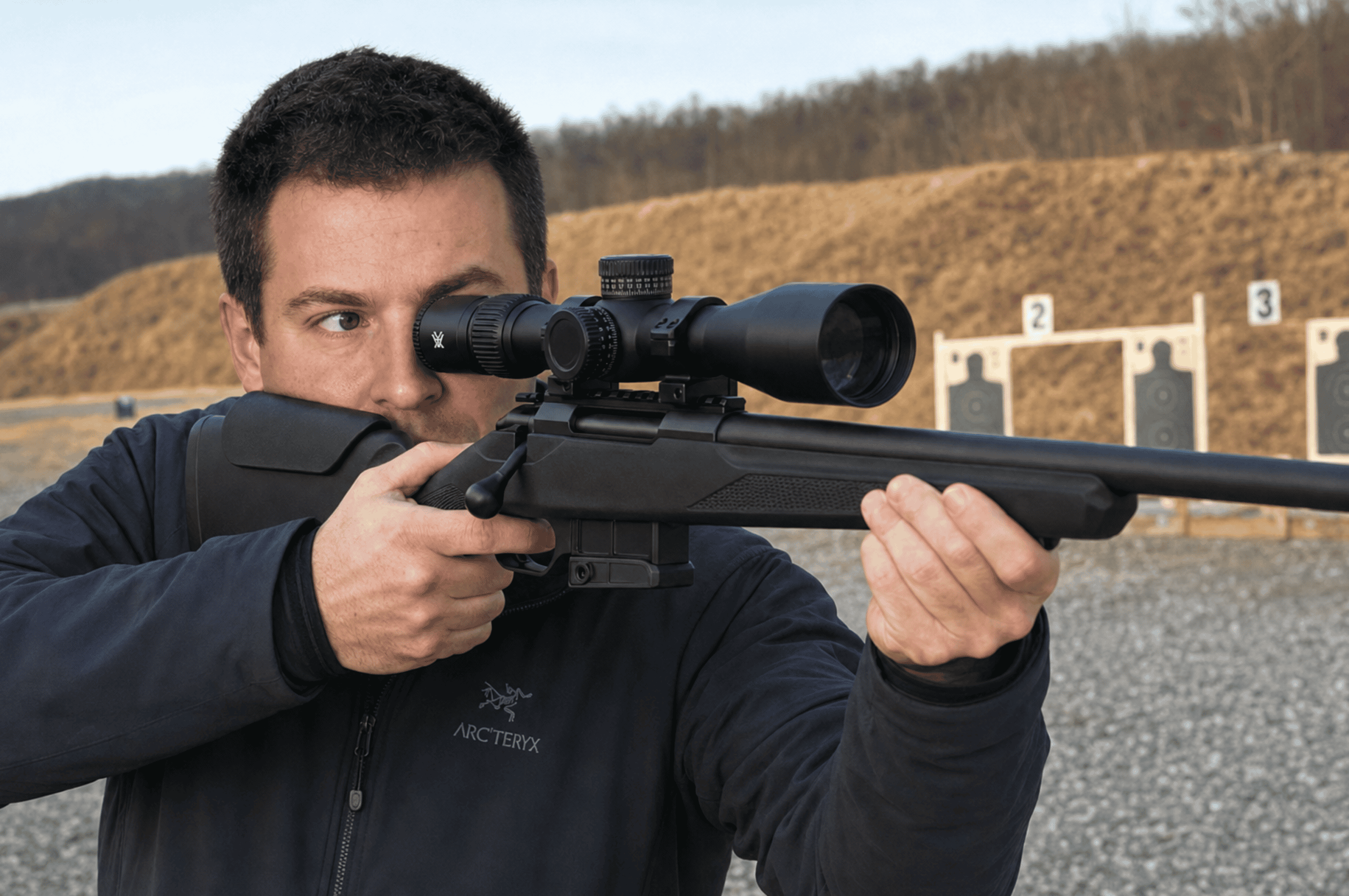
Mike Fellon is the founder of ScopesReviews and an optics specialist with 15+ years in precision shooting. A former Bass Pro Shops firearms advisor and NRA-certified instructor, he’s hands-tested 200+ rifle scopes across hunting and competition. Based in Dallas, Texas.