
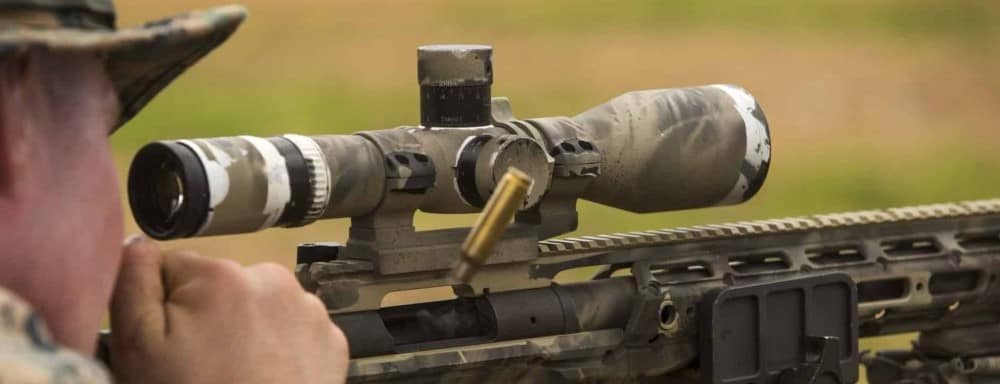
Under $200 is the price tier where most first-time scope buyers land, and it’s also where the gap between “good enough” and “genuinely good” gets blurry. You can get functional glass at the bottom of this range. You can get excellent glass for a bit more. Somewhere in the middle, four or five manufacturers are fighting over the same buyer with scopes that look almost identical on paper: 3-9×40, 1-inch tube, BDC reticle, capped turrets.
The UTG is included as a feature-heavy outlier, differing in magnification range, tube diameter, reticle type, and turret design, to show what extra money buys within this price tier. The specs blur together. So the real question isn’t which scope has the best numbers; it’s which one actually performs when you mount it on a rifle and start shooting. I tested four scopes at this ceiling to find out, and the Vortex Crossfire II 3-9×40 earned the top spot by delivering the cleanest glass and most reliable tracking of the group, all backed by a warranty that none of the others can match.
My Top 4 Scope Picks Under $200
Best Overall
Vortex Optics Crossfire II 3-9×40
The Crossfire II sits right in the sweet spot of this price tier. The glass is noticeably sharper than everything else I tested, edge-to-edge clarity holds up better at 9x, and the Dead-Hold BDC reticle is genuinely useful without cluttering up your field of view. Vortex’s VIP lifetime warranty (unconditional, transferable, no receipt required) seals it. If you’re buying one scope under $200 and want to stop thinking about it, this is the one.
Best Glass for Deer Hunters
SIG SAUER Buckmasters 3-9x40mm
SIG’s entry into the budget space punches harder than most people expect. The Buckmasters BDC reticle is clean and intuitive, the LensArmor coating resists scratches better than anything else at this price, and because it is tied for the widest field of view at 3x (34.1 ft at 100 yards), that wide view means faster target acquisition in brush. Priced nearly the same as the Vortex, the optical quality is close enough that some hunters might prefer it.
Best Budget Pick
Bushnell Banner 2 3-9×40
The cheapest scope in this test, and it doesn’t embarrass itself. A scope with 5.11 inches of eye relief and Bushnell’s Dusk & Dawn multi-coated glass at this price point is hard to argue with. The Banner 2 doesn’t pretend to compete with scopes costing twice as much, but for first-time hunters or anyone building a budget rifle on a tight timeline, it does everything you actually need. That extended eye relief alone makes it worth considering for magnum calibers or youth shooters still learning cheek weld.
Most Features Under $200
UTG 3-12X44 30mm Compact Scope
No other scope I tested at this price gives you side-focus parallax adjustment, a 14-mode illuminated mil-dot reticle, exposed locking turrets, and a 30mm tube. The UTG packs features you normally find a tier or two above into a package that still squeezes under the ceiling. The trade-off is weight (23.2 oz) and tight eye relief (3.0-3.4 inches), which limits what rifles you’d want to pair it with. But for range work, predator calling, or anyone who wants adjustable parallax without stepping into the next price bracket, it fills a niche nothing else here touches.
I’ve Tested Scopes at This Budget Since Before I Started Writing About Them
Sub-$200 scopes are the ones I’ve spent the most cumulative time evaluating, partly because they move through my hands more frequently and partly because the differences between them are subtle enough to require real range time. A scope at this ceiling can’t coast on premium glass the way a mid-tier optic can; it has to get the fundamentals right with tighter margins.
Over the years I’ve noticed that the scopes which survive at this tier share a pattern: they track reliably through at least a couple box-test cycles, their glass stays clear enough past 7x that you’re not squinting, and their zero holds after moderate recoil. The scopes that wash out usually fail one of those three things, and the failure doesn’t always show up on the first range session. That pattern is what drove the specific tests I ran for this guide, and it’s why the round count for each scope stretched across multiple weeks rather than a single afternoon.
Side-by-Side Specs
At this price tier, specifications start to look almost interchangeable across the 3-9×40 class. The real differences show up in glass quality, turret feel, and reticle execution, none of which appear in a spec table. That said, these numbers give you the baseline for comparison.
| Features | Vortex Optics Crossfire II 3-9×40 | SIG SAUER Buckmasters 3-9x40mm | Bushnell Banner 2 3-9×40 | UTG 3-12X44 30mm Compact Scope |
|---|---|---|---|---|
| Magnification | 3-9x | 3-9x | 3-9x | 3-12x |
| Objective Diameter | 40 mm | 40 mm | 40 mm | 44 mm |
| Eye Relief | 3.8″ | 4.17″ – 3.85″ | 5.11″ (Extended model) | 3.4″ – 3.0″ |
| Weight | 14.8 oz | 14.7 oz / 417 g | 14.8 oz | 23.2 oz |
| Length | 12.2″ | 12.4″ | ~12″ | 10.4″ |
| Tube Size | 1 inch | 1 inch | 1 inch | 30 mm |
| Reticle | Dead-Hold BDC (SFP) | Buckmasters BDC (SFP) | DOA Quick Ballistic (SFP) | 14-mode Mil-dot |
| Field of View | 34.1′ – 12.6′ @ 100 yds | 34.1 – 11.3 ft @ 100 yds | 32.7 – 11.5 ft @ 100 yds | 32.0 – 10.0 ft @ 100 yds |
| Turret Style | Capped | Capped | Capped | Exposed Zero Locking/Resetting |
| Adjustment Range | 60 MOA Elevation / 60 MOA Windage | 60 MOA Elevation / 60 MOA Windage | 60 MOA Elevation / 60 MOA Windage | 80 MOA Elevation / 80 MOA Windage |
| Click Value | 1/4 MOA | 1/4 MOA | 1/4 MOA | 1/4 MOA |
| Parallax Adjustment | Fixed (100 yds) | Fixed (100 yds) | Fixed | Side Focus, 10 yds to ∞ |
| Illumination | No | No | No | Yes, 14 modes |
The 4 Best Rifle Scopes Under $200
1. Vortex Optics Crossfire II 3-9×40 – Best Overall
The Glass That Set the Bar for This Test
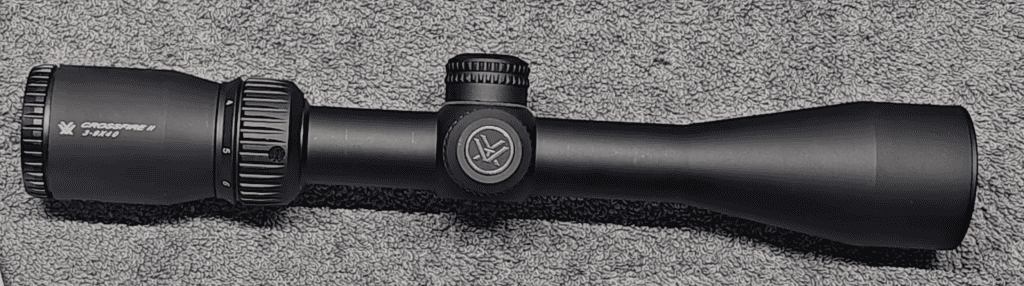
I mounted the Crossfire II first, mostly because I wanted a reference point. I’ve put Crossfire IIs on enough rifles over the years that I know roughly what to expect, and that’s useful when you’re evaluating three other scopes against it. What I didn’t expect was how much this particular unit reminded me why it keeps earning recommendations. The first thing I noticed at the bench at 100 yards was how crisp the center image was at 9x. Not just adequate, genuinely clean. The target lines stayed sharp, contrast was solid, and the transition from center to edge was smoother than what I got from the Bushnell or the UTG later in testing. There is some softening at the very edges on max power, but it doesn’t intrude into the usable field of view the way it does on cheaper glass.
Dead-Hold BDC: Enough Information Without the Clutter
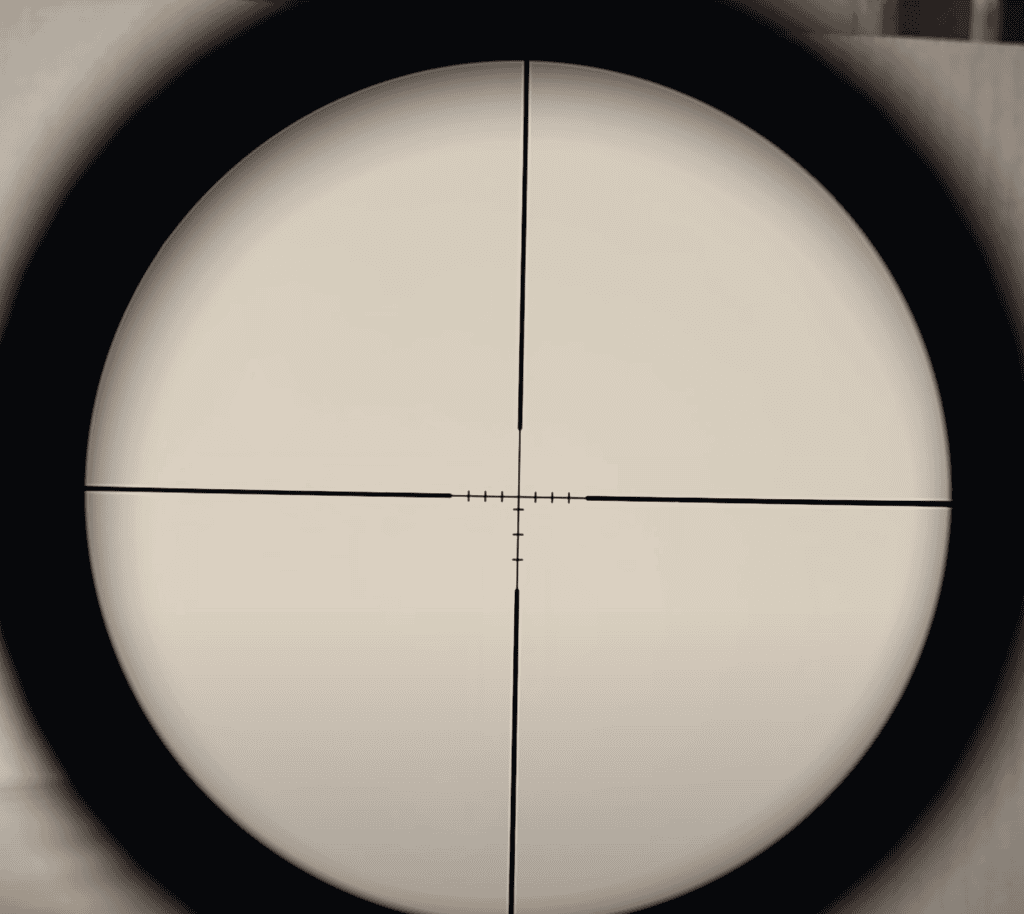
The Dead-Hold BDC reticle is one of the reasons this scope keeps landing on “best of” lists, and I think it deserves that. The holdover hashmarks and the windage references are positioned so they’re useful without turning your sight picture into a geometry lesson. At 9x on the SFP reticle, the subtensions are sized appropriately for the kind of shooting this scope is designed for. I ran holdovers out to 200 yards on steel and the aiming points corresponded well enough that I wasn’t making mental adjustments between shots. Compared to the SIG’s Buckmasters BDC (which uses dots instead of hashmarks), I found the Vortex reticle easier to use quickly because the hashmarks give you a visual reference without guessing which dot you’re on. That’s a personal preference, but several people I’ve let look through both said the same thing.
Turrets That Actually Do What You Tell Them
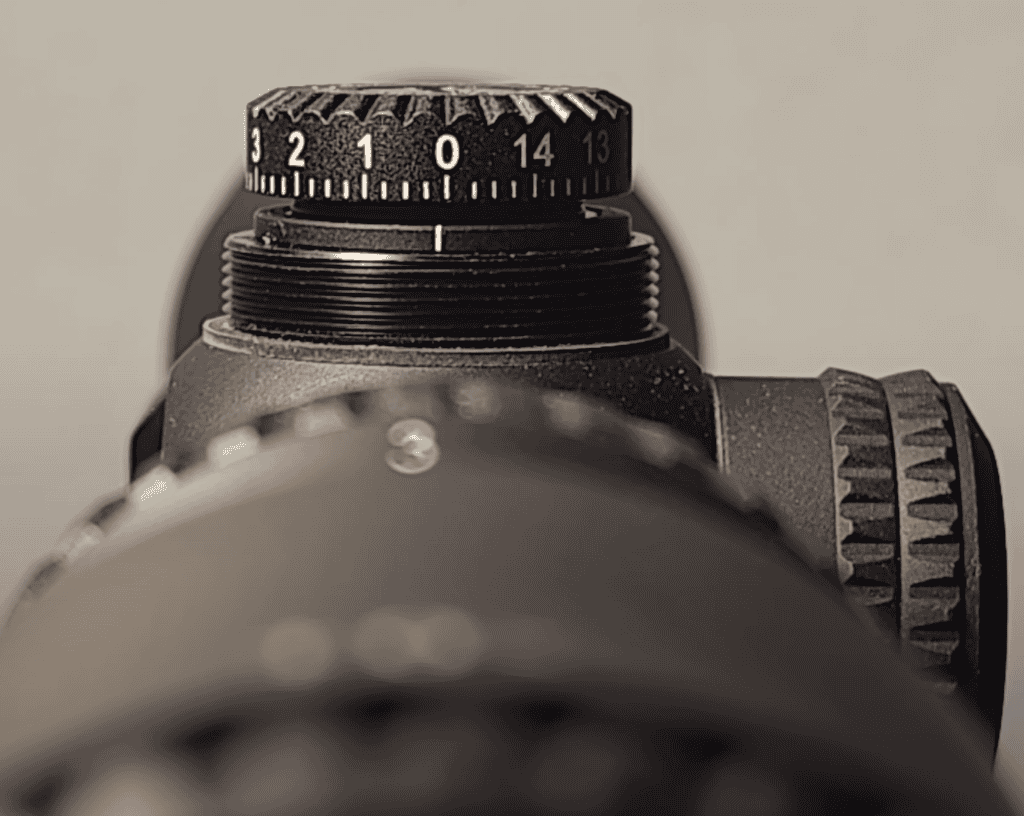
The capped turrets reset cleanly after zeroing. Each click has a distinct, tactile snap to it that’s better than what you typically feel at this price tier. I ran a simple box test (4 MOA square, 16 clicks each direction) and the group returned to within about half an inch of its starting point after completing the full cycle. For a scope in this class, that’s solid tracking. The Bushnell Banner 2’s turrets work fine, but the clicks feel softer and less defined; the Crossfire II’s feel like they actually lock into position. The fast-focus eyepiece on the rear is smooth and stays where you set it. Small detail, but I’ve had budget scopes where the diopter slowly drifts with recoil. This one didn’t move over roughly 65 rounds.
What It Won’t Do
Fixed parallax at 100 yards means this scope is purpose-built for hunting-distance shooting. If you’re trying to shoot small groups at 50 yards, you’ll notice some parallax shift when you move your head around behind the scope. Parallax error increases beyond the 100-yard fixed point; slight apparent image softness at longer distances is expected, not eliminated. That’s worth knowing if you plan to use this for rimfire or close-range precision. The eye relief at 3.8 inches is workable on the .308 I tested with, though the SIG and especially the Bushnell offer more room. Getting behind the scope quickly from an awkward position took a beat longer than it did with the Banner 2’s 5.11 inches.
The Warranty Factor
Vortex’s VIP warranty is unconditional, transferable, and doesn’t require a receipt. If you break it, they fix or replace it. Period. At this price tier, that’s a genuine differentiator. SIG offers a limited lifetime warranty. Bushnell has a lifetime warranty too. But Vortex’s policy covers user error, which the others don’t. For a scope that might live on a truck gun, get passed to a kid, or take a tumble off a tailgate, that matters more than any spec on paper.
Here’s what the numbers looked like on the bench.
Field Test Data
| Test Parameter | Result |
|---|---|
| 100-Yard Group (5-shot, sandbag rest) | 1.15″ best, 1.4″ average |
| 200-Yard Group (5-shot, sandbag rest) | 2.6″ average |
| Tracking Test (4 MOA box, 16 clicks/side) | Returned within 0.5″ of original POI |
| Zero Retention (65+ rounds) | No measurable shift |
| Low-Light Usability (last 20 min before sunset) | Clear image, reticle visible against dark brush at 7x |
Tested with: Savage Axis II .308 Winchester | Federal Power-Shok 150gr Soft Point
Pros and Cons
PROS
|
CONS
|
Performance Ratings
The Crossfire II doesn’t try to be anything it’s not. It’s a well-built 3-9×40 with clean glass, a practical reticle, and the best warranty in the business at this price. For most hunters building their first serious rifle setup, this is where I’d start, and it’s where I’d stay unless a specific need pushed me toward one of the others.
2. SIG SAUER Buckmasters 3-9x40mm – Best Glass for Deer Hunters
SIG Brought Low-Dispersion Glass to a Budget Fight
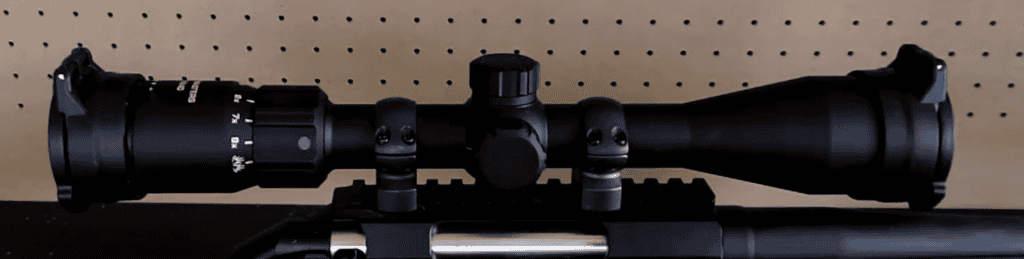
The Buckmasters genuinely surprised me. SIG’s SpectraCoat lens system and low-dispersion glass deliver image quality that’s closer to the Crossfire II than I expected, and in certain lighting conditions, specifically early morning with flat overcast, I actually preferred the SIG’s contrast. Colors looked more natural through the Buckmasters, and the image had a warmth to it that the Vortex doesn’t quite match. At 100 yards on the bench, target lines were sharp and the background stayed defined enough to distinguish individual branches in the treeline behind the target stand. The quality drops off a bit faster at the edges than the Vortex, which is the main optical difference between them. But for hunting, where you’re focused on what’s in the center of the reticle, it’s splitting hairs.
A BDC with Dots Instead of Hashes
The Buckmasters BDC uses holdover dots rather than the hashmark style you see on the Vortex Dead-Hold. SIG designed this reticle in collaboration with Jackie Bushman, and the dots extend holdover references out to 500 yards at 9x. In practice, the dots are small and clean enough that they don’t obstruct your target view, which I appreciated when I was shooting at 200 yards and the target was a smaller steel silhouette. The downside of dots versus hashmarks is that the dots can blend into a dark background more easily, especially in low light. I noticed this late one afternoon when the tree line behind my target went dark; the lower holdover dots started to disappear into the shadows. In bright or mixed light, no issue at all. For a scope paired with SIG’s Buckmasters rangefinder, the BDC holdover points are calibrated to work as a system, which is a nice touch if you’re already in the SIG ecosystem.
LensArmor Earns Its Name
I’m not normally one to care much about scratch-resistance coatings, because I use lens caps. But the LensArmor coating on this scope is noticeably harder than the glass surfaces on the other three. I accidentally set the scope lens-down on a concrete bench top (my fault, rushed swap between scopes) and checked the objective afterward, expecting to find a mark. Nothing. The Crossfire II has good coatings, but the SIG’s LensArmor genuinely feels like a more durable surface. For a hunting scope that gets thrown in and out of cases and bounced around in truck beds, that’s a practical advantage.
Turrets and the Thread-In Throw Lever
SIG includes an integrated thread-in throw lever on the power ring, which is a feature I almost never see at this price point. It makes magnification changes faster and more positive than just spinning the ring with your fingers, especially with gloves. The turrets themselves are capped and functional but slightly less tactile than the Vortex. Each click registers, and I got acceptable box-test results (returned within about 0.7 inches after a 4 MOA square), but the individual clicks don’t feel as crisp. They’re soft without being mushy. For a hunt-and-hold-over scope, that’s fine. For someone who dials frequently, the Vortex turrets would feel better. SIG backs this with a limited lifetime warranty, which covers defects but not user damage, so it’s a step behind Vortex there.
Where It Stands Against the Vortex
The Buckmasters and Crossfire II are close enough in glass quality and overall build that the deciding factor for most buyers will come down to reticle preference and warranty policy. I gave the edge to the Vortex because the turrets track more crisply, the Dead-Hold BDC is slightly easier to use in mixed lighting, and the VIP warranty is unmatched. But if you prefer SIG’s dot-style BDC or already own a Buckmasters rangefinder, this scope makes a lot of sense.
Field Test Data
| Test Parameter | Result |
|---|---|
| 100-Yard Group (5-shot, sandbag rest) | 1.25″ best, 1.5″ average |
| 200-Yard Group (5-shot, sandbag rest) | 2.8″ average |
| Tracking Test (4 MOA box, 16 clicks/side) | Returned within 0.7″ of original POI |
| Zero Retention (60+ rounds) | No measurable shift |
| BDC Dot Visibility (low light, last 15 min before sunset) | Center crosshair clear; lower holdover dots harder to distinguish against dark backgrounds |
Tested with: Savage Axis II .308 Winchester | Federal Power-Shok 150gr Soft Point
Pros and Cons
PROS
|
CONS
|
Performance Ratings
The Buckmasters is a scope I’d feel good recommending to anyone who asked me what to put on a deer rifle. SIG’s glass and build quality are the real deal here, and the throw lever is a smart inclusion that punches above this price tier. The Vortex edges it out on turret feel and warranty, but for a hunter who zeros once and uses holdovers, the SIG closes that gap.
3. Bushnell Banner 2 3-9×40 – Best Budget Pick
Five Inches of Eye Relief Changes the Conversation
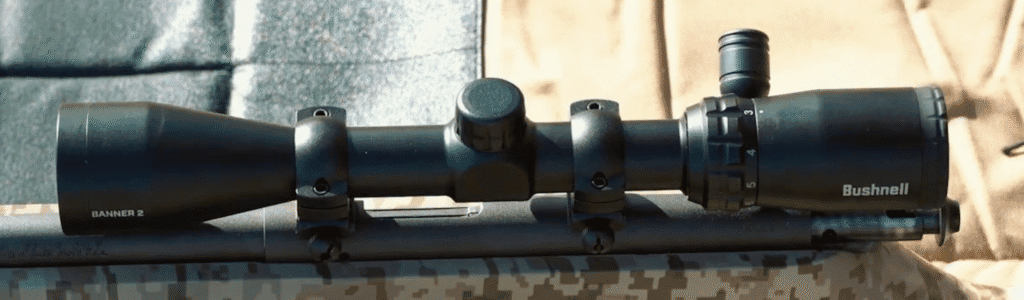
I’ll be honest: I mounted the Banner 2 expecting to confirm that it was the weakest scope in the test. It’s the least expensive of the four by a noticeable margin, and that usually means compromises everywhere. The eye relief changed my mind about what this scope is for. At 5.11 inches, I had so much room behind the scope that getting a sight picture felt almost lazy. On the .308 Savage, there was zero concern about scope bite, and I could get behind the reticle from an off-angle cheek weld faster than with any of the other three. For someone mounting a scope on a .30-06, a .300 Win Mag, or handing a rifle to a younger shooter who hasn’t dialed in their form yet, that eye relief is the single most important feature in this entire test.
Dusk & Dawn Coatings Earn Their Name
Bushnell’s Dusk & Dawn Brightness coating system is the Banner line’s calling card, and it works. During the last twenty minutes of usable light one evening, the Banner 2 held a brighter, more usable image than I expected. It wasn’t as sharp as the Crossfire II at the same moment, but it gathered enough light that I could still make out the 200-yard steel target against the darkening background. The coating seems to prioritize brightness over absolute sharpness, which is exactly the right trade-off for a scope designed around dawn and dusk hunting. In full daylight, the glass is a step behind the Vortex and SIG in center sharpness, and edge clarity rolls off noticeably past about 7x. I wouldn’t call it soft, but the difference is visible if you’re comparing them side by side.
DOA Quick Ballistic: Functional but Busy
The DOA Quick Ballistic reticle gives you five drop points and 5 mph wind hold lines, and it’s compatible with Bushnell’s free Ballistics App for calibration to specific loads. On paper, that’s a lot of utility. In practice, the reticle is busier than the Vortex Dead-Hold or SIG BDC. The wind hold lines in particular add visual clutter that took me a moment to sort through when I was trying to use the holdover points quickly. I got used to it after a dozen shots, but my first impression was that there’s more going on in the reticle than this scope’s optical quality can cleanly support. At 9x, the thinner holdover lines looked thicker and blurred slightly, a limit of optical clarity at maximum magnification for glass at this price. For someone who zeros at 100 and only uses the first two holdover points for 200-yard shots, it’s fine. For someone trying to work the full reticle out to 500 yards, I’d steer them toward the Vortex instead.
The Turrets Are the Weak Link
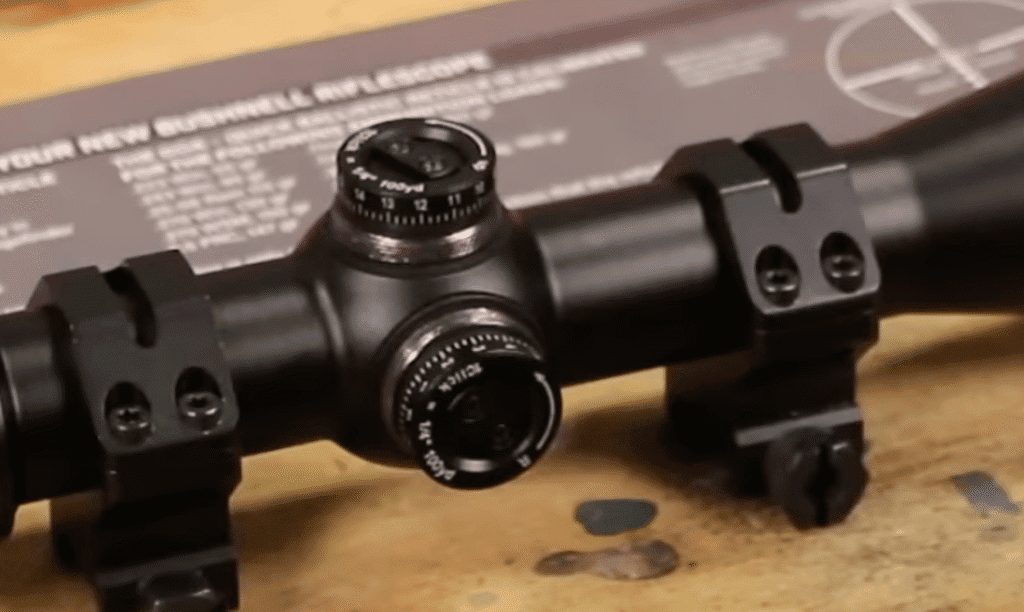
The Banner 2’s capped turrets function correctly but feel vague. Each click registers, and the scope tracked through my box test, returning within about an inch of the starting point, acceptable for set-and-forget hunting but insufficient for precise tracking. The tactile feedback is noticeably softer than the Vortex or even the UTG. I could feel the difference immediately when I switched from zeroing the SIG to zeroing the Bushnell. For a scope where you zero it once and then use holdovers for everything, this is a livable compromise. The rounded body design (Bushnell specifically markets the “snag-free” profile) is a nice touch for a hunting scope that gets dragged through brush. Weaver-style aluminum rings come in the box, which saves the cost of buying rings separately. For a first-time buyer building a setup from scratch, that’s a welcome inclusion.
The Value Math
At the lowest price in this test, the Banner 2 delivers the best eye relief, legitimate low-light performance from the Dusk & Dawn coatings, included mounting rings, and IPX7 waterproofing. The glass and turrets aren’t at the Vortex or SIG level, but they’re not pretending to be. This scope knows what it is: the most capable hunting optic you can get at the absolute bottom of this budget tier.
Field Test Data
| Test Parameter | Result |
|---|---|
| 100-Yard Group (5-shot, sandbag rest) | 1.4″ best, 1.7″ average |
| 200-Yard Group (5-shot, sandbag rest) | Not recorded for this scope |
| Tracking Test (4 MOA box, 16 clicks/side) | Returned within ~1.0″ of original POI; acceptable for set-and-forget hunting, not precise tracking |
| Zero Retention (55+ rounds) | No shift detected |
| Low-Light Image Brightness (last 20 min before sunset) | Brighter than SIG; slightly behind Vortex in detail |
Tested with: Savage Axis II .308 Winchester | Federal Power-Shok 150gr Soft Point
Pros and Cons
PROS
|
CONS
|
Performance Ratings
For the least amount of money in this test, the Banner 2 gives you the most forgiving shooting experience and genuine low-light capability. It doesn’t match the Vortex or SIG in raw optical quality, and the turrets won’t impress anyone. But it does the job it was built for, and that eye relief makes it the obvious choice for shooters running heavier-recoiling calibers or anyone who just wants the most forgiving scope they can find under the ceiling.
4. UTG 3-12X44 30mm Compact Scope – Most Features Under $200
A Feature Sheet That Reads Like a Scope Twice the Price
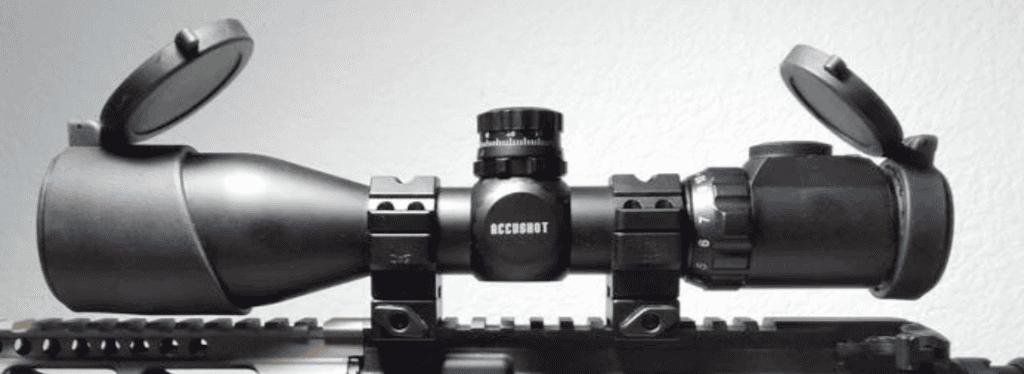
On paper, the UTG doesn’t belong in this test. Side-focus parallax adjustment, exposed locking turrets with zero reset, 14-mode illuminated reticle, a 30mm tube, and magnification up to 12x. Those are features you normally see in scopes well above this price ceiling. And the first time I picked it up, the weight confirmed that UTG packed all of it in: this thing is noticeably heavier than every other scope I tested. The difference is immediate when you mount it. The Savage felt front-heavy in a way it didn’t with the three lighter scopes. For a bench gun or a rifle that sits in a stand, that’s manageable. For a rifle you carry through brush all day, it’s a genuine consideration.
Glass That’s Good in the Center and Honest About Its Limits
The emerald-coated lenses produce a clear, usable image across the center of the field of view. At 3x through about 9x, the picture was sharp enough that I didn’t feel like I was giving up much compared to the Vortex or SIG. Past 9x, the story changes. Edge distortion creeps in, and at 12x the outer maybe 30% of the image starts to blur. I found myself instinctively staying around 7-9x for target work because the image quality was noticeably better there. The side-focus parallax knob helped clean up the image at different distances in a way the fixed-parallax scopes simply can’t, which is a real advantage when you’re shooting at 50 yards one moment and 200 the next. At 100 yards, once I dialed the parallax in, the sight picture snapped into a sharpness that surprised me.
The Mil-Dot Reticle Is Thick but Usable
UTG’s Tactical Range Estimating mil-dot features nine dots extending in each direction from the center crosshair. The wire reticle is functional and the dot spacing is consistent, but the crosshairs are thicker than what you get on the Vortex or SIG reticles. At 12x on a small target, the thick lines started to cover more of the aiming point than I liked. The EZ-TAP illumination system, though, is genuinely useful. Two buttons on the left side of the eyepiece cycle through red and green illumination across seven brightness levels each. At the lowest green setting during an overcast afternoon, the reticle popped against a shadowy treeline without washing out. Some of the brighter settings felt excessive for daylight use, but the range of options means you can dial it in for almost any background. None of the other three scopes in this test offer illumination at all.
Exposed Turrets: The Right Idea with a Caveat
The zero-locking, zero-resetting exposed turrets are the feature that most separates the UTG from the other three scopes conceptually. You can dial adjustments and then lock the turrets in place, which prevents the accidental bumps that plague exposed turrets on field rifles. The clicks themselves are crisp and audible. My box test came back within about 0.8 inches, which is decent. But I noticed that the locking mechanism needs to be firmly engaged; on one occasion I thought I’d locked the elevation turret and found it had shifted slightly after a series of shots. Finger-tightening wasn’t always enough. That’s not a deal-breaker, but it demands attention. For someone transitioning from capped turrets and used to a set-and-forget approach, the exposed turrets add a step to your pre-shot routine that the other scopes don’t require.
Eye Relief Is the Limiting Factor
At 3.0 inches on 12x, the eye relief is the tightest of any scope in this test. On the .308 Savage, I had to be deliberate about my cheek weld and head position to get a full, clear sight picture. Any rush to get behind the scope, and I’d catch a partial shadow or lose the image entirely. Compared to the Banner 2’s effortless 5.11 inches or even the Vortex’s 3.8, the UTG demands more from you. For experienced shooters who mount consistently, it’s workable. For newer shooters or anyone on a hard-kicking rifle, I’d point them toward one of the other three.
Field Test Data
| Test Parameter | Result |
|---|---|
| 100-Yard Group (5-shot, sandbag rest, 9x) | 1.3″ best, 1.6″ average |
| 200-Yard Group (5-shot, sandbag rest, 9x) | 3.1″ average |
| Tracking Test (4 MOA box, 16 clicks/side) | Returned within 0.8″ of original POI |
| Parallax Elimination at 50 yds (side focus) | Clean elimination; noticeable image improvement vs. fixed-parallax scopes |
| Illumination Usability (overcast afternoon) | Low green setting provided clear reticle contrast; higher settings too bright for daylight |
| Zero Retention (65+ rounds) | Held when turret lock was firmly engaged |
Tested with: Savage Axis II .308 Winchester | Federal Power-Shok 150gr Soft Point
Pros and Cons
PROS
|
CONS
|
Performance Ratings
The UTG occupies a strange space. It offers more features than anything else I tested under this ceiling, and for range use or stationary hunting where weight isn’t a factor, those features genuinely improve the shooting experience. The side-focus parallax alone is worth the consideration. But the weight, tight eye relief, and edge softening at higher magnification keep it from competing with the Crossfire II or Buckmasters as a do-everything hunting scope. Know what you need it for before you buy it.
250 Rounds Through a Savage Axis II: How This Test Came Together
All four scopes went on the same Savage Axis II in .308 Winchester, shooting Federal Power-Shok 150gr Soft Point exclusively. Testing stretched across three weekends in late October at an outdoor range south of the DFW area. Temperatures ranged from mid-50s to low 70s, with two overcast sessions and one clear day. Total round count: around 250, split between 55 and 70 per scope. Each was zeroed at 100, box-tested, then shot for groups at 100 and 200 yards where recorded; the Bushnell’s 200-yard group was not recorded in the field notes.
Before settling on these four, I rejected an Athlon Neos 3-9×40 BDC 500 IR and a Hawke Vantage 3-9×40. The Athlon’s BDC holdover dots didn’t correspond to .308 drop at the distances I tested; the subtensions seemed calibrated for a different trajectory. The Hawke had acceptable glass but inconsistent turret tracking, with POI wandering about 1.5 inches from where it should have returned on the box test. For this 4 MOA box test, I treated returns within about an inch as acceptable for set-and-forget hunting, while larger misses were not precise enough for tracking confidence. For a closer look at my process, here’s my full testing and review methodology.
The Sub-$200 Trap: Buying Features You’ll Never Use on Your Deer Rifle
The mistakes buyers make at this tier tend to follow a specific pattern.
Paying for magnification range that outpaces the glass
A 6-24x scope under $200 will have impressive zoom numbers and blurry images past 10x. Glass at this budget can’t support high magnification cleanly. A 3-9x with good glass shows more usable detail at 9x than a cheap 6-24x at 16x.
The UTG is the exception I treated as a trade-off, not a free pass. Its 12x setting shows edge blur, but the center stayed useful around 7-9x and the side-focus/illumination package makes sense for range or stationary use. The trap is paying for top-end magnification when the blur shows up in the magnification range you actually plan to use.
Choosing exposed turrets on a rifle that lives in a truck
Exposed turrets feel tactical, but on a hunting rifle that gets bounced around, they’re an invitation for your zero to wander. At this price, capped turrets keep your zero safe. The exception is deliberate range use with locking turrets like the UTG’s.
Skipping the box test after zeroing
Budget scopes are where tracking inconsistencies show up most. After zeroing, run a box test: 16 clicks up, right, down, left, and check if you return to original POI. Five minutes at the range can save a season of frustration.
What Buyers at This Budget Actually Want to Know
Can a scope under $200 actually hold zero on a .308 or .30-06?
Yes, with the UTG caveat that its turret lock needs to be firmly engaged. All four scopes held zero through 55-70 rounds of .308 each under their tested conditions. The days of budget scopes losing zero after a box of ammo are mostly gone with established brands like Vortex, Bushnell, SIG, and Leapers/UTG.
Do I need illumination on a hunting scope at this price?
Probably not. The three non-illuminated scopes all provided usable reticle visibility into the last minutes of legal light. Illumination is nice for dark timber, but not worth sacrificing glass quality or eye relief to get it at this budget.
Is there a real difference between the Vortex Crossfire II and SIG Buckmasters?
A real difference, but not a dramatic one. The Vortex has crisper turrets and a better warranty. The SIG has warmer glass tones, a throw lever, and better scratch resistance. For most hunters, the warranty tips it to Vortex.
Matching the Scope to What You Actually Shoot
For general hunting under 300 yards, the Vortex Crossfire II is the answer. Best glass, best tracking, best warranty. Done.
If eye relief is the deciding factor (magnum caliber, glasses, younger shooter), the Bushnell Banner 2 solves that problem better than anything else here. Accept softer turrets as the trade-off.
For bench or fixed-position shooting where you want adjustable parallax and illumination, the UTG is the only tested option. Don’t put it on a rifle you plan to carry all day.
Disclosure
All four scopes and the two rejected candidates were purchased retail within a two-week window in October. This site earns affiliate commissions from qualifying purchases through the links above.
Final Thoughts
After 250 rounds through one rifle with four scopes across three weekends, the picture under $200 is clearer than I expected. The Vortex Crossfire II earned the top spot because it does the most important things (sharp glass, reliable tracking, bombproof warranty) better than the competition. It’s not exciting. It just works, and at this price, that’s what matters.
The SIG Buckmasters ran close enough that I could see it winning for certain buyers, particularly those who value the included throw lever or already own SIG products. The Bushnell Banner 2 proved that the cheapest scope in the test doesn’t have to be the worst, especially when that eye relief advantage is exactly what your setup needs. And the UTG carved out a legitimate niche for shooters who want range-oriented features the other tested scopes don’t offer at this price.
Getting the scope decision right under $200 matters because the margins are thinner. A scope that loses zero or fogs up during November doesn’t give you a second chance. The Crossfire II’s combination of optical quality and that unconditional warranty makes it the safest bet for someone spending their first real money on glass.
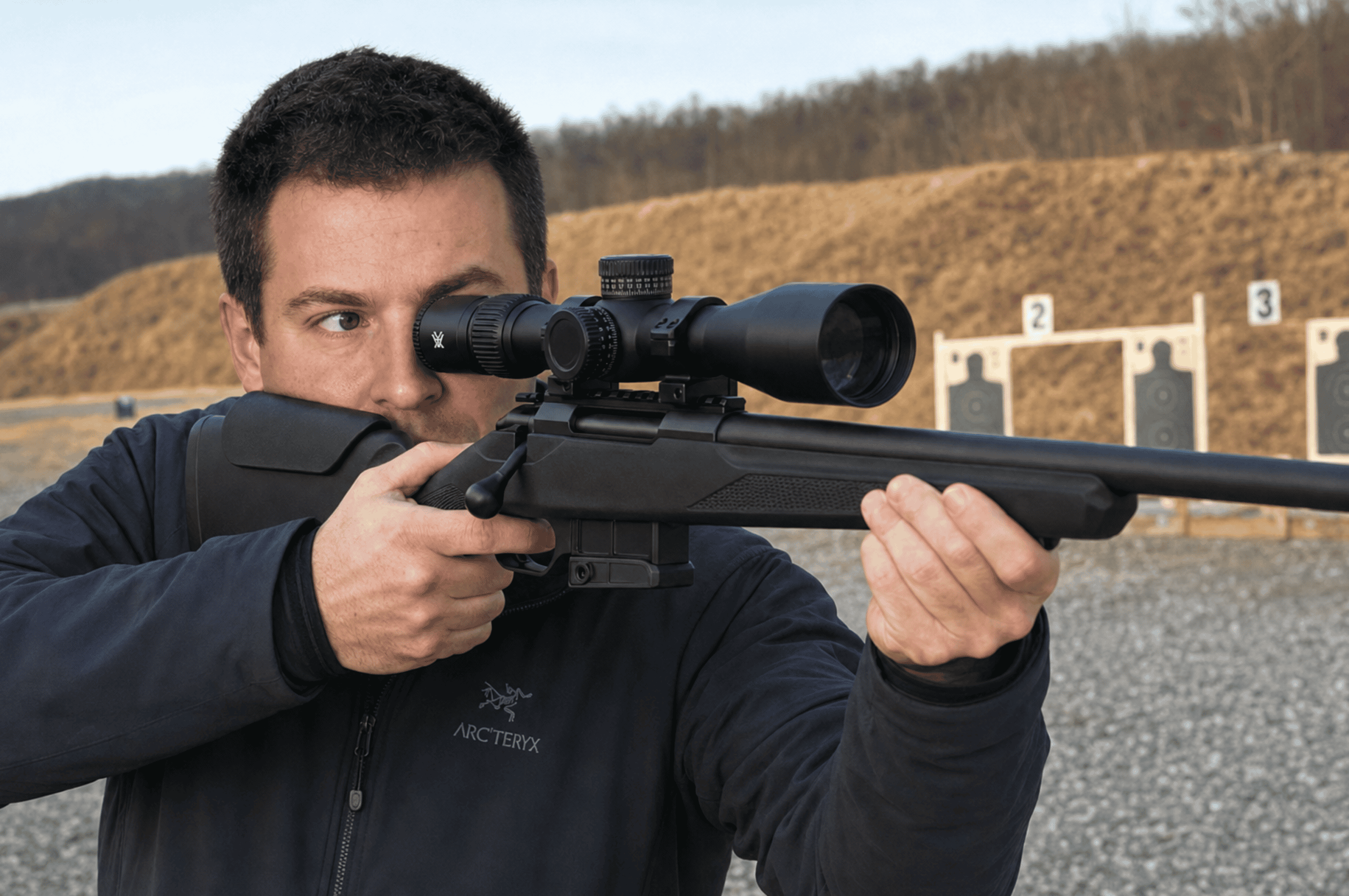
Mike Fellon is the founder of ScopesReviews and an optics specialist with 15+ years in precision shooting. A former Bass Pro Shops firearms advisor and NRA-certified instructor, he’s hands-tested 200+ rifle scopes across hunting and competition. Based in Dallas, Texas.