
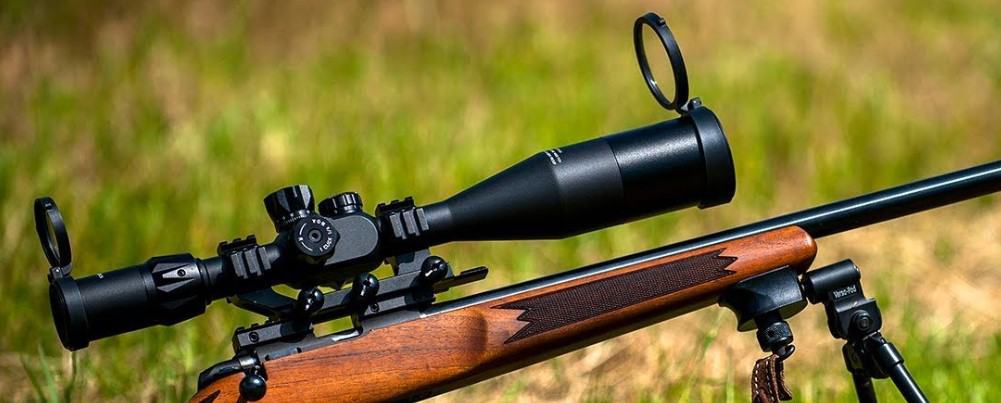
This budget tier gives you access to four completely different scope philosophies. You can get a precision long-range FFP optic with turrets that actually track, a featherweight hunting scope with glass that outperforms its price, a competition-focused platform built for PRS stages, or an LPVO that costs far less than the top options and handles close-range work surprisingly well.
The problem isn’t finding something good; it’s that “good” means wildly different things depending on what you’re actually doing with your rifle. After mounting and testing six candidates, I selected four finalists for full review, and the Vortex Viper PST Gen II 5-25×50 earned the top spot. It’s not the cheapest option here, but it delivers the most capable overall package for the money.
My 4 Favorite Scopes Under $1,000
Best Overall
Vortex Viper PST Gen II 5-25×50
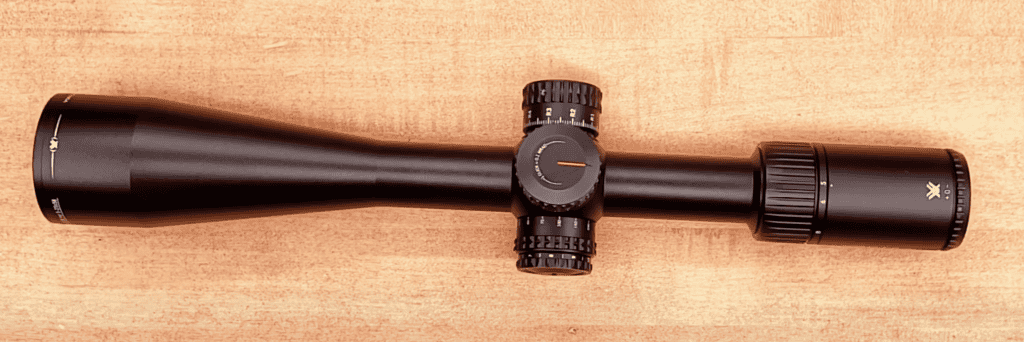
This is the scope I’d point someone toward if they could only buy one optic in this price tier. The Gen II’s XD glass is a genuine step up from the original, the RZR zero stop works the way a zero stop should, and the EBR-7C reticle in FFP gives you holdovers that stay honest across the magnification range. It’s the most complete precision scope in this test.
Best for Competition Shooters
Bushnell Match Pro ED 5-30×56
If you’re building a PRS rig or shooting local matches, the Match Pro ED deserves serious consideration. That 34mm tube and 5-30x range give it an edge for staged competition work, and the locking turrets prevent the accidental bumps that ruin a match stage. The ED glass pulls its weight too, though the Vortex edges it in outright clarity.
Best Lightweight Hunting Scope
Leupold VX-3HD 4.5-14x40mm
At 13.3 ounces, this is the scope for the hunter who hikes hard and shoots at realistic distances. It gives up the tactical features entirely (no FFP, capped windage, exposed CDS-ZL elevation turret, no parallax adjustment), and that’s the point. Leupold put the emphasis on glass and weight savings. For a backcountry rifle or a dedicated deer gun, nothing else in this test comes close to this weight class.
Best Budget LPVO
SIG SAUER Tango-MSR 1-8x24mm
This scope sits well below the top of the guide’s budget, and that’s part of its appeal. You get a functional 1-8x LPVO with illumination and a usable BDC reticle for far less than the precision scopes cost. The glass and turrets reflect its budget role, but for an AR or home defense setup where speed matters more than precision at distance, it fills the role.
What Fifteen Years of Testing Scopes in This Price Range Taught Me
The under-$1000 tier is where I’ve seen the most buyer confusion, and it’s usually the same issue: someone spends serious money on a scope built for a purpose they don’t actually have. I’ve watched this pattern across dozens of scopes in this range. A hunter buys a 5-25x tactical scope because the turrets looked impressive, then discovers the thing weighs two pounds and he never dials past 12x in the field. A guy building a 3-gun AR buys a fixed-parallax hunting scope because the glass was gorgeous, then can’t figure out why close targets blur. The 400 rounds I put through the Bergara for this test confirmed something I keep coming back to: at this budget, the scope that matches your actual shooting matters more than the scope with the best spec sheet. Every one of these four scopes does something well. The rankings reflect which one does the most things well for the most shooters.
Side-by-Side Specs
The numbers below tell part of the story, but pay attention to where these scopes differ in philosophy, not just measurements. A 13.3-ounce hunting scope and a 32-ounce competition scope aren’t competing on the same terms, even if they’re both in the same buyer’s-guide tier.
| Features | Vortex Viper PST Gen II 5-25×50 | Bushnell Match Pro ED 5-30×56 | Leupold VX-3HD 4.5-14x40mm | SIG SAUER Tango-MSR 1-8x24mm |
|---|---|---|---|---|
| Magnification | 5-25x | 5-30x | 4.5-14x | 1-8x |
| Objective Diameter | 50mm | 56mm | 40mm | 24mm |
| Eye Relief | 3.4″ | 3.8″ | 4.4″ – 3.6″ | 3.93″ – 3.74″ |
| Weight | 31.2 oz | 32.0 oz | 13.3 oz | 18.6 oz |
| Length | 15.8″ | 15.4″ | 12.6″ | 10.5″ |
| Tube Size | 30mm | 34mm | 1 Inch | 30mm |
| Reticle | EBR-7C (MRAD, FFP) | DM2 (MRAD, FFP) | Duplex (SFP) | MSR BDC8 (SFP) |
| Field of View | 24.1′ – 4.8′ @ 100 yds | 24.5 – 4.1 ft @ 100 yds | 19.9 – 7.4 ft @ 100 yds | 124.8 – 19.6 ft @ 100 yds |
| Turret Style | Tactical Exposed, RZR Zero Stop | Exposed, Locking w/ Zero Stop | Capped Windage, Exposed CDS-ZL Elevation | Capped |
| Adjustment Range | 20 MRAD Elevation / 10 MRAD Windage | 29 MRAD Elevation / 14.5 MRAD Windage | 75 MOA Elevation / 75 MOA Windage | 100 MOA Elevation / 100 MOA Windage |
| Click Value | 0.1 MRAD | 0.1 MRAD | 1/4 MOA | 1/2 MOA |
| Parallax Adjustment | 25 yds to infinity | 15 yds to infinity | Fixed (150 yds) | Fixed |
| Illumination | Yes, 10 settings | Yes, 11 settings | No | Yes, 11 settings |
The 4 Best Rifle Scopes Under $1000
1. Vortex Viper PST Gen II 5-25×50 – Best Overall Precision Scope
The Gen II Upgrades Actually Delivered
I owned the original Viper PST 6-24×50 for three years before Vortex released the Gen II, so I had a pretty clear baseline for comparison. The first thing I noticed mounting the Gen II on my Bergara was the turrets. That old CRS shim zero stop on the Gen I always felt like a compromise; you could dial past your zero if you weren’t paying attention. The RZR zero stop on the Gen II is a hard, mechanical stop that just works. I set it up in about two minutes, and throughout my time with the Vortex during testing it never gave me a reason to think about it again. The turret knobs themselves are chunkier, easier to read with gloves, and each click is distinct enough that I never lost count during a string of adjustments.
Glass That Punches Into the Next Price Tier
Vortex’s XD glass in the Gen II is legitimately improved over the original. On a clear March morning, the image through this scope was noticeably sharper edge-to-edge than what I remember from my old PST. At 15x to 18x, where I did most of my work, the sight picture was clean and bright with minimal chromatic aberration. Pushing past 20x, the image holds up well, though I did notice slight softness right at 25x on a couple of overcast afternoons. Honestly, I rarely needed that top end; most of my shooting happened between 12x and 20x, and in that range the glass competes with optics from the next tier up. The Bushnell Match Pro ED has good glass too, but the Vortex resolves detail better at the edges of the image at comparable magnification.
Living With the EBR-7C in the Field
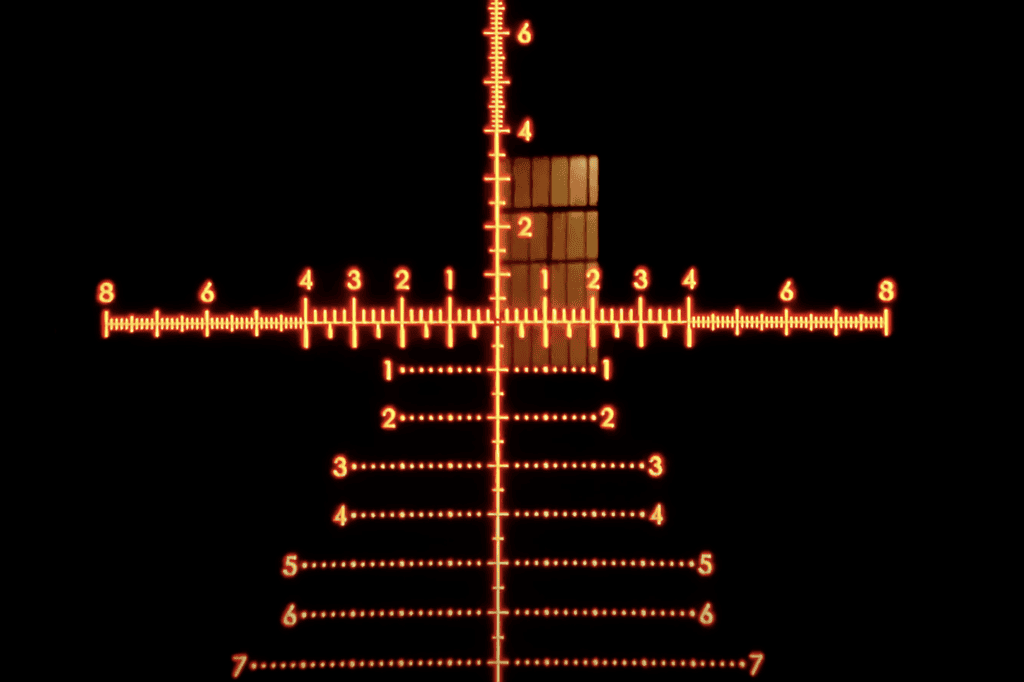
The EBR-7C is a Christmas tree reticle with holdover dots arranged in a widening pattern below the center crosshair. In the first focal plane, those subtensions stay proportionally accurate as you change magnification, which meant I could hold for wind or drop at any power setting without doing mental math. At lower magnifications the tree shrinks to the point where it almost disappears into the sight picture, keeping things clean for closer work. Cranked up past 15x, the individual dots and hash marks become genuinely useful for bracketing targets and making precise holds. I prefer this to the older EBR-2C; the 7C feels less cluttered at high power while still giving you enough reference points. On the illumination side, the dial is integrated into the side focus knob, which I found convenient once I got used to it. The off positions between each brightness level mean you can flip illumination on and off without hunting for the right setting.
Where It Falls Short of Perfection
At 31.2 ounces, this is not a scope you forget is on your rifle. On a bolt gun like the Bergara that already weighs nine-plus pounds, the total setup gets heavy for carrying any distance. If I were building a backcountry hunting rig, I’d look at the Leupold VX-3HD instead. The eye relief at 3.4 inches is also tighter than I’d prefer; I bumped my brow once during a quick follow-up shot, a reminder to keep consistent cheek weld. And the elevation adjustment range of 20 MRAD total is adequate for the Bergara in 6.5 Creedmoor at the distances I tested, but shooters wanting to stretch well past 800 yards or running cartridges with more drop may feel constrained compared to the Bushnell’s more generous 29 MRAD of elevation travel.
Why It Earned the Top Spot
The Vortex Viper PST Gen II represents Vortex taking the lessons from the original PST and fixing the things that needed fixing. Better glass, a real zero stop, improved turrets, and a reticle that works across the full magnification range. It sits near the top of this guide’s budget, and I think it earns that position. For a shooter who wants one scope that handles precision target work, long-range practice, and even doubles as a capable hunting optic in open country, this is the one I’d buy. The Vortex VIP lifetime warranty doesn’t hurt either.
Here’s what the numbers looked like when I put the PST Gen II through its paces. Group sizes here and in the tables below are role-specific field observations, not controlled head-to-head accuracy comparisons.
Field Test Data
| Test Parameter | Result |
|---|---|
| Tracking Test (5 MRAD box test at 100 yds) | Returned to zero within 0.1 MRAD |
| 100-Yard Group (5-shot, bench rest) | 0.71″ |
| 300-Yard Group (5-shot, bench rest) | 2.28″ |
| Zero Reset Consistency (3 RZR reset cycles) | Returned to zero each time, no deviation |
| Low-Light Usability (30 min after sunset, 15x) | Clear, usable image with good contrast |
Tested with: Bergara B-14 HMR 6.5 Creedmoor | Federal Gold Medal CenterStrike 140gr OTM
Pros and Cons
PROS
|
CONS
|
Performance Ratings
If you can only afford one scope and you want it to do precision work, the Vortex Viper PST Gen II 5-25×50 is the answer at this budget. It’s not light, and it’s not cheap relative to the other three here. But the glass, the turrets, and the zero stop form a package that I’d trust on a match stage or a long-range hunt without reservation.
2. Bushnell Match Pro ED 5-30×56 – Best for Competition Shooters
Built Around the Clock
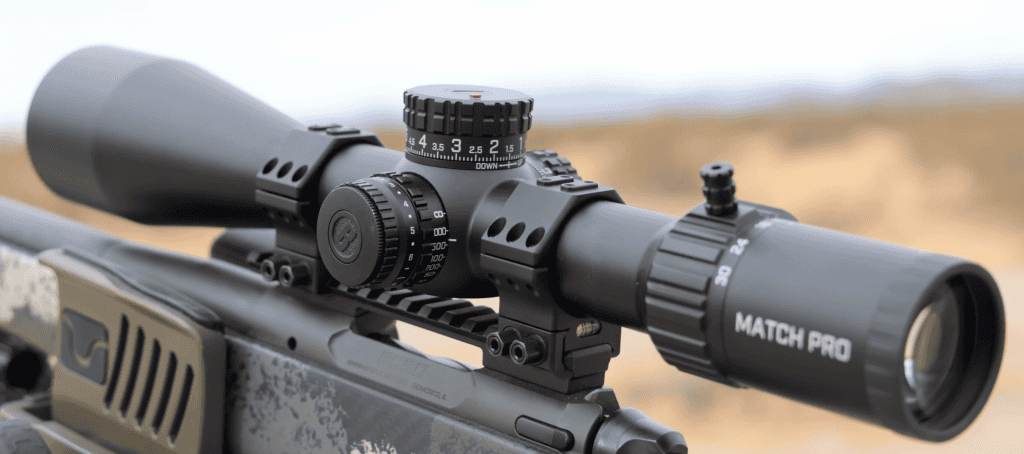
The Bushnell Match Pro ED makes its intentions clear the moment you start handling it. Locking turrets, a removable throw lever that can be configured for left or right-handed shooters, and illumination with a 6-hour auto-off timer. These are features designed for someone who is moving between stages, dialing under time pressure, and can’t afford to find a dead battery when it counts. I ran the Match Pro through four separate range sessions on the Bergara, and the competition DNA showed up in small details throughout. The throw lever snapped between magnification settings with enough resistance to stay put but not so much that I was fighting it during transitions. The turret lock engages with positive feedback; there’s no ambiguity about whether you’re locked in or not.
The DM2 Reticle Is Busy, and That’s the Point
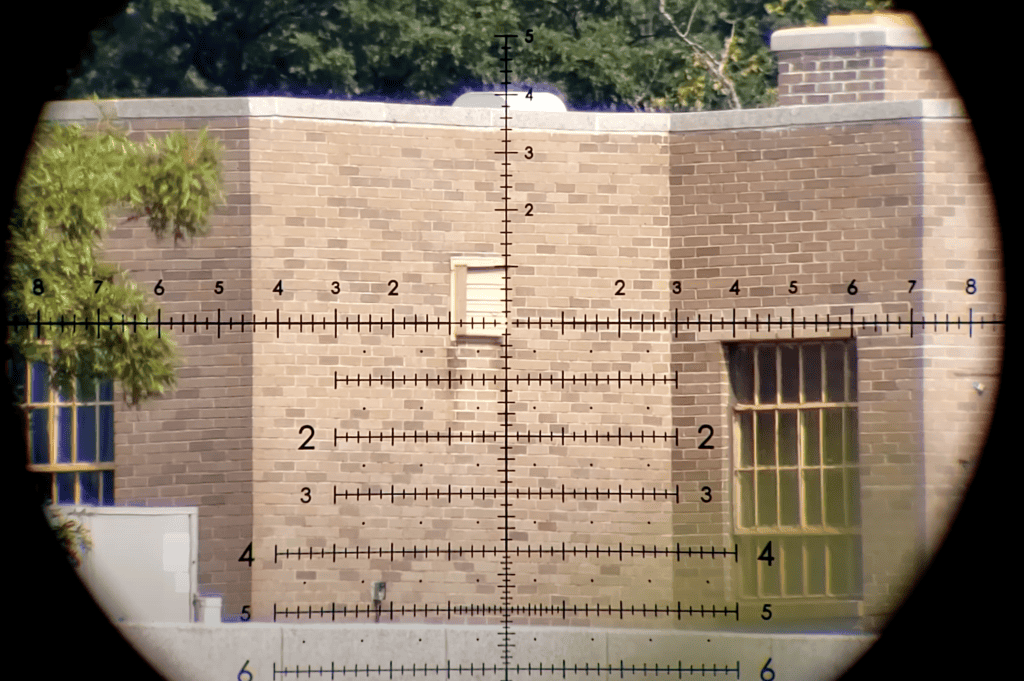
Bushnell’s Deploy Mil 2 is a 0.2 MRAD graduated tree that extends well below the center crosshair with wind references out to 5 mils at the bottom. In the first focal plane, the whole tree scales with magnification, which means it disappears into near-invisibility at 5x and becomes a comprehensive holdover chart above 15x. My first impression was that it felt cluttered compared to the Vortex’s EBR-7C. After a few sessions, though, I started appreciating the 0.2 mil hash spacing; it gave me enough granularity for wind holds without having to split the difference between wider-spaced marks. The floating center dot is a nice touch for precise aiming. Where the DM2 loses points: the lines are thicker than what I’ve seen on higher-end grid reticles, which can obscure small targets at distance. On a KYL rack at 400 yards, I occasionally wished for finer lines.
Turrets and Tracking Under Pressure
Each revolution of the elevation turret covers 10 MRAD, and the clicks are tactile enough that I could count them reliably without looking. Not the crispest I’ve ever felt (the Vortex edges it there), but consistent and without any mushiness. The zero stop uses a slider dial under the turret cap, and setting it up was straightforward with the included tool. Once set, it held. I ran a box test that came back within 0.1 MRAD, and over 90-some rounds I never noticed the turrets drifting. The locking mechanism is the real differentiator here. During one session where I was moving the rifle between a truck bed and the bench repeatedly, I appreciated knowing the turrets couldn’t get bumped off zero. That alone separates this scope from several competitors at the same price.
Glass Quality and Where It Sits in the Lineup
Bushnell’s ED Prime glass with Ultra Wide Band coating produces a bright, clean image through most of the magnification range. At 20x on a clear afternoon, I was resolving .22-caliber holes in paper at 200 yards without much trouble. Push it to 30x and the image holds together, though I noticed the brightness drops off more than the Vortex does at its top end. The bigger objective helps in low light; during one session that ran into the last half hour before dark, the Match Pro was still showing me a usable sight picture at 18x when the Leupold (at 10x, with its smaller 40mm objective) was already getting dim. Edge sharpness is good, with some softening in the outer 15% or so of the image that I didn’t find distracting during actual shooting.
Who This Scope Is For
The Match Pro ED is positioned slightly below the Vortex PST Gen II, and for PRS or NRL competition it might actually be the better buy. The locking turrets, the illuminated reticle, the parallax adjustment down to 15 yards for rimfire stages, and the wider magnification range all point toward someone shooting organized matches. It didn’t edge out the Vortex for Best Overall because the PST Gen II’s glass is a touch sharper and the turret feel is slightly more refined, but for the competition-specific shooter, this is a genuinely compelling scope.
Field Test Data
| Test Parameter | Result |
|---|---|
| Tracking Test (5 MRAD box test at 100 yds) | Returned to zero within 0.1 MRAD |
| 100-Yard Group (5-shot, bench rest) | 0.79″ |
| 500-Yard Group (5-shot, bipod prone) | 3.65″ |
| Turret Lock Integrity (after 50 rounds of handling) | Zero maintained, no shift detected |
| Edge Clarity at 20x | Mild softening in outer 15%; center sharp |
Tested with: Bergara B-14 HMR 6.5 Creedmoor | Federal Gold Medal CenterStrike 140gr OTM
Pros and Cons
PROS
|
CONS
|
Performance Ratings
For the PRS or NRL shooter building a competition rig on a budget, the Bushnell Match Pro ED is the scope I’d recommend over the Vortex. The locking turrets, wider magnification range, and close-focus parallax give it a competitive edge that the PST Gen II doesn’t specifically cater to. For everything else, the Vortex wins, but Bushnell carved out a niche here that’s hard to argue with.
3. Leupold VX-3HD 4.5-14x40mm – Best Lightweight Hunting Scope
Picking It Up Says Everything
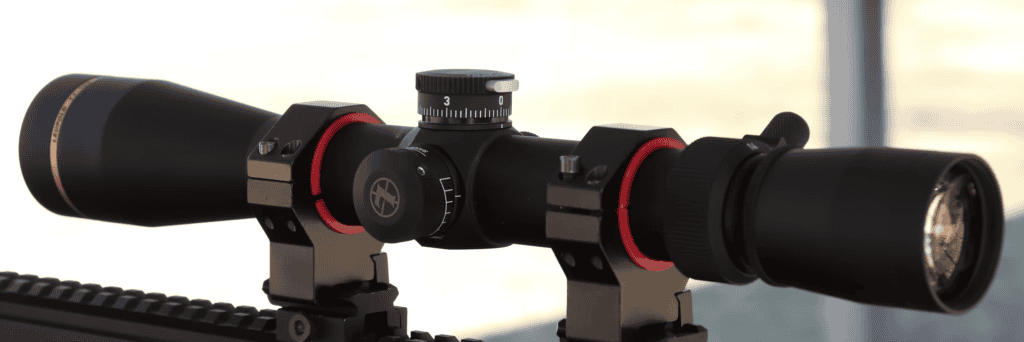
I mounted the Leupold VX-3HD on the Bergara right after pulling the Bushnell Match Pro ED off, and the difference was almost comical. Going from 32 ounces to 13.3 changed the entire balance of the rifle. The Bergara B-14 HMR is already around nine pounds, so shedding over a pound of glass made it feel like a different gun. For someone building a rifle they intend to carry through timber or up a mountainside, that weight difference matters more than any spec on paper. The scope is short, too, sitting compact on the receiver without the overhang you get from the larger objectives in this test.
Leupold’s Elite Glass in a Small Package
What surprised me was how well Leupold’s glass performs despite the smaller objective and 1-inch tube. During an early morning session that started about 40 minutes before sunrise, I was picking up usable contrast through the VX-3HD at 10x before I expected to. Leupold’s Elite Optical System has always punched above its weight in low light, and the VX-3HD continues that. Center sharpness is excellent through the full magnification range. Edge performance drops off more than the Vortex or Bushnell, but that’s a 1-inch tube working with a 40mm objective versus 30mm and 34mm tubes with 50mm and 56mm objectives. Not a fair comparison, and frankly not one that matters much when you’re actually looking through the scope at an animal.
The CDS-ZL Turret Is Made for Hunters
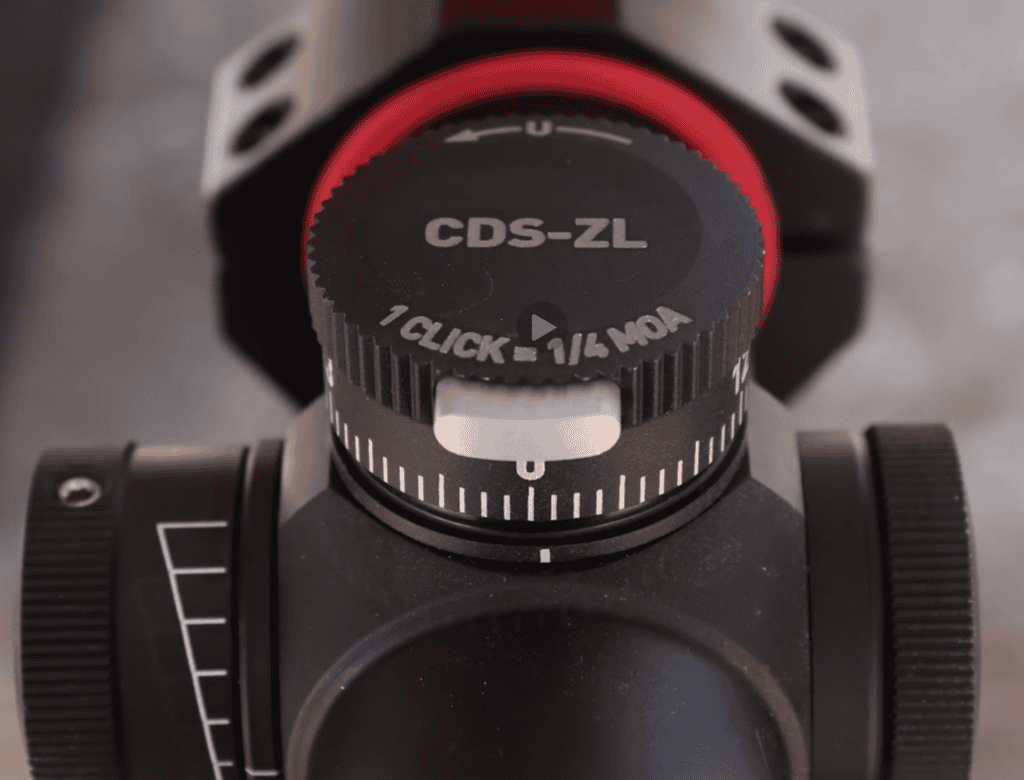
Leupold’s Custom Dial System with ZeroLock is one of those features that makes complete sense for its intended audience and almost none for anyone else. Push the button to unlock, dial your correction, and the turret locks back when you return to zero. I tested it by deliberately bumping the rifle around in a truck bed between sets; the zero never moved. Leupold also offers custom-engraved CDS turrets matched to your specific load and ballistics, marked in yardage instead of MOA. I didn’t have a custom dial for this test, but I can see the appeal for a hunter who zeros at 200 yards and wants to dial to 400 without thinking about angular adjustments. The windage turret stays capped underneath, which keeps the profile clean and prevents the kind of accidental drift that exposed windage dials can create.
The Duplex Reticle: Simple to a Fault
This is where the VX-3HD asks you to decide what kind of shooter you are. The Duplex crosshair is clean, fast to acquire, and has zero clutter. For a whitetail hunter taking shots inside 300 yards in mixed terrain, it’s all you need. But there are no holdover references, no wind marks, no ranging capability built into the glass. If you want to hold for bullet drop or windage, you’re either dialing the turret or guessing with Kentucky windage against those thick-to-thin crosshairs. The fixed parallax at 150 yards means you also can’t fine-focus at different distances the way you can with the adjustable parallax on the Vortex or Bushnell. At 200 to 300 yards, it’s not noticeable. Beyond that, I could see slight parallax error creeping in. No illumination means the reticle can wash out against dark backgrounds in heavy timber at dawn, which is exactly when a lot of hunters need their scope most.
Made in Oregon, Backed for Life
Leupold builds the VX-3HD in their Beaverton, Oregon facility, and the fit and finish reflect that. The anodizing, the turret feel, the overall solidity of the scope relative to its weight, all of it communicates quality. Their lifetime warranty is transferable and doesn’t require a receipt, which is a genuine advantage if you ever sell the rifle. This isn’t the scope for precision shooting or competition, and it would be a poor match for the two-pound tactical setups. But for the specific job of putting clean glass on a hunting rifle without adding unnecessary weight or complexity, the VX-3HD does it better than anything else I tested.
Field Test Data
| Test Parameter | Result |
|---|---|
| 100-Yard Group (5-shot, bench rest) | 0.83″ |
| Low-Light Clarity (40 min before sunrise, 10x) | Usable contrast; good for animal identification |
| CDS-ZL Zero Hold (after repeated handling/transport) | Zero maintained across all sessions |
| 200-Yard Group (3-shot, sitting position with bipod) | 1.95″ |
Tested with: Bergara B-14 HMR 6.5 Creedmoor | Federal Gold Medal CenterStrike 140gr OTM
Pros and Cons
PROS
|
CONS
|
Performance Ratings
The Leupold VX-3HD is the scope I’d put on a mountain rifle without a second thought. It does one thing exceptionally well: deliver clean, bright glass in a package light enough that you forget it’s there. If your shooting involves dialing for distance or holding for wind, look at the Vortex or Bushnell. If your shooting involves covering ground and making a clean shot inside 350 yards, this is it.
4. SIG SAUER Tango-MSR 1-8x24mm – Best Budget LPVO
A Different Animal Entirely
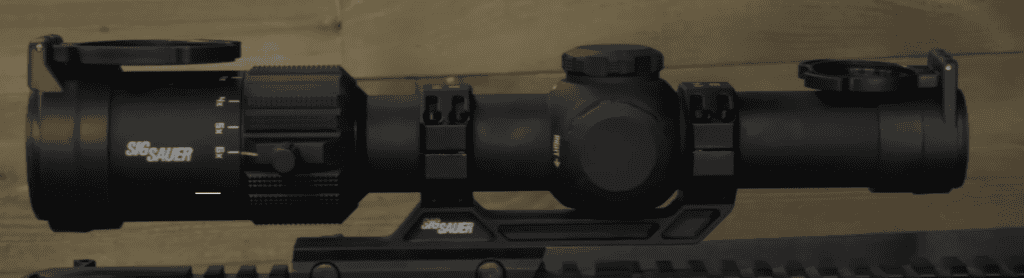
Putting the Tango-MSR on the Bergara felt odd, and I’ll be upfront about that. This scope was designed for ARs and modern sporting rifles; SIG ships it with an ALPHA-MSR cantilever mount purpose-built for flat-top receivers. On a bolt gun, it needed a different mounting solution, and the scope itself was clearly out of its natural habitat. But the point of this test was to keep the rifle and ammunition consistent, so the Bergara it was. The first thing I noticed at 1x was that massive field of view. At 124.8 feet at 100 yards, you’re essentially looking through a window. Both-eyes-open shooting felt natural and fast, even on a bolt action where speed isn’t exactly the priority. The throw lever (threaded directly into the magnification ring) let me snap through the 1-8x range quickly, which is where this scope earns its keep on a carbine. On the Bergara, that speed was less relevant, but I appreciated how smoothly the ring moved.
What the Entry-Level LPVO Gives You (and Doesn’t)
Let me be direct: the glass in the Tango-MSR is noticeably behind the other three scopes. Not bad for a budget LPVO, but noticeable. At 8x, I could see the difference in sharpness and contrast compared to the Vortex at the same magnification. Colors were slightly cooler, and fine detail at 200 yards required more effort to resolve. Chromatic aberration showed up as a faint purple fringe around high-contrast edges at 6x and above, which is typical for this price class. SIG uses low-dispersion glass, and it’s doing what it can, but glass quality is the most expensive component of any scope and the Tango-MSR’s budget position shows there. Where the value shows up is in what SIG includes in the box. The ALPHA-MSR mount and flip-back lens covers are nice touches that other manufacturers at this price skip entirely.
The BDC8 Reticle in Practice
The MSR BDC8 is a second focal plane BDC reticle with hashmarks calibrated for 5.56 NATO trajectory at specific distances. On the Bergara in 6.5 Creedmoor, those BDC holdovers didn’t correspond to my actual drops, which is expected; the reticle was designed around a different cartridge and barrel length. That’s not a flaw in the scope, just a mismatch with my test platform. The lower reticle score below reflects limited cross-caliber BDC versatility for SFP designs, not a failure on the test platform. On an AR-15 in 5.56, those holdovers would line up reasonably well. The illuminated center section was bright enough to use on overcast days around brightness level 7 or 8, and in direct afternoon sunlight I had to push it up to 10 or 11 to maintain visibility. The off positions between each setting were absent here, so dialing through brightness means clicking through every level. Minor thing, but it slows you down compared to the Vortex’s illumination dial.
Turrets Built to Be Forgotten
Capped turrets with 0.5 MOA clicks are exactly what you’d expect on an LPVO at this price. The clicks are coarser than the precision scopes (half-MOA versus quarter-MOA or tenth-of-a-mil), so fine adjustments require some patience. I got the Bergara zeroed without drama, and the turrets held that zero through about 60 rounds without issue. But I wasn’t dialing corrections between strings the way I did with the Vortex or Bushnell; this scope is built around a set-it-and-leave-it philosophy where the BDC reticle handles your holdovers and the turrets stay put under their caps. For that purpose, they work fine. I wouldn’t want to compete with them.
The Value Argument
The SIG Tango-MSR lives in this guide because it leaves plenty of room in the budget for ammunition, a better trigger, or even a second optic. For an AR-15 owner who wants a solid LPVO with a mount included, this is a genuinely good deal. It didn’t score higher because the glass, turrets, and reticle can’t compete with optics from much higher tiers, and on a bolt gun it’s a square peg in a round hole. But judged against what it costs and what it’s designed for, the Tango-MSR delivers honest performance without pretending to be something it isn’t.
Field Test Data
| Test Parameter | Result |
|---|---|
| True 1x Evaluation | Minor fisheye distortion at edges; center is clean and fast to acquire |
| 100-Yard Group (5-shot, bench rest at 8x) | 1.08″ |
| Illumination Visibility (direct afternoon sun) | Visible at settings 10-11; washed out below 8 |
| Zero Retention (60 rounds, 6.5 Creedmoor recoil) | Zero held with no detectable shift |
| Magnification Transition (1x to 8x via throw lever) | Smooth; under 1 second with throw lever |
Tested with: Bergara B-14 HMR 6.5 Creedmoor | Federal Gold Medal CenterStrike 140gr OTM
Pros and Cons
PROS
|
CONS
|
Performance Ratings
The Tango-MSR isn’t the best scope in this guide, and it doesn’t try to be. It’s the best value. With a mount included, it gives an AR owner a functional, reliable LPVO that handles close-range speed work better than its budget positioning suggests. Just don’t ask it to do precision work at distance.
400 Rounds Through a Bergara: How This Test Came Together
All four scopes went through a Bergara B-14 HMR in 6.5 Creedmoor, fed exclusively with Federal Gold Medal CenterStrike 140gr OTM. I chose the Bergara because it’s the kind of rifle that a buyer shopping this level of glass would realistically own: accurate enough to reveal differences between scopes, with a Remington 700 footprint that made swapping optics straightforward. Testing happened over three weeks in March at a private range outside Gatesville, Texas, where I had access to berms at 100, 200, 300, and 500 yards, plus a 400-yard KYL rack. The weather cooperated some days and didn’t on others; temperatures ranged from the mid-40s on early morning sessions to low 70s by afternoon. A couple of sessions had gusty south wind that made the 500-yard work more interesting than I planned.
I put roughly 400 rounds through the Bergara across all testing, splitting time unevenly between the four scopes based on what each one needed. The precision optics (Vortex and Bushnell) got the most trigger time because they demanded tracking tests, box tests, and extended-range groups. The Leupold and SIG needed fewer rounds to show their strengths and limitations.
Before settling on these four, I also mounted and tested an Athlon Ares ETR 4.5-30×56 and a Primary Arms GLx 4-16×50 FFP. The Athlon’s turret clicks felt vague compared to the Vortex and Bushnell at similar prices, with a mushiness that made me second-guess my count during dialing. In this tier, I expected better. The Primary Arms had decent glass for its class but the reticle illumination was dim enough to be nearly useless in bright conditions, which knocked it out for me. For a deeper look at how I structure these evaluations, here’s my full testing process.
The Scope Trap: Where Buyers at This Budget Go Wrong
Buying a Competition Scope for a Hunting Rifle (or Vice Versa)
This tier opens up both precision tactical scopes and premium hunting glass, and the temptation is to pick the one with the most impressive feature list. I’ve seen guys mount a 32-ounce FFP scope on a lightweight mountain rifle because the turrets looked cool, then complain about carrying it. The Bushnell Match Pro ED and the Leupold VX-3HD are both excellent scopes, but they solve completely different problems. At this budget you can afford the right tool for the job. Make sure you’re buying for what you actually do, not what you might do someday.
Ignoring What the 34mm Tube Actually Costs You
A 34mm tube scope like the Bushnell Match Pro ED needs 34mm rings, and quality options add to the total setup cost. That’s money you have to spend on top of the scope itself. Buyers who budget for the scope and forget the rings end up scrambling for cheap mounts that can introduce tracking problems. If you’re shopping at this tier, budget for the complete mounting system upfront.
Spending the Entire Budget When Half Would Do
The SIG Tango-MSR proved something during this test: not every shooter needs one of the most expensive scopes in the guide. If your rifle is an AR-15 that sees range days and the occasional hog hunt, paying extra for glass designed around long-range precision is wasting money. At this price ceiling, the smart move is matching the scope investment to what the rifle actually does, not reflexively spending up to the limit because you can.
Chasing Maximum Magnification Instead of Usable Glass Quality
Under $1,000 you can find scopes advertising 30x, 36x, even 40x top-end magnification. The numbers look impressive, but at this price the glass quality usually falls apart well before you reach those upper limits. A scope with excellent clarity at 20x will outperform a scope with mediocre clarity at 30x every time. During this test, I rarely used any scope above 20x for actual shooting; the PST Gen II’s sweet spot was 12x to 18x. Buy for glass quality across the range you’ll actually use.
What Buyers Spending Up to $1,000 on Glass Keep Asking
Is the jump from a lower-budget scope to this tier actually worth it?
In most cases, yes. The improvements show up in turret reliability, glass sharpness at higher magnifications, and build features like zero stops that genuinely affect performance. The jump from this tier into more premium optics is usually smaller. This is the tier where your money buys the most tangible improvement.
Do I need FFP at this price, or is SFP fine?
Depends on whether you use reticle holdovers. If you dial your turrets for every shot, SFP works just fine (the Leupold here is SFP and excellent for its purpose). If you hold over for drop or wind at varying magnifications, FFP keeps your subtensions honest. At this budget, FFP scopes like the Vortex and Bushnell are well-executed enough to justify the choice.
Can I use one of these precision scopes for hunting too?
The Vortex PST Gen II works as a crossover if you can tolerate the weight. At 31.2 ounces it’s not a mountain scope, but on a truck gun or a blind setup for open-country hunting, it handles the job. The Bushnell is heavier and more competition-focused, so it’s a harder sell as a hunting optic.
Why didn’t you include a Nightforce or Razor HD at this price?
Because they usually sit above this guide’s budget at retail. Some show up used or on sale near the ceiling, but I test scopes at their standard market position. If you find a Razor HD Gen II inside this budget, buy it. But that’s a deal, not a buying strategy you can rely on.
Matching the Scope to How You Actually Shoot
If your rifle lives on a bipod and you’re dialing for steel or shooting local matches, the Vortex Viper PST Gen II is the default. It handles precision work, tracks reliably, and the glass quality means you won’t outgrow it quickly. The Bushnell Match Pro ED is the better pick only if you’re specifically shooting PRS or NRL stages where the locking turrets and close parallax give you a real competitive advantage. Their close market positioning makes the decision more about whether you need competition-specific features.
If you hunt more than you shoot targets, skip the tactical scopes. The Leupold VX-3HD does the hunting scope job at 13.3 ounces with glass that handles low light well enough to make the most of legal shooting hours. It gives up everything the precision scopes offer in terms of holdovers and adjustability, and that’s exactly why it works for the hunter who wants simplicity. The one scenario where I’d steer away from the Leupold: if your hunting involves shots past 400 yards regularly, the fixed parallax and basic Duplex reticle start limiting you. For that kind of open-country work, the Vortex PST Gen II on a heavier rifle is the better compromise.
If your platform is an AR-15 and your budget is tight, the SIG Tango-MSR with included mount is hard to beat. But be honest about whether you need something more. Spending less on a scope that handles 90% of your shooting is smarter than buying one that’s overqualified for how you use it.
Disclosure
I purchased the Vortex, Leupold, and SIG at retail through different online dealers during a three-week stretch in February when I was stalking sales. The Bushnell Match Pro ED I borrowed from a friend who shoots NRL22 and wasn’t using it on his centerfire rig that month. All four scopes were evaluated with the same rifle, ammunition, and range, though round counts and drills varied by scope role, and the affiliate links in this guide generate a small commission that helps fund ammunition costs. My rankings reflect what I found during testing and nothing else.
Final Thoughts
After 400 rounds, three weeks, and enough scope swapping to wear the finish on my ring screws, here’s where I landed: the Vortex Viper PST Gen II 5-25×50 is the best overall scope under $1,000 because it delivers the most capable combination of glass, turrets, and features without wasting your money. The Gen II improvements over the original PST aren’t marketing fluff. The XD glass is sharper, the RZR zero stop actually works like a zero stop should, and the EBR-7C reticle strikes the right balance between information and clutter. It sits near the top of this budget, and it earns that position.
The Bushnell Match Pro ED came closer to the top spot than I expected. For the PRS and NRL crowd specifically, its locking turrets, wider magnification range, and close-focus parallax make a genuine case. The Leupold VX-3HD reminded me that not every rifle needs a tactical scope; 13.3 ounces of clean Leupold glass on a mountain rifle is its own kind of excellence. And the SIG Tango-MSR proved that budget LPVO performance has improved a lot over the past few years.
What I keep coming back to is that this price tier rewards shooters who know what they need. A less expensive scope that matches your shooting is a better purchase than a pricier scope that doesn’t. Every one of these four optics has a shooter it’s perfect for; the key is being honest about which one you are. If you’re exploring other budgets, I’ve also tested and ranked scopes under $500 and under $200 using the same approach. The right scope at the right price beats an expensive scope at the wrong price every single time.
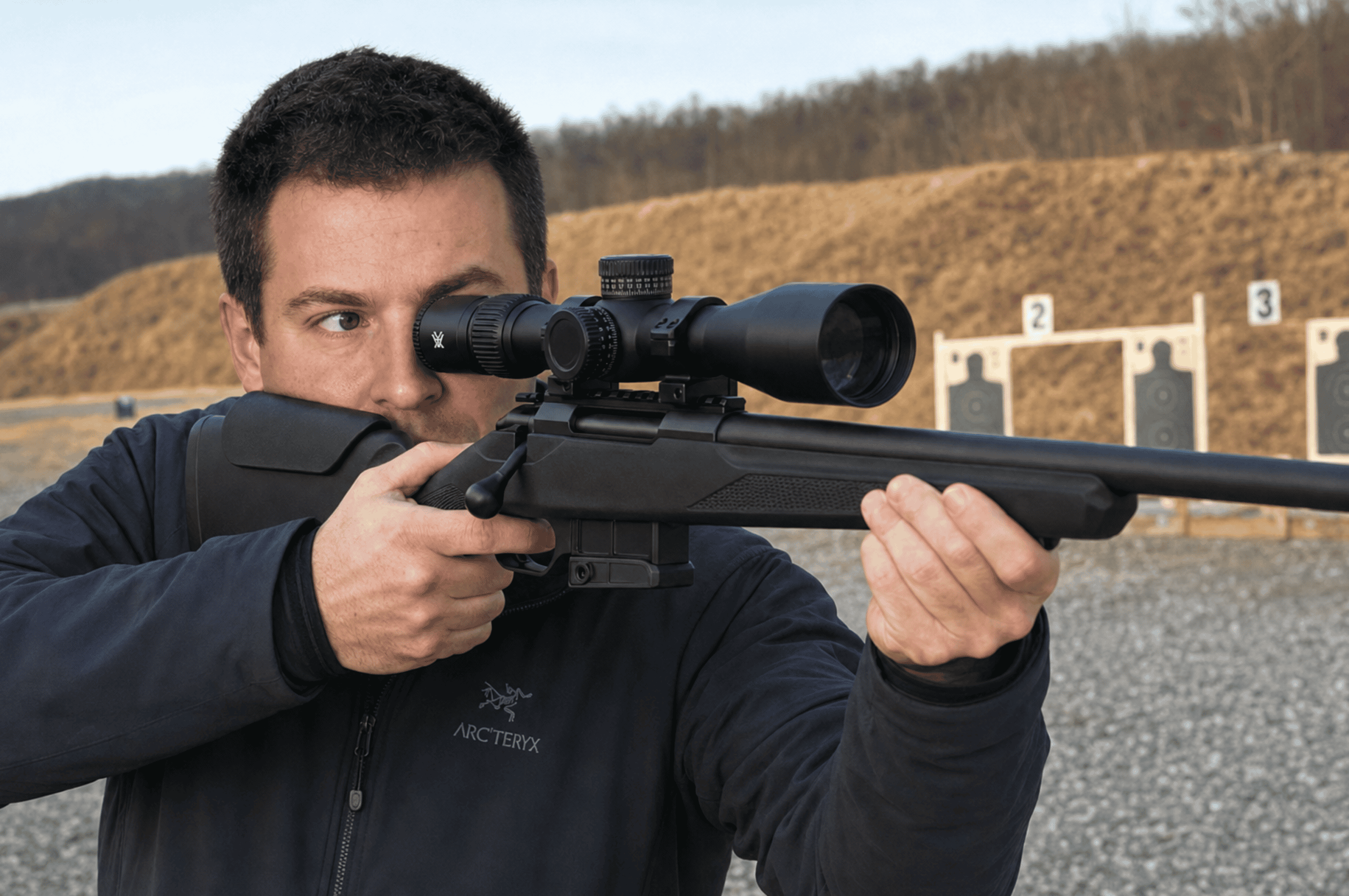
Mike Fellon is the founder of ScopesReviews and an optics specialist with 15+ years in precision shooting. A former Bass Pro Shops firearms advisor and NRA-certified instructor, he’s hands-tested 200+ rifle scopes across hunting and competition. Based in Dallas, Texas.