
Prism scopes lock you into one magnification. That sounds like a limitation until you realize it forces manufacturers to make everything else count: glass clarity, reticle design, eye box behavior, and build quality all have to carry the weight because there’s no zoom ring to compensate. The problem is that most shooters evaluate prism scopes the same way they’d evaluate a red dot or an LPVO, and the criteria don’t transfer cleanly. Eye box on a prism feels nothing like a red dot.
Reticle utility at fixed 3x matters more than it ever would on a variable optic. I mounted four prism scopes on the same AR-15, ran them through the same evaluation framework and distance work appropriate to their magnification, and scored them against what actually makes a prism optic succeed or fail. The Primary Arms SLx 3x32mm Gen III came out on top, and the reason comes down to one thing: the ACSS CQB-M2 reticle makes fixed magnification feel less like a compromise.
My Top 4 Prism Scope Picks Under $1,000
Best Overall
Primary Arms SLx 3x32mm Gen III
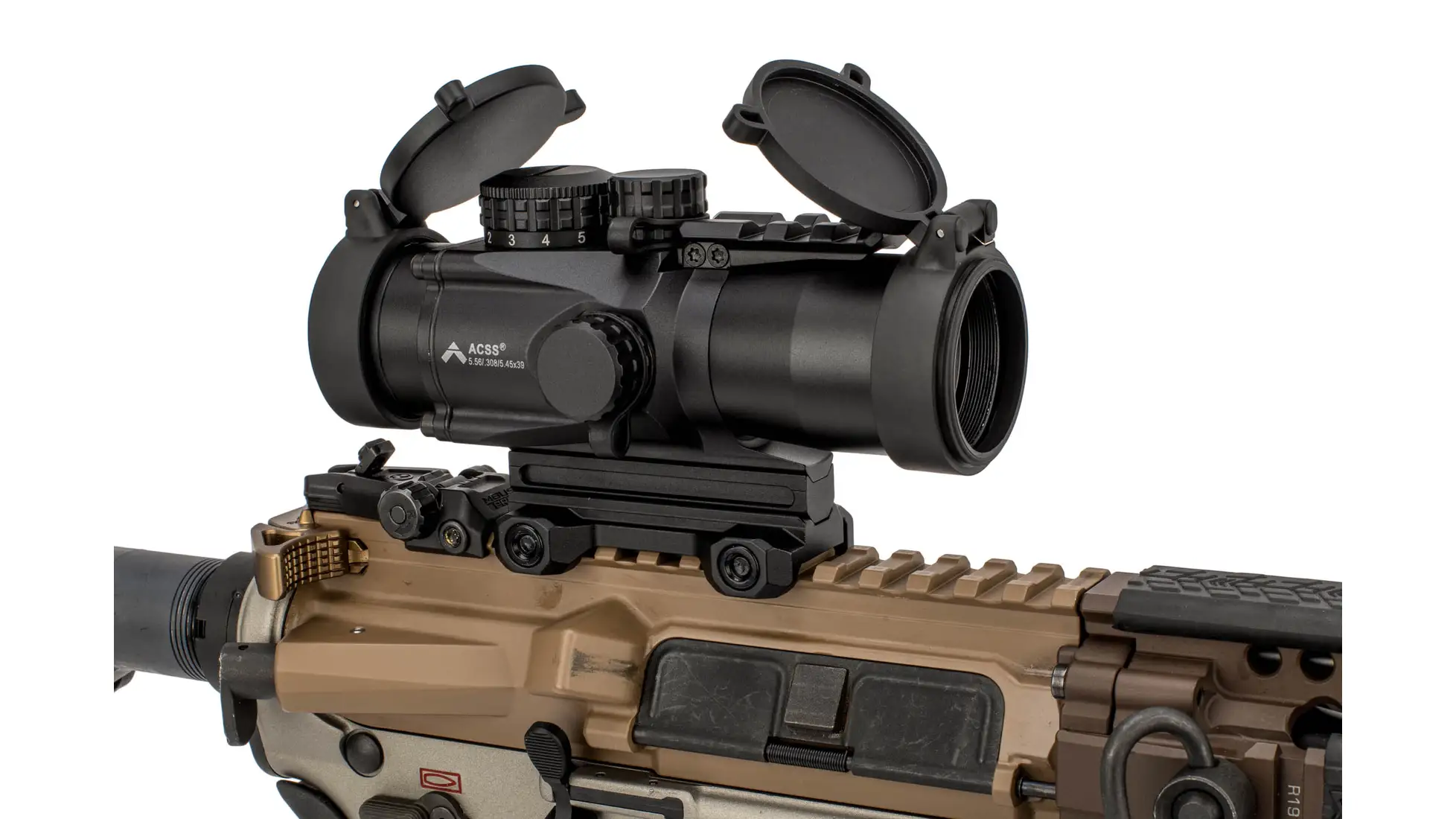
The ACSS CQB-M2 reticle is what separates this from every other prism scope in the mid-tier price range. Caliber-specific BDC holdovers, a ranging stadiametric system, and a horseshoe that works for both-eyes-open shooting at close range. Glass quality punches into territory you’d expect from optics costing significantly more. The Gen III mount is a real improvement too; those integrated recoil lugs aren’t just marketing. At its price point, nothing else gives you this much reticle capability paired with this level of optical clarity.
Best Compact Prism
Vortex Spitfire HD Gen II 3x
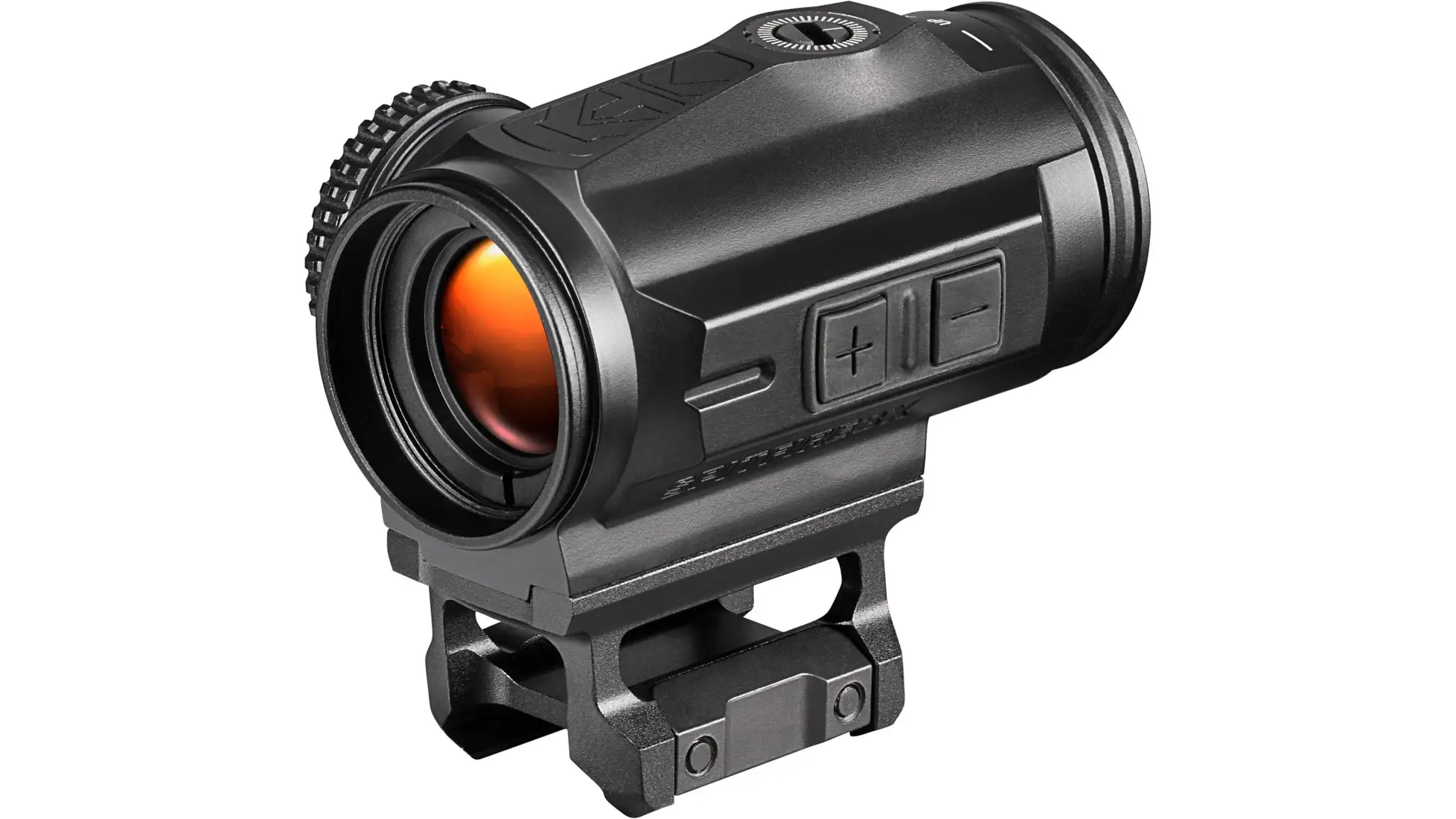
Three inches long. Nine point three ounces. Those numbers are absurd for a 3x optic with glass this good. The HD optical system delivers edge-to-edge clarity that genuinely surprised me, and the AR-BDC4 reticle is clean and functional. But that 2.6 inches of eye relief requires commitment. If you can work with the eye box, this is the most refined compact prism scope available. If you can’t, the frustration will overshadow the excellent optics.
Best 1x Prism for Home Defense
Swampfox Blade 1x25mm
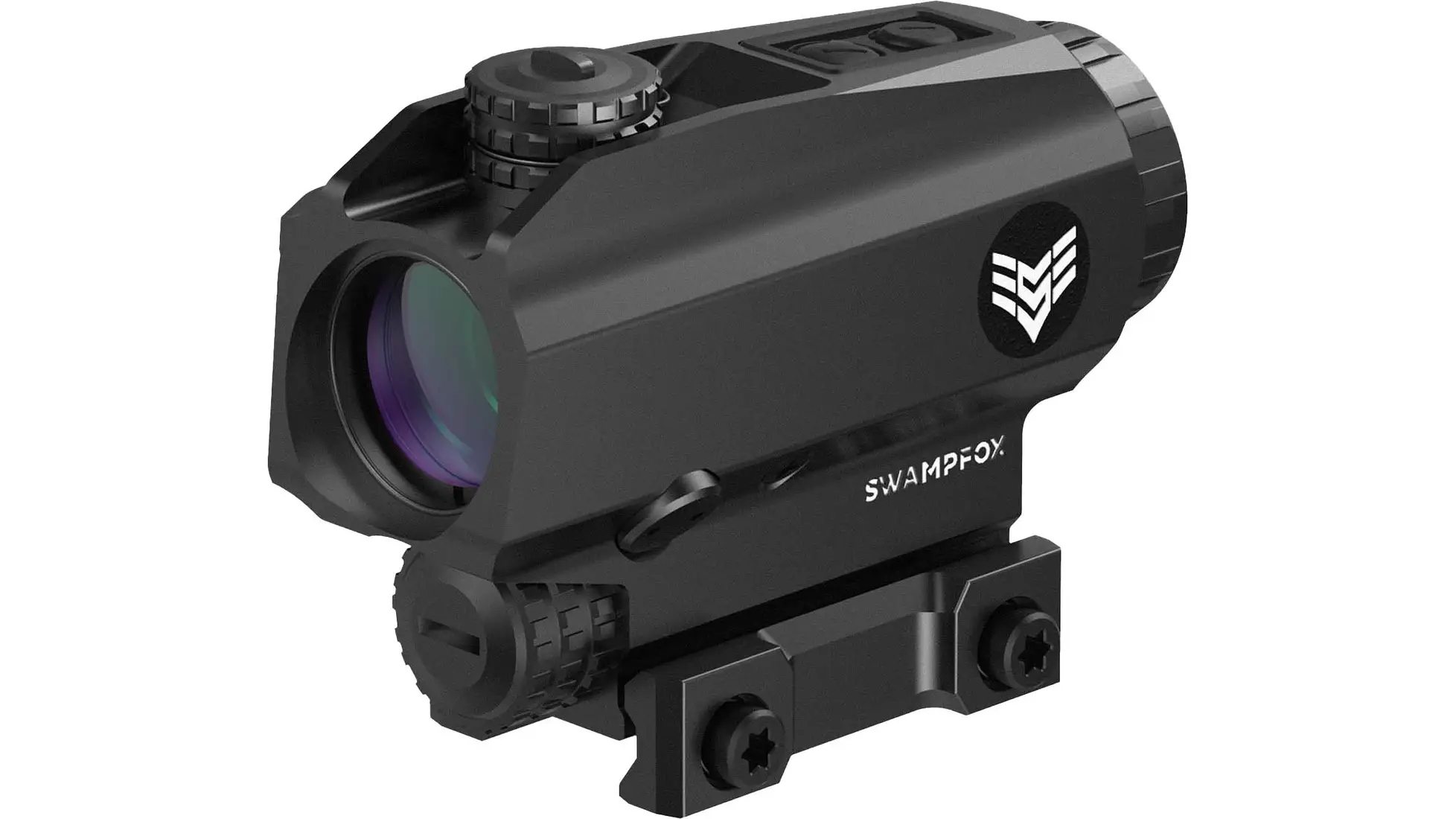
Swampfox built this for one job: close-quarters precision on an AR platform. The Bullet Rise Compensating reticle addresses height-over-bore at 5, 10, and 15 yards, which is the distance most home defense shooters actually need solved. Shake N’ Wake auto-on means the optic is live when you grab the rifle. If you have astigmatism and hate what red dots do to your vision, this 1x prism gives you a crisp etched reticle with a 73-foot field of view.
Best Budget Prism Scope
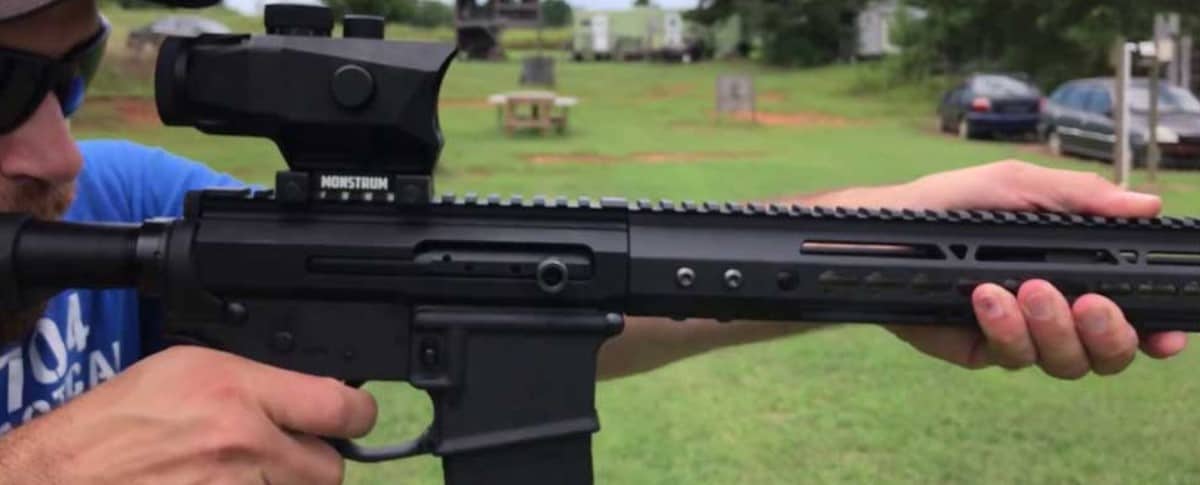
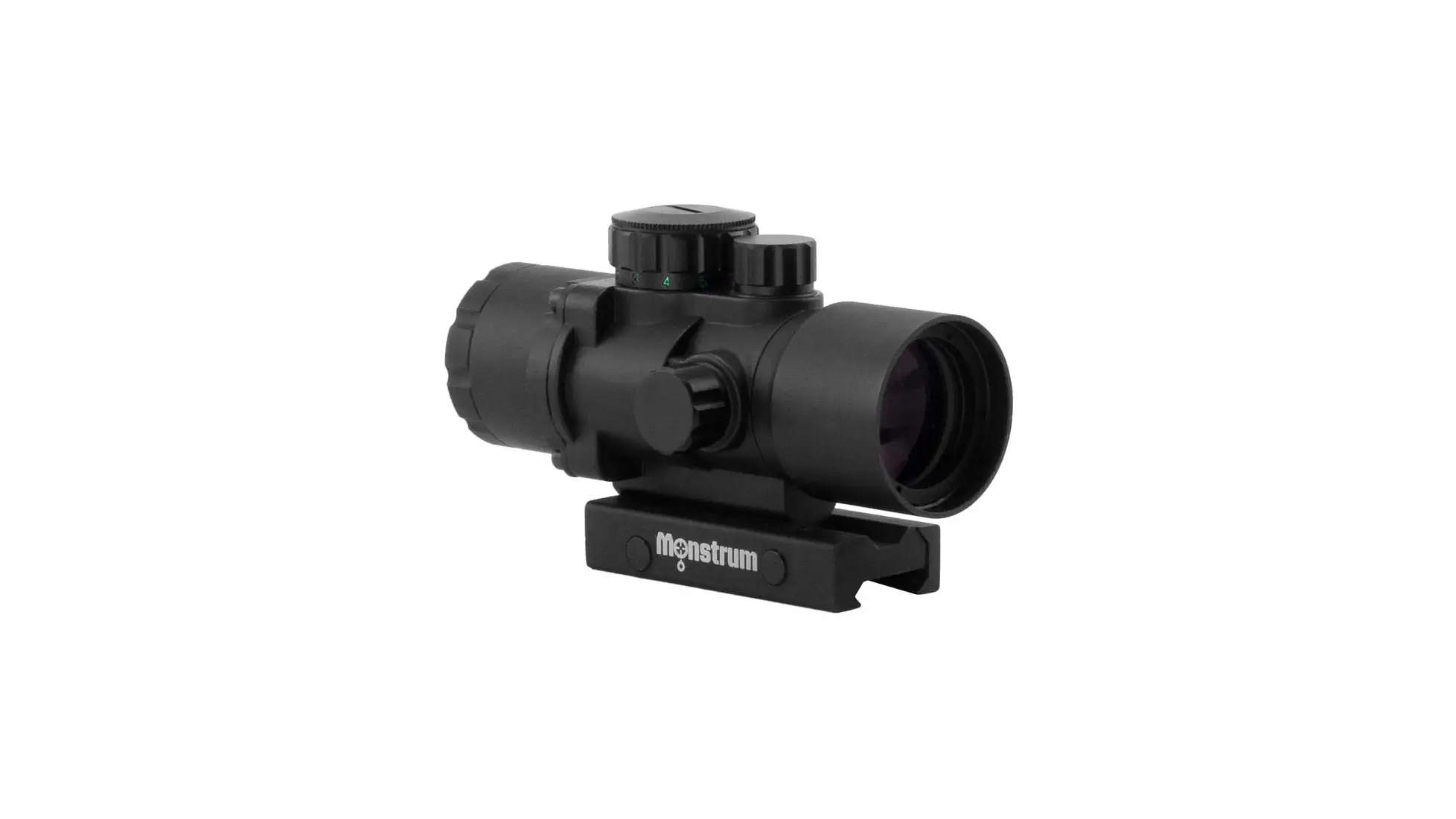
Monstrum S330P 3X
At roughly a third the price of the Primary Arms, the Monstrum gets you into a functional 3x prism scope with dual-color illumination and surprisingly generous eye relief. Glass quality has limits at this price tier, and the mount hardware demands attention. But if you need a prism scope on a tight budget and you’re willing to accept honest trade-offs, this is the only sub-$150 option I’d recommend without qualifications about “for the money.”
Fifteen Years of Squinting Through Prisms and Red Dots
Prism scopes expose problems that red dots and LPVOs can hide. A red dot with mediocre glass still throws a usable dot. An LPVO with a tight eye box can be dialed down to 1x where it barely matters. But a prism scope at fixed magnification puts every optical compromise directly in front of your shooting eye, and you either work with it or you don’t. I’ve tested enough of them now to know that the specifications on the box tell you almost nothing about whether you’ll actually enjoy using one. Eye relief measured in inches doesn’t capture how forgiving or punishing the eye box feels when you’re transitioning between targets under a shot timer. A reticle that looks great in a product photo can wash out against certain backgrounds in a way the illumination can’t fix. Those are things you learn from mounting these optics on rifles and shooting them, not from reading spec sheets. The four prism scopes in this guide went through exactly that process, and the results didn’t always line up with what I expected going in.
Prism scope specs can mislead if you don’t know which numbers actually predict field performance. Eye relief and eye box behavior matter more here than on almost any other optic type, so pay attention to those columns. Weight and length tell you about the compactness advantage you’re actually getting (or not getting) over an LPVO. Reticle design is where the real differentiation lives.
Side-by-Side Specs
| Features | Primary Arms SLx 3x32mm Gen III | Vortex Spitfire HD Gen II 3x | Swampfox Blade 1x25mm | Monstrum S330P 3X |
|---|---|---|---|---|
| Magnification | 3x | 3x | 1x | 3x |
| Objective Diameter | 32 mm | 21 mm | 25 mm | 30 mm |
| Eye Relief | 2.72 – 2.92 in | 2.6 in | 3.8 in | 3.0 – 3.5 in |
| Weight | 18.4 oz | 9.3 oz | 13 oz | 15 oz |
| Length | Not specified | 3.0 in | 4.0 in | 5.0 in |
| Prism Type | Glass Prism | HD Optical System Prism | Glass Prism | Glass Prism |
| Reticle | ACSS CQB-M2 (5.56) | AR-BDC4 | CQB (Bullet Rise Compensating) | Illuminated Circle Dot |
| Field of View | 31.5 ft at 100 yds | 37.9 ft at 100 yds | 73.3 ft at 100 yds | 39.3 ft at 100 yds |
| Turret Style | Capped | Capped | Capped | Capped |
| Adjustment Range | 60 MOA | 250 MOA | 90 MOA | Not specified |
| Click Value | 1/4 MOA | 1 MOA | 1/2 MOA | 1/2 MOA |
| Diopter Adjustment | Yes | Yes | Yes | Yes |
| Illumination | Yes (11 settings, red) | Yes (12 settings, bright red) | Yes (12 settings, LED) | Yes (red/green) |
The 4 Best Prism Scopes
1. Primary Arms SLx 3x32mm Gen III – Best Overall Prism Scope
That Reticle Carries the Whole Optic
I’ve used the ACSS reticle system across multiple Primary Arms optics, and the CQB-M2 at 3x is where the design hits its stride. The outer horseshoe gave me a fast aiming reference during close-range drills on steel at 15 and 25 yards; I kept both eyes open, put the horseshoe on the plate, and it just worked. Transitioning between three targets at those distances felt closer to running a red dot than a magnified optic. Then I pushed out to 200 yards and the chevron tip gave me a precise aim point that the circle dot reticles on the other scopes in this test couldn’t match. The BDC hashmarks below the chevron are calibrated for 5.56 NATO, and on Federal American Eagle 55gr FMJ they tracked close enough that I was making reliable hits on a torso-sized steel plate at 300 without dialing anything. That’s the fundamental advantage of a caliber-specific etched reticle in a fixed-magnification optic: the reticle compensates for what the zoom ring can’t.
Glass That Doesn’t Apologize for the Price
Optical clarity on this scope genuinely caught me off guard. Center sharpness was excellent, and edge softening was minimal enough that I didn’t notice it during actual shooting. Colors stayed true through the glass, no significant yellow or blue tint. In the early morning sessions when the light was still flat and gray, the image stayed bright and usable. Compared directly to the Vortex Spitfire HD, the Primary Arms gives up a small edge in outright resolution and color fidelity (the Vortex HD glass is legitimately premium), but the gap is narrower than the price difference would suggest. Against the Monstrum’s glass, there’s no contest.
The Weight Conversation
At 18.4 ounces, the Primary Arms is the heaviest scope in this test by a meaningful margin. The Vortex weighs half that. During an afternoon of timed transitions and positional shooting, I felt it. The M4E1’s balance shifted noticeably forward compared to running the Spitfire, and after a couple hours of shouldering and re-shouldering the rifle, the extra ounces added up. If you’re building a lightweight patrol rifle or a home defense gun that lives by the nightstand, this matters. If you’re setting up a range carbine or a do-everything AR that mostly rides in a case, it’s a non-issue. That weight comes with a larger 32mm objective lens, and the light-gathering benefit is real. It also comes from the Gen III ruggedized mount with its integrated recoil lugs and beefy crossbolts, which is one reason this scope held zero without any fuss through every round I put through it.
Mounting and Eye Box in Practice
The included AR-height riser put the scope at a comfortable height on the M4E1’s flat-top rail. I appreciated the removable Picatinny top rail too; it gives you the option to piggyback a micro red dot if you want a true 1x option alongside the 3x prism. Eye box was the most forgiving of the three 3x scopes I tested. Transitioning from target to target, I could find the full sight picture faster than with the Vortex, and head position didn’t need to be as precise. That roughly 10.7mm exit pupil does real work. Diopter adjustment was smooth, and once I dialed it in for my eyes, the etched reticle stayed sharp whether the illumination was on or off. Speaking of illumination, the red LED gets daylight bright at the upper settings. I had no trouble picking up the chevron against dark backstops in direct midday sun.
Where It Falls Short
Beyond the weight, the narrowest field of view among the 3x scopes tested (31.5 feet at 100 yards) was noticeable during the close-range transition drills. The Monstrum and Vortex both offered wider views at the same magnification, which felt more open when moving across the target array, but the Primary Arms still produced the fastest measured 25-yard transition time at 4.2 seconds versus 4.5 seconds for the Monstrum and 4.8 seconds for the Vortex. It’s not a dealbreaker at 3x, but if you’re doing a lot of close-quarters work, the narrower tube is worth knowing about. The 60 MOA total adjustment range is also the most limited among scopes with published adjustment ranges, though for a prism scope that’ll spend most of its time inside 300 yards on a 5.56 AR, it’s adequate. You’d only run into trouble if you needed extreme corrections, which shouldn’t happen with a properly mounted optic on this platform.
Numbers tell part of the story. Here’s what I measured.
Field Test Data
| Test Parameter | Result |
|---|---|
| Group Size at 100 yds (5-shot, from rest) | 1.8 MOA |
| Target Acquisition Speed (5 targets, 25 yds) | 4.2 sec avg |
| Eye Box Forgiveness Rating | 8/10 (best of the three 3x scopes tested) |
| Illumination Daylight Visibility | Reticle visible in direct sun at setting 9+ |
| Zero Retention (after ~110 rounds) | No shift detected |
Tested with: Aero Precision M4E1 16″ 5.56 NATO | Federal American Eagle 55gr FMJ (XM193)
Pros and Cons
PROS
|
CONS
|
Performance Ratings
The Primary Arms SLx 3x32mm Gen III earns the top spot because the ACSS CQB-M2 reticle turns a $300 prism scope into something that functionally outperforms optics costing twice as much. The weight is a real trade-off, and if that’s a dealbreaker for your build, look at the Vortex. But for a scope that does the most with fixed magnification, nothing else in this test comes close.
2. Vortex Spitfire HD Gen II 3x – Best Compact Prism Scope
Red Dot Footprint, 3x Magnification
When I pulled the Spitfire HD Gen II out of the box, my first thought was that someone had sent me a red dot by mistake. This thing is tiny. Mounting it on the M4E1, it occupied less rail space than the Aimpoint PRO sitting on the shelf behind me. The rifle’s handling changed immediately. Compared to the Primary Arms I’d just finished testing, the M4E1 felt like a different gun: lighter between targets, more balanced during offhand shooting, and less fatiguing during extended strings of fire. The original Spitfire 3x weighed over 15 ounces. Vortex cut that by roughly 40 percent for the Gen II. That kind of weight reduction on a magnified optic, without gutting the optical quality, is the engineering achievement here.
HD Glass Does What It Claims
Vortex uses select glass elements in their HD optical system, and the result is the clearest image in this test. Edge-to-edge sharpness was a step above the Primary Arms, chromatic aberration was nearly nonexistent, and color fidelity through the glass was natural and accurate. Shooting steel at 200 yards, I could see my impacts clearly and distinguish target edges against cluttered backgrounds with less squinting. For a 21mm objective, the light transmission was impressive; low-light performance in early morning and late afternoon held up better than I expected given the small aperture. The Monstrum and Primary Arms both have larger objective lenses, but the Vortex’s glass coatings compensate enough that the brightness difference is less dramatic than the numbers suggest.
That Eye Relief Though
Here’s where the Spitfire’s compactness exacts its toll. At 2.6 inches, this is the tightest eye relief in the test, and it translates directly into a demanding eye box. I mounted the scope as far back on the rail as the M4E1’s receiver would allow, and I still had to consciously bring my cheek weld forward to find the full sight picture. Once I settled into a consistent position, transitions were fine. But during the first few magazines, I kept catching blackout at the edges when my head position drifted even slightly. The close-range transition drill that I ran in 4.2 seconds with the Primary Arms took me 4.8 seconds on the Spitfire, and I attribute most of that gap to the split-second of reacquiring the sight picture between targets. Shooters with shorter length-of-pull or those running this on an AR pistol with a brace may have an easier time. On a full-size carbine with a standard stock, the eye relief is the limiting factor.
AR-BDC4: Clean but Less Capable
The AR-BDC4 reticle is a circle with a center dot and BDC hashmarks below, calibrated for 5.56 out to 650 yards. It’s a clean design that doesn’t clutter the sight picture, and the center dot is precise enough for aimed shots at distance. What it lacks compared to the ACSS CQB-M2 is the ranging function and dedicated moving-target leads. For most shooters using a 3x prism inside 300 yards, the BDC4 does everything needed. But if you want the reticle doing more work for you, particularly at extended distances or on moving targets, the Primary Arms reticle has more tools built in. The etched lines on the Vortex are crisp and well-defined, and they remain fully visible when the illumination is off. The 12 brightness settings include two night-vision-compatible levels at the low end and daylight-bright settings at the top that compete with the Primary Arms for visibility in direct sunlight.
Build and Extras
Vortex includes both a low mount and a lower-1/3 co-witness mount in the box, which is a thoughtful touch that most competitors skip. I used the lower-1/3 mount on the M4E1 and it put the optic at a comfortable height. The single-piece aluminum chassis is clean and feels solid despite the low weight. Rubber bikini lens covers protect the glass. Vortex’s VIP warranty backs it unconditionally. Zero held through my testing without issue, and the turret clicks at 1 MOA were positive if somewhat coarse for precision work; the Primary Arms’ 1/4 MOA clicks offered finer zeroing control.
Field Test Data
| Test Parameter | Result |
|---|---|
| Group Size at 100 yds (5-shot, from rest) | 1.9 MOA |
| Target Acquisition Speed (5 targets, 25 yds) | 4.8 sec avg |
| Reticle Clarity (non-illuminated, against foliage) | Best in test; black etching sharp and visible |
| Edge-to-Edge Sharpness | Minimal degradation; sharpest across full FOV in test |
| Zero Retention (after ~100 rounds) | No shift detected |
| Illumination Daylight Visibility | Bright red center visible in direct sun at setting 10+ |
Tested with: Aero Precision M4E1 16″ 5.56 NATO | Federal American Eagle 55gr FMJ (XM193)
Pros and Cons
PROS
|
CONS
|
Performance Ratings
If compact size and glass quality are your priorities, and you can adapt to the tight eye box, the Spitfire HD Gen II is an outstanding optic. It lost the overall top spot because the eye relief limitation slowed me down in exactly the scenarios where prism scopes should excel: fast, close-range work. But for a lightweight build where handling matters more than reticle features, it’s hard to argue against an optic this refined in a package this small.
3. Swampfox Blade 1x25mm – Best 1x Prism for Home Defense
A Different Animal Entirely
The Blade doesn’t compete with the 3x scopes in this test and it doesn’t try to. Swampfox designed this for one application: real-world close-quarters shooting on an AR platform. I included it in this roundup because prism scope buyers often face a magnification decision before they face a brand decision, and the 1x versus 3x choice matters more than most people give it credit for. On the M4E1, the Blade felt closer to running a red dot than any other prism scope I’ve used. Both eyes open, wide field of view, fast on target. The difference is the etched reticle sitting sharp and black against whatever background I pointed it at. For anyone whose astigmatism turns red dot sights into unusable starbursts, this is the optic that solves the problem without giving up speed.
The BRC Reticle Does Something Nobody Else Bothers With
Height-over-bore is a problem most optic manufacturers ignore. Your scope sits roughly 2.5 inches above the bore on a standard AR-15, which means at five yards your bullet impacts about 2.5 inches below your aim point. At ten yards, it’s still low. Swampfox built dedicated holdover points into the BRC reticle for 5, 10, and 15 yards to compensate for exactly this. I tested these holdovers on cardboard silhouettes in the first bay of the range, and because that bay’s close target line was set at 7 yards rather than a calibrated 5 or 10, I treated it as a practical hallway-distance check: using the 5-yard BRC hash put me within an inch of center. The BRC also includes BDC subtensions for 50 through 200 yards, calibrated for 5.56, which extends the Blade’s utility beyond just across-the-room distances. It’s still a 1x optic, so 200-yard shooting requires knowing your targets well, but the holdovers are there.
Shake N’ Wake Earns Its Keep
The auto-on feature activated instantly every time I picked up the rifle. After 225 seconds of inactivity, the illumination shuts off to save battery, and any movement snaps it back to the last brightness setting. For a scope that might sit in a safe or by the bed for weeks between uses, this is the right engineering choice. I deliberately left the Blade untouched for 20 minutes on the bench, picked up the rifle, and the reticle was lit before I had the stock at my shoulder. The CR123 battery and Swampfox’s 50,000-round surety warranty add to the “grab it and go” proposition. Settings 9 and 10 were daylight bright for the outdoor range, and settings in the 3-to-6 range worked well for the indoor bay I used for the close-quarters holdover testing.
Eye Box and Speed Versus a True Red Dot
Even at 1x with a generous 3.8-inch eye relief, the Blade’s eye box is more restrictive than a holographic or reflex sight. That’s the fundamental trade-off of every prism optic: the etched reticle requires looking through the optic rather than at a projected dot. I noticed it most on fast draws from low ready. A proper cheek weld found the reticle immediately. A sloppy mount caught the edge of the eye box and needed correction. In timed drills, I was about 0.2 seconds slower to first shot compared to running a tube red dot on the same rifle. That’s a fair trade for the reticle clarity advantage, especially for astigmatic shooters who would be slower with a blurred red dot anyway. The 73.3-foot field of view at 100 yards is enormous and gives real situational awareness during both-eyes-open shooting.
Limitations at Distance
I pushed the Blade to 100 yards on paper and managed 3.5 MOA groups from a rest. That’s not the scope’s fault; 1x magnification just doesn’t resolve targets at distance the way 3x does. The center dot and the steel at 100 appeared small and required deliberate aim rather than the confident placement I had through the Primary Arms or Vortex. The integrated Picatinny mount is solid and simplifies setup, but it also limits height options. On the M4E1, the height was appropriate for a standard stock and cheek weld, but shooters on different platforms may want to confirm compatibility before buying. One thing I’ll note: the glass isn’t as crisp as the Vortex HD or even the Primary Arms. At 1x that matters less than it would at 3x, since you’re looking through the optic at close targets rather than scrutinizing distant details. It’s fine for the intended purpose.
Field Test Data
| Test Parameter | Result |
|---|---|
| Target Acquisition Speed (5 targets, 10 yds) | 3.1 sec avg in the 10-yard close-range drill |
| Practical BRC Holdover Check at 7 yds | Within 1 inch of POA using 5-yard BRC hash |
| Shake N’ Wake Activation | Instant; lit before rifle shouldered |
| Group Size at 100 yds (5-shot, from rest) | 3.5 MOA (1x magnification limitation, not scope accuracy) |
| Zero Retention (after ~90 rounds) | No shift detected |
Tested with: Aero Precision M4E1 16″ 5.56 NATO | Federal American Eagle 55gr FMJ (XM193)
Pros and Cons
PROS
|
CONS
|
Performance Ratings
The Blade isn’t trying to be a do-everything optic, and that focus is its strength. If your AR’s primary job is home defense or patrol, and especially if astigmatism has made red dots frustrating, the Blade solves a specific set of problems that no 3x prism scope in this test addresses. It earns its spot by doing one thing and doing it well.
4. Monstrum S330P 3X – Best Budget Prism Scope
Setting Expectations at This Price
I’ll be honest: I picked up the Monstrum expecting to write it off quickly. A 3x prism scope at a fraction of the Primary Arms’ price usually means corners cut in obvious places. The S330P surprised me in some ways and confirmed my suspicions in others. The 6061 aluminum housing feels genuinely solid in hand. It’s not hollow or plasticky, and the matte anodized finish looks more expensive than it is. Mounting it on the M4E1 with the included base, I had to fidget with the crossbolts a bit; they didn’t seat with the same confidence as the Primary Arms’ recoil-lugged mount or the Vortex’s machined base. I torqued them carefully and added a small drop of blue Loctite for insurance, which is something I shouldn’t need to do with a scope mount but also something that solved the problem for under a dollar.
Eye Relief Is the Monstrum’s Hidden Advantage
Here’s what caught me off guard: the eye box on this scope was comfortable. Comfortably placing my cheek on the stock, I found the full sight picture quickly and consistently. I ran the same five-target transition drill I used on the other scopes, and my times were faster on the Monstrum than on the Vortex Spitfire. That surprised me enough that I ran it again. Same result. The generous eye relief range meant I wasn’t fighting for head position during transitions, and the wider FOV compared to the Primary Arms made the sight picture feel more open laterally, even though the stopwatch still favored the Primary Arms overall: 4.2 seconds versus 4.5 for the Monstrum and 4.8 for the Vortex. On paper, this should be the worst optic in the test. In rapid close-range work, the forgiving eye box actually made it easier to shoot fast than the premium Vortex.
Glass Quality Is Where the Budget Shows
Moving out to 100 and 200 yards told a different story. Center clarity is acceptable; I could identify and engage an 8-inch steel plate at 200 without trouble. But the image softens noticeably toward the edges, and there’s a slight yellowish cast to the glass that becomes obvious if you’ve just been looking through the Vortex HD. Chromatic aberration around high-contrast edges (dark steel against a bright sky) was visible in a way it wasn’t through the other two 3x options. In the flat morning light during early sessions, the image looked decent. Once the sun climbed and contrast increased, the glass limitations stood out. None of this makes the Monstrum unusable. But if you’re coming from a quality red dot and expecting similar optical refinement with added magnification, recalibrate your expectations.
Circle Dot Reticle: Simple by Design
The 60 MOA circle with a 3 MOA center dot is a straightforward design. No BDC hashmarks, no ranging references, no wind holds. It does exactly one thing: put a dot where you want the bullet to go, with a surrounding circle for fast close-range acquisition. Compared to the ACSS CQB-M2 on the Primary Arms, the circle dot feels like a blunt instrument. But there’s a valid argument for simplicity. Newer shooters who might get overwhelmed by a busy reticle can point the dot and shoot. The dual-color illumination (red and green) is a feature neither the Primary Arms nor the Vortex offer; green showed up noticeably better against the red-dirt backstops at the range, and the option to switch colors based on background conditions has practical value. Without illumination, the etched black reticle remained visible against all backgrounds I tested, which is the baseline promise every prism scope should deliver.
The Mount Situation
I mentioned the crossbolts needing Loctite, and I want to expand on that. The included mount base uses an ACOG-style footprint, and the fit on the M4E1’s Picatinny rail was adequate but not precise. There was slight lateral play before tightening, and I could feel the crossbolts loading unevenly. After securing everything with Loctite and proper torque, the scope held zero through my testing. But I’d recommend anyone buying this scope budget for an aftermarket riser mount, both for a more secure attachment and for height flexibility. The scope sits low on the included base, lower than ideal for a standard AR stock height. An adjustable riser (Monstrum sells their own RM5-AH) would be a worthwhile addition.
Here’s what the stopwatch and the targets showed.
Field Test Data
| Test Parameter | Result |
|---|---|
| Group Size at 100 yds (5-shot, from rest) | 2.6 MOA |
| Target Acquisition Speed (5 targets, 25 yds) | 4.5 sec avg |
| Eye Box Forgiveness Rating | 7.5/10 (second best of the 3x scopes) |
| Zero Retention (after ~100 rounds, with Loctite) | No shift detected after mount was secured |
Tested with: Aero Precision M4E1 16″ 5.56 NATO | Federal American Eagle 55gr FMJ (XM193)
Pros and Cons
PROS
|
CONS
|
Performance Ratings
The Monstrum earns its spot in this guide not because it competes with the Primary Arms or Vortex on optical quality, but because it answers a legitimate question: can you get a functional prism scope experience for around a hundred bucks? You can. Add Loctite, budget for a riser, and manage your expectations about glass quality. For a first AR build, a range-only rifle, or a budget-conscious shooter who wants the etched reticle advantage over a cheap red dot, the S330P does the job.
Four Prism Scopes, One Carbine, and Late Winter in North Texas
All four scopes went through testing on the same platform: an Aero Precision M4E1 with a 16-inch barrel in 5.56 NATO. I chose the M4E1 because it’s the kind of mid-tier AR that most prism scope buyers actually own, and the free-floated handguard gave me enough rail space to swap optics without repositioning anything else on the rifle. Ammunition was Federal American Eagle 55gr FMJ (XM193) throughout, roughly 400 rounds total spread across the four scopes. I wanted consistency more than match-grade precision; the ammo needed to be the same for every scope so the variable was always the optic, not the load.
Testing ran across three range sessions in February and early March at an outdoor facility outside Weatherford, about 45 minutes west of Dallas. Temperatures ranged from the low 40s during a morning session to mid-60s in the afternoons. One session caught a persistent overcast with spitting rain, which gave me a natural low-light evaluation. Distances ranged from 7 yards (for the Swampfox Blade’s BRC holdover check) out to 300 yards on steel for the 3x scopes. I zeroed each optic at 50 yards, confirmed at 100, then ran timed five-target transitions at distances appropriate to each optic’s role, groups from a bench rest at 100 yards, and steel engagement at 200 and 300.
Before settling on these four, I tested and rejected two others. A Sig Sauer Bravo3 3×24 came off the rifle after one session; at 22 ounces, it weighed more than some 1-6x LPVOs I’ve tested, and combined with its size and price, that eliminated the compactness advantage that justifies choosing a prism over a variable optic in the first place. A Burris AR-332 had solid glass but its Ballistic CQ reticle offered only a generic crosshair with basic hashmarks. In a fixed-magnification optic where the reticle has to do the work a zoom ring can’t, that generic design felt like a missed opportunity compared to the caliber-specific systems on the Primary Arms and Vortex. The Monstrum’s simpler circle-dot cleared the bar because I evaluated it as a close-range budget compromise; the Burris was competing for a broader 3x role without a similarly useful reticle system. More detail on my general approach to testing is available at my testing methodology page.
The Diopter Dial and Other Things Prism Scope Buyers Get Wrong
Skipping the Diopter Adjustment Entirely
Every prism scope in this test has a diopter adjustment, and most shooters never touch it. The diopter focuses the reticle to your individual eye, which is particularly important for prism scopes because the etched reticle sits at a fixed focal plane inside the optic. If you mount a prism scope and the reticle looks slightly fuzzy, the diopter is probably set wrong. Point the scope at a plain wall or the sky, adjust the diopter until the reticle lines are razor sharp, then leave it alone. This is the single biggest improvement most shooters can make with a new prism optic, and it takes about 30 seconds.
Expecting Red Dot Eye Box from a Prism
A reflex red dot lets you see the dot from almost any angle behind the lens. A prism scope doesn’t work that way. The etched reticle requires your eye to be within a specific cone behind the eyepiece, and if your head position drifts outside that cone, you get partial or complete blackout. Shooters who switch from a red dot to a prism scope and don’t adjust their mounting position or stock length-of-pull get frustrated and blame the optic. The solution is usually moving the scope as far back on the rail as possible and verifying that your natural cheek weld puts your eye within the eye box. This matters more on the tighter options (the Vortex Spitfire at 2.6 inches, for example) than the more forgiving ones.
Ignoring BDC Caliber Calibration
The ACSS CQB-M2 on the Primary Arms is calibrated for 5.56 NATO. The AR-BDC4 on the Vortex is calibrated for 5.56. The BRC on the Swampfox compensates for height-over-bore on a 5.56 AR. If you mount any of these on a .300 Blackout, a 7.62×39 AK, or a 9mm PCC, the holdover marks will be wrong. They’ll still function as aiming references, but the ballistic compensation won’t match your cartridge’s trajectory. Primary Arms offers caliber-specific ACSS variants (including 7.62×39 and .300 BLK) for exactly this reason. Buying the wrong caliber variant because the price was right is a mistake I’ve seen repeatedly, and it defeats the entire purpose of a BDC etched reticle.
Treating 3x and 1x Prisms as Interchangeable
A 1x prism scope like the Swampfox Blade and a 3x prism scope like the Primary Arms SLx occupy different roles. The 1x is a red dot replacement with etched reticle benefits. The 3x extends your effective precision out to 300 yards but narrows the eye box and field of view. Choosing between them should start with distance: if most of your shooting happens inside 50 yards and speed matters more than precision at range, 1x is the right call. If you need target identification and aimed fire past 100 yards, 3x earns its trade-offs. Splitting the difference with “3x should be fine for everything” leads to frustration at close quarters, and “1x covers all distances” leads to frustration past 100.
What Prism Scope Buyers Actually Want to Know
Will a prism scope fix my astigmatism problems with red dots?
For most people, yes. The etched reticle in a prism scope is physically cut into the glass, so your eye focuses on it the same way it focuses on any object at that distance. Red dots project a reflected LED that astigmatic eyes distort into starbursts or smears. The diopter adjustment on prism scopes lets you fine-tune focus for your specific prescription. All four scopes in this test produced a sharp, clean reticle regardless of my vision correction status.
Can I run a prism scope on an AK or a PCC?
Absolutely, but check two things. First, mounting: AKs typically need a low-mount option or a side rail adapter; the Vortex includes a low mount, and the Primary Arms can run without the AR riser for a lower profile. PCCs work well with prism scopes, particularly 1x models like the Blade. Second, BDC calibration: if the reticle has holdover marks for 5.56, they won’t be accurate for 7.62×39 or 9mm. Use the center aiming point and ignore the BDC marks, or find a caliber-matched reticle variant.
Do I need a backup iron sight with a prism scope?
The etched reticle works without battery power, which eliminates the primary reason people run backup irons behind a red dot. If the illumination dies, the black etched reticle remains visible. It’s less conspicuous in low light without illumination, but it’s there. I ran all four scopes with dead batteries during testing and could still make hits at 100 yards using just the etched pattern. Backup irons are personal preference with a prism scope, not a necessity.
Is a 3x prism scope better than a 1-4x LPVO?
Different tools. A prism scope is shorter, typically lighter, and gives you a crisp etched reticle that works without power. An LPVO offers variable magnification from 1x to 4x (or higher), which provides more flexibility but at the cost of weight, length, and usually a dimmer image at lower price points. If you know you want fixed 3x and value compactness, the prism wins. If you need the option to drop to 1x for close work and push to 4x for distance, the LPVO is more versatile.
Matching the Right Prism Scope to How You Actually Shoot
If you want one prism scope to do the most across the widest range of uses, the Primary Arms SLx 3x32mm Gen III is the answer. The ACSS CQB-M2 reticle gives you CQB capability with the horseshoe, precision holdovers out to 300 yards with the BDC, and ranging tools if you need to push further. Shooters building a general-purpose AR for range days, carbine classes, and occasional competition will get the most mileage here. The weight is the trade-off you accept for the capability, so if you’re building an ultralight or a truck gun, this isn’t the right fit.
If weight is a hard constraint (SBR builds, lightweight patrol setups, or you simply hate a front-heavy rifle), the Vortex Spitfire HD Gen II transforms the handling of whatever you mount it on. Accept the eye box discipline it demands and you get the best glass in this test in a package smaller than most red dots. Shooters who have experience with fixed-magnification optics and consistent cheek weld habits will adapt faster. If you’re new to prism scopes, the tight eye relief can be discouraging before you’ve built the muscle memory.
The Swampfox Blade occupies a role the 3x scopes can’t fill. If your AR is a home defense gun, a patrol rifle, or a bedside carbine, and you’ve been fighting blurry red dots because of astigmatism, stop looking at 3x options. The Blade’s BRC reticle, Shake N’ Wake, and 1x speed are designed for your exact use case. It doesn’t extend range. It masters the distances where defensive shooting actually happens.
Skip the Monstrum if you can stretch to the Primary Arms. I say this knowing the S330P performed better than expected. But the gap between $100 and $300 buys you dramatically better glass, a caliber-specific reticle, and a mount that doesn’t need aftermarket help. The Monstrum makes sense if your budget is genuinely fixed and you want a prism scope over a cheap red dot; the etched reticle and astigmatism advantage hold up even at this price. Just know what you’re getting and plan for a riser mount.
Disclosure
All four scopes were purchased at retail. The Monstrum and Swampfox were ordered through Amazon; the Primary Arms came direct from their site during a holiday sale; the Vortex through an authorized dealer. This guide contains affiliate links, and I earn a small commission if you buy through them. Every scope was tested on the same M4E1 across the same range sessions in Weatherford, and the rankings reflect what happened on the range, not which brand offered a better affiliate rate.
Final Thoughts
I started this test expecting the Vortex to win. The HD glass, the absurd compactness, the premium engineering; on paper, it’s the better optic. What the testing showed me is that prism scope performance isn’t just about glass quality. It’s about what the entire package does for the shooter when there’s no zoom ring to adjust and no parallax-free viewing window to bail you out. The Primary Arms SLx 3x32mm Gen III took the top spot because the ACSS CQB-M2 reticle compensates for fixed magnification’s biggest limitation: it gives you tools at every distance instead of just a dot and some hope. The eye box is more forgiving. The glass is excellent for the tier. The Gen III mount inspires confidence. It’s the heaviest scope in the test, and I’d still mount it first.
The other three scopes each earned their positions by doing specific things well. The Vortex is an optical and engineering achievement that a different shooter (one with more cheek weld discipline than impatience) might reasonably choose first. The Swampfox Blade solved a problem I didn’t include in my original testing criteria, and I’m glad I tested it anyway because it fills a real gap. The Monstrum surprised me by demonstrating that even at the bottom of the price range, prism scopes can deliver their core promise: a sharp etched reticle that works for astigmatic eyes and doesn’t need a battery to function.
Mike Fellon is the founder of ScopesReviews and an optics specialist with 15+ years in precision shooting. A former Bass Pro Shops firearms advisor and NRA-certified instructor, he’s hands-tested 200+ rifle scopes across hunting and competition. Based in Dallas, Texas.