
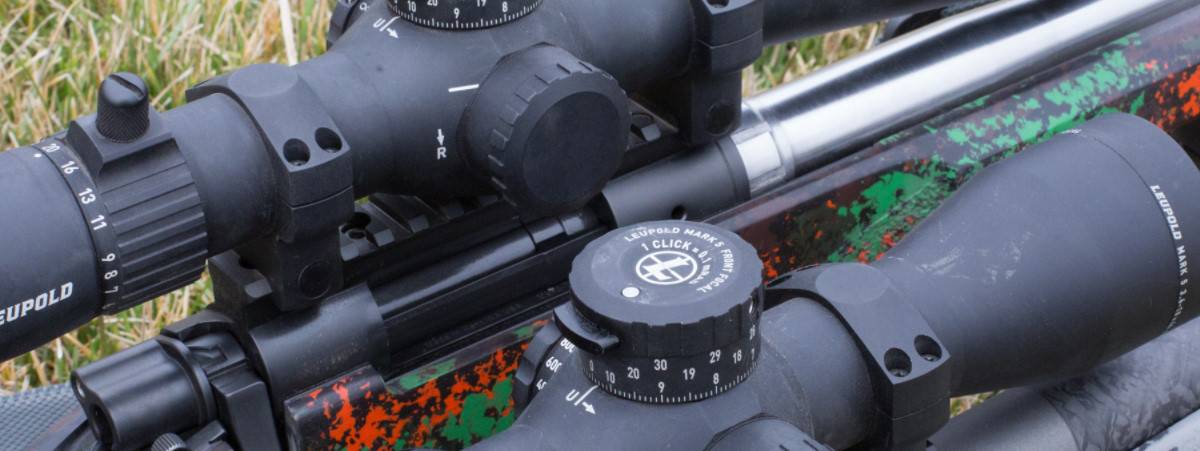
Beyond 400 yards, scopes stop hiding their flaws. Resolution that looked fine at 200 falls apart when you’re trying to spot bullet splash on steel at 700. Turrets that held zero for a hunting setup reveal half-MIL drift under repeated dialing. Parallax error that was invisible close up shifts your point of impact by inches at distance. Every optical and mechanical compromise you accepted at short range gets exposed — and punished.
At that distance, FFP reticles, exposed turrets, precise parallax adjustment, and ideally a zero stop cease being nice extras. They become the features that separate a true long-range scope from something that only pretends to be one.
The Best Long-Range Scope at Every Budget
I tested 13 scopes(3 were rejected) across three price tiers to find the best options at each budget level. Your budget determines which compromises you accept, but every scope on this list can reach out to distance if you understand its limits.
Best Overall Under $500
Arken Optics SH-4J GEN2 6-24×50
Japanese ED glass, 32 MIL of elevation travel, a 34mm tube, and a working zero stop for less than anything else in this tier. The SH-4J GEN2 has no business being this capable at this price. Glass quality alone separates it from anything else at this budget, and the massive internal elevation range means you’re not running out of adjustment at extended distances.
Best Overall Between $500 and $1,000
Bushnell Match Pro ED 5-30x56mm
The Match Pro ED assembled the most complete long-range mechanical package in its price range. A 34mm tube, 30 MRAD of elevation, locking turrets with a real zero stop, and 5-30x magnification. The glass isn’t quite as refined as the Viper PST, but for a scope built around putting rounds on steel at distance, the mechanical advantages matter more.
Best Overall Over $1,000
Vortex Razor HD Gen III 6-36x56mm
The Gen III takes everything the Gen II Razor built and pushes it further: 6-36x magnification, 36.1 MRAD of elevation, the new L-Tec+ zero system, and glass quality that resolves detail at 36x better than the other scopes in this test do at 25. You pay for it in weight (45.1 ounces), but the optical and mechanical package is the most complete I tested.
Here’s Why You Should Take My Long-Range Recommendations Seriously
The reason I can tell you which budget scope tracks reliably and which premium scope doesn’t justify its price is that I’ve watched both happen, repeatedly, over fifteen years of distance shooting. My name is Mike Fellon, and between PRS matches, open-country hunts out West, and dedicated testing that’s covered more than 200 scopes, I’ve accumulated a pretty clear picture of where optics fail at distance and why.
The failure mode is almost never obvious. It shows up when you’re on your fourth or fifth elevation cycle, or when you dial back to zero under time pressure and discover you’re a quarter-MIL off. Budget scopes fail that way. So do expensive ones. The price tag doesn’t protect you.
Every scope went through the same baseline work at 100 yards before I took it to distance. I confirmed mechanical zero, verified click values and tracking, and checked return to zero before moving any optic onto steel farther out. Three scopes looked promising enough to enter the initial pool but never earned a place in the final ten. The ones that remained had something in common: they inspired repeatable confidence once the testing moved from paper specs to actual dialing and distance work.
The 3 Best Long-Range Scopes Under $500
This tier surprised me. Japanese extra-low-dispersion glass in a scope that costs less than a set of premium rings and a Picatinny rail. Zero stops, FFP reticles, illumination, 34mm tubes. Five years ago this feature set didn’t exist below eight hundred dollars. The compromises are real, mostly in glass edge sharpness and turret feel, and one of these three lacks features I consider essential for serious long-range work. But the best performer in this group tracked as reliably as mid-tier optics I tested alongside it.
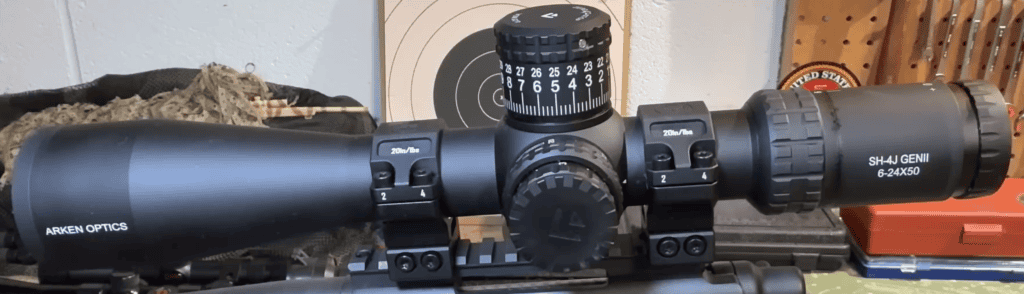
1. Arken Optics SH-4J GEN2 6-24×50 – Best Overall Under $500
Japanese Glass Where You Don’t Expect It
The first thing I noticed mounting the SH-4J was weight. At 36.6 ounces, it’s the heaviest scope in this tier by a comfortable margin, and on the Bergara B-14 HMR I used as my test platform, the balance shifted noticeably forward. That weight comes from the 34mm tube and the glass inside it, and once I started actually looking through the scope at distance, the trade-off made sense immediately. Arken upgraded from Chinese glass to Japanese extra-low-dispersion elements for the SH-4J line, and the difference is visible. Center sharpness at 18x was noticeably ahead of both the Athlon and the Vortex on the same afternoon, same targets, same bench. Chromatic aberration around high-contrast edges stayed minimal until I pushed past 20x, which is where budget glass typically starts falling apart.
32 MIL and a Reticle Built for Holdovers
The 34mm tube does more than house better glass. It gives the SH-4J 32 MIL of total elevation travel, which is nearly double what the Athlon offers. For long-range shooting in 6.5 Creedmoor, that amount of adjustment is more than I’d ever need, even with a flat 100-yard zero and no canted base. But the extra headroom means I could set a generous zero stop and still have plenty of room to dial to 800 without worrying about running out of travel. The VPR reticle is one of the reasons this scope works so well at distance. It’s a Christmas-tree style design with hash marks at half-MIL increments that stay readable across the magnification range because it’s in the first focal plane. At 6x the subtensions are tiny, but by 15x or 16x (where I do most of my actual shooting), they’re clean and usable for wind holds. I found myself holding wind with the reticle and dialing elevation, which is exactly how a long-range scope should work.
Turret Feel and the AZS Zero Stop
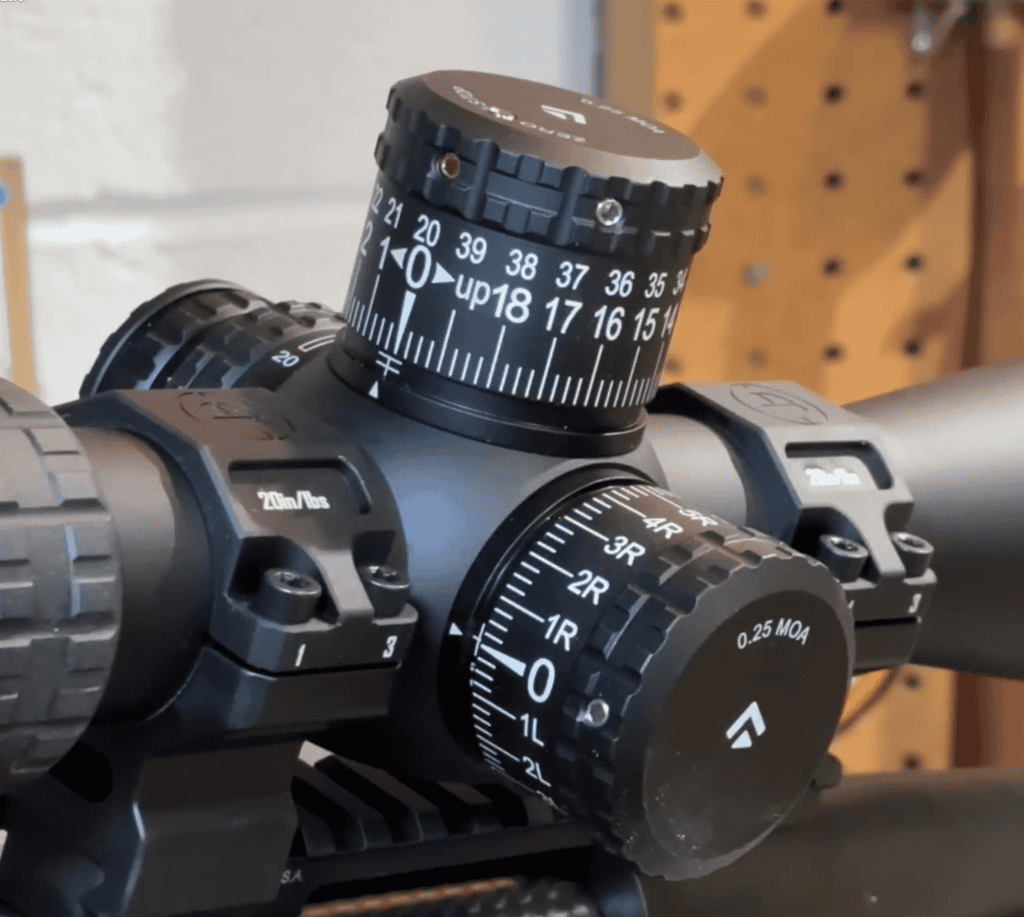
The turrets are functional. I want to be specific about that, because “functional” at this price point is actually a compliment. Each 0.1 MIL click is audible and distinct, with enough resistance that I didn’t accidentally bump past my intended setting. They’re not as refined as the Athlon’s Gen 3 turrets; there’s a slight mushiness at the transition between clicks that the Athlon doesn’t have. The AZS zero stop worked reliably every time I tested it. Setting it requires removing the turret cap and following Arken’s procedure, which isn’t as intuitive as some designs, but once set, the hard stop at zero was consistent through five full elevation cycles during my testing.
Where 36 Ounces Matters and Where It Doesn’t
If you’re building a precision rifle that lives on a bipod or a bag at the range, the weight is irrelevant. On a hunting rifle you’re carrying up a mountain, it’s a problem. I wouldn’t put this scope on a lightweight 6.5 Creedmoor build intended for backcountry use. For its intended purpose, getting into PRS-style shooting or ringing steel at distance without spending $800, the SH-4J GEN2 is the most capable scope under $500 I’ve tested. The parallax knob starts at 25 yards instead of 10 like the other two scopes in this tier, which doesn’t matter at all for long-range use but could annoy rimfire shooters who might consider it for double duty.
The Gap Between This and Mid-Tier Glass
Edge clarity softens noticeably past 18x, and in low light the image dims faster than the Athlon’s despite the larger tube. The illumination is adequate for dawn and dusk but washes out in bright daylight, which seems to be universal at this price. These are real limitations, but they’re the kind that show up when you’re comparing against scopes costing twice as much. Within this tier, the SH-4J delivers the sharpest center image, the most elevation travel, and the widest field of view at 6x. That combination earned it the top spot.
Field Test Data
| Test Parameter | Result |
|---|---|
| Tracking Test (10 MIL tall target) | Measured 9.95 MIL actual shift; 0.05 MIL deviation |
| Zero Return After 5 Elevation Cycles | Returned within 0.1 MIL of original zero each time |
| Resolution at 24x (USAF 1951 target, 100 yds) | Resolved Group 3, Element 2; slight softening at edges |
| Parallax Elimination at 600 yds | Clean elimination; knob marking accurate within ~15 yards |
| Relative Brightness (30 min after sunset) | Usable target identification at 400 yds; dimmer than Athlon at same conditions |
Tested with: Bergara B-14 HMR 6.5 Creedmoor | Hornady 140gr ELD Match
Pros and Cons
PROS
|
CONS
|
Performance Ratings
The Arken SH-4J GEN2 is the scope I’d hand to anyone getting into long-range shooting on a budget and tell them not to look back. It has genuine optical quality, enough elevation to reach anywhere a 6.5 Creedmoor can go, and a reticle that earns its place on a precision rifle. The weight is the price of admission, and it’s worth paying.
2. Athlon Argos BTR Gen 3 6-24×50 – Best Turret Precision Under $500
The Gen 3 Turrets Are the Story
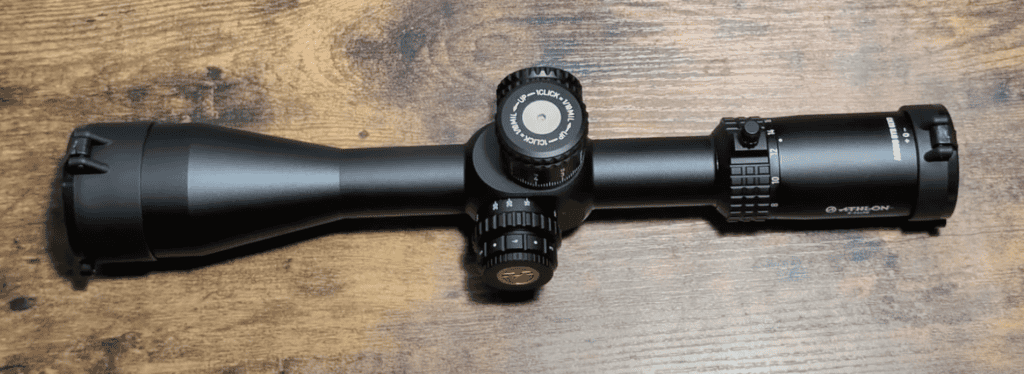
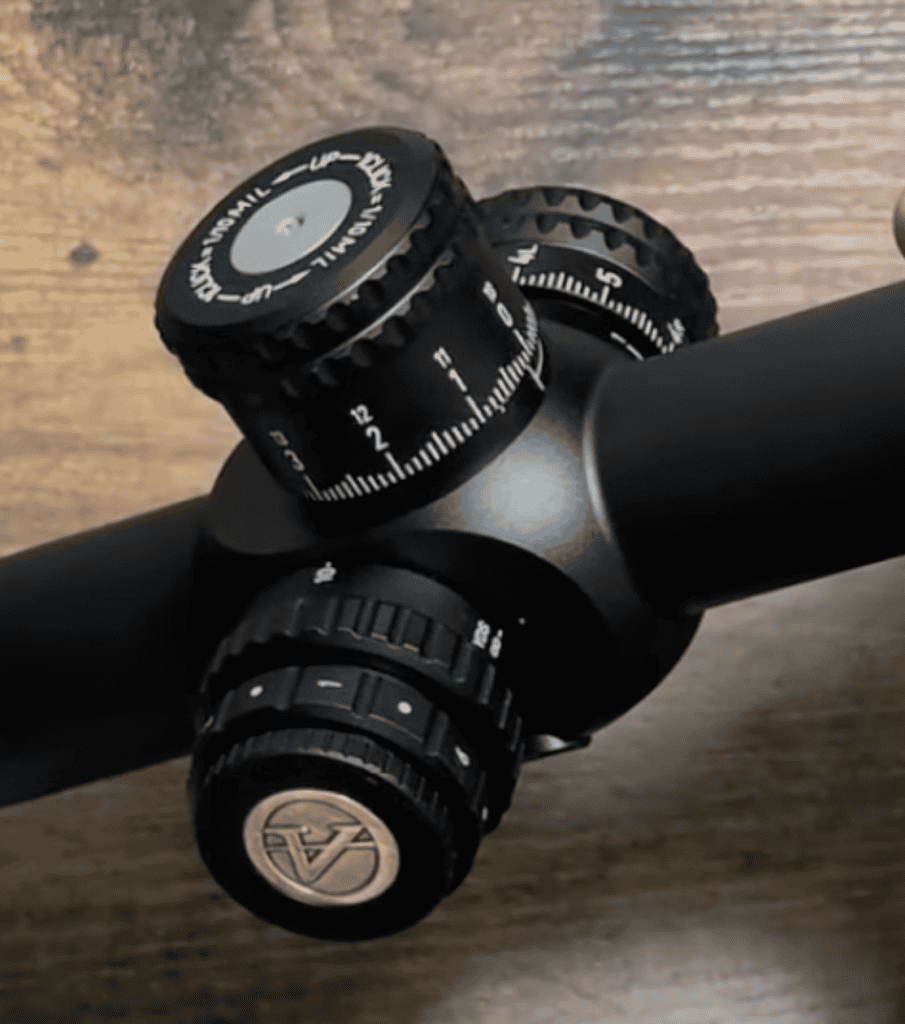
Athlon kept the same glass from the Gen 2 in the Argos BTR Gen 3. What they changed was the turrets, the magnification ring, and the reticle options. Normally I’d consider that a modest update, but the turret redesign is significant enough that it shifts how this scope performs for long-range work. The Gen 3 knobs are wider in diameter with a more aggressive knurl pattern, and the click detent is noticeably crisper than either the previous generation or the Arken in this tier. I ran a box test the first morning I had the scope mounted and each click felt like a distinct mechanical event. No mush, no ambiguity about whether I’d moved 0.1 or 0.2 MIL. The integrated throw lever on the magnification ring is a nice touch too; I used it constantly when transitioning between target acquisition at 6x and precision shooting at 18-20x.
18 MIL Is the Limitation You Need to Understand
Here’s where the 30mm tube creates a ceiling. At 18 MIL of total elevation travel, the Argos has the least internal adjustment of any scope in this tier. That’s enough for most long-range applications with a 100-yard zero in 6.5 Creedmoor, but there isn’t much margin. A 20 MOA canted base helps, and I’d consider one essential if you’re planning to regularly shoot past 600 with this scope. The Arken’s 32 MIL of travel is almost double, which is the single biggest practical advantage the Arken holds. If you’re running a flat base and this cartridge, you’ll feel the constraint somewhere between 700 and 800 yards depending on your load and conditions.
Glass That Holds Its Own Until It Doesn’t
Athlon’s fully multi-coated optics are decent for the price. Center clarity from 6x through about 16x is clean and bright, and I had no trouble identifying steel targets at 600 yards on a clear afternoon. Push past 18x and the image softens faster than the Arken, particularly at the edges. In early morning light during one of my testing sessions, the Athlon actually held contrast slightly better than the Arken at the same magnification, which I attribute to the coating formula rather than the glass itself. The APRS11 reticle is a clean MIL-based FFP design with hash marks for holdovers. It’s less detailed than the Arken’s VPR Christmas tree, which means it’s less cluttered at low magnification but offers fewer reference points for wind calls at distance. A fair trade depending on your preference. I found it perfectly adequate for dialing elevation and holding wind at 600, but at 800 I wanted more subtension detail than it provides.
Zero Stop and Precision That Earns the Name
The precision zero stop is straightforward to set and held rock-solid through my testing. Athlon’s implementation is more intuitive than the Arken’s; I had it configured in about two minutes without referencing the manual. Tracking through the tall target test measured within 0.1 MIL of true at 10 MIL of dialed correction, which is as good as the Arken and better than some mid-tier scopes I’ve tested. Return to zero after five cycles was consistent. This is where the Athlon earns its keep for long-range use: the mechanical precision of the turret system inspires confidence when you’re dialing for a shot at distance and need to trust that what you’ve dialed is what you’ll get.
A Scope That Punches Accurately If Not Farthest
The Athlon sits in an interesting position. It has the best turret feel in this tier, reliable tracking, a solid zero stop, and a feature set (illumination, parallax from 10 yards) that covers most bases. The 30mm tube and limited elevation travel are what keep it from the top spot for dedicated long-range work. If your shooting stays inside 600 yards, the Athlon and Arken are closer to a coin flip, and many shooters would prefer the Athlon’s turret feel. Past 600, the Arken’s elevation advantage and glass quality pull ahead.
Field Test Data
| Test Parameter | Result |
|---|---|
| Tracking Test (5 MIL box test at 100 yds) | Measured within 0.1 MIL on all four legs; final group overlapped original zero |
| Turret Repeatability (zero return, 5 cycles) | Consistent return within 0.15 MIL across all five cycles |
| Click Consistency (per-revolution travel) | 5 MIL per revolution measured at 4.95 MIL actual; consistent across two revolutions |
| Edge Clarity at 18x | ~15% softening in outer quarter of FOV; center sharp through 16x |
Tested with: Bergara B-14 HMR 6.5 Creedmoor | Hornady 140gr ELD Match
Pros and Cons
PROS
|
CONS
|
Performance Ratings
If turret feel is your priority and your shooting stays inside 600 to 700 yards, the Athlon Argos BTR Gen 3 deserves serious consideration. The mechanical precision is genuinely impressive at this price. Just plan on a 20 MOA rail and understand you’re trading some glass quality and elevation range for the most satisfying clicks in budget long-range glass.
You can also read my full guide on the best rifle scopes under $500.
3. Vortex Diamondback Tactical 6-24×50 – Best Lightweight Long-Range Option Under $500

Nearly a Pound Lighter Than the Arken.
I picked up the Diamondback Tactical right after handling the Arken, and the difference was startling. Twelve ounces is nearly a full pound, and you feel every bit of it. On a precision rig that’s already 10 or 11 pounds with a bipod, the Vortex keeps the total system weight in a range where you can still carry the thing to a shooting position without dreading it. This is the scope’s primary argument for long-range use: it can go on a rifle that actually gets carried somewhere. The 3.9 inches of eye relief is the most generous in this tier too, which makes getting behind the scope faster and more forgiving, particularly from improvised positions where perfect cheek weld isn’t always possible.
Missing a Zero Stop Changes How You Use This Scope
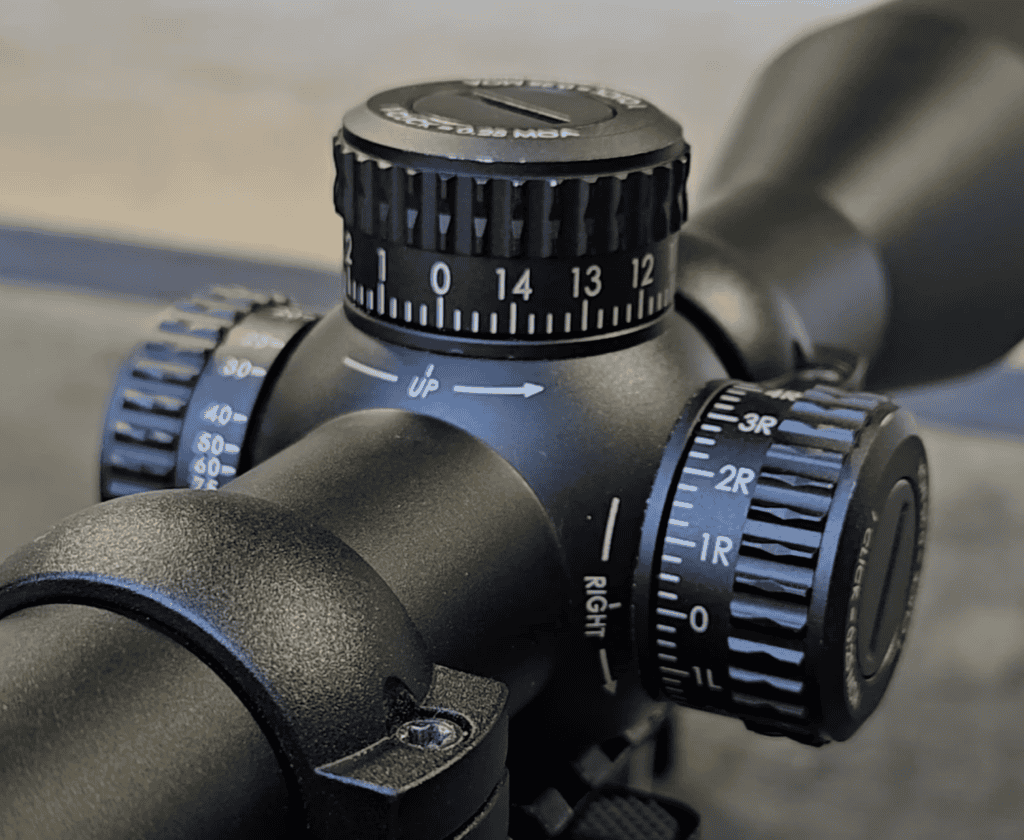
The absence of a zero stop is a significant limitation for a scope marketed toward tactical and long-range use. After dialing up for a shot at 600 or 700 yards, spinning back to zero requires counting clicks or watching the turret markings. That’s manageable in a controlled range environment. In a match, under time pressure, or on a hunt where you’ve dialed up and need to quickly return to zero for a closer target, the lack of a hard stop creates real risk. I miscounted on one occasion during testing and sent a round a full MRAD high because I’d blown past zero without realizing it. Both the Arken and Athlon include zero stops at a lower price point. That’s hard to overlook.
The EBR-2C Does Its Job Quietly
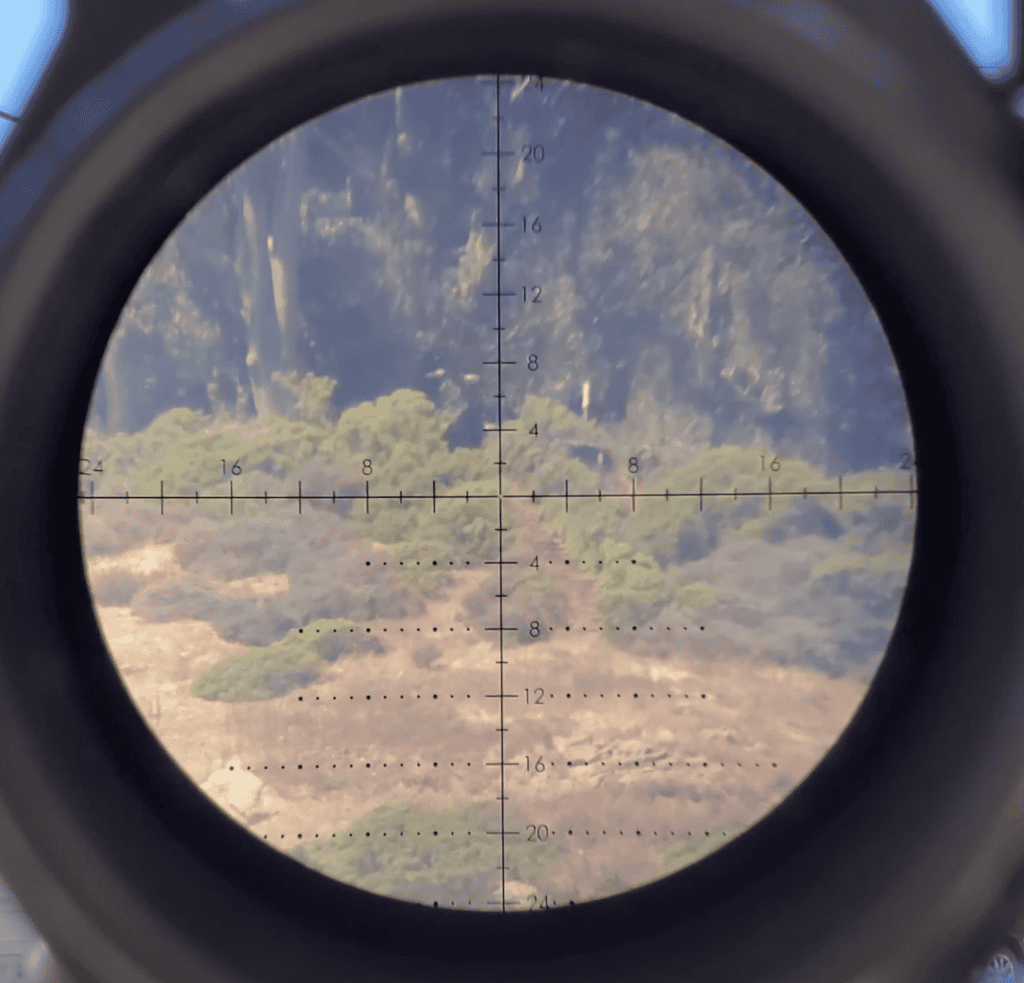
Vortex’s EBR-2C is a proven reticle and for good reason. The design is open through the center with hash marks for holdovers, and in FFP it scales correctly across the magnification range. It’s simpler than the Arken’s VPR; fewer subtension marks mean fewer reference points for wind holds at extended distance, but the cleaner sight picture is easier to process quickly. For someone who primarily dials corrections rather than holding, the EBR-2C is perfectly fine. Glass quality is acceptable without being remarkable. Center sharpness through 18x was close to the Athlon’s performance, which put it behind the Arken but not embarrassingly so. I noticed more color fringing around high-contrast edges (black steel against bright sky) at 20x and above, which is typical for this price class.
Where the Vortex VIP Warranty Actually Matters
Vortex’s unconditional lifetime warranty is a genuine differentiator at this price point. Scopes in the sub-$500 range get used hard by shooters who are often still learning their equipment, and things break. I’ve sent scopes back to Vortex twice over the years (not this model specifically) and received replacements without argument both times. For a newer long-range shooter who might be rough on equipment, that warranty reduces risk in a way the other brands can’t quite match. The 19 MRAD of elevation travel is adequate, one MRAD more than the Athlon, and the balanced symmetrical adjustment range (19 MRAD each for elevation and windage) is a sensible design choice.
An Entry Point, Not a Destination
The Diamondback Tactical is the lightest way under $500 to put a functional FFP scope with exposed tactical turrets on a long-range rifle. But at the highest price in this tier, the absence of a zero stop and illumination makes the value proposition harder to defend against the Arken and Athlon. Its strength is weight and eye relief, which matter most to shooters who need their scope to work on a rifle that gets carried, not just parked on a bench.
Numbers from the range tell the tracking story clearly enough.
Field Test Data
| Test Parameter | Result |
|---|---|
| Tracking Test (10 MRAD tall target) | Measured 10.1 MRAD actual shift; 0.1 MRAD deviation (within acceptable range) |
| Resolution at 20x (USAF 1951 target, 100 yds) | Resolved Group 2, Element 5; behind the Arken, comparable to Athlon |
| Weight with Vortex Pro Rings (30mm) | 29.1 oz total; lightest mounted configuration in the tier |
| Parallax Precision at 400 yds | Clean elimination; knob markings accurate within ~25 yards at distance |
| Eye Relief Consistency Across Magnification | Maintained 3.8-3.9″ from 6x to 20x; slight reduction at 24x |
Tested with: Bergara B-14 HMR 6.5 Creedmoor | Hornady 140gr ELD Match
Pros and Cons
PROS
|
CONS
|
Performance Ratings
The Diamondback Tactical is the scope for the shooter who needs light weight and a forgiving eye box more than they need every long-range feature checked off. The VIP warranty makes it a low-risk purchase, and the EBR-2C reticle works fine for dialing. But the Arken and Athlon both offer more capability for less money, which makes the Vortex a harder sell for dedicated long-range use unless portability is your primary concern.
The 4 Best Long-Range Scopes Between $500 and $1,000
This tier is where long-range scopes stop requiring apologies. Under $500, you’re managing compromises. Between $500 and $1,000, you’re choosing between genuinely capable optics that differ in philosophy more than fundamental quality. Three of the four scopes here run MRAD systems with FFP reticles, 34mm or 30mm tubes, and enough elevation travel to stay in the game past 800 yards. The one that doesn’t, the Burris, makes a different argument entirely with its weight savings. What caught me off guard was how much the mechanical packages have improved at this price; locking turrets with proper zero stops used to cost twice this.
1. Bushnell Match Pro ED 5-30x56mm – Best Overall Between $500 and $1,000
Thirty Power and a 34mm Tube at This Price
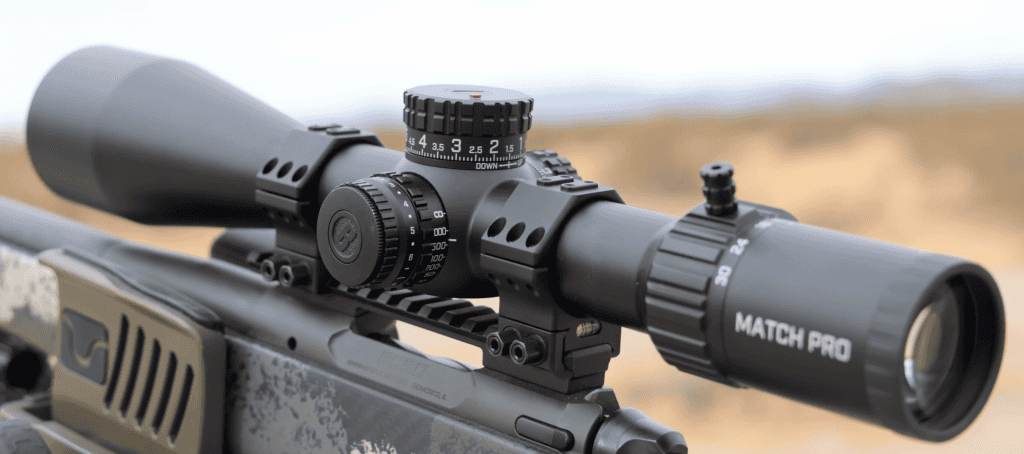
I’ll be straightforward: when I first pulled the Match Pro ED out of the box, I expected a scope that looked better on paper than it performed behind the rifle. Bushnell has been making solid hunting optics for decades, but the precision rifle market is a different animal. The spec sheet reads like something from a tier above: 34mm tube, 30 MRAD of elevation travel, 5-30x magnification, locking turrets with a zero stop, ED glass. That combination usually costs more.
The Deploy MIL 2 Earned Its Spot
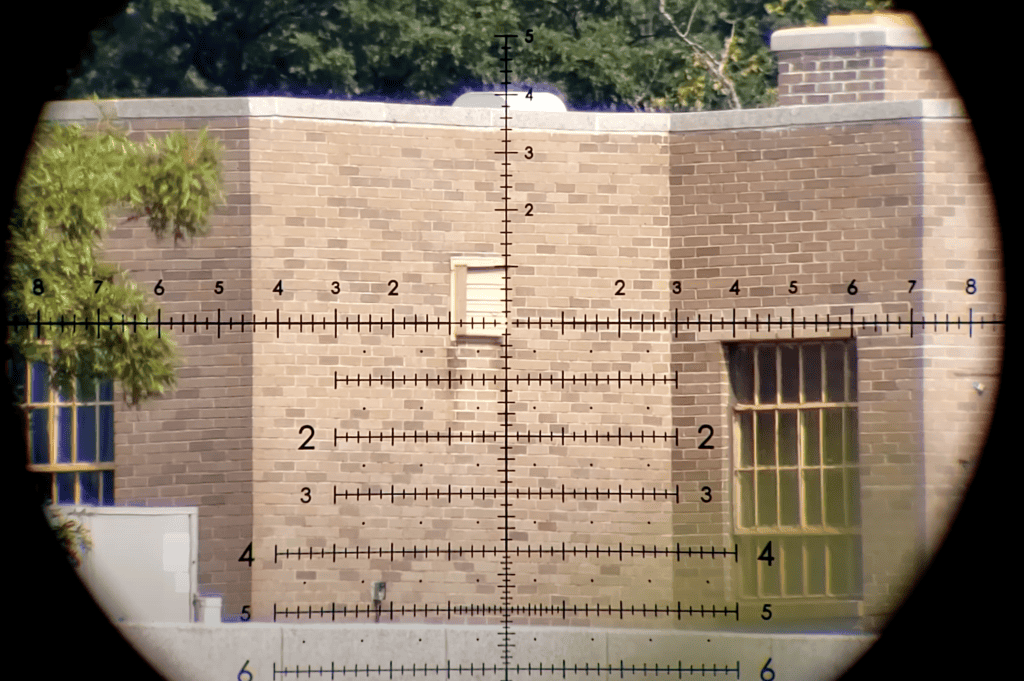
The DM2 reticle is clean, which matters more than most people think when you’re holding on a target at 700 yards. The hash marks are spaced at 0.2 MRAD intervals, so the tree doesn’t get cluttered the way some Christmas-tree designs do. At 30x, I could still read wind holds without the subtensions blurring into each other. In FFP, the reticle thins out on the lower magnification settings (around 5-8x, the finer marks practically disappear), but that’s the tradeoff with any FFP reticle at this price. I found 10-12x to be the sweet spot where the full reticle was visible without being intrusive. Compared to the EBR-7C on both Vortex scopes in this tier, the DM2 offers a slightly more open center, which I preferred for spotting impacts.
Locking Turrets That Actually Work Under Pressure
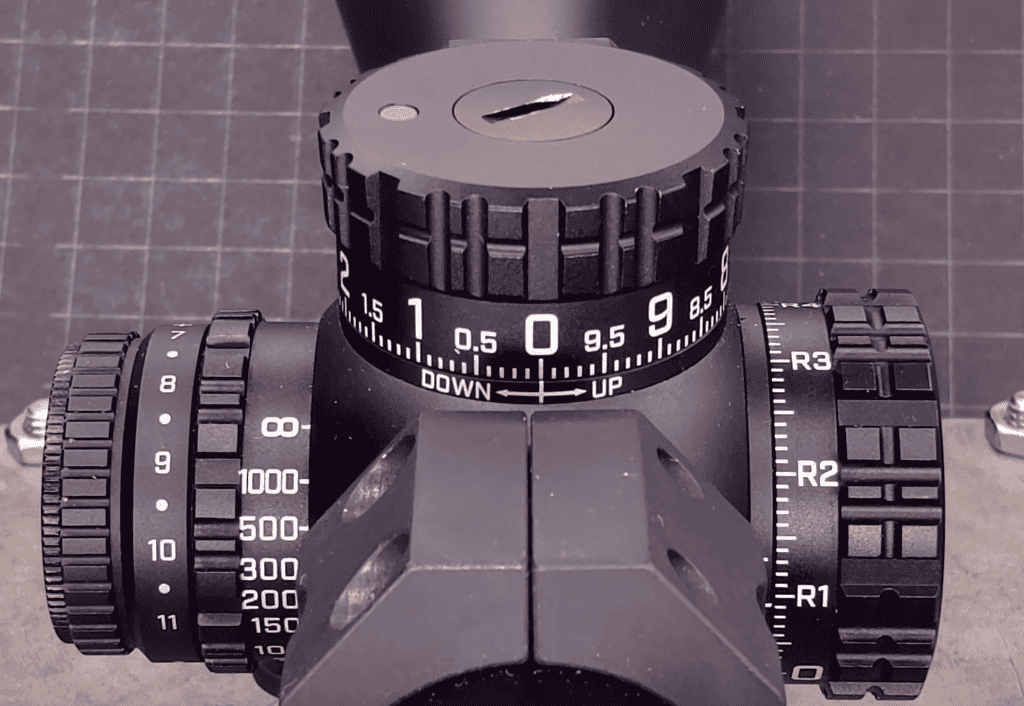
The elevation turret lifts to unlock before you can dial, and the system works. It’s not elegant like the Viper PST’s RZR setup, but during my testing, I never bumped the turret off zero while transitioning between positions or packing up. The Easy Set zero stop is genuinely easy: click a ring into place under the turret cap at your zero, and it stops there. I had 21+ MRAD of usable elevation above my 100-yard zero after setting it, which is more than adequate for 6.5 Creedmoor at distances well beyond 800 yards. That’s where the 34mm tube and 30 MRAD of total travel pay off: you’re not running into an adjustment ceiling the way you would with a 30mm scope at distance.
Where the ED Glass Shows Its Limits
Glass is where the Bushnell concedes ground to the Viper PST. At 20x and below, the image is bright, the color rendering is natural, and edge-to-edge clarity is respectable. Push past 24x or so and you start to notice the center sharpness dropping a fraction compared to what the PST Gen II delivers. Early morning testing sessions showed decent low-light performance from the 56mm objective, but the PST’s coatings pulled ahead during those first minutes of usable light. The illumination helps, though; 11 brightness settings with an auto-off feature at 6 hours is a practical touch. Setting two or three worked well in pre-dawn conditions without blowing out the reticle.
One Stiff Knob and a Heavy Package
Two gripes. The parallax adjustment is stiff, noticeably more so than any other scope in this tier. It gets the job done and focuses down to 15 yards if that matters to you, but the resistance slowed me down when dialing from 300 to 600 yards in quick succession. And at 32 ounces, the Match Pro is the heaviest scope in this group, though only by a fraction over the Viper PST. Neither of those complaints changes the fundamental calculation: the Match Pro ED delivers the most complete long-range mechanical package between $500 and $1,000.
Field Test Data
| Test Parameter | Result |
|---|---|
| Tracking Test (10 MRAD box at 100 yds) | Returned within 0.1 MRAD; consistent across 3 full cycles |
| Zero Return After 6 MRAD Elevation Dial | POI shift < 0.2″ at 100 yds on return |
| Usable Magnification Ceiling (sharp center image) | 24x before noticeable softening; 30x usable but reduced |
| Low-Light Resolution (dawn, 12x) | Target differentiation at 400 yds in marginal light; good for tier |
| Parallax Elimination at 600 yds | Achievable but knob resistance slowed fine adjustment |
Tested with: Bergara B-14 HMR 6.5 Creedmoor | Hornady 140gr ELD Match
Pros and Cons
PROS
|
CONS
|
Performance Ratings
The Bushnell Match Pro ED is the scope I’d hand to someone building their first dedicated long-range rig in this price range. It doesn’t have the prettiest glass in the tier, but the combination of elevation travel, locking turrets, zero stop, and magnification range is unmatched here. For PRS-style shooting or anyone who plans to dial rather than hold at distance, the mechanical advantages win out.
2. Vortex Viper PST Gen II 5-25x50mm – Best Glass Quality Between $500 and $1,000
Gen II Glass That Earned Its Reputation
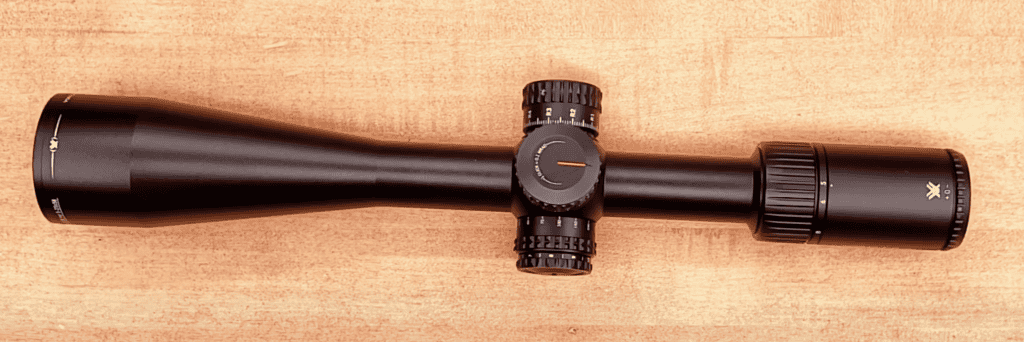
The Viper PST Gen II has been a benchmark in this price range since 2017, and the glass is the reason. Vortex upgraded the XD (extra-low dispersion) lenses and coatings from the Gen I, and the improvement is not subtle. Edge-to-edge clarity at 20x is the sharpest I saw in this tier. Color fidelity stays natural across the magnification range, and the contrast holds up in mixed lighting where cheaper glass tends to wash out. During early morning sessions, I was resolving target details through the PST that the Strike Eagle next to it simply could not render at the same distance and magnification.
Twenty MRAD of Elevation Is the Ceiling
Here is the problem. The 30mm tube limits the PST Gen II to 20 MRAD of total elevation travel, which is the lowest among the MRAD scopes in this tier by a significant margin. The Bushnell offers 30, the Strike Eagle 31. With a 20 MOA rail on my Bergara, I had workable elevation to reach 800 yards with the Hornady 140gr ELD Match, but there wasn’t much room left. A shooter running a cartridge with more drop, or who needs to reach further, will run out of adjustment before the scope runs out of optical capability. That is a frustrating place to be, because the glass deserves to be used at distance.
The RZR Zero Stop Trickled Down from the Razor
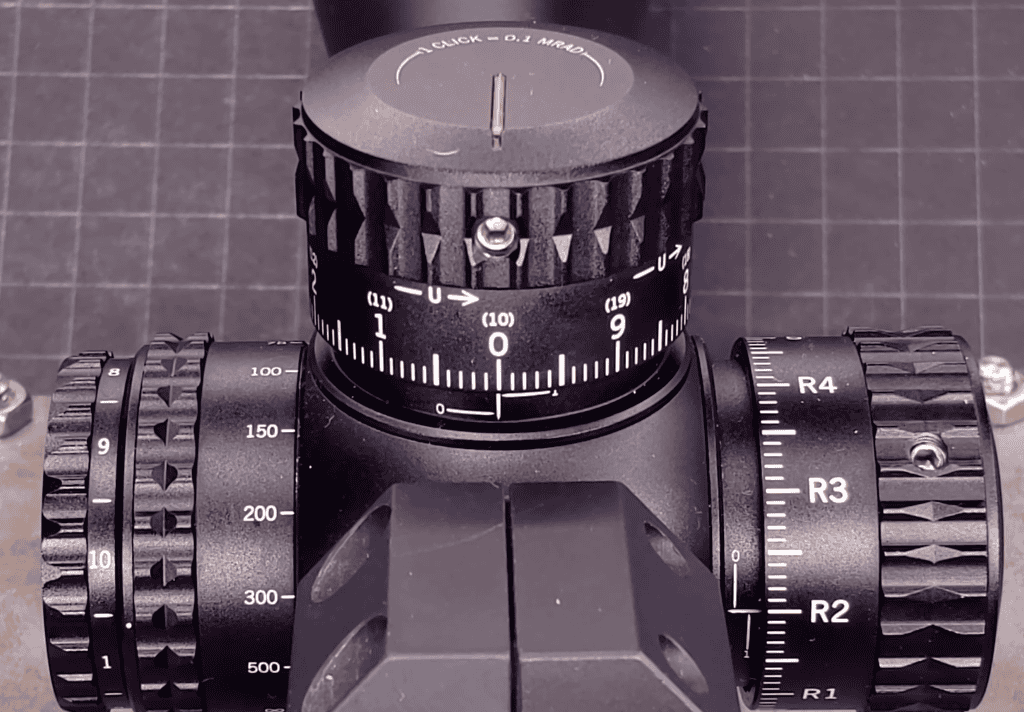
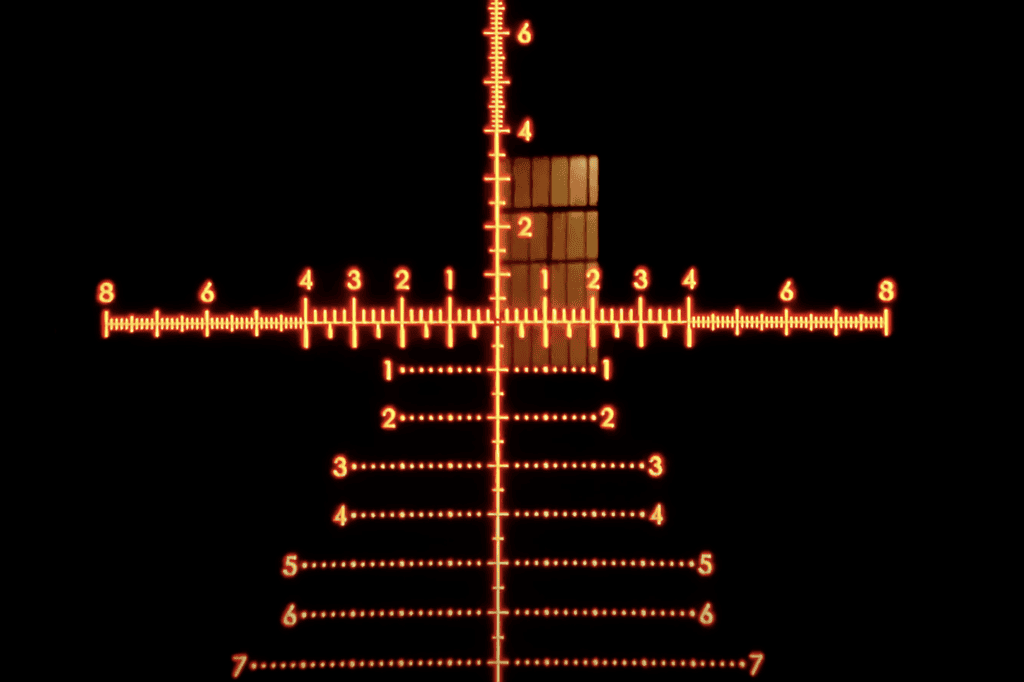
One of the Gen II’s best upgrades was adopting the RZR zero stop system from Vortex’s premium Razor line. The Gen I used a shim-based system that wasn’t really a true zero stop; you could actually dial past zero. The Gen II’s mechanical stop is positive and reliable. I tested it across multiple sessions, dialing up to various distances and returning, and it came back clean every time. The turrets themselves have good tactile feedback, crisp 0.1 MRAD clicks, and a satisfying resistance that prevents accidental movement without making intentional adjustments difficult. The EBR-7C reticle is proven for long-range work: Christmas-tree style with numbered holdover marks that stay readable even when the FFP scaling shrinks them at lower magnifications.
Where 30mm Costs You
Beyond the elevation limitation, the 30mm tube means the PST Gen II is more limited in internal adjustment travel compared to the 34mm scopes in this tier. Light gathering is driven by the objective lens diameter — the PST’s 50mm versus the 56mm on the Strike Eagle — not the tube diameter. In practice, the optical coatings compensate well enough that the difference in brightness wasn’t dramatic side by side. But at 25x, the 50mm objective does produce a smaller exit pupil than a 56mm, and during the last few minutes of usable light, I noticed it. The scope is also the longest in this group at 15.8 inches. At 31.2 ounces it’s a touch lighter than the Bushnell, so the overall handling is fine on the Bergara; it just sits a bit further forward.
The PST Gen II lands in an interesting position. The glass quality gives it an advantage the numbers can’t capture, and the turret feel is among the best you’ll get at this price. If your shooting stays inside ranges where 20 MRAD is sufficient (and for most 6.5 Creedmoor or .308 shooters, that covers a lot of distance), the optical experience alone might justify it over the Bushnell. For anyone who wants to push further or simply wants the insurance of extra elevation travel, the Bushnell’s mechanical edge takes the top spot.
Numbers behind the glass.
Field Test Data
| Test Parameter | Result |
|---|---|
| Tracking Test (5 MRAD box at 100 yds) | Dead-on return through 4 complete cycles |
| Resolution at 25x (100 yd resolution chart) | Sharpest center image in this tier; edge clarity maintained to ~85% of field |
| Low-Light Comparison (dawn, 16x, 400 yds) | Resolved target details 3-4 minutes earlier than Strike Eagle at same magnification |
| Turret Repeatability (10 return-to-zero cycles) | Consistent within 0.15″ at 100 yds across all cycles |
| Usable Elevation Above 100-yd Zero (20 MOA rail) | ~14.5 MRAD available; adequate for 6.5 CM to ~800 yds but tight beyond |
| Parallax Elimination at 600 yds | Smooth and precise; best parallax feel in this tier |
Tested with: Bergara B-14 HMR 6.5 Creedmoor | Hornady 140gr ELD Match
Pros and Cons
PROS
|
CONS
|
Performance Ratings
The Viper PST Gen II is a scope I keep coming back to, even knowing its limitations. If you’re building a 6.5 Creedmoor precision rig and your shooting stays within 800 yards, the glass quality alone makes it worth serious consideration. Push beyond that, or run a caliber with more drop, and the 20 MRAD ceiling becomes a real constraint.
You can also check my full review of Vortex.
3. Vortex Strike Eagle 5-25x56mm – Best Long-Range Feature Set for the Money
Same Reticle, Different Scope
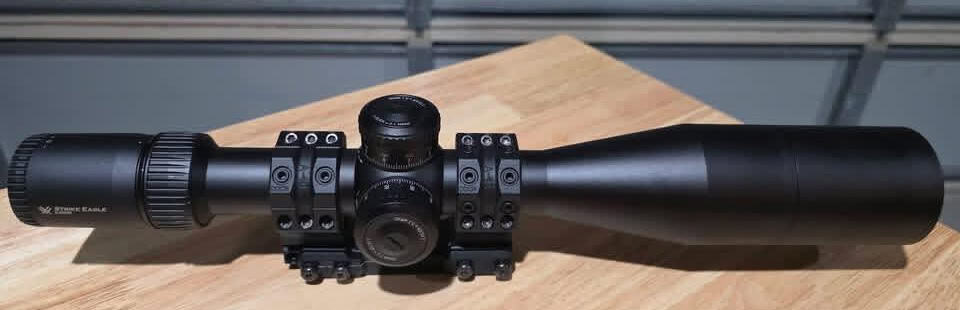
The Strike Eagle 5-25×56 runs the same EBR-7C reticle in the same FFP configuration as the Viper PST Gen II sitting in its case ten feet away. On paper, with a 34mm tube, 31 MRAD of elevation, locking turrets with a RevStop zero system, and 56mm objective, it should outperform its more expensive sibling for long-range work. That kind of spec advantage at a lower price needs an explanation, and the explanation is glass.
31 MRAD in a Budget Frame
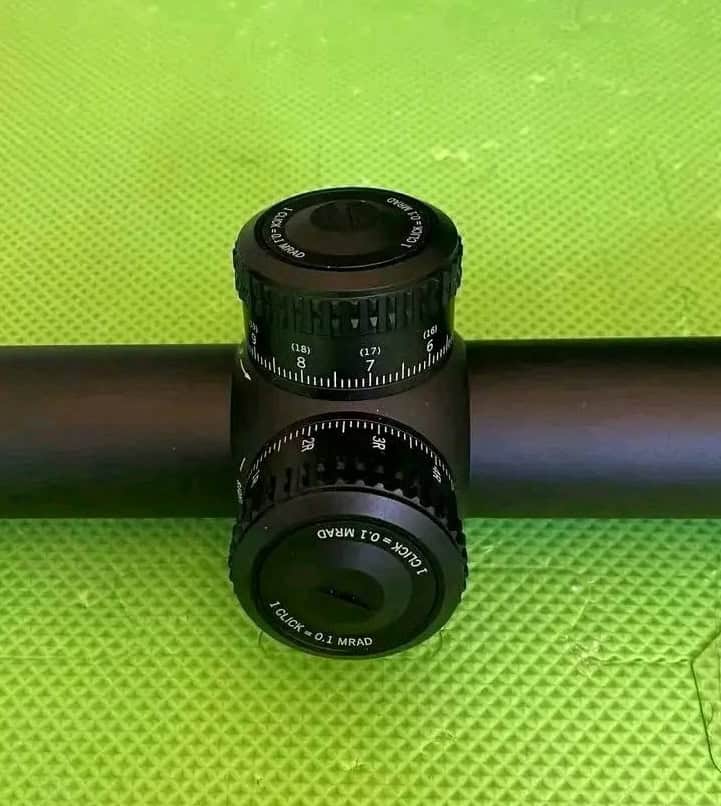
The elevation travel is the Strike Eagle’s headliner. 31 MRAD total, paired with 23 MRAD of windage, gives you the most adjustment range in this tier. For someone shooting 6.5 Creedmoor or .308 and wanting insurance to reach past 1,000 yards, and if that’s your primary goal, my dedicated best 1000 yard scope guide goes deeper, the Strike Eagle simply won’t run out of dial the way the PST Gen II will. The RevStop zero system works differently from Vortex’s RZR: you set your zero, and the system limits downward travel to prevent dialing below it. It worked fine in testing, though the clicks don’t have quite the same tactile sharpness as the PST’s turrets. Good enough, but you can feel the difference.
Glass Tells You Exactly What You Saved
From 5x through about 16x, the Strike Eagle’s image quality is solid. Bright, reasonably sharp, adequate contrast. Past 18x, the gap between this scope and the Viper PST becomes obvious. Center resolution softens, edge clarity drops off more aggressively, and the image takes on a slightly cooler, less natural tone. At 25x on a calm morning at 600 yards, I was working harder to spot impacts through the Strike Eagle than I had been through the PST at the same distance. The 56mm objective helps with brightness, and I’ll give it credit for low-light performance that hung close to the PST’s despite the glass quality gap. But for critical long-range observation, where you need to pick up mirage, spot bullet trace, or distinguish small targets against a busy background, the optical difference matters.
RevStop and Locking Turrets Pull Their Weight
The locking turret mechanism on the Strike Eagle requires a lift before dialing, same concept as the Bushnell. It’s functional, if a bit loose compared to the Match Pro’s implementation. I never had an accidental adjustment, so it does its job. The parallax knob focuses down to 15 yards and operates smoothly. Eye relief at 3.8 inches matches the Bushnell as the most generous in the tier, and the eyebox is forgiving enough to get behind quickly from awkward positions. At 30.4 ounces, the Strike Eagle is actually lighter than both the Bushnell and PST, and at 14.6 inches, it’s the second shortest scope in this group.
A Scope Looking for Its Shooter
The Strike Eagle occupies an interesting space. It has more mechanical capability than the PST Gen II and one MRAD more elevation travel than the Bushnell’s 30 MRAD — the most in this tier. It costs less than both. If glass quality weren’t part of the equation, it would win this tier outright. But glass quality is always part of the equation at distance, and the gap here is real. For a newer long-range shooter who prioritizes having enough adjustment range and a proven reticle while working within a tighter budget, the Strike Eagle delivers. For someone already dialing past 600 yards and wanting to see impacts clearly through their scope, the Bushnell’s modest glass advantage combined with its superior magnification range and turret feel makes the stronger case.
Field Test Data
| Test Parameter | Result |
|---|---|
| Tracking Test (8 MRAD box at 100 yds) | Returned within 0.2 MRAD consistently; no cumulative drift |
| Image Quality at 20x vs PST Gen II | Noticeable softness in center; more pronounced edge falloff |
| Low-Light Performance (dawn, 14x) | Competitive brightness from 56mm objective; detail resolution behind PST |
| Turret Click Feel | Functional 0.1 MRAD clicks; less crisp than PST’s RZR turrets |
Tested with: Bergara B-14 HMR 6.5 Creedmoor | Hornady 140gr ELD Match
Pros and Cons
PROS
|
CONS
|
Performance Ratings
If someone told me they had a strict budget and needed to get into long-range shooting with a scope that wouldn’t limit their mechanical capability, the Strike Eagle would be the answer. Just go in knowing the glass is a generation behind its more expensive sibling, and plan to stay at moderate magnifications when clarity matters most.
4. Burris Signature HD 5-25x50mm – Lightest Long-Range Scope Between $500 and $1,000
Twenty-Four Ounces Changes What You Can Carry
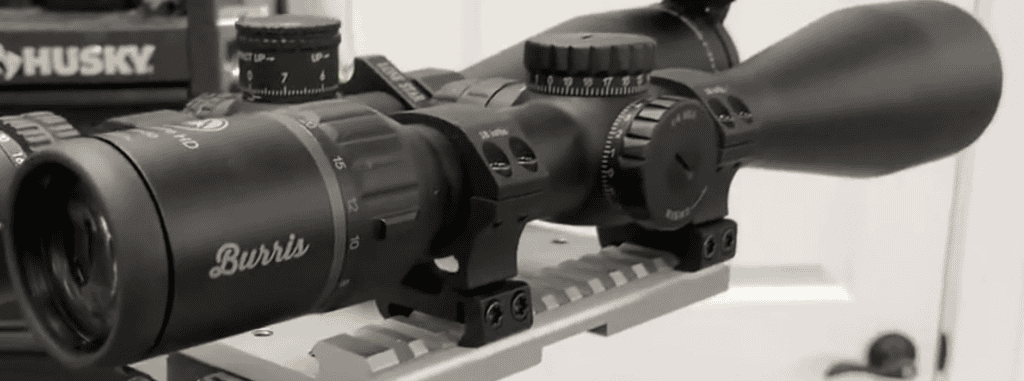
The Burris Signature HD weighs 24 ounces. The next lightest scope in this tier, the Strike Eagle, weighs 30.4. That 6.4-ounce gap isn’t a rounding error; it’s the difference between a rifle that handles like a precision rig and one that handles like a field rifle. At 14.3 inches, it’s also the shortest scope I tested in this group. On the Bergara B-14 HMR, which is already a heavier chassis rifle, the Signature HD shifted the balance point noticeably rearward compared to the 34mm scopes. For someone building a long-range hunting rifle where they need to hike to their shooting position, the weight savings is meaningful in a way that specification charts don’t fully capture.
A Reticle Made for This Exact Ammunition
Burris designed the 6.5 Creedmoor FFP reticle around the 140-grain ELD bullet, which is exactly what I was putting through the Bergara. The holdover marks are calibrated to that specific load’s trajectory, and during testing, the pre-marked holds lined up with my actual drops with surprising accuracy out to 500 yards. Past that distance, environmental variables started creating enough deviation that I was dialing anyway, which brings up the limitation: this reticle is only useful for this specific cartridge and bullet weight combination. Swap to a different load, a different caliber, or even significantly different altitude, and those hold marks become decorative. The three MRAD scopes in this tier work with any cartridge, any load, any distance, because their reticles are measurement tools rather than caliber-specific solutions.
MOA in a Tier of MRAD Scopes
The Burris runs 1/4 MOA clicks and 65 MOA of total elevation, putting it in a different measurement world from the other three scopes here. MOA is not inferior to MRAD; plenty of excellent long-range shooters run MOA systems. But MRAD has become the dominant language in the precision rifle community, and the other three scopes in this tier all speak it. If you’re building a DOPE card from a ballistic calculator, downloading data from other shooters, or attending PRS-style matches where range officers call corrections in MRAD, running an MOA scope adds a translation step. On its own merits, the 65 MOA of elevation is approximately 19 MRAD equivalent, making it the most limited adjustment range in this tier.
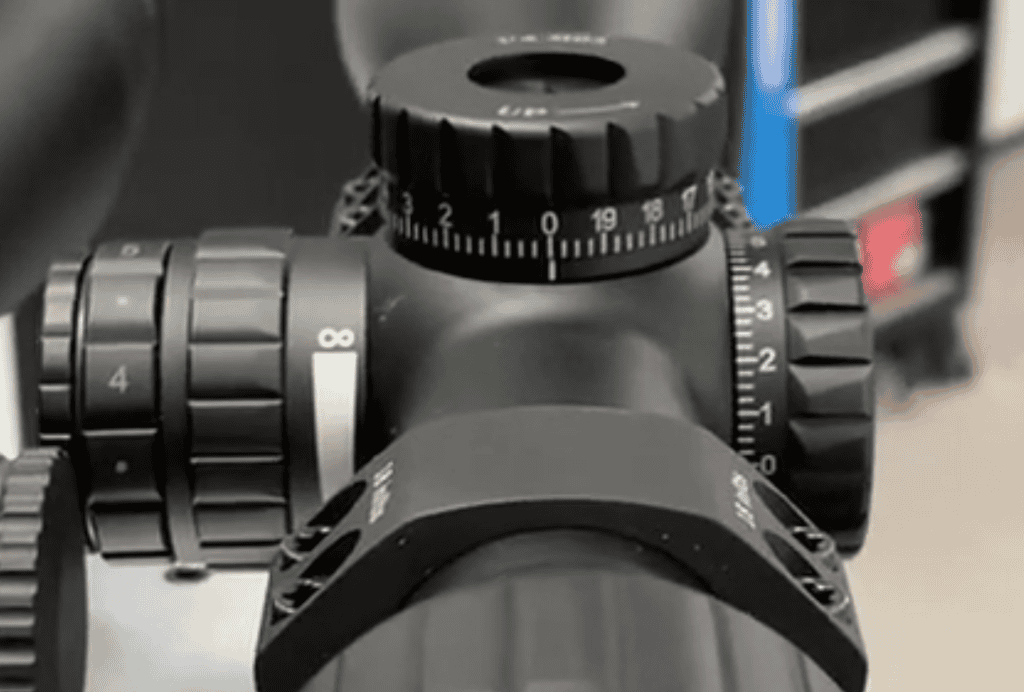
Push/Pull Turrets That Need Commitment
The push/pull locking mechanism is simple: push the turret down to lock, pull up to unlock and dial. The zero stop works as advertised. My complaint is the turret feel itself; clicks are a bit soft, lacking the crispness of the Vortex RZR system or even the Bushnell’s turrets. You can feel each click, but there’s a sponginess that makes rapid dialing less confident. For a hunting application where you dial once and settle in, that’s minor. For any kind of positional shooting where you’re dialing between targets under time, it adds uncertainty. The glass itself is decent. Bright, with good light transmission through the multi-coated lenses, and the illumination works well in low light with six brightness settings. Clarity is on par with the Strike Eagle and a step behind the PST Gen II.
The Signature HD is built for a specific shooter: someone who hunts with a 6.5 Creedmoor, values carrying the lightest possible scope, and wants FFP holdover marks calibrated to their exact load. For that person, nothing else in this tier even competes. For a general long-range scope? The caliber-specific reticle, MOA system, and limited elevation travel narrow its appeal.
Field Test Data
| Test Parameter | Result |
|---|---|
| Holdover Accuracy (6.5 CM 140gr ELD Match, 300-500 yds) | Reticle marks matched actual drops within 0.5 MOA to 500 yds |
| Tracking Test (20 MOA box at 100 yds) | Returned within 0.5 MOA; minor POI shift on 3rd cycle |
| Weight on Rifle (Bergara B-14 HMR with rings) | Total system ~8 oz lighter than with 34mm scopes; noticeable balance shift |
| Turret Click Precision | Functional but soft; less tactile feedback than MRAD competitors in tier |
| Low-Light Performance (dawn, 16x) | Competitive brightness; illumination effective at settings 3-4 |
Tested with: Bergara B-14 HMR 6.5 Creedmoor | Hornady 140gr ELD Match
Pros and Cons
PROS
|
CONS
|
Performance Ratings
I respect what Burris built here. The weight is remarkable, the glass is honest, and for a 6.5 Creedmoor hunter who wants holdovers calibrated to their exact load, the reticle works as advertised. But for a general long-range scope recommendation, the caliber-specific reticle and MOA limitation in a MRAD-dominant landscape push it to the bottom of this tier.
The 3 Best Long-Range Scopes Over $1,000
The conversation changes above $1,000. Under that line, I was evaluating which compromises were acceptable. Here, I was evaluating how close each scope came to doing everything well. All three scopes in this tier have FFP MRAD reticles designed for distance work, turret systems that professional shooters trust in competition, and glass that made me take my time looking through them instead of rushing to the next test. The differences are in philosophy: one prioritizes magnification range and versatility, one prioritizes mechanical precision above all else, and one proves that a premium scope doesn’t have to weigh three pounds.
1. Vortex Razor HD Gen III 6-36x56mm – Best Overall Over $1,000
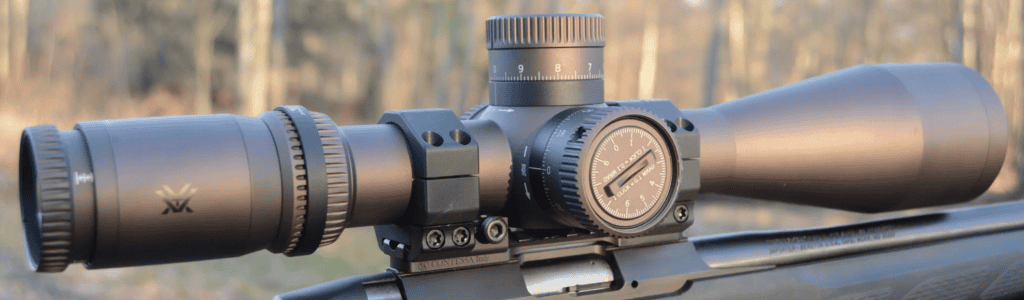
Six to Thirty-Six at the Eyepiece
The Gen III Razor pushes magnification to 36x, up from the Gen II’s 27x ceiling. That’s a 6x zoom ratio, and what makes it remarkable is that Vortex maintained edge-to-edge sharpness across the range. At 6x, the field of view is wide enough for target acquisition and scanning. At 36x, I was reading mirage and spotting bullet holes at 600 yards without pulling out a spotting scope. Most scopes with magnification above 30x start to show meaningful image degradation at the top end. The Razor showed only minimal edge degradation, keeping the image remarkably sharp across the field. It’s the widest magnification range in this tier, and the useful range matches the number on the dial.
APO Glass Earns Every Dollar
The apochromatic lens system in the Gen III controls chromatic aberration in a way that is immediately visible compared to the mid-tier scopes I’d been testing for weeks. The color fringing that shows up on high-contrast edges at 25x through lesser glass just isn’t present here. Light transmission is superb, and Vortex’s coatings produce an image with contrast that makes targets separate from backgrounds almost effortlessly. During an early morning session with low, flat light, the Razor was the scope I wanted behind the rifle. I tested it alongside the ATACR in the same conditions, and the two were close in raw brightness, but the Razor’s color rendition had a warmth to it that I found more natural and easier on my eyes over a long shooting day.
L-Tec+ and the Turret Evolution
Vortex introduced the L-Tec+ zero system with the Gen III, replacing the earlier zeroing process. You lock the turret at your zero with a single angled hex screw, which is simpler than the Gen II’s approach. The turrets are pull-up-to-unlock, non-translating, with a pop-up revolution indicator on the side. Early Gen III production units had reports of turret issues that Vortex addressed quickly, and my test unit (which appeared to be a later production run) showed no signs of the problem. Clicks are crisp and tactile, if not quite at the ATACR’s level. With 36.1 MRAD of total elevation, the Gen III has the most adjustment range in this tier, which complements its magnification for shooters reaching toward and past 1,000 yards. The EBR-7D reticle is a refined version of the 7C from the Viper line, with numbered MRAD holdovers and a cleaner layout that works particularly well at higher magnifications.
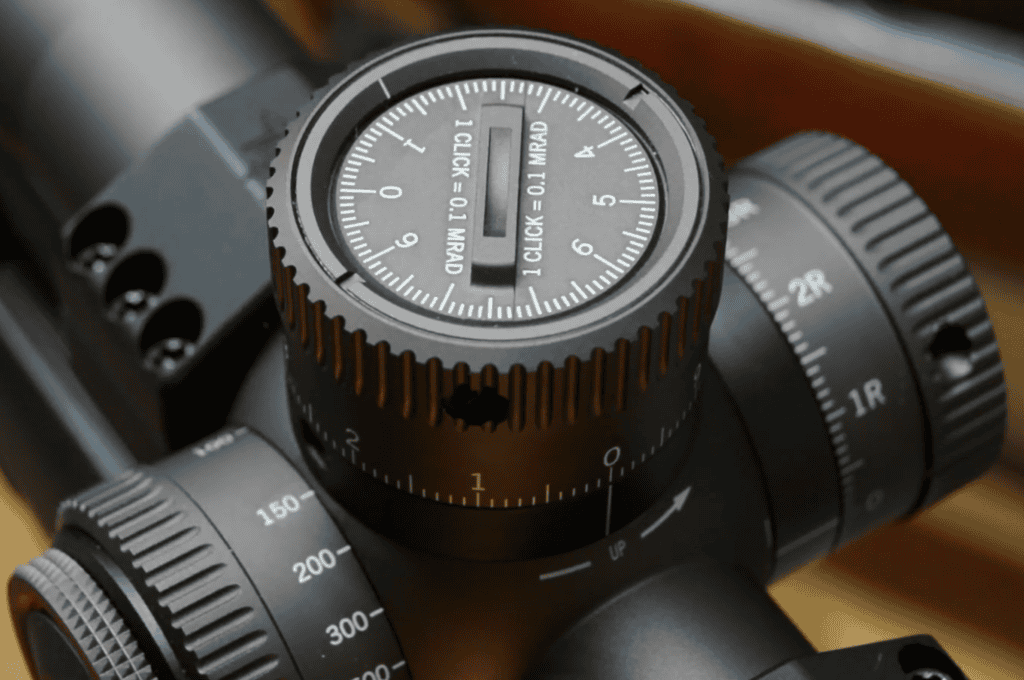
Forty-Five Ounces on the Rail
There is no way around it: the Razor Gen III weighs 45.1 ounces, nearly three pounds sitting on top of your rifle. On the Bergara B-14 HMR, the total package with mount felt nose-heavy even with a proper bipod setup. For bench shooting, positional work on bags, or a dedicated competition rig that lives in a case, the weight is a non-issue. For anything involving carrying the rifle more than a quarter mile, you will feel it. The ATACR at 39.3 ounces is also heavy, but that 5.8-ounce gap between them is perceptible. The Leupold at 30 ounces is in a different conversation entirely. If weight matters to your use case, the Razor asks you to accept a real tradeoff.
The Gen III Delivered What the Gen II Promised
Relative to the Gen II 4.5-27×56, the Gen III gains higher magnification, more elevation travel (36.1 vs 33 MRAD), a lower parallax minimum (10 yards vs 32), and the improved zeroing system. The glass is comparable, which is to say excellent. Vortex clearly designed the Gen III for shooters who wanted more reach, both optically and mechanically, and they delivered without compromising what made the Gen II a PRS favorite. The scope is made in Japan, and the build quality reflects it.
Field Test Data
| Test Parameter | Result |
|---|---|
| Tracking Test (10 MRAD box at 100 yds) | Perfect return through 5 complete cycles; no measurable drift |
| Resolution at 36x (100 yd chart) | Maintained sharp center image with minimal edge degradation; best high-magnification clarity tested |
| Low-Light Performance (dawn, 18x, 500 yds) | Target differentiation approximately 5 minutes before legal light; exceptional |
| Turret Repeatability (15 return-to-zero cycles) | Consistent within 0.1″ at 100 yds across all cycles |
| Parallax Elimination at 800 yds | Smooth and precise; no perceptible parallax error at distance |
Tested with: Bergara B-14 HMR 6.5 Creedmoor | Hornady 140gr ELD Match
Pros and Cons
PROS
|
CONS
|
Performance Ratings
The Razor HD Gen III is the scope I’d put on a dedicated long-range rifle that doesn’t need to go anywhere by foot. For PRS competition, bench precision, or any application where weight isn’t the primary concern, the combination of magnification range, glass quality, and elevation travel is simply the most complete package I tested across all ten finalists.
2. NightForce ATACR 7-35x56mm – Most Precise Turret Action Over $1,000
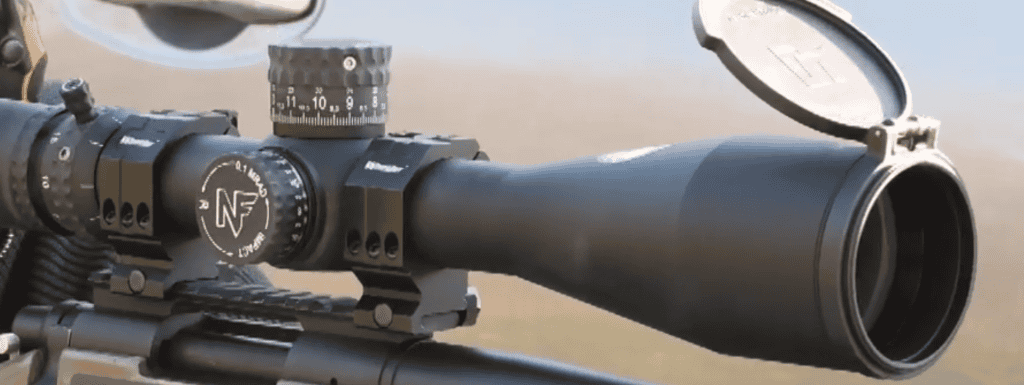
The Turrets Everything Else Gets Compared To
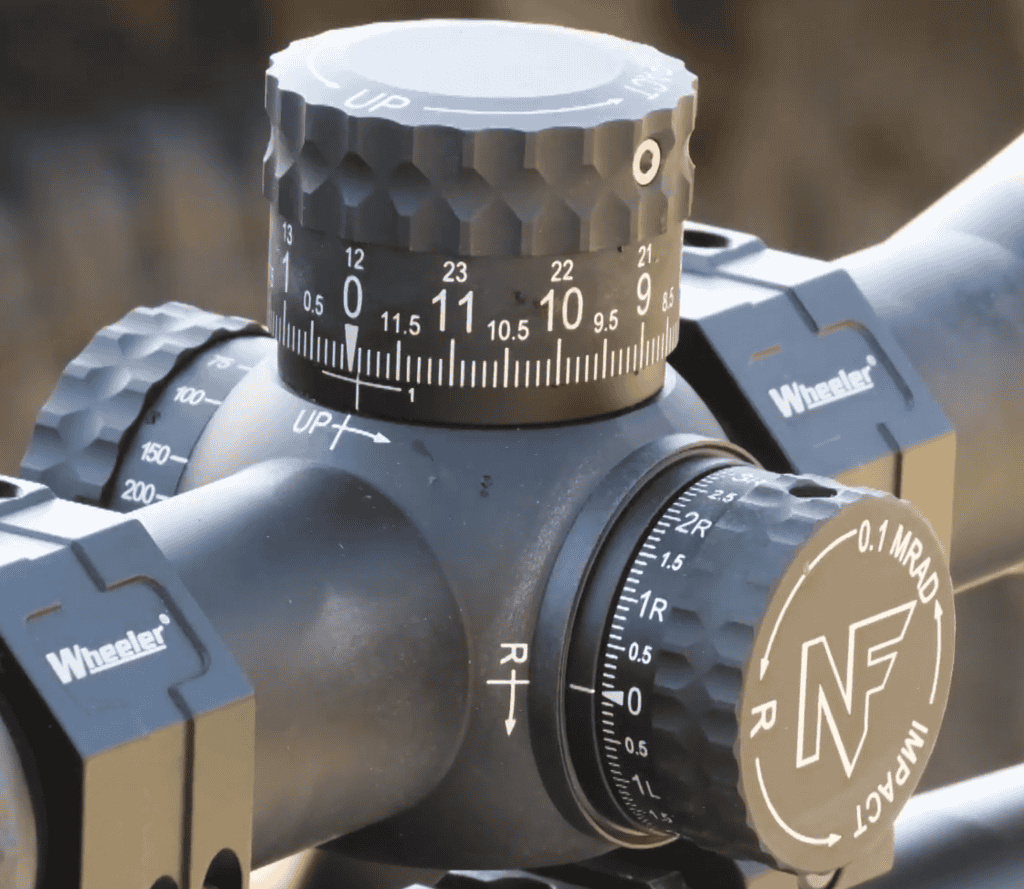
I need to start here, because it’s the defining experience of this scope. Every click on the ATACR’s elevation turret is distinct, positive, and identical to the one before it. There’s no ambiguity about whether you moved one click or two; the tactile and audible feedback leaves no room for miscounting. Across roughly 60 precision rifle matches, I have dialed hundreds of scopes at this point, and the ATACR’s turret feel is the reference I measure others against. The elevation turret doesn’t lock, which is a deliberate NightForce design choice: the resistance is calibrated so that bumps won’t move it, but you also never have to push, pull, or lift anything before dialing. When you’re on the clock in a PRS stage and need to go from a 300-yard target to a 700-yard target in seconds, that matters. The ZeroStop is simple and absolute; you dial back down and it stops at zero.
MIL-XT at Distance
NightForce’s MIL-XT reticle is a grid-style design with 0.2 MRAD hash marks, numbered whole-MRAD intersections, and floating dots below center at each MRAD step. It’s busier than the Razor’s EBR-7D but also more informative. For holding wind corrections while simultaneously holding for elevation, the grid format gives you an intersection to aim at rather than estimating between marks on a tree. At 35x, the subtensions stay readable thanks to the FFP scaling and the reticle’s line thickness, which NightForce clearly optimized for high magnification. The illumination uses NightForce’s Digillum system with five brightness levels in both red and green. I rarely used it during daylight shooting, but the green option worked well during those early morning sessions when the standard black reticle started to disappear against dark targets.
Built for More Than a Season
The ATACR is overbuilt in the way that military equipment tends to be — it wouldn’t look out of place on my list of the best sniper scopes — heavy because nothing was sacrificed for weight savings. At 39.3 ounces and 16 inches, it’s the longest scope I tested and the second heaviest. The 34mm tube is machined from 6061 aluminum, and every surface, every adjustment, every seal feels like it was designed to survive being bounced around in a Pelican case for years. I put the scope through my standard handling tests (none of them gentle), and it held zero without complaint. NightForce’s reputation for durability is not marketing; it’s earned by scopes like this one surviving professional use that would destroy lesser optics.
Where the ATACR Concedes Ground
At 29 MRAD of total elevation, the ATACR has less adjustment range than both the Razor (36.1 MRAD) and the Leupold (35 MIL). For most 6.5 Creedmoor shooting, even out to 1,000 yards and beyond with a canted rail, 29 MRAD is workable. But the margin shrinks compared to the Razor. Field of view is also narrower than the other two scopes at low magnification: 15 feet at 7x versus 20+ feet from both competitors at their respective low ends. That 7x floor, compared to the Razor’s 6x and Leupold’s 5x, narrows the scope’s usefulness for target acquisition at closer ranges. The glass is excellent, with strong contrast and resolution through the ED lens package, but side by side with the Razor at 25x on the same target, the Vortex had a slight edge in color fidelity and an easier-to-look-through image. The gap is small. Both scopes produce images that are a generation beyond anything in the mid-tier.
The ATACR is also the most expensive scope in this guide, and at premium prices, every feature gap gets magnified. If turret feel and mechanical reliability are your non-negotiable priorities (and for competition dialing, they should be high on the list), the ATACR is the answer. For the most complete all-around package, the Razor’s combination of magnification range, elevation travel, and glass quality edges ahead.
Field Test Data
| Test Parameter | Result |
|---|---|
| Tracking Test (10 MRAD box at 100 yds) | Flawless return through 5 cycles; clicks measured within 0.05 MRAD of stated value |
| Turret Repeatability (20 return-to-zero cycles) | Zero shift unmeasurable at 100 yds; the best mechanical result in this test |
| Resolution at 35x | Excellent center clarity; edge sharpness maintained to ~90% of field diameter |
| Recoil Test (50 rounds, .300 WM on secondary rifle) | Zero maintained; no shift detected on return to primary rifle |
| Parallax Elimination at 800 yds | Precise; smooth knob with less resistance than the Bushnell in mid-tier |
Tested with: Bergara B-14 HMR 6.5 Creedmoor | Hornady 140gr ELD Match
Pros and Cons
PROS
|
CONS
|
Performance Ratings
If I were buying one scope for PRS competition and needed to trust that every click would be exactly where it should be for the next five years, I would buy the ATACR. The turrets are that good. For a broader long-range application where magnification range and elevation travel carry more weight, the Razor takes the overall position, but the gap between these two is narrow and comes down to what you prioritize.
3. Leupold Mark 5HD 5-25×56 – Best Weight-to-Performance Over $1,000
Thirty Ounces Should Not Be Possible
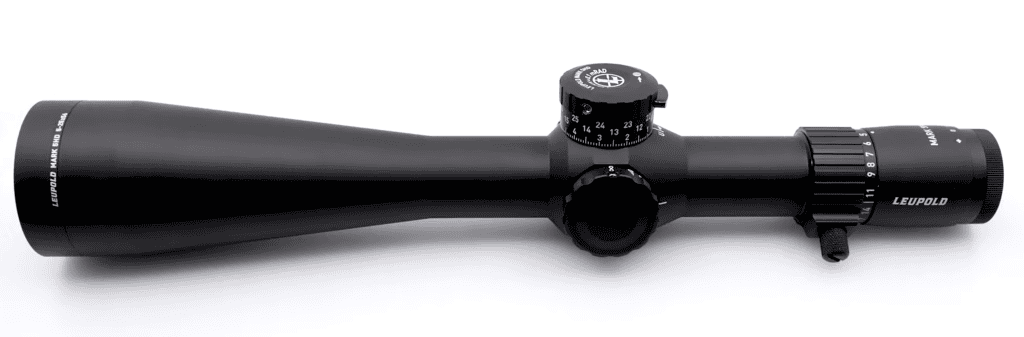
Every time I picked up the Mark 5HD after handling the Razor or the ATACR, I had the same reaction. The Razor weighs 45.1 ounces. The ATACR weighs 39.3. The Mark 5HD weighs 30. That is 15 ounces lighter than the Razor, which is nearly a full pound. Mounted on the Bergara, the difference transformed how the rifle balanced, shouldered, and moved between positions. This is a full-featured 5-25x56mm precision scope with 35 MIL of elevation travel, premium glass with Leupold’s Twilight Max HD coatings, and M5C3 turrets, and it weighs less than the Bushnell Match Pro ED from the mid-tier. Leupold achieved this through engineering, not compromise; the 35mm tube uses a lightweight alloy chassis that disperses recoil energy effectively despite the reduced mass.
M5C3 Turrets and the 35mm Tube Tradeoff
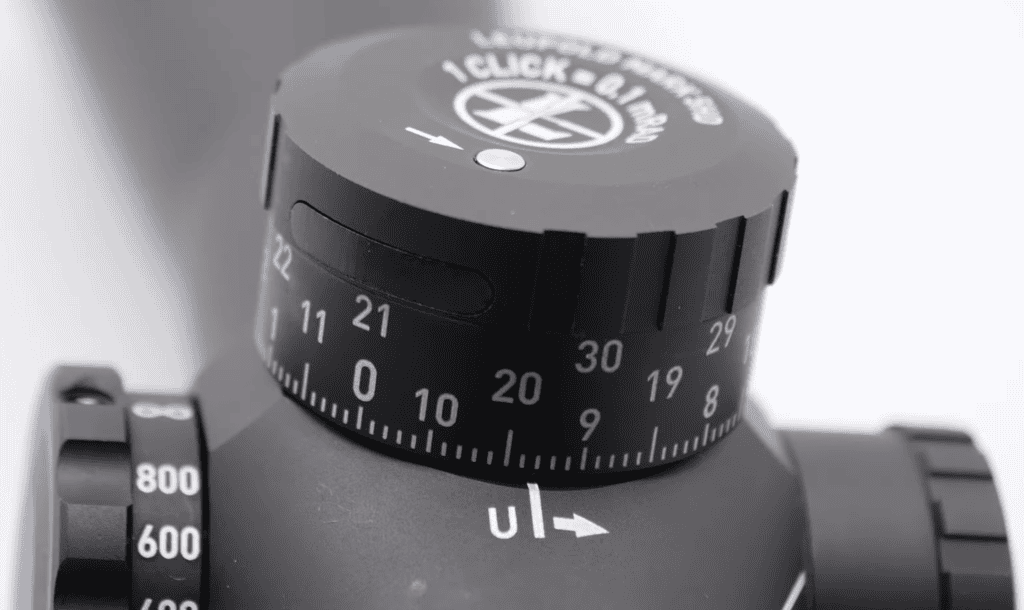
The M5C3 turret system packs a zero stop, a zero lock, and visual revolution indicators into a compact turret housing. Clicks are tactile and audible, 0.1 MIL each, with a crispness that sits between the ATACR’s exceptional standard and the mid-tier scopes. The zero lock requires depressing a button above the zero mark before dialing, which prevents the accidental adjustment issue that open turrets can create. Three revolutions of elevation give you 35 MIL of total travel, which is generous and only slightly behind the Razor’s 36.1 MRAD. The 35mm tube is what enables both the adjustment range and the weight savings, but it creates a real-world annoyance: ring options are limited. Leupold makes their own in several heights, and a few aftermarket manufacturers offer 35mm, but you won’t find the variety available for 30mm or 34mm scopes. If you already have a mount system you prefer, check 35mm compatibility before buying.
No Illumination on This Model
This specific Mark 5HD model, the PR2-MIL FFP, does not have an illuminated reticle. Leupold offers illuminated versions of the 5-25×56 with different reticles, but the PR2-MIL in this configuration relies on the black reticle alone. For daytime shooting at any distance, the PR2-MIL’s fine center dot and clean hash marks are easy to see against most backgrounds. In low light, the reticle starts to disappear against dark targets earlier than it would with illumination. Leupold’s Twilight Max HD coatings partially compensate by extending usable light; I consistently gained several minutes of shooting time compared to mid-tier scopes at dawn. But when the Razor’s illuminated EBR-7D and the ATACR’s Digillum system both kept their reticles visible in conditions where the Mark 5HD’s reticle was becoming hard to see, the missing illumination felt like a real gap. It’s a solvable problem (buy the illuminated model, which costs more), but in this specific configuration, it’s a limitation.
Parallax Starts at Fifty Yards
The parallax adjustment on the Mark 5HD ranges from 50 yards to infinity. Both the Razor (10 yards) and the ATACR (11 yards) focus down much closer. For dedicated long-range shooting, where you’re rarely engaging targets inside 100 yards, the 50-yard minimum is fine. But if you also use the scope on a .22 trainer or for closer work, the limitation matters. The PR2-MIL reticle deserves specific attention: it was developed with input from competitive PRS shooters and uses 0.25 MIL hash marks instead of the more common 0.2 MIL. The quarter-MIL spacing is slightly less granular but more intuitive for shooters who think in quarter increments. The reticle has an open 12 o’clock design (no stadia line above the center dot), which keeps the field above your aiming point clear for spotting. Below center, you get approximately 6 MIL of holdover at 25x and more at lower magnifications. It’s a purposeful design, less cluttered than the MIL-XT but with fewer hold references available at the highest magnification.
The Mark 5HD fills a gap that neither the Razor nor the ATACR addresses: premium optics and mechanical capability at a weight that doesn’t punish you for carrying the rifle. For hunters who push shots past 500 yards in mountain terrain, or PRS shooters who value lighter systems, the Mark 5HD does something the other two simply cannot.
Field Test Data
| Test Parameter | Result |
|---|---|
| Tracking Test (10 MIL box at 100 yds) | Returned within 0.1 MIL consistently across 4 cycles |
| Low-Light Usable Window (dawn, no illumination) | Twilight Max HD coatings extended shooting by ~3-4 minutes vs mid-tier glass; reticle visibility limited |
| Weight on Rifle (Bergara B-14 HMR with rings) | Total system notably lighter; improved balance and handling from all positions |
| Resolution at 25x | Very good center sharpness; slight edge softening at extreme periphery; behind Razor at equivalent magnification |
Tested with: Bergara B-14 HMR 6.5 Creedmoor | Hornady 140gr ELD Match
Pros and Cons
PROS
|
CONS
|
Performance Ratings
Each rating reflects performance relative to premium expectations; my full methodology details how tier context affects scoring.
The Mark 5HD occupied a niche I didn’t expect to find this compelling. For a long-range hunter who needs premium glass and mechanical precision without the 2.5-pound penalty, or a PRS competitor who values system weight, the Mark 5HD delivers. The lack of illumination on this specific model is the most significant limitation, and it’s one Leupold lets you solve by choosing a different variant at additional cost.
Ten Scopes, 700 Rounds, and a Bergara Bolted to a Bench at 800 Yards
Every scope in this guide was mounted on the same rifle: a Bergara B-14 HMR in 6.5 Creedmoor, fed exclusively with Hornady 140gr ELD Match. One rifle, one load, ten scopes — for all mechanical and tracking comparisons. That was the whole point. Swapping optics on the same platform strips away the variables that let mediocre glass hide behind a good rifle or a forgiving cartridge.
Testing ran from late February through mid-March 2026 at a private facility outside Junction, Texas, where bermed positions face steel from 100 out to 1,000 yards across flat, open rangeland. Most sessions fell on clear afternoons with mild wind, though I deliberately scheduled a handful of early morning starts to evaluate low-light performance when dawn was still creeping over the hills. Temperatures ranged from the low 40s at first light to the mid-70s by afternoon. Across all ten scopes I put roughly 700 rounds downrange, working each optic through 60 to 80 rounds depending on how much follow-up a particular test demanded.
The testing sequence was the same for every scope. I’d confirm mechanical zero at 100, run a tall target test at that distance to verify click values, then shoot a four-corner box test to check tracking and return to zero. Only after a scope cleared that baseline work did I move it to 500, 600, 700, and 800 yards. Three scopes made the original pool but did not survive into the final ten. A Bushnell Nitro 6-24×50 brought the right general feature set but not the turret refinement or dialing confidence I wanted for repeated long-range work. A Burris Veracity 3-15×44 made a stronger hunting case than a precision-rifle case once elevation range and reticle utility started to matter past 600 yards. And a Leupold VX-3HD 4.5-14×50, while excellent in weight and low-light glass, was simply the wrong tool for a guide centered on repeated dialing, exposed turrets, and long-range holds. All three are good scopes in the right role, but this guide was built to find optics that stay convincing when distance starts exposing priorities.
I also borrowed a Tikka T3x Lite in .300 Win Mag to run a recoil durability check on the NightForce ATACR, confirming zero hold after 50 rounds of magnum punishment. The full breakdown of my testing protocol and scoring criteria is available in my scope testing and review methodology.
Where Long-Range Scope Buyers Lose Money Before Firing a Shot
Buying Elevation Travel Without Checking the Math
A scope advertising 25 MIL of total elevation sounds generous until you realize that’s split across both directions from mechanical center. Your usable come-up depends on where mechanical center falls relative to your zero, which depends on your mount and base setup. Shooters who buy based on the total number alone often discover they’re out of adjustment at 700 yards because half that travel sits below their 100-yard zero where it does nothing useful. A 20 MOA base matters here as much as the total elevation figure — it shifts your usable upward travel by roughly 6 MIL, giving you substantially more room above your zero. A zero stop is a separate feature entirely: it marks your established zero and prevents dialing below it, which is useful for returning quickly after dialing up for a shot, but it adds no upward adjustment range.
Treating FFP as Optional for Distance Work
Second focal plane reticles are calibrated at one magnification. At every other setting, the subtensions are wrong. For a hunter who dials and shoots at max power, SFP works fine. But long-range shooting often demands fast wind holds and range estimation at variable magnification, and an SFP reticle’s holdover marks become unreliable the moment you adjust zoom. FFP costs more at every price tier. It’s still the cheaper mistake to avoid.
Ignoring Parallax Precision Past 500 Yards
Most side-focus parallax knobs are marked in approximate yardage, and at close to moderate range a rough setting barely matters. Past 500 yards, even a small parallax error shifts your apparent point of aim enough to miss steel. The real issue isn’t whether a scope has side parallax (they all do at this level) but whether the adjustment is fine enough to dial in precisely at distance. A stiff or vague parallax knob, like the one I fought on the Bushnell, costs time and potentially rounds at the distances where this guide’s scopes are meant to operate.
What Long-Range Scope Buyers Actually Want to Know
Do I need a 34mm tube for long-range shooting?
Not necessarily. A 34mm tube allows more internal adjustment range, which helps at extreme distance, but a 30mm tube with a 20 MOA rail can get most 6.5 Creedmoor shooters to 1,000 yards. The Viper PST Gen II has the elevation math to get there with a 20 MOA base. Buy the 34mm for what it enables mechanically, not because marketing says bigger is better.
MIL or MOA for long-range precision?
Either system works. MIL dominates competitive precision rifle because the community standardized around it, which means more reticle options, more shared data, and easier communication with spotters. MOA gives finer per-click adjustments (0.25 MOA vs 0.1 MIL). Pick whichever your shooting circle uses, and don’t mix systems between reticle and turret.
How much magnification do I actually need for 800 yards?
Less than you think. I made consistent hits on 800-yard steel at 18x during this test. Higher magnification helps read mirage and spot trace, but past 24x you’re often fighting atmospheric distortion more than gaining useful detail. A scope that’s sharp at 20x beats one that’s soft at 30x every time.
Does illumination matter for long-range shooting?
For low-light target acquisition, yes. For daytime precision at distance, rarely. The Leupold Mark 5HD lacks illumination on the model I tested and it didn’t affect performance on steel. Illumination earns its keep during dawn and dusk hunting sessions, not on a bright afternoon at the range.
Matching the Right Scope to How You Actually Shoot at Distance
If you’re shooting PRS or precision rifle matches, the Razor HD Gen III is the most complete competition optic I tested: 6-36x covers everything from close movers to 1,000-yard stages, the glass resolves mirage at high power, and 36.1 MIL of elevation handles any stage design I’ve encountered. The ATACR’s turrets are better, and serious competitors who prioritize mechanical feel over magnification range should look there instead. If budget forces a choice from the mid tier, the Bushnell Match Pro ED’s 30 MRAD of travel and locking turrets get you surprisingly close for a fraction of the cost.
For Western big-game hunting where shots stretch past 400 yards, weight changes the equation. The Leupold Mark 5HD at 30 ounces is the obvious premium pick for a rifle you’re carrying miles into the backcountry. It gives up illumination and top-end magnification, but 25x is enough for any ethical hunting shot I can imagine. Tighter budgets point to the Vortex Diamondback Tactical if absolute weight savings matter, or the Viper PST Gen II if optical quality at dawn and dusk matters more than saving a few ounces.
Someone entering long-range shooting for the first time should start with the Arken SH-4J GEN2 and spend the savings on ammunition and range time. Its 32 MIL of elevation travel and Japanese ED glass give a new distance shooter more capability than they’ll outgrow quickly, and the optical quality is close enough to mid-tier scopes that glass won’t be the limiting factor while fundamentals are still developing.
Disclosure
Mounting and remounting ten scopes on one rifle over three weeks consumed more Loctite and patience than any single-scope review. I purchased every optic through standard retail; links in this guide are affiliate links, meaning I earn a small commission if you buy through them. That doesn’t change the price you pay or the way I scored these scopes across the full testing process.
What 700 Rounds Actually Taught Me
After 700 rounds and ten scopes cycled through the same Bergara, a few things became clear that the spec sheets never showed. The Vortex Razor HD Gen III earned its place at the top of the premium tier not because of one standout dimension but because it was rarely weak anywhere: sharp glass at 36x, enough elevation to handle any stage or shot, and turrets that tracked cleanly even if they lacked the ATACR’s mechanical perfection. The NightForce ATACR delivered the single best mechanical result across all ten scopes, and any shooter who prioritizes turret precision above all else should buy it without hesitation. In the mid tier, the Bushnell Match Pro ED packed a feature set that had no business existing at its price point, and the Arken SH-4J GEN2 did the same thing under $500.
The honest answer about where the value sweet spot falls for most long-range shooters is the $500 to $1,000 range. That tier delivered the sharpest jump in genuine capability per dollar. The Bushnell and Viper PST Gen II both proved that a serious long-range scope doesn’t require a serious long-range budget, and the tracking reliability at that price tier surprised me more than anything in the premium bracket. Below $500, the Arken bends the curve impressively, but you’re still making compromises in turret feel and edge clarity that the mid tier resolves. Above $1,000, you’re paying for the last 10-15% of optical and mechanical refinement, which matters enormously in competition but less for someone shooting steel on weekends.
Mike Fellon is the founder of ScopesReviews and an optics specialist with 15+ years in precision shooting. A former Bass Pro Shops firearms advisor and NRA-certified instructor, he’s hands-tested 200+ rifle scopes across hunting and competition. Based in Dallas, Texas.
Great article
Thank you.
Great and informative article, thank you.
Excellent article. One excellent line of scopes and not covered in your article is by Tract. Their 34mm tube diameter HD Torric Zoom to 30 power is certainly worthy of consideration.
A well thought out article. Too many articles are unrealistic. This was very well organized and executed. Thank you for the massive effort this took.
Thank you! Yes, this article took a lot of time to write and structure.
Great,informative article,wished msrp’s would have been listed,but thanks.
I will consider adding it, thank you.
Thanks for looking & reviewing these scopes. I learned a great deal after reading this piece.
Amazing breakdown of a lot of information.
good information left Burris out ? been building long range guns since 1970 for folks all over country personally use Leopold but tried all the rest all have Excellent point but did not see BURRIS also use them excellent quality all up and Down the price point
Hello and thank you for your comment.
There are 2 Burris scopes on the list. I agree with you they are of excellent quality.
A real eye opener Thank you
Glad to be of service.
I will be starting my 68 hunting season here in pa come fall and you did an excellent job on this article. Get the best scope you can afford and learn to use it because there is no better teacher than practice . Shoot often
You provide a good overview but have included an error or typo in the explanation of Mils. A mil is 1 yard (36″) at 1000 yards distance (or would be 1m at 1000m distance). At 100 yds. one mil is 3.6 inches, not 0.36 in inches. Intervals in mil-dot reticles subtend 3.6″ at 100 yds. You may find some scopes with turret adjustments of 1/10 mil per click. Those intervals would be 0.36″, vs. the 1/4″ at 100 yds. which is most common on scopes sold in North America.
I prefer metres for measuring distance along the ground, but still use inches for drop or wind compensation. At 100m, one mil is very close to 4″ (actually 10 cm). This is an easy approximation which is extremely close to the correct value.
Thank you for your comment, it will be fixed.
I notice Sig scopes are not on the list. Any reason for this other than you didn’t test them? I’m seriously considering the Sig Tango4 6-24×50 with their MOA DEV-L reticle.
Your thoughts?
I didn’t test them as you said, but I’ve heard good things.