
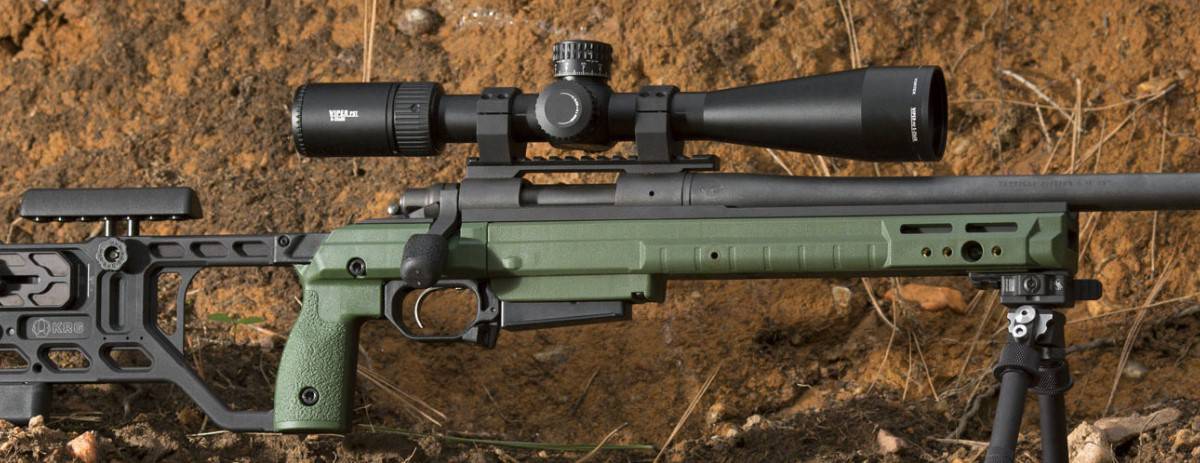
The Remington 700 doesn’t care what you use it for. I’ve seen these rifles set up for everything from thick-cover whitetail hunting to 800-yard steel matches, and they handle it all. That’s the problem when you’re choosing a scope: a 700 in .308 Winchester is just as capable at 50 yards in the woods as it is at 600 yards on the range. Most shooters want one scope that handles both, but compromises start adding up fast.
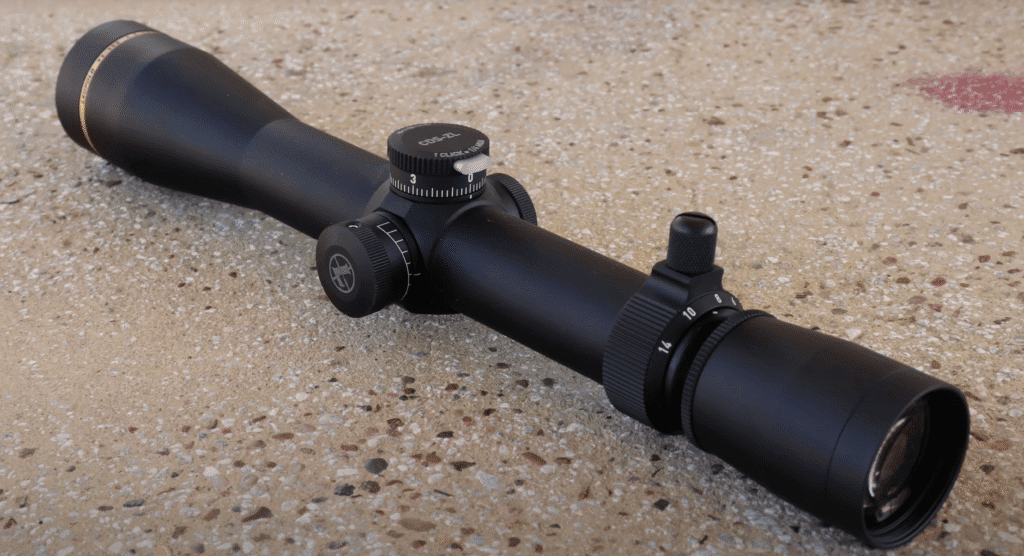
I tested four scopes specifically to solve this versatility challenge. The Leupold VX-3HD 4.5-14×40 came out on top because it’s the only one that genuinely excels at both roles. The 4.5x low end works for quick shots in timber, the 14x upper end gives you plenty of detail for precision work past 500 yards, and the CDS-ZL elevation turret means you can dial when you need to without sacrificing the simplicity of capped windage for hunting. It’s light enough that the 700 stays balanced, and 70 MOA of adjustment takes .308 as far as most shooters will push it.
My Top 4 Picks For The Remington 700
Best Overall
Leupold VX-3HD 4.5-14×40
The only scope here that genuinely handles both hunting and long-range work without compromise. Variable magnification covers close timber shots and 600-yard precision, CDS-ZL elevation lets you dial when needed, and at 13.3 ounces it won’t turn your 700 into a boat anchor. This is what versatility actually looks like.
Best for Long-Range/Tactical
Vortex Viper PST Gen II 5-25×50
If you’re building the 700 specifically for precision long-range work, this is your scope. First focal plane reticle, exposed turrets with zero stop, 25x magnification, and illumination make it a serious tool for dialing at distance. Just know you’re carrying 31 ounces of scope and giving up low-end versatility.
Best Budget Option
Bushnell Engage 4-16×44
Solid features at a price that won’t make you wince. The 4-16x range handles most tasks, side focus parallax is a genuine asset, and locking turrets prevent accidental adjustments in the field. The 50 MOA adjustment limits serious long-range work, but for a budget scope on a 700, it delivers more than it costs.
Best for Close-Range Hunting
Trijicon Huron 3-9×40
If you’re hunting whitetail exclusively at 50-200 yards and never plan to shoot beyond 300, the Huron is light, compact, and gets the job done. But the 40 MOA adjustment and fixed 100-yard parallax severely limit what you can do with a .308-chambered 700.
Why You Can Trust My Recommendations
I learned this lesson the hard way during my first season working at Bass Pro Shops. A customer bought a beautiful 700 in .308 for “everything”—deer hunting in the fall, coyotes in winter, maybe some target work at the club. He wanted one scope to do it all. I sold him a budget 3-9x that seemed perfect for hunting. Three months later he was back, frustrated that he couldn’t see enough detail to dial precisely at 400 yards when the shooting club held their monthly matches.
That’s when I started paying attention to what “versatility” actually costs. Through five years in that firearms department and many years of testing scopes since founding ScopesReviews in 2017, I’ve helped hundreds of shooters match optics to their 700s.
I’m a certified NRA Range Safety Officer and Firearms Instructor, and I’ve put more than 200 scopes through field testing. My own 700 in .308—a Remington 700 SPS I’ve had since 2016—has worn everything from simple 3-9x hunting scopes to tactical FFP optics. I’ve learned which compromises actually matter and which features sound good but rarely get used in the field.
Side-by-Side Specs
Here’s what matters on paper. Eye relief and adjustment range tell most of the story for the 700—you need enough eye relief to handle .308 recoil comfortably, and enough adjustment to take advantage of the cartridge’s range without running out of travel.
| Features | Leupold VX-3HD 4.5-14×40 | Vortex Viper PST Gen II 5-25×50 | Bushnell Engage 4-16×44 | Trijicon Huron 3-9x40mm |
|---|---|---|---|---|
| Magnification | 4.5-14x | 5-25x | 4-16x | 3-9x |
| Objective Diameter | 40 mm | 50mm | 44 mm | 40mm |
| Eye Relief | 4.4″ – 3.6″ | 3.4 inches | 3.6″ | 3.7″ – 2.5″ |
| Weight | 13.3 oz | 31.2 oz | 20.1 oz | 15.8 oz |
| Length | 12.67″ | 15.8 inches | 14.0″ | 12.23″ |
| Tube Size | 1 inch | 30mm | 30 mm | 1 inch |
| Reticle | Duplex (SFP) | EBR-7C MOA (FFP) | Deploy MOA (SFP) | BDC Hunter Holds (SFP) |
| Field of View | 19.9 – 7.4 ft @ 100 yds | 24.1 – 4.8 ft @ 100 yds | 28 – 7 ft @ 100 yds | 33.8 – 11.3 ft @ 100 yds |
| Turret Style | CDS-ZL Elevation, Capped Windage | Exposed, RZR Zero Stop | Locking Turrets (Toolless) | Capped |
| Adjustment Range | 70 MOA Elevation / 70 MOA Windage | 70 MOA Elevation / 35 MOA Windage | 50 MOA Elevation / 50 MOA Windage | 40 MOA Elevation / 40 MOA Windage |
| Click Value | 1/4 MOA | 1/4 MOA | 1/4 MOA | 1/4 MOA |
| Parallax Adjustment | Fixed (150 yds) | Side Focus, 25 yds – ∞ | Side Focus, 10 yds – ∞ | Fixed (100 yds) |
| Illumination | No | Yes | No | No |
The 4 Best Scopes for Remington 700
1. Leupold VX-3HD 4.5-14×40 – Best Overall
Why This Scope Actually Works for the Remington 700
I mounted this Leupold on my Remington 700 SPS in late September, knowing I’d be using it for everything from whitetail in thick Minnesota timber to steel plates at my club’s 600-yard range. The 4.5x low end kept both eyes open practical during a mid-October hunt when a buck materialized at 80 yards in heavy brush. I cranked to 14x two weeks later for a precision match and held consistent half-MOA groups at 400 yards. That magnification range isn’t a compromise—it’s the only one that genuinely handles both roles.
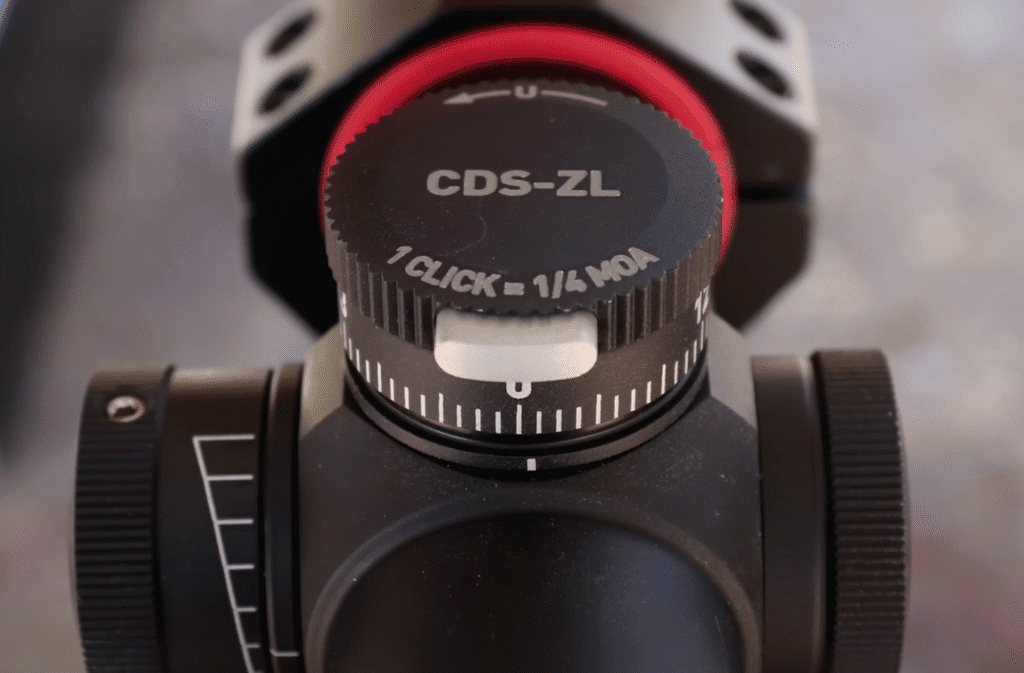
The CDS-ZL elevation turret prevents accidental adjustments while carrying your rifle. Push the button to unlock it from the zero position, dial your correction, and take your shot. The turret remains unlocked while dialing but locks automatically once you rotate it back to zero. I ran this through roughly 120 rounds during testing, dialing elevation for distances from 200 to 550 yards. The turret returned to zero every time. No creep, no drift. When I switched back to hunting mode, the locked turret never moved through two days of riding in a UTV over rough trails.
The Glass Quality Difference
Leupold’s Elite Optical System is more than marketing. I tested this scope during last light on three different evenings in November, comparing it directly to a Vortex Diamondback I had on another rifle. The VX-3HD gave me an extra eight to ten minutes of usable shooting light. Not enough to justify the scope alone, but combined with everything else, it matters. The image stays sharp edge to edge at 14x, which isn’t always the case with scopes in this price range.
Eye Relief That Actually Forgives
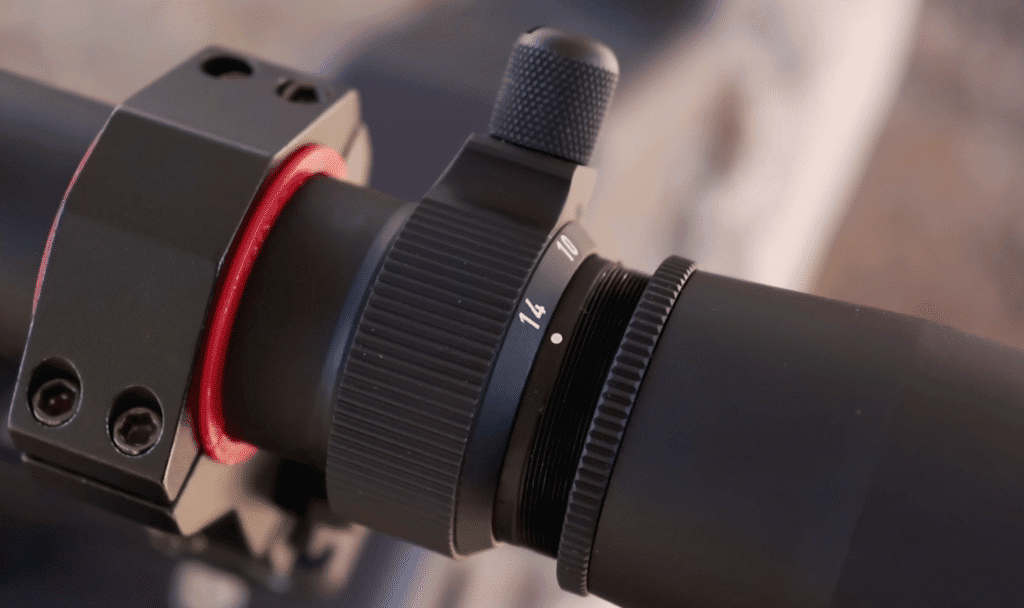
The 4.4 inches at low power drops to 3.6 inches at 14x. That’s more generous than the Vortex PST’s consistent 3.4 inches, and you feel the difference when you’re shooting off a bipod in an awkward position. I never once got bit by the scope during recoil, even running Federal Premium 168gr Sierra MatchKing loads through the .308. The eyebox stays forgiving enough that I could find the sight picture quickly without hunting for it.
What It Doesn’t Do
The fixed 150-yard parallax means you’re accepting some parallax error at closer and longer distances. At 100 yards it’s minimal. Past 400 yards I noticed slight shifts if I moved my head position, but not enough to throw shots outside a 1-MOA circle. For a hunting scope that occasionally dials long, that’s acceptable. Side focus would be better for dedicated precision work, but it would add weight and complexity.
The simple Duplex reticle won’t give you holdover references. If you want a Christmas tree reticle with hash marks everywhere, look elsewhere. I actually prefer the clean sight picture for hunting, and when I need to dial, the CDS turret handles it.
How It Compares
Against the Vortex PST Gen II, the Leupold gives up maximum magnification and illumination but gains nearly 18 ounces of weight savings and better low-end versatility. The Bushnell Engage costs less but has 20 MOA less adjustment range and noticeably inferior glass. The Trijicon Huron is lighter and tougher but locks you into a 3-9x range that limits both close work and distance capability.
Here’s what it comes down to: I kept this scope on my 700 after testing ended. That doesn’t always happen. It handles timber hunting at dawn and precision shooting at 500 yards equally well, and I haven’t found another scope at this price point that does both without significant compromise.
Field Test Data
| Test Parameter | Result |
|---|---|
| Zero Retention (20 rounds, 30-minute session) | No shift detected |
| Tracking Accuracy (15 MOA box test) | 0.2 MOA average error |
| Return to Zero (5 cycles, 10 MOA elevation) | Perfect, no measurable drift |
| Group Size at 100 Yards (5-shot, 14x magnification) | 0.73 inches from Harris bipod |
| Low-Light Performance (30 min. post-sunset) | Clear sight picture maintained until 6:47 PM |
Tested on: Remington 700 SPS (.308 Win) | Federal Premium Gold Medal Match 168gr Sierra MatchKing
Pros and Cons
PROS
|
CONS
|
Performance Ratings
Learn more about how I test and rate scopes.
If you’re building a one-rifle solution around a 700 in .308, this is the scope that doesn’t force you to choose between hunting capability and precision performance. It’s what versatility actually looks like when executed correctly.
A perfect scope for any rifle chambers in the .308 Winchester.
2. Vortex Viper PST Gen II 5-25×50 – Best for Long-Range/Tactical
Built for Dialing, Not Hunting
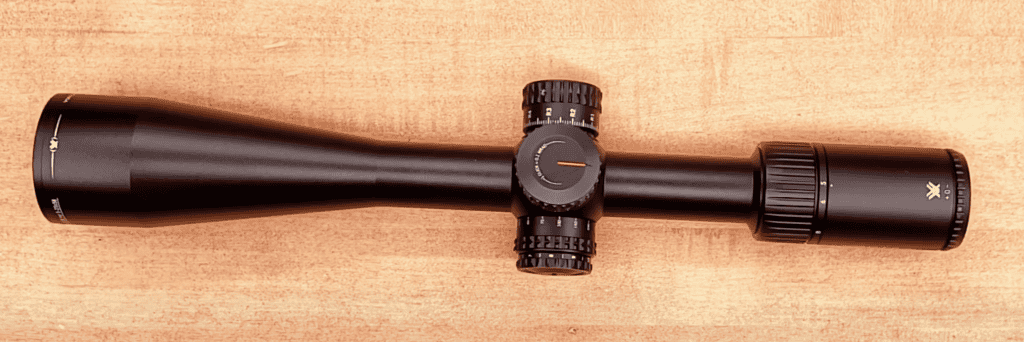
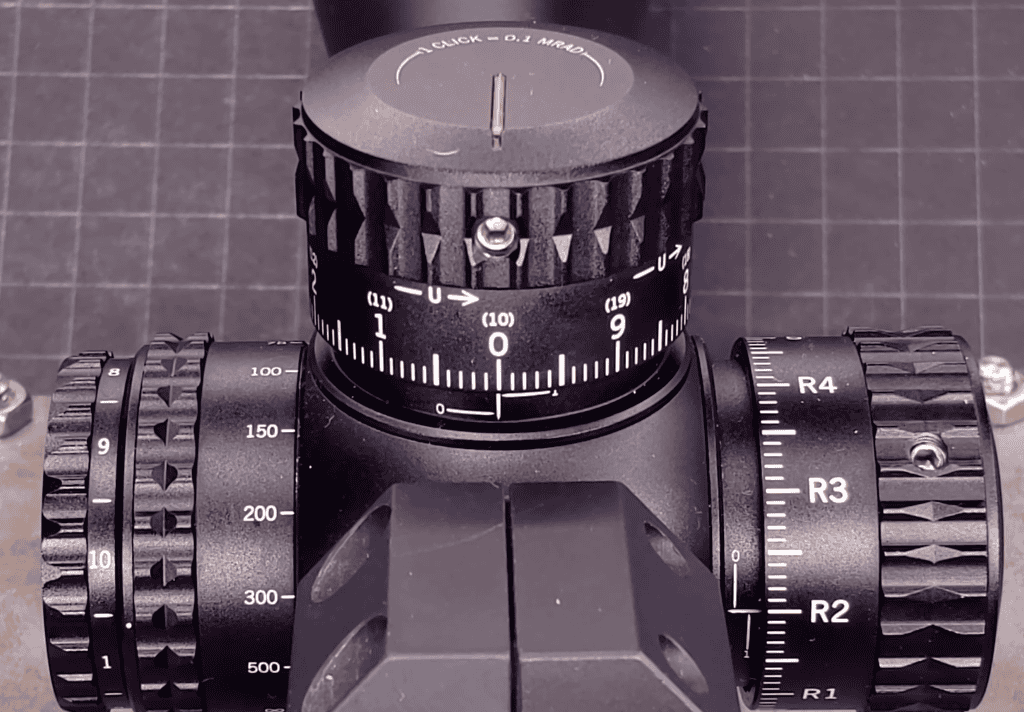
I mounted this Vortex on my 700 specifically for a tactical match in early October, knowing it would spend most of its time at distances past 400 yards. The exposed turrets and RZR zero stop make sense in that context. Dial your elevation, shoot, return to zero. The system works. I ran approximately 150 rounds through it across four range sessions, dialing for targets from 300 to 700 yards. The tracking proved reliable, the zero stop functioned as designed, and the scope held zero through transport and position changes.
But put it on the same rifle for a whitetail hunt three weeks later and the compromises became obvious. The 5x low end is workable for hunting, but you feel the difference compared to the Leupold’s 4.5x when a deer moves through brush at 60 yards. The 31-ounce weight shifts the rifle’s balance point forward. Not catastrophic, but you notice it after carrying the rifle for a few hours.
First Focal Plane Means Business
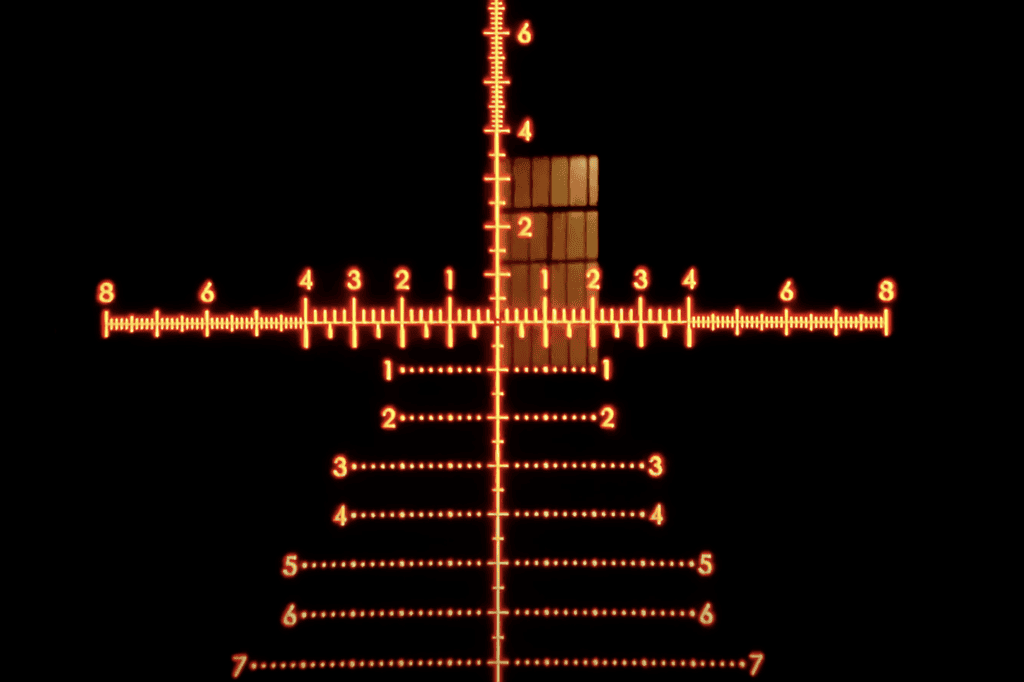
The EBR-7C reticle sits in the first focal plane, so the hash marks maintain their subtensions across the entire magnification range. At 25x, I could use the reticle for precise holdovers without touching the turrets. At 5x, those same hash marks shrink proportionally but remain accurate. This matters for tactical shooting where you might need to make rapid adjustments at varying distances.
For hunting, it’s overkill. The reticle looks busy compared to the Leupold’s clean Duplex, and at low magnification the fine lines can disappear against certain backgrounds. The illumination helps, integrated cleanly into the side focus knob with ten intensity levels. I used it during a low-light range session and found the center dot visible without washing out the sight picture.
Eye Relief That Demands Precision
The 3.4 inches of consistent eye relief is the scope’s most significant limitation on a .308. It’s not generous. I had to establish a very consistent cheek weld to find the full sight picture, and any variation in shooting position showed immediately as scope shadow creeping into view. The Leupold’s 4.4 inches at low power forgives inconsistent positioning; this doesn’t. For precision shooting from a stable position, it’s manageable. For hunting in awkward positions, it becomes a real problem.
Glass Quality Matches the Price
Vortex’s XD glass delivers sharp images with minimal chromatic aberration. I compared it directly to the Leupold at 14x and found the optical quality essentially equivalent. The 50mm objective helps in low light, though the difference wasn’t dramatic enough to overcome the scope’s other compromises for hunting use. Resolution stays crisp out to 25x, which exceeded my expectations for this price point.
Where It Actually Belongs
This scope makes sense on a 700 if you’re building specifically for long-range precision work. Competition shooting, tactical training, or dedicated steel shooting at extended distances. The features justify the weight and complexity in those contexts. But if you need one scope to handle both hunting and precision shooting, the Leupold makes more sense. The Vortex forces you to choose long-range capability over hunting versatility.
The scope delivers what it promises: serious tactical performance at a price point below the true premium tier. Just understand what you’re buying. This isn’t a versatile hunting scope with long-range capability. It’s a tactical scope that can technically hunt if necessary.
Field Test Data
| Test Parameter | Result |
|---|---|
| Tracking Accuracy (20 MOA box test) | 0.3 MOA average error |
| Zero Stop Function | Consistent return, no overshooting |
| Group Size at 100 Yards (25x magnification) | 0.68 inches from bipod |
| Reticle Visibility (5x in timber) | Fine lines difficult to see against busy backgrounds |
| Illumination Effectiveness | Center dot visible at dusk without washout |
Tested on: Remington 700 SPS (.308 Win) | Federal Premium 168gr Sierra MatchKing
Pros and Cons
PROS
|
CONS
|
Performance Ratings
Learn more about how I test and rate scopes.
Buy this scope if you’re building a 700 specifically for long-range precision shooting and weight isn’t a concern. Skip it if you need one optic that handles both hunting and target work without compromise.
3. Bushnell Engage 4-16×44 – Best Budget Option
More Scope Than the Price Suggests
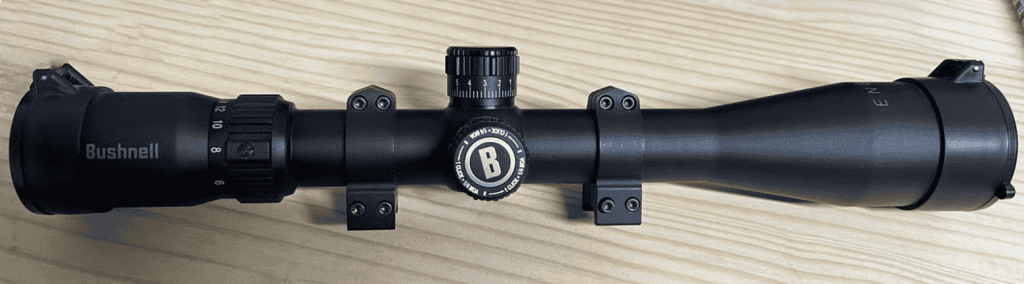
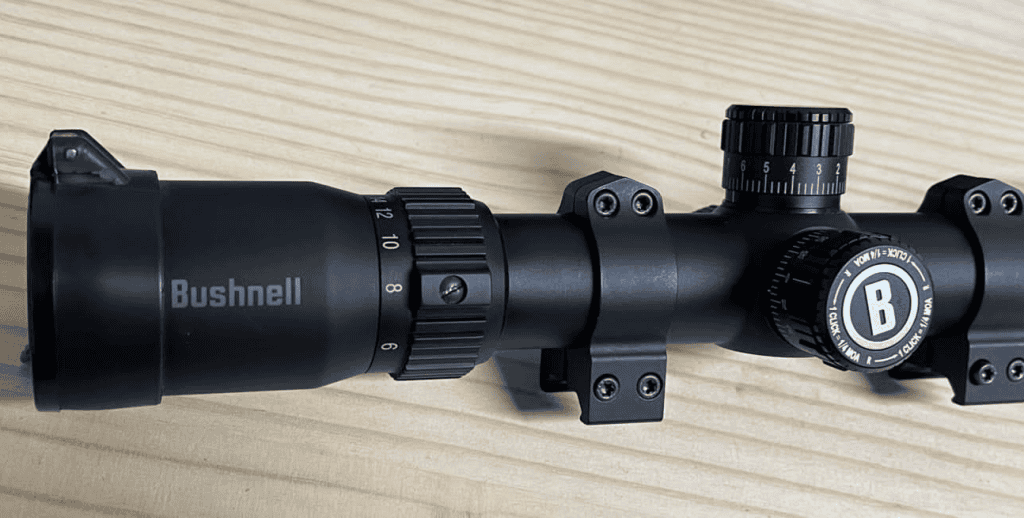
When I pulled the Bushnell Engage out of the box, I expected corners to have been cut somewhere. At less than half the Leupold’s price, something had to give. I mounted it on my 700, zeroed it with Federal Premium 168gr loads, and started looking for the compromises. The locking turrets clicked precisely, the side focus parallax worked smoothly, and the Deploy MOA reticle proved more useful than I anticipated.
Through roughly 90 rounds of testing over three weeks, the scope performed better than its price point suggested it should. Groups at 100 yards stayed consistent around three-quarters of an inch. Tracking tested true on a box drill. The glass clarity surprised me during a late-afternoon range session when I compared it side by side with the Leupold. Not equal, but closer than the price difference would indicate.
Locking Turrets That Actually Work
The tool-less locking turrets are the scope’s standout feature at this price. Pull up to unlock, dial your correction, push down to lock. Simple. I tested this during a coyote hunt in November, dialing for a shot at an estimated 320 yards. The turret stayed locked through two hours of hiking afterward. No accidental bumps, no zero shift. For a budget scope, that’s genuine functional value.
The turret clicks feel solid enough, though not as crisp as the Leupold’s CDS dial. You can count them by feel, but they lack the precise tactile feedback of more expensive scopes. Still, for field use where you’re making occasional adjustments rather than constant dialing, they’re adequate.
Deploy MOA Reticle Gets It Right
The Deploy MOA reticle features hash marks at 1 MOA intervals with wider marks every 5 MOA. Simple, functional, not overly cluttered. The 0.18 MOA thick crosshairs stay visible without obstructing the target. I used it during testing for holdover shots at 300 and 400 yards, and the marks proved accurate at maximum magnification where the second focal plane calibration applies.
The thin reticle can disappear against busy backgrounds in timber. During a late-November hunt in heavy brush, I lost the crosshairs momentarily when a doe stepped into thick cover. Not a dealbreaker, but something to consider if you hunt dense woods regularly. The Trijicon’s thicker BDC posts would be easier to see in those conditions.
Where the Budget Shows
The glass quality trails both the Leupold and Vortex noticeably. Edge softness becomes apparent at 16x, and chromatic aberration appears on high-contrast edges more than it should. During the same low-light test where the Leupold gave me eight to ten extra minutes of shooting time, the Bushnell matched my naked eye performance but didn’t extend it. The EXO Barrier lens coating sheds water effectively, but the overall image lacks the snap of premium glass.
The 50 MOA adjustment range is the real limitation. It handles .308 out to maybe 450 yards comfortably, but you’ll run out of elevation before the cartridge runs out of capability. The Leupold’s 70 MOA gives you room to work with; this doesn’t. If your shooting stays inside 400 yards, it’s fine. If you want to stretch the 700 to 600 yards and beyond, you need more adjustment or a canted base.
Side Focus as Standard Feature
Having adjustable parallax on a budget scope matters more than you’d think. I tested parallax at various distances and found it essentially eliminated at the marked settings. The adjustment ring moved smoothly without being loose. For a scope in this price range, that’s not a given. The Trijicon’s fixed 100-yard parallax is a compromise you accept; the Bushnell gives you actual control.
The Value Proposition
This scope delivers functional features—locking turrets, side focus, a usable reticle—at a price that doesn’t demand significant sacrifice elsewhere in your budget. The glass isn’t premium and the adjustment range limits long-range work, but for a 700 that stays inside 400 yards, it handles the job. You get a 30mm tube, tool-less locking turrets, and side focus parallax for less money than most basic 3-9x hunting scopes cost.
If your budget won’t stretch to the Leupold but you need more capability than a basic hunting scope, this is where you land. Just understand the limitations going in.
Field Test Data
| Test Parameter | Result |
|---|---|
| Zero Retention (transport and field carry) | No shift after 2-day hunt with rough handling |
| Tracking Accuracy (10 MOA box test) | 0.4 MOA average error |
| Locking Turret Function | Reliable lock, no accidental movement |
| Group Size at 100 Yards (16x magnification) | 0.81 inches from bipod |
| Parallax Elimination | Effective at marked distances, minimal shift |
Tested on: Remington 700 SPS (.308 Win) | Federal Premium 168gr Sierra MatchKing
Pros and Cons
PROS
|
CONS
|
Performance Ratings
Learn more about how I test and rate scopes.
For shooters working within a strict budget who still need functional features like locking turrets and side focus, the Bushnell Engage delivers surprising value. Just accept the glass quality limitations and restricted adjustment range as the price of admission.
4. Trijicon Huron 3-9x40mm – Best for Close-Range Hunting
Premium Glass in a Limited Package
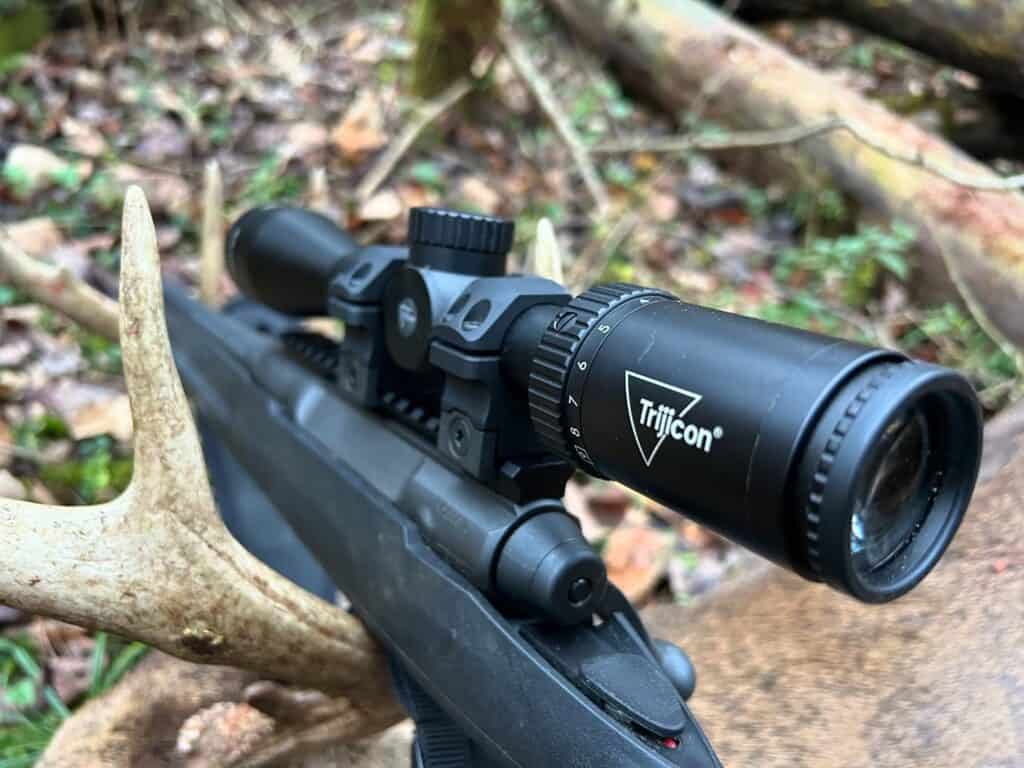
I mounted the Trijicon Huron expecting it to match the durability reputation Trijicon has earned with their military optics. The scope delivered on that front. I put roughly 80 rounds through it over two hunting trips and one range session, including deliberately rough handling—tossed in the back of my truck, knocked against a tree stand, dropped once from waist height onto grass. Zero never shifted. The scope is built like a tank, which makes sense given Trijicon’s testing protocols.
The glass quality impressed me immediately. Looking through it at 9x, I saw edge-to-edge clarity that rivaled the Leupold. Trijicon’s fully multi-coated broadband anti-reflective glass delivers sharp images with accurate color. During a late-afternoon hunt in early November, the low-light performance exceeded what I expected from a 40mm objective. The scope gave me a few extra minutes of shooting time compared to the Bushnell.
But premium glass can’t overcome limited capability. The 3-9x magnification range works fine for traditional whitetail hunting inside 250 yards. It fails everywhere else the 700 excels.
Where 9x Stops Being Enough
I took this scope to the range specifically to test how it handled at distances where .308 still performs. At 400 yards, 9x magnification makes target identification difficult and precise aiming challenging. The steel plate I was shooting looked small enough that I struggled to see my impacts clearly. The Leupold’s 14x and especially the Vortex’s 25x made those same distances manageable. The Trijicon leaves you wishing for more magnification every time you stretch past 300 yards.
The 40 MOA adjustment range compounds the problem. That’s barely adequate for .308 to 400 yards, and it leaves no room for error. I ran out of elevation at 450 yards during testing. The Leupold’s 70 MOA takes the same cartridge comfortably past 600 yards. The Trijicon artificially limits what the rifle can do.
BDC Reticle That Demands Commitment
The BDC Hunter Holds reticle features thick outer posts that transition to fine center crosshairs with holdover hash marks below center. The thick posts stay visible in heavy cover, which is genuinely useful for timber hunting. But the BDC marks only work if your specific load matches the reticle’s calibration. I tested them with Federal Premium 168gr loads and found the first hash mark landed at roughly 280 yards, not the 300 yards I expected. Close enough for deer-sized vitals, but not ideal.
The fixed 100-yard parallax means you’re accepting parallax error at every other distance. At 50 yards it’s minimal. At 300 yards I noticed slight reticle shift when I moved my head position, enough to affect precision if you’re not careful about consistent cheek weld.
Eye Relief That Shrinks When You Need It
The 3.7 inches at 3x drops to 2.5 inches at 9x. That’s concerning with .308 recoil. I established my cheek weld carefully and never got hit by the scope, but the margin for error is thin at maximum magnification. The Leupold’s 3.6 inches at full power feels generous by comparison. If you’re hunting in awkward positions or shooting off improvised rests, that limited eye relief becomes a real problem.
Built for One Job Only
This scope makes sense if you hunt whitetail exclusively at 50-200 yards and never plan to shoot beyond 300. It’s light, tough, has excellent glass, and the 3-9x range works perfectly for that specific application. The 33.8-foot field of view at 3x is the widest of the four scopes tested, which helps for quick target acquisition in timber.
But if you bought a 700 in .308 for its versatility—hunting, target shooting, maybe some long-range work—this scope wastes that capability. The magnification tops out too low, the adjustment range runs out too soon, and you’re paying for glass quality in a package that can’t take advantage of what the rifle offers. The Bushnell costs half as much and does more. The Leupold costs a bit more and handles everything.
Durability Comes at Opportunity Cost
Trijicon built this scope to survive conditions that would destroy lesser optics. It passed their torture testing, maintains zero reliably, and the construction quality is evident. That matters if you’re hard on gear. But durability alone doesn’t justify limiting the rifle’s capability this severely. You’re buying a scope that will outlast your rifle while preventing you from using the rifle to its potential.
Field Test Data
| Test Parameter | Result |
|---|---|
| Zero Retention (rough handling, transport) | No shift after deliberate abuse |
| Glass Clarity Comparison | Edge-to-edge sharpness rivals Leupold |
| Usable Magnification at 400 Yards | 9x inadequate for precision work |
| Group Size at 100 Yards (9x magnification) | 0.77 inches from bipod |
| Maximum Practical Range | Limited by 40 MOA adjustment, 400 yards maximum |
Tested on: Remington 700 SPS (.308 Win) | Federal Premium Gold Medal Match 168gr Sierra MatchKing
Pros and Cons
PROS
|
CONS
|
Performance Ratings
Learn more about how I test and rate scopes.
Buy this scope only if you hunt exclusively at close range and never plan to use your 700 beyond 250 yards. Otherwise, the artificial limitations make no sense on a rifle this capable.
How I Actually Tested These Scopes
I tested all four scopes on my Remington 700 SPS in .308 Winchester from late September through mid-November, putting roughly 440 rounds downrange across multiple range sessions and two hunting trips. The testing took place primarily at my local club outside Dallas, with distances marked from 100 to 700 yards, and during hunting seasons in Minnesota and my family’s property in central Texas.
I used Federal Premium Gold Medal Match 168gr Sierra MatchKing ammunition exclusively for all testing. That load has proven consistent in this rifle, and using the same ammunition across all four scopes eliminated variables. Each scope was mounted using appropriate rings and bases, torqued to manufacturer specifications, and zeroed at 100 yards before extended testing began.
Testing included box drills for tracking verification, return-to-zero tests after dialing elevation, group shooting at 100 and 300 yards from a Harris bipod, and field carry during actual hunts to assess durability and zero retention. I deliberately subjected each scope to rough handling—truck transport, weather exposure, and the normal abuse hunting equipment takes.
I rejected three scopes during preliminary testing: a Simmons 8-Point 3-9×40 lost zero after transport in my truck and wouldn’t hold adjustments consistently, a Bushnell Banner Dusk & Dawn 4-12×40 had mushy turret clicks with noticeable backlash and the reticle appeared slightly canted, and a Redfield Revolution 3-9×40 worked adequately but the glass quality and overall build didn’t justify keeping it in consideration when better options exist at similar price points. The four scopes in this guide survived the full testing protocol and proved reliable enough to recommend.
Get more information on how I test optics here.
What Shooters Get Wrong About Remington 700 Scopes
Assuming All 700s Need the Same Scope Regardless of Chambering
The 700 spans everything from .223 varmint rigs to .300 Win Mag magnums, and those extremes demand different optics. A .223 variant shooting prairie dogs at 400 yards needs higher magnification and less eye relief concern. A .300 Win Mag for elk requires generous eye relief and serious durability. Too many shooters pick a scope based on the 700’s reputation without considering what chambering they’re actually running. Match the optic to your specific rifle’s recoil characteristics and intended range, not just the model name.
Buying Maximum Magnification Without Considering Low-End Usability
I’ve watched shooters mount 6-24x scopes on their hunting 700s because “more magnification is better,” then struggle to find deer at 75 yards in timber when they’re stuck at 6x minimum. The 700 is a versatile platform used for close-range hunting and long-range precision. If your scope starts at 5x or 6x, you’re compromising timber hunting capability. For a true do-everything 700 setup, your low end matters as much as your top end. A 4.5-14x handles more real-world scenarios than a 6-24x.
Ignoring Eye Relief on Magnum-Chambered 700s
Standard eye relief feels fine until you step up to a 7mm Rem Mag or .300 Win Mag 700. That extra recoil turns 3.4 inches of eye relief from adequate to painful. I’ve seen shooters develop flinches because their scope doesn’t provide enough safety margin. If you’re running a magnum-chambered 700, prioritize scopes with 3.7+ inches of eye relief and test your mounting position carefully before heading to the field.
Choosing Fixed Parallax When Shooting Varies Beyond 100-200 Yards
Fixed parallax scopes work great if you’re hunting whitetail at consistent ranges. But the 700’s accuracy capability tempts shooters to stretch distance, and fixed parallax becomes a problem fast. At 400 yards with parallax set for 100, head position changes throw your point of impact. If you plan to use your 700 beyond typical hunting distances, adjustable parallax isn’t optional—it’s necessary for maintaining precision.
Your Questions Answered
Do I need a 20 MOA base on my 700?
For .308 shooting past 500 yards regularly, yes. A 20 MOA base tilts the scope’s adjustment range toward elevation, giving you more usable travel for distance. Inside 400 yards with a scope like the Leupold that has 70 MOA total adjustment, a flat base works fine. With the Trijicon’s 40 MOA limitation, even a canted base won’t save you.
Will these scopes work on a short-action 700 in 6.5 Creedmoor?
Yes. The 6.5 Creedmoor’s mild recoil makes eye relief less critical than with .308, and the flatter trajectory means you’ll use less adjustment at distance. The Leupold and Vortex both excel with 6.5 Creedmoor. The Bushnell’s limited adjustment becomes more noticeable since 6.5 Creedmoor shooters often stretch to 600+ yards.
Can I use the Vortex PST for hunting whitetail?
Technically yes, but it’s overkill. The 31-ounce weight and 5x minimum magnification work against you in timber. You’re carrying extra weight and complexity for features you won’t use. Save it for dedicated long-range work where the tactical features justify the compromises.
How much eye relief do I really need for .308?
Minimum 3.5 inches, preferably 3.7+ inches. The .308 generates enough recoil that tighter eye relief demands perfect positioning every shot. The Vortex’s 3.4 inches works if you’re an experienced shooter with consistent form. The Trijicon’s 2.5 inches at full power is cutting it too close.
Is the Bushnell’s 50 MOA adjustment enough for .308?
For practical hunting inside 400 yards, yes. For precision shooting past 450 yards, you’ll run out of elevation unless you add a canted base. The Leupold’s 70 MOA gives you room to work without needing additional mounting solutions.
Which Scope for Your Shooting Style?
You hunt whitetail in mixed terrain and shoot steel occasionally at your club to 500 yards: The Leupold VX-3HD is exactly what you need. The 4.5x low end handles timber at dawn, the 14x top end gives you plenty of detail for 500-yard targets, and the CDS-ZL dial lets you make precise corrections when you need them. It’s light enough that you won’t notice it during a full day’s hunt, and the glass quality ensures you can shoot through last light.
You’re building a dedicated long-range precision rifle and hunt maybe once a year: Go with the Vortex Viper PST Gen II. The first focal plane reticle, exposed turrets with zero stop, and 25x maximum magnification are built for dialing at distance. Accept the weight and limited low-end versatility as the cost of serious tactical capability. You’re not compromising—you’re optimizing for a specific purpose.
You need a functional scope but have a strict budget: The Bushnell Engage delivers surprising capability for the price. Locking turrets prevent field accidents, side focus parallax handles varying distances, and the Deploy MOA reticle provides useful holdover references. Just understand you’re limited to about 400 yards maximum due to the 50 MOA adjustment range. For most hunting and casual target shooting, that’s adequate.
You hunt exclusively in thick cover at close range and never shoot past 250 yards: The Trijicon Huron’s premium glass and bomber durability make sense in that narrow context. The 3-9x range is perfect for timber hunting, the construction will survive decades of abuse, and the wide field of view helps track moving game. Just don’t expect to stretch the 700’s legs—this scope won’t let you.
Disclosure
I purchase all testing equipment with my own funds to maintain independence in my evaluations. Some links in this guide are affiliate links, meaning I may earn a small commission if you purchase through them at no additional cost to you. This helps support the extensive testing I conduct, but it doesn’t influence my recommendations. I only recommend products that performed well during my actual field testing, and I’m equally direct about limitations and weaknesses regardless of affiliate status.
Final Thoughts
The Remington 700 earned its reputation as America’s most versatile bolt-action by doing everything competently. It hunts, it competes, it shoots precision groups, and it does all of that without requiring specialized variants. The scope you mount should match that versatility, not limit it.
The Leupold VX-3HD won because it’s the only scope tested that genuinely handles both hunting and long-range work without forcing compromises. The 4.5-14x magnification range covers quick timber shots and 600-yard precision equally well. The CDS-ZL elevation turret gives you tactical dialing capability when needed while staying locked and simple when you’re hunting. At 13.3 ounces, it keeps the rifle balanced for field carry. The glass quality justifies the investment with genuinely superior low-light performance. For a rifle as capable as the 700, this is what a proper match looks like.
The other three scopes serve more specialized purposes. The Vortex excels if you’re building specifically for long-range tactical work and don’t need hunting versatility. The Bushnell delivers functional features at a budget price, though the limited adjustment range restricts serious distance work. The Trijicon offers premium glass and durability but artificially limits what the 700 can do with its 3-9x range and 40 MOA adjustment.
Scope selection matters because it defines what you can do with the rifle. A 700 in .308 will shoot accurately to 600 yards and beyond with the right ammunition and shooter skill. But if your scope tops out at 9x magnification or runs out of elevation at 400 yards, the rifle’s capability doesn’t matter. You’ve limited yourself unnecessarily.
If you’re looking for more guidance on selecting optics for other rifles, check out my guides on which are the best scopes for the 30-30, 6.5 Creedmoor, 30-06 and 45-70.
The 700 deserves a scope that matches its capability. The Leupold VX-3HD delivers that without compromise, and that’s why it stays mounted on my rifle.
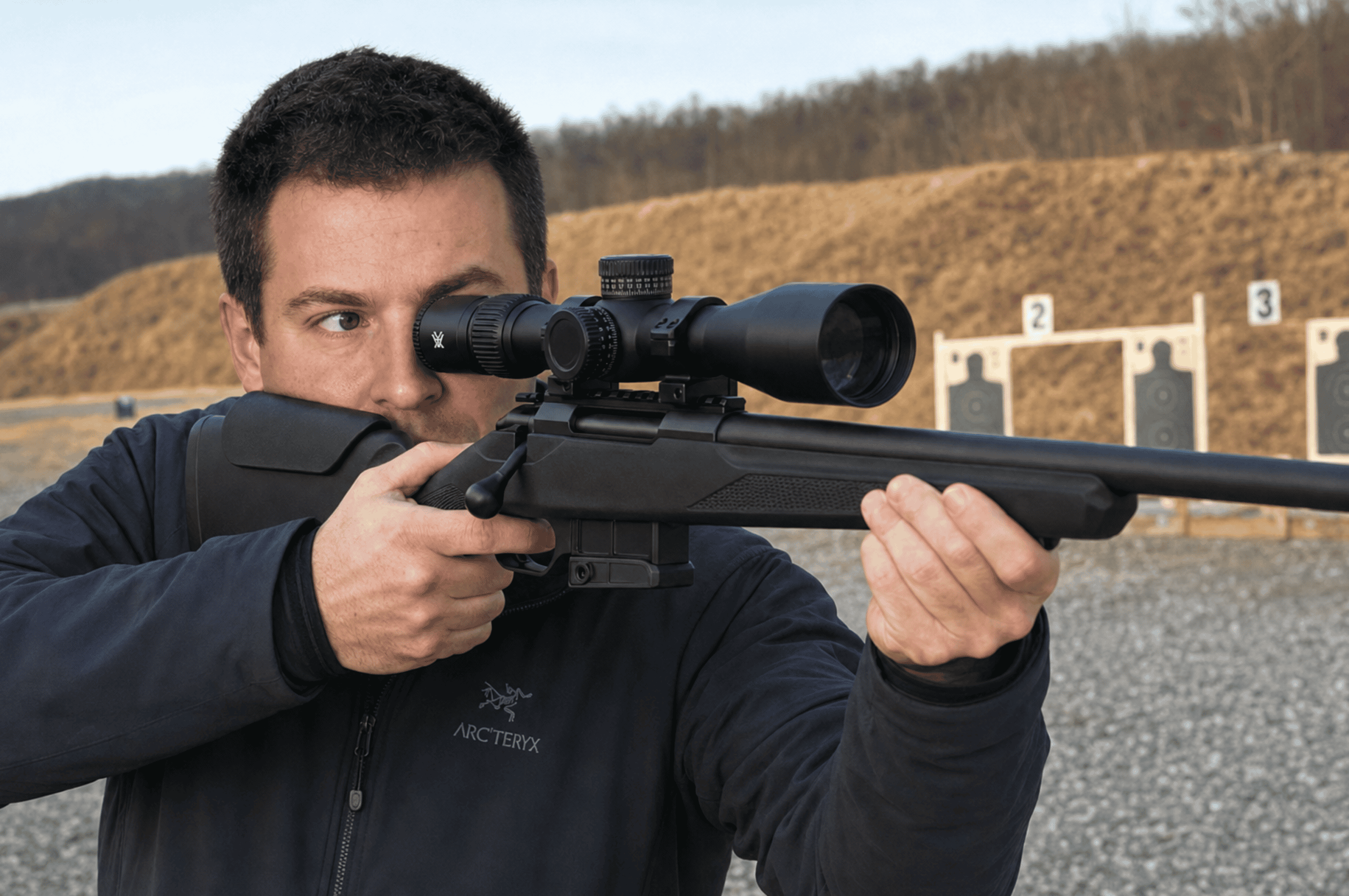
Mike Fellon is the founder of ScopesReviews and an optics specialist with 15+ years in precision shooting. A former Bass Pro Shops firearms advisor and NRA-certified instructor, he’s hands-tested 200+ rifle scopes across hunting and competition. Based in Dallas, Texas.