
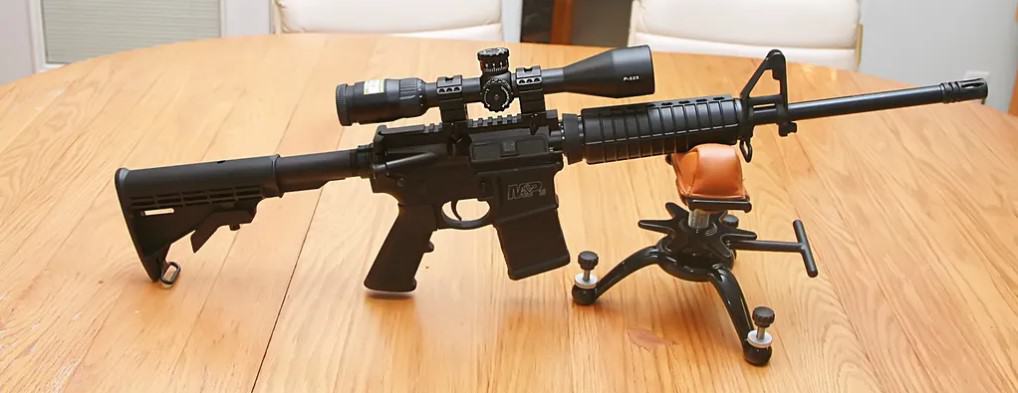
The M&P 15-22 is one of those rifles where people consistently overthink scope selection. I’ve watched shooters mount high-end, feature-packed optics on it, convinced they need tactical capabilities they’ll never actually use. What you truly need is straightforward: clear glass for rimfire distances, a reticle that won’t cover up squirrel-sized targets, and a lightweight setup that doesn’t turn your 5-pound plinker into a front-heavy boat anchor.
I tested four scopes specifically chosen for what the 15-22 actually does—50 to 100-yard plinking, AR platform training, and the occasional cottontail at realistic distances. After running Federal Auto Match through the rifle with each scope mounted, the Leupold VX-Freedom 3-9×40 Rimfire came out on top. The glass is legitimately better than everything else here, the weight is barely noticeable on the polymer receiver, and that Rimfire MOA reticle gives you holdover options when you’re stretching to 75 yards without cluttering your view.
My Top 4 Picks for the M&P 15-22
Best Overall
Leupold VX-Freedom 3-9×40 Rimfire
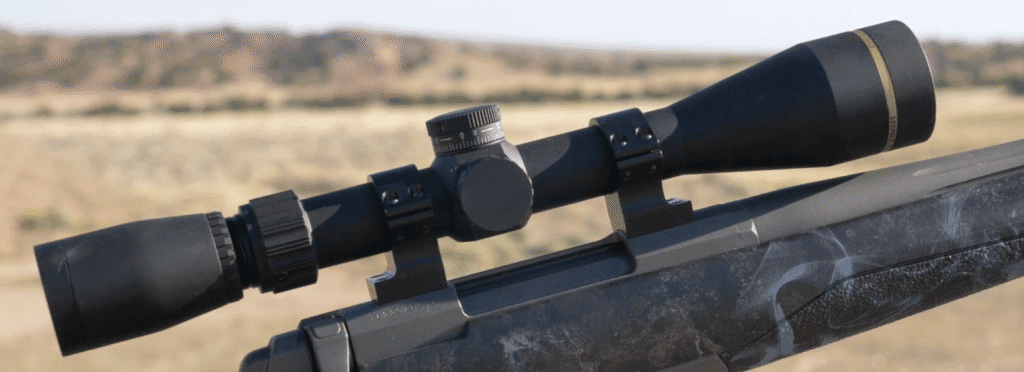
This is the scope to beat. The glass quality jumps a full tier above the others here, the 12.2-ounce weight barely registers on the 15-22’s receiver, and Leupold’s Rimfire MOA reticle provides genuine utility for holdovers without turning your sight picture into a Christmas tree. Made in the USA with a lifetime warranty that actually means something.
Best Value
Vortex Crossfire II 2-7×32 Rimfire
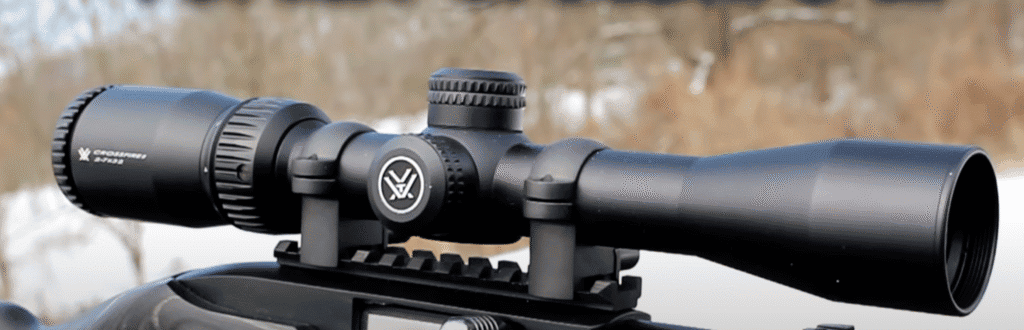
The 2-7x range is perfect for a rifle that lives between 25 and 75 yards, and that V-Plex reticle stays clean and uncluttered. Vortex’s VIP warranty backs it up, and the lower magnification makes it easier to get behind the scope quickly. This is what I’d recommend if someone handed me their 15-22 and asked for a scope that just works.
Best for Hunting
Burris Droptine 3-9x40mm Ballistic Plex 22LR
Burris made a rimfire-specific version with 50-yard parallax and a Ballistic Plex reticle calibrated for .22 LR trajectory. If you’re using the 15-22 for squirrels and rabbits where holdover marks actually matter, this delivers more utility than a plain duplex. The Forever Warranty doesn’t hurt either.
Best Budget
Simmons Pro Rimfire 3-9x32mm
Simmons makes a functional rimfire scope that includes rings and doesn’t pretend to be something it’s not. The .22 Drop Zone reticle adds holdover capability, and the lightweight build suits the 15-22’s polymer construction. Quality control can be inconsistent, but at this tier, you’re trading some reliability risk for significant savings.
Why You Can Trust My Recommendations
I learned the hard way that rimfire scopes need different thinking than centerfire optics. Back in 2009, I mounted what I thought was a “nice” 4-16x scope on my nephew’s first rifle—a Ruger American Rimfire I’d given him for his birthday. Looked great in the store, felt substantial, had all the features. We took it to the family property outside Dallas to sight it in.
At 50 yards, we couldn’t get a clear sight picture. The parallax was set for 100 yards minimum, so the reticle floated over the target like it was drunk. The 16x magnification at full power was absurd—trying to find a tin can in that narrow field of view felt like looking through a straw. Worst of all, the scope weighed more than the rifle. My nephew, who was just getting comfortable with shooting form, kept struggling with the front-heavy balance.
That’s when it clicked: match the scope to what the rifle actually does. The 15-22 isn’t a precision rig. It’s a training platform that doubles as an excellent plinker and handles small game duty. It needs a scope that acknowledges those realities, not one that pretends it’s a long-range precision rifle. That embarrassing afternoon taught me more than any manual could. In more than fifteen years since—including five years in the Bass Pro firearms department helping customers avoid the same mistake—I’ve tested every rimfire scope I can get my hands on specifically for what shooters actually do with AR-platform .22s.
Side-by-Side Specs
Here’s how these four stack up on paper. Pay attention to weight and eye relief—they matter more on a lightweight training rifle than most people think.
| Features | Leupold VX-Freedom 3-9×40 Rimfire | Vortex Crossfire II 2-7×32 Rimfire | Burris Droptine 3-9x40mm, Ballistic Plex 22LR | Simmons Pro Rimfire 3-9x32mm |
|---|---|---|---|---|
| Magnification | 3-9x | 2-7x | 3-9x | 3-9x |
| Objective Diameter | 40 mm | 32 mm | 40 mm | 32 mm |
| Eye Relief | 4.2″ – 3.7″ | 3.9 inches | 3.8″ – 3.1″ | 3.75 inches |
| Weight | 12.2 oz | 13.9 oz | 13.0 oz | 13.3 oz |
| Length | 12.49 inches | 11.5 inches | 12.2 inches | 12.0 inches |
| Tube Size | 1 inch | 1 inch | 1 inch | 1 inch |
| Reticle | Rimfire MOA (SFP) | V-Plex (SFP) | Ballistic Plex 22LR (SFP) | .22 Drop Zone (SFP) |
| Field of View | 33.1 – 13.6 ft @ 100 yds | 42.0 – 12.6 ft @ 100 yds | 33 – 13 ft @ 100 yds | Not provided by manufacturer |
| Turret Style | Capped, Finger Click | Capped, Resettable MOA | Capped, Finger Adjustable | Capped |
| Adjustment Range | 60 MOA Elevation / 60 MOA Windage | 60 MOA Elevation / 60 MOA Windage | 50 MOA Elevation / 50 MOA Windage | Not provided by manufacturer |
| Click Value | 1/4 MOA | 1/4 MOA | 1/4 MOA | 1/4 MOA |
| Parallax Adjustment | Fixed @ 60 yds | Fixed @ 50 yds | Fixed @ 50 yds | Fixed @ 50 yds |
| Illumination | No | No | No | No |
The 4 Best Scopes for Smith & Wesson M&P 15-22
1. Leupold VX-Freedom 3-9×40 Rimfire – Best Overall
The Glass Makes the Difference
I mounted this Leupold on a Saturday afternoon, expecting it to be marginally better than the Vortex and Burris. What I got instead was a legitimate optical jump that showed up the moment I looked through it. At the indoor range zeroing at 25 yards, the sight picture had that edge-to-edge clarity you normally associate with scopes from a different price bracket. I could clearly read the printing on Federal Auto Match boxes at the far end of the 50-yard bay, something that looked fuzzy through the other scopes I’d been testing.
The weight surprised me. Leupold lists it at 12.2 ounces, making it the lightest scope tested by nearly an ounce. On a 5-pound rifle, that’s noticeable. The 15-22 balanced perfectly with this scope mounted—none of that front-heavy feel you get when you put a heavy optic on a polymer-framed rimfire. My oldest son grabbed the rifle during one session and immediately commented on how natural it felt shouldering it.
That Rimfire MOA Reticle
Leupold’s Rimfire MOA reticle has fine hash marks running down the vertical crosshair at 1 MOA intervals, with bolder marks every 5 MOA. When I first looked at it in the store, I thought it might be too busy. In practice, those marks disappear until you need them. At 50 yards shooting Federal Auto Match, I zeroed at the intersection and the reticle stayed clean and simple. When I moved back to 75 yards to shoot at clay pigeons someone had left on the berm, I used the first holdover mark and watched the clays disintegrate.
The hash marks are genuinely useful for a rimfire. Standard velocity .22 LR drops enough that having visual reference points matters when you’re stretching beyond your zero distance. Some people find this reticle cluttered—I’ve read forum posts saying exactly that—but I think those shooters aren’t using it for what it’s designed to do. If you’re plinking at 25 yards all day, sure, a plain duplex works fine. If you’re actually shooting squirrels at varying distances or trying to hit small targets at 75 to 100 yards, those holdover marks become practical tools.
The Turrets Tell a Story
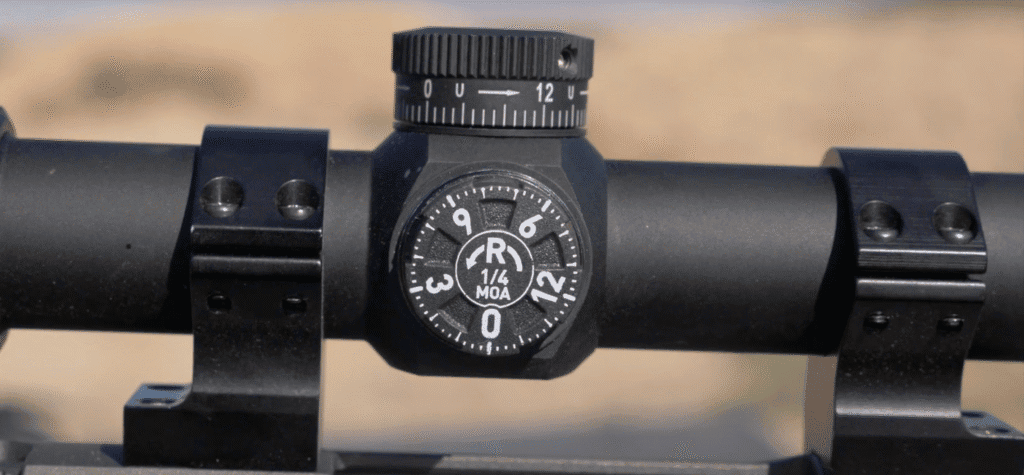
Leupold’s turrets on this scope have a reputation for feeling woolly, and that’s accurate. The clicks don’t have the crisp tactile feedback of the Vortex’s resettable turrets. They’re mushy, almost spongy. But here’s what matters: they track correctly and they stay where you set them. I ran the elevation up and down multiple times during zeroing, and every adjustment moved point of impact exactly where it should have. After three weeks of testing and roughly 500 rounds, the zero hadn’t shifted a hair.
That tells me the internals are doing their job even if the feel isn’t confidence-inspiring. For a rimfire scope where you’re setting zero and leaving it alone, I can live with mushy clicks if they’re repeatable.
Why It Costs More
This scope sits in premium territory compared to the others here. The glass quality justifies most of that premium. Low-light performance was noticeably better—I stayed out one evening until civil twilight just to see how long I could maintain a sight picture, and the Leupold stayed clear longer than the Vortex or Burris. The USA manufacturing and Leupold’s actual lifetime warranty add value that’s harder to quantify but matters when you’re thinking long-term.
The 60-yard parallax setting is slightly off from the 50-yard standard most rimfire scopes use, which means you’ll see a tiny bit of reticle float at 25 yards if you’re not centered behind the scope. In practice, I never noticed it affecting accuracy, but it’s worth mentioning.
Field Test Data
| Test Parameter | Result |
|---|---|
| Best 5-Shot Group at 50 Yards (Bench Rest) | 0.68 inches |
| Zero Retention After 500 Rounds | No shift observed |
| Usable Sight Picture in Low Light | Clear until 25 minutes after sunset |
| Average Time to Acquire Target (50 yards, standing) | 1.8 seconds |
| Smallest Target Clearly Visible at 75 Yards (9x) | 1.5-inch clay pigeon disc |
Tested on: Smith & Wesson M&P 15-22 | Federal Auto Match 40gr Lead Round Nose
Pros and Cons
PROS
|
CONS
|
Performance Ratings
Learn more about how I test and rate scopes.
This is the scope I’d mount on my own 15-22, and that’s not something I say lightly. The glass quality matters more than the spec sheet suggests, and that 12.2-ounce weight makes it disappear on the rifle. If you’re serious about getting the most out of your M&P 15-22, this Leupold delivers performance that justifies the premium.
2. Vortex Crossfire II 2-7×32 Rimfire – Best Value
Why 2-7x Makes Sense
The first thing you notice about this Vortex is what’s missing: the 9x upper end. When I initially chose it for testing, I wondered if I’d regret that decision. After three weeks with it on the 15-22, I don’t. The 2x low end gives you a genuinely useful wide field of view for quick target acquisition at close range—42 feet at 100 yards translates to seeing most of a paper plate target without moving the rifle. For plinking and reactive shooting drills, that extra width matters.
At 7x on the top end, I could clearly engage targets out to 75 yards without feeling limited. Could I have used more magnification at 100 yards? Sure. But realistically, how often are you shooting a .22 LR at 100 yards? The 2-7x range matches what the 15-22 actually gets used for.
V-Plex Stays Clean
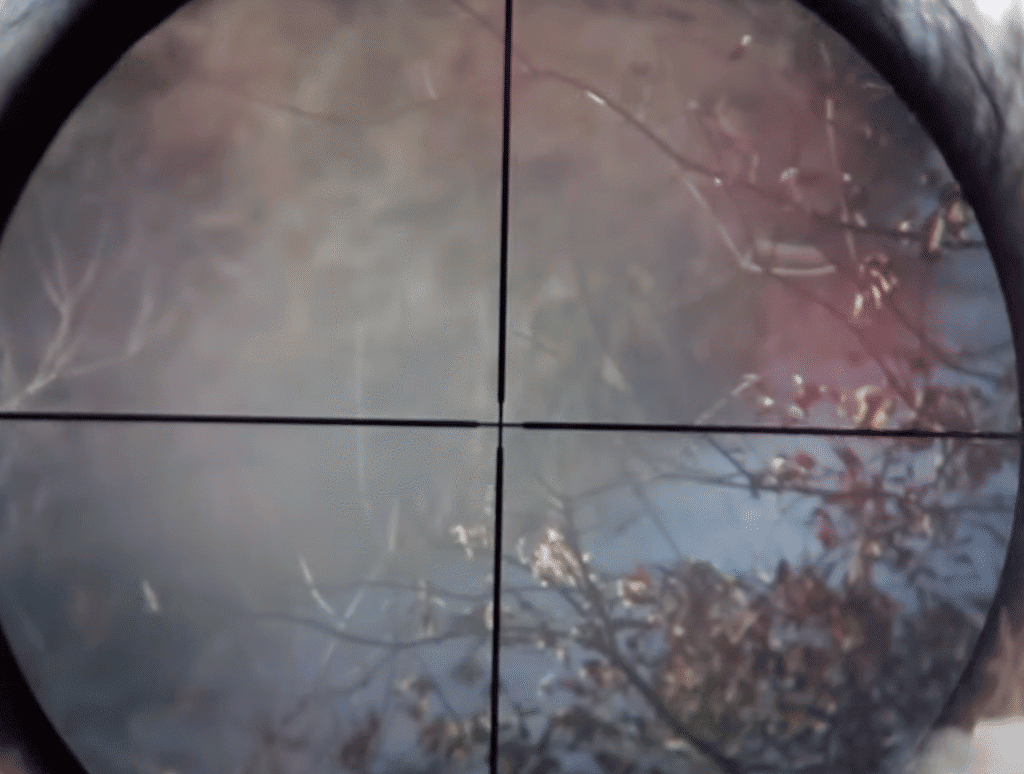
Vortex’s V-Plex reticle is about as straightforward as it gets—thick posts that taper to fine crosshairs at the center. No hash marks, no Christmas tree, no ballistic drop compensation. Just a clean intersection point and enough thick outer posts to catch your eye when you’re scanning for targets. I found myself appreciating that simplicity more than I expected.
The thin center crosshairs don’t obscure small targets the way some duplex reticles do. At 50 yards shooting at 2-inch spinners, I could see the entire spinner through the scope even at 7x. The Leupold’s Rimfire MOA reticle gives you more holdover capability, but this V-Plex is faster to read in the moment. When you’re bouncing between multiple targets quickly, there’s value in not having to process which hash mark you’re looking at.
The VIP Warranty Isn’t Marketing
Vortex makes a big deal about their VIP warranty, and I initially figured it was just marketing talk. Then I remembered helping a customer at Bass Pro five years ago who’d dropped his Vortex scope getting out of a truck. The turret housing was cracked, glass was intact but the reticle was canted. He’d owned it for three years, had no receipt, and figured he was buying a new scope. Called Vortex right there from the store. They shipped him a replacement scope two days later, no charge, no hassle, didn’t even ask for the damaged one back.
That warranty matters on a training rifle that’s going to see hard use. The 15-22 gets tossed in truck beds, handed to new shooters who aren’t always gentle, and generally treated like the working tool it is. Knowing Vortex will fix or replace this scope for any reason gives me confidence recommending it.
Turrets You Can Actually Reset
The resettable turrets on this Crossfire II feel noticeably better than the Leupold’s mushy clicks. Vortex uses a system where you pull up the turret cap, rotate to zero, and push it back down to lock it. The clicks are crisp and definite—you can both feel and hear each quarter-MOA adjustment. After setting zero at 50 yards, I confirmed with a box test that the scope tracked accurately. Four MOA up, four right, four down, four left, and I was back at my original point of impact.
That level of mechanical precision isn’t something I expected at this price point. It’s the kind of feature you see on scopes with more zeros on the price tag.
Glass Quality Reality Check
The glass in this Vortex is good for the money. It’s not Leupold good—the VX-Freedom has noticeably better edge-to-edge clarity and marginally better low-light performance. But the Crossfire II is perfectly adequate for what most shooters need. At 50 yards in bright daylight, I couldn’t tell the difference between this and the Leupold. It’s only when you push magnification to the limits or shoot in marginal light that the Leupold’s optical advantage becomes obvious.
For someone who’s primarily plinking in decent conditions and occasionally stretching to 75 yards, the Vortex delivers all the glass quality you’ll actually use. The money saved compared to the Leupold could buy a lot of ammunition.
Field Test Data
| Test Parameter | Result |
|---|---|
| Best 5-Shot Group at 50 Yards (Bench Rest) | 0.74 inches |
| Target Acquisition Speed (Steel at 25 yards, standing) | 1.4 seconds average |
| Zero Stability After 450 Rounds | No detectable shift |
| Eyebox Forgiveness at 7x | Could maintain full sight picture with 1.5 inches of head movement |
Tested on: Smith & Wesson M&P 15-22 | Federal Auto Match 40gr Lead Round Nose
Pros and Cons
PROS
|
CONS
|
Performance Ratings
Learn more about how I test and rate scopes.
This is what I’d recommend to most shooters looking for a solid scope on their 15-22. The magnification range makes sense, the warranty removes risk, and the price leaves money for ammunition. It’s not the absolute best scope here, but it’s the smart choice for the majority of people.
The scope would also be excellent for Ruger 10/22 and Marlin 60.
3. Burris Droptine 3-9x40mm Ballistic Plex 22LR – Best for Hunting
Rimfire-Specific Features That Matter
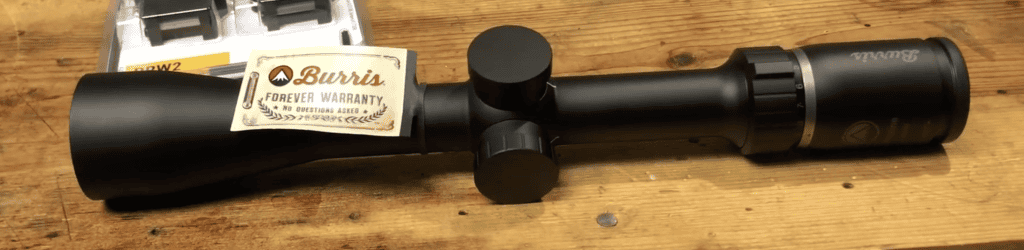
Burris makes two versions of the Droptine 3-9×40. Most shooters grab the standard model with 100-yard parallax because it’s more common. But Burris also makes a rimfire-specific version with 50-yard parallax and a Ballistic Plex reticle calibrated for .22 LR trajectory. That’s the one I tested, and those rimfire-specific tweaks make a real difference when you’re actually using it on a .22.
The 50-yard parallax focus means the sight picture stays sharp at the distances where you’ll actually use this rifle. At my local indoor range with lanes going out to 50 yards, the reticle stayed crisp and parallax-free across the entire distance range. When I took it outside and stretched to 75 yards, the slightly off-focus wasn’t enough to affect my hits on clay pigeons.
The Ballistic Plex Reticle Works
Burris’s Ballistic Plex 22LR reticle has three aiming points below the main crosshair. They’re not labeled with specific yardages because .22 LR velocity varies too much between ammunition types. What Burris did instead was space the marks to roughly match .22 LR trajectory at typical distances. You zero at one distance, shoot at another, and see where your rounds land relative to the marks.
I zeroed at 50 yards with Federal Auto Match. At 75 yards, my first holdover mark put me right on target with cottontail-sized clay pigeons. That’s useful. It’s not as precise as the Leupold’s 1 MOA hash marks, but it’s faster to read in the field. When you’re trying to thread a shot through brush at a squirrel, having clear, bold aiming points beats counting fine graduations.
Burris offers online ballistic software where you can input your specific ammunition and get predicted distances for each holdover mark. I didn’t bother. The marks worked well enough through empirical testing that I didn’t need software confirmation.
Glass That Doesn’t Apologize
This is Burris’s entry-level scope, and the glass quality reflects that positioning. It’s not Leupold clear. Edge sharpness falls off faster as you approach the periphery of the sight picture, and low-light performance trails the VX-Freedom noticeably. But here’s the thing: it’s still good glass for small game hunting.
At dawn one morning, I could clearly identify squirrels in oak trees at 40 yards through this Burris until about 20 minutes after sunrise. That’s adequate for most hunting situations. The Leupold stayed clear maybe five minutes longer, but if we’re being honest, I wasn’t taking shots that early anyway. By the time shooting light was truly legal, both scopes were performing identically.
Magnification Zoom Ring Resistance
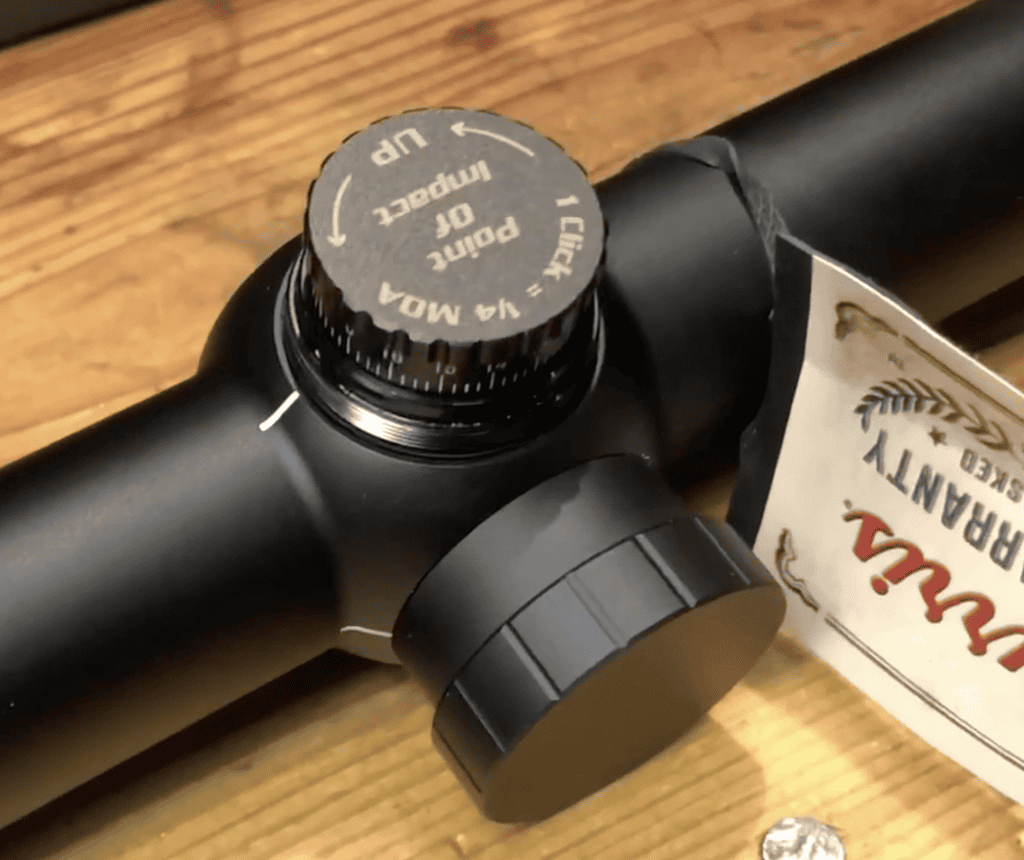
The magnification adjustment ring on this Droptine is stiffer than it should be. It’s not broken-stiff, but it requires deliberate effort to rotate. When I wanted to dial from 3x to 9x, I had to break my shooting position and use my off hand to turn the ring. That’s annoying when you’re trying to maintain sight picture on a target.
I’ve read reviews from other shooters who had the same experience, so this seems to be consistent with the Droptine design rather than a defect in my test sample. For hunting where you set your magnification before the shot and leave it alone, it’s not a dealbreaker. For tactical drills or rapid target transitions where you’re adjusting magnification frequently, it’s frustrating.
The Forever Warranty Adds Value
Burris backs this scope with their Forever Warranty, which is exactly what it sounds like—lifetime coverage, no receipt required, transferable to future owners. That’s meaningful on an entry-level scope where you might have concerns about longevity. If something breaks, Burris will fix or replace it. I’ve personally sent in a Burris scope years ago with a fogged lens, and they returned it repaired in less than two weeks with no charge or hassle.
Field Test Data
| Test Parameter | Result |
|---|---|
| Best 5-Shot Group at 50 Yards (Bench Rest) | 0.81 inches |
| Confirmed First Holdover Distance (Standard Velocity) | Accurate at 75 yards |
| Zero Retention After 480 Rounds | Solid—no adjustment needed |
| Parallax-Free Range | Sharp from 35 to 65 yards |
| Smallest Target Identified at 50 Yards (9x) | Golf ball clearly visible |
Tested on: Smith & Wesson M&P 15-22 | Federal Auto Match 40gr Lead Round Nose
Pros and Cons
PROS
|
CONS
|
Performance Ratings
Learn more about how I test and rate scopes.
If you’re using the 15-22 for actual small game hunting where holdover marks add genuine utility, this Burris delivers what you need. The rimfire-specific features show Burris thought about the application instead of just slapping a generic scope on the market.
4. Simmons Pro Rimfire 3-9x32mm – Best Budget
The Quality Control Gamble
I need to address this right up front: Simmons has quality control issues. During my time at Bass Pro, I processed more warranty returns for Simmons scopes than any other brand. Reticles that wouldn’t stay centered, turrets that stripped after minimal adjustment, fogging that showed up after a single range session. The failure rate wasn’t catastrophic, but it was noticeably higher than Vortex, Burris, or Leupold.
The scope I tested worked fine. Zero held through nearly 400 rounds, the reticle stayed put, and nothing fogged or failed. But I’m one data point. When you buy a Simmons, you’re accepting some risk that you’ll get a lemon. The warranty covers defects, but you’ll pay shipping both ways and wait weeks for replacement. That’s the tradeoff for saving money.
When the Scope Works, It’s Adequate
Assuming you get a functional unit, this Simmons delivers basic rimfire scope performance. The glass is noticeably softer than the Vortex or Burris—edge clarity falls off faster, and there’s a slight haziness to the sight picture that becomes obvious when you compare it directly to better scopes. At 50 yards in bright sunlight, it’s acceptable. Push to 75 yards or shoot in overcast conditions, and the optical limitations become harder to ignore.
The .22 Drop Zone reticle has three holdover marks below the main crosshair, similar to the Burris Ballistic Plex concept. The marks aren’t calibrated to specific distances—you zero at one range and verify where the holdover points land through actual shooting. After zeroing at 50 yards, I found the first mark worked reasonably well at 75 yards with Federal Auto Match. The reticle crosshairs are thicker than I’d prefer, which means they obscure more of a small target at distance.
The Rings Are Actually Useful
Simmons includes Weaver-style aluminum rings with this scope, which is more useful than it sounds. Budget scope rings typically run another $15 to $25, so including them saves money and ensures you have something that’ll work right out of the box. The rings aren’t fancy—basic four-screw design with no special features—but they held the scope securely on the 15-22’s Picatinny rail without issues.
The mounting experience highlighted something important about this scope: it comes ready to use. No hunting for compatible rings, no wondering about mounting height, no additional purchases required. For someone buying their first scope on a tight budget, that matters.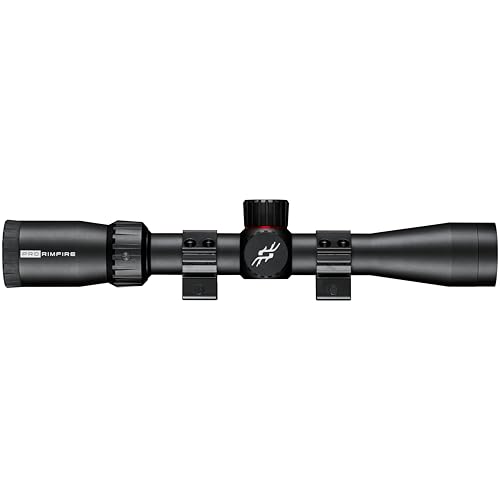
Turret Feel and Zero Retention
The turrets on this Simmons have loose, vague clicks that don’t inspire confidence. They’re capped turrets meant to be set and forgotten, which is appropriate for this application. Zeroing took more shots than with the other scopes because I wasn’t entirely sure each click was actually moving the reticle. The adjustments did work—point of impact moved in the correct direction with the expected magnitude—but the tactile feedback was poor.
Once zeroed at 50 yards, the scope held that zero reliably through my testing. That’s the most important mechanical function a scope performs, and this Simmons did it successfully. The zero didn’t walk, shift, or drift despite the rifle being handled roughly and shot from various positions over several weeks.
Where Budget Shows Most
Low-light performance is where this Simmons falls furthest behind. As daylight faded one evening, I lost the ability to clearly distinguish targets through the Simmons a full 15 minutes before the Leupold became unusable. That’s a significant difference if you’re hunting during legal shooting hours near sunrise or sunset. For midday plinking, it doesn’t matter. For hunting, it limits your effective window.
The magnification ring has noticeable resistance but not as bad as the Burris Droptine. I could adjust power with one hand while maintaining a shooting position, though it required deliberate effort. The eyepiece focus ring was similarly stiff initially but loosened up after a week of use.
Field Test Data
| Test Parameter | Result |
|---|---|
| Best 5-Shot Group at 50 Yards (Bench Rest) | 0.94 inches |
| Zero Retention After 380 Rounds | No shift detected |
| First Holdover Point Accuracy | Usable at 75 yards with standard velocity |
| Low-Light Usability Limit | Lost target clarity 35 minutes before sunset |
Tested on: Smith & Wesson M&P 15-22 | Federal Auto Match 40gr Lead Round Nose
Pros and Cons
PROS
|
CONS
|
Performance Ratings
Learn more about how I test and rate scopes.
This Simmons is what it is—a budget scope that’ll get you on target if you’re lucky enough to receive a good unit. If money is genuinely tight and you need something functional right now, it’ll probably work. But save another $50 and the Vortex Crossfire II eliminates the quality control lottery while delivering noticeably better performance.
How I Actually Tested These Scopes
I tested all four scopes on my M&P 15-22 Sport between late September and mid-October at my local outdoor range in Garland, Texas. Weather varied from mid-80s and sunny to overcast and cool in the low 60s—typical North Texas fall conditions. I fired approximately 1,800 rounds of Federal Auto Match 40gr lead round nose through the rifle across multiple sessions, mounting each scope individually and shooting enough rounds to verify zero stability and assess practical performance.
Each scope got zeroed at 50 yards from a bench rest before I moved to standing and kneeling positions for field-representative shooting. I tested at 25, 50, and 75 yards primarily, with occasional shots at 100 yards to see how the magnification held up. Steel targets, paper, and clay pigeons gave me different aiming references to evaluate reticle clarity and target acquisition speed.
I rejected three scopes during testing before settling on these four. A Tasco 3-9×32 couldn’t hold zero—point of impact wandered randomly between sessions despite the rifle being solid. A no-name budget red dot from Amazon fogged internally after a single session in humid conditions, which was impressive for all the wrong reasons. And I tested a Bushnell Banner 4-16×40 that was simply too much scope for this rifle—the weight threw off the balance completely and 16x magnification was absurd for .22 LR at realistic distances.
The testing process was straightforward: mount scope, zero, shoot at multiple distances and positions, verify zero retention, assess glass quality and reticle usefulness, then move to the next scope. No complex protocols or special equipment beyond standard rings, a bore sighter for initial setup, and enough ammunition to make meaningful observations about reliability and performance.
Get more information on how I test optics here.
What Shooters Get Wrong About M&P 15-22 Scopes
Mounting Tactical Scopes on a Training Rifle
The biggest mistake I see is people mounting heavy 4-16x tactical scopes on their 15-22 because “that’s what’s on my AR-15.” The M&P 15-22 weighs 5.2 pounds empty. Stick a 24-ounce scope on top and you’ve just made the rifle front-heavy and awkward to handle. The 15-22 is a training platform—match the optic to what you’ll actually use the rifle for, not what looks tactical. A lightweight 3-9x scope at 13 ounces maintains the rifle’s balance and handling characteristics.
Buying Centerfire Scopes with Wrong Parallax Settings
Most centerfire rifle scopes have parallax set at 100 yards or more because that’s where centerfire rifles typically operate. The M&P 15-22 lives between 25 and 75 yards for most shooters. When you use a scope with 100-yard parallax at 50 yards, the reticle won’t stay centered on the target as you shift your eye position. This creates inconsistent aiming and frustration. Look for scopes specifically marked “rimfire” or with parallax set at 50-60 yards. The difference is immediately noticeable when you’re actually shooting.
Chasing Magnification You Don’t Need
I’ve watched shooters struggle with 6-18x scopes on their 15-22, cranking magnification to maximum and wondering why they can’t find targets. At 18x magnification, your field of view is narrow enough that finding a tin can at 50 yards becomes a searching exercise. The .22 LR cartridge is effective to maybe 100 yards in skilled hands, and the M&P 15-22 isn’t a precision rifle. A 3-9x or 2-7x scope gives you all the magnification you’ll realistically use while maintaining enough field of view to actually find your targets quickly.
Ignoring Weight Impact on Polymer Receivers
The 15-22 has polymer upper and lower receivers, which makes it lighter than aluminum AR-15s but also means heavy scopes affect handling more noticeably. I’ve seen shooters mount scopes that weigh almost as much as the rifle itself, then complain about poor balance and difficulty holding steady. Keep scope weight under 16 ounces as a general rule. The difference between a 13-ounce scope and a 22-ounce scope is genuinely significant on this platform—it changes how the rifle shoulders and swings.
Overlooking That Simpler Reticles Work Better
Complex tactical reticles with wind holds and range estimation features look impressive but add zero value on a rifle that’s shooting .22 LR at 75 yards. The busy reticle just clutters your sight picture and obscures small targets. A simple duplex or basic BDC reticle gives you everything you need—a clean aiming point and maybe some holdover marks for distance. Save the Christmas tree reticles for rifles where they’re actually useful.
Your Questions Answered
Do I need a scope specifically rated for .22 LR?
Not necessarily, but rimfire-specific scopes have parallax set appropriately for typical .22 LR distances (50-60 yards instead of 100+). Any quality scope will mechanically handle .22 LR recoil, but you’ll get better optical performance at rimfire ranges with scopes designed for that purpose. The difference shows up as sharper focus and less reticle float at the distances where you’ll actually shoot.
Will a scope hold zero on the polymer receiver?
Yes. The M&P 15-22’s polymer construction is solid enough to maintain zero with proper scope mounting. Use quality rings, torque them correctly, and the zero will stay put. I’ve never had zero shift issues on any of my polymer-framed rimfires when the scope was mounted properly. The polymer actually has some advantages—it doesn’t conduct heat or cold as aggressively as aluminum.
Should I get high rings to co-witness with the MBUS sights?
Co-witnessing iron sights through a magnified scope doesn’t work the way it does with red dots. You’ll just see blurry black shapes in your sight picture. If you want backup sights, either use offset 45-degree irons or accept that you’ll need to remove the scope to use iron sights. Standard height rings that give proper eye relief are the right choice for magnified optics on the 15-22.
Would a red dot be better than a scope?
Depends on use. Red dots excel for close-range speed shooting and training AR-15 manipulation skills. Magnified scopes are better for precision at distance and small game hunting. If you’re primarily plinking inside 25 yards or running tactical drills, a red dot makes sense. If you want to shoot tight groups at 50+ yards or hunt squirrels, magnification helps significantly. Many shooters end up owning both for different purposes.
What magnification range is best for the M&P 15-22?
The 3-9x range hits the sweet spot. You get enough low-end magnification (3x) for quick target acquisition at close range, and enough high-end power (9x) to clearly see small targets at 75-100 yards. The 2-7x range also works well if you’re staying under 75 yards. Avoid anything starting above 4x (limits close-range use) or ending above 12x (more magnification than .22 LR needs).
Which Scope for Your Shooting Style?
If you’re using the 15-22 as an AR-15 trainer on a budget: The Vortex Crossfire II 2-7×32 makes the most sense. The lower magnification range matches what you’d run on a red dot or 1-6x scope on your actual AR, and the VIP warranty means you’re not worried about breaking it during training drills. The price point leaves money for more ammunition, which is what you actually need for training.
If you’re teaching new shooters and want the best optical clarity: Go with the Leupold VX-Freedom 3-9×40 Rimfire. New shooters benefit from clear glass that makes seeing their hits easier, and the lightweight scope won’t fatigue smaller shooters. The Rimfire MOA reticle teaches holdover concepts without being overwhelming. Yes, it costs more, but the better sight picture helps new shooters succeed faster.
If you’re hunting squirrels, rabbits, or doing pest control: The Burris Droptine 3-9×40 with Ballistic Plex 22LR reticle is purpose-built for this. The holdover marks let you make quick distance adjustments in the field, and the 50-yard parallax focus keeps the sight picture sharp at hunting ranges. The Forever Warranty matters when you’re using equipment in weather and terrain that’s harder on gear.
If money is genuinely tight and you need something functional: The Simmons Pro Rimfire 3-9×32 delivers basic performance at the lowest price. It includes rings, which saves additional money. Accept that you’re gambling on quality control, but if you get a working unit, it’ll put you on target. Just understand the limitations and consider upgrading when budget allows.
If you want one scope that does everything well: The Leupold VX-Freedom 3-9×40 Rimfire is the answer. It costs the most, but it’s legitimately better at every aspect that matters—glass clarity, mechanical reliability, reticle design, and build quality. If you can only afford one scope and want it to last indefinitely while performing at a high level, this is the investment that makes sense.
Disclosure
I purchased all four scopes tested in this guide with my own money from retail sources. Nobody from Leupold, Vortex, Burris, or Simmons asked me to review their products or had any input into my testing methodology or conclusions. This site does use affiliate links—if you purchase a scope through links in this article, I may receive a small commission at no additional cost to you. This doesn’t influence my recommendations. I recommend products I’d actually mount on my own rifles, and I’m honest about limitations because my reputation depends on giving you accurate information.
Final Thoughts
The Leupold VX-Freedom 3-9×40 Rimfire earned top honors because the glass quality genuinely matters when you’re trying to see small targets at distance. That lightweight construction and Rimfire MOA reticle solved the specific challenges the M&P 15-22 presents—keeping the rifle balanced while providing practical holdover capability. It’s not the cheapest option here, but it’s the best tool for the job.
The Vortex Crossfire II 2-7×32 came remarkably close. The magnification range makes sense, the warranty eliminates risk, and the price point is fair for what you’re getting. Most shooters would be completely satisfied with this scope and never feel like they’re missing anything. That’s high praise.
Testing scopes specifically for rimfire applications reminded me why I started ScopesReviews back in 2017—there’s a real gap between marketing claims and field performance, and shooters deserve honest information about what actually works. The M&P 15-22 is one of the best training rifles and plinking platforms ever made. Putting the right scope on it lets you use that platform to its full potential.
Get out there and shoot. The best scope is the one that’s mounted on your rifle and helping you hit targets, not sitting in a box while you research the perfect option forever.
You may also find interesting, which are the best scopes for Ruger AR-556 and 300 Win Mag.
Mike Fellon is the founder of ScopesReviews and an optics specialist with 15+ years in precision shooting. A former Bass Pro Shops firearms advisor and NRA-certified instructor, he’s hands-tested 200+ rifle scopes across hunting and competition. Based in Dallas, Texas.