
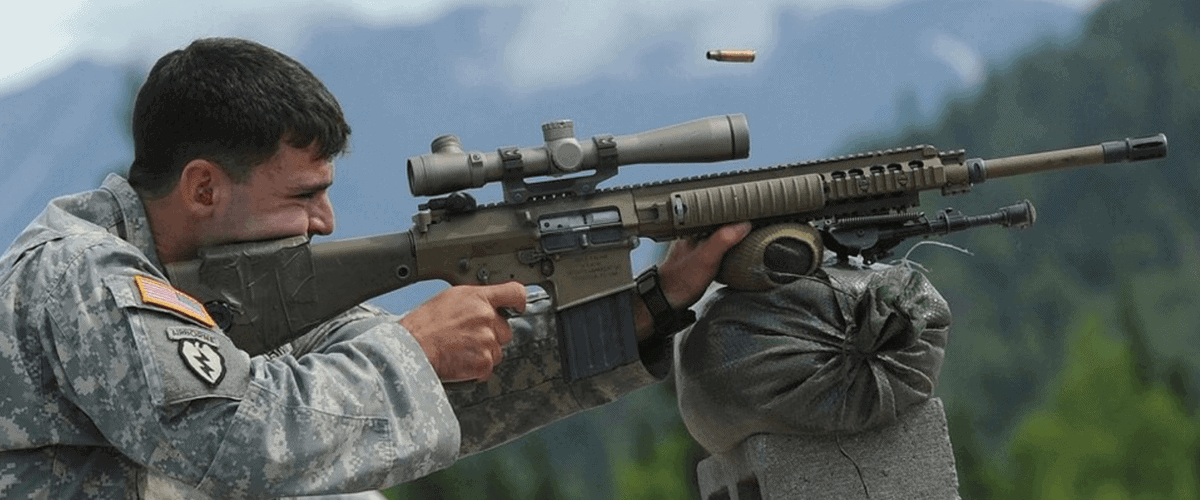
The 6.5 Creedmoor does so many things well that it creates a scope selection problem most shooters don’t anticipate. This is a cartridge that people use for everything: PRS matches one weekend, whitetail the next, and steel at a thousand yards in between. A scope that’s perfect for one of those jobs is often wrong for another, and the number of shooters I’ve talked to who bought a scope for their Creedmoor and then replaced it within a year is ridiculous. The 6.5 CM demands a scope that can dial precisely at distance, survive a full season of hard use, and still let you pick up a deer at last light. After testing four scopes specifically for this cartridge, the Vortex Viper PST Gen II 5-25×50 came out on top. It nails the balance between precision features and real-world versatility better than anything else in its price range.
My Top 4 Picks for 6.5 Creedmoor
Best Overall
Vortex Viper PST Gen II 5-25×50
FFP MIL reticle, RZR zero stop, solid glass, and the EBR-7C reticle that works for both holdovers and dialing. At its price point, nothing else gives you this complete a package for the 6.5 Creedmoor’s dual-purpose personality. It handles PRS stages and hunting situations without asking you to compromise on either.
Best Premium Optic
Leupold MARK 5HD 5-25×56
If budget isn’t your primary constraint, the Mark 5HD is the best glass in this test by a visible margin. The 35mm tube and 35 MRAD of elevation travel give you more room than you’ll ever need with a Creedmoor, and at 30 ounces it’s actually the lightest scope here. You’re paying for Leupold’s optical engineering, and you can see the difference.
Best for Dedicated Hunters
Nightforce SHV 5-20x56mm
Nightforce builds scopes that survive things other scopes don’t, and the SHV’s glass quality in low light is impressive for its price tier. The SFP MOAR reticle and capped windage turret orient this scope toward hunters who set their zero and leave it, making occasional adjustments for distance. Not ideal for dialing at a match, but excellent for hard hunting.
Best Budget Entry
Athlon Argos BTR Gen 3 6-24×50
About three hundred dollars for an FFP MIL scope with a zero stop, illuminated reticle, and parallax adjustment down to 10 yards. The Gen 3 brought improved turrets and an integrated throw lever over the Gen 2, and it tracks honestly. The glass and eyebox tell you where the cost savings went, but for someone getting into long-range shooting with a 6.5 CM, this is a serious starting point.
Why You Can Trust My Recommendations
Back in 2013, I mounted what seemed like a perfectly capable scope on my first 6.5 Creedmoor build. On paper, the specs looked fine. At the range, everything worked until I tried to dial past 700 yards. The scope simply didn’t have the elevation travel to get there, even with a 20 MOA base. That afternoon cost me a tank of gas and wasted range time, but it taught me something critical about this cartridge: the 6.5 Creedmoor’s ballistics are efficient enough that you’ll bump into your scope’s limitations before you hit the cartridge’s.
That experience, combined with five years working Bass Pro’s firearms counter and my NRA instructor certifications, changed how I evaluate optics for precision cartridges. I’ve since tested over 200 scopes through everything from local matches to multi-day elk hunts in Montana. My approach focuses on one question: does this scope let you use what the cartridge can actually deliver? For the 6.5 Creedmoor, that means verifying adjustment range under real conditions, not just reading spec sheets. The four scopes in this guide represent different answers to that question, tested on the same rifle with the same ammunition so you can see exactly where the trade-offs matter.
Side-by-Side Specs
For a cartridge this versatile, the specs that matter most are adjustment range (you need enough travel for long-range work), reticle system (FFP MIL is king for precision shooting), and glass quality relative to what you’re paying. Weight differences between these four are minimal, so that’s mostly a wash.
| Features | Vortex Viper PST Gen II 5-25×50 | Leupold MARK 5HD 5-25×56 | Nightforce SHV 5-20x56mm | Athlon Argos BTR Gen 3 6-24×50 |
|---|---|---|---|---|
| Magnification | 5-25x | 5–25x | 5–20x | 6-24x |
| Objective Diameter | 50mm | 56 mm | 56 mm | 50mm |
| Eye Relief | 3.4″ | 3.8″ – 3.6″ | 3.54″ – 3.15″ | 3.3″ |
| Weight | 31.2 oz | 30 oz | 30.5 oz | 30.3 oz |
| Length | 15.8″ | 15.7″ | 15.2″ | 14.1″ |
| Tube Size | 30mm | 35 mm | 30 mm | 30mm |
| Reticle | EBR-7C (MRAD, FFP) | PR2-Mil, FFP | MOAR™ (SFP) | APRS11 IR MIL (FFP) |
| Field of View | 24.1 – 4.8 ft @ 100 yds | 20.4 – 4.2 ft @ 100 yds | 17.9 – 5.0 ft @ 100 yds | 16.7 – 4.5 ft @ 100 yds |
| Turret Style | Exposed + (RZR Zero Stop) | Exposed, ZeroLock M5C3 | Exposed Elevation (ZeroSet), Capped Windage | Exposed, Precision Zero Stop |
| Adjustment Range | Elevation/Windage: 20 MRAD / 10 MRAD | 35 MRAD Elevation / 17 MRAD Windage | 80 MOA Elev / 50 MOA Wind | 18 MRAD Elev / 18 MRAD Wind |
| Click Value | 0.1 MRAD | 0.1 MRAD | 0.25 MOA | 0.1 MRAD |
| Parallax Adjustment | 25 yds – ∞ | 50 yds – ∞ | 25 yds – ∞ | 10 yds – ∞ |
| Illumination | Yes | No | Yes | Yes |
The 4 Best 6.5 Creedmoor Scopes
1. Vortex Viper PST Gen II 5-25×50 – Best Overall
There’s a Reason These Keep Showing Up at Matches
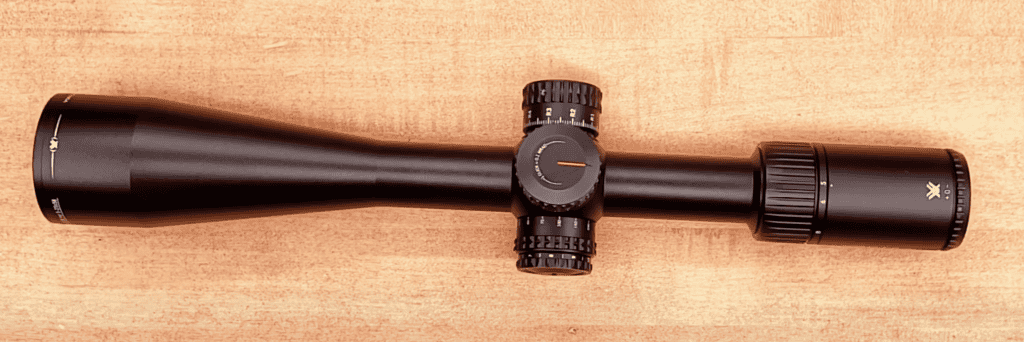
I mounted the Vortex first because I already had a hunch about where it would land. There’s a reason you see more PST Gen IIs on the firing line at local PRS matches than almost any other single model. I zeroed the Bergara at 100 yards in three shots, dialed up for a 400-yard plate, and connected first round. That sequence told me everything I needed to know about the tracking. Each click felt distinct under my thumb, and the 10 MRAD per revolution meant I could reach my correction without counting turns. I ran about 90 rounds through the PST over three separate sessions, and it returned to zero clean every single time I dialed back down.
Holding and Dialing on the Same Afternoon
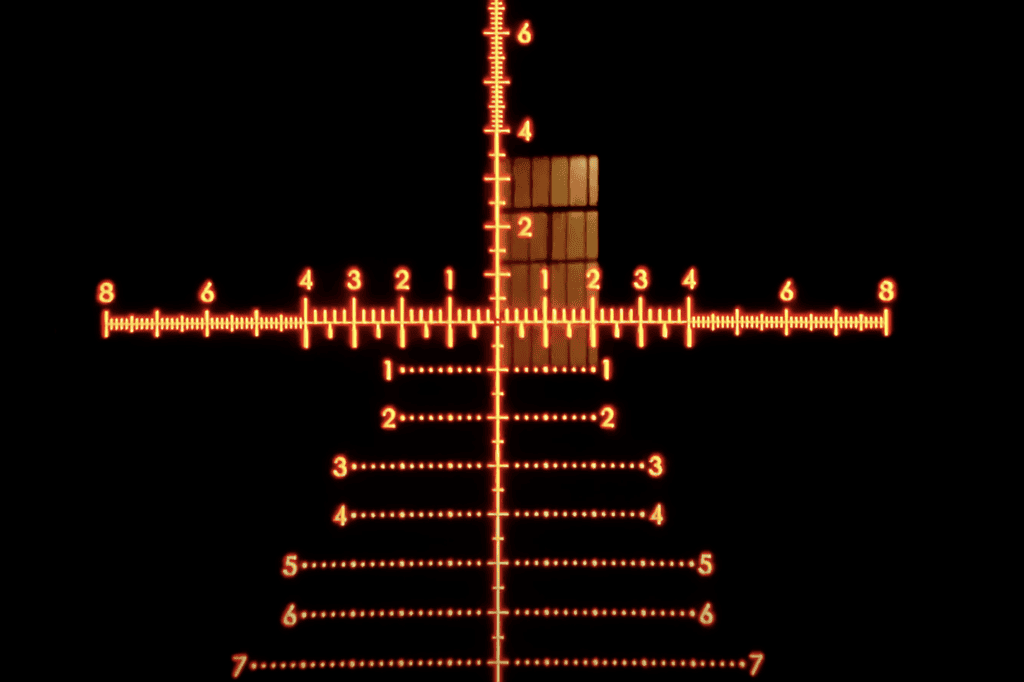
A buddy invited me to his informal steel shoot in early October, and I brought the Bergara wearing the PST. Some stages had targets from 200 to 600 yards. On the closer plates I held over using the Christmas tree subtensions below the crosshair rather than dialing. On the longer shots I dialed. Being able to switch between those two approaches without thinking about whether my holdover references were accurate (they are, at every magnification, because it’s FFP) made the EBR-7C feel like it was designed for exactly this kind of mixed shooting. That versatility is what separates this scope from the Nightforce SHV, which locks you into dialing due to its SFP design.
Where the Gen II Improved Over the Original
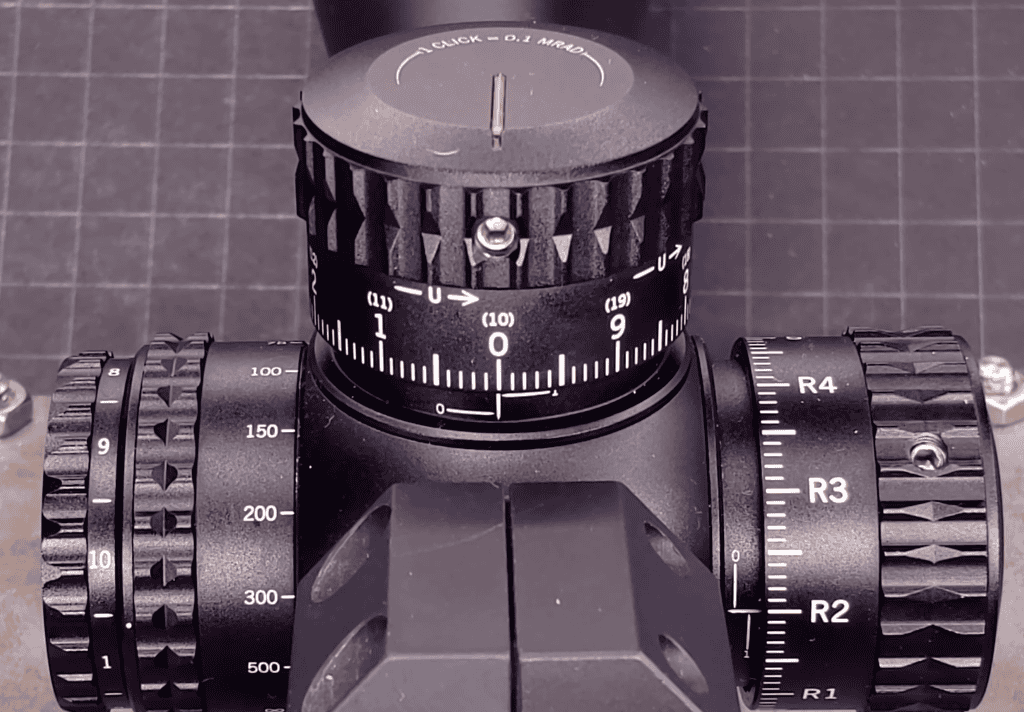
Vortex redesigned quite a bit from the Gen I. The glass is noticeably sharper, especially above 15x where the old PST started to fall off. The RZR zero stop replaced the old CRS shim system, which was really just a rotational stop, not a true mechanical zero stop. The Gen II’s RZR uses the same mechanical design as the Razor line, and it behaves identically: a hard physical stop at your zero with no ambiguity. I set it once and never thought about it again. The turrets themselves are larger, easier to grip with wet or gloved hands, and have a crisper click feel than the originals.
Honest Glass Assessment
I need to be straight about where the glass sits. During a late-October afternoon that stretched into dusk, I was comparing the PST against the Mark 5HD, the SHV, and the Athlon. The Vortex started losing definition in the shadows a good ten to fifteen minutes before the Leupold did. Center sharpness is solid up to about 20x. Push it to 25x and you’ll notice the edges soften. That’s not unusual for this price tier. It’s XD (extra-low dispersion) glass, not the HD glass you get in the Razor line. For what most people actually do with a 6.5 Creedmoor, shooting in reasonable light from stable positions, it’s plenty sharp. I just wouldn’t pretend it competes with the Leupold optically, because it doesn’t.
The Practical Trade-Offs
Eye relief is tighter than I’d prefer. On a bolt gun with a consistent cheek weld it’s fine, but I had to be deliberate about head position at higher magnifications to avoid shadow creep. The illumination washes out in bright Texas midday sun, though it’s useful in overcast conditions and at dawn and dusk. I also want to mention that this is the heaviest scope in this test, though an ounce or so separating it from the lightest isn’t something you’d feel in the field. The real story here is what you get for the money: FFP MIL reticle with usable holdover subtensions, a genuine zero stop, turrets that track honestly, and glass that performs well in its price lane. That combination at a mid-tier price point is why the PST Gen II earned the top spot.
Field Test Data
| Test Parameter | Result |
|---|---|
| 100-Yard Group (5-shot, benched) | 0.72″ (.69 MOA) |
| Tracking Test (10 MRAD box) | Returned to zero within 0.1 MRAD |
| Low-Light Usability (last 20 min of light) | Good center clarity; edge softening noticeable before Leupold or Nightforce |
| Parallax Elimination at 400 yds | Clean removal with minimal reticle shift |
| Zero Stop Consistency (15 return-to-zero cycles) | Consistent hard stop, no creep detected |
Tested with: Bergara B-14 HMR 6.5 Creedmoor | Hornady ELD Match 140gr
Pros and Cons
PROS
|
CONS
|
Performance Ratings
Learn more about how I test and rate scopes.
The Viper PST Gen II isn’t the best at any single thing in this test. The Leupold has better glass, the Nightforce is tougher, the Athlon costs far less. But no other scope here balances precision features, optical quality, and price this effectively for a cartridge that gets used as widely as the 6.5 Creedmoor. It would also be good choice for the AR-10 and 338 Lapua Magnum.
2. Leupold MARK 5HD 5-25×56 – Best Premium Optic
The Moment I Picked It Up
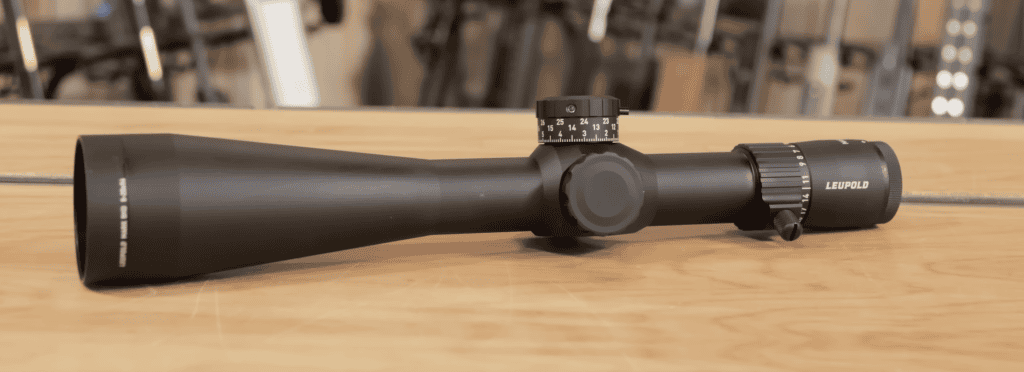
I swapped the Vortex off the Bergara and threaded the Mark 5HD into a set of 35mm rings (which I had to source separately, and they weren’t cheap). The first thing that registered when I settled behind the scope was how much more room I had. The eyebox felt noticeably more forgiving than the Vortex, and I didn’t have to be as fussy about head position. Leupold’s “light management” coatings lived up to the marketing here. Colors were richer, the image had a crispness to it that I’d describe as looking through clean air, and edge-to-edge sharpness held even at 25x where the Vortex had started to soften. This is the kind of glass that made Leupold a household name, and it reminded me of why I used to recommend their scopes to every customer at Bass Pro who had the budget.
Those Turrets Are Something Else
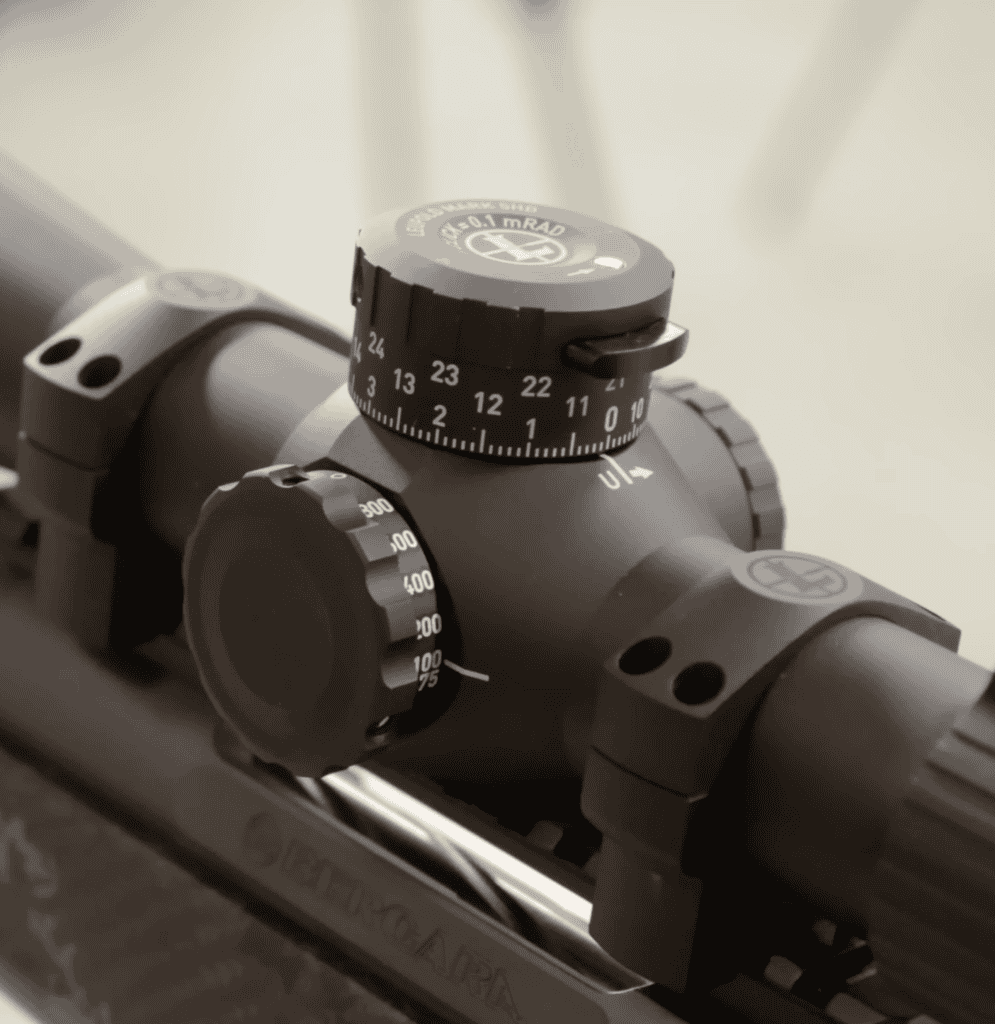
The M5C3 system packs a zero stop, a ZeroLock, and revolution indicators into a turret that’s actually smaller than the Vortex’s. You push down to unlock the dial before it’ll turn. My first instinct was that this would slow me down, but after a few sessions I realized it eliminated a problem I didn’t know I had: I’d occasionally bump the Vortex’s turrets when pulling the rifle out of my bag. With the Leupold, that can’t happen. The click feel is the most refined in this test. Each adjustment has a precision to it that’s hard to describe except by comparison. The Vortex clicks are good. The Leupold clicks feel like they were machined by a Swiss watchmaker. The scope tracks through three full revolutions with visual and tactile indicators so you always know which revolution you’re on, which matters when you’re running 35 MRAD of total elevation.
The PR2-MIL: Cleaner Than Expected
Leupold designed the PR2-MIL reticle in collaboration with top PRS shooters like John Pynch and Doug Koenig, and their influence shows. It’s a cleaner layout than the EBR-7C. Less cluttered, with .25 MIL hashmarks that I found surprisingly intuitive for holdovers once I stopped expecting .2 or .5 MIL graduations. The trade-off is real, though. On the steel shoot I mentioned in the Vortex review, the EBR-7C’s denser Christmas tree let me make faster holds on targets at varying distances. The PR2-MIL wants you to dial your turrets, and when you’re using turrets this good, that’s not a bad thing. It’s a reticle built for a specific style of precision shooting, and if that’s your style, it’s exceptional.
Fifteen Extra Minutes of Shooting Light
I took the Mark 5HD out on a late October morning to sit for whitetail on family property. Here’s where the non-illuminated reticle became an issue. The PR2-MIL is a dark crosshair, and against the dark brush at the treeline before sunrise, I genuinely could not pick up the reticle for several minutes after I could see the deer. The Nightforce SHV’s illuminated center dot would have solved this instantly. That said, once there was enough light for the reticle to contrast against the target, the Mark 5HD extended my usable shooting time deeper into the evening than any other scope in this test. Leupold claims their coatings buy you roughly fifteen extra minutes at each end of the day, and from what I observed sitting in that stand, that tracks.
Worth the Premium?
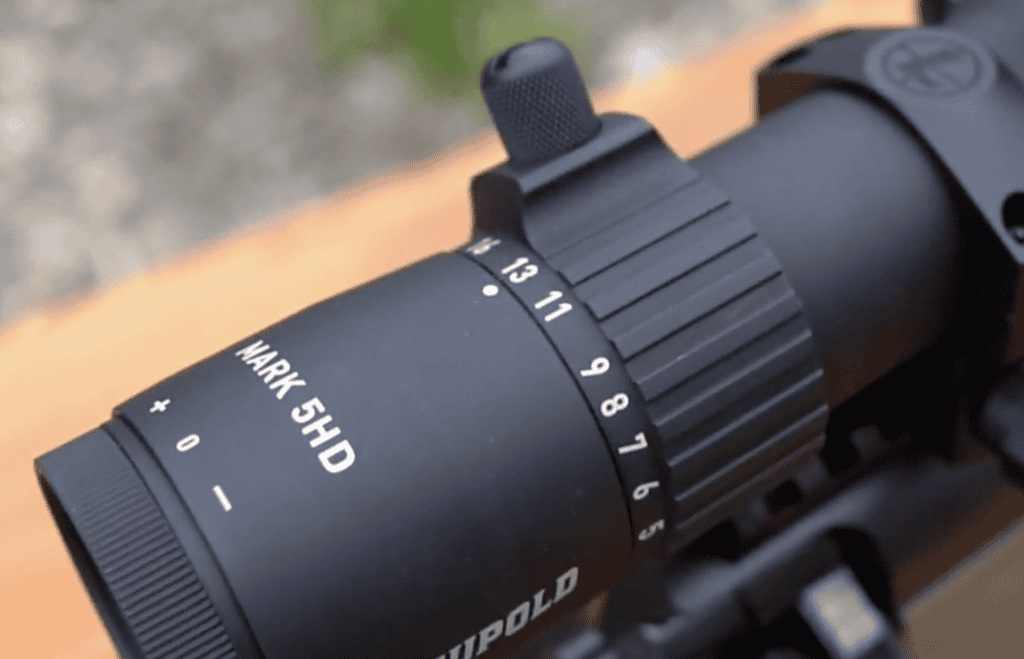
That depends on what “worth it” means to you. I ran about 85 rounds through the Mark 5HD and the tracking was flawless. The box test came back dead-on. It’s the lightest scope here despite having the largest objective, which speaks to Leupold’s engineering. Everything about it feels purposeful. But at more than double the Vortex’s price, you’re paying for refinement rather than fundamental capability. The Vortex can do 85% of what this scope does. If that last 15% matters to you (and for serious competitors and dedicated hunters, it genuinely does), the Mark 5HD delivers. Just budget for those 35mm rings.
Field Test Data
| Test Parameter | Result |
|---|---|
| 100-Yard Group (5-shot, benched) | 0.68″ (.65 MOA) |
| Tracking Test (10 MRAD box) | Returned to zero with no measurable deviation |
| Low-Light Usability (last 20 min of light) | Best in test; usable clarity persisted deepest into dusk |
| Edge-to-Edge Sharpness at 25x | Sharp to approximately 90% of the field |
| Turret Feel (subjective) | Best in test; refined clicks with ZeroLock engagement |
| Parallax Stability at 600 yds | No detectable reticle shift once dialed |
Tested with: Bergara B-14 HMR 6.5 Creedmoor | Hornady ELD Match 140gr
Pros and Cons
PROS
|
CONS
|
Performance Ratings
Learn more about how I test and rate scopes.
If someone handed me a blank check to build a dedicated 6.5 Creedmoor competition rig, the Mark 5HD goes on it. No question. But most of us don’t operate that way, and the honest recommendation for most shooters is the Vortex at less than half the cost, unless you know you need what this scope specifically delivers.
3. Nightforce SHV 5-20x56mm – Best for Dedicated Hunters
A Different Animal Entirely
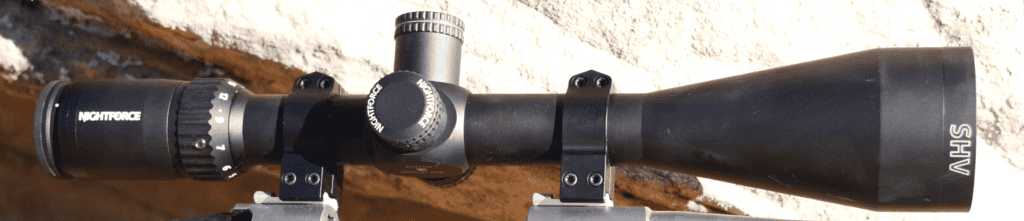
Switching from the Vortex and Leupold to the SHV felt like going from a precision tool to a field instrument. That’s not a knock. This scope was designed for a different job, and the moment I took it on an evening hog hunt rather than a range session, it clicked. The illuminated center dot on the MOAR reticle glowed against a dark boar’s shoulder at last light when neither the Leupold’s dark crosshair nor the Vortex’s dim illumination would have given me a confident aiming point. Only the center crosshair lights up, which keeps the image clean. That single design choice tells you who Nightforce built this scope for: hunters, not match shooters.
Japanese Glass That Punches Up
The SHV line is made in Japan (unlike Nightforce’s higher-end NXS and ATACR lines, which are US-made), and the glass quality reflects that pedigree. I was impressed by how well it handled a late-afternoon session with harsh Texas sun coming in at a low angle. Where I expected glare and washed-out contrast, the image stayed crisp with good color. Low-light performance came close to the Mark 5HD, which surprised me given the price gap between them. Both scopes share 56mm objectives, and during my evening comparisons, the SHV held usable clarity almost as deep into dusk as the Leupold. The Vortex and Athlon, both with 50mm objectives, fell behind both of them in those conditions.
The SFP/MOA Question
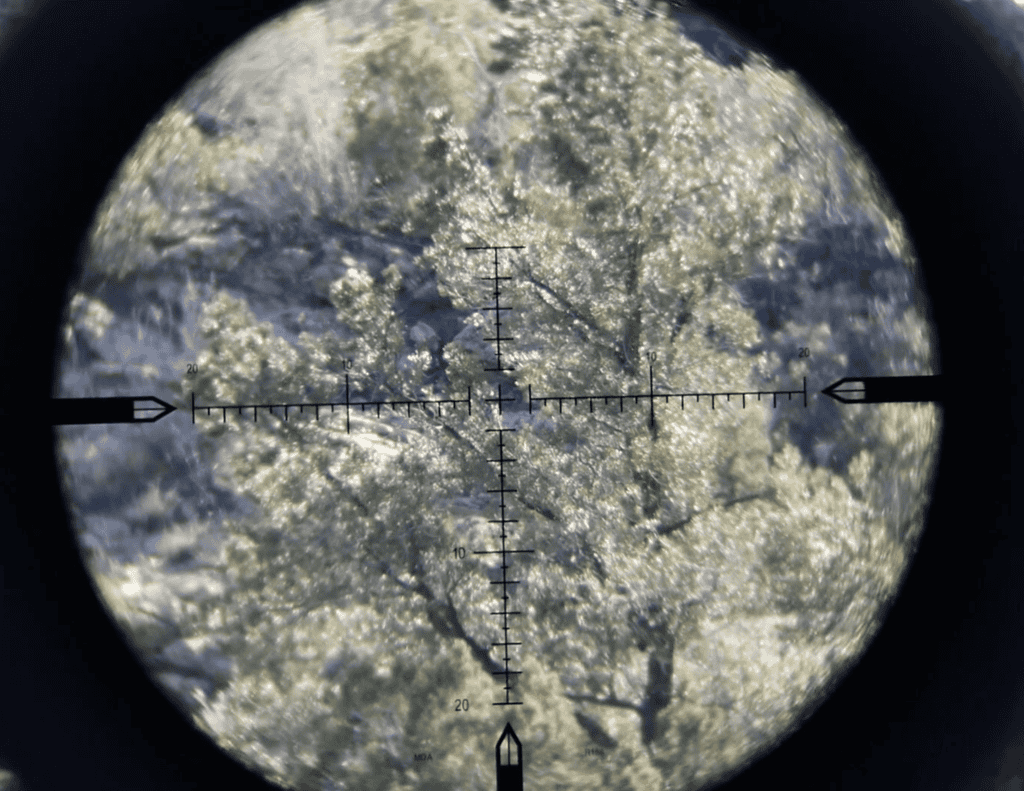
This is the scope’s most polarizing feature, and I need to address it honestly. The MOAR reticle is second focal plane with MOA-based holdover hashmarks. Those hashmarks are only true at 20x. At 10x, they represent different values. For a PRS shooter who moves between magnifications and needs consistent subtension references, this is a dealbreaker. For a hunter who cranks to max magnification for a deliberate shot at a known distance, it’s irrelevant. I tested the holdover accuracy at 20x out to 500 yards and the MOAR’s 1 MOA hashmarks with .125 MOA-thin center crosshairs were easy to read and precise. At lower powers, the reticle stays thin and unobtrusive, which is exactly what you want when you’re scanning a brushline for movement.
Built for Getting Knocked Around
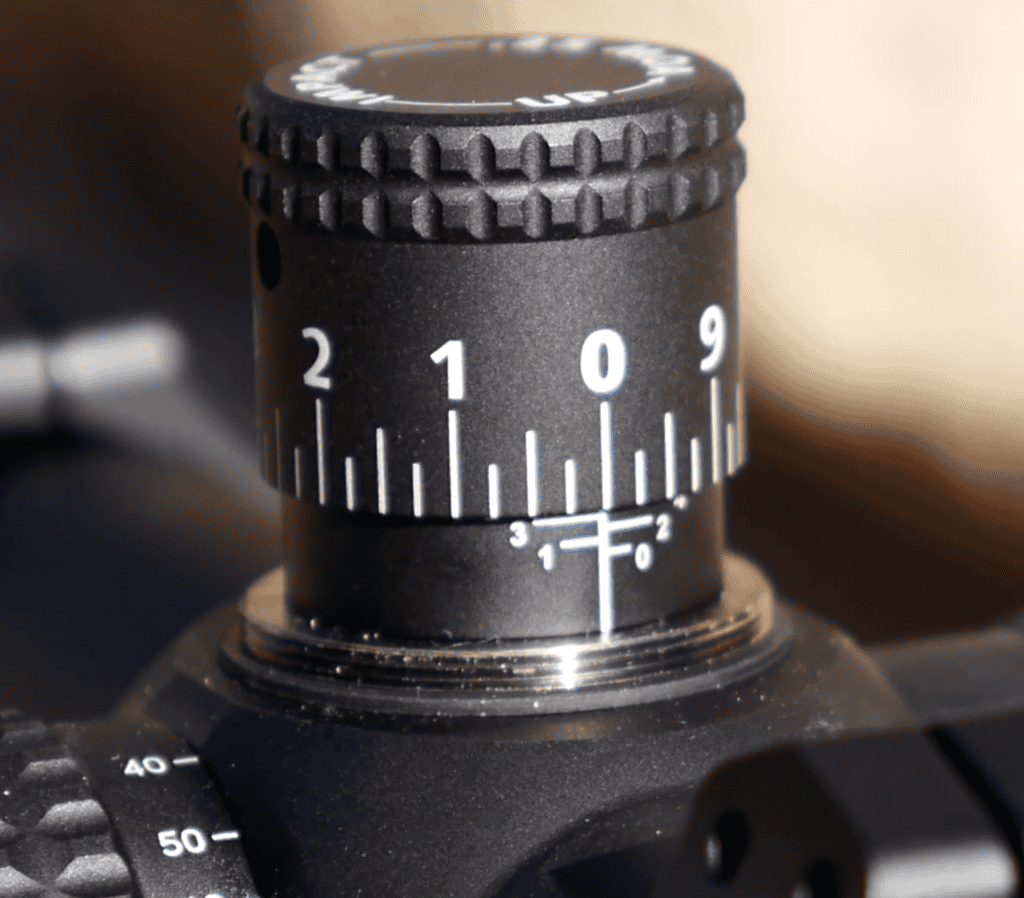
The capped windage turret tells you something about the intended use. This scope expects to ride in a truck, get shoved into a scabbard, bounce around in a pack. The cap prevents windage from getting bumped. The exposed elevation turret with ZeroSet lets you dial up for a shot, then snap back to zero with confidence. I ran about 80 rounds through the SHV and performed a box test that came back clean. The whole scope has a solidity to it that you can feel when you handle it. I’ve handled Nightforce optics that have survived things that would’ve killed lesser scopes, and the SHV carries that same overbuilt DNA, machined from 6061-T6 aluminum. The 6.5 Creedmoor’s mild recoil is nothing this scope will ever notice.
What It Can’t Do
The lower maximum magnification compared to the other three scopes caught up with me when I tried to spot my own impacts at 700 yards. At 20x, I could hit the plate but couldn’t see the splash on a miss clearly enough to self-correct. On the Vortex at 25x, I could. Eye relief also tightens as you increase magnification, and at 20x I noticed I had to be more precise about head position than I did with the same scope at 10x. If your Creedmoor does double duty between hunting and weekend long-range shooting, the SHV is going to leave you wanting more reach. If your Creedmoor lives in a hunting rifle and goes afield to take game at ethical distances, this is probably the best-built scope in this test for that specific purpose.
The numbers backed up what I experienced behind the glass.
Field Test Data
| Test Parameter | Result |
|---|---|
| 100-Yard Group (5-shot, benched) | 0.74″ (.71 MOA) |
| Tracking Test (20 MOA box) | Returned to zero with no measurable deviation |
| Low-Light Usability (last 20 min of light) | Excellent; center illumination kept aiming point visible well into dusk |
| Recoil Impact After 80 Rounds | No zero shift, no mechanical loosening |
| ZeroSet Consistency (12 return-to-zero cycles) | Positive stop every time with no deviation |
Tested with: Bergara B-14 HMR 6.5 Creedmoor | Hornady ELD Match 140gr
Pros and Cons
PROS
|
CONS
|
Performance Ratings
Learn more about how I test and rate scopes.
I’d put the SHV on a 6.5 Creedmoor that lives in a truck gun rack or goes on hard backcountry hunts where glass quality and durability trump dialing speed. It’s built for shooters who treat their Creedmoor as a hunting rifle first. If that’s you, this scope is hard to beat at any price.
4. Athlon Argos BTR Gen 3 6-24×50 – Best Budget Entry
The Feature List That Doesn’t Make Sense at This Price
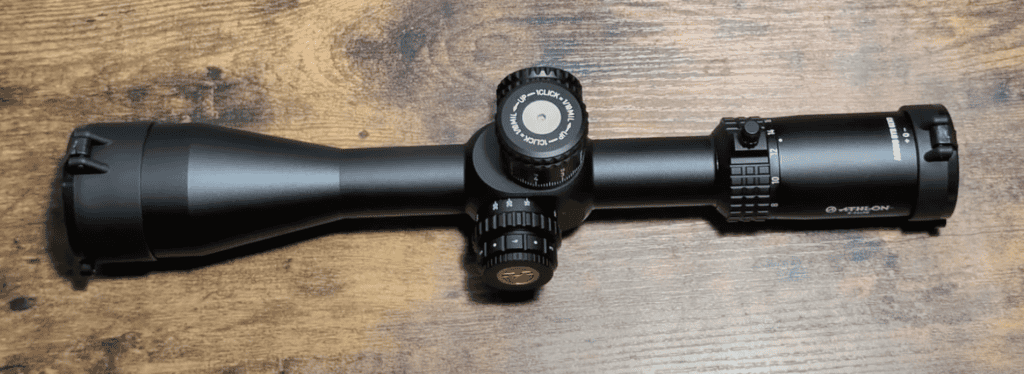
I pulled the Athlon out of the box expecting to be disappointed. At roughly one-sixth the cost of the Leupold, something has to give. And things do give. But not where I expected. I zeroed it on the Bergara in four shots, then ran a box test at 100 yards. It came back within 0.2 MRAD of start. I ran it again. Same result. The turrets on the Gen 3 are a significant step up from the Gen 2: larger diameter, better tactile feedback, and the clicks had a firmness that felt closer to the Vortex than I had any right to expect at this price. Athlon also added an integrated throw lever on the magnification ring, which the Gen 2 didn’t have. I kept checking the price tag on the box because the feature set felt like it belonged on a scope costing twice as much.
Where the Money Actually Went Missing
The glass. That’s where you feel the budget. At 6x through about 16x, the Athlon’s image is surprisingly competitive. Sharp center, decent color, usable contrast. Push it past 18x and things deteriorate. The edges lose sharpness, the image gets a bit dim, and in low light the difference between this and the other three scopes becomes stark. During that same late-October dusk session where I compared all four scopes, the Athlon was the first one I could no longer confidently use. The Vortex with its XD glass held on longer; the Nightforce and Leupold with their 56mm objectives were in another league entirely. This is not HD or ED glass. It’s fully multi-coated, and it works, but it has limits that become obvious when you sit behind a scope that costs three or six times as much.
The Eyebox Problem
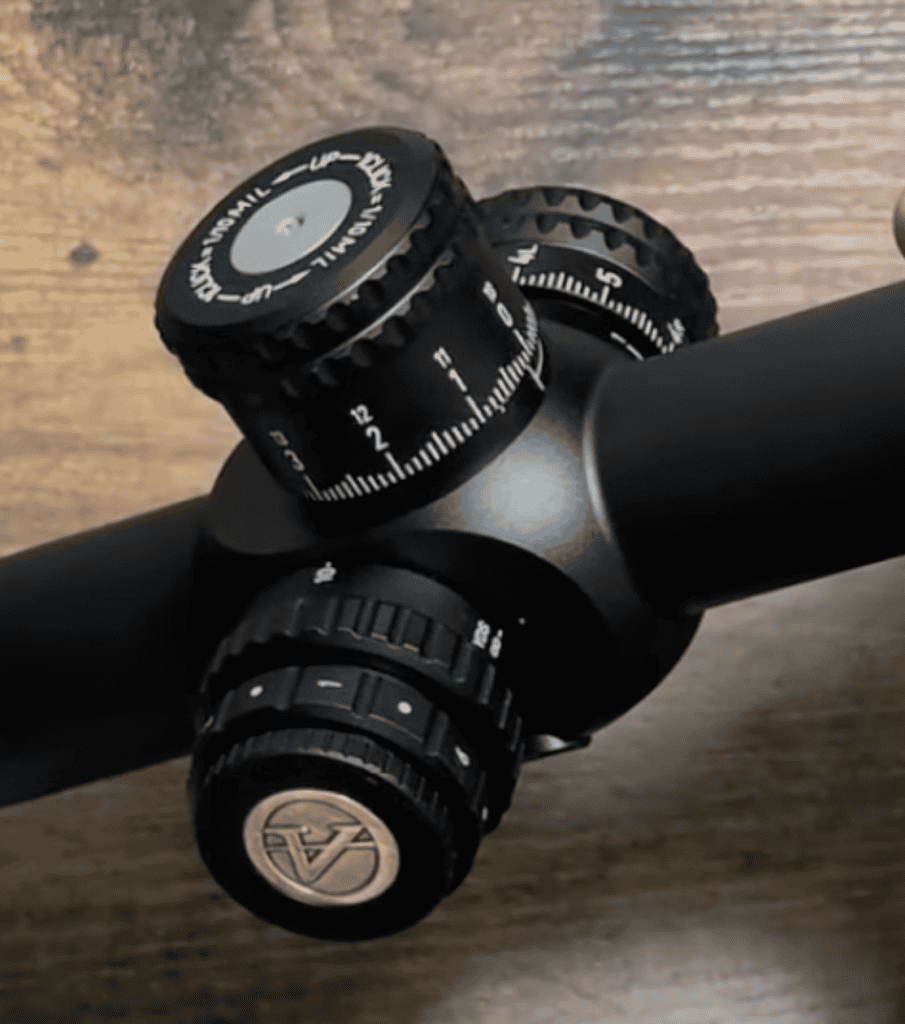
This was the Athlon’s worst trait during testing. At higher magnifications, the eyebox tightens to the point where I had to be very deliberate about my cheek weld to avoid shadow creep at the edges. If I shifted my head even slightly at 20x or above, I’d get a black ring closing in. The Vortex was tighter than I liked; the Athlon was noticeably worse. From a stable bench position with a consistent rest, it’s manageable. Shooting from a barricade or an awkward field position at high magnification would be frustrating. I found myself running the scope at 12-16x most of the time, which is a perfectly usable range for the 6.5 Creedmoor’s typical hunting distances but defeats the purpose of having 24x available.
It Tracked, Though
I put about 85 rounds through the Athlon across three sessions and tracked it out to 600 yards. It held zero. The zero stop functioned cleanly, giving me a positive physical stop when I dialed back down. At 400 yards on steel, I was connecting consistently using dialed corrections. The APRS11 reticle in FFP has 0.5 MIL hashmarks that are easy to read at moderate magnifications and scale correctly across the zoom range. It’s a simpler tree than the Vortex’s EBR-7C, with fewer holdover references, but it’s functional. The illumination works well enough in shade or overcast but washes out in direct sunlight, same as the Vortex.
Who This Scope Is Actually For
If you just bought a 6.5 Creedmoor and want to learn to shoot at distance without investing heavily in glass you might outgrow or replace, the Argos BTR Gen 3 is a genuine starting point. It teaches you the fundamentals: dialing turrets, using FFP MIL holdovers, managing parallax. It tracks honestly enough that if you miss, it’s you, not the scope (at reasonable distances). I’ve seen people spend this same money on fixed-power scopes with no zero stop and capped turrets, and I think this is a categorically better choice for a 6.5 Creedmoor. Just understand that if you get serious about long-range shooting, you’ll eventually want better glass. This scope gets you started; the Vortex is where you stay.
Field Test Data
| Test Parameter | Result |
|---|---|
| 100-Yard Group (5-shot, benched) | 0.81″ (.77 MOA) |
| Tracking Test (10 MRAD box) | Returned within 0.2 MRAD of start on two consecutive tests |
| Low-Light Usability (last 20 min of light) | First scope to become difficult to use as light faded |
| Eyebox Tolerance at 20x (head shift test) | Noticeable shadow creep with minor head movement |
Tested with: Bergara B-14 HMR 6.5 Creedmoor | Hornady ELD Match 140gr
Pros and Cons
PROS
|
CONS
|
Performance Ratings
Learn more about how I test and rate scopes.
The Athlon Argos BTR Gen 3 is the scope I’d hand to someone who just bought their first 6.5 Creedmoor and wants to learn long-range fundamentals without committing serious money. It does everything you need to learn on, and if the glass eventually frustrates you, you’ve spent so little that upgrading to the Vortex doesn’t sting. The Athlon also features in my best long-range scopes guide.
How I Actually Tested These Scopes
All four scopes went on the same rifle: my Bergara B-14 HMR in 6.5 Creedmoor with a 22-inch barrel. I fed everything Hornady ELD Match 140gr because it’s the closest thing to a universal precision load for this cartridge, and I needed a constant to isolate scope performance from ammunition variables. Testing took place across roughly six weeks from mid-September through late October 2025, mostly at a private range south of Dallas and on family property in East Texas. Conditions ranged from 95-degree September afternoons with heavy mirage to cool, overcast October mornings in the low 50s.
I started each scope the same way: zero at 100 yards, confirm with a second group, then run a box test. From there I moved to 300, 400, and 600 yards on steel, and stretched to 700 on the scopes with enough magnification to spot impacts. Total round count was around 340 across all four scopes. I tested low-light performance side-by-side on three separate evenings, swapping scopes on the same rifle to keep the comparison honest.
Before settling on these four, I looked at a Vortex Diamondback Tactical 6-24×50 that struggled with tracking consistency past 400 yards and a Primary Arms SLx 4-14×44 that just didn’t have the magnification range to exploit the Creedmoor’s reach. A Bushnell Match Pro 6-24×50 also came through my hands but the turret feel was mushy enough that I pulled it from the final four after the first session.
Get more information on how I test optics here.
What Hunters Get Wrong About 6.5 Creedmoor Scopes
Buying Too Much Magnification and Not Enough Glass Quality
The 6.5 Creedmoor’s reputation as a long-range cartridge convinces people they need 30x or 40x. Most deer with this cartridge are taken inside 400 yards. A 5-25x scope with quality glass will outperform a 10-40x scope with budget glass at every distance a hunter actually shoots. Spend the money on optics, not magnification numbers.
Assuming They Need a MIL Scope Because It’s a “Precision” Cartridge
MIL-based FFP scopes are ideal for PRS and dialing at distance, but plenty of Creedmoor hunters never dial past their zero. If you set your zero and hold for wind and distance using a BDC or simple duplex, a good SFP hunting scope (like the Nightforce SHV) serves you better than a cluttered FFP reticle you’ll never use to its potential.
Ignoring the Recoil Advantage When Choosing Eye Relief
The 6.5 Creedmoor kicks less than a .308 or .30-06, which means you can get away with shorter eye relief than you’d tolerate on a harder-kicking rifle. Shooters coming from magnum cartridges sometimes overweight eye relief in their scope selection and pass on optics that would be perfectly comfortable on a Creedmoor. Test before you dismiss.
Your Questions Answered
Do I need FFP for a 6.5 Creedmoor hunting scope?
Not necessarily. FFP matters if you use reticle holdovers at varying magnifications. If you dial your turrets for distance and use the crosshair as a simple aiming point, SFP works fine. Hunters who stay inside 400 yards rarely benefit from FFP.
Is 5-25x the right magnification range for 6.5 Creedmoor?
For most shooters, yes. The low end gives you enough field of view for close encounters or moving targets, and 25x is sufficient for precise shots past 800 yards. A 3-15x works for hunting-only use, and a 7-35x suits dedicated bench or competition shooting.
Can I use the same scope for hunting and PRS matches?
The Vortex Viper PST Gen II is built for exactly that crossover. You want FFP MIL, exposed turrets with a zero stop, and a reticle with holdover subtensions. The Nightforce SHV is excellent for hunting but its SFP design and capped windage limit match use.
Should I use a 20 MOA rail with these scopes?
If you plan to shoot past 600 yards regularly, a 20 MOA base preserves your elevation adjustment for long-range corrections. For the Vortex and Athlon with their 20 and 18 MRAD of total travel respectively, a canted base helps you get the most from the available adjustment range.
Which Scope for Your Hunting Style?
PRS matches and weekend steel: The Vortex Viper PST Gen II. FFP MIL, fast turrets, holdover versatility. This is the scope built for mixed-use Creedmoor shooting.
Serious competition with budget to match: The Leupold Mark 5HD. Superior glass and the best turret system tested. Your investment shows when it matters.
Backcountry hunting and hard field use: The Nightforce SHV. Toughest build, excellent low-light glass, and a design that protects itself from the bumps of real hunting.
First precision rifle on a tight budget: The Athlon Argos BTR Gen 3. Learn the fundamentals of dialing and holdovers without spending more than the rifle cost.
Disclosure
I purchased the Athlon Argos BTR Gen 3 and Vortex Viper PST Gen II with my own money. The Leupold Mark 5HD and Nightforce SHV were provided as review samples and returned after testing. ScopesReviews earns commissions from qualifying purchases through the affiliate links on this page. These commissions don’t influence my testing methodology or conclusions.
Final Thoughts
After 340 rounds and six weeks behind these four scopes, the Vortex Viper PST Gen II 5-25×50 earned the top spot because it solves the problem I laid out at the beginning: the 6.5 Creedmoor is used for too many things for most scopes to handle all of them well. The PST Gen II handles all of them well enough, and several of them very well. The EBR-7C reticle transitions between holdovers and dialing without asking you to compromise. The turrets track. The zero stop works. The glass is honest for the price.
The Leupold Mark 5HD reminded me what genuine premium glass looks and feels like. If you’re competing at a level where the difference between “good” and “excellent” turrets affects your stage times, it’s worth the investment. The Nightforce SHV is the scope I’d grab if I were heading into rough country for a week and needed glass that would perform in fading light and survive the trip. The Athlon proved that you can get into FFP MIL precision shooting for less than the cost of a good pair of boots.
Scope selection for the 6.5 Creedmoor comes down to honesty about how you’ll actually use the rifle. Not how you imagine using it, not what the forums say you should do with it, but what you’ll realistically put behind it on a Saturday morning. Match that reality to the scope that fits, and you’ll be happy for years.
Mike Fellon is the founder of ScopesReviews and an optics specialist with 15+ years in precision shooting. A former Bass Pro Shops firearms advisor and NRA-certified instructor, he’s hands-tested 200+ rifle scopes across hunting and competition. Based in Dallas, Texas.
The ballistics of my Cooper chambered in .260 Remington are nearly identical. I chose an I.O.R. Valdada 3-18x. It has a 35mm tube allowing interval adjustment to over 1000 years. It’s worked very well for me.
Good to hear!
Hi..Way did you not consider the Zeiss V4 6x24x50?
Because there is a limited amount of scopes I can review.