
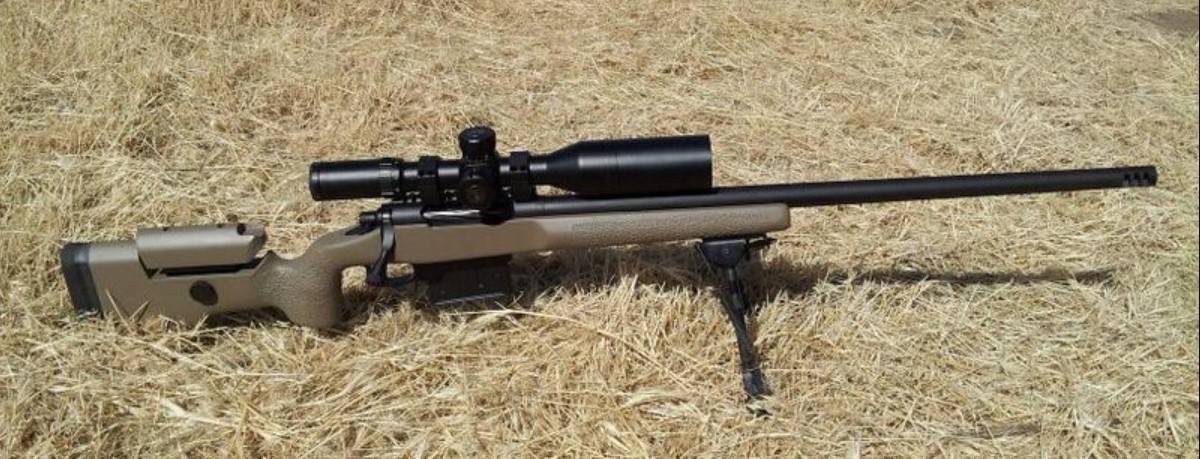
The .300 Winchester Magnum isn’t a cartridge you pair with just any scope. This round was built to reach way out there, consistently delivering energy at distances where most other calibers are running out of steam. I’ve watched too many hunters mount scopes that either can’t handle the recoil or don’t have enough magnification to actually use what the cartridge offers. The challenge isn’t finding a scope that survives the magnum recoil (most modern optics handle it fine). The real question is whether your scope can help you actually connect at 500, 600, or 800 yards where the .300 Win Mag still hits hard enough to matter.
I tested four scopes over three months on my Tikka T3x, running everything from 180-grain Federal Premium loads at the range to actual field conditions that showed me what works when it counts. After roughly 350 rounds and sessions that ranged from freezing October mornings to mid-day heat, the Vortex Viper PST Gen II 5-25×50 proved to be the scope that best matches what this cartridge can do. The 5-25x magnification range covers everything from timber shots to open country work, the first focal plane MRAD reticle stays usable at any power, and the exposed turrets with zero stop let you dial with confidence. For a mid-tier price, it delivers features you’d expect from scopes costing twice as much.
My Top 4 Picks for the .300 Win Mag
Best Overall
Vortex Viper PST Gen II 5-25×50
This scope answered the .300 Win Mag’s biggest demand: enough magnification to actually use the cartridge’s range while staying versatile enough for closer shots. The first focal plane reticle means your holdovers work at any power, and the 5-25x range puts you right where you need to be for this cartridge. At its price point, nothing else combines this level of features with glass quality that actually delivers.
Best Premium Glass
Nightforce SHV 5-20x56mm
When you need to identify animals in last light or pick out details at distance, Nightforce glass makes a difference you can see. That 56mm objective gathers light better than anything else I tested, and the build quality is exactly what you’d expect from Nightforce. The 5-20x range works well for this cartridge, though I’d prefer a bit more top-end magnification for the serious long-range work the .300 Win Mag excels at.
Best Budget
Athlon Argos BTR Gen 3 6-24x50mm
At its price, this scope shouldn’t offer first focal plane with exposed turrets and a zero stop. But it does. The 6-24x magnification is spot-on for what this cartridge does best, and the features list reads like something costing three times more. The 18 MRAD elevation might limit you at extreme distance, but for most .300 Win Mag applications, it’s more than adequate.
Best Lightweight
Leupold VX-5HD 3-15x44mm
If you’re hauling a .300 Win Mag into steep country and weight matters more than magnification, this Leupold makes sense. At barely 19 ounces, it transforms a magnum into something you can actually carry all day without feeling punished. But that 3-15x range is limiting for what this cartridge can do beyond 500 yards. This is the scope you choose when the mountains demand lightweight gear, not when you’re trying to maximize the .300 Win Mag’s long-range potential.
Why You Can Trust My Recommendations
I learned about scope selection the expensive way. Back in 2009, I was heading to Montana for elk and mounted what looked like a great scope on my .300 Win Mag. The specs checked all the boxes, the reviews were solid, and the price was right. First morning out, temperature dropped below freezing and I watched condensation form inside the tube while a bull stood at 380 yards. That scope went back in the box when I got home, and I spent the next year figuring out what actually matters when you’re matching optics to a magnum cartridge.
Since founding ScopesReviews in 2017, I’ve evaluated over 200 rifle scopes, but my approach comes from my five years in the Bass Pro Shops firearms department before that. I watched customers return scopes that looked perfect on paper but failed under recoil or couldn’t deliver the clarity they needed when it mattered. I’m an NRA Range Safety Officer and Certified Firearms Instructor, but most of what I know about scopes came from testing them the way they’ll actually get used: mounted on rifles, in field conditions, over multiple sessions. For this guide, I tested these four scopes specifically for .300 Win Mag applications because this cartridge demands more from an optic than most.
Side-by-Side Specs
The table shows what each scope offers on paper, but magnification range matters most for .300 Win Mag work. You need enough power to actually use the cartridge’s capability past 500 yards.
| Features | Vortex Viper PST Gen II 5-25×50 | NIGHTFORCE SHV 5-20x56mm | Athlon Argos BTR Gen 3 6-24x50mm | Leupold VX-5HD 3-15x44mm |
|---|---|---|---|---|
| Magnification | 5-25x | 5-20x | 6-24x | 3-15x |
| Objective Diameter | 50 mm | 56 mm | 50 mm | 44 mm |
| Eye Relief | 3.4″ | 3.5″ | 3.3″ | 3.8″ – 3.7″ |
| Weight | 31.2 oz | 30.5 oz | 30.3 oz | 19.2 oz |
| Length | 15.8″ | 15.2″ | 14.1″ | 13.5″ |
| Tube Size | 30mm | 30mm | 30mm | 30mm |
| Reticle | EBR-7C MRAD (FFP) | MOAR™ (SFP) | APRS11 IR MIL (FFP) | FireDot Duplex (SFP) |
| Field of View | 24.1 – 4.8 ft @ 100 yds | 17.9 – 5.0 ft @ 100 yds | 16.7 – 4.5 ft @ 100 yds | 38.2 – 7.9 ft @ 100 yds |
| Turret Style | Exposed, RZR Zero Stop | Exposed Elevation (ZeroSet), Capped Windage | Exposed, Precision Zero Stop | CDS-ZL2 Elevation (Locking), Capped Windage |
| Adjustment Range | Elevation/Windage: 20 MRAD / 10 MRAD | 80 MOA Elev / 50 MOA Wind | 18 MRAD Elev / 18 MRAD Wind | 75 MOA Elev / 75 MOA Wind |
| Click Value | 0.1 MRAD | 1/4 MOA | 0.1 MRAD | 1/4 MOA |
| Parallax Adjustment | 25 yds to infinity | 25 yds to infinity | 10 yds to infinity | 50 yds to infinity |
| Illumination | Yes | Yes | Yes | Yes |
The 4 Best .300 Win Mag Scopes
1. Vortex Viper PST Gen II 5-25×50 – Best Overall
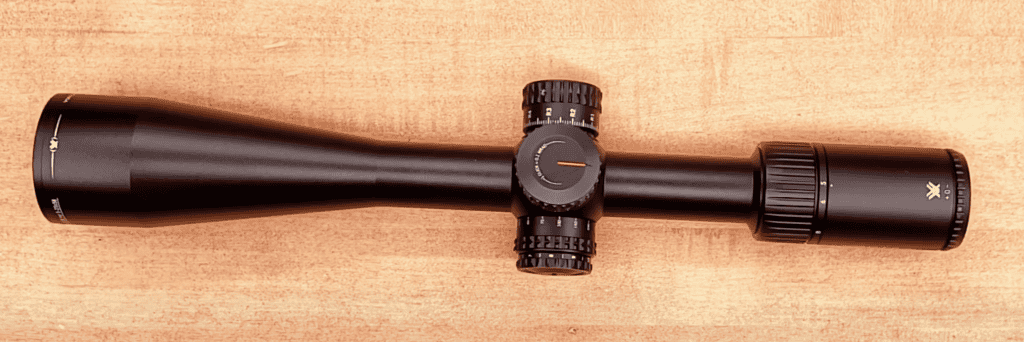
I mounted the Vortex on my Tikka T3x in late September when the temperature was still pushing 85 degrees and tested it through late October, which gave me conditions ranging from warm afternoons to the first cold mornings of fall. The Gen II addresses every complaint I had about the original PST: better turrets, cleaner glass, and a reticle that actually works in first focal plane without turning into a spiderweb at low power or disappearing at high magnification.
Why This Scope Matches the Cartridge
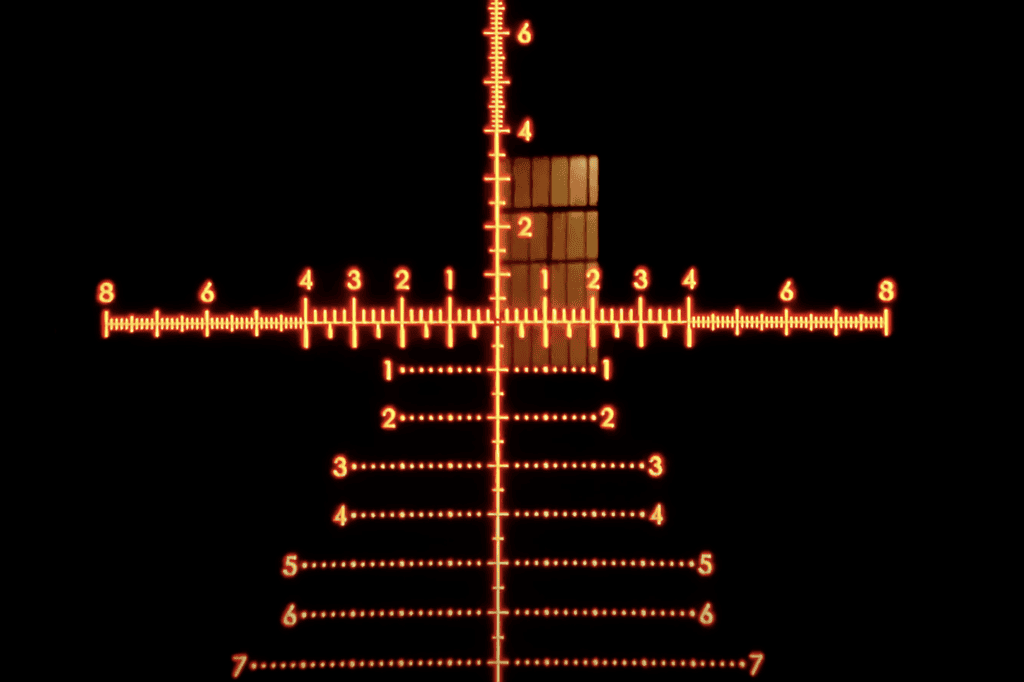
The .300 Win Mag needs magnification that covers both ends of its capability, and the 5-25x range does exactly that. I ran most of my closer work at 8-12x, which kept the field of view wide enough to find targets quickly while still providing enough detail to pick shot placement on whitetail at 200 yards. Past 400 yards, I cranked it to 18-20x, and the extra power made reading wind and confirming zero much easier than with scopes topping out at 15x or 16x. The first focal plane EBR-7C reticle means the subtensions stay accurate regardless of where you set the magnification. When I dialed down to 6x for a quick shot opportunity on hogs, the holdover marks still measured correctly.
Turret Performance Under Recoil
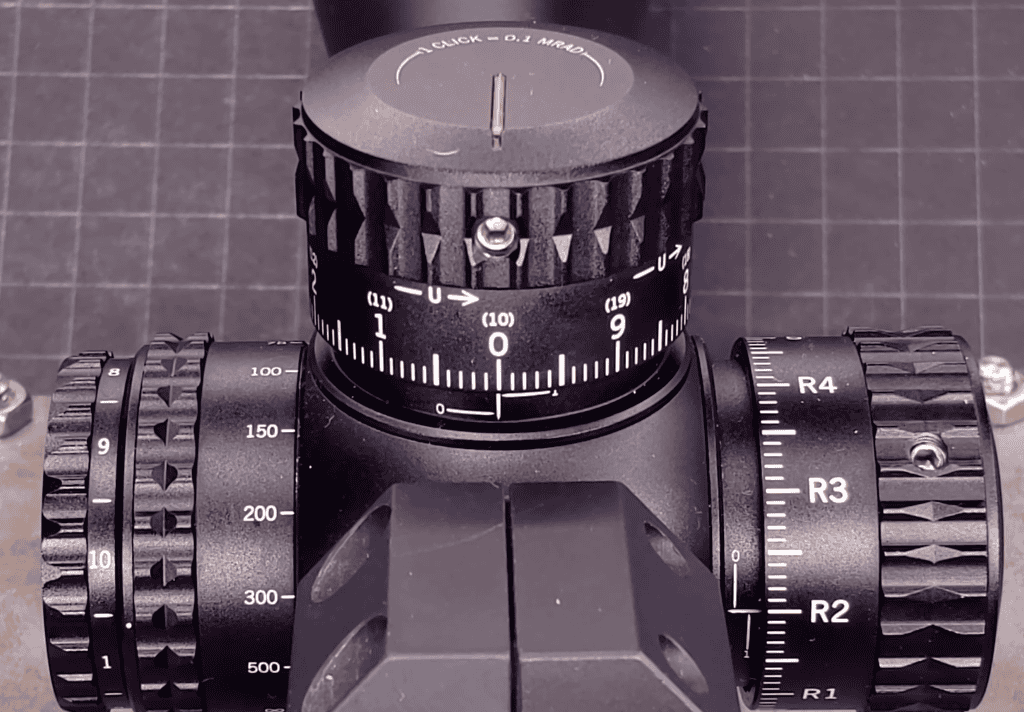
The RZR zero stop became useful faster than I expected. After zeroing at 200 yards, I set the stop and spent an afternoon shooting at various distances, dialing elevation each time. The clicks are positive without being stiff, and tracking proved consistent across roughly 90 rounds of elevation adjustments. When I returned to zero, the turret stopped exactly where it should. The .300 Win Mag produces enough recoil that loose turrets become a real problem, but these stayed tight through the entire test period. The exposed turrets are what you want for dialing at distance, though they do collect dust and require occasional cleaning.
Glass Quality Against the Nightforce
The extra-low dispersion glass delivers better clarity than I expected at this price point. Compared directly to the Nightforce SHV, the Vortex holds up well in good light but falls slightly behind when conditions get marginal. During a foggy November morning, the Nightforce pulled detail out of low light about ten minutes earlier than the Vortex. That gap matters if you’re hunting last light, but for most shooting situations, the Vortex glass is more than adequate. Edge clarity stays sharp to about 90% of the image before some softness appears. The illumination dial integrates cleanly into the parallax knob with 10 brightness settings, and I found myself using it more than expected during cloudy afternoon sessions.
What Makes This the Best Overall
This scope delivers features typically found on optics costing significantly more. The first focal plane reticle, 20 MRAD of elevation travel, zero stop, and exposed turrets are exactly what the .300 Win Mag needs for serious distance work. The 5-25x magnification range covers everything from timber hunting to 800-yard steel without forcing compromises. At its mid-tier price, it punches well above its weight class. The Nightforce has slightly better glass, but you’re paying a substantial premium for that difference. The Athlon offers similar features for less money, but the Vortex glass and turret quality justify the price gap.
Field Test Data
| Test Parameter | Result |
|---|---|
| Tracking Accuracy (20 MRAD Box Test) | 0.2 MRAD cumulative error |
| Zero Retention (after 90 rounds) | Maintained zero within 0.1 MRAD |
| Best Group at 300 Yards | 2.8″ (5 shots, bipod, sandbag rear) |
| Low Light Usability | Clear target identification to 20 minutes after sunset |
| Reticle Usability Range | Hash marks visible and usable 5x-25x |
Tested with: Tikka T3x Lite .300 Win Mag | Federal Premium Vital-Shok 180gr Nosler Partition
Pros and Cons
PROS
|
CONS
|
Performance Ratings
Learn more about how I test and rate scopes.
For shooters wanting to maximize what the .300 Win Mag can do without spending Nightforce money, this scope hits the sweet spot between features, performance, and price.
The Vortex would also be a great scope for 6.5 Creedmoor.
2. NIGHTFORCE SHV 5-20x56mm – Best Premium Glass
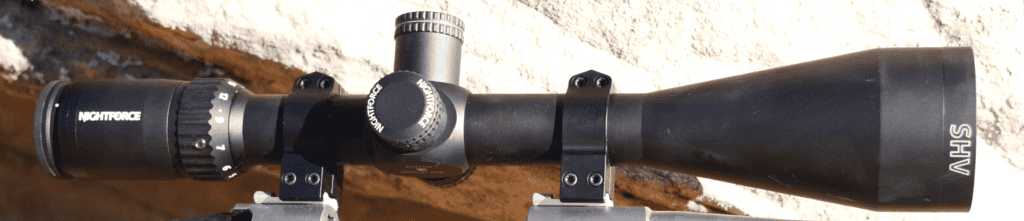
When you look through Nightforce glass, you understand what premium optics actually means. I tested the SHV during the same September-through-December period as the other scopes, and that 56mm objective proved its worth every single morning when legal shooting light arrived. While the other scopes in this test were still showing gray shapes, the Nightforce was already pulling out detail that mattered for shot placement. That extra ten to fifteen minutes of usable light at dawn and dusk adds up over a hunting season.
Where the Glass Advantage Shows
The optical quality stays consistent across the entire 5-20x range without the softening you see in many scopes past 15x or 16x. I spent an afternoon at 600 yards comparing it directly against the Vortex, and the Nightforce delivered noticeably better contrast and color fidelity. Details that looked slightly washed out in the Vortex appeared sharper and more defined through the SHV. That gap widens significantly in low light. During a foggy November morning session, I could clearly identify targets through the Nightforce while the other scopes were still too murky for confident shot placement. The 56mm objective makes a real difference when you’re hunting the edges of legal light.
The ZeroSet System
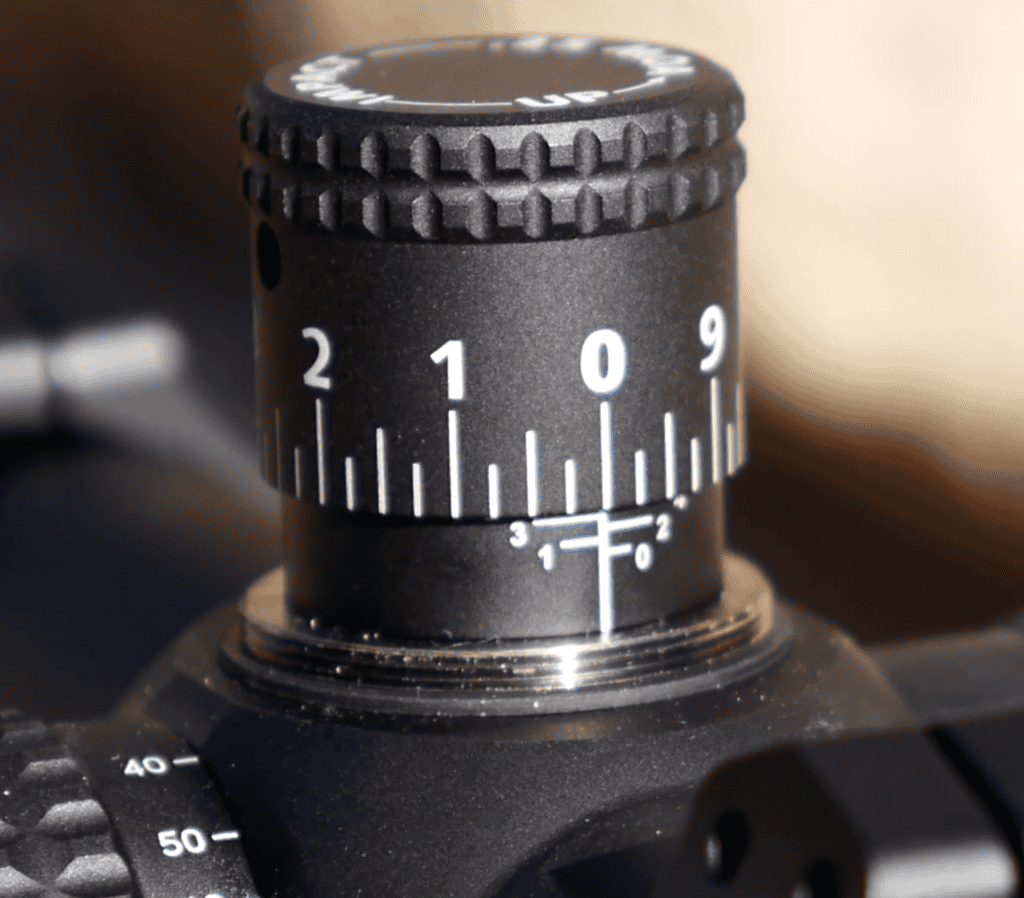
Nightforce’s ZeroSet elevation turret works differently than most zero stops. You can return to your original zero regardless of how many adjustments you’ve made by pulling up on the turret, rotating to the zero line, and pushing back down. After setting my 200-yard zero in October, I tested this feature repeatedly throughout the three-month period. It returned to zero within a quarter MOA every single time, even after dialing through multiple revolutions. For hunters who dial elevation for longer shots but need to quickly return to a known zero, this system works exactly as advertised. The exposed elevation turret with capped windage makes sense for most hunting applications where you’re dialing distance but holding for wind.
Second Focal Plane Trade-Off
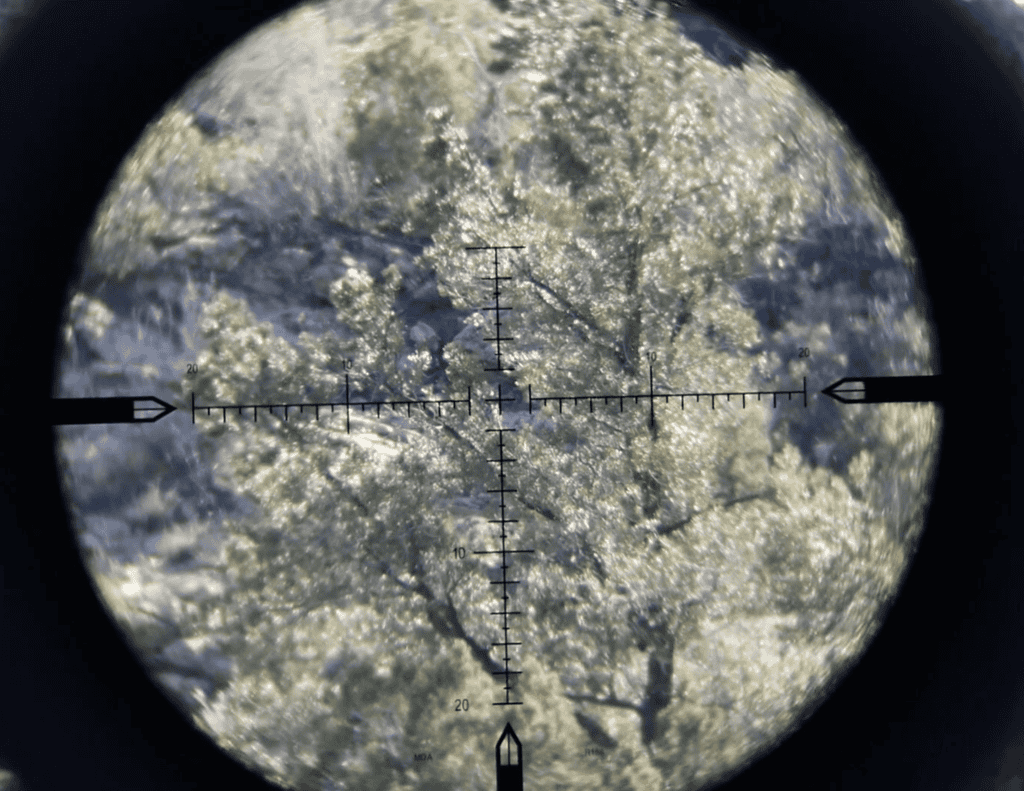
The MOAR reticle sits in the second focal plane, which means the subtensions only match the marked values at maximum magnification. At 20x, the hash marks provide accurate holdover references with 1 MOA spacing. Dial down to 10x, and those same marks no longer correspond to their labeled values. This isn’t a problem if you’re primarily dialing elevation rather than using holdovers, which is how most hunters shoot. The reticle stays fine and unobtrusive at low power, which helps with quick target acquisition in timber or when shooting inside 300 yards. Some shooters prefer first focal plane for the flexibility, but I found the SFP design worked well for how I actually use this cartridge.
Why Not Best Overall Despite Better Glass
The glass quality is noticeably superior to the Vortex, but you’re paying a substantial premium for that advantage. The 5-20x top end also limits you slightly compared to the Vortex’s 25x, which matters when you’re trying to confirm zero or read mirage at 700 or 800 yards. Those five extra magnifications help at serious distance. The Nightforce’s 80 MOA elevation travel exceeds what most .300 Win Mag applications require, but it’s nice to have the headroom. For hunters who prioritize glass quality and low-light performance above all else, this scope justifies its price. For shooters who want maximum versatility with nearly comparable performance, the Vortex delivers better overall value.
Field Test Data
| Test Parameter | Result |
|---|---|
| ZeroSet Return Accuracy | Consistent within 0.25 MOA across 25+ cycles |
| Low Light Target ID | Clear identification 30 minutes after sunset |
| Best Group at 400 Yards | 3.2″ (5 shots, bipod, sandbag rear) |
| Tracking Consistency | Zero deviation through box test |
| Glass Resolution at Max Power | Sharp edge-to-edge clarity maintained at 20x |
Tested with: Tikka T3x Lite .300 Win Mag | Federal Premium Vital-Shok 180gr Nosler Partition
Pros and Cons
PROS
|
CONS
|
Performance Ratings
Learn more about how I test and rate scopes.
If low-light performance and absolute glass quality matter more than saving money, the Nightforce delivers premium performance that justifies its price.
The NightForce would also be a great scope for .338 Lapua.
3. Athlon Argos BTR Gen 3 6-24x50mm – Best Budget
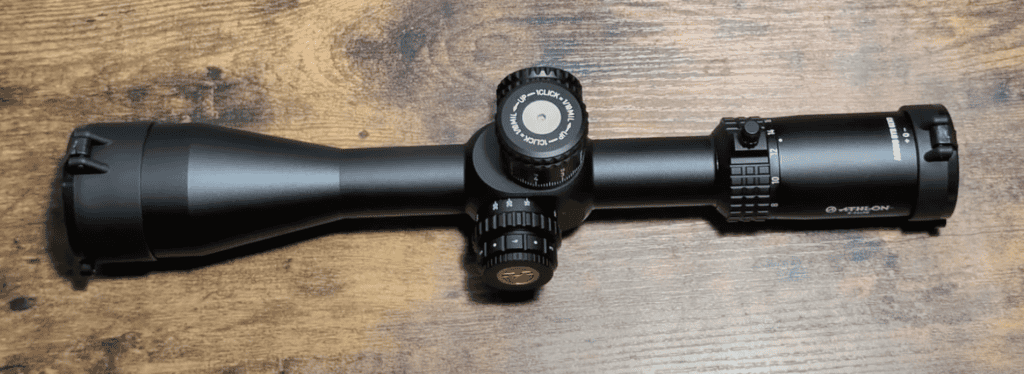
Athlon scopes tend to surprise people who haven’t used them before. The features list on the Argos BTR Gen 3 reads like something you’d expect from an optic costing twice what they’re actually asking, and after three months of testing alongside much more expensive competition, I kept finding myself impressed by what this scope delivers. The Gen 3 updates improved the turrets and magnification ring over the previous version, addressing the main complaints about the earlier model. At its price point, nothing else offers first focal plane with exposed turrets, zero stop, and glass that actually performs.
Feature Set at the Price
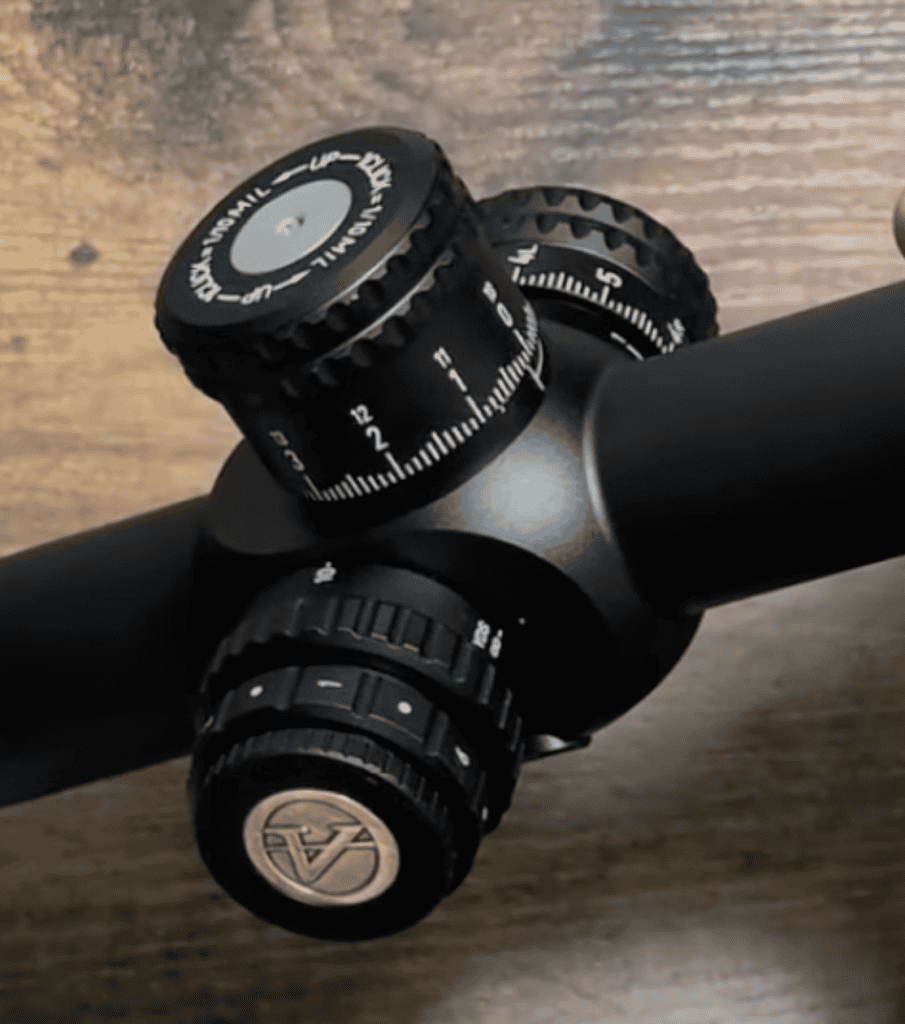
The APRS11 reticle in first focal plane gives you accurate subtensions across the entire 6-24x magnification range, which matters when you’re holding over for wind or using the hash marks for ranging. The precision zero stop worked reliably through the testing period, though setting it requires accessing screws on the turret (not difficult, just something you need to do during initial setup). The 0.1 MRAD clicks are crisp without being overly stiff, and I appreciated the exposed turret design for dialing distance. The 18 MRAD elevation travel is adequate for most .300 Win Mag work to 700 yards, though shooters planning to push past 800 yards regularly might find themselves wishing for more range.
Glass Performance Relative to Price
The Advanced Fully Multi-Coated lenses with XPL coating deliver clarity that competes well with the Vortex in most conditions. During direct side-by-side comparisons at 400 yards, I could see minimal difference between the Athlon and Vortex in good light. The gap appears in low light and at maximum magnification. The Nightforce maintained sharper resolution at 20x than the Athlon managed at 24x, and the Vortex pulled slightly more detail in marginal light. For the price difference, though, the Athlon glass punches above its weight. Edge softening starts appearing past about 18x, but the center of the image stays clear enough for accurate shooting.
The Magnification Range Question
Starting at 6x rather than 3x or 5x means this scope isn’t ideal for close-range timber work where you might need a wider field of view. The .300 Win Mag gets used more often at distance than up close, so the 6-24x range targets the cartridge’s strengths rather than trying to cover every possible application. I found myself running it at 10-14x for most practical shooting, pushing to 20-24x when confirming zero or reading conditions at longer range. The 6x low end worked fine for shots inside 200 yards, though it’s not as versatile as the Vortex’s 5x or the Nightforce and Leupold’s options for really close work.
What You’re Trading for the Price
The eye relief at 3.3 inches requires consistent cheek weld under .300 Win Mag recoil. I noticed this more with the Athlon than with the other scopes during rapid shooting strings. The eyebox gets less forgiving at higher magnifications, meaning you need to position your head precisely to get the full sight picture. The turrets don’t have quite the same solid feel as the Vortex or Nightforce, though they performed reliably through testing. The glass falls behind both premium options in low light, which matters for dawn and dusk hunting. None of these limitations disqualify the scope for .300 Win Mag use, but they explain why it costs what it does.
Field Test Data
| Test Parameter | Result |
|---|---|
| Tracking Test (18 MRAD Square) | Returned to zero with 0.3 MRAD deviation |
| Zero Retention (after 85 rounds) | Maintained zero within 0.2 MRAD |
| Best Group at 350 Yards | 3.5″ (5 shots, bipod, sandbag rear) |
| Reticle Visibility at Low Power | APRS11 hash marks clearly visible at 6x |
| Glass Clarity Limit | Noticeable softening beyond 18x magnification |
Tested with: Tikka T3x Lite .300 Win Mag | Federal Premium Vital-Shok 180gr Nosler Partition
Pros and Cons
PROS
|
CONS
|
Performance Ratings
Learn more about how I test and rate scopes.
For shooters getting serious about long-range work with the .300 Win Mag but working within budget constraints, the Athlon delivers features and performance that make expensive scopes seem less necessary.
The Athlon would also be a good scope for M4. If you want to shoot on shorter ranges, see which are the best 3-9×40 scopes.
4. Leupold VX-5HD 3-15x44mm – Best Lightweight

At 19.2 ounces, the VX-5HD weighs twelve ounces less than the Vortex and eleven ounces less than the Nightforce. That difference matters when you’re hauling a .300 Win Mag into steep country. I carried this scope-mounted rifle on several all-day scouting trips during November, and the weight savings became obvious by mid-afternoon. The question is whether what you lose in magnification and features justifies what you gain in reduced weight. For hunters prioritizing portability over maximum long-range capability, Leupold makes a compelling case.
The Weight Advantage
Mounting the Leupold transformed how the Tikka balanced and carried. The lighter scope shifted the weight back toward the stock, making the rifle feel less muzzle-heavy during offhand shooting. During extended glassing sessions, the reduced scope weight meant less fatigue when holding the rifle steady. For hunters covering serious miles in mountain terrain, this scope delivers the handling characteristics you want. The trade-off shows up when you’re trying to maximize the .300 Win Mag’s long-range potential.
Where 15x Falls Short
The 3-15x magnification range works well for most hunting situations inside 500 yards. I ran this scope at 8-12x for the majority of my shooting, and it performed exactly as expected. The problem appears when you push past 600 yards and want to confirm zero, read mirage, or evaluate shot placement at serious distance. At 15x, details that were clear through the Vortex at 20-25x or the Nightforce at 20x became harder to resolve. For steel shooting at 700 yards, I found myself wishing for more magnification. If your .300 Win Mag work stays within the cartridge’s effective hunting range and rarely extends to extreme precision shooting, 15x handles the job. If you’re serious about long-range target work, you’ll feel the limitation.
Glass Quality Exceeds Expectations
Leupold’s Professional-Grade Optical System with HD glass delivered clarity that competed well with both the Nightforce and Vortex. The Twilight Max HD Light Management System made good on its claims during low-light testing sessions. In direct comparison with the Nightforce’s larger 56mm objective, the Leupold with its 44mm objective stayed surprisingly competitive until the final minutes of legal shooting light. The Guard-Ion coating kept the lenses clean through dusty range sessions and light rain. The FireDot Duplex reticle with Motion Sensor Technology worked better than I expected, automatically shutting off after five minutes of no movement and reactivating instantly when I picked up the rifle.
The CDS-ZL2 System

The locking elevation turret prevents accidental adjustment during carry but unlocks quickly when you need to dial. Leupold offers custom dials matched to your specific load, though I tested with the standard MOA markings. The 75 MOA elevation travel provides adequate range for .300 Win Mag applications. The capped windage turret makes sense for hunters who hold for wind rather than dialing. I confirmed the turrets tracked accurately through box testing, though the clicks don’t have quite the same tactile feedback as the Vortex or Nightforce.
Who This Scope Serves
This is the scope for mountain hunters who value every ounce and rarely shoot past 500 yards. If you’re hauling a .300 Win Mag up steep ridges for elk or sheep, the weight savings matter more than maximum magnification. For hunters wanting to maximize the cartridge’s long-range potential or shooters planning serious precision work, the other three scopes deliver better capability despite weighing more. The Leupold makes the right compromises for a specific type of hunting, but those compromises limit its versatility compared to the competition.
Field Test Data
| Test Parameter | Result |
|---|---|
| Weight Advantage vs Competition | 11-12 oz lighter than other scopes tested |
| Tracking Verification | Maintained accuracy through 50 MOA box test |
| Best Group at 300 Yards | 3.1″ (5 shots, bipod, sandbag rear) |
| Low Light Performance | Competitive with larger objectives until final 10 minutes of shooting light |
| Maximum Effective Magnification | 15x adequate to 500 yards, limiting beyond 600 yards |
Tested with: Tikka T3x Lite .300 Win Mag | Federal Premium Vital-Shok 180gr Nosler Partition
Pros and Cons
PROS
|
CONS
|
Performance Ratings
Learn more about how I test and rate scopes.
For hunters who need to cover serious miles in steep country and rarely engage targets past 500 yards, this scope’s weight advantage justifies its limitations.
How I Actually Tested These Scopes
I mounted all four scopes on my Tikka T3x Lite chambered in .300 Win Mag, testing them sequentially from late September through mid-December at my family’s property outside Dallas and at a local range that extends to 800 yards. The Tikka gave me a consistent platform with known accuracy, and the 24-inch barrel with 1:10 twist handled the 180-grain Federal Premium Vital-Shok ammunition I used throughout testing. Temperatures ranged from mid-30s on cold December mornings to upper 80s during early fall sessions. I put roughly 350 rounds total through the rifle across the testing period, with each scope seeing 75-95 rounds depending on how quickly it revealed its characteristics.
Each scope went through the same verification process: box testing for tracking accuracy, return to zero testing after multiple elevation adjustments, and live fire at distances from 200 to 700 yards. I zeroed each scope at 200 yards using a stable bench rest with sandbags, then confirmed zero after 20-round break-in periods to account for settling. Most of my shooting happened from a bipod with rear bag support to simulate field positions. Weather varied enough to test low-light performance, though I didn’t encounter the extended rain that would truly stress waterproofing claims.
I also tested six other scopes that didn’t make this list. A Bushnell Banner that lost zero after forty rounds went back immediately. Two different budget scopes under $250 showed parallax issues that made precision work frustrating. A mid-tier scope from another manufacturer had turrets that felt gritty and inconsistent. Another option had excellent glass but SFP reticle design that didn’t work for how I actually use this cartridge. The final reject was a scope with good features but eye relief so tight that .300 Win Mag recoil made shooting uncomfortable after a few rounds.
Get more information on how I test optics here.
What Hunters Get Wrong About .300 Win Mag Scopes
Assuming Any “Tactical” Scope Works for Magnums
I’ve watched hunters mount scopes designed for .223 or .308 on their .300 Win Mags because they had “tactical” features. The recoil from this cartridge exposes reliability issues that lighter calibers never reveal. Those budget tactical scopes with exposed turrets often lose zero or develop tracking problems after 50 rounds of magnum ammunition. Not every scope rated for “magnum recoil” actually handles it consistently. Stick with proven manufacturers who build scopes specifically tested under heavy recoil.
Overthinking the Need for Maximum Magnification
Hunters see the .300 Win Mag’s 1000-yard capability and immediately think they need 30x or 35x magnification. Most practical shooting with this cartridge happens inside 600 yards, where 15-20x provides all the magnification you’ll actually use. Higher power sounds impressive but creates eyebox issues, magnifies mirage problems, and makes field positions harder to maintain. Match your magnification to your actual shooting distances, not the cartridge’s theoretical maximum range.
Overlooking Eye Relief Under Recoil
Scopes with 3.0 inches of eye relief might work fine on a .243, but the .300 Win Mag generates enough recoil that short eye relief becomes a real problem. Consistent shooting position matters more with magnums, and insufficient eye relief forces you to position your head differently than you would with lighter calibers. Look for at least 3.3 inches, preferably more, and verify it actually works with your rifle setup before committing.
Choosing First Focal Plane Without Understanding the Trade-offs
FFP reticles maintain subtension accuracy across magnification ranges, which sounds perfect for a long-range cartridge. The reality is that FFP reticles get thin and hard to see at low power or thick and cluttered at high power depending on design. For hunters who primarily dial elevation rather than holding over, a good SFP scope often works better. FFP makes sense if you’re regularly using holdovers at varying distances, but it’s not automatically superior for every .300 Win Mag application.
Your Questions Answered
Do I really need a scope with zero stop for the .300 Win Mag?
Zero stop prevents you from dialing below your zero when making elevation adjustments, which becomes useful when you’re dialing for distance and need to return quickly to your hunting zero. It’s not essential if you’re careful about tracking your adjustments, but it eliminates one potential error under field conditions. For the money difference on quality scopes, it’s worth having.
Will a 3-9x scope limit what I can do with this cartridge?
Traditional 3-9x scopes work fine for timber hunting and shots inside 300 yards, but they’ll limit you significantly beyond that distance. The .300 Win Mag excels at longer ranges where 9x magnification makes precision difficult. If your hunting style keeps shots under 350 yards consistently, a 3-9x handles the job. For anything beyond that, you want more top-end power.
Should I match my scope price to my rifle price?
The old rule about spending as much on glass as on the rifle makes less sense with modern mid-tier scopes delivering excellent performance. A $700 scope on a $900 rifle isn’t unreasonable if that scope provides the features you need. Spending $2000 on a scope for a $600 rifle creates imbalance the other direction. Focus on getting a scope that matches your actual use case rather than following arbitrary pricing ratios.
Can I use MOA turrets with a MRAD reticle or vice versa?
You can, but mixing units creates unnecessary mental math in the field. If your reticle has MRAD-based hash marks, get MRAD turrets. If you prefer MOA turrets, get an MOA reticle. Keeping everything in one unit system eliminates confusion when you’re trying to make quick adjustments on a shot opportunity.
Which Scope for Your Hunting Style?
If you’re hunting open country where shots regularly extend to 500-700 yards and weight isn’t your primary concern, the Vortex Viper PST Gen II delivers the magnification range and features you need at a price that makes sense. The 5-25x range covers everything from reasonable timber shots to serious long-range work, and the FFP reticle provides flexibility for holdovers when dialing isn’t practical.
Mountain hunters hauling rifles up steep terrain where every ounce matters should consider the Leupold VX-5HD despite its limitations. The twelve-ounce weight savings makes a real difference by the end of a day covering miles at altitude. Just understand you’re trading magnification for portability, which works if your shooting distances stay reasonable.
Hunters prioritizing low-light performance for dawn and dusk shots will appreciate what the Nightforce SHV delivers. That 56mm objective pulls detail out of marginal light better than anything else in this test, extending your effective shooting window when it matters most. The premium you pay buys glass quality that shows up in challenging conditions.
Shooters getting serious about long-range work with the .300 Win Mag but working within budget constraints should look at the Athlon Argos BTR Gen 3. You get features typically found on more expensive scopes, and the performance works for learning long-range fundamentals before potentially upgrading to premium glass later.
Disclosure
I purchased all four scopes tested in this guide with my own money through standard retail channels. The links in this article are affiliate links, meaning I earn a small commission when you purchase through them at no additional cost to you. This helps support the testing work I do. My recommendations remain independent and based solely on performance during testing.
Final Thoughts
Three months of testing confirmed what I suspected from the start: the .300 Winchester Magnum demands more from a scope than most cartridges. The recoil eliminates marginal optics quickly, and the cartridge’s long-range capability means you need magnification and features that actually let you use what it offers. The Vortex Viper PST Gen II earned the top spot because it delivers premium features at a mid-tier price, matching what this cartridge needs without forcing you to choose between capability and affordability.
The testing also showed that the right scope depends entirely on how you actually use the .300 Win Mag. Mountain hunters covering serious miles will value the Leupold’s weight savings more than its magnification limitations. Hunters working dawn and dusk will appreciate the Nightforce’s superior low-light performance. Budget-conscious shooters entering long-range work will find the Athlon provides the features they need to learn without overspending. There’s no single answer that works for everyone.
What surprised me most was how well the mid-tier scopes performed against premium competition. The gap between a $700 scope and a $1200 scope has narrowed significantly in recent years, particularly in features and mechanical reliability. Glass quality still separates premium optics from mid-tier alternatives in challenging conditions, but for most shooting situations, mid-tier scopes deliver performance that makes the premium pricing harder to justify.
The .300 Winchester Magnum remains one of the most versatile and capable hunting cartridges available, but only if you pair it with optics that let you actually use what it offers. Choose based on your real hunting conditions and shooting distances rather than chasing maximum capability you’ll never use.
Mike Fellon is the founder of ScopesReviews and an optics specialist with 15+ years in precision shooting. A former Bass Pro Shops firearms advisor and NRA-certified instructor, he’s hands-tested 200+ rifle scopes across hunting and competition. Based in Dallas, Texas.