
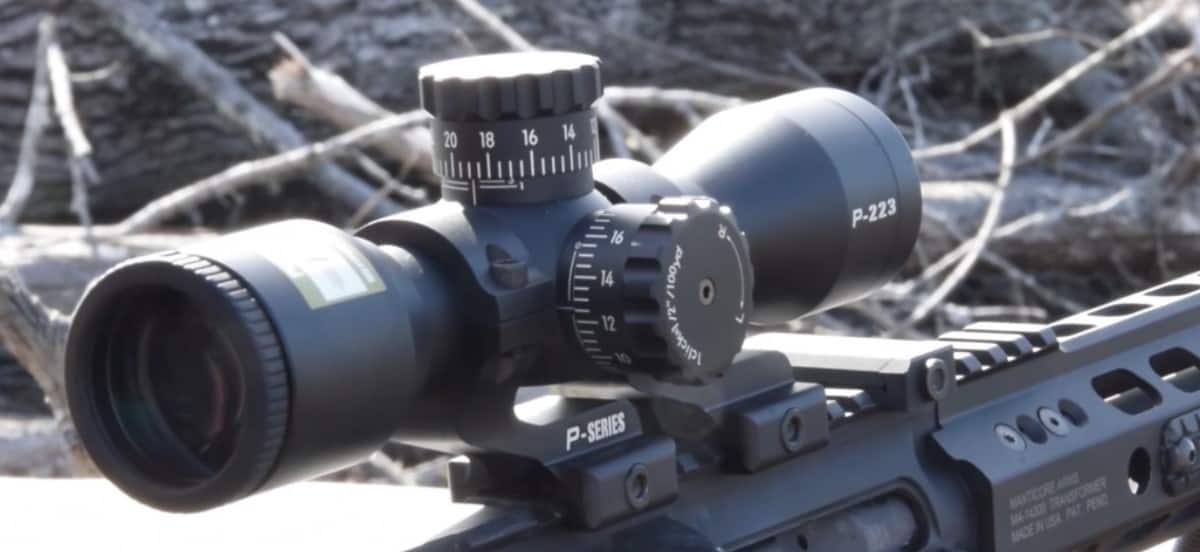
The .223 Remington gets used for everything. Coyotes at 350 yards across a pasture, prairie dogs at 400, punching paper at the local range, running drills on an AR-15. That versatility is the whole appeal of the cartridge, but it’s also what makes picking a scope for it surprisingly tricky. A scope that’s perfect for varminting on a bolt gun can be completely wrong for a carbine running hog control at close range.
You have to decide what your .223 actually does most of the time before you can make a smart choice. I tested four scopes across different price points and design philosophies, and the Vortex Diamondback 4-12×40 came out on top as the best overall match for what most .223 shooters actually need: a scope that covers the cartridge’s effective envelope from 100 to 400 yards without overcomplicating things or emptying your wallet.
My Top 4 Picks for the .223 Remington
Best Overall
Vortex Diamondback 4-12×40
The 4-12x magnification range is almost tailor-made for how the .223 gets used. You’ve got enough power to identify varmints at distance, enough zoom range to work from 100 yards out past 400, and the Dead-Hold BDC reticle gives you usable holdover points without needing to dial turrets. For the price, nothing else in this test delivered this kind of balanced performance across the board.
Best Premium Hunting Scope
Leupold VX-3HD 4.5-14×40
If you want the best glass and a featherweight build and you’re willing to pay for it, this is the scope. The CDS-ZL turret system is a genuine advantage for hunters who shoot at varying distances, and the optical clarity is a step above everything else I tested. You’re paying a premium, but you’re getting a premium product that Leupold builds and backs in Oregon.
Best for AR-15 Platforms
Primary Arms SLx 1-8×24
The ACSS Raptor reticle was literally designed around 5.56 ballistics. If your .223 lives on an AR-15 and you need to move between close-quarters speed and mid-range precision, this is the only scope here that can do both. The 1x true bottom end and FFP construction make it a different animal from the other three.
Best Budget Option
Burris Fullfield E1 3-9×40
At the lowest price point in this test, the Fullfield E1 still delivers clean glass and reliable mechanics. It’s not fancy, and 9x is the ceiling, but for a .223 that stays inside 250 yards (think Texas brush country or casual range work), it handles the job without any drama. Lightest scope I tested, too.
Why You Can Trust My Recommendations
Most of the centerfire shooting I’ve done has been with a .223. Coyote stands at first light, prairie-dog towns in summer, benchrest sessions chasing sub-MOA — fifteen-plus years of it. That cartridge has a personality: flat to 250 yards with 55gr V-MAX, looping fast past 300, energy bleeding by 400. That personality punishes the wrong reticle, the wrong magnification range, and the wrong eye box in very specific ways.
That’s why I started ScopesReviews in 2017: too many .223 buyers were grading scopes by spec sheets that don’t reflect how this caliber actually behaves in the field. The four scopes in this guide each spent weeks on my Ruger American Predator out at the lease west of Wichita Falls, and the rankings come out of that field time — not warranty fine print or YouTube hype. NRA Range Safety Officer and Certified Firearms Instructor certifications inform how I run the testing; they’re not why you should trust this guide. The .223-specific hours behind these scopes are.
Side-by-Side Specs
For a .223, pay close attention to the magnification range and reticle type. Those two specs will determine 90% of whether a scope works for your specific application. Weight matters too, especially if you’re running an AR and moving around, but glass quality and magnification range are where the rubber meets the road.
| Features | Vortex Diamondback 4-12×40 | Leupold VX-3HD 4.5-14×40 | Primary Arms SLx 1-8×24 | Burris Fullfield E1 3-9x40mm |
|---|---|---|---|---|
| Magnification | 4-12x | 4.5-14x | 1-8x | 3-9x |
| Objective Diameter | 40 mm | 40 mm | 24 mm | 40 mm |
| Eye Relief | 3.1″ | 4.4″ – 3.6″ | 3.3″ – 3.3″ | 4.2″ – 3.7″ |
| Weight | 14.2 oz | 13.4 oz | 17.9 oz | 12.2 oz |
| Length | 12.0″ | 12.7″ | 10.3″ | 12.49″ |
| Tube Size | 1 inch | 1 inch | 30 mm | 1 inch |
| Reticle | Dead-Hold BDC (SFP) | Duplex (SFP) | ACSS Raptor 5.56 / .308 (FFP) | Duplex (SFP) |
| Field of View | 32.4 – 11.3 ft @ 100 yds | 19.9 – 7.4 ft @ 100 yds | 105.0 – 14.3 ft @ 100 yds | 33.1 – 13.6 ft @ 100 yds |
| Turret Style | Capped (no zero stop) | CDS-ZL Elevation / Capped Windage | Capped, low profile | Capped |
| Adjustment Range | 60 MOA Elevation / 60 MOA Windage | 70 MOA Elevation / 70 MOA Windage | 130 MOA Elevation / 130 MOA Windage | 60 MOA Elevation / 60 MOA Windage |
| Click Value | 1/4 MOA | 1/4 MOA | 1/4 MOA | 1/4 MOA |
| Parallax Adjustment | Fixed at 100 yds | Fixed 150 yds | Fixed at 100 yds | Fixed at 150 yards |
| Illumination | No | No | Yes | No |
The 4 Best .223 Remington Scopes
1. Vortex Diamondback 4-12×40 – Best Overall .223 Scope
Why This Scope Keeps Winning Me Over
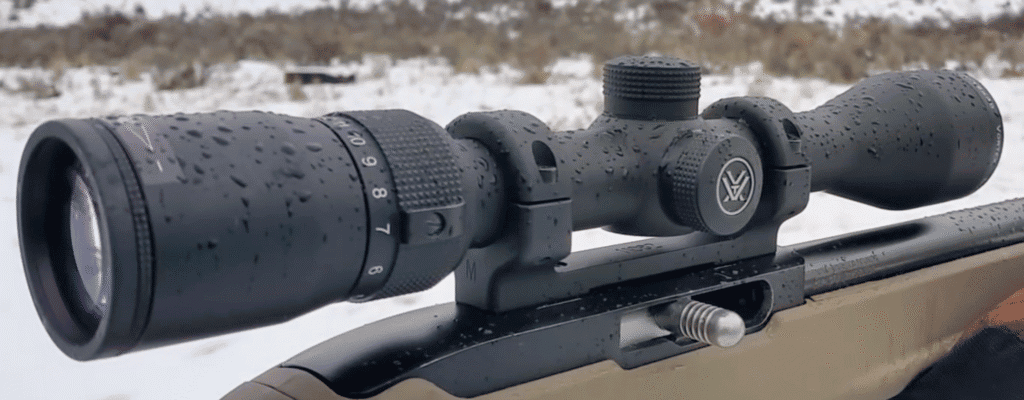
I almost didn’t include the Diamondback in this test. A budget scope going up against a Leupold that costs nearly four times as much? I figured it would get embarrassed. Instead, it ended up being the scope I reached for most often during testing, and the one I’d recommend to the majority of .223 shooters without hesitation.
I mounted it on my Ruger American Predator and drove out to the lease on a crisp Saturday in early December. The first thing I noticed was how quickly I could get on target at 4x. The image was bright and contrasty, not washed out the way budget glass sometimes looks in direct afternoon sun. Cranked up to 12x on a steel plate at 300 yards, I could clearly see my impacts. Color fringing was minimal, and edge sharpness held up better than I expected, though the last 10% of the field does soften a bit at max power.
The BDC Reticle Earns Its Keep on .223
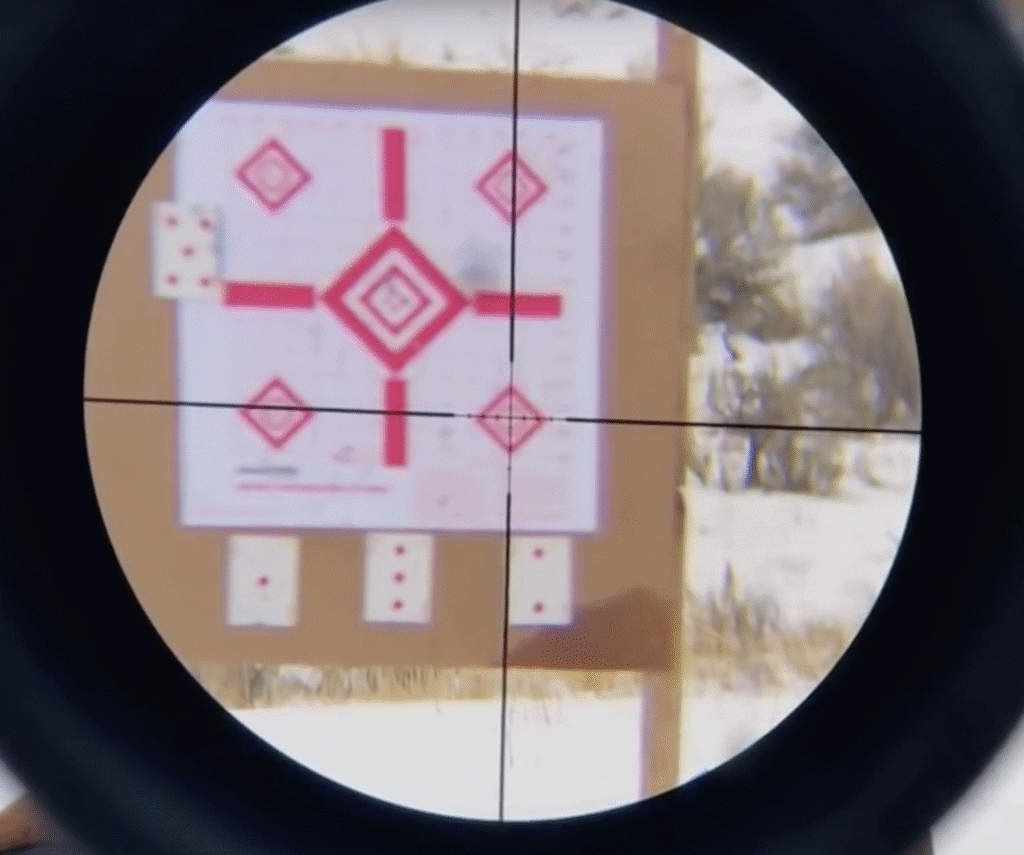
The Dead-Hold BDC reticle is where this scope really makes sense for the .223. The stadia lines and windage dots give you holdover references without any turret fiddling. I zeroed at 100 yards with my Hornady V-MAX 55gr loads and the holdover marks lined up close enough for varmint-sized targets out to 350 yards. Not match-grade precision, but for coyotes or prairie dogs, you’re in the kill zone. Being SFP, those holdover references are only accurate at max magnification, which is a trade-off I’m fine with since I was running 12x for anything beyond 200 yards anyway.
Where It Gets Tight
The eye box is the one area where the Diamondback shows its price point. Below 8x, getting a full sight picture was never an issue. But above 10x, I had to be more deliberate about cheek weld and head position. Any inconsistency and I’d get shadow creeping in from the edges. On a bolt gun from a bench, that’s manageable. On an AR where you’re moving between positions, it would be annoying. At 3.1 inches, the eye relief is fixed and on the shorter side compared to the Leupold and Burris in this test. For the .223’s light recoil that’s a non-issue, but it’s something to know about.
Tracking and Turret Feel
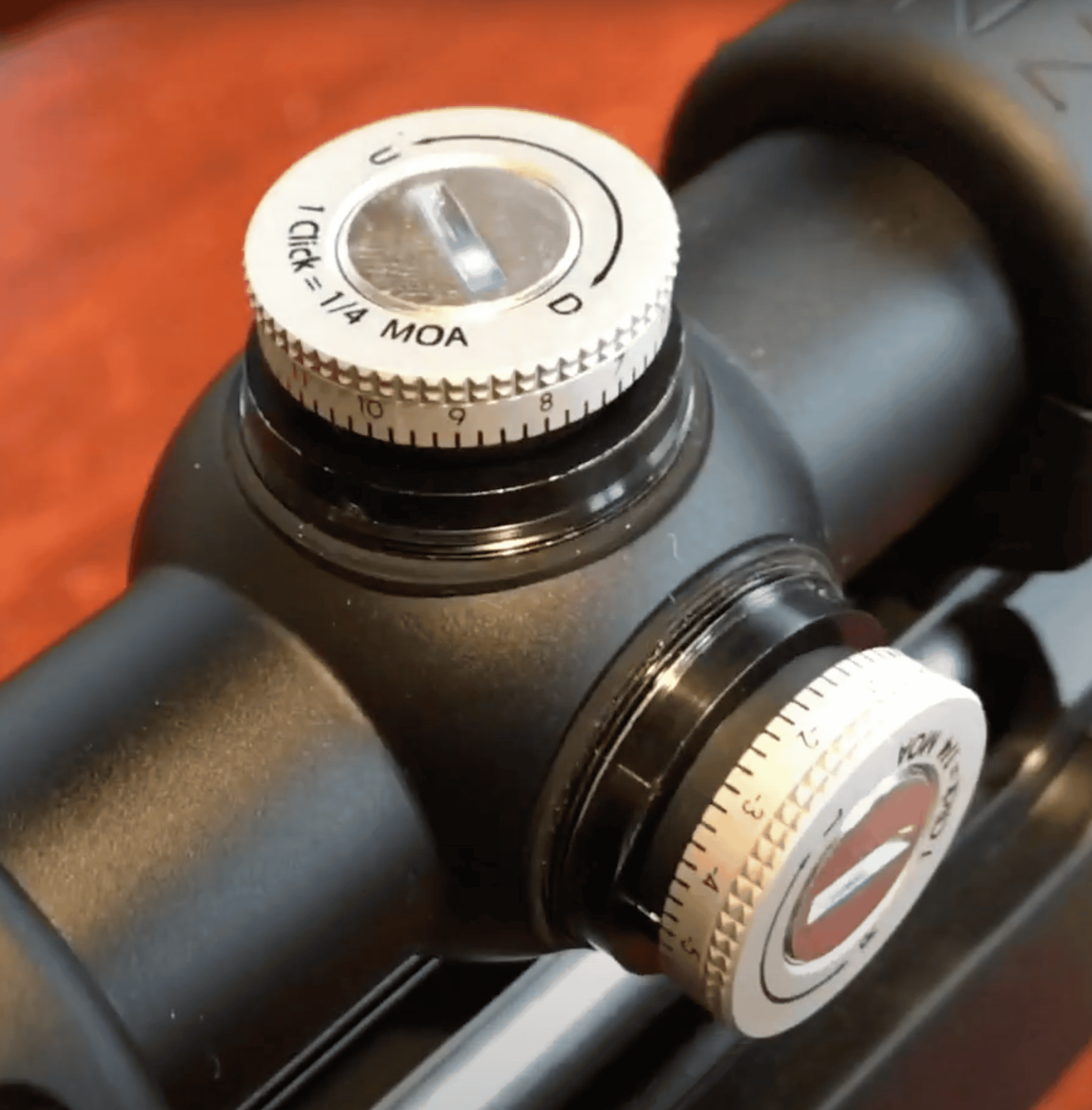
I ran a box test at 100 yards just to see where things stood. Clicks were tactile with a decent snap to them, maybe not quite as crisp as the Leupold’s, but they tracked consistently. After 20 MOA of elevation adjustments, I returned to zero and my group shifted less than half an inch. For a scope in this price tier, that’s solid mechanical performance. The capped turrets won’t appeal to anyone who wants to dial for distance, but for a set-it-and-hold-it approach using the BDC reticle, capped turrets are actually an advantage since they protect your zero from getting bumped.
A Week of Coyote Duty
I kept the Diamondback on the Ruger for a full week of predator sits on a neighbor’s ranch in mid-December. Early morning glass performance surprised me. I could pick up coyote movement against a treeline at first light on 8x without straining. Not the same league as the Leupold’s low-light capability, but entirely usable for that 20-minute window around dawn. I took one coyote at 180 yards and another at roughly 260, using the first BDC hashmark for the longer shot. Both were clean kills. The scope just stayed out of the way and let me shoot, which is honestly the highest compliment I can give any optic.
Vortex’s VIP warranty covers the scope unconditionally, no receipt needed, fully transferable. I’ve used it once on a different Vortex product and the turnaround was about ten days. That kind of backing on a scope at this price makes the Diamondback almost impossible to argue against for most .223 applications.
Here’s how the numbers shook out.
Field Test Data
| Test Parameter | Result |
|---|---|
| Best 5-shot group at 100 yds (bench rest) | 0.72″ (Hornady V-MAX 55gr) |
| Average 5-shot group at 200 yds | 1.68″ |
| Tracking accuracy (20 MOA box test) | Return to zero within 0.4″ |
| BDC holdover accuracy at 300 yds | Within 1.5″ of predicted impact |
| Low-light usability (dawn, 8x) | Usable image ~15 min before legal sunrise |
Tested with: Ruger American Predator .223 Rem | Hornady V-MAX 55gr
Pros and Cons
PROS
|
CONS
|
Performance Ratings
Learn more about how I test and rate scopes.
The Vortex Diamondback 4-12×40 is the scope I’d put on a .223 if someone handed me a rifle and said “make it work for everything.” The BDC reticle, the magnification range, and the price all line up for this caliber in a way that none of the other three scopes quite match. It’s not the clearest glass here, and it’s not the most refined mechanically, but it does more things right for more .223 shooters than anything else I tested.
2. Leupold VX-3HD 4.5-14×40 – Best Premium Hunting Scope
The Glass That Justifies the Price
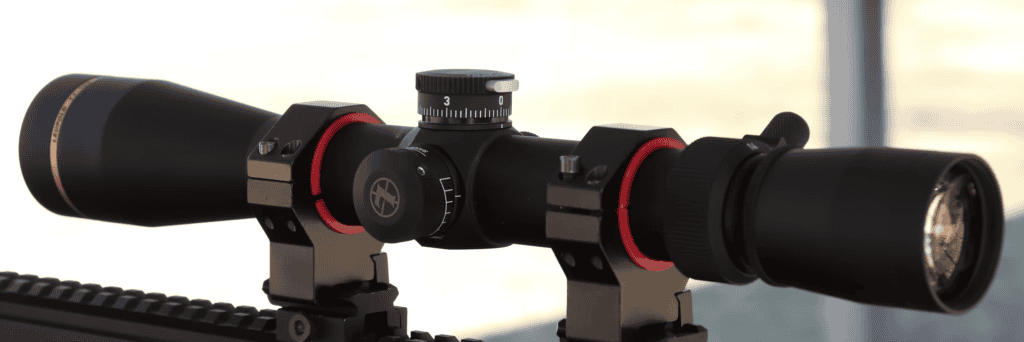
I could see the difference the moment I swapped the Leupold onto the Ruger American Predator. The Vortex had been doing fine all week, but looking through the VX-3HD was like cleaning a window you didn’t realize was dirty. Leupold’s Elite Optical System delivers noticeably better color fidelity and contrast, especially shooting into mixed light where shadows meet sunlit brush. On a cloudy mid-December morning, I was glassing a sendero on the back of the lease at 14x and the image stayed crisp and bright in a way that the other three scopes in this test couldn’t quite match.
For a .223 scope, that kind of optical performance is arguably overkill. You’re not tracking elk at 600 yards with this cartridge. But if you hunt predators during those low-light transition periods, or if you’re varminting in mixed conditions where target ID matters, the glass advantage is real and immediate.
The CDS-ZL System on a .223
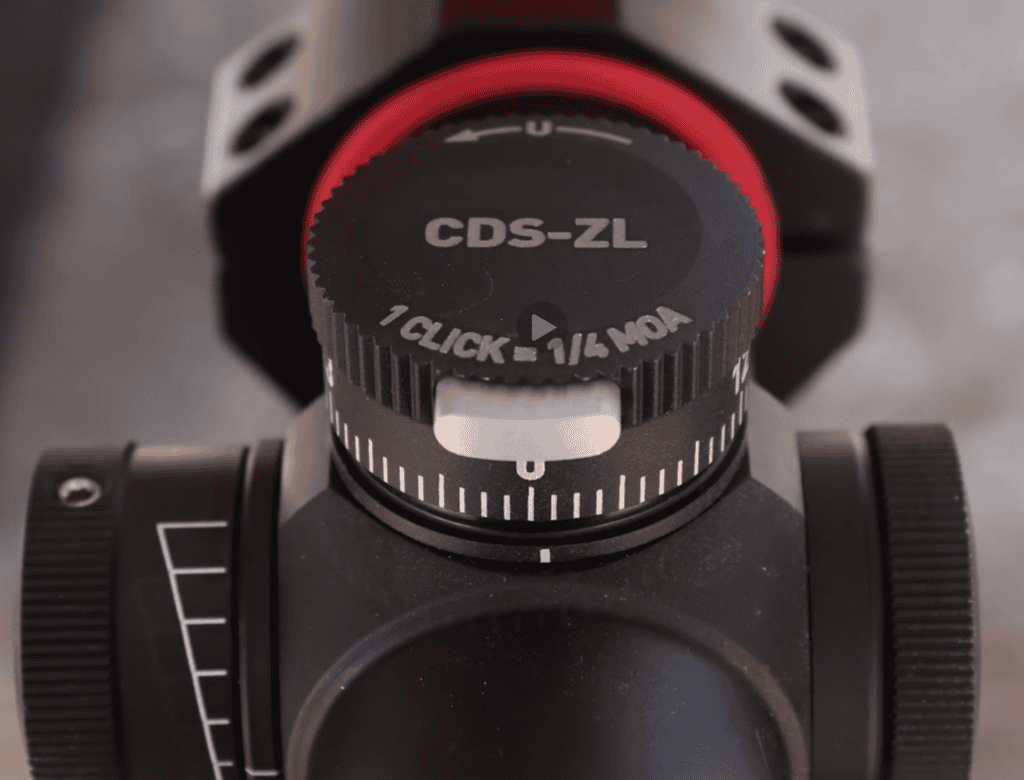
Leupold’s Custom Dial System is the VX-3HD’s signature feature. You send Leupold your load data (caliber, bullet, velocity, altitude) and they laser-engrave a custom turret dial marked in yardage instead of MOA clicks. The first custom dial is included free. The ZeroLock component adds a push-button lock that prevents the turret from moving accidentally, and it returns to zero with a satisfying click. It’s a smart system for hunters who shoot at varying distances.
On the .223 though, I have mixed feelings. The CDS-ZL provides two revolutions of adjustment, which gives you plenty of dialing range. That’s more than enough to reach the practical limits of this cartridge, but it also means the system is somewhat underutilized. A 6.5 Creedmoor or .308 would take better advantage of what CDS offers across those two revolutions. On my Hornady V-MAX loads, I could comfortably dial to 400 yards and had a ton of room to spare. Beyond that, the .223’s trajectory falls off fast enough that the CDS starts to feel like a luxury rather than a necessity.
13.4 Ounces and You Barely Know It’s There
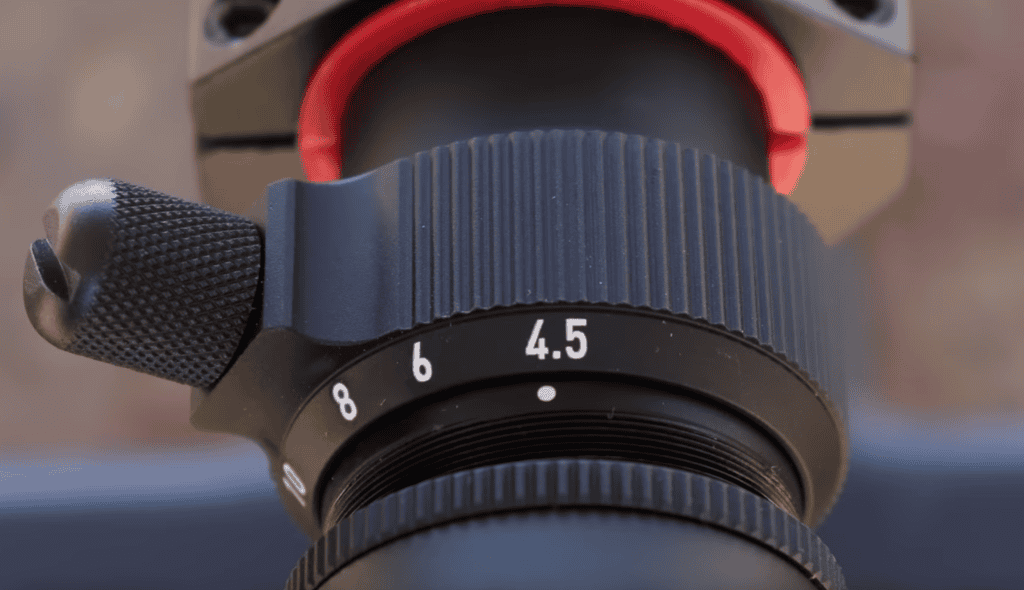
The weight is impressive. At 13.4 ounces, the VX-3HD is lighter than both the Vortex and the Primary Arms by a meaningful margin, and only the featherweight Burris at 12.2 ounces beats it. Combined with a 1-inch tube, it sits low on the rifle and keeps the overall handling balance where it should be. I carried the Ruger with the Leupold mounted for a full morning walking senderos looking for coyotes, and the rifle felt noticeably more nimble than it had with the heavier Vortex and Primary Arms optics. If you’re building a walking varmint rig or a lightweight predator rifle, this weight advantage compounds over a long day afield.
A Clean Reticle That Cuts Both Ways
The Duplex reticle is classic Leupold: four tapered posts pointing to a fine crosshair intersection. It’s fast to acquire and uncluttered. For a scope with the CDS turret system, a simple reticle makes sense because you’re dialing your corrections rather than holding. But compared to the Vortex’s BDC or the Primary Arms’ ACSS Raptor, you get no holdover references at all. If you don’t order the custom CDS dial (or haven’t received it yet), you’re essentially running a plain crosshair with standard 1/4 MOA clicks. For fast follow-up shots where you don’t have time to dial, you’re estimating holdover with nothing to reference. This is the trade-off for a clean sight picture, and whether it works for you depends entirely on how you shoot.
When Money Isn’t the Main Concern
I can’t talk about this scope without mentioning the price. The VX-3HD costs nearly three times what the Vortex Diamondback does and about four times the Burris. Is the glass better? Absolutely. Is it three times better than the Vortex? No. You’re paying for Leupold’s USA manufacturing, the CDS turret system, exceptional build quality, and a low-light performance edge that matters during those dawn and dusk windows. If those things matter to your hunting, the VX-3HD delivers. If you’re mostly a daytime range shooter or weekend varminter, the Diamondback gets you 80% of the way there for a fraction of the cost.
Field Test Data
| Test Parameter | Result |
|---|---|
| Best 5-shot group at 100 yds (bench rest) | 0.65″ (Hornady V-MAX 55gr) |
| Average 5-shot group at 200 yds | 1.48″ |
| Tracking accuracy (20 MOA box test) | Return to zero within 0.2″ |
| CDS dial accuracy at 300 yds | Impact within 0.8″ of dialed POA |
| Low-light usability (dawn, 10x) | Usable image ~20 min before legal sunrise |
| Weight with standard 1″ rings | 15.1 oz total mounted |
Tested with: Ruger American Predator .223 Rem | Hornady V-MAX 55gr
Pros and Cons
PROS
|
CONS
|
Performance Ratings
Learn more about how I test and rate scopes.
The VX-3HD is the best-built, best-glassed scope in this test, and on a different caliber it might have been my Best Overall pick. But the .223 just doesn’t demand what the CDS system offers, and the Duplex reticle gives you nothing to work with on fast holdover shots. If you’re a serious predator hunter who values dawn-and-dusk glass and wants a scope you’ll never need to replace, this is the one. For everyone else, the Diamondback does the job for a lot less money.
3. Primary Arms SLx 1-8×24 – Best for AR-15 Platforms
A Completely Different Tool
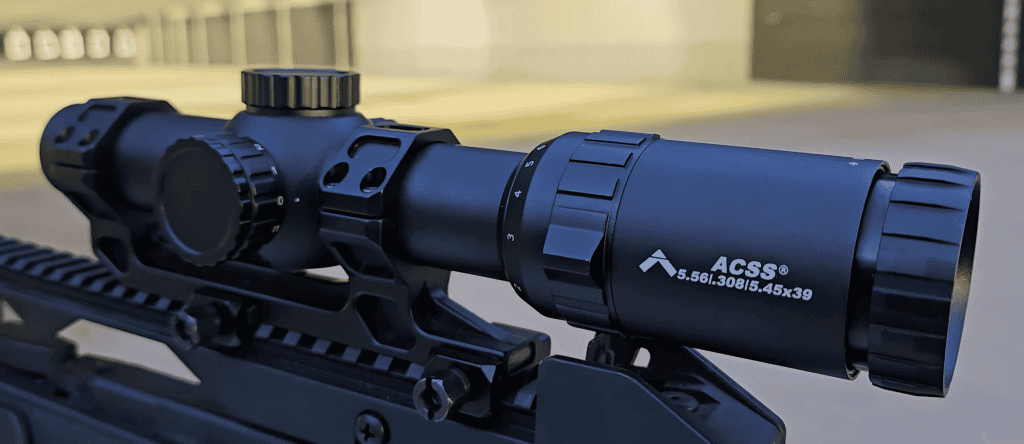
I need to be upfront: this scope does not belong in the same category as the other three. It’s an LPVO (low-power variable optic) designed for carbines, and testing it on my Ruger American Predator bolt gun is a bit like evaluating a sports car on a farm road. It works, but it’s not where this scope shines. I tested it here because a huge number of .223 shooters are running AR-15s, and those shooters deserve a recommendation that actually fits their platform. The SLx 1-8×24 earned a Gold-tier rating from the National Tactical Officers Association during their field testing, which gives you an idea of how seriously this optic is taken in the tactical community.
The ACSS Raptor Was Built for This Cartridge
Primary Arms designed the ACSS Raptor reticle specifically around 5.56 NATO ballistics. The horseshoe with center chevron dominates your view at 1x, making target acquisition almost as fast as a red dot. Crank it to 8x and the full BDC ladder reveals itself with holdover marks, wind dots, moving target leads, and ranging stadia calibrated out to 600 yards for 5.56. Because this is a first focal plane scope, those references stay proportionally accurate at every magnification setting, not just max power. That’s a significant advantage over the SFP Dead-Hold BDC on the Vortex.
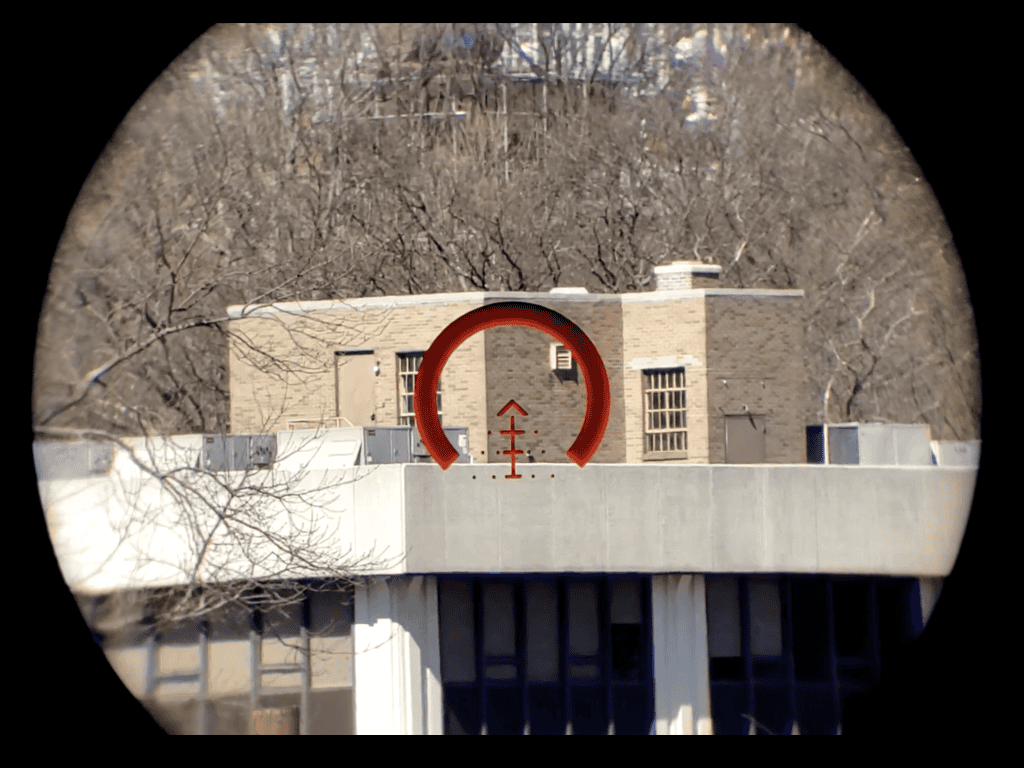
I zeroed the reticle’s chevron tip at 100 yards and tested the BDC holdovers against my Hornady V-MAX loads at 200, 300, and 400 yards. The BDC is calibrated for specific velocities and barrel lengths (an 18-inch barrel with M193 ball being the baseline), so my bolt gun’s 22-inch barrel and different ammo produced slightly different results. At 200, the holdover was essentially dead on. By 300, I was about 2 inches off. At 400, the discrepancy grew enough that I had to learn my particular offsets rather than trusting the marks blindly. This is an inherent limitation of any BDC reticle when you deviate from its calibration parameters.
Illumination That Actually Works in Daylight
The illumination is the only powered feature on any scope in this test. Primary Arms uses a CR2032 battery (with a spare cleverly stored in the windage cap) and offers 11 brightness settings that go all the way to daylight bright. On a sunny January afternoon, I could see the illuminated horseshoe clearly against tan grass at 1x. That matters for CQB-speed shooting where you need the reticle to pop against the background immediately. The off settings between each brightness level let you quickly cycle to what you need without overshooting.
The Weight and Magnification Trade-Off
At 17.9 ounces, the SLx is the heaviest scope in this test by a comfortable margin. The 30mm tube and LPVO design contribute to that. On an AR-15 with a cantilever mount, it balances fine because the rifle is already heavier. On my bolt-action Ruger, it felt nose-heavy and a little awkward. The 8x top end also limits you compared to the 12x and 14x ceilings on the Vortex and Leupold. For target ID at distance, I found myself wanting more magnification on several occasions, particularly when trying to confirm whether movement at 350+ yards was a coyote or just a shadow. This isn’t a scope for precision shooting at range; it’s a scope for fast transitions across varying distances.
Who This Is Really For
If you’re running a .223 on an AR-15 for home defense, hog control, competition, or tactical training, the SLx 1-8×24 with the ACSS Raptor is hard to beat at this price. The FFP construction, caliber-specific BDC, and true 1x bottom end give it capabilities that none of the other three scopes here can touch. But if your .223 is a bolt gun for varminting or predator hunting, this scope gives up too much magnification and adds too much weight for what you get in return. Primary Arms backs it with a lifetime warranty covering defects and normal wear.
Field Test Data
| Test Parameter | Result |
|---|---|
| Best 5-shot group at 100 yds (bench rest, 8x) | 0.88″ (Hornady V-MAX 55gr) |
| BDC holdover accuracy at 200 yds | Within 0.5″ of predicted impact |
| BDC holdover accuracy at 300 yds | ~2″ deviation from predicted impact |
| 1x target transition speed (3 targets, 10 yds) | 2.4 seconds average |
| Illumination visibility (direct sun, 1x) | Horseshoe clearly visible at setting 9/11 |
Tested with: Ruger American Predator .223 Rem | Hornady V-MAX 55gr
Pros and Cons
PROS
|
CONS
|
Performance Ratings
Learn more about how I test and rate scopes.
I scored the SLx lower overall not because it’s a lesser scope, but because this guide is primarily aimed at .223 hunters and general-purpose shooters. For that audience, 8x max magnification and 17.9 ounces are real limitations. Swap the context to an AR-15 used for hog control, competition, or home defense, and this scope jumps to the top of the list. It does things the other three simply cannot.
4. Burris Fullfield E1 3-9×40 – Best Budget Option
The Scope Nobody Talks About
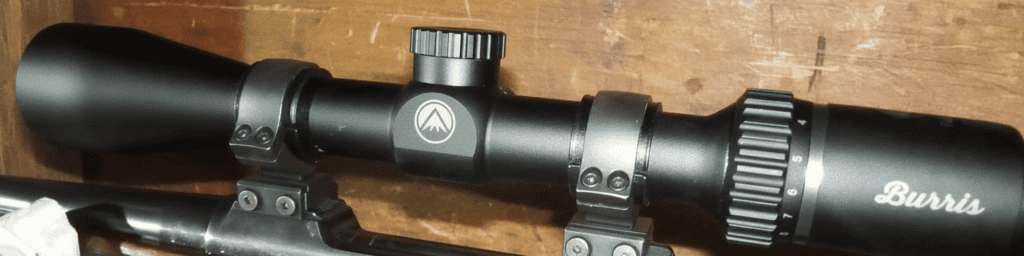
Burris flies under the radar in .223 conversations. Walk any predator forum and Vortex Diamondbacks and Primary Arms LPVOs get traded back and forth fifty times before a Fullfield E1 comes up. That’s not because the scope is worse — it’s because Burris doesn’t push their hunting line into the .223 affiliate ecosystem the louder brands dominate. The Fullfield E1 just quietly shows up, does its job, and doesn’t ask for attention. That’s a pretty good summary of what this scope is like to use.
I mounted it on the Ruger American Predator toward the end of my testing rotation, and I’ll admit I had low expectations. At this price point, I was bracing for mushy turrets, hazy glass, or the kind of color fringing that makes you squint. What I got instead was a scope that felt honest. The image through the Fullfield E1 at 6x was bright and cleanly resolved, with good contrast between a dark treeline and the tan grass of the field I was shooting across. It’s not Leupold glass. But it’s closer to the Vortex Diamondback than the price gap suggests.
Burris’s Hi-Lume Coatings Pull Their Weight
The low-light performance surprised me. On a late December evening, I was sitting a sendero on the lease and could still make out a fence post at 200 yards on 9x a solid ten minutes after I’d normally pack it in. Burris’s Hi-Lume multicoating is doing real work on this scope. Not at the VX-3HD’s level, obviously, but better than I expected from the cheapest optic in this test. For a hunter who sits morning and evening, that extra usable light can mean the difference between filling a tag and watching a coyote walk away in the gloom.
Where 9x Becomes the Ceiling
Here’s the reality check. On a .223, 9x magnification covers you to about 250 yards on varmint-sized targets comfortably. Beyond that, I was struggling to identify small targets with any confidence. A coyote at 300 yards on 9x was manageable, but a prairie dog at the same distance would be a guessing game. The Vortex’s extra 3x on the top end (12x versus 9x) makes a meaningful difference once you start stretching past 250. If your .223 stays inside 200 yards most of the time, like a lot of Texas brush country hunting, the 3-9x range is perfectly adequate. If you’re shooting across open pasture at anything past 300, you’ll feel limited.
Solid Bones Under the Hood
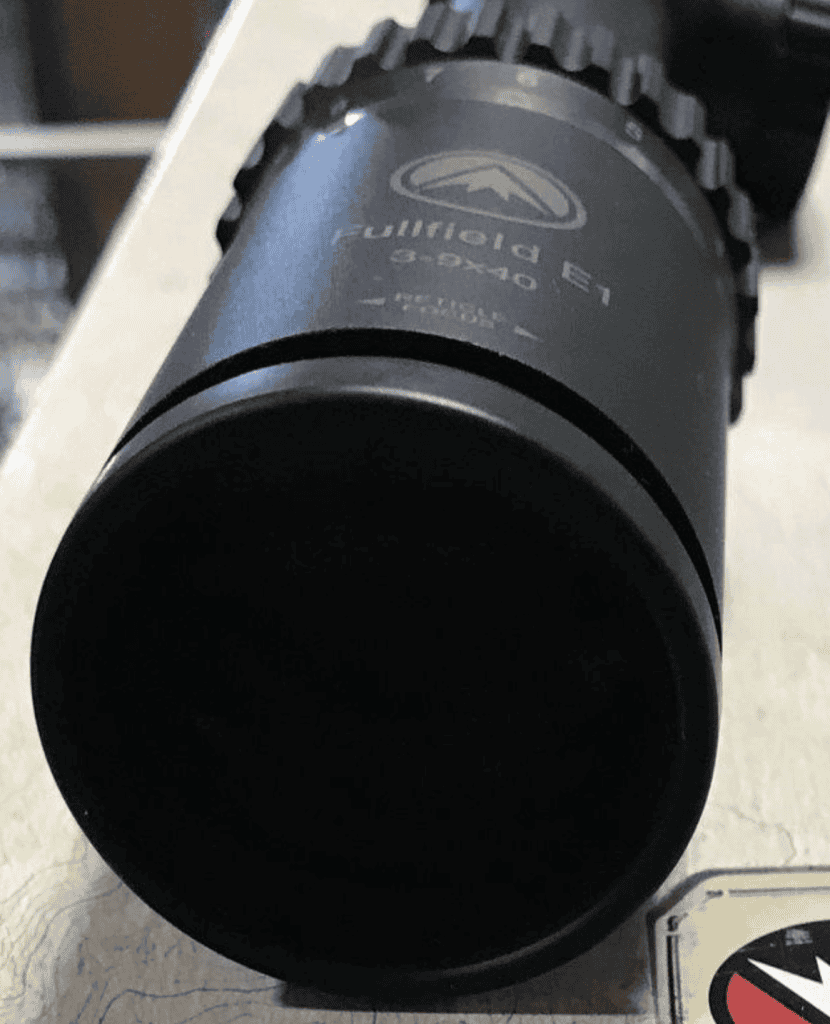
Burris uses a double internal spring-tension system in the Fullfield E1 that’s designed to hold zero through heavy recoil. On a .223 that’s not much of a concern, but it speaks to the robustness of the design. My turret clicks were positive with the steel-on-steel adjustments, though I noticed the power selector ring was stiffer than any other scope in the test. Multiple reviewers have noted the same thing. It’s not a dealbreaker, but if you’re the type who changes magnification frequently in the field, it’s worth knowing about. One thing I couldn’t do: reset the turrets to zero after sighting in. There’s no zero-reset feature, so you either count clicks or mark your turret position. Minor annoyance, but the Vortex and Leupold both handle this better.
The Lightest Glass in the Test
At 12.2 ounces, the Fullfield E1 is the featherweight of this group. It’s a full ounce lighter than the Leupold and two ounces lighter than the Diamondback. On a lightweight bolt gun that you carry more than you shoot, those ounces compound into a noticeably more pleasant experience. The one-piece tube construction feels solid in the hand despite the low weight; there’s no sense of fragility. Burris backs it with their Forever Warranty, which covers repair or replacement regardless of cause. I’ve never had to use it, but the policy reads as straightforward as Vortex’s VIP.
The Duplex reticle is identical in concept to the Leupold’s: four tapered posts converging on a fine crosshair. It’s clean, fast, and completely devoid of holdover references. Unlike the Leupold, there’s no CDS turret system to compensate for that simplicity. You’re holding center and estimating anything beyond your zero range. For a scope intended for shots inside 250 yards, that’s fine. You zero at 100, hold a little high at 200, and you’re in the vitals on most game the .223 is appropriate for.
The data tells the story of a scope that performs honestly within its limitations.
Field Test Data
| Test Parameter | Result |
|---|---|
| Best 5-shot group at 100 yds (bench rest) | 0.81″ (Hornady V-MAX 55gr) |
| Average 5-shot group at 200 yds | 1.74″ |
| Tracking accuracy (10 MOA box test) | Return to zero within 0.5″ |
| Low-light usability (dusk, 9x) | Usable image ~10 min after legal sunset |
Tested with: Ruger American Predator .223 Rem | Hornady V-MAX 55gr
Pros and Cons
PROS
|
CONS
|
Performance Ratings
Learn more about how I test and rate scopes.
The Burris Fullfield E1 doesn’t try to be more than it is, and I respect that. If you want a reliable, lightweight scope for a .223 that works inside moderate ranges, the E1 handles it with surprising competence. The glass is better than it has any right to be at this price, the eye relief is the most comfortable here, and the weight barely registers on the rifle. But the 9x ceiling and plain Duplex reticle keep it from being the do-everything .223 scope that the Diamondback is. Buy this if budget matters and your shooting stays close. Buy the Vortex if you want more reach.
How I Actually Tested These Scopes
All four scopes went through the same Ruger American Predator in .223 Remington, a rifle I picked specifically because it’s one of the most common bolt guns people actually pair with this caliber. I ran Hornady V-MAX 55gr exclusively across all testing, roughly 600 rounds total spread over about six weeks from early December 2025 through mid-January 2026.
Most shooting happened at my hunting lease west of Wichita Falls and at a local range with steel out to 500 yards. Weather ranged from mid-60s on warmer afternoons to teens at dawn, which gave me a decent spread of conditions. Each scope got zeroed from scratch, box-tested for tracking, and then put through a week or more of actual field use, mostly predator sits and range sessions at 100, 200, 300, and 400 yards. I documented group sizes from a front rest on a concrete bench at 100 and 200.
I also tested and rejected three scopes before settling on these four. The Athlon Argos BTR Gen 2 6-24×50’s 6x bottom end was too narrow when called coyotes broke cover inside 75 yards — too tight at the close end of .223 predator work. The Bushnell Banner 2 4-12×40’s BDC, calibrated for generic deer-cartridge drops, printed about four inches high at 300 on 55gr V-MAX, which defeats the whole point of a holdover reticle on a varmint round. And the Crimson Trace Brushline Pro 3-12×44’s tall turret stack pushed cheek weld too high on the AR-15 I cross-mounted it on, where a huge share of .223 shooters live. The four that survived held zero, tracked honestly, and matched what the .223 actually demands.
Get more information on how I test optics here.
The Four .223 Scope Mistakes I See on Every Pasture and Bench
Buying too much magnification
I see guys slapping 6-24x scopes on their .223 varmint rifles. The cartridge runs out of reliable energy well before you need 24x to see your target. A .223 with 55gr bullets is losing effectiveness past 400 yards, and most shooters aren’t taking ethical shots much beyond 300. You’re hauling extra weight and paying for magnification you’ll never use at this caliber’s practical distances. Something in the 4-14x range covers it.
Ignoring the AR-15 vs. bolt gun distinction
A scope that’s perfect on a bolt-action .223 varmint rifle can be terrible on an AR-15 and vice versa. Bolt guns reward higher magnification and lighter weight. AR-15s need wider fields of view, forgiving eye boxes, and often benefit from illuminated reticles for faster acquisition. Pick your scope for the platform, not just the caliber. A 1-8x LPVO and a 4-12x hunting scope solve completely different problems.
Outspending the cartridge’s actual reach
.223 with 55gr V-MAX gives up reliable terminal performance past 400 yards no matter how good your glass is. A $1,500 scope can’t make the bullet fly farther or hit harder downrange. Mid-tier glass tracks accurately enough to wring out everything the cartridge offers; the marginal dollar past that buys low-light glass and turret refinement that .223 use cases rarely reward. Save the difference for ammo — you’ll burn through a lot of it on this caliber.
Trusting an off-the-shelf BDC at the .223’s energy edge
Holdovers stay close inside 250 yards on most BDC reticles — the .223 is flat enough that calibration error hides. Past 300, the trajectory bends fast, and a BDC built around a 16-inch carbine with M193 ball (the ACSS Raptor’s baseline) will print inches off when run through a 22-inch bolt-gun barrel pushing 55gr V-MAX. Confirm the marks on paper at 200, 300, and 400 before trusting them on a coyote.
The .223 Scope Questions Buyers Ask Me Most
Can I use the same scope for 5.56 NATO and .223 Remington?
Yes. The external ballistics are close enough that any scope (including BDC reticles) calibrated for one will work for the other. The chamber pressure differences between 5.56 and .223 are a rifle concern, not an optics concern. All four scopes I tested handle both cartridges equally well.
Do I need adjustable parallax on a .223 scope?
For most .223 applications, no. Fixed parallax at 100 or 150 yards covers the distances where this cartridge does its best work. Adjustable parallax becomes useful if you’re shooting past 300 yards regularly or doing precision benchrest work. None of the scopes in this test have it, and none needed it.
What magnification do I need for coyote hunting with a .223?
A top end of 10-14x handles most predator hunting situations. You need enough zoom to positively ID a coyote at 300 yards and place a precise shot. The 4-12x Diamondback and 4.5-14x Leupold both excel here. A 3-9x works inside 250 yards but gets tight beyond that on coyote-sized targets.
Is FFP or SFP better for a .223 scope?
Depends on how you use holdovers. If you’re using BDC marks at varying magnifications, FFP keeps them accurate at every setting. If you mostly shoot at max power or dial your turrets, SFP is simpler and cheaper. For an AR-15 LPVO where magnification changes constantly, FFP is the clear winner. For a hunting scope you leave on 9x, SFP is fine.
Picking by How You Actually Use Your .223
If you’re calling coyotes across Texas pastures and senderos: The Vortex Diamondback 4-12×40 gives you enough magnification to reach across open ground and the BDC reticle handles those 150-to-350 yard shots where most called predators show up. It’s the best all-around choice for this kind of work.
If you’re a serious dawn-and-dusk predator hunter who wants the best glass: The Leupold VX-3HD earns its premium during those low-light transition windows when coyotes are most active. Order the free CDS dial with your load data and you can dial precise shots without thinking about holdover math.
If your .223 lives on an AR-15 for hog control or home defense: The Primary Arms SLx 1-8×24 is the only scope here with true 1x, illumination, and a reticle designed around 5.56 ballistics. For fast transitions between close and medium range, nothing else in this test comes close.
If you need a simple, lightweight scope for a ranch rifle or youth gun: The Burris Fullfield E1 at 12.2 ounces and its comfortable eye relief make it ideal for a lightweight .223 that stays under 250 yards. Mount it, zero it, and forget about it.
Disclosure
All four scopes came out of my own pocket — the Vortex and Burris from an OpticsPlanet Black Friday order, the Leupold direct from leupold.com with the free CDS dial coupon applied to my .223 load data, and the Primary Arms SLx from primaryarms.com during a sale on the SLx line. ScopesReviews earns a small affiliate commission on purchases made through the links on this page.
Final Thoughts
The .223 Remington is the most versatile centerfire cartridge in America, and picking a scope for it should reflect whatever you actually do with the rifle. That’s the lesson these four scopes drove home for me. The Vortex Diamondback 4-12×40 earned the Best Overall spot because it covers the broadest range of .223 applications without compromising on any one of them. The magnification range matches the cartridge’s effective envelope. The Dead-Hold BDC reticle turns holdover shots into a quick, intuitive process. And the price leaves room in your budget for ammunition, which matters on a caliber most people shoot in volume.
The Leupold VX-3HD proved that premium glass still matters, especially when you’re hunting those critical low-light windows. If I were building a dedicated predator rifle and budget wasn’t the primary concern, the VX-3HD would be on top. The Primary Arms SLx carved out a category of its own; if you’re on an AR-15, it’s simply the right tool. And the Burris Fullfield E1 reminded me that a good cheap scope honestly outperforms a bad expensive one, every time.
My father gave me my first centerfire rifle in .223 when I was sixteen. I’ve been shooting this cartridge for over fifteen years now, and the sheer number of different scopes I’ve paired with it would probably surprise people. What I keep coming back to is that the .223 rewards simplicity. It doesn’t need a $1,500 optic or a 5-25x tactical scope. It needs clear glass, a useful reticle, and enough magnification to reach where the bullet can still do its job. Whichever of these four you choose, match it to how you actually shoot, and you’ll be set for years.
If you are want to shoot at longer range, check which are the best scopes for 1000 yards and best scopes for 6.5 Grendel.
Mike Fellon is the founder of ScopesReviews and an optics specialist with 15+ years in precision shooting. A former Bass Pro Shops firearms advisor and NRA-certified instructor, he’s hands-tested 200+ rifle scopes across hunting and competition. Based in Dallas, Texas.