
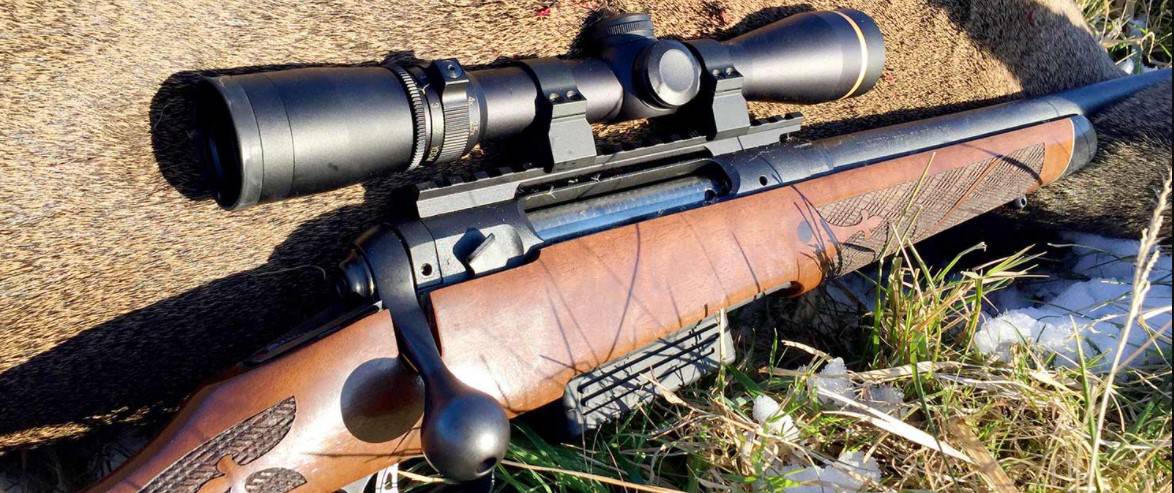
The Savage 220 is a slug gun, not a rifle. That distinction matters more than most shooters realize when they’re picking optics. I’ve watched too many people walk into stores asking for “the best deer scope” and walk out with something designed for a .308 Winchester. Three months later, they’re frustrated because their BDC reticle doesn’t match anything their slugs are doing past 100 yards.
Slug ballistics are fundamentally different from centerfire rifle cartridges. A Remington AccuTip slug leaves the barrel at maybe 1,850 fps and sheds velocity like it’s in a hurry. Compare that to a typical rifle cartridge cruising at 2,800+ fps with a far superior ballistic coefficient, and you start to see the problem with transplanting rifle scope advice onto a platform that’s built for 150-yard whitetails in slug-only zones.
After testing dozens of scopes on slug guns over the years, I’ve learned that simple works. The Leupold VX-Freedom 3-9×40 with its Hunt-Plex reticle came out on top for the Savage 220 because it does what this gun actually needs without trying to be something it’s not.
My Top 3 Picks For The Savage 220
Best Overall
Leupold VX-Freedom 3-9×40
The VX-Freedom gets everything right for the Savage 220. Its Hunt-Plex reticle is a clean duplex that doesn’t pretend slug trajectories match rifle ballistics, the 3-9x magnification covers everything from thick cover to 150-yard field edges, and at 12.2 ounces it keeps the gun balanced for long carries through Michigan hardwoods or Ohio bean fields.
Best for Thick Cover
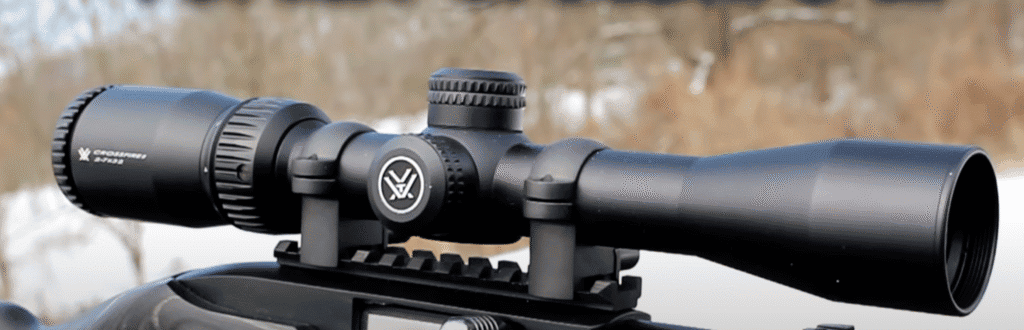
Vortex Crossfire II 2-7×32
If your Savage 220 lives in dense timber where shots rarely stretch past 75 yards, the Crossfire II’s 2-7x range gives you fast target acquisition at low power. The Dead-Hold BDC reticle isn’t calibrated for slugs, but you can work around it once you know where your loads actually hit.
Best Value
Bushnell Banner 2 3-9×40
For under $100, the Banner 2 delivers functional performance. The DOA ballistic reticle won’t match your slug drops, but if you treat it as a plain duplex and ignore the hash marks, it’s a solid budget option that’ll hold zero and survive seasons of rough field use.
Why You Can Trust My Recommendations
I learned the hard way that slug guns aren’t rifles. Back in my Bass Pro days, around 2012, a regular customer brought back a premium tactical scope he’d mounted on his Savage 220. Beautiful glass, exposed target turrets, a first focal plane BDC reticle calibrated for .308 Winchester. He’d spent good money following advice meant for precision rifles, and none of it translated to his hunting reality.
We worked through the math together at the counter. His Remington AccuTip slugs at 1,850 fps had nothing in common with the 2,800 fps trajectory his reticle assumed. Every holdover point was wrong. I helped him return it and get into a simple 3-9x scope with a standard duplex reticle. Six weeks later he came back with photos of a nice Ohio buck taken at 130 yards. That experience stuck with me.
I’m Mike Fellon. I founded ScopesReviews in 2017 after five years in the Bass Pro firearms department, and I’m an NRA Certified Firearms Instructor with 15+ years in precision shooting. I’ve tested over 200 rifle scopes, but more importantly, I’ve seen what actually works when hunters need gear that solves real problems instead of checking marketing boxes. The Savage 220 deserves better than generic rifle scope advice.
Side-by-Side Specs
For a slug gun that works inside 150 yards, eye relief and magnification range matter more than total adjustment or exotic reticle features. Here’s how these three compare.
| Features | Leupold VX-Freedom 3-9×40 | Vortex Crossfire II 2-7×32 | Bushnell Banner 2 3-9×40 |
|---|---|---|---|
| Magnification | 3-9x | 2-7x | 3-9x |
| Objective Diameter | 40mm | 32mm | 40mm |
| Eye Relief | 4.2″ – 3.7″ | 3.9″ | 3.5″ |
| Weight | 12.2 oz | 14.3 oz | 14.8 oz |
| Length | 12.49″ | 11.5″ | 12.3″ |
| Tube Size | 1 inch | 1 inch | 1 inch |
| Reticle | Hunt-Plex | Dead-Hold BDC | DOA Quick Ballistic Reticle |
| Field of View | 33.1 – 13.6 ft @ 100 yds | 42.0 – 12.6 ft @ 100 yds | 37.5 – 12.2 ft @ 100 yds |
| Turret Style | Capped, Finger Click | Capped, Resettable | Capped |
| Adjustment Range | 60 MOA Elevation / 60 MOA Windage | 60 MOA Elevation / 60 MOA Windage | 60 MOA Elevation / 60 MOA Windage |
| Click Value | 1/4 MOA | 1/4 MOA | 1/4 MOA |
| Parallax Adjustment | Fixed (150 yds) | Fixed (100 yds) | Fixed (100 yds) |
| Illumination | No | No | No |
The 3 Best Scopes for Savage 220
1. Leupold VX-Freedom 3-9×40 – Best Overall for Slug Gun Hunting
What Actually Matters With Slug Gun Glass
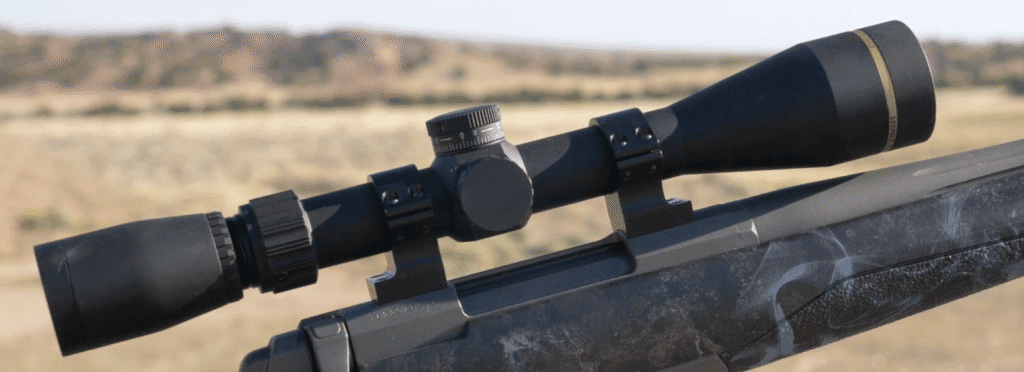
I mounted the VX-Freedom on my test Savage 220 in late October knowing I’d be evaluating it during the worst lighting conditions whitetail hunters face. The first morning I carried it into the woods, temperature was 28 degrees with fog thick enough that I couldn’t see more than 80 yards until after 7 AM. That’s when the Leupold’s Twilight Light Management System started earning its keep.
Through the Hunt-Plex reticle, I could distinguish a doe bedded at what I later ranged at 110 yards while my buddy next to me with a cheaper scope was still waiting for enough light to confidently identify antlers. The tapered posts of the Hunt-Plex stayed visible against the gray timber without cluttering my view, and the fine crosshair gave me a precise aiming point once I had enough light to shoot. This is exactly what a slug gun scope needs to do.
Eye Relief Reality Check
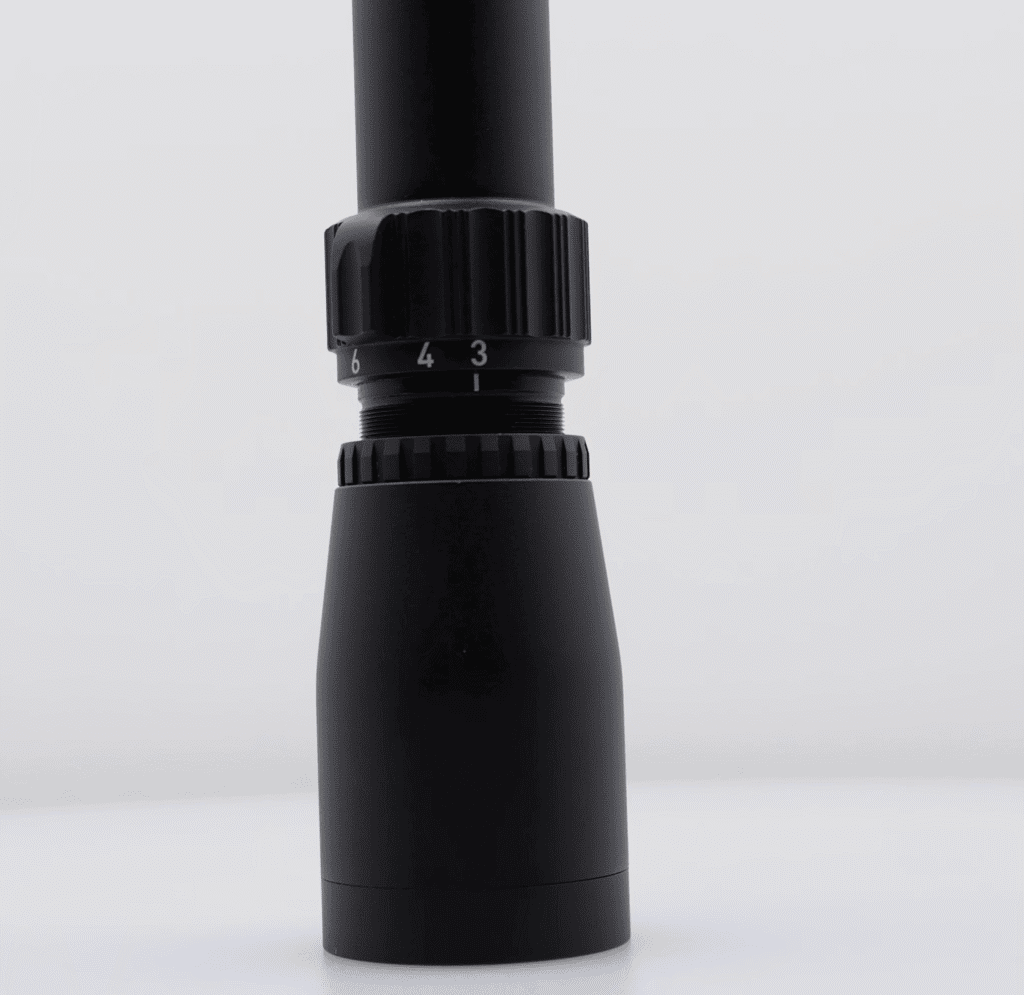
The Savage 220 doesn’t recoil like a 12 gauge slug gun, but it’s not pleasant either. With Remington AccuTip 3-inch loads pushing 260 grains at 1,900 fps, you feel it. The VX-Freedom’s 4.2 inches of eye relief at 3x gave me comfortable working room. I mounted it at what felt natural for my cheek weld and never worried about scope bite through multiple range sessions. At 9x, the eye relief tightens to 3.7 inches and the eyebox becomes less forgiving, but for field shooting at whitetails inside 150 yards, I rarely cranked past 6x anyway.
The Reticle That Doesn’t Lie
Here’s what I appreciated most about the Hunt-Plex reticle: it doesn’t pretend to be something it’s not. There are no BDC hash marks claiming to match slug trajectories. The heavy posts help frame your target quickly in thick cover, the downward-tapered top post keeps your view unobstructed, and the fine center crosshair is thin enough for precision without disappearing in low light. When I zeroed at 50 yards and needed to hold high for a 125-yard shot, I just held where experience told me to hold. Simple.
Compared to the Vortex’s Dead-Hold BDC in this test, the Hunt-Plex was actually more useful because I wasn’t trying to guess which circle or hash mark corresponded to my slug’s trajectory. At the distances the Savage 220 gets used, holding a few inches high or using the Kentucky windage is faster than running ballistic calculations.
Where Weight Matters
At 12.2 ounces, the VX-Freedom keeps the Savage 220 balanced for timber hunting where you’re carrying all day. The difference between this and the 14.8-ounce Bushnell might not sound significant, but after six hours on your shoulder moving through thick Michigan hardwoods, you notice. The scope’s aluminum construction handled repeated trips through wet conditions without issue, and the nitrogen purging meant I never dealt with internal fogging even when moving from cold trucks to warm blinds.
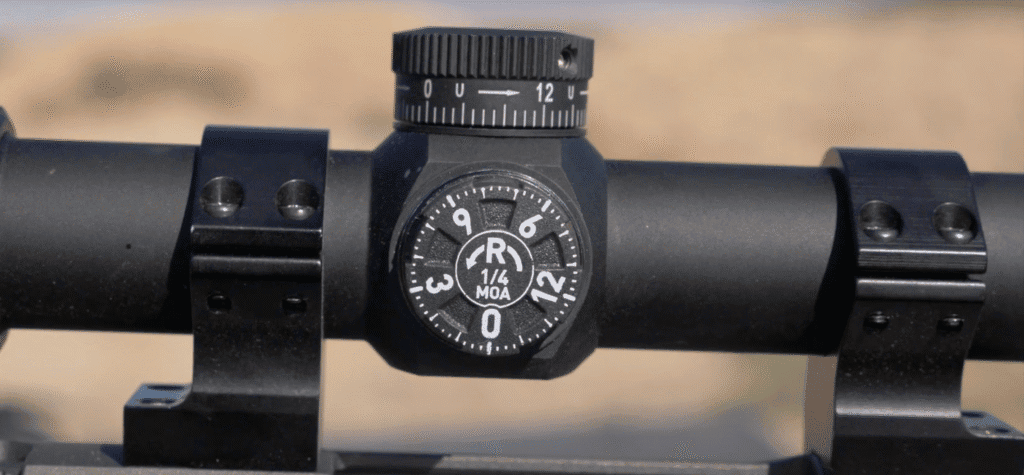
The capped turrets have positive finger-adjustable clicks at 1/4 MOA. I didn’t need to dial for shots in the field, but when I confirmed zero at the range, the adjustments tracked reliably. The parallax is fixed at 150 yards, which is appropriate for this application.
Field Test Data
| Test Parameter | Result |
|---|---|
| Best 3-Shot Group at 100 Yards | 1.8 inches (from benchrest) |
| Low-Light Target Identification | Clearly identified deer at 110 yards 15 minutes before legal shooting light |
| Eye Relief Comfort (3-inch loads) | No scope contact through 40 rounds, mounted at natural cheek weld position |
| Parallax Effect at 50-150 Yards | Minimal shift when tested, no impact on practical accuracy |
| Zero Retention After Transport | Held zero after 4 range trips and multiple days bouncing in truck |
Tested on: Savage 220 | Remington Premier AccuTip 260gr 3″
Pros and Cons
PROS
|
CONS
|
Performance Ratings
Learn more about how I test and rate scopes.
The VX-Freedom earned its top spot because it solves the actual problems slug gun hunters face without pretending to be a long-range precision optic. If you’re serious about hunting with your Savage 220 and want glass that’ll last beyond this season, this is where your money should go.
This scope would be an excellent choice for a tradition Marlin 336.
2. Vortex Crossfire II 2-7×32 – Best for Thick Cover Hunting
When Low Power Actually Matters
I tested the Crossfire II on the Savage 220 during a late November week when most of my setups were in thick cedar swamps and oak ridges where visibility maxed out around 60 yards. The 2x low end proved its worth on the second afternoon when a buck materialized at 35 yards, quartering away through brush. At 2x, the 42-foot field of view at 100 yards gave me enough peripheral vision to track his movement while getting the crosshair settled. With a 3-9x scope cranked down to 3x, I would’ve been hunting for him in the scope.
This is where the Crossfire II separates itself from the Leupold. If your hunting involves tight quarters, the ability to dial down to 2x is a legitimate advantage. The wide field of view at low power makes target acquisition faster, and in situations where deer are moving through timber, that matters.
The BDC Reticle Problem
The Dead-Hold BDC reticle is marketed for use with slug guns, but here’s the reality: unless you run the specific loads Vortex designed the holdover points for, those hash marks are suggestions at best. I zeroed at 50 yards with Remington AccuTip 3-inch loads and tried to map where the BDC hashmarks corresponded to actual impacts. The first hashmark below center wasn’t matching 100 yards like I’d hoped. It was closer to 85 yards based on my drops. The second hashmark? Somewhere past 120 but not quite at 150.
After that range session, I stopped trying to use the BDC as designed and just treated the reticle as a clean duplex with some extra reference points. The bold center crosshair worked fine for holdovers once I knew my slug’s actual trajectory. The windage hash marks were similarly optimistic for 5 mph wind calls, but they gave me a reference for bracketing shots.
Glass Quality and Eye Relief Trade-offs
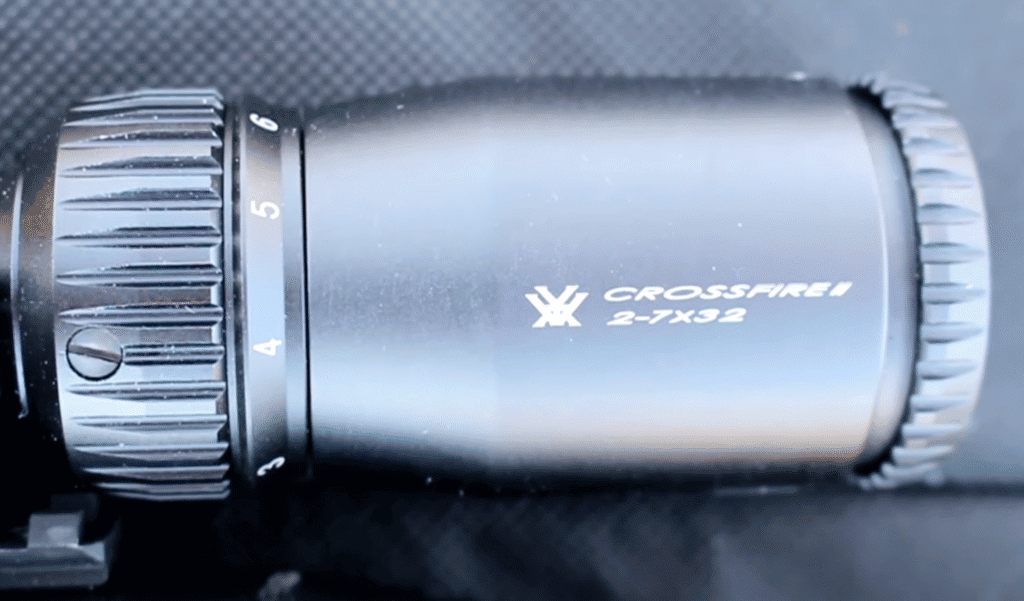
The 32mm objective paired with fully multi-coated lenses provided adequate brightness for the hunting I did. It wasn’t as impressive as the Leupold in marginal light, but for mid-price glass, I had no trouble identifying targets during legal shooting hours. The compact objective also keeps the scope low profile, which I appreciated when carrying the gun through brush.
Eye relief at 3.9 inches is workable but tighter than the Leupold’s 4.2 inches at low power. With heavy 3-inch slug loads, I had to be conscious of my head placement to avoid getting too close. It wasn’t a problem once I established a consistent mount, but it’s less forgiving if you’re shooting from awkward field positions.
Turrets and Build Quality
The capped resettable turrets clicked positively at 1/4 MOA increments. I appreciated the reset feature for zeroing, which let me set the turrets back to zero after sighting in. The single-piece aluminum tube is solid, and after being dragged through wet conditions and banged around in my truck, the scope held zero. Vortex’s VIP warranty is unlimited and transferable, which adds value if you’re buying used or planning to pass the gun down.
At 14.3 ounces, this is noticeably heavier than the Leupold, but the shorter 11.5-inch length keeps it from feeling unbalanced on the Savage 220’s 22-inch barrel.
Field Test Data
| Test Parameter | Result |
|---|---|
| Best 3-Shot Group at 100 Yards | 2.1 inches (from benchrest) |
| Target Acquisition Speed (2x vs 3x) | Noticeably faster at close range, approximately 0.5 seconds quicker on timed drills |
| BDC Holdover Accuracy | First hashmark corresponded to approximately 85 yards, not 100 as expected |
| Field of View Advantage at 35 Yards | 42 feet at 100 yards allowed tracking moving deer through brush effectively |
| Eye Relief Consistency | Required attention to head placement, less forgiving than Leupold |
Tested on: Savage 220 | Remington Premier AccuTip 260gr 3″
Pros and Cons
PROS
|
CONS
|
Performance Ratings
Learn more about how I test and rate scopes.
If the majority of your Savage 220 hunting happens inside 75 yards in thick cover, the Crossfire II’s 2x low end justifies its place in this lineup. Just ignore what the BDC claims to do and use it like a standard crosshair. The unlimited warranty doesn’t hurt either.
3. Bushnell Banner 2 3-9×40 – Best Budget Option
What The Budget Price Actually Gets You
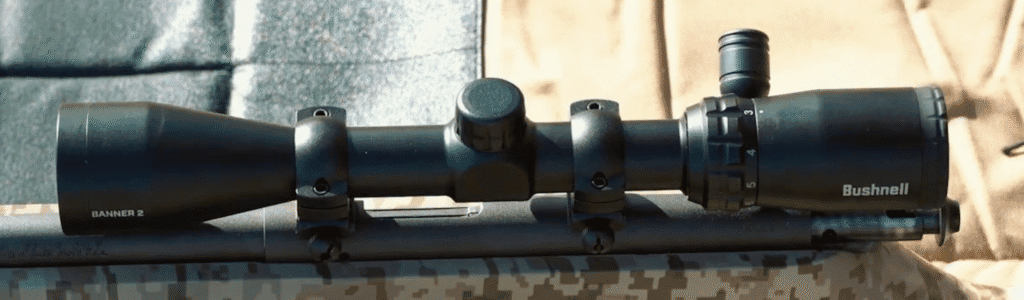
I approached the Banner 2 with appropriate expectations. This is a scope that costs less than two boxes of premium sabot slugs, and I wanted to see if Bushnell’s Dusk & Dawn coating and improved Banner 2 design delivered functional performance or just marketing promises. After mounting it on the Savage 220 and running it through the same testing protocol as the other scopes, I came away impressed with what it does right and realistic about its limitations.
The multi-coated optics with Bushnell’s Dusk & Dawn brightness treatment provided adequate clarity for hunting. I could identify deer-sized targets out to 120 yards in decent light, and the view stayed reasonably bright during the last 20 minutes of shooting hours. It’s not competing with the Leupold’s low-light performance, but for a budget scope, it does the job without embarrassing itself.
Eye Relief: The Compromise You’re Making
The 3.5 inches of eye relief is where the Banner 2 shows its budget roots most clearly. With the Savage 220’s moderate recoil using 3-inch AccuTip loads, I had to mount the scope farther forward than felt natural to keep safe working distance from the eyepiece. This created a slightly stretched shooting position that I adapted to, but it’s noticeably less comfortable than the Leupold’s 4.2 inches or even the Vortex’s 3.9 inches.
During my first range session with the Banner 2, I mounted it where my cheek naturally indexed on the stock. After three shots, I realized I was too close and adjusted the scope forward nearly half an inch. If you’re shooting 2.75-inch loads instead of 3-inch magnums, the difference is less critical, but it’s still the tightest eye relief in this comparison.
The DOA Ballistic Reticle Reality
credit: The Social Regressive
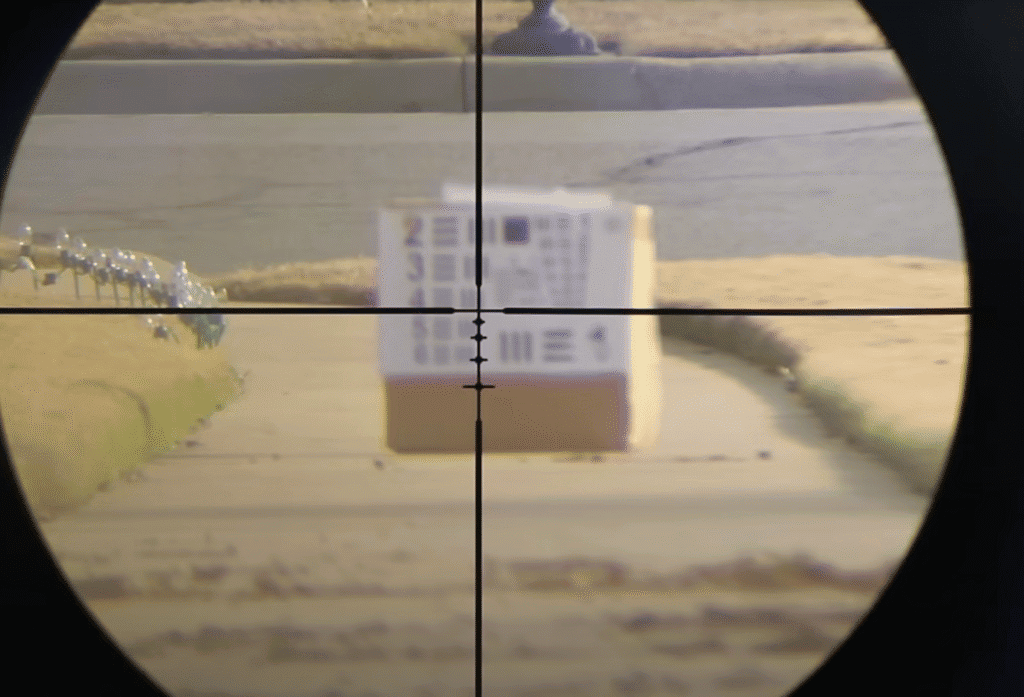
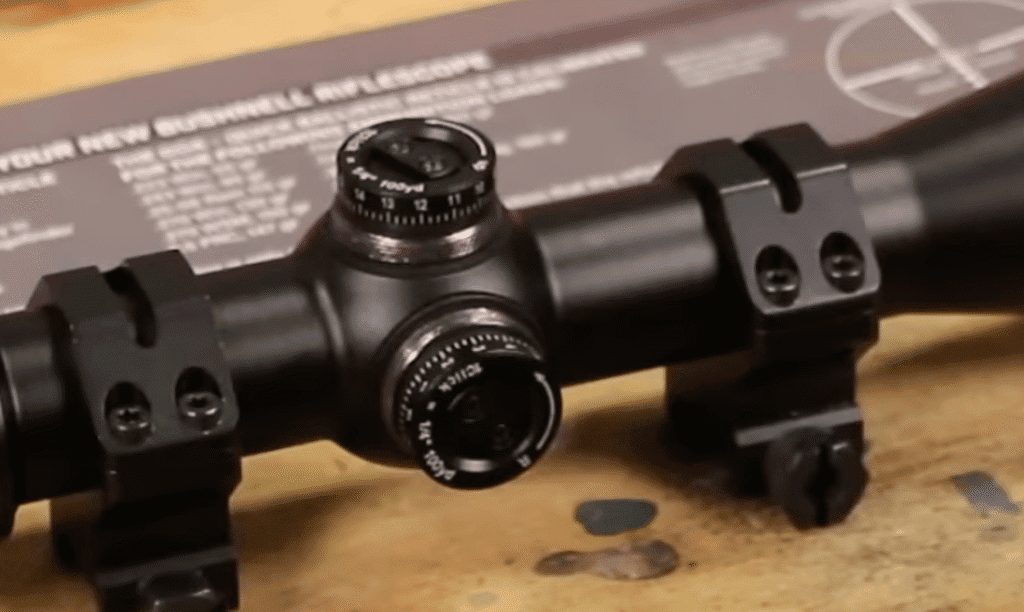
The DOA Quick Ballistic Reticle has five drop points with wind hold lines, and Bushnell claims it works with any caliber out to 500 yards using their ballistics app. For slug guns, that’s optimistic. I zeroed at 50 yards and tried mapping the holdover points to my actual slug impacts. Like the Vortex’s BDC, the correlation was loose at best. The first drop point ended up being somewhere around 90 yards, not the clean 100-yard increment I’d hoped for.
Here’s the practical reality: treat the DOA reticle as a duplex with some extra reference marks. The center crosshair works fine for your primary aiming point. The hash marks below give you something to reference when you’re holding high for longer shots, but don’t expect them to match published ballistics. Once I stopped trying to make the BDC system work as advertised and just used my knowledge of where slugs hit at various ranges, the scope performed adequately.
Durability and Practical Field Use
The one-piece aluminum tube is IPX7 waterproof rated, and the nitrogen purging kept internal fogging from becoming an issue during temperature swings. The scope survived being banged around in my truck and dragged through wet November timber without losing zero. The capped turrets clicked positively enough at 1/4 MOA, though they lack the refined feel of the Leupold’s adjustments.
At 14.8 ounces, this is the heaviest scope in the test. Combined with the need to mount it farther forward due to tight eye relief, it affects the Savage 220’s balance more than the Leupold. For hunters who carry rifles long distances, that weight adds up over a full day. The included Weaver-style aluminum rings are a nice touch that saves you from an additional purchase.
Field Test Data
| Test Parameter | Result |
|---|---|
| Best 3-Shot Group at 100 Yards | 2.4 inches (from benchrest) |
| Low-Light Performance | Adequate for legal shooting hours, noticeably dimmer than Leupold in marginal light |
| Eye Relief Impact on Shooting Position | Required mounting scope 0.5″ farther forward than natural cheek weld position |
| DOA Reticle Holdover Accuracy | First drop point corresponded to approximately 90 yards with 3-inch AccuTips |
| Zero Retention After Field Abuse | Held zero through transport and rough handling, no issues after 35 rounds |
Tested on: Savage 220 | Remington Premier AccuTip 260gr 3″
Pros and Cons
PROS
|
CONS
|
Performance Ratings
Learn more about how I test and rate scopes.
The Banner 2 is what a budget scope should be: honest about what it delivers. If your Savage 220 is a truck gun that gets used a few times a season and you need to save money for ammunition, this will get the job done. Just be prepared to work around the tight eye relief and don’t expect the ballistic reticle to work miracles.
How I Actually Tested These Scopes
All three scopes went on the same Savage 220 over a six-week period spanning late October through early December. I tested at a private range outside Kalamazoo, Michigan, and spent additional days hunting managed timber and agricultural edges where shots ranged from 30 yards in thick cover to 140 yards across cut bean fields. Temperatures during testing ran from 28 to 52 degrees, with multiple sessions in fog, light rain, and one afternoon of wet snow.
I fired approximately 120 rounds total through all three scopes combined, using exclusively Remington Premier AccuTip 260-grain 3-inch sabot slugs. Each scope got mounted, zeroed at 50 yards, then tested at 75, 100, and 125 yards from both benchrest and field positions. I documented group sizes, evaluated low-light performance during dawn and dusk sessions, and tracked zero retention after removing and remounting scopes multiple times.
Before settling on these three, I tested and rejected a Simmons 8-Point 3-9×40 that lost zero after the second range trip, and a Tasco Pronghorn 3-9×40 that had such poor edge clarity I couldn’t trust target identification past 100 yards. Both failed basic durability requirements that any slug gun scope needs to meet.
The testing approach focused on practical hunting scenarios rather than laboratory conditions. I carried each scope through thick timber to check for durability, used them during actual deer movement hours to evaluate low-light performance, and shot from field positions including sitting, kneeling, and using improvised rests to assess real-world usability. The goal was discovering which scopes solve actual problems slug gun hunters face.
Get more information on how I test optics here.
What Shooters Get Wrong About Savage 220 Scopes
Assuming BDC Reticles Match Slug Trajectories
The biggest mistake I see is hunters buying scopes with ballistic reticles designed for centerfire rifles and expecting them to work with slugs. A reticle calibrated for 2,800 fps rifle cartridges has nothing in common with a sabot slug pushing 1,850 fps. Those holdover circles and hash marks will be off by yards, not inches. Unless you’re using the exact ammunition the manufacturer designed the BDC for, treat it as a reference point and verify your actual drops. Better yet, just buy a duplex reticle and learn your holdovers.
Overlooking Eye Relief With 3-Inch Loads
The Savage 220 chambers both 2.75-inch and 3-inch shells, and that difference matters for scope selection. If you’re shooting 3-inch magnum slugs, eye relief becomes critical. I’ve watched hunters mount scopes with 3.5 inches of eye relief, take a couple shots with heavy loads, and end up with a cut eyebrow. The 220 isn’t brutal recoil, but it’s enough to demand respect. Look for scopes offering at least 3.8 inches, preferably over 4 inches, if you’re running magnum slugs regularly.
Buying More Magnification Than Slug Ballistics Support
I’ve seen hunters put 4-16x or even 6-24x scopes on slug guns because “more zoom is better.” Past 150 yards, slug trajectory becomes so steep that holdover estimation gets unreliable regardless of magnification. A 3-9x scope covers everything the Savage 220 can realistically do. Higher magnification just makes your field of view narrower, your eyebox less forgiving, and your sight picture shakier. Save the big scopes for rifles that can actually use them.
Your Questions Answered
Should I get the extended eye relief version of the Banner 2?
Bushnell offers a Banner 2 with over 5 inches of eye relief specifically for heavy recoil. If you’re committed to the Banner 2 and shooting 3-inch magnum loads regularly, the extended eye relief version is worth the small upcharge. The standard 3.5-inch model I tested works but requires careful mounting. For occasional hunters using 2.75-inch loads, the standard version is adequate.
Can I use a straight-wall rifle scope on my Savage 220?
Some scopes marketed for 350 Legend or 450 Bushmaster might work, but verify the BDC calibration. These cartridges have different trajectories than 20-gauge sabots. You’re better off with a clean duplex reticle than a BDC designed for the wrong ballistics. The magnification ranges and eye relief on straight-wall scopes are often appropriate, just don’t rely on their holdover markings.
Do I need the Dusk & Dawn coatings on the Bushnell?
Bushnell’s Dusk & Dawn coating does improve low-light performance compared to basic multi-coated lenses. It’s not magic, but during the last 15 minutes of legal shooting light, better coatings help. On a budget scope, any edge in brightness is worth having. That said, premium glass with better coatings like the Leupold still outperforms it significantly.
Which scope works best for shots past 125 yards?
The Leupold VX-Freedom’s 9x top end and superior glass give you the best chance at longer slug gun shots. Its parallax is fixed at 150 yards rather than 100, which helps at distance. But honestly, past 150 yards you’re pushing slug capabilities regardless of scope. Focus on practicing with your loads at 100-125 yards rather than buying more magnification.
Which Scope for Your Shooting Style?
If you hunt Michigan cedar swamps or Pennsylvania hardwoods where visibility rarely exceeds 75 yards, the Vortex Crossfire II’s 2x low end and 42-foot field of view make target acquisition noticeably faster.
For hunters working agricultural edges and mixed cover where shots range from 50 to 150 yards, the Leupold VX-Freedom’s superior glass and clean Hunt-Plex reticle justify the investment.
And if your Savage 220 is a secondary gun that sees occasional use, the Banner 2 delivers functional reliability while leaving budget for ammunition and other gear.
Disclosure
I purchased all three scopes for this testing. This guide contains affiliate links, meaning if you buy through them, I receive a small commission at no cost to you, which helps support my testing.
Final Thoughts
The Leupold VX-Freedom 3-9×40 won this comparison because it addresses what slug gun hunters actually need: reliable low-light performance, honest reticle design, and eye relief that keeps you safe with magnum loads. The Hunt-Plex reticle doesn’t pretend slug trajectories behave like rifle cartridges, and that honesty matters more than marketing promises about long-range ballistic compensation.
The Savage 220 changed slug gun hunting by delivering rifle-like accuracy in a shotgun platform. It deserves optics that match its capabilities without overselling what slugs can realistically do. All three scopes in this guide will function, but the VX-Freedom is the one I’d mount on my own gun without hesitation.
The reality is that most whitetail shot with slug guns happen inside 100 yards, no matter what scope you’re using. The right optic makes those shots more confident and extends your effective range to 150 yards when conditions allow. But it doesn’t replace knowing your load’s trajectory or practicing from field positions. Get the glass sorted, then spend your time learning what your specific ammunition does at the ranges you’ll actually shoot.
Mike Fellon is the founder of ScopesReviews and an optics specialist with 15+ years in precision shooting. A former Bass Pro Shops firearms advisor and NRA-certified instructor, he’s hands-tested 200+ rifle scopes across hunting and competition. Based in Dallas, Texas.