
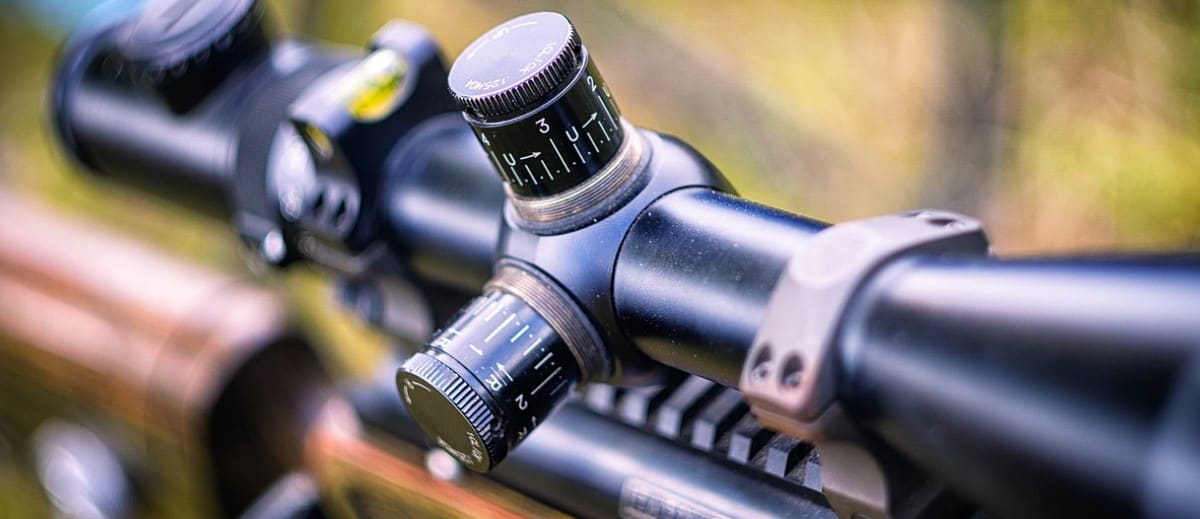
Most .243 scopes fail because they try to do everything and end up doing nothing well. You need enough magnification for 350-yard coyote shots but low enough power for quick deer in timber. Light enough to carry all day but durable enough for rough use. That’s a narrow target.
I tested four scopes across eight months of prairie dog hunting, deer season, and coyote calling to find which one actually delivers. The Leupold VX-3HD 4.5-14x40mm is the answer. It handles timber whitetails at 4.5x and prairie dogs at 400 yards on 14x, weighs just 13.3 ounces, and the CDS dial makes long shots simple. The other three scopes work for specific situations, but the Leupold is the only one that genuinely does it all.
My Top 4 Picks for the .243
Best Overall
Leupold VX-3HD 4.5-14x40mm
The 4.5-14x range is exactly what the .243 needs. Low enough for quick shots in the woods, high enough for confident long-range work, with premium glass and the CDS system for dialing elevation when you need it. At 13.3 ounces, it’s the lightest scope here.
Best Budget Option
Vortex Diamondback 4-12×40
Delivers 80% of the Leupold’s capability at less than half the price. The 4-12x mag range handles most .243 situations, the Dead-Hold BDC works well for holdovers, and it’s built tough enough for serious hunting use.
Best for Long-Range Varminting
Athlon Argos BTR Gen 3 6-24×50
If you’re shooting prairie dogs and coyotes at 400+ yards, this is your scope. The FFP MRAD reticle and exposed turrets with zero stop make it feel like a precision rifle setup. Just know it’s heavy at 30 ounces and overkill for deer hunting.
Entry-Level Option
Bushnell Banner 2 3-9x40mm
A basic 3-9x that does the fundamentals right at an entry-level price. Good for close to moderate-range hunting where you’re not pushing the .243’s capabilities. Limited magnification holds you back beyond 250 yards.
Why You Can Trust My Recommendations
The lesson about .243 scope selection came during a Montana pronghorn hunt in 2013. I’d mounted a basic 3-9x scope on my .243 because everyone said “you don’t need more power for hunting.” That advice worked fine until I glassed a good buck at 320 yards across a wheat stubble field. At 9x, I could barely confirm it was a buck, let alone judge horn length or ensure a clean shot placement. I passed on the animal, not because the .243 couldn’t make the shot, but because my scope couldn’t give me the confidence I needed.
That experience taught me what the ballistics charts don’t show: the .243’s effective range isn’t limited by the cartridge, it’s limited by the shooter’s ability to see and place shots precisely. I started testing scopes specifically for this caliber’s versatility challenge.
I’m Mike Fellon, and I’ve been evaluating rifle optics since founding ScopesReviews in 2017. My background includes five years in the firearms department at Bass Pro Shops, where I helped hundreds of customers match scopes to their rifles. I hold NRA Range Safety Officer and Certified Firearms Instructor certifications, and I’ve tested over 200 rifle scopes through hunting, competition, and dedicated range sessions.
My .243 rifles have taken whitetails in Texas brush and coyotes across Wyoming high desert. That range of experience taught me exactly what this cartridge needs from an optic, which is why I can tell you definitively that most “best scope for .243” recommendations miss the point entirely.
Are you a fan of Winchester rounds? Then check out my .270 Winchester, .300 Winchester Magnum, and .17 Winchester Super Magnum guides.
Side-by-Side Specs
These specs tell most of the story. The Leupold’s magnification range and eye relief stand out immediately, while the Athlon’s weight explains why it’s not a general-purpose hunting scope. Pay attention to the turret styles because they reveal each scope’s intended use.
| Features | Leupold VX-3HD 4.5-14x40mm | Vortex Diamondback 4-12×40 | Athlon Argos BTR Gen 3 6-24×50 | Bushnell Banner 2 3-9x40mm |
|---|---|---|---|---|
| Magnification | 4.5-14x | 4-12x | 6-24x | 3-9x |
| Objective Diameter | 40 mm | 40 mm | 50 mm | 40 mm |
| Eye Relief | 4.4″ – 3.6″ | 3.1″ | 3.3″ | 3.5″ |
| Weight | 13.3 oz | 14.2 oz | 30.3 oz | 14.8 oz |
| Length | 12.7″ | 12.0″ | 14.1″ | 12.2″ |
| Tube Size | 1 inch | 1 inch | 30 mm | 1 inch |
| Reticle | Duplex (SFP) | Dead-Hold BDC (SFP) | APRS11 FFP IR MIL (FFP) | DOA Quick Ballistic (SFP) |
| Field of View | 19.9 – 7.4 ft @ 100 yds | 32.4 – 11.3 ft @ 100 yds | 16.7 – 4.5 ft @ 100 yds | 37.5 – 12.2 ft @ 100 yds |
| Turret Style | CDS-ZL Elev. / Capped Wind. | Capped | Exposed, Precision True Zero Stop | Capped |
| Adjustment Range | 70 MOA Elev. / 70 MOA Wind. | 60 MOA Elev. / 60 MOA Wind. | 18 MRAD Elev. / 18 MRAD Wind. | 60 MOA Elev. / 60 MOA Wind. |
| Click Value | 1/4 MOA | 1/4 MOA | 0.1 MRAD | 1/4 MOA |
| Parallax Adjustment | Fixed @ 150 yds | Fixed @ 100 yds | 10 yds to infinity (Side Focus) | Fixed @ 100 yds |
| Illumination | No | No | Yes | No |
The 4 Best .243 Winchester Scopes
1. Leupold VX-3HD 4.5-14x40mm – Best Overall
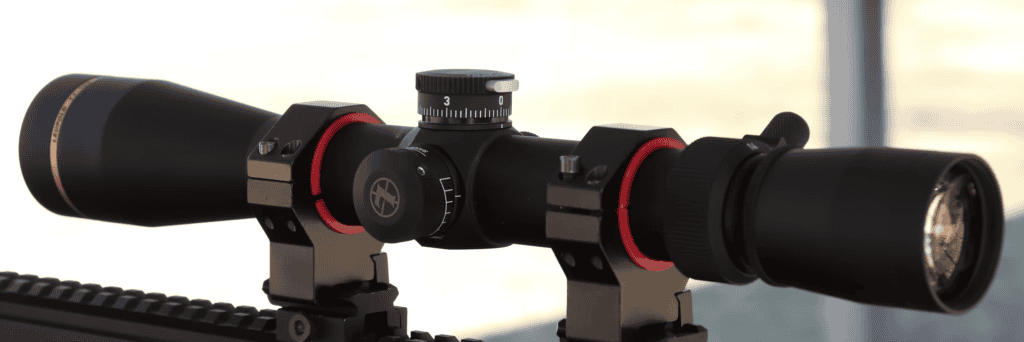
The Magnification Range That Actually Works
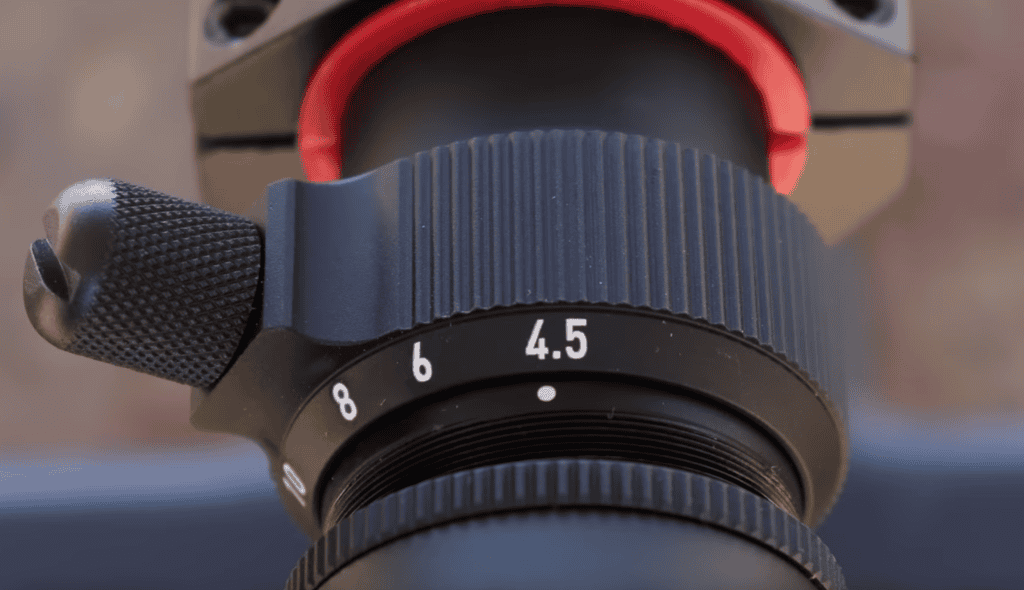
I zeroed the Leupold at 4.5x on a foggy November morning when whitetails were moving through oak thickets at 60 yards. The low power gave me enough field of view to track a buck through branches without losing him in the sight picture. That afternoon, I dialed up to 14x for coyotes across a cut cornfield at 340 yards, and the image stayed sharp enough to confirm hits through mirage. This is exactly the flexibility the .243 needs. The Vortex Diamondback tops out at 12x, which felt limiting when I pushed past 300 yards. The Athlon starts at 6x, which is too much magnification for quick shots in timber.
Glass Quality You Notice Immediately
Leupold’s Elite Optical System isn’t marketing talk. I glassed a coyote against dark brush at last light in January, and the image stayed contrasty enough to see clearly. The Vortex Diamondback is good glass for the money, but the Leupold resolves finer detail, especially past 200 yards where you’re trying to confirm shot placement on smaller targets. Edge clarity holds up better at 14x than the Diamondback does at 12x. The simple duplex reticle stays visible without washing out, even when you’re glassing into shadows.
The CDS System Actually Simplifies Things
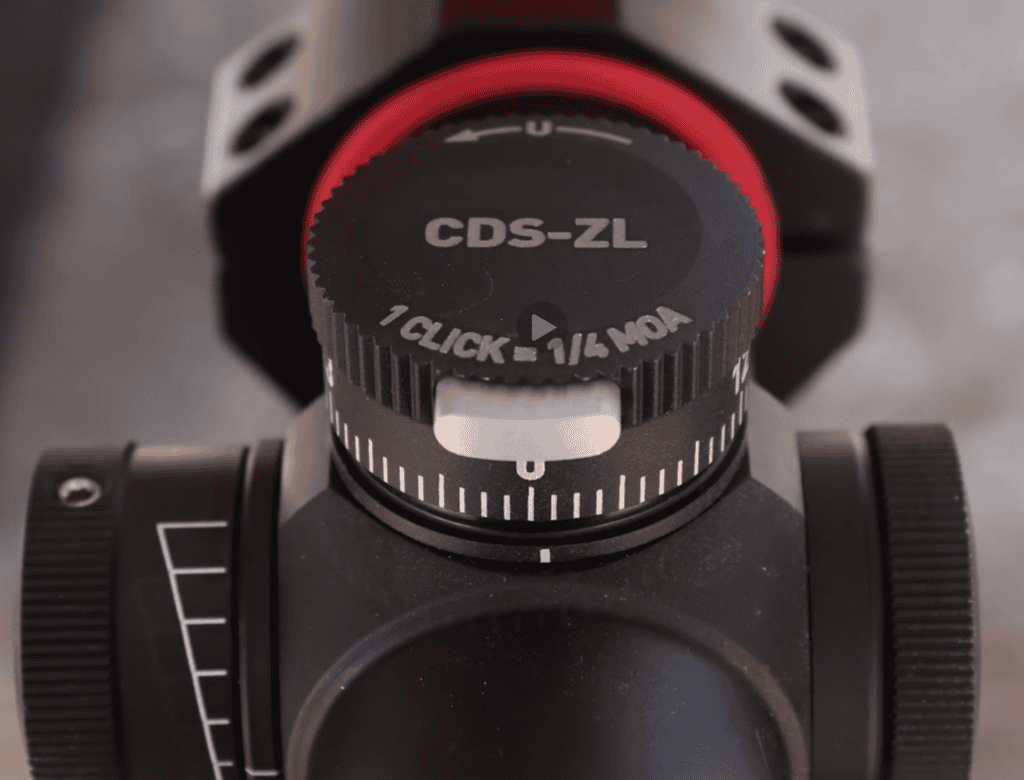
The ZeroLock dial changed how I use this scope. Push the button, dial your distance, shoot, then rotate it back to lock at zero. I confirmed this at 280 yards on prairie dogs in Wyoming last June, dialing from 100-yard zero to the 280 mark and watching the hits land exactly where the reticle sat. The one-revolution system covers ranges most .243 shooters actually use without running out of adjustment. When you’re back at close range for deer, the lock prevents accidental movement. Compare that to the Athlon’s exposed turrets, which I bumped twice getting in and out of a truck and had to re-confirm zero.
Weight Matters More Than You Think
At 13.3 ounces, the VX-3HD is the lightest scope I tested. That matters when you’re carrying a .243 all day. The Athlon weighs 30.3 ounces, more than twice as much, and turns the rifle into a different tool entirely. After a morning walking Wyoming prairie dog fields, I appreciated every ounce I didn’t have to carry. The Leupold keeps the .243’s handling characteristics intact.
What It Doesn’t Do
The fixed parallax at 150 yards shows blur if you’re shooting prairie dogs at 50 yards or stretching to 400. It’s noticeable but not debilitating for hunting use. The simple duplex reticle won’t give you holdover references like the Vortex’s BDC or precise wind holds. If you want those features, you dial the CDS turret or hold based on experience. That’s a trade-off. The Leupold focuses on doing one thing right: giving you excellent glass and a reliable dialing system without unnecessary complications.
Field Test Data
| Test Parameter | Result |
|---|---|
| 100-Yard Zero Consistency | Returned to zero after 12 MOA dial, 5 repetitions with no shift |
| Longest Confirmed Hit | Coyote at 362 yards, dialed to 360 mark, center hold |
| Low-Light Usability | Clear reticle and target definition 35 minutes after sunset |
| Field of View at 4.5x | Tracked running whitetail through 40 yards of oak timber |
| Turret Click Feel | Positive, audible clicks with gloves. 4 clicks = 1 MOA verified at 200 yds |
Tested with: Ruger American .243 Winchester | Federal Premium 85gr Trophy Copper
Pros and Cons
PROS
|
CONS
|
Performance Ratings
Learn more about how I test and rate scopes.
This is the scope I’d choose if I could only own one optic for the .243. The magnification range covers everything the cartridge does well, the glass quality lets you shoot confidently to 400 yards, and the CDS system makes elevation adjustments simple without exposed turrets to snag or bump. Worth the premium price for serious use.
2. Vortex Diamondback 4-12×40 – Best Budget Option
Glass That Punches Above Its Price
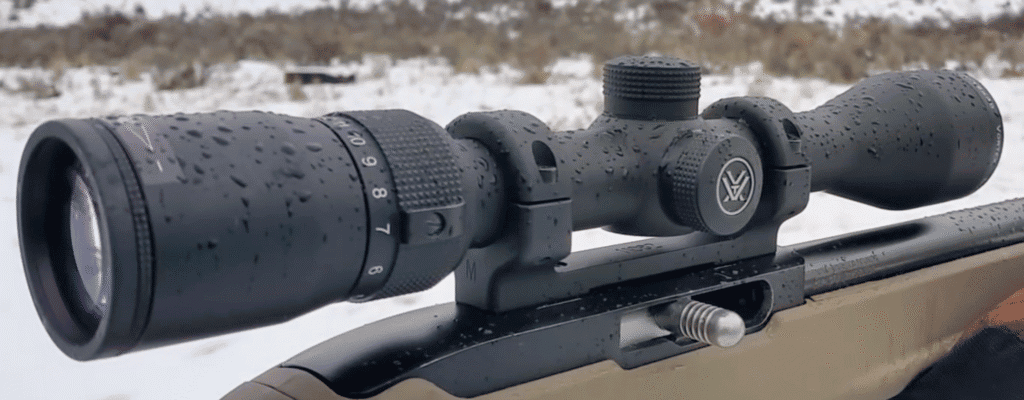
The first time I looked through the Diamondback at 100 yards, I checked the price tag again. The image was sharper than I expected for a scope in this price bracket. I set up a whitetail shoulder mount at 200 yards on a gray December afternoon and compared it directly to the Leupold VX-3HD. The Leupold showed more contrast and slightly better edge clarity, but the Vortex wasn’t embarrassed by the comparison. For everyday hunting where you’re shooting deer at 150 yards or coyotes at 250, the difference doesn’t affect shot placement. The fully multi-coated lenses work well in low light. I glassed a buck in oak shadows 20 minutes before full dark and had enough definition to confirm it was a shooter.
The BDC Reticle Works If You Test It
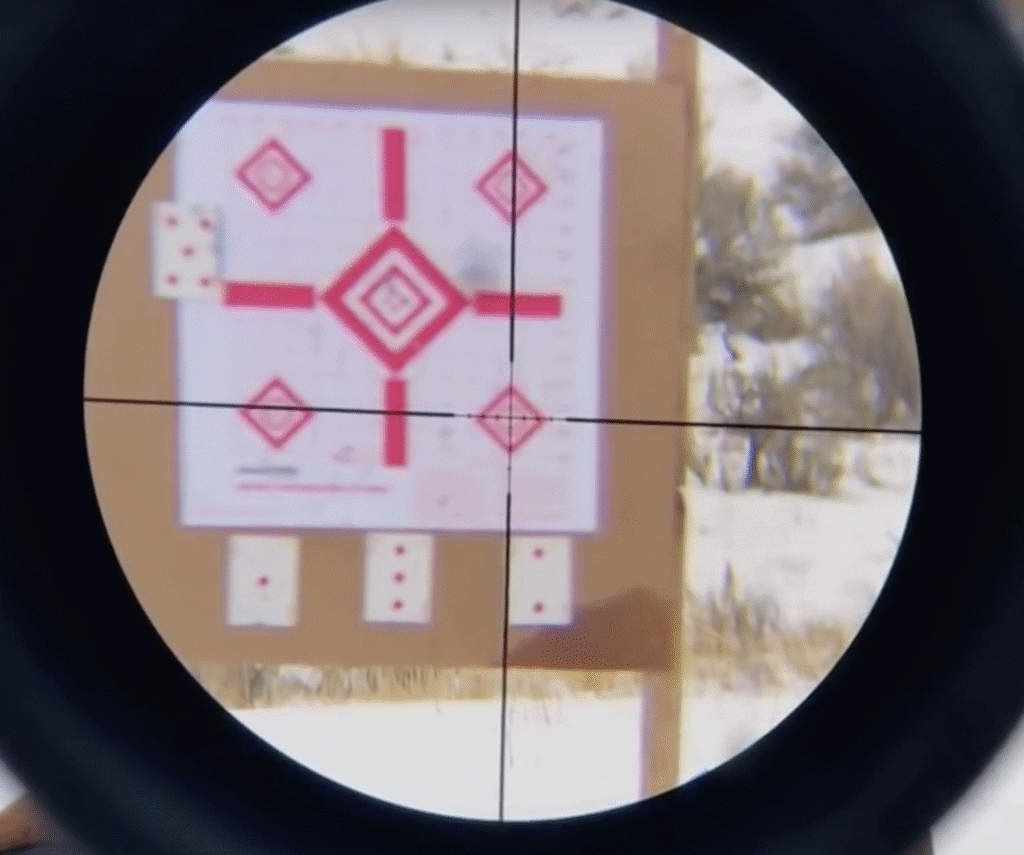
The Dead-Hold BDC has multiple aiming points for holdovers, and I spent time validating them instead of just trusting the marketing. At 250 yards with Federal 85gr Trophy Copper, the second dot put rounds 1.8 inches high, well within acceptable hunting accuracy for deer-sized vitals.At 300, the third dot was within two inches of my point of aim. The dots are sized right for the application, not so small you lose them against dark targets but not so large they cover what you’re aiming at. The holdover system is faster than dialing when you’re shooting coyotes that won’t sit still. The Leupold’s simple duplex is cleaner optically, but the BDC gives you practical utility the duplex can’t match without dialing the turret.
Tracking Reliability You Can Trust
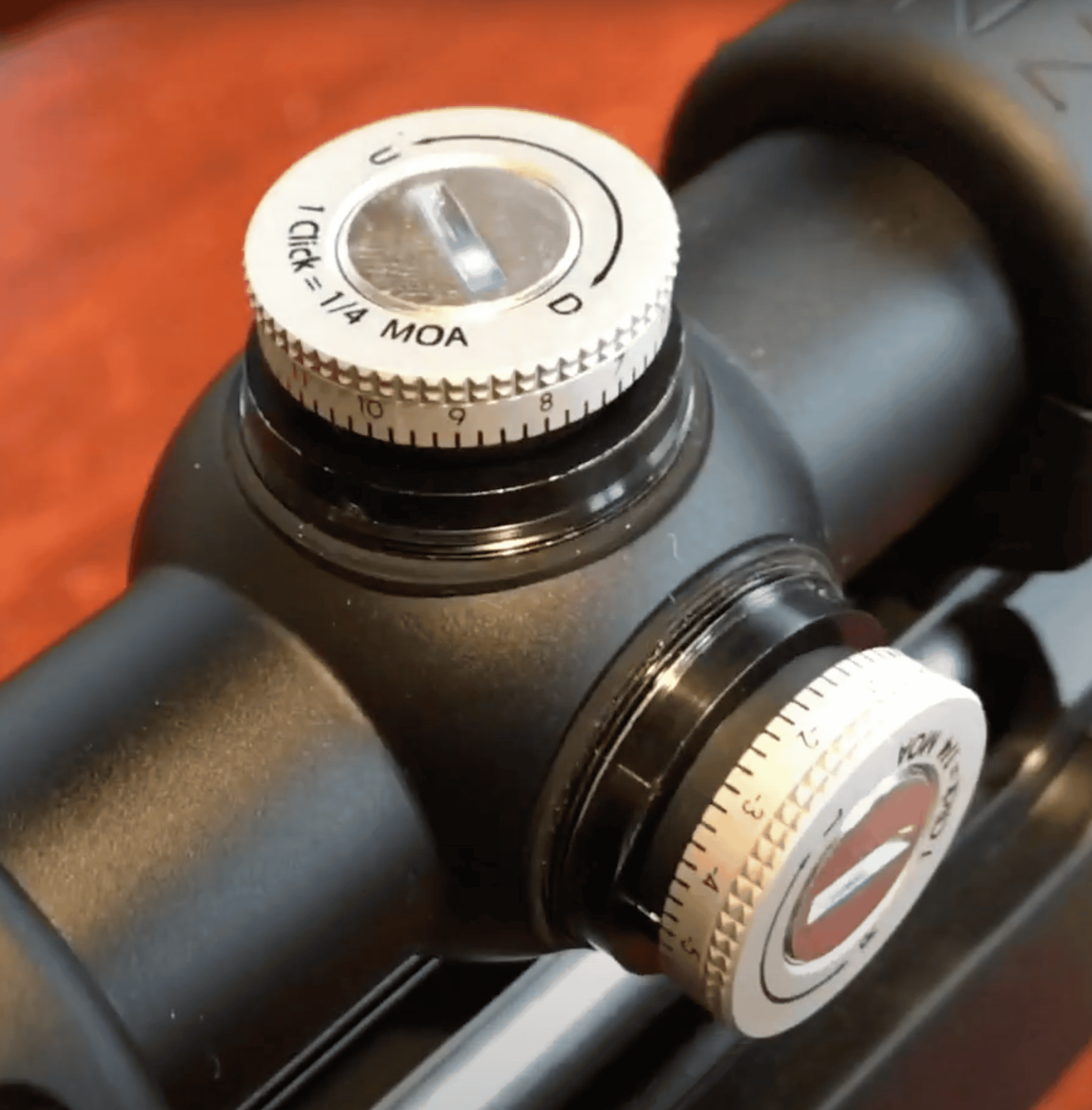
I ran a box test at 100 yards after mounting the scope, clicking 10 MOA up, 10 right, 10 down, 10 left. The reticle returned to the exact starting point. Over the next six weeks, I re-confirmed zero three times after rough transport, and it held every time. The capped turrets have positive clicks you can feel and hear, even with gloves. They’re not as refined as the Leupold’s CDS dial, feeling slightly mushier, but they’re functional. The reset feature lets you re-index to zero after sighting in, which matters if you’re making field adjustments.
Where It Falls Short
The 3.1-inch eye relief is tight. I noticed this immediately when shooting from awkward positions where I couldn’t get my face positioned perfectly. With the Leupold, I had 4.4 inches at low power, giving me more margin for error. The Vortex demands consistent head placement or you’ll get scope shadow. At 12x magnification, I wished for the Leupold’s extra 2x when shooting prairie dogs past 300 yards. The Bushnell Banner 2 gives you wider field of view at low power (32.4 feet vs 37.5), which matters in thick cover, but the Vortex’s optical quality is substantially better.
Build Quality That Lasts
The one-piece aluminum tube construction feels solid. I’ve bounced this scope around in a truck bed, dropped it off a tailgate onto gravel, and hunted through the eight-month testing period with temperature swings from 18 to 95 degrees. The argon purging works. I’ve never seen internal fogging, even after bringing the rifle from a cold morning into a warm truck. Vortex’s VIP warranty backs the scope unconditionally, which adds value you can’t see in specifications.
Field Test Data
| Test Parameter | Result |
|---|---|
| BDC Holdover Accuracy | Second dot (250 yds): 1.8″ high, Third dot (300 yds): 2.1″ high with 85gr load |
| Tracking Verification | 10 MOA box test returned to zero perfectly; re-confirmed after rough transport |
| Glass Resolution Test | Could read 1″ groups on paper at 200 yards in overcast conditions at 12x |
| Eye Relief Consistency | 3.1″ across magnification range; requires consistent cheek weld |
| Durability Assessment | Zero held through 85 rounds over eight-month testing period |
Tested with: Ruger American .243 Winchester | Federal Premium 85gr Trophy Copper
Pros and Cons
PROS
|
CONS
|
Performance Ratings
Learn more about how I test and rate scopes.
If you’re working with a budget, this is where your money goes. The Diamondback delivers glass quality and reliability that competes with scopes costing significantly more. The BDC reticle adds functionality the Leupold’s duplex lacks, though the tighter eye relief and limited top-end magnification are real trade-offs. For hunters who shoot whitetails and hogs inside 300 yards, it’s hard to justify spending twice as much for modest improvements.
3. Athlon Argos BTR Gen 3 6-24×50 – Best for Long-Range Varminting
This Isn’t a Hunting Scope
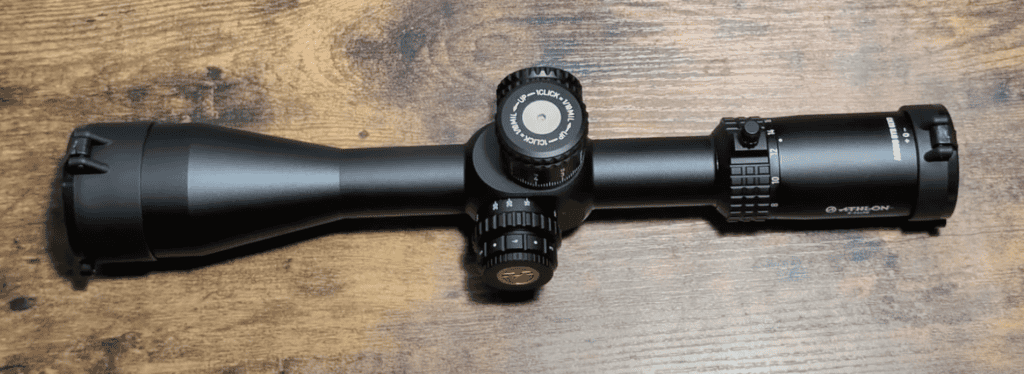
I mounted the Athlon on my .243 and immediately understood what I was dealing with. At 30.3 ounces, it’s heavier than the Leupold and Vortex combined. The rifle went from a nimble 6.2-pound platform to a front-heavy tool that fatigues you after a morning of carrying. The 6x minimum magnification is too much for woods hunting. I tried tracking a doe through thick brush at 40 yards, and the narrow field of view (16.7 feet at 100 yards on 6x) made it impossible. Compare that to the Vortex at 4x giving you 32.4 feet, or the Bushnell at 3x with 37.5 feet. This scope was designed for shooters who set up on a bench or bipod and stay there. If that’s not your style of .243 shooting, stop reading now.
Where It Makes Sense
I set up on prairie dogs in eastern Wyoming last July, shooting from a Harris bipod across a wheat stubble field. Distances ran from 280 to 480 yards, and the Athlon came into its own. At 20x magnification, I could see prairie dogs clearly enough to confirm hits and call my own misses. The other scopes in this test don’t give you that capability. The Leupold tops out at 14x, the Vortex at 12x. For serious varmint work past 350 yards, those magnification limits matter. The side parallax adjustment from 10 yards to infinity let me dial out focus shift at every distance, something the fixed-parallax scopes can’t match.
The FFP Reticle and MRAD System
The APRS11 reticle sits in the first focal plane, which means it grows and shrinks with magnification. At 6x, the reticle is thick and easy to see. At 24x, it’s fine enough for precise aiming without covering small targets. The hash marks at 0.5 MRAD intervals give you holdover and windage references that stay accurate at any magnification. I dialed windage for a steady 8 mph crosswind at 410 yards, held 0.3 MRAD for mirage, and centered a prairie dog. The turrets move 10 MRAD per revolution with positive clicks at 0.1 MRAD increments. For shooters who think in MRAD, this system works cleanly. The zero stop is mechanical and repeatable, you set it once and return to zero confidently.
Gen 3 Improvements
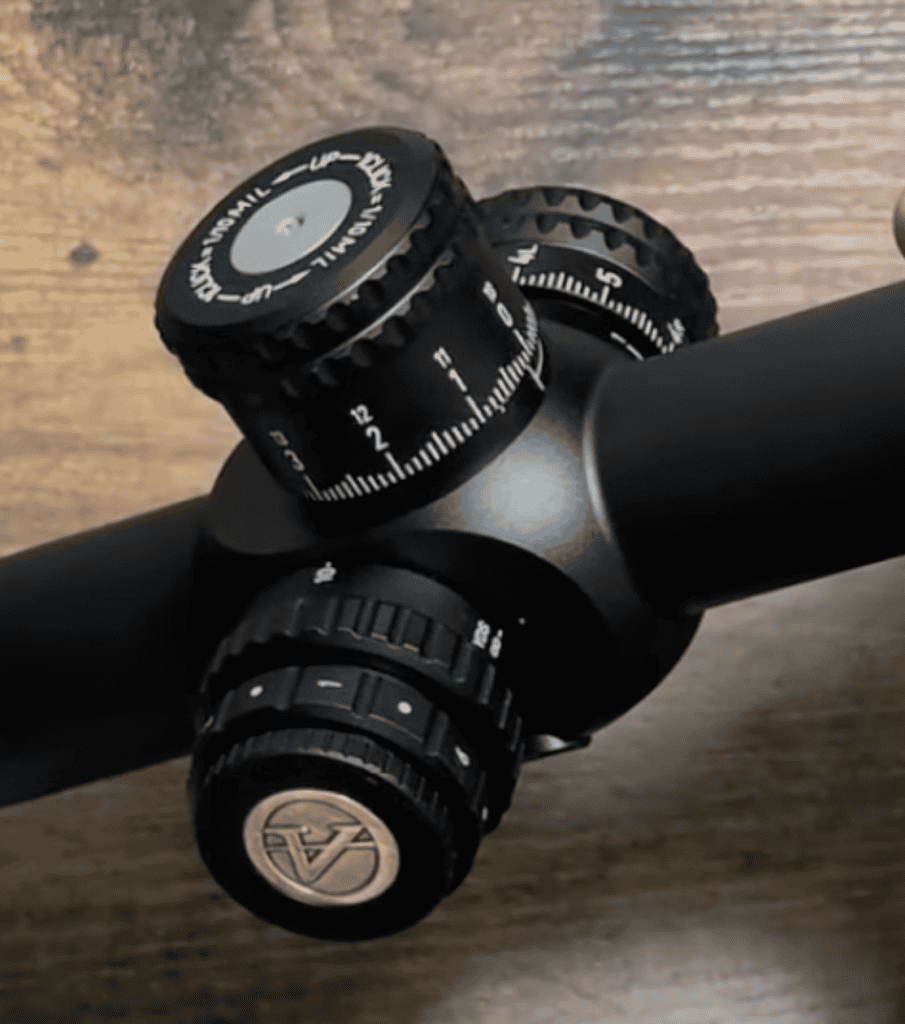
Athlon redesigned the turrets for the Gen 3 model, and they feel more refined than the Gen 2 version I tested two years ago. The clicks are crisper, the magnification ring turns smoothly without stiffness, and the overall fit and finish looks better. The illumination works in daylight without washing out, which matters if you’re shooting in shadows or against dark backgrounds. You don’t need it often, but it’s there when conditions demand it.
The Weight Problem Won’t Go Away
I keep coming back to this because it fundamentally changes how the rifle handles. After three hours of shooting prairie dogs, my shoulder felt the weight. Walking back to the truck with the rifle slung, I noticed it. The scope is nearly as long as the Leupold and Vortex, sitting on a 30mm tube that requires higher rings. If you’re building a dedicated varmint rig or a bench gun, none of this matters. If you want one .243 that does everything, the Athlon turns it into a specialist.
Field Test Data
| Test Parameter | Result |
|---|---|
| Maximum Tested Distance | Prairie dogs at 480 yards; confirmed hits with holdover at 1.8 MRAD |
| Parallax Effectiveness | Side focus eliminated blur from 50 to 400+ yards; adjusted easily with gloves |
| FFP Reticle Usability | Hash marks remained visible and accurate from 6x to 24x magnification |
| Zero Stop Function | Mechanical stop prevented going below zero; returned after 8 MRAD dial |
| Turret Tracking | 5 MRAD box test at 100 yards: returned to exact zero point |
Tested with: Ruger American .243 Winchester | Federal Premium 85gr Trophy Copper
Pros and Cons
PROS
|
CONS
|
Performance Ratings
Learn more about how I test and rate scopes.
Buy this scope if you’re shooting prairie dogs, ground squirrels, or coyotes past 350 yards and want precision rifle features on your .243. Don’t buy it if you hunt deer in timber, shoot hogs at close range, or need one scope that handles everything. The Athlon does one job exceptionally well but fails at the versatility that makes the .243 Winchester useful in the first place.
4. Bushnell Banner 2 3-9x40mm – Entry-Level Option
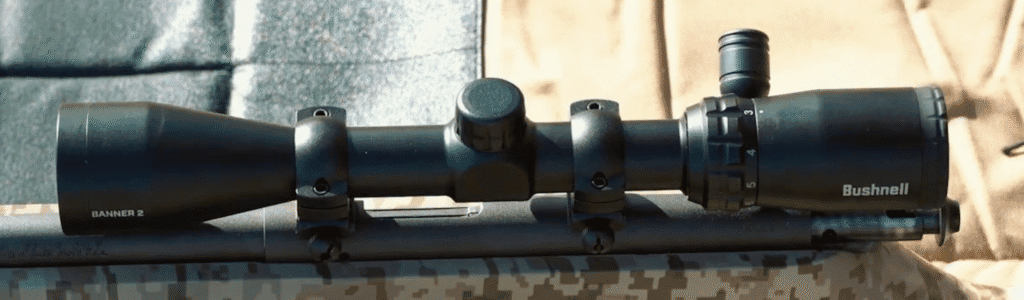
What Entry-Level Actually Means
I mounted the Bushnell on my Ruger American expecting compromised glass, and that’s exactly what I got. At 100 yards in good light, the image is serviceable. You can see deer clearly enough to confirm shot placement, and the multi-coated lenses handle glare reasonably well. But compare it directly to the Vortex Diamondback, and the difference is obvious. The Bushnell’s image looks slightly hazy, like you’re viewing through a window that needs cleaning. Resolution suffers at 9x magnification, where the other scopes in this test still deliver sharp detail. For close-range hunting where you’re shooting whitetails at 75 yards through timber, it works. Past 200 yards, you’ll notice the optical limitations.
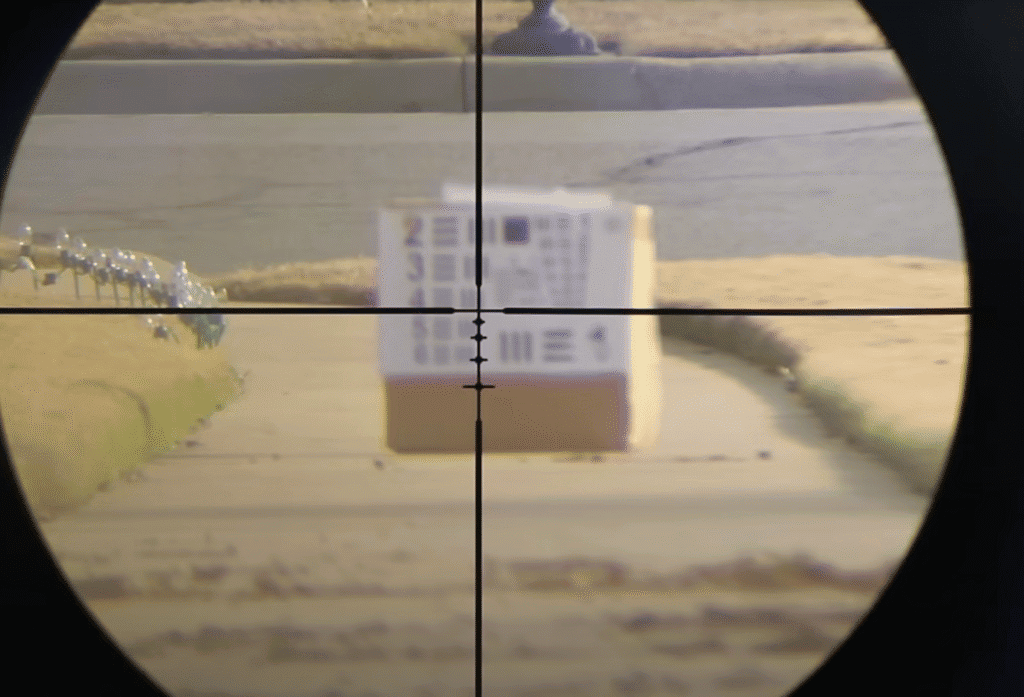
The DOA Reticle’s Promise and Reality
credit: The Social Regressive
Bushnell markets the DOA Quick Ballistic reticle as good for any caliber out to 500 yards using their ballistics app. I downloaded the app, entered my Federal 85gr load data, and got yardage assignments for each aiming point. At 200 yards, the first holdover dot put me 3 inches high. At 250, I was within acceptable hunting accuracy. But here’s the problem: the reticle design uses large circles as aiming points, and they cover too much of the target at distance. When I tried shooting prairie dogs at 280 yards, the circle obscured the entire animal. The Vortex’s Dead-Hold BDC uses smaller, more precise dots that don’t have this issue. For deer-sized targets inside 250 yards, the DOA system functions adequately.
Field of View Advantage
At 3x, the Bushnell gives you 37.5 feet of field of view at 100 yards. That’s the widest in this test, and it matters when you’re hunting thick cover. I tracked a doe moving through oak brush at 40 yards, and the wide view let me follow her without losing her in the sight picture. The Leupold starts at 4.5x with 19.9 feet, the Vortex at 4x with 32.4 feet. If most of your .243 shooting happens in timber under 150 yards, the Bushnell’s low magnification and wide field work in your favor. Once you need to reach past 250 yards, the 9x limitation becomes restrictive.
Durability That Surprised Me
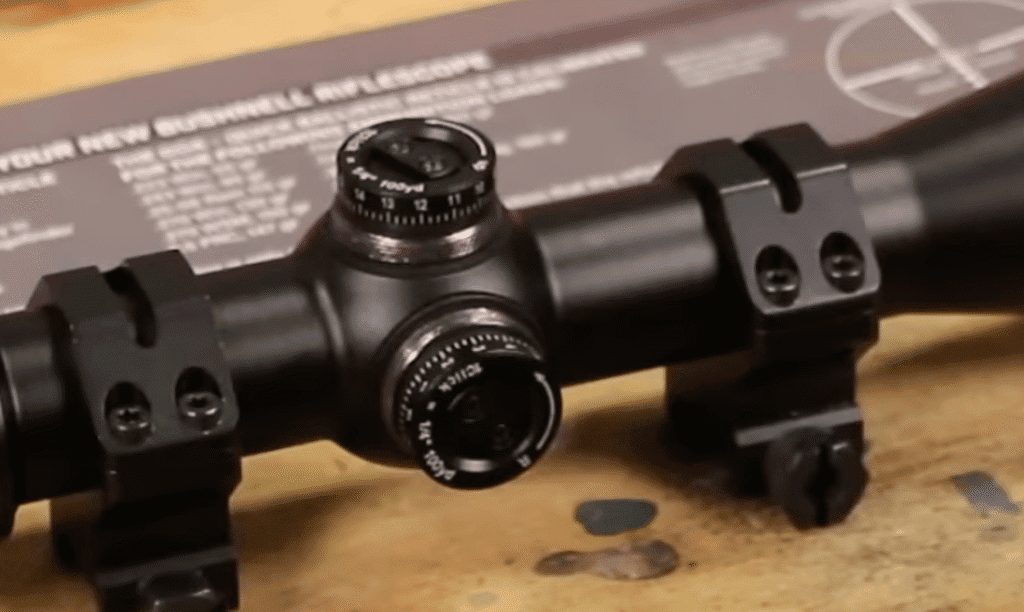
The Banner 2 is built tougher than its price suggests. The one-piece aluminum tube survived rough handling that included getting dropped on gravel and bouncing around in a truck bed for two months. The nitrogen purging prevented internal fogging when I brought the rifle from a cold morning into a warm vehicle. The scope held zero through 80 rounds of testing. The rounded edges won’t snag on brush, which is practical for hunting. Bushnell includes Weaver-style rings in the box, a small detail that saves you money on mounting hardware.
Where the Budget Shows
The turret adjustments feel vague compared to the other scopes here. When you dial corrections, the clicks lack the positive, mechanical feel of the Vortex or Leupold. They work functionally, but you’re never confident you’ve moved exactly one click without double-checking. The fast-focus eyepiece takes more rotation to achieve sharp focus than the Vortex. In low light, the Dusk & Dawn coating helps, but the scope still dims noticeably compared to the Diamondback. These aren’t failures, they’re compromises you accept at this price.
Field Test Data
| Test Parameter | Result |
|---|---|
| Close Range Usability | Tracked deer at 40 yards through oak brush; 37.5 ft FOV at 3x aided target acquisition |
| DOA Reticle Accuracy | First holdover: 3″ high at 200 yds; acceptable for deer-sized targets to 250 yds |
| Optical Clarity Assessment | Serviceable to 200 yards; noticeable resolution loss compared to Vortex at 9x |
| Zero Retention | Held zero through 80 rounds and rough transport; re-confirmed three times |
| Low-Light Performance | Usable 15 minutes after sunset; dims faster than Vortex or Leupold |
Tested with: Ruger American .243 Winchester | Federal Premium 85gr Trophy Copper
Pros and Cons
PROS
|
CONS
|
Performance Ratings
Learn more about how I test and rate scopes.
Buy this if you’re hunting whitetails and hogs in timber where shots stay under 200 yards and your budget is tight. The wide field of view and 3x low magnification work well for that application. Don’t buy it if you need to shoot past 250 yards regularly or want glass quality that competes with mid-tier options. Spending another $150 for the Vortex Diamondback gets you substantially better performance.
How I Actually Tested These Scopes
I ran all four scopes on the same rifle, a Ruger American in .243 Winchester with a 22-inch barrel. Testing happened across eight months, from June through January, covering summer prairie dog hunting in Wyoming, fall deer season in Texas, and winter coyote hunting. Temperatures ranged from 18 degrees during a January cold snap to 95 degrees on a Wyoming afternoon in July. I shot Federal Premium 85gr Trophy Copper exclusively, roughly 320 rounds total across all four scopes.
Each scope got mounted, zeroed at 100 yards, then tested at 150, 200, 250, and 300 yards to verify tracking and confirm how the reticles or turret systems handled actual field distances. I spent time with each scope in different conditions: timber hunting for whitetails, open pasture shooting on coyotes, and deliberate prairie dog sessions in Wyoming. The Leupold stayed mounted longest because it handled the widest range of situations. The Athlon got the most time on prairie dogs because that’s where it made sense.
I rejected three scopes during initial testing. A Simmons 3-9x wouldn’t hold zero after 40 rounds. A Tasco 4-16x had such poor edge clarity at higher magnifications that I couldn’t trust shot placement past 200 yards. A budget red dot combo scope lost zero twice after normal transport, making it unreliable for hunting use. These failures reinforced why the four scopes in this guide earned their spots—they all held zero consistently and delivered optical performance that didn’t compromise shot placement.
Get more information on how I test optics here.
What Hunters Get Wrong About .243 Winchester Scopes
Thinking 3-9x Is Enough Magnification for Everything
The old “3-9x for everything” advice came from an era when most deer hunting happened under 150 yards. The .243 shoots flat enough to reach 400 yards on coyotes and prairie dogs, but 9x magnification makes precise shot placement difficult past 250. You’ll be guessing at exact aim points when you should be confirming them. If you hunt deer exclusively in timber, 3-9x works fine. If you shoot varmints or want the .243’s full capability, you need at least 12x on the top end, preferably 14x. The magnification range should match how you actually use the caliber, not generic hunting advice.
Buying Tactical Scopes for Hunting Applications
Scopes designed for precision rifle competition bring features the .243 doesn’t need: excessive magnification (5-25x or 6-24x), heavy construction, FFP reticles with complex subtensions. These add weight and complexity without improving hunting performance. A 30-ounce scope turns your lightweight .243 into a front-heavy club that fatigues you after half a day of carrying. Unless you’re specifically shooting prairie dogs from a bench at 450+ yards, you don’t need tactical features. A 4-14x hunting scope with capped or locking turrets handles everything the .243 does well without compromising the rifle’s balance.
Assuming BDC Reticles Work Without Verification
Every BDC reticle is calibrated for a theoretical ballistic curve that won’t precisely match your specific ammunition, rifle, and altitude. I’ve tested dozens of BDC scopes, and the holdover points are rarely dead-on without verification. You need to shoot at actual distances and confirm where each aiming point impacts. If the second dot is supposed to be your 250-yard hold but actually hits at 230, you need to know that before hunting. Test your BDC at 100-yard increments and write down the actual distances. Otherwise you’re guessing in the field.
Prioritizing Objective Lens Size Over Everything Else
Bigger objective lenses gather more light, but the practical difference between a 40mm and 50mm objective on the .243 is minimal during legal shooting hours. A 50mm lens forces higher mounting, which compromises cheek weld and makes the rifle harder to shoot accurately. The extra light gathering helps in the last five minutes of legal shooting time, but you sacrifice handling and comfort all day for those five minutes. A 40mm objective gives you plenty of light for dawn and dusk hunting while keeping the scope mounted low. Only go bigger if you’re specifically hunting the last minutes of shooting light regularly.
Your Questions Answered
Do I really need more than 9x magnification for .243 deer hunting?
For whitetails in timber under 200 yards, 9x is adequate. But the .243 shoots accurately to 300+ yards, and identifying exact shot placement at that distance with 9x magnification is difficult. A scope that tops out at 12-14x gives you confidence at extended range without being excessive. If you only hunt close, 9x works. If you occasionally take longer shots, more magnification helps.
Should I get MOA or MRAD turrets for my .243?
Either system works if you’re consistent. MOA is more common in American hunting scopes and slightly more intuitive (1 MOA ≈ 1 inch at 100 yards). MRAD is standard in tactical shooting and works well if you already think in that system. The important part is matching your reticle to your turret system and actually practicing with it. Most .243 hunters never dial turrets, so this matters less than choosing good glass and appropriate magnification range.
What magnification should I zero my .243 at?
Zero at your scope’s highest magnification. This eliminates parallax error and gives you the most precise sight picture for confirming zero. You can shoot at any magnification after zeroing, but establishing zero at maximum power ensures accuracy. For a 4-12x scope, zero at 12x even if you hunt at 6x. This is standard practice for any variable scope.
Is first focal plane necessary for a .243 hunting scope?
No. FFP reticles are designed for long-range precision shooting where you need accurate subtensions at any magnification. Most .243 hunting happens at distances where holdovers are simple and you’re not doing complex wind calculations. SFP scopes are lighter, less expensive, and work perfectly for typical .243 applications. FFP makes sense only if you’re shooting prairie dogs past 400 yards and dialing constantly.
How much eye relief do I need for a .243?
The .243’s recoil is mild, so 3.5 inches of eye relief is sufficient for most shooters. More is better for comfort and allows awkward shooting positions, but you won’t get scope bite like you would with magnum calibers. Variable eye relief (like 4.4-3.6 inches) gives you flexibility at different magnifications. Avoid scopes with less than 3 inches as they demand perfect head placement.
Which Scope for Your Hunting Style?
If you hunt whitetails in mixed timber and fields, taking shots from 50 to 250 yards: The Leupold VX-3HD handles this perfectly. The 4.5x low end gives you enough field of view for close timber shots, and 14x lets you confirm shot placement on deer at the far end of fields. You’re not pushing extreme distance, so the fixed parallax won’t bother you. The CDS dial gives you precision when you need it without exposed turrets to snag on brush.
If you’re on a budget and hunt mostly close range, under 200 yards: Save money and get the Bushnell Banner 2. The 3-9x magnification range works fine for shots where you can see the deer clearly with your naked eye. The wide field of view at 3x helps in thick cover. You’re giving up optical quality and magnification, but if your shots stay close and your wallet is tight, it does the job.
If you want one scope that does 80% of what the Leupold does for half the money: The Vortex Diamondback is your answer. You’ll shoot whitetails and hogs confidently out to 300 yards, the BDC reticle gives you holdover references, and the build quality is solid enough for hard use. The 12x top end limits you slightly compared to the Leupold’s 14x, but most shooters won’t notice that difference in practical hunting.
If you’re serious about long-range varmint hunting, shooting prairie dogs and coyotes past 350 yards: Accept the weight penalty and mount the Athlon Argos BTR Gen 3. The 24x magnification lets you see small targets clearly at distance, the FFP reticle gives you precise holdovers, and the exposed turrets with zero stop work for dialing shots. This isn’t a deer hunting scope, it’s a precision tool for specialized work.
If you hunt predators at varying ranges and need quick target acquisition plus long-range capability: The Leupold VX-3HD again. You’ll glass coyotes at 400 yards with enough magnification to confirm the shot, then dial down to 4.5x for close setups without swapping scopes. The CDS dial lets you range and shoot quickly, which matters when coyotes won’t sit still.
Disclosure
I purchased all four scopes in this guide with my own money for testing purposes. The Leupold, Vortex, and Athlon were bought new from retailers. The Bushnell came from a friend upgrading his setup. Some links in this article are affiliate links, meaning I earn a small commission if you purchase through them at no additional cost to you. These commissions help support the testing work I do. My recommendations are based solely on performance during testing, not affiliate relationships. I’ve turned down sponsorship offers from scope manufacturers to maintain independence in my reviews.
Final Thoughts
The .243 Winchester’s dual-purpose design creates a scope selection problem most shooters solve incorrectly. They either buy too little scope (3-9x that limits the cartridge’s range) or too much scope (heavy tactical optics that ruin the rifle’s handling). After testing these four scopes across eight months and 320 rounds, the answer is clear: the Leupold VX-3HD 4.5-14x40mm is the only scope here that genuinely handles everything the .243 does well without meaningful compromise.
The Vortex Diamondback delivers 80% of the Leupold’s performance at less than half the price, which makes it the smart budget choice. The Athlon Argos BTR Gen 3 excels at specialized long-range varmint work but fails as a general-purpose hunting scope. The Bushnell Banner 2 functions adequately for close-range hunting when money is tight, but spending another $150 for the Vortex gets you substantially better optical quality and capability.
Scope selection matters more than most shooters admit. The .243 shoots accurately to 400 yards with proper ammunition, but you can’t take advantage of that accuracy if your scope limits you to 200 yards of usable magnification or fails to resolve detail clearly. I’ve watched hunters miss shots they should have made because their scope didn’t give them confidence in precise aim points. Good glass and appropriate magnification aren’t luxuries, they’re fundamental to using the .243’s actual capabilities.
If you found this guide helpful, check out my other scope reviews for the .308 Winchester and 6.5 Creedmoor. These calibers face similar scope selection challenges with different answers based on their ballistics and typical applications. The testing methodology stays consistent, but the recommendations change based on what each cartridge actually needs.
Mount the right scope, learn its features, and practice at the distances you’ll actually hunt. That combination will improve your shooting more than any other gear upgrade you can make.
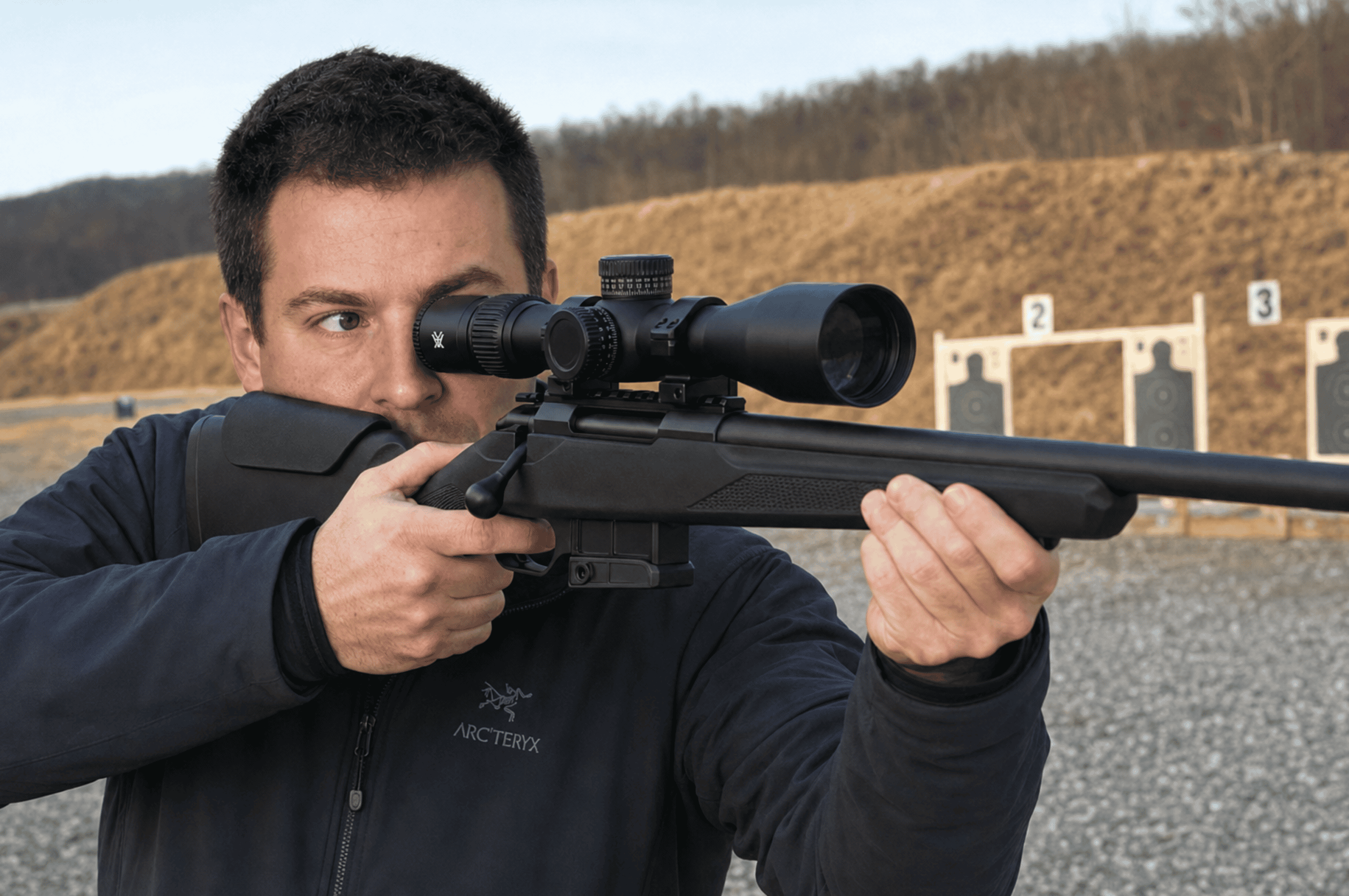
Mike Fellon is the founder of ScopesReviews and an optics specialist with 15+ years in precision shooting. A former Bass Pro Shops firearms advisor and NRA-certified instructor, he’s hands-tested 200+ rifle scopes across hunting and competition. Based in Dallas, Texas.