
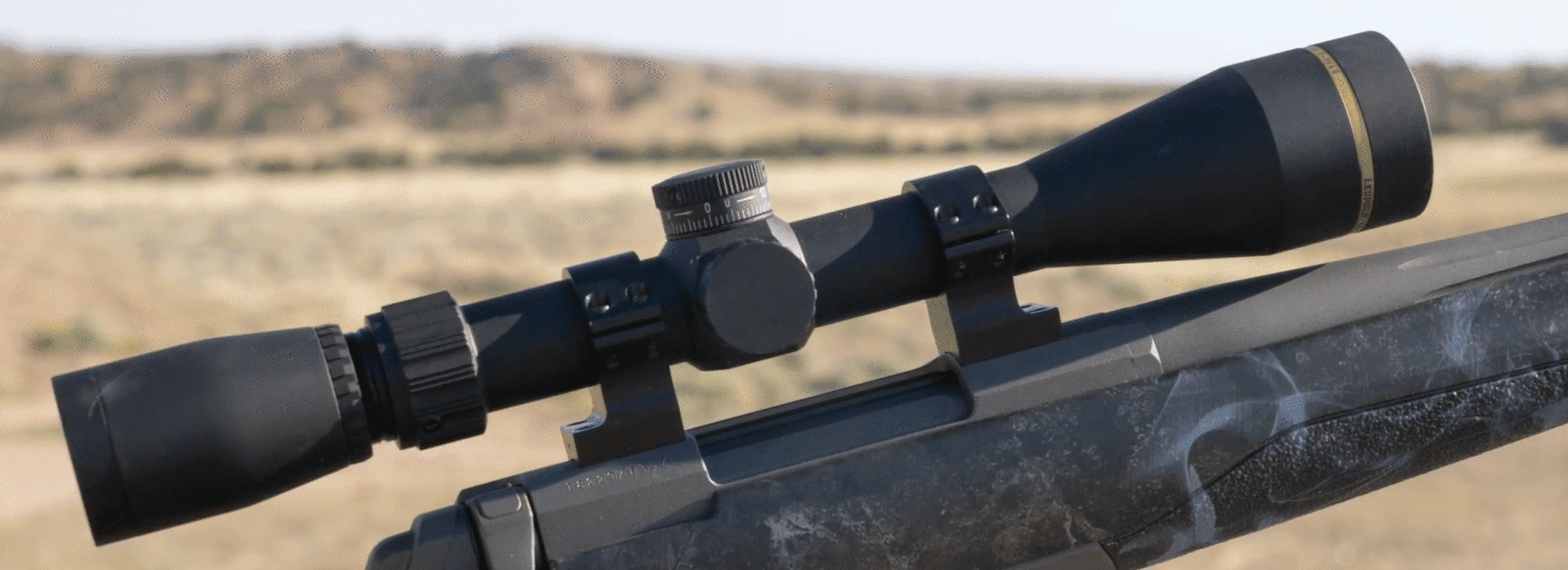
Every fall a certain kind of hunter walks up to the optics case already set on Leupold, then stalls when someone points out that a scope two feet down the counter throws in an illuminated BDC reticle, side parallax, and a throw lever for what looks like comparable money. The VX-Freedom 3-9x40mm gives you none of that. A capped-turret, fixed-parallax, second focal plane duplex is close to the most conservative hunting scope you can buy new right now, and it makes no apology for it. What I wanted to settle was whether the things Leupold deliberately left off are things a whitetail hunter genuinely reaches for in the field, or whether the glass, the carry weight, and the no-questions lifetime warranty quietly cover the gap.
I ran one through a full deer season on a lightweight bolt gun. My read came out simple: this scope makes the most sense to the hunter who has already decided that features are not the same thing as capability. It does a handful of things cleanly and makes no pretense of doing anything else. Whether that restraint reads as confidence or as thin depends less on the reticle than on where the fixed parallax and the honest glass land against real hunting light.
Leupold VX-Freedom 3-9x40mm Review
The First Dawn Sit Told Me What the Glass Was For
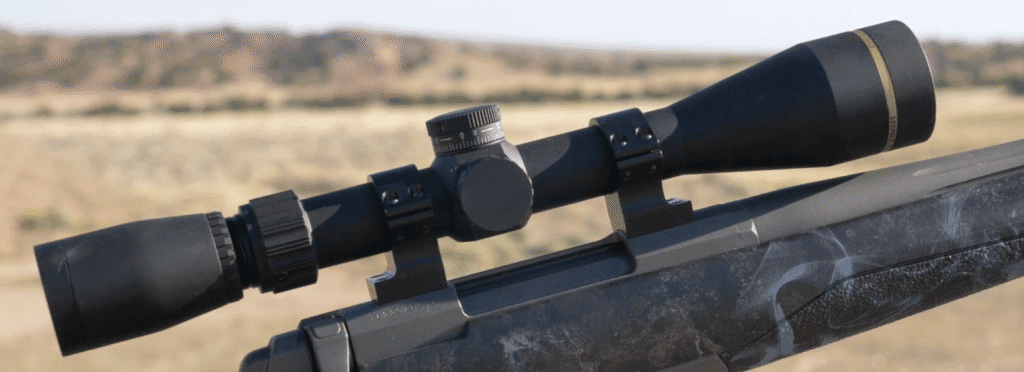
Opening morning I was tucked into the edge of a cutover with the rifle across my knees, and legal light came the way it usually does, slow and gray and grudging. A doe stepped out of the tree line maybe a hundred and thirty yards off while the woods behind her were still one flat smudge. Cranked to 6x, the VX-Freedom pulled her shoulder line and the crease behind it out of that murk with more separation than I expected from a 40mm objective and a one-inch tube. That is the whole argument for this scope in a single frame. Leupold’s Twilight coatings are not marketing filler; they buy you real minutes at both ends of the day, and for an animal that does most of its moving in exactly that light, those minutes are the point.
I will not oversell it. Next to a 50mm, 30mm-tube optic at true last light the bigger scope wins; coatings do not beat physics. But few scopes this light give back this much brightness at honest hunting ranges.
Fixed at 150 Yards Is a Compromise You Feel in Two Directions
This is the spec that decides whether the scope fits your shooting or fights it. The parallax is set at 150 yards and there is no knob to change it. For a deer scope that is a defensible factory choice, since a hundred and fifty is close to the honest middle of where these rifles get used. In practice I confirmed it: from bench out to field distances, any parallax error was smaller than my own wobble, and I never chased a phantom miss because of it.
The compromise shows up when you leave that lane. One slow afternoon I swung the rifle onto a squirrel picking through leaves maybe twenty-five yards out, purely to see what would happen, and floated my cheek deliberately off the stock. The reticle drifted against the target the way close-range parallax does, enough that on a small mark at that distance it would matter. On a deer-sized vital zone up close it is a non-issue, but if you were eyeing this scope for a rimfire plinker or a close-cover varmint gun, that fixed setting is the reason to think twice. It was built around one job and it does not stretch politely outside it.
A Duplex Asks Nothing of You, and That Is the Trade
The Duplex is the oldest pattern Leupold sells, and a season with it again showed why it stays in the catalog. Thick outer posts taper to a fine center, the eye falls to the intersection on its own, and in fading light that heavy-to-fine transition finds the aiming point faster than any busy grid I have used. Nothing to range with, nothing to hold off of, nothing to learn.
That simplicity quietly solves a problem most buyers never think about. In a second focal plane scope, any subtension-based reticle is only truly calibrated at one magnification, which trips up plenty of shooters running BDC glass at the wrong power. The Duplex sidesteps the whole trap because it never asked you to hold anything in the first place. Zero it, aim center, trust your dope in your head. The cost is equally plain: stretch past comfortable range and you are on your own for holdover, because this reticle gives you no reference at all. If your hunting lives inside a few hundred yards, that is a fair bargain. If you want to reach, this is the wrong tool and Leupold’s own BDC-equipped VX-Freedom variants exist for a reason.
Twelve Ounces You Stop Registering by the Second Mile
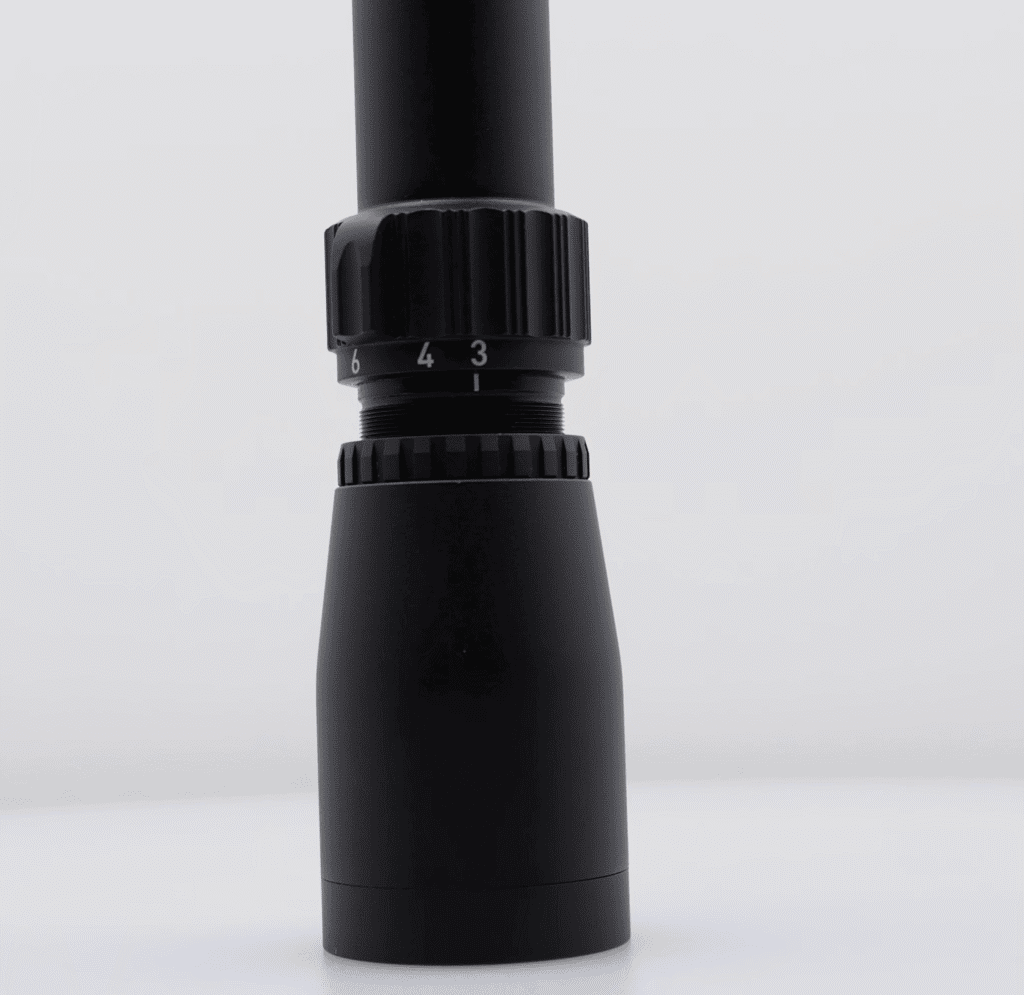
I hunted long ridge lines where you walk in dark and climb before you glass, and the 12.2 oz made those mornings pleasant. Mounted on a slim rifle the whole rig stayed lively in the hands. The eyebox is the price of that compact build. Eye relief runs 4.2 down to 3.7 inches, generous at 3x, where a fast shoulder-and-shoot found the picture with the rifle still moving. Wind it to 9x and the box tightens; off an awkward sitting position I had to settle my cheek before the image squared up. Under the .270’s recoil that shrinking relief never threatened my eyebrow, more than I can say for some featherweight scopes.
One Zero, Capped and Left Alone
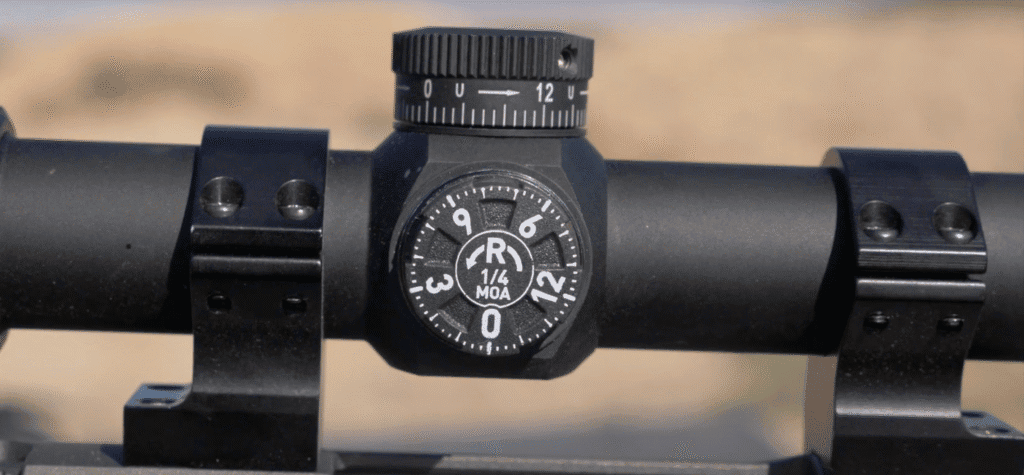
The turrets are capped, low, and built to be set and forgotten rather than dialed, which suits a hunting optic exactly. I confirmed zero cold on three frigid mornings across the season, and it never walked. A bench box test, dialing a square and back to center, returned to near zero on the quarter-MOA clicks. They are not the crisp detents of a target turret; they are soft and a little vague under a gloved thumb, the kind you verify by counting rather than feel. For a scope whose turrets live under caps, I cannot hold that against it. The 60 MOA of travel is more than these ranges need, and beside the point for owners who will set one zero and never unscrew a cap again.
The Deer Rifle and Season Behind These Notes
I mounted the VX-Freedom on a Tikka T3x, chambered in .270 Winchester, and fed it Federal Premium 130gr Nosler Partition the whole way through. That pairing was deliberate: the .270 is a classic open-country and timber deer cartridge, the Tikka is the kind of light bolt gun this scope’s buyer actually owns, and the Partition load is exactly what a hunter grabs when a rifle needs to just work rather than chase tiny groups. A featherweight scope on a featherweight rifle is also the only fair way to judge whether the weight savings translate in the field, so I refused to bolt it to something heavy that would have masked the point.
Testing ran across a full fall season in mixed hardwood timber and cutover field edges, roughly 220 rounds between bench confirmation and actual hunting, with cold gray dawns, one steady drizzle, and a couple of hard frosts to see whether the glass fogged or the zero drifted. Neither did. My read on where this scope lands leans on something narrower than any one season, though. In five years selling optics across a firearms counter, the VX-Freedom line was, in my own recollection, among the scopes I saw come back least often; the returns I handled skewed toward feature-loaded budget glass that fogged internally or lost zero after a season of recoil, while the plain Leupolds mostly stayed in the field where their owners had put them. I never kept numbers on it, so I offer that as a personal impression rather than a tally, but it is what leaves me reading the restraint here as a feature and not a shortcoming. You can read the rest of my process in my full testing methodology.
Performance Ratings
Field Test Data
| Test Parameter | Result |
|---|---|
| Zero retention (full season, ~220 rounds) | No measurable shift; cold-confirmed on three mornings |
| Box test tracking (bench, dial square and return) | Returned to near center; clicks soft but repeatable |
| 100-yard group (3-shot, bipod, 130gr Partition) | 1.1 in average |
| Usable low-light window past clear daylight | Roughly 8-10 extra minutes of aiming light at dusk versus the naked eye |
| Fog / frost resistance | No internal fogging through drizzle and hard frost |
| Close-range parallax check (25 yds, deliberate cheek float) | Visible reticle drift; expected from fixed 150-yard setting |
Tested with: Tikka T3x | .270 Winchester | Federal Premium 130gr Nosler Partition
Pros and Cons
PROS
|
CONS
|
Common Questions About the Leupold VX-Freedom 3-9x40mm
Does the fixed 150-yard parallax cause problems at normal hunting distances?
No. Across bench-to-field ranges any parallax error stayed smaller than normal shooter wobble. It only becomes a factor on small targets or precise rimfire work inside roughly fifty yards, where floating your cheek off the stock shows visible reticle drift.
Is the plain Duplex enough, or should I get a BDC version?
If your shots live inside a few hundred yards, the Duplex is faster and simpler in low light. If you want to reach past that, step up to Leupold’s BDC-equipped VX-Freedom variants, since this reticle gives you no holdover reference at all.
Can I use this on a .22 rimfire?
You can, but the fixed 150-yard parallax works against you at typical rimfire distances, where much of the shooting happens close. For a dedicated rimfire setup, a scope with adjustable or lower fixed parallax is the better match.
Is it worth the Leupold premium over cheaper scopes with more features?
That is the real question. You are paying for glass, low weight, and the warranty, not for features. If those three matter more to you than illumination and a parallax knob, yes. If you want the longest spec list per dollar, no.
Disclosure
This review reflects my own hands-on testing over a full hunting season. It may contain affiliate links, and if you buy through one it can support the site at no extra cost to you. Those relationships do not shape the evaluation; the ratings and criticisms above draw on how this scope performed in my field testing, its documented warranty terms, and the return patterns I saw across years behind a firearms counter.
The Bottom Line on the VX-Freedom 3-9x40mm
This is a buy for the hunter it fits and a skip for the one it does not, and the line between them is clear. The VX-Freedom 3-9x40mm delivers genuinely good glass, standout weight, and Leupold’s reliability in a package stripped down to what a whitetail rifle actually needs. It held zero through frost, pulled deer out of gray light, and carried like it was not there. What it does not do is give you illumination, an adjustable parallax, or a holdover reticle, and next to other scopes that seem to pile those on at a similar tier, the value math is the one place it stumbles.
If you measure a scope by capability inside its lane rather than by feature count, this one is easy to recommend and easy to trust across a full season. If you were hoping the Leupold name would also hand you the longest spec list in the case, you are shopping for the wrong virtue. This scope rewards the hunter who wanted less all along, and quietly frustrates the one who wanted more.
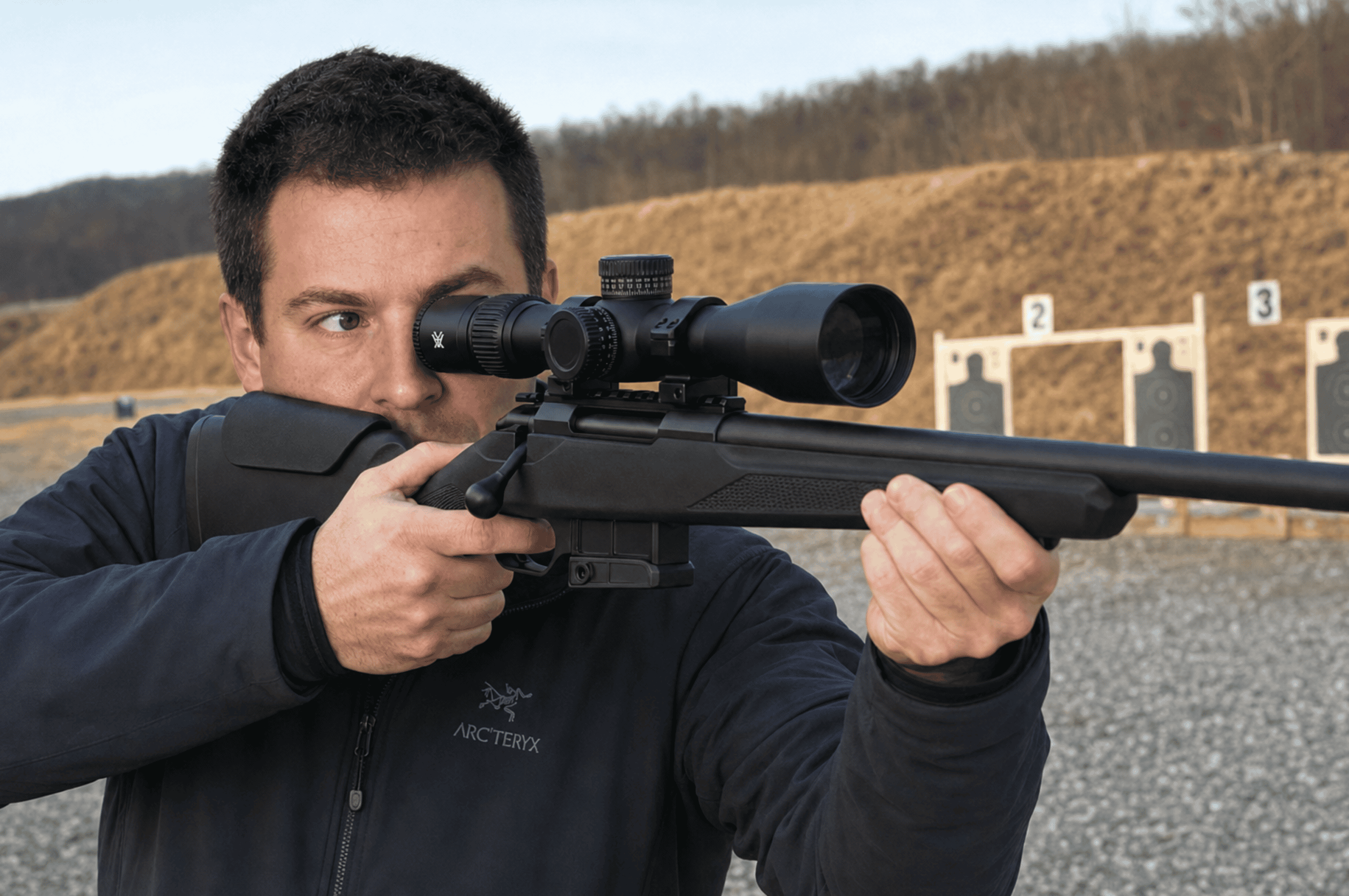
Mike Fellon is the founder of ScopesReviews and an optics specialist with 15+ years in precision shooting. A former Bass Pro Shops firearms advisor and NRA-certified instructor, he’s hands-tested 200+ rifle scopes across hunting and competition. Based in Dallas, Texas.