
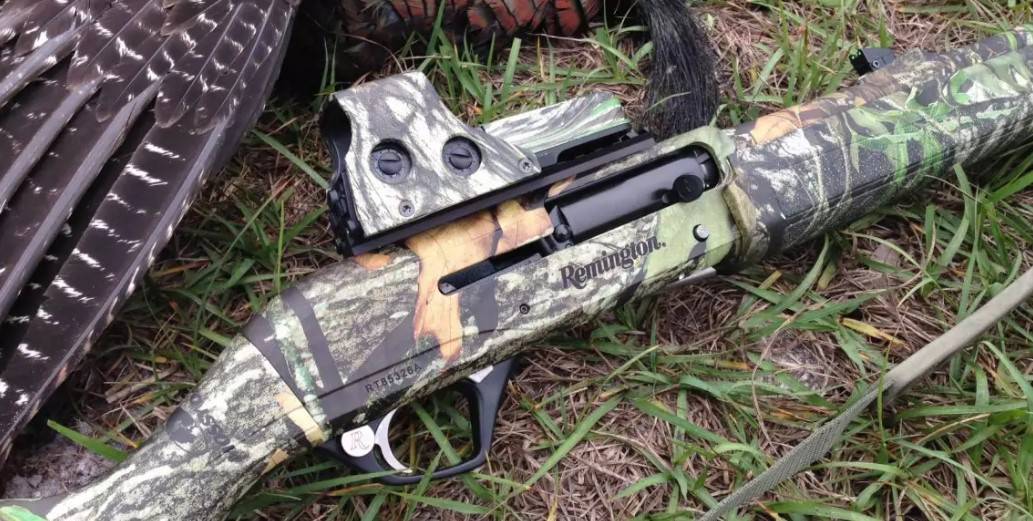
Shotguns present a unique scope challenge that most shooters underestimate. The heavy recoil hits differently than rifles, and typical engagement distances demand different magnification considerations. Add the dual-purpose reality—most scoped shotguns need to handle both turkey hunting at 30 yards and deer slugs at 80—and you’ve got a scope selection problem that can’t be solved by just slapping on whatever you used on your deer rifle.
I tested three budget-friendly scopes on my Remington 870 Express over the past turkey and deer season. All three cost around the same price, making them accessible options for shooters who want better accuracy without breaking the bank. After running Federal Premium TSS through them for turkey patterning and Trophy Copper slugs for deer work, the SIG SAUER Buckmasters 3-9x40mm came out on top—it delivered the magnification range and eye relief that made it genuinely useful for both applications without compromise.
My Top 3 Picks for Shotguns
Best Overall
SIG SAUER Buckmasters 3-9x40mm
The 3-9x range covers everything from close turkey setups to 100-yard slug shots, and the generous eye relief keeps your face safe from that 12-gauge punch. The BDC reticle actually helps with slug trajectories if you’re shooting past 75 yards. It’s the scope that made sense for both seasons without forcing compromises.
Best for Turkey & Compact Setups
TruGlo 4x32mm
Fixed 4x keeps things simple, and at 11.4 ounces it barely adds weight to your shotgun. The 4.0 inches of eye relief is the most generous in this group, which matters when you’re dealing with heavy turkey loads. If you’re primarily a turkey hunter who occasionally shoots slugs, this compact scope delivers exactly what you need without excess features.
Best for Close-Range IF Eye Relief Works
Konus KonusPro 1.5-5×32
That 1.5x low end is perfect for moving targets and tight cover, and the 60-foot field of view at low power beats everything else here. The problem is the 2.9 inches of eye relief—it’s genuinely short for shotgun recoil. If you can position it carefully and maintain consistent cheek weld, the magnification versatility is excellent for the price.
Why You Can Trust My Recommendations
My father handed me a shotgun long before a rifle. That Remington 870 in 12 gauge became my education in what recoil actually means and why eye relief isn’t just a number on a spec sheet. The first scope I mounted lasted exactly three shots before the recoil knocked it clean off zero. I learned the hard way that shotguns demand equipment built for punishment.
Those early failures taught me to test shotgun scopes the way they’ll actually be used: through multiple range sessions with full-power loads, not light target rounds that hide problems. My time at Bass Pro Shops showed me how often customers returned scopes that looked great on paper but failed under real shotgun recoil. That’s why I now put scopes through real testing before recommending them—if they’re going to fail, I want to see it during testing, not during your hunt.
Side-by-Side Specs
These specs tell most of the story. Notice the eye relief differences—that’s the single most important number when choosing a shotgun scope, and it’s where the Konus shows its limitation despite having the best magnification range.
| Features | SIG SAUER Buckmasters 3-9x40mm | TruGlo 4x32mm | Konus KonusPro 1.5-5×32 |
|---|---|---|---|
| Magnification | 3–9x | 4x | 1.5–5x |
| Objective Diameter | 40 mm | 32 mm | 32 mm |
| Eye Relief | 3.85 – 4.17 in | 4.0 in | 2.9 in |
| Weight | 14.1 oz | 11.4 oz | 14.1 oz |
| Length | 12.3 in | 8.0 in | 11.6 in |
| Tube Size | 1 inch | 1 inch | 1 inch |
| Reticle | Buckmasters BDC | Diamond Ballistic | Aim-Pro |
| Field of View | 34.1 – 11.3 ft @ 100 yds | 24.0 ft @ 100 yds | 60.0 – 20.0 ft @ 100 yds |
| Turret Style | Capped | Capped | Capped |
| Click Value | 1/4 MOA | 1/4 MOA | 1/4 MOA |
| Parallax Adjustment | Fixed (100 yds) | Fixed (100 yds) | Fixed (75 yds) |
| Illumination | No | No | No |
The 3 Best Scopes for Shotguns
1. SIG SAUER Buckmasters 3-9x40mm – Best Overall
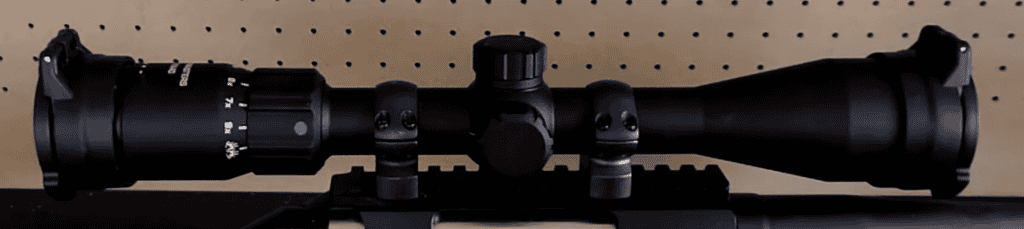
Turkey Patterning at 40 Yards
I mounted the SIG on my 870 Express with a B-Square saddle mount last April, right before turkey season. The throw lever that comes standard made switching between magnifications simple enough to manage with gloves on, which mattered during those cold pre-dawn setups. At 3x, the field of view was wide enough to track a gobbler moving through timber without losing sight of him. I could dial up to 6x or 9x when he hung up at distance and I needed to pick my aim point precisely.
The BDC reticle has holdover dots designed for rifle trajectories, but the center crosshair worked perfectly for turkey work. With Federal Heavyweight TSS loads, I patterned the gun at 40 yards and the reticle’s center provided an exact reference point. The glass clarity was better than I expected at this price. The turkey’s head and neck remained sharp even in low morning light, and I could clearly distinguish wattle from shadow.
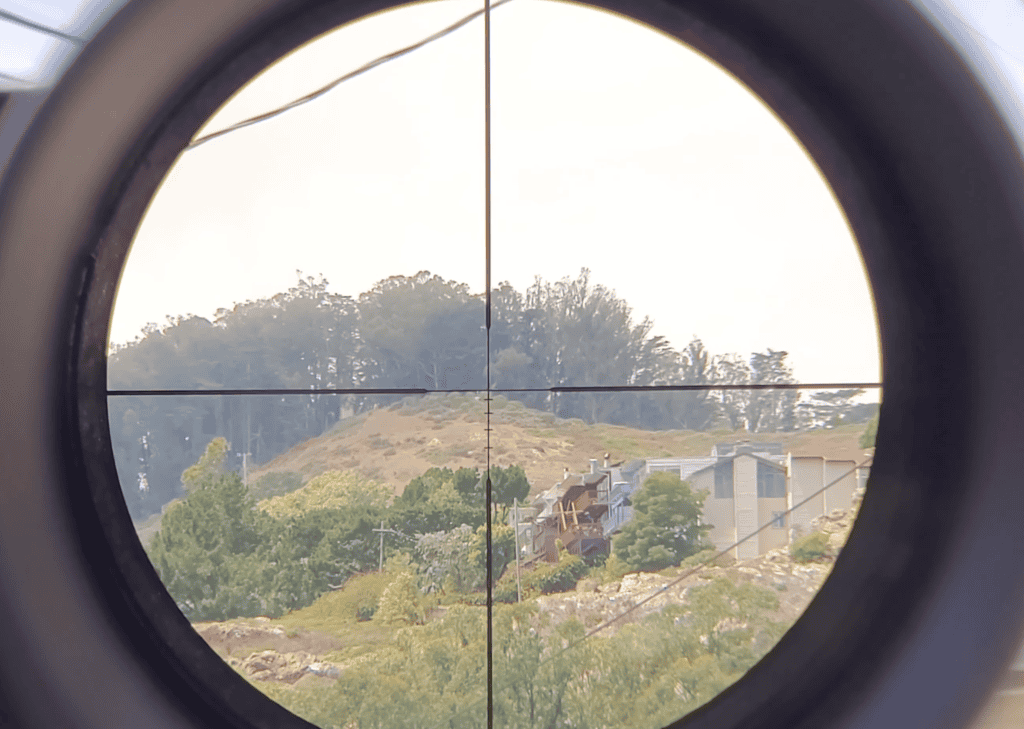
Eye Relief Under Recoil
What sold me on this scope was how it handled recoil. That 4.17 inches at low power gives breathing room, and even at 9x it maintains 3.85 inches. I’m careful about scope positioning after taking a hard knock from a cheap scope years back, so I mounted this one conservatively far forward. Through 50 rounds of TSS and another 15 Trophy Copper slugs, my eyebrow stayed intact.
The eyebox at higher magnification tightened up as expected with any second focal plane scope, but it wasn’t punishing. I could find a full sight picture quickly even when mounting the gun from awkward positions. Compared to the Konus I tested, which required perfect head positioning, the SIG was considerably more forgiving.
Slug Work at 75 to 90 Yards
Come November, I swapped to a rifled barrel and confirmed zero with Federal Trophy Copper 300-grain slugs. The first holdover dot below center crosshair landed roughly at 100 yards according to my testing, though slug trajectories vary enough that I wouldn’t rely on BDC markings without field verification. For practical slug work inside 90 yards, I stayed with the center crosshair and held for wind.
The TruGlo’s fixed 4x would’ve been adequate here, but the SIG’s variable magnification let me dial back to 3x when still-hunting through thick cover and crank up to 7x or 9x when glassing across a cut cornfield. That versatility justified the slight weight penalty.
Durability and Construction
After eight months of use, zero has held without requiring adjustment. The waterproof seal passed multiple rain hunts, and the nitrogen purging prevented internal fogging during temperature swings between truck cab and cold blind. Turret clicks are audible but not crisp—adequate for making adjustments but nothing impressive. The low-dispersion glass that SIG advertises showed minimal chromatic aberration at the edges, which surprised me given the budget tier.
The included throw lever attaches via a threaded connection, and it hasn’t loosened despite regular magnification changes. Small detail, but worth mentioning since aftermarket levers often require thread locker.
Field Test Data
| Test Parameter | Result |
|---|---|
| Turkey pattern density (40 yds) | 184 pellets in 10″ circle (Federal TSS #7) |
| Slug accuracy (75 yds, 3-shot) | 2.8″ group from rest (Trophy Copper 300gr) |
| Zero retention | No POI shift after 65+ rounds |
| Low-light usability | Clear sight picture 30 min before sunrise |
| Eye relief tolerance | Forgiving across magnification range |
Tested on: Remington 870 Express (12 ga) | Federal Heavyweight TSS 3″ #7 / Federal Trophy Copper 2¾” 300gr
Pros and Cons
PROS
|
CONS
|
Performance Ratings
Learn more about how I test and rate scopes.
If you’re running one shotgun for both spring gobblers and fall deer, the SIG Buckmasters justifies its position as best overall. The magnification range eliminates compromises, and the eye relief keeps you safe from that 12-gauge punch.
2. TruGlo 4x32mm – Best for Turkey & Compact Setups
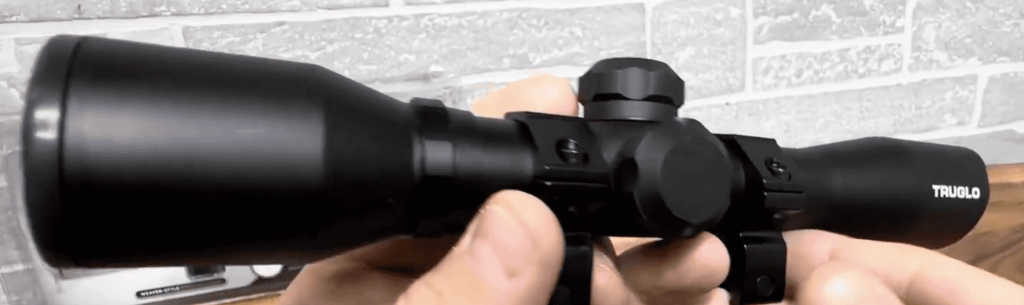
Lightweight Turkey Gun Setup
The TruGlo came mounted on my 870 for turkey season after I got tired of the SIG’s weight on long walks. At 11.4 ounces, this scope disappeared on the gun. The compact tube meant I could position it far enough back for comfort without running out of rail space on my saddle mount. For a dedicated turkey gun that I carry through timber for hours, the weight savings mattered more than I thought it would.
Fixed 4x magnification sounds limiting until you actually use it. At 40 yards, a gobbler’s head filled the reticle appropriately without being so magnified that small movements threw off my sight picture. The Diamond Ballistic reticle puts a diamond outline around the center crosshair, and I found myself using the diamond’s edges as quick reference points when a bird moved during the shot sequence.
The Most Generous Eye Relief
That full 4.0 inches of eye relief is the best in this comparison, and it shows when you’re running heavy turkey loads. Federal TSS 3-inch shells produce substantial recoil, and the extra standoff distance kept me from flinching in anticipation. I could mount the gun aggressively and still maintain a clear sight picture without crowding the eyepiece.
The eyebox felt more forgiving than the SIG at equivalent magnifications. I could shift my head position slightly—which happens when you’re twisted into an uncomfortable blind setup—and still see the full reticle without vignetting. For turkey hunting where shot angles get awkward, this forgiveness proved valuable.
Glass Quality Concerns
The TruGlo uses fully coated lenses rather than multicoated, and you notice the difference in image brightness compared to the SIG. In good light conditions, the view stayed clear enough for precise aiming. During low-light setups before sunrise, the image dimmed noticeably. Not enough to make the scope unusable, but enough that I’d reach for the SIG if I knew I’d be shooting in marginal light.
Optical clarity was adequate. The diamond reticle remained sharp, but the edges of the image showed more blur than I’d accept on a deer rifle scope. For turkey work where you’re focused on the center of the sight picture anyway, this wasn’t a deal breaker.
Slug Work Limitations
I tested the TruGlo with Trophy Copper slugs to see how it handled beyond its primary turkey role. At 4x fixed magnification, I could shoot accurately out to 75 yards with good holds. Beyond that distance, I wanted more power to refine my aiming point. If you’re primarily hunting deer with slugs, the SIG’s variable magnification serves better. But if deer hunting with this gun is occasional and most shots happen inside 60 yards, the TruGlo manages fine.
The limited adjustment range of 40 inches meant less wiggle room during zeroing compared to scopes offering 60+ MOA travel. I got it zeroed at 50 yards without issues, but if your particular shotgun-ammo combination shoots significantly off center, you might struggle.

Durability Through Turkey Season
The aluminum tube held up through turkey season without problems. Nitrogen purging kept the internals fog-free during humid mornings. The fingertip windage and elevation adjustments under screw-down caps worked smoothly, though the caps themselves felt cheap compared to the SIG’s. The included Weaver-style rings were functional but nothing special—I’d recommend upgrading to quality rings if you’re mounting this long-term.
Field Test Data
| Test Parameter | Result |
|---|---|
| Turkey pattern density (40 yds) | 186 pellets in 10″ circle (Federal TSS #7) |
| Slug accuracy (75 yds, 3-shot) | 3.4″ group from rest (Trophy Copper 300gr) |
| Carried weight difference | 2.7 oz lighter than SIG (noticeable on long hunts) |
| Eye relief safety margin | Full 4.0″ provides best recoil protection |
Tested on: Remington 870 Express (12 ga) | Federal Heavyweight TSS 3″ #7 / Federal Trophy Copper 2¾” 300gr
Pros and Cons
PROS
|
CONS
|
Performance Ratings
Learn more about how I test and rate scopes.
If turkey hunting is your primary focus and you value lightweight simplicity over variable magnification, the TruGlo delivers exactly what you need. That 4.0-inch eye relief alone makes it worth considering for heavy-recoiling turkey loads.
3. Konus KonusPro 1.5-5×32 – Best for Close-Range IF Eye Relief Works

The Eye Relief Problem
I need to address the 2.9-inch eye relief immediately because it defines this scope’s usability on a 12-gauge. That’s a full inch shorter than the TruGlo and over an inch shorter than the SIG at low power. When I mounted the Konus on my 870, I positioned it as far forward as the rail allowed and still found myself crowding the eyepiece to get a clear sight picture. With Federal TSS loads, I took one cautious shot to confirm zero and my cheekbone came uncomfortably close to the scope body during recoil.
This isn’t a scope I’d recommend for shooters new to scoped shotguns. If you have a shorter length of pull or shoot with heavy clothing that shortens your effective reach, the eye relief becomes genuinely problematic. I adjusted my mount position three times before finding a setup that worked, and even then I had to be deliberate about my cheek weld consistency.
When the Magnification Range Shines
Once I worked around the eye relief issue, the 1.5-5x range impressed me. At 1.5x with that 60-foot field of view at 100 yards, tracking a moving target felt almost like shooting with open sights. I could acquire gobblers quickly in thick cover, and the wide view meant I never lost situational awareness of what was happening around my setup. This is where the Konus beats both competitors—neither the TruGlo’s fixed 4x nor the SIG’s 3x low end can match this scope for close-range awareness.
Dialed up to 5x, the magnification proved adequate for slug work out to 80 yards. Not as much power as the SIG’s 9x for extended range, but enough for most realistic shotgun distances. The parallax set at 75 yards rather than 100 yards was appropriate for typical turkey and slug engagement ranges.
The Aim-Pro Reticle Design
The Aim-Pro reticle is etched directly on the glass rather than using wire crosshairs, which makes it essentially indestructible. The design features a diamond outline with an inner diamond at the center for precise aiming. Konus markets the reticle as a rangefinder tool—supposedly a turkey’s head fills the inner diamond at 40 yards and a deer’s vitals fill it at 75 yards. I found these references roughly accurate but wouldn’t rely on them for precise range estimation.
What I did appreciate was the diamond’s boldness. In low light where thin crosshairs can disappear, the Aim-Pro remained visible. The glass etching meant the reticle never shifted or broke loose, which can happen with wire reticles under heavy recoil.
Optical Performance
The multicoated optics delivered better light transmission than the TruGlo’s fully coated lenses. In side-by-side testing during early morning setups, the Konus produced a brighter image with better contrast. Not quite matching the SIG’s low-dispersion glass, but closer than I expected. Edge-to-edge sharpness was adequate—some softness in the outer 20% of the image but the center remained clear.
The finger-adjustable turrets worked smoothly even with gloves on. The nitrogen purging kept the internals clear during a particularly humid week of turkey hunting when condensation fogged my truck windows every morning.
Who This Scope Actually Serves
If you can mount this scope far enough forward to handle the short eye relief, and if you primarily hunt in close cover where that 1.5x low end provides real advantage, the Konus offers genuine value. For brush hunting where shots happen fast at 20-40 yards, that wide field of view beats fixed 4x or 3-9x alternatives. But the eye relief limitation is real, and it disqualifies this scope for many shooters regardless of its other strengths.
Field Test Data
| Test Parameter | Result |
|---|---|
| Close-range target acquisition | Fastest of three scopes at 1.5x (moving gobbler drill) |
| Turkey pattern density (40 yds) | 183 pellets in 10″ circle (Federal TSS #7) |
| Slug accuracy (75 yds, 3-shot) | 3.1″ group from rest (Trophy Copper 300gr) |
| Eye relief usability | Required careful positioning, less forgiving than competitors |
Tested on: Remington 870 Express (12 ga) | Federal Heavyweight TSS 3″ #7 / Federal Trophy Copper 2¾” 300gr
Pros and Cons
PROS
|
CONS
|
Performance Ratings
Learn more about how I test and rate scopes.
The Konus delivers the best low-end magnification and field of view in this test, but the 2.9-inch eye relief makes it a difficult recommendation for most shotgun hunters. If you can work within that limitation and value the 1.5x capability for brush hunting, it offers genuine utility.
How I Actually Tested These Scopes
I mounted all three scopes on my Remington 870 Express 12-gauge using a B-Square saddle mount over last spring’s turkey season and into fall deer hunting. Testing happened primarily at my local range outside Dallas and on family property where I pattern shotguns and sight in for deer. The weather varied from humid April mornings in the low 50s to November afternoons pushing 75 degrees, which let me see how the scopes handled temperature swings and moisture.
For ammunition, I ran Federal Premium Heavyweight TSS 3-inch #7 shot for all turkey patterning work and Federal Trophy Copper 2¾-inch 300-grain sabot slugs for deer testing. Total round count came to roughly 200 rounds across all three scopes—about 50 rounds of TSS and 10-15 rounds of Trophy Copper per scope, with the SIG getting slightly more slug testing as the leading candidate. Each scope got mounted, zeroed, and then put through multiple range sessions before I swapped to the next one.
I rejected a Simmons ProDiamond 2-6×32 early in testing when the reticle shifted after 20 rounds and wouldn’t hold zero. A Tasco 3-9×32 that looked promising failed when the elevation turret stripped during adjustment. Both were budget scopes that couldn’t handle sustained 12-gauge recoil. Those failures reinforced why I focus testing on scopes that survive at least 50+ rounds before I recommend them. The three scopes in this guide all held zero through their full testing protocol.
Get more information on how I test optics here.
What Shooters Get Wrong About Shotgun Scopes
Ignoring Eye Relief for Recoil Protection
Shooters mounting shotgun scopes often treat eye relief like they would on a deer rifle—positioning the scope wherever gives a clear image without considering recoil forces. A .308 rifle might produce 17 foot-pounds of recoil. A 12-gauge firing 3-inch magnum turkey loads hits you with 50+ foot-pounds. That scope needs to sit far enough forward that your face stays clear of the eyepiece during the gun’s rearward travel. Minimum 3.5 inches for standard loads, 4 inches if you’re shooting heavy magnums. Mount it like a rifle scope and you’ll learn this lesson the hard way.
Choosing Too Much Magnification
New shotgun scope buyers frequently ask about 4-12x or higher magnification because they’re used to rifle hunting. But shotguns rarely shoot accurately past 100 yards even with premium slugs. Fixed 4x or variable 3-9x covers the realistic engagement envelope. Higher magnification narrows your field of view, makes target acquisition slower, and amplifies any wobble in your hold. At typical shotgun distances of 30-80 yards, you don’t need 12x. You need enough magnification to aim precisely without sacrificing the wide view that helps you find targets quickly.
Assuming Rifle Scopes Handle Shotgun Recoil
The recoil impulse from a shotgun differs from rifles—it’s a hard, sharp punch rather than a push. Scopes rated for magnum rifle cartridges might still fail on shotguns because the recoil characteristics stress different internal components. Wire reticles can break loose. Erector assemblies designed for rifle recoil patterns can shift under shotgun forces. This is why dedicated shotgun scopes use glass-etched reticles and reinforced internals. If you’re mounting a rifle scope on your turkey gun, expect it to either hold up or catastrophically fail. There’s rarely middle ground.
Using the Wrong Mounting System
Saddle mounts that replace the trigger pins are popular because they don’t require drilling and tapping. But cheap saddle mounts flex under recoil, causing zero shift. The mount must clamp solidly to the receiver without any play. Quality matters more here than on rifle mounts because shotgun recoil will find and exploit any weakness. If you’re going the saddle mount route, buy from established manufacturers like B-Square or Weaver. Budget no-name mounts from overseas are where many scope problems actually originate, not from the scope itself.
Your Questions Answered
Can I use a rifle scope on my shotgun?
You can, but choose carefully. The scope needs to handle heavy recoil, which means looking for models rated for magnum rifles or specifically shotgun-rated. Standard rifle scopes often fail under sustained 12-gauge punishment. Dedicated shotgun scopes use reinforced internals and glass-etched reticles that survive better. If you already own a quality rifle scope rated for .300 Win Mag or similar, it’ll probably work—just mount it with generous eye relief.
What magnification do I actually need for turkey and deer?
Fixed 4x works fine for both if you’re comfortable with no adjustment. Variable 1.5-5x or 3-9x gives more flexibility. For turkeys at 20-40 yards, lower power (1.5x-4x) helps with target acquisition. For slugs at 60-100 yards, 4x-6x provides adequate precision. Anything above 9x is overkill unless you’re shooting specialized long-range slug setups, which most hunters aren’t.
Do I need a scope with a BDC reticle for slugs?
Not necessary. Slug trajectories vary significantly based on your specific shotgun, barrel, and ammunition combination. BDC reticles designed for rifles rarely match slug trajectories without extensive field verification. A simple crosshair or duplex reticle works just as well—learn your holds at various distances or dial your turrets if needed. Save money and complexity by skipping BDC features on shotgun scopes.
Will these scopes work on a 20-gauge?
Yes. A 20-gauge produces less recoil than 12-gauge, so any scope rated for 12-gauge will handle it easily. The same eye relief considerations apply, though you can get away with slightly less standoff distance. All three scopes reviewed here work fine on 20-gauge shotguns for both turkey and deer hunting applications.
Which Scope for Your Shooting Style?
If you hunt both spring turkeys and fall deer with the same shotgun, the SIG Buckmasters 3-9x40mm eliminates compromises. The magnification range handles close turkey setups at 3x and extended slug shots at 9x without requiring a scope swap. The generous eye relief keeps you safe through both TSS turkey loads and heavy slug rounds.
For dedicated turkey hunters who cover ground, the TruGlo 4x32mm delivers lightweight simplicity. That 11.4-ounce weight disappears on long walks through timber, and the 4.0-inch eye relief provides maximum protection from heavy turkey loads. Fixed magnification means one less thing to think about when a gobbler appears.
If you hunt thick cover where shots happen fast and close, and you can mount a scope with enough forward positioning, the Konus 1.5-5×32 provides the widest field of view at low power. That 1.5x setting excels for tracking moving targets in brush. Just be certain you can work within the 2.9-inch eye relief limitation before committing.
For budget-conscious shooters needing dual-purpose capability, the SIG Buckmasters offers the best overall value. It delivers features typically found at higher price points while maintaining reliability through heavy recoil. The included throw lever and solid construction make it the practical choice for most shotgun hunters.
Disclosure
I purchased all three scopes tested in this guide with my own money through standard retail channels. No manufacturers provided products, compensation, or input into the testing process or review content. Some links in this article are affiliate links, meaning I may earn a small commission if you make a purchase through them, at no additional cost to you. These commissions help support the site and allow me to continue conducting independent gear testing. My recommendations remain unchanged regardless of affiliate relationships, and I only recommend products I’ve personally tested and would use myself.
Final Thoughts
After running these three scopes through turkey season and deer hunting, the SIG SAUER Buckmasters 3-9x40mm proved itself as the best overall choice for dual-purpose shotgun work. That magnification range genuinely covers both applications without forcing you to compromise. The 4-inch-plus eye relief at low power kept my face safe through heavy loads, and the scope held zero through 80+ rounds of punishment. For most shotgun hunters running one gun through both seasons, it’s the scope that makes sense.
The TruGlo 4x32mm earned its place as the dedicated turkey scope. If spring gobblers are your focus and you value lightweight simplicity, that fixed 4x eliminates complexity while the generous eye relief provides maximum recoil protection. It’s not trying to be versatile—it’s trying to excel at one thing, and it does.
The Konus sits in a difficult position. That 1.5x low end and 60-foot field of view beat both competitors for close-range work, but the 2.9-inch eye relief disqualifies it for many shooters. If you can mount it far enough forward and maintain consistent positioning, it offers genuine utility for brush hunting. Most shooters will find the eye relief limitation too restrictive to work around.
What matters most for shotgun scopes is understanding that recoil protection comes first. Eye relief isn’t just a comfort feature—it’s a safety consideration when you’re absorbing 50+ foot-pounds of recoil. Get that positioning right, choose appropriate magnification for your actual engagement distances, and mount everything solidly. The scope selection comes after those fundamentals are sorted.

Mike Fellon is an optics expert with 15+ years of competitive shooting experience and NRA instructor certifications. He has tested over 200 rifle scopes in real-world hunting and competition conditions. Based in Dallas, Texas.