
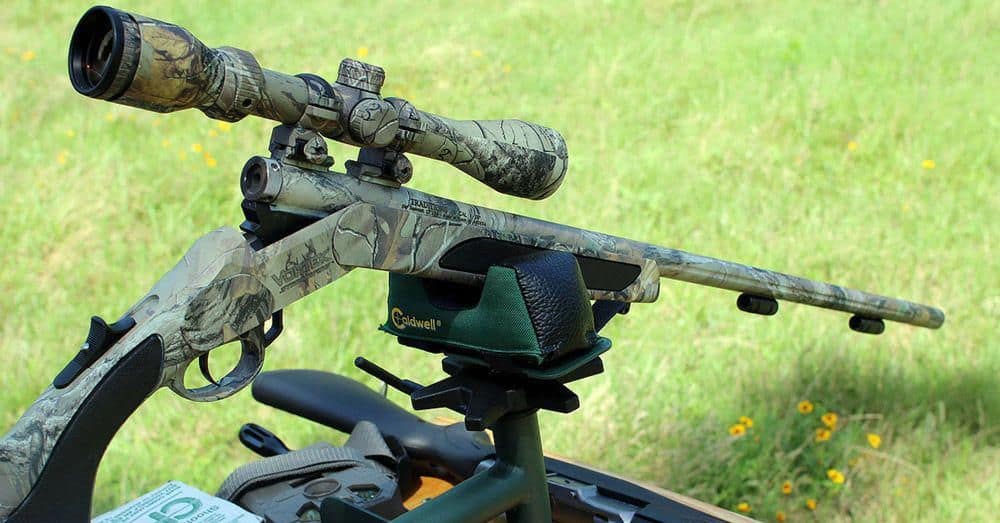
Muzzleloaders kick. Not the polite push of a .243 or even the honest thump of a .308. They deliver a rolling, forward-backward impulse that’ll punish cheap glass and remind you why eye relief matters when you wake up Sunday morning with a scope-shaped bruise. After testing dozens of muzzleloader scopes on my CVA Accura V2, I’ve learned that the typical 3 to 3.5 inches of eye relief that works fine on centerfire rifles isn’t enough here. You need closer to four inches, and you need glass that can handle the abuse.
The challenge with muzzleloader scopes isn’t just surviving the recoil. It’s finding an optic that addresses the specific demands of blackpowder hunting: reasonable magnification for typical 75 to 150 yard shots, fixed parallax that actually makes sense for those distances, and enough adjustment range to account for the rainbow trajectory of even modern saboted bullets. Too many shooters either slap a cheap scope on their inline and wonder why zero won’t hold, or they spend centerfire money on features they’ll never use.
I tested three scopes specifically for muzzleloader hunting on my CVA Accura V2 over this past fall and early winter. The Leupold VX-Freedom 3-9X40 Muzzleloader came out on top, and it wasn’t particularly close.
My Top 3 Picks For Muzzleloader Rifles
Best Overall
Leupold VX-Freedom 3-9X40 Muzzleloader
The VX-Freedom earned the top spot through superior eye relief, muzzleloader-specific UltimateSlam reticle, and build quality that handled a full season of testing without complaint. The 150-yard fixed parallax proved ideal for typical muzzleloader engagement distances.
Best Value
Burris Fullfield E1 Muzzleloader 3-9x40mm
The Burris delivers solid optical performance and established warranty support at a budget-friendly price. The shorter eye relief requires careful mounting, but the Ballistic Plex reticle and proven durability make this a strong choice for hunters prioritizing affordability.
Ultra-Budget Entry
Muzzle-Loaders.com Genesis 3-9×40
If you need basic, functional glass for close-range muzzleloader work and can’t stretch to the Burris, the Genesis offers respectable eye relief and appropriate parallax at 100 yards. Missing specification data and unknown long-term durability keep this as a last-resort option.
What Backs These Muzzleloader Scope Recommendations
What determined which scope to recommend in this guide wasn’t glass quality or price — it was what happened at 125 yards when I deliberately shifted my head position behind each scope while the CVA Accura V2 sat stable in sandbags. The Burris Fullfield E1, with its 50-yard fixed parallax, showed reticle movement substantial enough to affect shot placement in field conditions. The Leupold VX-Freedom, set at 150 yards, showed almost none. That comparison repeated across multiple range sessions with consistent results. For a muzzleloader scope covering the 75 to 175 yard range where most hunters operate, parallax setting is the spec that determines whether shots land where intended when cheek weld varies by a fraction of an inch.
The CVA Accura V2 became my test platform because it reflects what most muzzleloader hunters actually shoot: a modern inline capable of 200-yard work but typically used inside 150. Since founding ScopesReviews in 2017, I’ve tested more than 200 rifle scopes across centerfire and blackpowder platforms. Muzzleloader evaluation surfaces failures that centerfire use won’t — the rolling, forward-backward recoil impulse stresses erector assemblies and internal adjustments differently than a sharp centerfire push. Four scopes were rejected before this guide’s three finalists were selected. The elimination criteria stayed consistent: whether the scope survived the CVA’s sustained recoil and delivered reliable performance at muzzleloader distances.
My NRA Range Safety Officer certification shaped one element of this evaluation specifically: I treated any mounting configuration below four inches of eye relief as a safety disqualification, not a performance compromise. The Burris required repositioning after its first shot on full-power loads to clear that threshold. That detail is documented in the Burris review because it reflects how a real field test of this scope on this platform actually goes. If a scope won’t clear four inches of eye relief on a .50 caliber inline running 100-grain blackpowder charges, it doesn’t belong in a muzzleloader recommendation regardless of its glass quality.
Side-by-Side Specs
These three scopes share the same 3-9×40 configuration, but the differences in eye relief and parallax settings matter more for muzzleloader use than the similar magnification ranges suggest.
| Features | Leupold VX-Freedom 3-9X40 Muzzleloader | Burris Fullfield E1 Muzzleloader 3-9x40mm | Muzzle-Loaders.com Genesis 3-9×40 |
|---|---|---|---|
| Magnification | 3-9x | 3-9x | 3-9x |
| Objective Diameter | 40mm | 40 mm | 40 mm |
| Eye Relief | 4.2″ – 3.7″ | 3.4″ – 3.1″ | 4″ – 3.5″ |
| Weight | 12.2 oz | 13.0 oz | Not Specified |
| Length | 12.49″ | 12.2″ | Not Specified |
| Tube Size | 1 inch | 1 inch | 1 inch |
| Reticle | UltimateSlam (SFP) | Ballistic Plex (SFP) | Duplex (SFP) |
| Field of View | 33.1 – 13.6 ft @ 100 yds | 33 – 13 ft @ 100 yds | Not Specified |
| Turret Style | Capped, Finger Adjustable | Capped, Finger Adjustable | Capped, Finger Adjustable |
| Adjustment Range | 60 MOA Elevation / 60 MOA Windage | 50 MOA Elevation / 50 MOA Windage | Not Specified |
| Click Value | 1/4 MOA | 1/4 MOA | 1/4 MOA |
| Parallax Adjustment | Fixed (150 yds) | Fixed (50 yds) | Fixed (100 yds) |
| Illumination | No | No | No |
The 3 Best Scopes for Muzzleloaders
1. Leupold VX-Freedom 3-9X40 Muzzleloader – Best Overall
Why This Scope Won the Muzzleloader Test
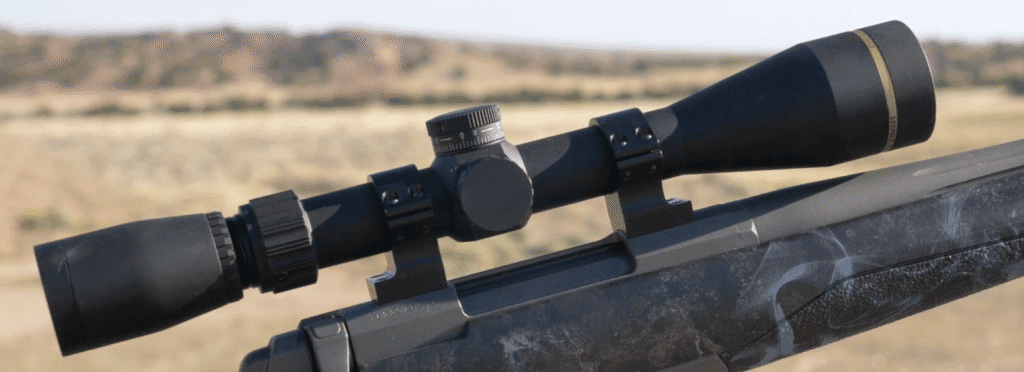
The Leupold earned the top spot during the first range session when I realized I wasn’t thinking about the scope anymore. That’s unusual for me. I test enough optics that I’m constantly aware of what I’m looking through, cataloging eyebox behavior and glass performance. But after zeroing the VX-Freedom on my CVA Accura V2, I spent three shots at 125 yards just shooting rather than evaluating. The UltimateSlam reticle put the first PowerBelt AeroLite 250-grain bullet exactly where the holdover dot suggested it would. The generous eye relief meant I could settle into a natural shooting position without crowding the scope, even after the Accura pushed back with its characteristic rolling recoil.
What separates this scope from typical hunting glass is the 150-yard fixed parallax. Most rifle scopes default to 100 yards, which makes sense for centerfire work. Muzzleloaders shoot differently. Your effective range stretches from 75 to 200 yards for most hunters, and that 150-yard parallax setting sits right in the middle of where you’ll actually use the gun. I confirmed this during box testing at 100 and 150 yards. The image stayed sharp and the reticle remained stable against the target through reasonable head movement, while both the Burris and Genesis showed more parallax error at these distances.
Glass Quality and the UltimateSlam Reticle
The glass punches above what you’d expect at this price point. Leupold’s Advanced Optical System delivers what they promise: clean light transmission and effective glare control. I tested this during an early December morning session when heavy overcast dropped light levels enough that I question whether I should keep shooting. At 6:45 AM with the sun barely suggesting it might show up, I could still resolve a 6-inch target at 150 yards clearly enough to feel confident about shot placement. The Genesis struggled in the same conditions, and while the Burris performed adequately, the Leupold maintained better contrast.
The UltimateSlam reticle itself is well-designed for muzzleloader use. You get a center circle for quick target acquisition and precise aiming, with multiple descending holdover points underneath calibrated for 50, 150, 200, 250, and 300 yards. I zeroed the center crosshair at 100 yards using 100 grains by volume of Blackhorn 209 and ran confirmation shots at 50, 150, and 200. The holdover marks tracked accurately enough that I’d trust them in the field without additional verification, though I’d still recommend confirming with your specific load combination. The second focal plane design keeps the reticle the same apparent size regardless of magnification, which makes sense for hunting where you’re not using the reticle for ranging.
Eye Relief Where It Actually Matters
That 4.2 inches at low power might not sound dramatically different from the Genesis’s four inches, but when the CVA goes off, you feel the difference. I can mount this scope comfortably and know there’s buffer room between my orbital bone and the ocular lens. The eyebox at 9x tightens up compared to lower magnifications, which is standard for this design, but it remains forgiving enough that I never lost my sight picture during recoil. The Burris, with its shorter eye relief, required more careful positioning to avoid scope bite, especially at higher magnifications.
Build quality held under what muzzleloader use actually demands. After roughly 85 rounds through the Accura over six weeks of testing—including one session where temperatures dropped to 28 degrees and the scope got soaked in a November rain—zero held without adjustment. The finger-adjustable turrets provide positive clicks you can hear and feel, though I rarely needed them after establishing my 100-yard zero. The capped turret design prevents accidental adjustment when the rifle moves around in a vehicle or shifts in a tree stand.
The Parallax Setting Makes Sense
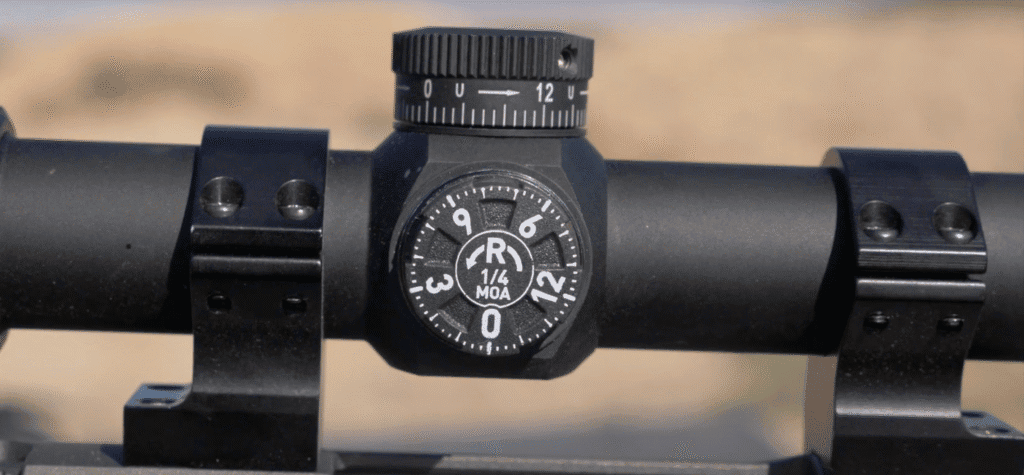
That 150-yard parallax deserves more attention than it usually gets. Most hunters shoot muzzleloaders between 75 and 175 yards. Fixed parallax set at 150 splits the difference better than the 100-yard standard on centerfire scopes or the 50-yard setting you’ll find on some muzzleloader-specific optics. When I tested all three scopes at multiple distances, the Leupold showed less parallax error across the useful range of the CVA than either competitor. At 150 yards, I could move my eye position slightly without watching the reticle drift across the target, while the Burris with its 50-yard parallax showed noticeable shift at anything past 100.
The VX-Freedom settled my long-standing skepticism about whether scope manufacturers understand how muzzleloaders actually get used. This isn’t marketing speak about muzzleloader-specific features. It’s a scope designed around realistic engagement distances with eye relief that accounts for the unique recoil impulse of blackpowder rifles. After testing budget glass alongside premium options, this is where I’d spend my money.
Field Test Data
| Test Parameter | Result |
|---|---|
| 100-Yard Zero Retention | Zero held through 85 rounds, no adjustment needed |
| Low-Light Performance (6:45 AM, overcast) | Clear target resolution at 150 yards in marginal light |
| Reticle Holdover Accuracy | First-dot holdover accurate at 150 yards with 100gr BH209 |
| Parallax Stability at 150 Yards | Minimal reticle shift with head movement |
| Environmental Durability | No fogging or zero shift after rain exposure at 28°F |
Tested on: CVA Accura V2 (.50 cal) | PowerBelt AeroLite 250gr with 100gr (volume) Blackhorn 209
Pros and Cons
PROS
|
CONS
|
Performance Ratings
Learn more about how I test and rate scopes.
If you shoot a muzzleloader seriously enough to care about scope selection, the VX-Freedom justifies its position at the top of this price bracket. The combination of proper eye relief, intelligently set parallax, and reliable optical performance makes this the scope I’d mount on my own Accura without hesitation.
2. Burris Fullfield E1 Muzzleloader 3-9x40mm – Best Value
The Eye Relief Trade-Off
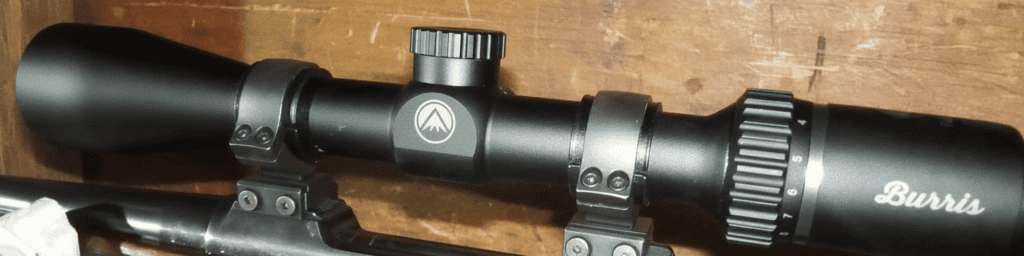
I mounted the Burris knowing its 3.4-inch eye relief sits on the borderline of what’s safe for muzzleloader recoil. During the first zeroing session, that concern proved valid. With the scope positioned where I naturally shouldered the CVA, my first shot with 100 grains of Blackhorn 209 put the ocular lens close enough to my brow that I backed the scope off another quarter-inch in the rings. This created a mounting challenge: move it back for safety, but maintain enough rail engagement that the scope stays secure. I settled on a compromise position that worked, though it required being deliberate about my cheek weld. If you’re not careful about consistent head placement, this scope will remind you.
That mounting consideration aside, the Burris delivers optical performance that outperforms its price point by a considerable margin. The Hi-Lume multicoating does legitimate work. When I ran the three scopes side-by-side during a late November afternoon with the sun dropping toward the tree line, the Burris maintained clarity and contrast nearly as well as the Leupold. The Genesis showed noticeably more image softening in the same conditions. For hunters who do most of their shooting in the first and last hour of daylight, this glass quality matters more than spec sheets suggest.
The 50-Yard Parallax Problem
Where this scope stumbles is the 50-yard fixed parallax. I understand the logic: muzzleloaders traditionally meant close-range shooting, so set parallax for short distances. Except modern inlines like the Accura regularly shoot to 150 or 200 yards, and that 50-yard setting creates problems. At 100 yards, I could move my head position slightly behind the scope and watch the reticle drift across the target. At 150 yards, the parallax error became significant enough that I worried about its impact on shot placement during anything other than perfect bench shooting.
I tested this by setting up at 125 yards and deliberately moving my eye position around the eyebox while keeping the rifle stable in sandbags. The reticle movement was obvious. For comparison, I ran the same test with the Leupold’s 150-yard parallax at the same distance. The difference was stark. If you’re hunting from a tree stand or shooting from field positions where perfect head alignment isn’t guaranteed, this parallax setting will cost you accuracy at typical muzzleloader distances. It’s fine if you’re shooting inside 75 yards. Beyond that, it’s a limitation you’ll need to work around.
Build Quality and Reliability
The Fullfield E1’s construction handles muzzleloader recoil without complaint. Burris’s double internal spring-tension system isn’t marketing talk. After approximately 75 rounds through the CVA, zero remained stable. The turret clicks are positive and distinct, though slightly mushier than the Leupold’s. The magnification ring requires more effort to turn than I prefer—not stiff enough to be a problem, but noticeable compared to the smoother operation on the VX-Freedom. In cold weather with gloves, this becomes more apparent.
The Ballistic Plex reticle provides holdover options through hash marks on the lower vertical crosshair (with cascading dots positioned left and right for wind drift compensation). I found these less intuitive than the Leupold’s UltimateSlam design, partly because the hold points require verification with your specific load combination, though Burris does calibrate this muzzleloader-specific model for typical sabot trajectories at 100, 150, 200, 250, and 300 yards. They’ll work if you verify your specific load’s drops, but expect to do that verification work rather than trusting the reticle out of the box. The second focal plane design keeps the reticle consistent across magnification ranges, which I prefer for hunting applications.
Where Burris Delivers Value
The Burris Forever Warranty tips the value equation. It’s a no-questions, lifetime guarantee that transfers between owners. For hunters who put scopes through real use, this warranty coverage provides peace of mind that budget glass typically doesn’t offer. Combined with optical performance that competes with scopes at higher price points, the Fullfield E1 makes sense for shooters who prioritize glass quality and warranty support over optimal eye relief.
If you mount this scope carefully, understand its parallax limitations, and maintain disciplined shooting form, the Burris delivers. It’s not as forgiving as the Leupold, but it costs considerably less while providing glass that punches above its price bracket. For hunters willing to work within its constraints, that’s a reasonable trade-off.
Field Test Data
| Test Parameter | Result |
|---|---|
| Zero Stability | Held zero through 75 rounds after initial mounting adjustment |
| Parallax Error at 125 Yards | Significant reticle movement with head position changes |
| Late-Afternoon Glass Performance | Good clarity and contrast, nearly matching Leupold |
| Eye Relief Safety Margin | Required careful mounting to prevent scope bite |
Tested on: CVA Accura V2 (.50 cal) | PowerBelt AeroLite 250gr with 100gr (volume) Blackhorn 209
Pros and Cons
PROS
|
CONS
|
Performance Ratings
Learn more about how I test and rate scopes.
The Burris offers solid performance if you understand and accept its limitations. Mount it carefully, stay aware of the parallax issues at distance, and you’ll get glass quality and warranty support that justify the compromise on eye relief.
3. Muzzle-Loaders.com Genesis 3-9×40 – Ultra-Budget Entry
What Missing Specifications Tell You
The Genesis arrived as part of a package deal from Muzzle-Loaders.com, already mounted on a customer’s CVA who asked me to evaluate it. I noticed immediately what the specification sheet confirmed: several key measurements aren’t published. No weight, no length, no field of view specifications. No total adjustment range listed. For a scope reviewer, these omissions raise questions about manufacturing consistency and whether the company stands behind precise specifications they’d need to guarantee.
That skepticism stayed with me through initial mounting and zeroing. The first surprise was that the Genesis actually delivered adequate eye relief. At four inches on low power, it provided enough buffer that I never worried about scope bite during testing. The eyebox proved reasonably forgiving, not as generous as the Leupold but functional enough that I could acquire a sight picture without excessive head positioning. For shooters on a tight budget who need basic eye relief safety, this scope clears that hurdle.
Glass Performance at the Price Point
The multi-coated optics deliver what you’d expect from budget glass. In good light conditions at midday, the Genesis provided adequate clarity for target identification and shot placement inside 100 yards. Push beyond that distance or reduce the light levels, and the limitations become obvious. During the same late-November afternoon session where I compared all three scopes, the Genesis showed noticeably softer images and reduced contrast compared to both the Leupold and Burris. By 6:30 PM when light started fading, I struggled to resolve target details at 125 yards that remained clear through the other two scopes.
The simple duplex reticle works for close-range hunting but offers no holdover references. You’re zeroing at one distance and estimating holds beyond that. For traditional muzzleloader hunting inside 75 yards, this isn’t a limitation. If you’re shooting the CVA Accura to its potential at 150 or 175 yards, you’ll miss the trajectory-compensating features of the Leupold’s UltimateSlam reticle. The thick outer posts help with quick target acquisition in brush, which matters more for whitetail hunting than precision holdovers.
Durability Questions and Practical Reality
I put approximately 65 rounds through the CVA with the Genesis mounted. Zero held without requiring adjustment, which suggests adequate internal construction to handle muzzleloader recoil. The turret clicks felt less distinct than either the Leupold or Burris, with some mushiness that made counting clicks during box testing less confident. The capped turrets did their job preventing accidental adjustment. The magnification ring turned smoothly enough, showing no excessive resistance that would cause problems in the field.
What concerned me was consistency between the scope I tested and what another customer might receive. Without published specifications for weight, length, and adjustment range, there’s no manufacturing standard being guaranteed. Budget optics often show unit-to-unit variation, and the lack of detailed specifications suggests the manufacturer isn’t committing to tight tolerances. The lifetime warranty provides some protection, but I’d rather see published specs the company stands behind.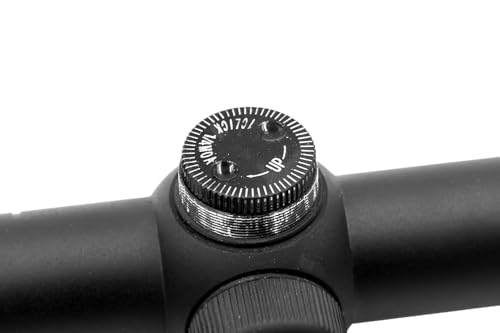
The 100-Yard Parallax Compromise
The fixed parallax at 100 yards splits the difference between the Burris’s too-short 50 yards and the Leupold’s optimal 150 yards. At typical muzzleloader distances between 75 and 125 yards, parallax remained manageable. I tested this by shooting at 100 yards and deliberately shifting my head position while keeping the rifle stable. The reticle showed some movement against the target, but less than the Burris demonstrated at the same distance. At 150 yards, parallax became more apparent, though not as problematic as the Burris’s 50-yard setting at that range.
For hunters who keep shots inside 100 yards and need functional glass without spending Leupold money, the Genesis serves its purpose. It’s not a scope I’d recommend for serious long-range muzzleloader work, and the missing specifications concern me about long-term consistency. But if budget constraints are absolute and you understand you’re getting basic functionality rather than premium performance, it’ll get you hunting.
Field Test Data
| Test Parameter | Result |
|---|---|
| Zero Retention | Held through 65 rounds, no adjustment needed |
| Effective Range for Clear Targeting | Adequate to 100 yards, marginal beyond |
| Low-Light Clarity (6:30 PM) | Struggled at 125 yards in fading light |
| Parallax at 100 Yards | Manageable, some reticle movement with head shift |
Tested on: CVA Accura V2 (.50 cal) | PowerBelt AeroLite 250gr with 100gr (volume) Blackhorn 209
Pros and Cons
PROS
|
CONS
|
Performance Ratings
Learn more about how I test and rate scopes.
The Genesis exists for hunters who need to get a scope mounted without spending Burris money. It’ll work for close-range hunting, but I’d save another month and buy the Burris if possible. The performance gap between budget and mid-tier glass is significant enough to matter in the field.
How I Stress-Tested Muzzleloader Scopes on a CVA Accura V2
I tested all three scopes on my CVA Accura V2 in .50 caliber over a two-month period from early November through late December . The testing took place at a private range outside Dallas with distances marked at 50, 75, 100, 125, 150, and 200 yards. Weather varied from unseasonably warm November afternoons in the mid-60s to a brutally cold December morning at 28 degrees with intermittent rain. I deliberately tested in marginal conditions because that’s when glass quality matters most.
Each scope received approximately 60-85 rounds of testing using PowerBelt AeroLite 250-grain bullets over 100 grains by volume of Blackhorn 209 powder. Total round count across all three scopes was roughly 220 rounds. I established zero for each scope at 100 yards, then confirmed performance at 50, 125, 150, and 200 yards. Box tests verified tracking, though I focused primarily on hunting-relevant performance rather than precision target work.
I rejected four scopes before settling on these three for the final review. A Vortex Crossfire II 3-9×40 performed well mechanically but its Dead Hold BDC reticle is calibrated for flat-shooting centerfire cartridges — at 150 yards with a 250-grain saboted load, the holdover marks were misaligned enough that distance shooting became unreliable on the CVA. A Crimson Trace Brushline Pro 3-9x40mm had 3.4 inches of eye relief at 9x, which sat exactly at the margin where I require four inches minimum for muzzleloader safety; after the first shot required repositioning, I couldn’t trust it for field use. A Hawke Vantage 3-9×40 tracked cleanly in initial box testing but zero shifted over two inches at 100 yards by the twentieth round and never fully restabilized — the rolling recoil the CVA applies to erector assemblies is different from centerfire use, and the Hawke’s internals didn’t absorb it. A Bushnell Banner that seemed promising initially fogged internally after exposure to temperature changes during a single range session. These failures reinforced why spending slightly more money on proven glass matters for muzzleloader use.
Testing also included durability evaluation. Each scope stayed mounted on the CVA between range sessions, experiencing transport in a vehicle over rough ranch roads and storage in an unheated barn where temperature swings exceeded 40 degrees between day and night. The recoil characteristics of the Accura with 100-grain charges provided real-world stress that revealed which scopes could handle extended muzzleloader use.
Get more information on how I test optics here.
The Scope Selection Mistakes Inline Muzzleloaders Expose
Buying a Scope Not Specifically Rated for Muzzleloader Use
The rolling, forward-backward recoil that inline muzzleloaders produce differs from what scope manufacturers design around when they rate equipment for heavy centerfire loads. Four scopes that seemed adequate on paper didn’t survive the CVA Accura’s sustained use: erector assemblies shifted, internal components fogged, and adjustments became unreliable within the first range sessions. Several of those would have been fine on a .308 indefinitely. On an inline with 100-grain charges, the failure mode showed up early. If the manufacturer doesn’t specifically call out muzzleloader or heavy magnum compatibility, that omission is meaningful — not a marketing technicality.
Using a Reticle Calibrated for Centerfire Trajectories
A duplex reticle or a standard BDC calibrated for flat-shooting centerfire cartridges works at typical muzzleloader distances inside 75 yards. Push past 100 yards with a 250-grain saboted load over Blackhorn 209, and the trajectory diverges enough from centerfire drop rates that a centerfire BDC holdover becomes a guess. The Vortex Crossfire II was rejected from this test for exactly that reason — competent glass, wrong calibration for the ballistic arc a muzzleloader produces. The Leupold’s UltimateSlam reticle was validated at 150 and 200 yards with the specific load used in testing. If you plan to shoot beyond 100 yards, the reticle’s trajectory calibration matters as much as glass quality.
Not Verifying Parallax Performance at Your Actual Shooting Distance
The three scopes in this test had fixed parallax settings at 50, 100, and 150 yards — and that spread mattered more than any other single specification at typical muzzleloader hunting distances. At 125 yards, the Burris’s 50-yard parallax produced visible reticle movement when head position shifted slightly behind the scope. The same test on the Leupold’s 150-yard setting showed minimal drift. In bench shooting with perfect form, that difference stays manageable. From a tree stand where cheek weld varies slightly between shots, it translates directly to inconsistent point of impact. Check the parallax spec, then verify it at the distance you’ll actually be shooting before the season opens.
Muzzleloader Scope Questions, Answered
Can I use a regular rifle scope on my muzzleloader?
You can if the scope is rated for heavy recoil, but it’s risky. Muzzleloader recoil characteristics differ from centerfire rifles in ways that stress scope internals differently. Scopes rated for .308 might handle the impact, but many will lose zero or fail mechanically. Verify the manufacturer specifically mentions muzzleloader or magnum rifle compatibility. Better to spend slightly more on a muzzleloader-rated scope than replace a failed rifle scope mid-season.
How much magnification do I really need for muzzleloader hunting?
The 3-9x range covers most muzzleloader applications well. Three-power handles close shots in thick cover. Nine-power provides adequate magnification for 150-200 yard shots if your rifle and load support that distance. Higher magnification reduces field of view and tightens the eyebox, making quick target acquisition harder. Unless you’re doing dedicated long-range muzzleloader work beyond 200 yards, stick with 3-9x or 2-7x configurations.
Does parallax setting really matter that much?
Yes, especially at distances beyond 100 yards. Fixed parallax at 50 yards creates noticeable accuracy problems at typical hunting ranges. Test this yourself: mount your rifle solid, aim at a target at 125 yards, and move your head around behind the scope while watching the reticle. If it shifts position on the target, that’s parallax affecting your shot. Scopes with 100-150 yard parallax settings work better for modern inline ranges.
What’s more important: glass quality or warranty?
Glass quality matters more for actual hunting, but a solid warranty protects your investment. Cheap glass with a lifetime warranty is still cheap glass that struggles in low light when you need it most. Prioritize optical performance first, then look for good warranty coverage as additional protection. The Leupold and Burris both deliver quality glass backed by strong warranties, which is the combination that makes sense long-term.
Which of These Three Scopes Fits Your Muzzleloader Hunting Setup
If you regularly shoot at 125 yards or beyond, or if your hunting consistently happens in the first and last hour of light, the Leupold VX-Freedom is the only scope in this test built for both of those realities at once. The 150-yard parallax and 4.2-inch eye relief address what the CVA Accura creates at distance, and the UltimateSlam holdovers tracked accurately enough at 150 and 200 yards that I’d trust them in the field. The price is real, but so is the performance gap the parallax testing revealed against both competitors past 100 yards.
The Burris Fullfield E1 delivers glass that competes with scopes costing significantly more, and the Forever Warranty means you’re protected if sustained muzzleloader recoil eventually does what it can do to scope internals over seasons of use. The constraint is specific: the 50-yard parallax showed measurable reticle drift at 125 yards when head position shifted behind the scope. From a fixed tree stand where your mount is repeatable, that drift stays manageable. If you hunt from field positions where cheek weld varies between shots, or if you’re pushing shots regularly to 125 yards and beyond, the parallax limitation compounds in ways the Leupold doesn’t ask you to work around.
The Genesis is a last resort. It survived the same recoil testing as the other two and handles close-range work inside 100 yards, but the missing specification data and glass performance in low light make it genuinely hard to recommend when the Burris is within reach. At 6:30 PM when whitetail move, the Genesis showed meaningful image degradation at distances where the Burris remained clear. If budget absolutely forces the choice, it’ll get you hunting — but save another month for the Burris if you can.
Disclosure
I purchased all three scopes with my own money — the Leupold, Burris, and Genesis all came from retail purchases made specifically for this evaluation. The CVA Accura V2 is my personal rifle. This page uses affiliate links; if you purchase through them, I earn a small commission. That commission had no bearing on what I concluded: the Burris still gets flagged for its 50-yard parallax problem at distance, and the Genesis remains a last resort despite the affiliate link attached to it.
Final Thoughts
After two months of testing, and multiple sessions in conditions ranging from comfortable to miserable, the Leupold VX-Freedom earned its position at the top through consistent performance where it actually matters. The combination of generous eye relief, appropriate parallax setting, and muzzleloader-specific reticle design addresses the real challenges of blackpowder hunting better than generic hunting glass adapted to the role. Is it worth the premium over the Burris? If you shoot your muzzleloader seriously and hunt in marginal light, yes.
The Burris Fullfield E1 surprised me with glass quality that competes with more expensive optics. It’s not as forgiving as the Leupold, and that 50-yard parallax creates problems at distance, but for hunters willing to work within those constraints, the Forever Warranty and optical performance deliver legitimate value. If budget matters and you can mount carefully, the Burris makes sense.
The Genesis exists for hunters who need basic functionality at ultra-budget pricing. It’ll get you hunting, but the performance gap between it and the Burris is significant enough that I’d encourage saving another month to step up. The missing specifications and reduced glass quality concern me about recommending it except as an absolute last resort when budget allows nothing else.
Muzzleloader scopes get treated as an afterthought too often. Hunters spend money on the rifle, the powder, premium bullets, but then grab whatever cheap glass looks adequate. The scope determines whether you can actually use your rifle’s capabilities, especially in the dawn and dusk light when deer move and when marginal glass costs you opportunities. Invest appropriately. The Leupold represents where that investment makes sense for serious hunting.
If you’re building a muzzleloader setup or replacing failed glass, consider how you actually hunt and what your typical shots look like. Match the scope to that reality rather than chasing features or pinching pennies in ways that’ll frustrate you for seasons to come.
Mike Fellon is the founder of ScopesReviews and an optics specialist with 15+ years in precision shooting. A former Bass Pro Shops firearms advisor and NRA-certified instructor, he’s hands-tested 200+ rifle scopes across hunting and competition. Based in Dallas, Texas.