
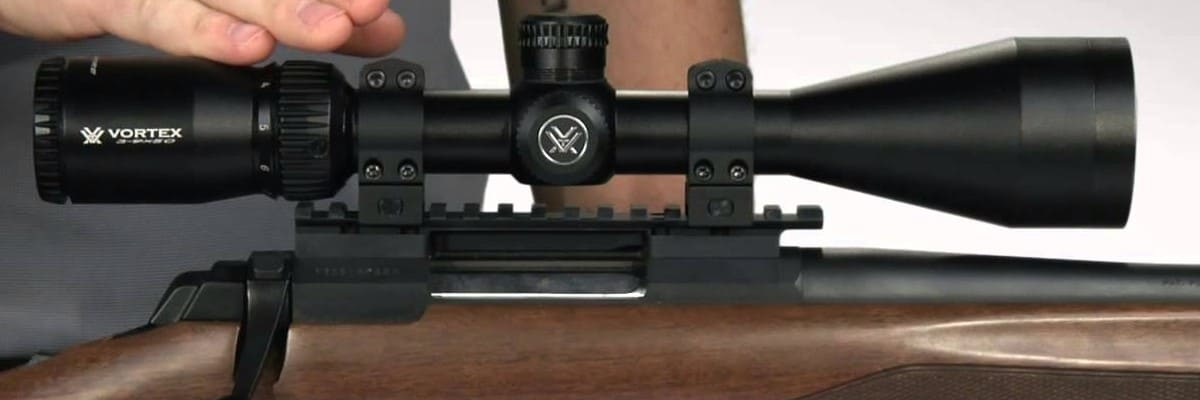
The Crossfire II 3-9×40 is the scope people land on when they’ve just bought their first deer rifle and the guy behind the counter has already talked them out of the no-name optic that came bundled in a combo deal. It’s an entry-tier, second-focal-plane hunting scope built around a classic 3-9x range, a 40mm objective, and Vortex’s Dead-Hold BDC reticle. Vortex sells it on a simple pitch: clear glass, true tracking, and the VIP warranty, all at a price that doesn’t make you wince. I’ve watched hundreds of new hunters try to decide whether to spend here or stretch for something pricier, so I wanted to put one through a full season myself and answer the only question that matters at this tier: does it do the job, or does it just look like it does on a spec sheet?
Short version, since the rest of this is long: in daylight, it’s the easy recommendation it’s reputed to be. The honest catch shows up in the last ten minutes of legal light, and there’s a reticle wrinkle worth understanding before you buy. More on both below.
Vortex Crossfire II 3-9×40 Review
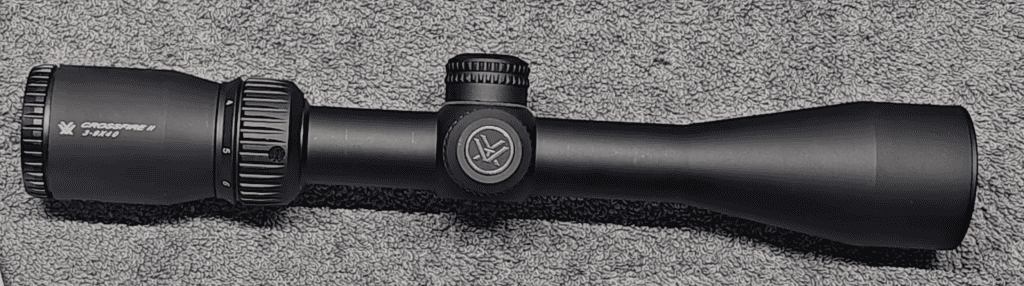
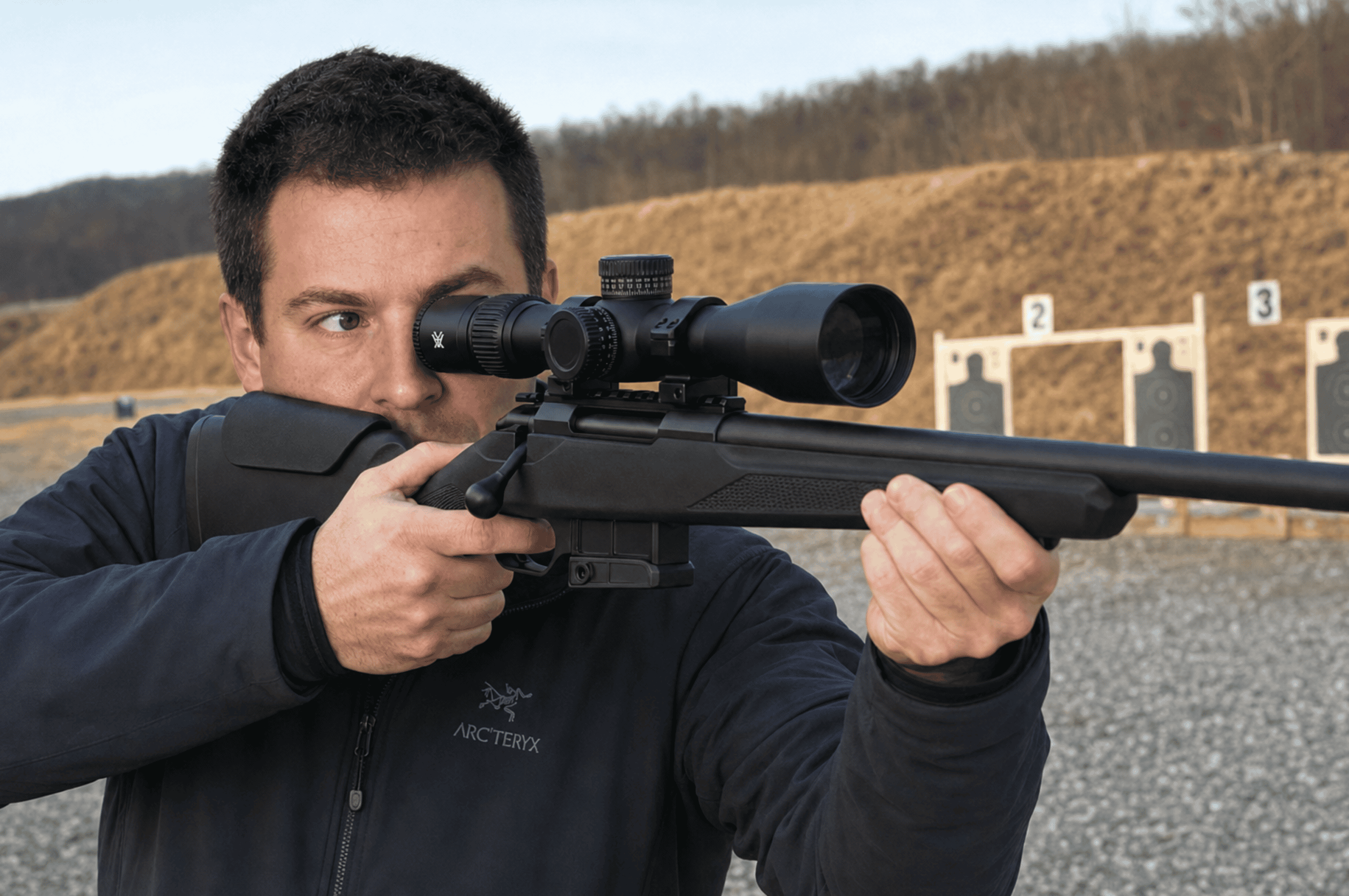
I mounted this on a Savage Axis II in .308 Winchester, which is about as honest a pairing as you’ll find. Budget rifle, budget scope, common deer cartridge. If the combination works, it works for the exact person buying this scope, not for some idealized shooter with a custom action. I fed it Hornady American Whitetail 150-grain InterLock, sighted in at 100 yards, and went hunting.
Glass That Punches Above the Sticker
The first thing I noticed setting up at 100 yards was how flat and bright the center of the image was. For an entry-tier optic, the fully multi-coated glass holds its own. Edge to edge it isn’t perfect; crank it to 9x and the outer third of the picture softens a touch and you’ll catch a hint of distortion at the very edge. But you aim with the center, and the center stays crisp through the magnification range. Color rendition is neutral, not the washed-out blue-gray you sometimes get at this price. I’ve handled the original Crossfire, and the II is a real step up here. The fast-focus eyepiece on the II snaps the reticle sharp in a second or two, which the older line didn’t do nearly as cleanly. For a scope in this bracket, the daylight clarity genuinely surprised me, and I don’t say that often about glass this affordable.
The Dead-Hold BDC and Its One Honest Catch
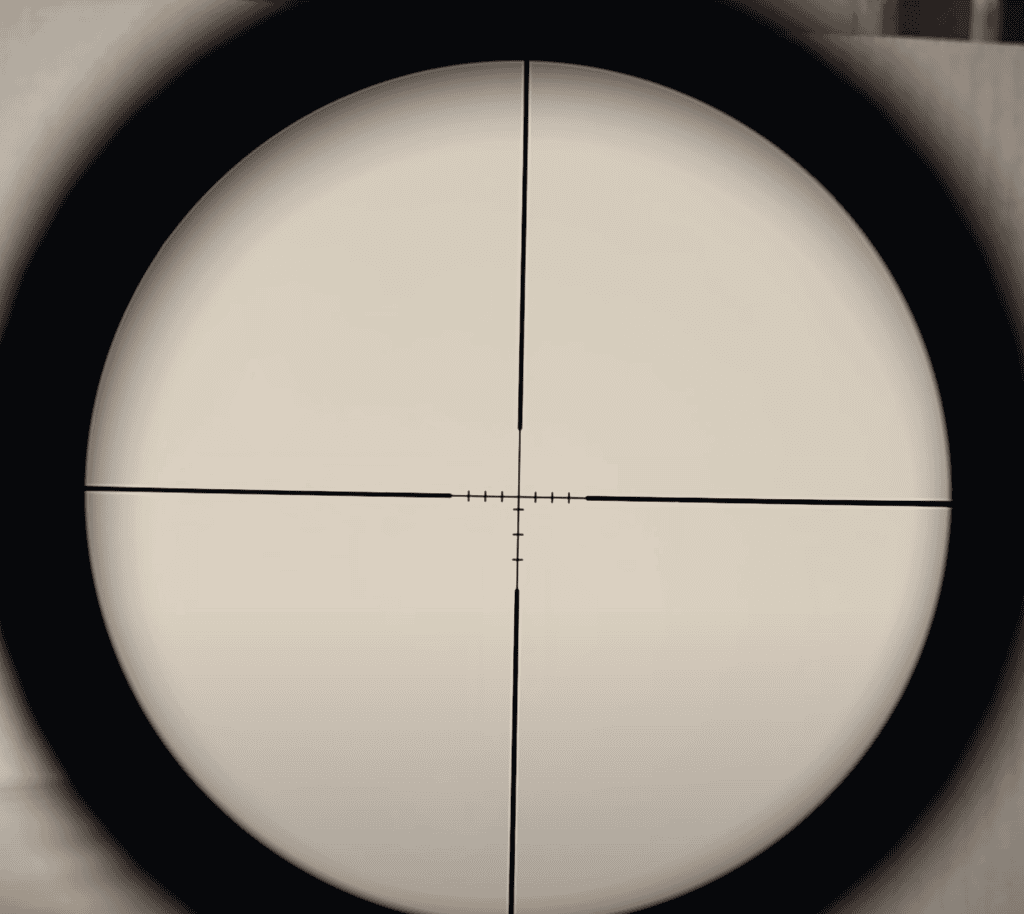
The Dead-Hold BDC reticle is the right reticle for this scope’s job, with one thing you have to understand going in. The hash marks below center give you quick reference points for holdover at extended range without dialing, which is exactly how most people use a 3-9x in the field. The crosshairs are on the thicker side, which I actually like for a hunting reticle because they draw your eye fast against brush and timber. Some shooters find them a hair heavy for precise work on small targets, and that’s a fair gripe, but it’s a preference, not a flaw.
Here’s the catch: it’s a second-focal-plane reticle. The subtensions and BDC marks are only true at one magnification (Vortex calibrates them at the top end, 9x). Drop to 6x or 4x and those hash marks no longer correspond to the same holdovers. Plenty of new buyers don’t realize this and zoom out for a closer shot expecting the marks to still mean something. They don’t. If you’re going to lean on the BDC, leave it at 9x. For close stuff, use the main crosshair and forget the hashes. Once you know that, the reticle does its job well.
Where the Last Ten Minutes of Light Goes
This is the part I want every dawn-and-dusk hunter to read twice. In full daylight and even into early morning, the 40mm objective gathers plenty of light and the picture stays usable. But as legal light burns down at the end of the day, the image dims faster than I’d like, and because this variant has no illumination, that thicker reticle starts to disappear against dark hide right when you need it most. I had a doe step out of a treeline in the last several minutes of shooting light, and I could see her fine; picking my crosshair off her shoulder against the shadow took longer than it should have. The scope is honestly fine for the bulk of legal hunting hours. It’s the ragged edge of the day where you feel the price.
Capped Turrets, and Why That’s the Right Call Here
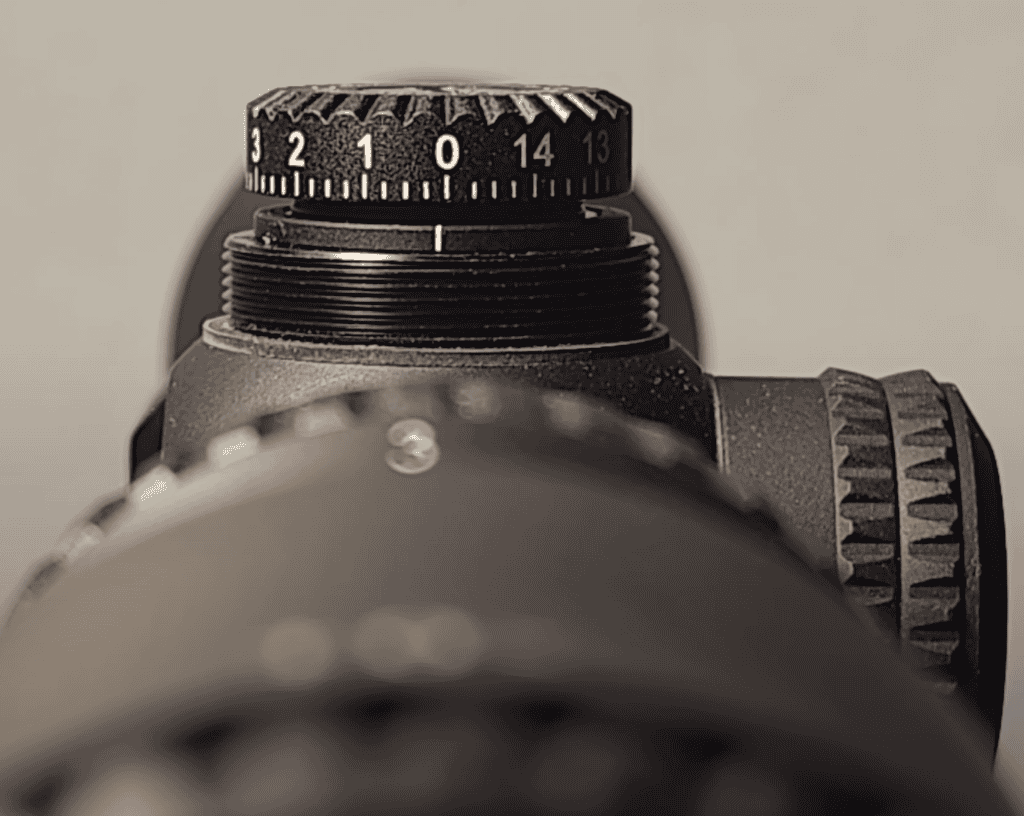
The capped turrets are correct for this scope, full stop. This isn’t a dialing optic; it’s a zero-it-and-leave-it hunting scope, and the caps keep you from bumping your zero in a truck or a treestand. The 1/4-MOA clicks aren’t the crispest I’ve felt; they’re a little mushy and took a firm hand during sight-in, which lines up with what other owners report. For a set-and-forget scope you’ll touch twice a year, that’s a non-issue. The 60 MOA of elevation travel is more than adequate for a 3-9x working at the ranges this scope is built for. You’re not stretching this thing to the edge of its adjustment at any sane hunting distance, and the BDC reticle means you mostly won’t be touching the turrets in the field anyway.
It Took the Knocks and Kept Zero
Build quality is where Vortex’s reputation is earned at this tier. The one-piece aircraft-grade aluminum tube shrugged off a season of being slung over a shoulder, dropped against a stand rail, and rattled around in a truck. It’s nitrogen-purged and sealed, and it ran through some genuinely miserable cold, wet mornings without fogging internally. Most important, it held zero. After roughly 160 rounds it printed to the same point of impact it started at, and a deliberate box test confirmed it returned to zero cleanly. Pair that with the no-questions VIP warranty and the durability equation tilts hard in your favor: if it ever does fail, Vortex fixes or replaces it, no receipt, no drama. That warranty is a real part of what you’re buying.
How I Ran a Savage Axis .308 Through a Whitetail Season With This Scope
I built the test around the buyer, not around making the scope look good. A Savage Axis II in .308 Winchester is the rifle this scope actually ends up on more than any other, so that’s what I mounted it to, using standard 1-inch rings torqued to spec. The .308 gives you real recoil to test how the scope holds zero and whether that 3.8 inches of eye relief keeps your eyebrow safe, without being so punishing that I couldn’t shoot it enough to learn anything. For ammunition I committed to one load the whole way through, Hornady American Whitetail 150-grain InterLock, because it’s an affordable hunting load a real Crossfire II owner would actually run, not a premium match round that flatters the rifle.
Testing ran across the back half of a whitetail season, with bench work mixed into the hunting. I split time between cut crop edges where shots opened up toward 250 yards and tighter hardwood draws where everything happened inside 100. That spread mattered: I needed the long edges to see how the glass and BDC reticle handled reach, and the close timber to judge the eyebox and how fast I could get on a target. Conditions cooperated by not cooperating; I got bright midday sun, flat gray overcast, a couple of hard frosts, and the dim, blue last-light windows that decide whether a hunting scope is actually any good. Round count landed around 160 across the whole stretch, which is plenty to validate zero retention and tracking on a scope you’ll never beat on like a tactical optic.
Going in, my two questions were specific. First, does the daylight glass actually justify the reputation, or is that just brand goodwill? Second, how badly does the missing illumination hurt at the edges of legal light? I confirmed zero at 100 yards off a rest, ran a box test to verify the turrets tracked and returned, then spent the rest of the season watching how it behaved in the field. Years of helping first-time buyers pick between this and the next tier up taught me the real failure point for budget hunting scopes isn’t the spec sheet, it’s the moment light fades and a new shooter can’t find their crosshair, so I tested for exactly that. You can read more about how I evaluate optics in my full testing methodology.
Performance Ratings
Field Test Data
| Test Parameter | Result |
|---|---|
| Best 100-yard group (3 shots, off a rest) | ~1.3 inches |
| Zero retention after ~160 rounds | No measurable shift |
| Box test tracking (return to zero) | Tracked true, returned clean |
| Usable low-light window past sunset | ~15-20 minutes before reticle gets hard to pick up |
| Eyebox forgiveness | Relaxed at 3-6x; tightens at 9x |
| Internal fogging in cold/wet conditions | None observed |
Tested with: Savage Axis II | .308 Winchester | Hornady American Whitetail 150gr InterLock
Pros and Cons
PROS
|
CONS
|
Who Should Mount One, and Who Should Walk Past It
This scope is built for the new or budget-minded big-game hunter running a standard-caliber rifle who takes shots inside roughly 300 yards in reasonable light. If that’s you, the Crossfire II 3-9×40 is one of the easiest recommendations in the entire entry tier. It’s also a smart pick for a second rifle or a truck gun, where you want dependable glass and a zero that won’t wander, without tying up much money.
Where it’s the wrong call: if you do most of your hunting in the last and first minutes of legal light, the dimming image and unlit reticle will eventually cost you a shot, and you should either buy the illuminated V-Brite version of this same scope or step up a tier. Skip it too if you actually want to dial elevation for longer pokes; the capped turrets and mushy clicks aren’t built for that, and you’d be fighting the scope’s whole design. And if you’re a precision or target shooter chasing fine holds on small marks, the thick reticle and fixed 100-yard parallax will frustrate you. This is a hunting scope that knows exactly what it is. Buy it for that, and it delivers.
Common Questions About the Vortex Crossfire II 3-9×40
Are the Dead-Hold BDC holdover marks accurate at any magnification?
No. This is a second-focal-plane scope, so the BDC subtensions are only true at one power. Vortex calibrates them at 9x, the top end. If you zoom out, the hash marks no longer match. Lean on the BDC only at 9x.
Does this version have an illuminated reticle?
No. The standard Dead-Hold BDC 3-9×40 reviewed here is non-illuminated. If you want illumination, Vortex sells the same scope in a V-Brite version with a lit center dot, which is the better pick for serious low-light hunters.
Can it handle hard-recoiling rifles?
Yes. It held zero through a season on a .308 and the build is rated shockproof. The 3.8 inches of eye relief is generous enough to keep you off the ocular bell on magnum calibers, as long as you mount it correctly.
Crossfire II or Crossfire HD?
The HD line uses upgraded glass and runs a bit clearer, especially toward the edges and in fading light. If low-light clarity is your priority and budget allows, the HD is worth the bump. For pure daylight value, the Crossfire II still holds up well.
Does it really hold zero, and is the warranty as good as people say?
In my testing, zero never moved. The VIP warranty is unconditional and transferable, with no receipt required; Vortex repairs or replaces it regardless of cause. That backing is a genuine reason this scope dominates the entry tier.
Better Options If Low Light or Dialing Is Your Priority
If the only thing holding you back is the low-light reticle issue I ran into, the simplest fix is the Crossfire II V-Brite, the same scope with an illuminated center dot. You keep everything good about this optic and solve the one problem that costs you shots at last light. If you want a real step up in glass for those dim windows, the Leupold VX-Freedom 3-9×40 costs more but pulls noticeably more usable light at dawn and dusk and runs a cleaner, thinner reticle; it’s the move for hunters who live in the margins of legal light and don’t need a BDC. And if the thick Dead-Hold crosshair just doesn’t suit your eye for precise placement, the Burris Fullfield E1 3-9×40 sits in the same tier with a simpler ballistic plex and crisp, usable hashes that some shooters find cleaner to aim with. All three are widely available and worth a look depending on which limitation matters most to you.
Disclosure
This review reflects my own field testing and honest assessment of the Vortex Crossfire II 3-9×40. This article may contain affiliate links, meaning I could earn a small commission if you purchase through them at no extra cost to you. Affiliate relationships have no influence on my ratings or conclusions; the evaluation here is based solely on how the scope performed during testing.
The Verdict: A Daylight Workhorse That’s Hard to Argue With
Buy it. For the new hunter, the budget build, or the second rifle, the Crossfire II 3-9×40 does exactly what it promises and a little more. The daylight glass genuinely outperforms its price, it held zero through a full season of .308 recoil and rough handling, the eye relief keeps you safe, and the VIP warranty means you’re never really out anything if it fails. That combination is why this scope sells the way it does, and the reputation is earned.
The one place I’ll hold you back is low light. As legal shooting time runs out, the image dims and the unlit, thicker reticle gets hard to find against dark hide. If your hunting lives in those last few minutes, spend up to the V-Brite version or a Leupold VX-Freedom instead. And remember the BDC only holds true at 9x. Understand those two things going in, and you’ll be hard-pressed to find a more honest daylight hunting scope for the money.
Mike Fellon is the founder of ScopesReviews and an optics specialist with 15+ years in precision shooting. A former Bass Pro Shops firearms advisor and NRA-certified instructor, he’s hands-tested 200+ rifle scopes across hunting and competition. Based in Dallas, Texas.