
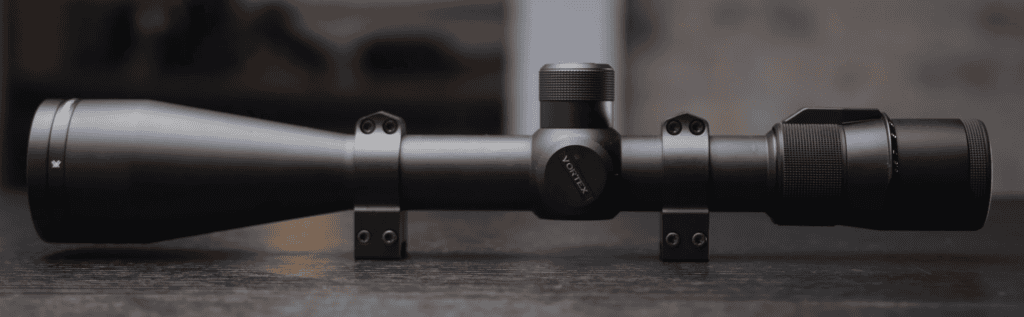
The Viper 6.5-20×50 reads like a dedicated varmint and target optic the moment you look at the numbers: a 6.5x floor that’s too much magnification for any brush work, a 20x ceiling for picking apart small targets at distance, a 50mm objective, and a side-focus dial that runs from 50 yards out. This is a prairie-dog and bench scope wearing mid-tier price, and Vortex leans on its XD glass to justify the spot it occupies. I wanted to know two things going in. Does the glass actually carry a scope at this tier, and does the rest of the package match the precision job the magnification keeps promising?
The glass answer is yes, and it’s the best reason to own this thing. The second answer is where the scope gets interesting, because the optical hardware points one direction and the controls point another. You get a high-magnification, side-focus platform built for reaching out, mated to capped turrets and a hold-over reticle that asks you not to dial at all. That tension defined my whole summer with it.
Vortex Viper 6.5-20×50 Review
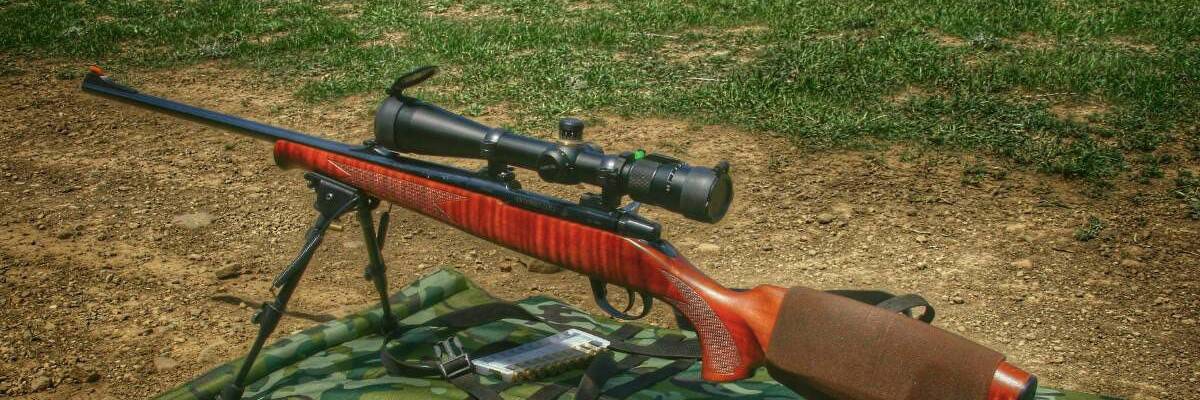
My rig for the summer was a Tikka T3x Varmint in .22-250 Remington feeding Hornady Varmint Express 55gr V-MAX, which is about as honest a home for this scope as exists. A heavy-barrel .22-250 over a bipod, shooting ground squirrels and prairie dogs across open country, is exactly the work a 6.5-20×50 was drawn up for. I zeroed at 100 yards and then spent two trips out on the flats, plus a handful of bench sessions, watching where the scope helped and where it fought me.
The glass is doing the heavy lifting, and it earns the tier
First morning out, sun still low, I was glassing a dog town maybe a few hundred yards off and could pick individual animals sitting up at the mouths of their burrows, sharp enough to tell which way they were facing. That’s the moment the XD glass justified itself. Color was neutral, the edges stayed honest, and there was none of the muddy gray wash I’ve come to expect when you push a mid-priced varmint scope toward its ceiling in flat light. Resolution at distance is the whole point of a scope like this, and the Viper delivers more of it than the price tier usually hands you. Later in the day, with heat coming off the ground, the mirage was its own animal, but that’s physics, not the optic. Dialing the magnification back to around 14x or 15x calmed the boil and kept the picture usable, which is its own small lesson in not living at 20x just because it’s there.
The side focus is the feature I’d miss most
The 50-yard-to-infinity side focus turned out to be the control I touched most. Small targets at varying distances mean you’re constantly refocusing, and being able to crisp up the image and pull the parallax error out without coming off the gun mattered more than I expected. One afternoon I caught myself ranging a far dog, rolling the side focus until he snapped into focus, and using that as a rough confirmation that I had the parallax killed before I broke the shot. On a fixed-parallax hunting scope you simply can’t do that. This is the part of the scope that genuinely belongs on a precision platform, and it works the way it should.
At 20x the eyebox stops being your friend
Here’s where the package starts arguing with itself. The eye relief is listed at 3.1 inches, and through the bottom two-thirds of the range the eyebox is comfortable enough. Run it to 20x and it tightens up noticeably. Several times late in a string I’d shift on the bipod, get back behind the scope a hair off, and catch a dark crescent riding the edge before I settled my cheek and cleared it. On a settled bench shot that costs you nothing. Trying to get back on a dog quickly at full power, it cost me a second I didn’t always have. The other quirk worth flagging is the zoom ring, which came stiff enough out of the box that I worked it back and forth a few dozen times before it loosened into something I’d trust to move fast.
Capped turrets and a top-mag-only reticle on a scope that begs to dial
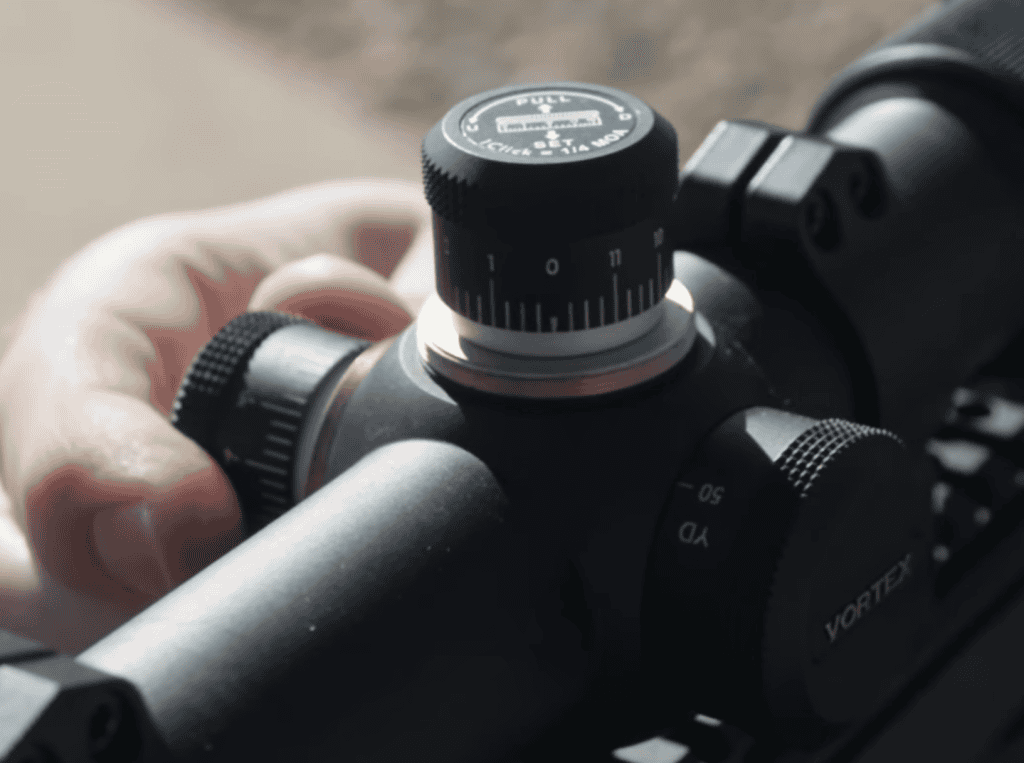
The Dead-Hold BDC is a second-focal-plane reticle with MOA-based hold marks, and those marks only read true at 20x. That’s standard SFP behavior, and on a deer scope it’s no problem. On a 6.5-20x varmint optic it creates a real bind: the magnification where your holds are honest is the same magnification where the eyebox gets picky and the mirage is worst. So you’re nudged toward holding at full power exactly when full power is least pleasant to use. And the turrets are capped. A scope with this much magnification and a side-focus dial is practically asking to be dialed, but Vortex built it to be held, not turned. I pulled the caps, ran a 20 MOA box check to confirm the mechanics were sound, and they were, the reticle came right back to zero. But the caps go back on and you’re back to holding over with a reticle that wants 20x to be accurate. The hardware says precision tool; the control scheme says hunting scope. Both are competent. They just don’t agree.
Add the weight to that picture and the scope’s real identity sharpens. At 21.6 ounces this is not something you walk miles with. It’s a scope that lives on a heavy-barrel rifle, shot off a bipod or bags, doing deliberate work on small targets. Inside that lane the glass and the side focus make it shine. Step outside it and the compromises start showing.
Why I Ran This One on a Heavy .22-250 Across Open Country
I chose the Tikka T3x Varmint in .22-250 Remington with Hornady Varmint Express 55gr V-MAX because the pairing is honest, not flattering. A 6.5-20×50 belongs on a heavy-barrel flat-shooter doing varmint and target work, and putting it there is the only way to learn what it actually is. I zeroed at 100 yards, then shot it across two summer trips on open prairie and ground-squirrel country plus several bench sessions, running somewhere north of five hundred rounds of light .22-250 through it in heat, wind, and the kind of midday mirage that flat-country varmint shooting always serves up.
What I was paying attention to comes from watching how this whole segment is priced. Mid-tier varmint scopes almost always spend their money on one of two things, glass or features, and rarely both, and the buyer’s job is to figure out which one a given model chose. The Viper is firmly a glass-first scope: the XD optics are clearly where the budget went, and the control package is conventional hunting hardware rather than target-grade dialing gear. Knowing that pattern is what told me to test the glass hard at distance and then stress the controls at full power, because that’s exactly the seam where a glass-first varmint scope shows its trade-offs. You can read my full testing methodology for how I structure that across a season of varmint work.
Performance Ratings
Field Test Data
| Test Parameter | Result |
|---|---|
| Best 5-shot group, 100 yds (bipod, rear bag) | 0.7 inches |
| Resolution at distance, low morning light | Picked individual targets across a dog town several hundred yards out |
| Box check, under caps (20 MOA square) | Returned to zero, no measurable drift |
| Zero retention (~550 rounds, two prairie trips) | Held; no shift across travel and bench sessions |
| Eyebox behavior at 20x | Tight; edge shadowing on a hurried head position |
| Image through mid-range vs 20x in midday mirage | Sharp to ~15x; backing off the top end calmed the boil |
| Zoom ring effort, out of box | Very stiff; loosened to usable after repeated cycling |
Tested with: Tikka T3x Varmint | .22-250 Remington | Hornady Varmint Express 55gr V-MAX
Pros and Cons
PROS
|
CONS
|
Common Questions About the Vortex Viper 6.5-20×50
Is the Dead-Hold BDC reticle first or second focal plane, and when are the holds accurate?
It’s second focal plane. The reticle stays the same visual size as you zoom, so the BDC hold marks only read true at the 20x top magnification. Hold over at lower powers and the spacing no longer matches.
Can it handle .22-250 and harder-recoiling rifles?
Yes. It shrugged off a summer of .22-250 with no zero shift, and the build is rated for far heavier recoil. The tight eyebox is a usability quirk at 20x, not a durability concern.
How is this different from the Viper PST?
The PST line adds first-focal-plane reticles and exposed tactical turrets built for dialing. This standard Viper is a glass-first hunting and varmint scope with capped turrets and an SFP reticle, meant to be held rather than turned.
Is 6.5x too much minimum magnification for general hunting?
For brush or close timber, yes. A 6.5x floor is too much for fast, close shots, and the weight compounds it. This is a varmint, target, and open-country scope, not a do-everything hunting optic.
Why capped turrets on a 20x scope?
Vortex built this variant around holding over rather than dialing, and capped turrets protect the zero from accidental movement. It’s a defensible choice, but it does sit oddly against a magnification range that otherwise invites dialing.
Disclosure
Everything here comes from a summer of carrying this scope to the flats and shooting it myself. This article may contain affiliate links, and a purchase made through them can earn the site a commission at no extra cost to you. Those relationships do not influence the evaluation or the rating; the scope was judged on how it performed in the field.
A Varmint Scope to Buy for the Glass, Once You Accept How It Wants to Be Used
The Viper 6.5-20×50 is a glass-first varmint and target scope, and on that count it delivers more than the mid-tier price suggests. The XD optics resolve small targets at distance honestly, the side focus is a real precision asset, and the mechanics held zero through a hard summer without complaint. If you shoot prairie dogs, ground squirrels, or paper off a heavy-barrel rifle and a bipod, this is an easy scope to recommend.
What keeps it from being a clean win is that the control package was built for a different job than the magnification implies. The capped turrets and the 20x-only BDC point you toward holding over, while everything optical points toward dialing precision work, and the eyebox tightens right where the reticle needs you to be. None of that is a defect; it’s a design that didn’t fully commit. Buy it for the glass and the varmint work it was clearly meant for, run it mostly in the middle of its range, and accept that it’s a hold-over scope wearing a dialer’s spec sheet. Want a scope in this class that actually lets you dial? That’s a different model.
Mike Fellon is the founder of ScopesReviews and an optics specialist with 15+ years in precision shooting. A former Bass Pro Shops firearms advisor and NRA-certified instructor, he’s hands-tested 200+ rifle scopes across hunting and competition. Based in Dallas, Texas.