
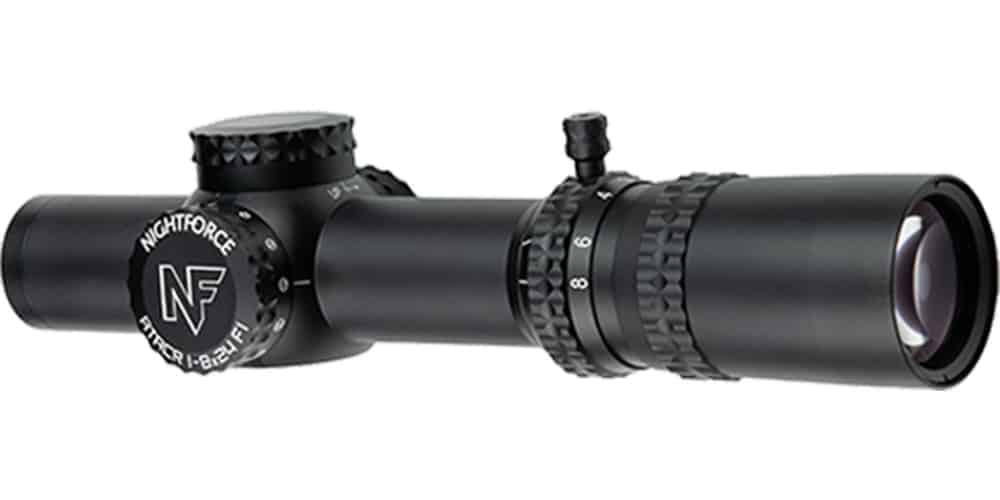
It depends on which Nightforce line you’re buying. The short answer: the ATACR and B.E.A.S.T. series are machined and assembled in the United States (Orofino, Idaho), while the SHV, NX8, NXS, Benchrest, and Competition series are made in Japan and marked as such. All Nightforce scopes use optical glass sourced from Japan; that’s true across the board.
One thing worth knowing upfront: Nightforce Optics is not a purely American company. It operates as a subsidiary of Lightforce Performance Lighting, an Australian manufacturer. The U.S. operation is headquartered in Orofino, Idaho, where manufacturing takes place, with a sales and marketing office in Lavonia, Georgia. Nightforce was established in 1992 when Lightforce expanded into the U.S. market.
Where Each Nightforce Series Is Made
Here’s how the lineup breaks down by country of origin:
| Series | Country of Origin Label | Glass | Price Tier |
|---|---|---|---|
| SHV | Made in Japan | Japan | Entry-level Nightforce ($800–$1,400) |
| NX8 | Made in Japan | Japan | Mid-range ($1,200–$1,600) |
| NXS | Made in Japan | Japan | Mid–high ($1,400–$2,200) |
| ATACR | Assembled in USA (Idaho) | Japan | High ($2,200–$3,800+) |
| B.E.A.S.T. | Assembled in USA (Idaho) | Japan | High ($2,800+) |
| Benchrest / Competition | Made in Japan | Japan | Specialty ($1,800–$3,000+) |
Series Breakdown
Nightforce SHV
SHV stands for Shooter, Hunter, Varminter, the most accessible line Nightforce makes. These are manufactured entirely in Japan and marked accordingly. They’re solid optics at a lower price point, but if American assembly matters to you, this isn’t that scope.
Nightforce NX8
The NX8 is a compact, lightweight 1-8x scope aimed at PRS and tactical use. Also manufactured in Japan. The glass quality is excellent for the category; Nightforce’s Japanese manufacturing partners produce consistently sharp optics at this price tier.
Nightforce NXS
The NXS has a long history as a professional-grade tactical and long-range hunting scope. These are manufactured in Japan, though Nightforce tests and packages them in the U.S. The scope is still labeled “Made in Japan” because enough of the production happens overseas that it doesn’t qualify for a domestic label under FTC guidelines. Historically, the NXS saw military use, but Nightforce’s more recent large government contracts have gone to the ATACR line.
Nightforce ATACR
The ATACR (Advanced Tactical Riflescope) is where Nightforce does the most work stateside. Optical glass comes from Japan, but the bodies are machined and the scopes assembled at the Orofino, Idaho facility. Most ATACR models carry a “designed, assembled, and verified in USA” designation. This line won Nightforce its most significant military contracts: USSOCOM awarded Nightforce a nearly $54 million Precision-Variable Power Scope contract in 2019 (ATACR 5-25×56 and 7-35×56), followed by an R-VPS contract in 2021 for the ATACR 4-20×50 F1. Those are real-world results that carry weight.
Nightforce B.E.A.S.T.
B.E.A.S.T. stands for Best Example of Advanced Scope Technology. Like the ATACR, this series is machined and assembled in Idaho. Glass sourced from Japan. If you want the most “American-built” Nightforce scope, the B.E.A.S.T. and ATACR are your options.
Nightforce Benchrest and Competition
These are specialty scopes built for precision benchrest and target shooting. Both lines are manufactured in Japan and labeled as such. The optics are purpose-built for that niche: high magnification, surgical tracking. The Japanese manufacturing doesn’t hurt them in that application.
A Note on FTC “Made in USA” Labels
The FTC’s “Made in USA” standard requires that “all or virtually all” of a product be made domestically, meaning no or negligible foreign content. That’s a high bar. Because Nightforce’s Japanese-made glass is a substantial component, the lower-tier lines can’t clear it, even when assembly or packaging touches U.S. soil. The ATACR and B.E.A.S.T. typically use language like “designed, assembled, and verified in the USA” rather than a flat “Made in USA” claim, which is the honest and FTC-compliant way to handle it.
Does Where It’s Made Affect Quality?
Not as much as people assume. Japan has produced some of the finest optical glass and precision mechanics in the world for decades: Fujinon, Kowa, and several other suppliers running glass for premium brands are all Japanese. The SHV and NX8 being made in Japan isn’t a knock on quality; it’s just where certain volume-oriented production runs make sense economically. The ATACR and B.E.A.S.T. being assembled in Idaho means tighter QC loops and hand-finishing on the higher-dollar units, which matters more at that price point.
For comparison: Vortex makes most of its lineup in Japan and the Philippines, Schmidt & Bender builds in Germany, and Leupold assembles in Oregon with mixed-origin glass. Country of assembly is just one data point, not the whole picture.
My Take
I’ve handled and mounted a lot of Nightforce glass over the years, from the SHV on hunting rifles to the ATACR on precision builds. What I notice isn’t a quality gap between the Japan-made and Idaho-assembled lines so much as a purpose gap. The SHV and NX8 are well-built optics for hunters and practical shooters. The ATACR is a different animal: tighter tolerances, more robust under hard use, and it earns the price. In my experience working the counter and spending time on the range with these, both ends of the Nightforce lineup punch above their price relative to comparable brands. The “made in Japan” label on the SHV or NX8 has never given me a reason to steer someone away from it.
Mike Fellon is the founder of ScopesReviews and an optics specialist with 15+ years in precision shooting. A former Bass Pro Shops firearms advisor and NRA-certified instructor, he’s hands-tested 200+ rifle scopes across hunting and competition. Based in Dallas, Texas.