
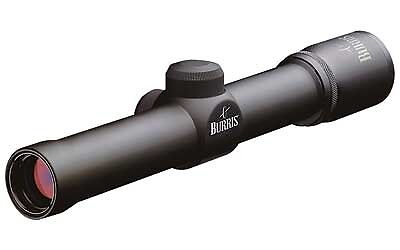
Most Burris scopes are made in the Philippines. Their premium XTR models are assembled — and in some cases fully manufactured — in the United States at Burris’s facility in Greeley, Colorado. That split maps cleanly to price: Philippine-made lines cover the hunting and budget end, while US-built XTR scopes are built for precision and tactical use.
Burris has been headquartered in Greeley, Colorado since 1971. The company is owned by Beretta Holding S.A., the Italian Beretta group, which acquired Burris in 2002. Manufacturing decisions and QC standards remain an American operation regardless of the Italian parent.
Where Each Burris Line Is Made
Philippines — Hunting and Mid-Range Lines
The majority of Burris’s lineup is produced in the Philippines. Confirmed Philippine-manufactured models include:
- Droptine — entry-level hunting scope
- Veracity — mid-range hunting line (also sold as the “Veracity PH”)
- Fullfield II — the legacy budget hunting scope (being phased out; see note below)
- Scout — forward-mounted scout rifle scope
- MSR — modern sporting rifle line
Philippine production isn’t a mark against these scopes. The Droptine and Veracity routinely earn solid reviews for optical clarity and mechanical repeatability at their price points. Burris holds its factories to the same specification standards across all production locations.
United States — XTR Tactical and Precision Lines
Burris assembles and manufactures their XTR series in Greeley, Colorado:
- XTR II — assembled in the USA using Japanese-sourced optical components
- XTR III — fully manufactured in the USA; current flagship tactical line
- XTR Pro — fully made in the USA; purpose-built for PRS and NRL competition
- XTR PS — newest model (2025), fully USA-made; features a programmable elevation knob and onboard ballistic data center for precision long-range shooting
China — Fullfield IV
The Fullfield IV, which sits alongside the older Fullfield II at the budget end, is reported to be manufactured in China. Burris doesn’t publicly disclose its OEM on this line, but multiple independent sources consistently report Chinese production for the Fullfield IV. If country of origin is a deciding factor for you at this price tier, confirm it at purchase. Note: Burris introduced a consolidated new Fullfield line in 2025 that appears to replace the Fullfield II and IV variants — the manufacturing origin of the new version has not been confirmed at time of writing.
Country and Price at a Glance
| Model | Country | Price Tier |
|---|---|---|
| Droptine | Philippines | $100–$200 |
| Fullfield II (phasing out) | Philippines | $150–$300 |
| Fullfield IV | China (reported) | $150–$300 |
| Veracity | Philippines | $300–$600 |
| XTR II | USA (assembled; Japanese components) | $700–$1,500 |
| XTR III | USA (fully made) | $1,200–$1,800 |
| XTR Pro | USA (fully made) | $1,500–$2,200 |
| XTR PS (2025) | USA (fully made) | $1,500–$2,200 |
Does It Matter Where a Burris Scope Is Made?
For most hunters, not much. Philippine-made Burris scopes have a long track record, and the Veracity in particular holds its own against Japanese-made glass from Vortex and Leupold at the same price. Country of origin controls some things — labor costs, component sourcing — but Burris’s spec sheets and QC standards apply company-wide. The Droptine and Veracity punch above their weight class regardless of where they’re assembled.
Where origin matters more is at the precision end. The US-assembled or US-made XTR series is built to tighter tolerances for competition, long-range, and duty use — and the price reflects that. If you’re running a PRS rifle or a hard-use tactical build, the XTR III or XTR Pro aren’t in the same category as the hunting line.
Every Burris scope — except thermal models — is covered by the Burris Signature Warranty (previously called the “Forever Warranty”). It’s lifetime coverage, fully transferable to a second owner, and requires no original receipt. That applies whether your scope came out of Greeley or Manila.
My Take on Burris Scopes
I’ve handled and mounted a lot of Burris scopes — Droptines and Fullfield IIs at the counter, a Veracity on a deer rifle, XTR models at the range. The Philippine-made pieces feel and perform like they cost more than they do. Turrets are positive and repeatable, glass is cleaner than you’d expect at those prices. The XTR series is a different animal — heavier, tighter, built for people who need a scope they can trust at distance or in competition.
How Burris Stacks Up Against the Competition
At the entry level — Droptine territory — Burris goes up against the Vortex Crossfire II and Leupold Freedom RDX, both in the same price band with similar manufacturing profiles. The Droptine holds its own. At the Veracity level ($300–$600), the competition is Vortex Diamondback HP, Leupold VX-3HD, and Tract Toric. The Veracity is competitive on glass quality and turret feel. At the XTR level, you’re in the same conversation as Nightforce SHV, Vortex Viper PST Gen II, and Kahles K series — serious company, and the US-made XTR III earns its place there.
Final Words
Burris makes capable scopes at every price tier. The Philippines-built hunting line — Droptine, Veracity — is where they offer the best value for most shooters, and the Filipino origin hasn’t stopped those scopes from earning a solid reputation. The US-made XTR series is the real deal for precision and tactical use. If you need American-made glass and you’re not in the XTR price range, Burris isn’t the right call — but for the money, very few brands beat the Veracity at $300–$500. The Signature Warranty backs every non-thermal scope for life, which takes some of the risk out of whatever tier you buy into.
Mike Fellon is the founder of ScopesReviews and an optics specialist with 15+ years in precision shooting. A former Bass Pro Shops firearms advisor and NRA-certified instructor, he’s hands-tested 200+ rifle scopes across hunting and competition. Based in Dallas, Texas.