
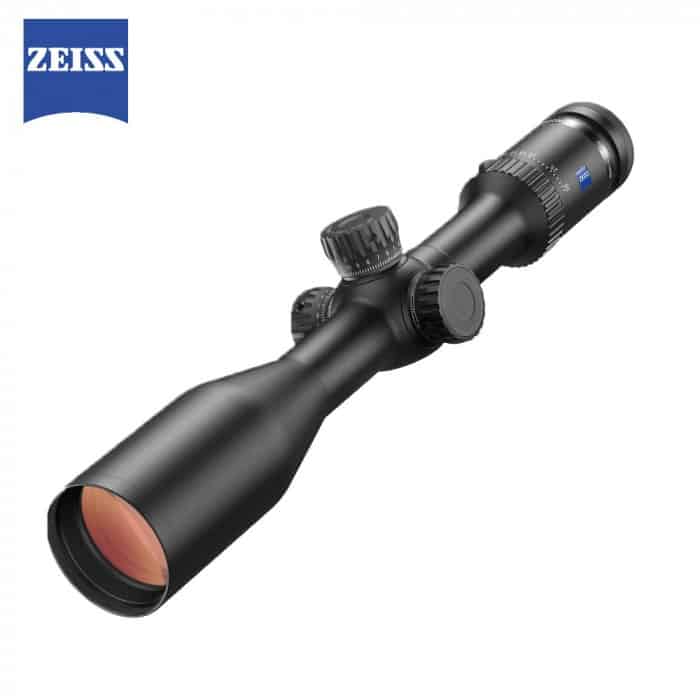
Most current Zeiss rifle scopes are made in either Germany or Japan depending on the product line. The premium Victory and LRP series come out of Zeiss’s German facilities; the mid-range Conquest V4 and entry-level Terra 3X are made in Japan. That split has been consistent for years — but buyers should know that Zeiss announced it will end all sporting optics manufacturing at its Wetzlar facility by the end of 2026, which may shift more production to Asia going forward.
About Zeiss
Carl Zeiss founded his optical workshop in Jena in 1846. The company has been under the Carl Zeiss Foundation since the 19th century — the same non-profit that also owns Schott AG, the specialty glass manufacturer. That ownership structure has kept Zeiss focused on long-term optical quality. The sporting optics arm, Carl Zeiss Sports Optics GmbH, is headquartered in Wetzlar, Germany.
Beyond riflescopes, the Zeiss Group operates across medical technology, semiconductor manufacturing, and life sciences. Their T* anti-reflection coating — the same technology that built Zeiss’s reputation in photography and scientific instruments — carries into their riflescopes and is a meaningful part of why the glass performs the way it does.
Where Each Zeiss Scope Line Is Made
Here’s the current breakdown by product line:
| Model Line | Country of Manufacture | Price Tier |
|---|---|---|
| Victory V8 | Germany (Oberkochen/Wetzlar) | Premium ($2,500–$4,500+) |
| LRP S3 / LRP S5 | Germany | Precision/Tactical ($2,000–$3,500+) |
| Conquest V6 | Germany | Upper Mid-Range ($1,200–$1,800) |
| Conquest V4 | Japan | Mid-Range ($500–$900) |
| Terra 3X | Japan | Entry-Level ($300–$500) |
| Conquest DL / Duralyt (discontinued) | Germany | — |
The pattern is straightforward: anything Germany-made sits at the upper end of the price range. The Conquest V4, which replaced the discontinued Conquest DL as Zeiss’s mid-range option, moved production to Japan when it launched. The older Duralyt, which the Conquest DL replaced before that, was also Germany-made and is now fully discontinued.
The Wetzlar Closure: What It Means for Buyers
In 2024, Zeiss announced it would end all sporting optics manufacturing at its Wetzlar facility by the end of 2026, affecting roughly 70 jobs. The stated reasons were cost pressure, declining demand for analog optics in the premium segment, competition from lower-cost manufacturers, and a strategic decision to pivot the Wetzlar facility toward Zeiss’s semiconductor technology division.
Zeiss confirmed that customer service, quality assurance, and logistics will remain in Wetzlar. What hasn’t been publicly announced is where production for the German-made lines will go after 2026 — whether it shifts to the Oberkochen facility or moves to Asia. If you’re spending $2,000+ on a German-made Victory V8 or LRP series scope and “Made in Germany” matters to you, this is a development worth watching. Existing inventory of German-made Zeiss scopes will still be on shelves for some time, but the window is narrowing.
Does Country of Origin Affect Quality?
For Zeiss specifically, the Japan-made models hold up well. Japanese precision optics manufacturing — the same environment that produces glass for several other premium Western brands — runs at tight tolerances. The Conquest V4 is a better scope than many buyers expect at its price point, and it competes directly with the Vortex Viper HST and Leupold VX-5HD in that $500–$900 range.
The meaningful difference between a Japan-made Zeiss and a German-made Zeiss isn’t manufacturing quality — it’s the sophistication of the optical system. The Victory V8 and LRP series use more complex glass formulations, more refined coatings, and tighter design specs. That’s where the Germany premium actually lives. At $2,500+, those scopes sit alongside Swarovski Z8i and Nightforce NX8 — and they belong there.
My Take on Zeiss Glass
I’ve mounted and run quite a few Zeiss scopes over the years — from the Conquest V4 on deer rifles to the Victory V8 on longer-range setups. What stands out consistently is the edge-to-edge clarity and low-light performance on the German-made lines. The Conquest V4 I’ve used held zero reliably and the glass was genuinely clean for the price. But pick up a Victory V8 and the difference isn’t subtle — it’s a different tier of optical performance. The T* coatings do what they claim in low-light, and the image stays sharp at max magnification in a way that cheaper glass can’t match. If you’re debating whether Zeiss is worth the price at the high end, the answer is yes — provided you’re buying the right line for your budget.
Zeiss Scope Lines Overview
Zeiss currently offers three main riflescope categories for hunters and precision shooters:
- Victory V8 — Zeiss’s flagship hunting scope. Wide 8x zoom ratio (1–8x, 1.8–14x, 2.8–20x options). Made in Germany. Best-in-class low-light performance. Built for serious hunters willing to pay for it.
- LRP S3 / LRP S5 — First focal plane tactical/precision scopes with wide adjustment range. Made in Germany. Compete with Schmidt & Bender PM II and Nightforce ATACR at the high end.
- Conquest V6 — Germany-made upper mid-range option. 6x zoom ratio, good reticle selection. Strong value for hunters who want German glass without Victory V8 pricing.
- Conquest V4 — Japan-made mid-range scope. Solid glass, reliable turrets, good price-to-performance for deer hunters and general-purpose rifle use.
- Terra 3X — Japan-made entry-level line. Budget Zeiss. Reasonable glass for the price but no longer the standout value it once was given how competitive the sub-$500 market has gotten.
Conclusion
If you’re buying on a tighter budget, the Japan-made Conquest V4 delivers real Zeiss optical quality without the premium German price tag. If you’re investing at the high end, the German-made Victory V8 and LRP series are still being produced — for now. The Wetzlar plant closure by end of 2026 means the “Made in Germany” Zeiss window may be shorter than buyers realize, and it’s worth staying informed on how Zeiss handles that transition.
Mike Fellon is the founder of ScopesReviews and an optics specialist with 15+ years in precision shooting. A former Bass Pro Shops firearms advisor and NRA-certified instructor, he’s hands-tested 200+ rifle scopes across hunting and competition. Based in Dallas, Texas.